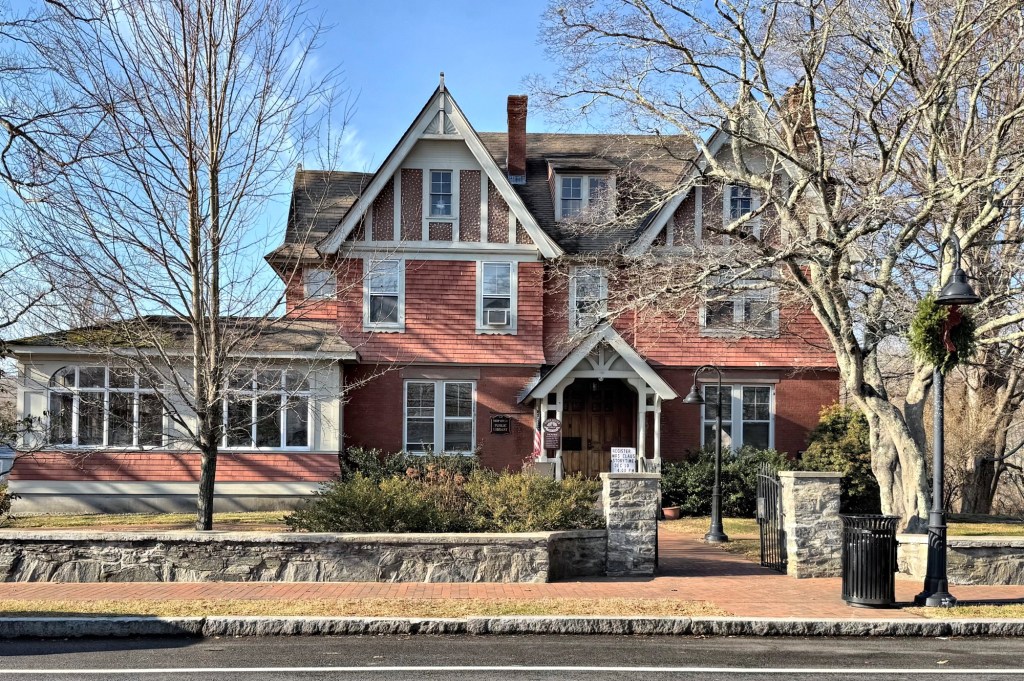
Richard P. Spencer House – Deep River Public Library // 1881

The finest extant Queen Anne Victorian-era house in the town of Deep River, Connecticut, is located on Main Street and since the 1930s, has been home to the town’s public library! How’s that for adaptive reuse?! This residence was built in 1881 for Richard Pratt Spencer (1820-1910), a local prominent businessman who lived to be 90 years old. Spencer lived here with his second wife, Juliana Selden, who was 32 years his junior, and three children until his death in 1910. When Spencer’s widow died in 1932, the heirs sold the property to the Saybrook Library Association (before the town renamed Deep River in 1947), which then, in turn, sold the building to the town for a small price in order to convert it into a library. Opened to the public in 1931, the Deep River Public Library has been preserved inside and out with historic fireplaces, woodwork, and features. The only notable change occured in 1995 when a children’s room addition was built to resemble an old porch. The library even retains the original pebbledash finish in the gables, a rare detail not commonly found in typical old houses of the period.


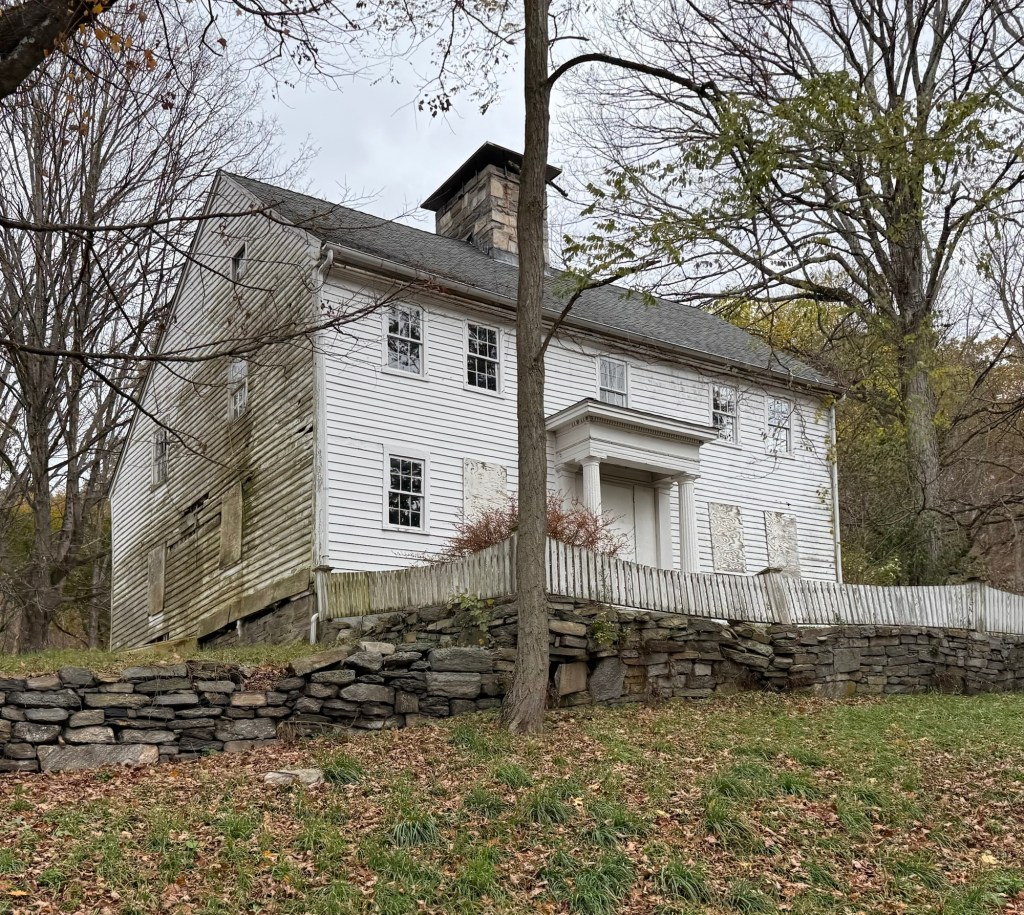
Smith-Curtiss House // c.1714

The Smith-Curtiss House, which is possibly the oldest extant building in Derby, Connecticut, has sat vacant and decaying for years and is owned by the State of Connecticut. Believed to have been built sometime between 1714 and 1740, this historic saltbox farmhouse at 411 Hawthorne Avenue is slowly decaying due to lack of maintenance and funding. Early ownership is difficult to determine, but by the 19th century, the property was owned by Ms. Alice E. Curtiss. The old estate was sold by Ms. Curtiss in 1913 to Frances Osborne Kellogg, a businesswoman, philanthropist and environmentalist, as part of her 350-acre dairy farm and land-conservation holdings. The Smith-Curtiss House was used as a residence for the herdsmen who ran the farm nearby. Before her death in 1956, Frances deeded the property to the state as a public park, and allowed her head herdsman life-occupancy of this house for the remainder of his life. The State of Connecticut assumed possession of this house in 1981. The building has suffered from deferred maintenance since this period, with the State attempting to lease the building to tenants. I hope that local and statewide preservation groups can mobilize to secure grants and funding to restore this important property.

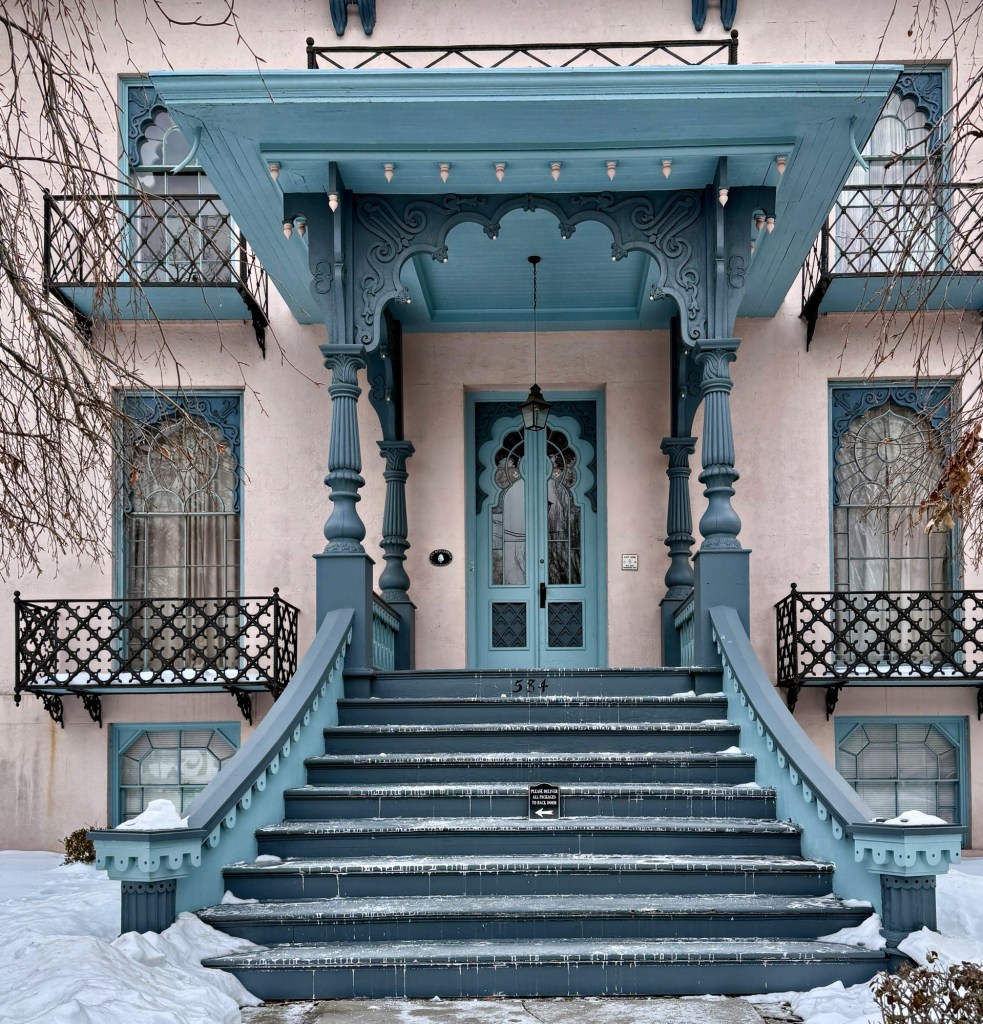
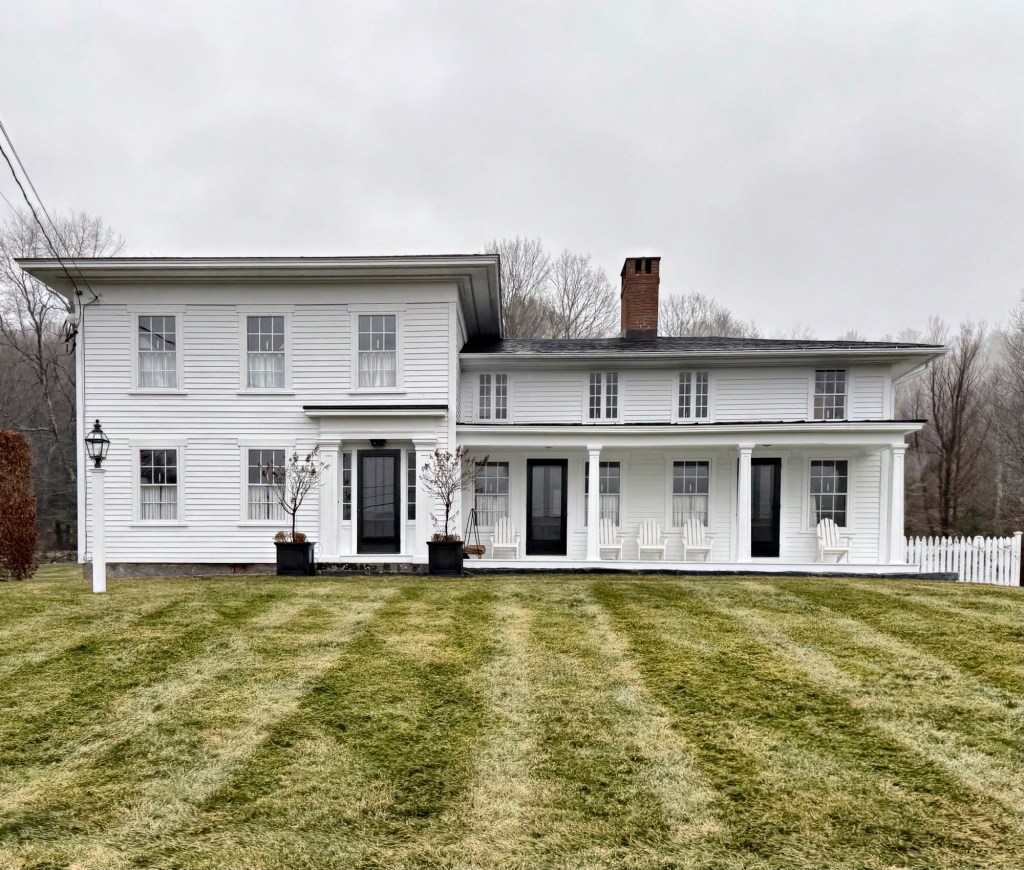
William H. Harrison House // c.1850

In about 1850, William Hopkins Harrison (1813-1878) purchased farmland from the Pierce Family of Cornwall, Connecticut, and built this stately Greek Revival style home upon it. The house was built around the same time as its neighbor, the Dwight W. Pierce House (last post), also an example of the Greek Revival style, but in a very different finish. The seven-bay residence has its main block at the end with a shallow hip roof and overhanging eaves, showcasing the emergence of the Italianate style form to come into popularity. The solidly Classical pilaster and entablature surround at the entry firmly places the house in the Greek Revival style.

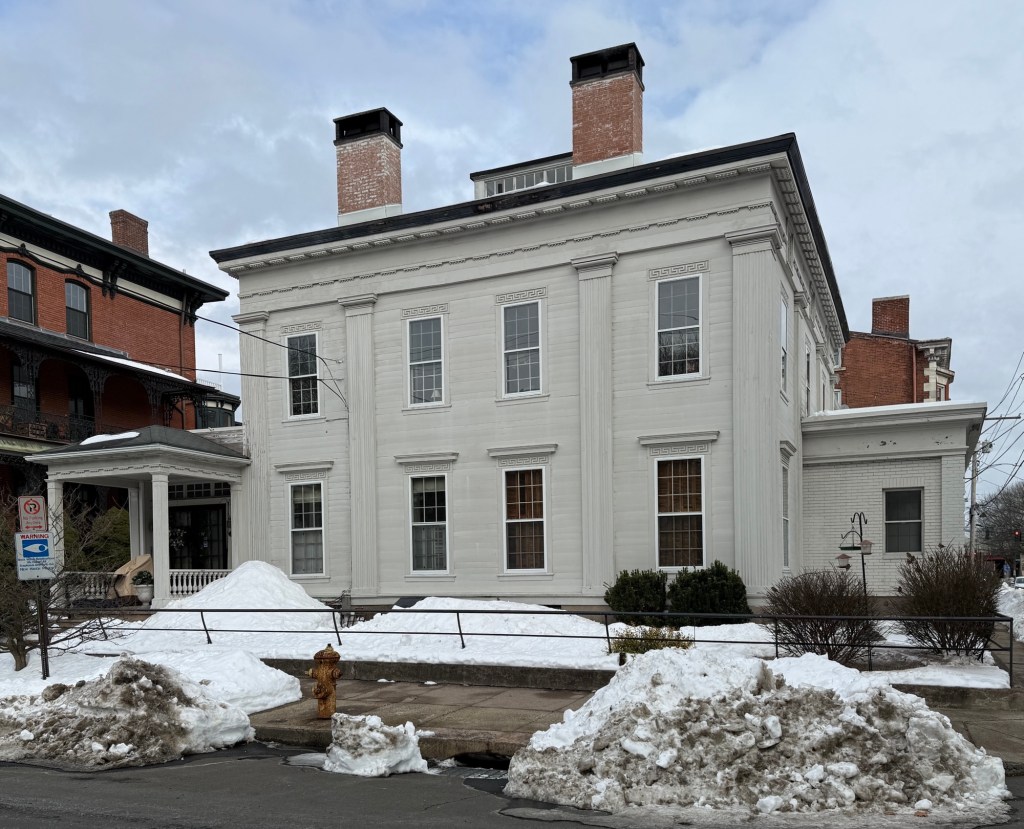
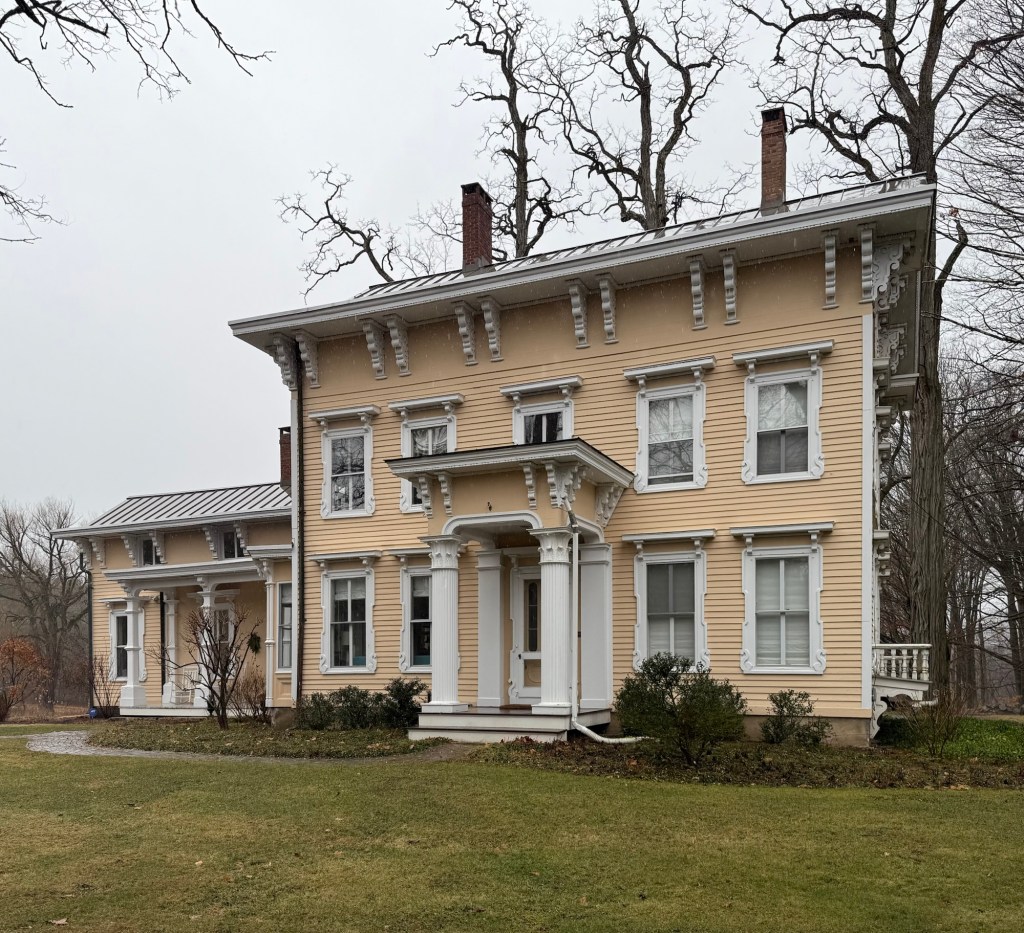
General John Sedgwick House // 1860

The Major General John Sedgwick House is located in Cornwall Hollow, Connecticut, and stands out as one of the finest residences in this part of the state in a rural setting. The house was built by 1860 for General John Sedgwick (1813-1864), who was born in a house standing on this site, which had been built by his grandfather, a veteran of the Revolutionary War. In 1859, the Sedgwick family homestead burned to the ground. Sedgwick, then already well established in his military career, took leave to oversee construction of its replacement. This house was built, apparently on the foundation of the old house, in 1859–60. The work was done by Cyrus Marsh, a local builder, in the Italianate style with decorative brackets, window mouldings, hoods, and a large columned entry portico. Major General Sedgwick was active in many campaigns, and during the American Civil War, he was killed by a sharpshooter at the 1864 Battle of Spotsylvania Court House, he was the Union Army’s highest-ranking casualty of the war and never got to reside in his Cornwall home.

Benjamin Bosworth House // 1800

One of the most unique houses in Connecticut is this massive Federal style residence located in the small town of Eastford. Built next to the Congregational Church of Eastford (1829-2023), which burned down in 2023 by arson, the massive house has been known as both the Benjamin Bosworth House and Squire Bosworth’s Castle due to its first owner, Benjamin Bosworth (1762-1850). According to the Bosworth Family, the house was built in 1800 by Bosworth was a wealthy merchant, who hired Vini Goodell, a local carpenter to design and build the large Federal home. The house was completed by 1801 when the local Masonic group met in the building. As Bosworth was also a merchant, he used the basement as a storeroom. The house is also unusual for its monitor roof, a rarity in Federal period construction, which reads like a second structure on the house, due to the building’s size. After Bosworth’s death, the house was occupied by his niece, and was later purchased by Elisha Grant Trowbridge in 1897. Trowbridge was a grand-nephew of General Nathaniel Lyon (1818-1861), a local hero who was the first Union general killed during the Civil War. Trowbridge, an engineer, lived here until he died in 1963 at the age of 96. Later owners have had the monumental task of restoring and maintaining this behemoth of a house, to great success.

Abner Richmond House // c.1803

This high-style Federal house sits across from the former Westford Baptist Church in Ashford, Connecticut. The house was built around 1803 for Abner Richmond (1761-1834) and his wife Eunice, who purchased 92-acres of land here one year earlier. Abner descended from John Richmond (1594-1664), one of the original white settlers of Taunton, Massachusetts in 1637. About ten years after he built his farmhouse, the town of Ashford paid the Richmond’s money for hardship caused by laying out a road right in front of the homestead. This 1812 occurrence possibly allowed the couple to invest further into the property, where they converted some of the rooms into a tavern, which was later accessible by the new Boston and Hartford Turnpike. The turnpike began in East Hartford and made its way through Ashford before winding its way to Boston. The house was documented as having 19th century stenciling on the walls, which survived underneath wallpaper (go figure). The new owners have clearly given the Richmond House some love and care, down to the perfect paint color.

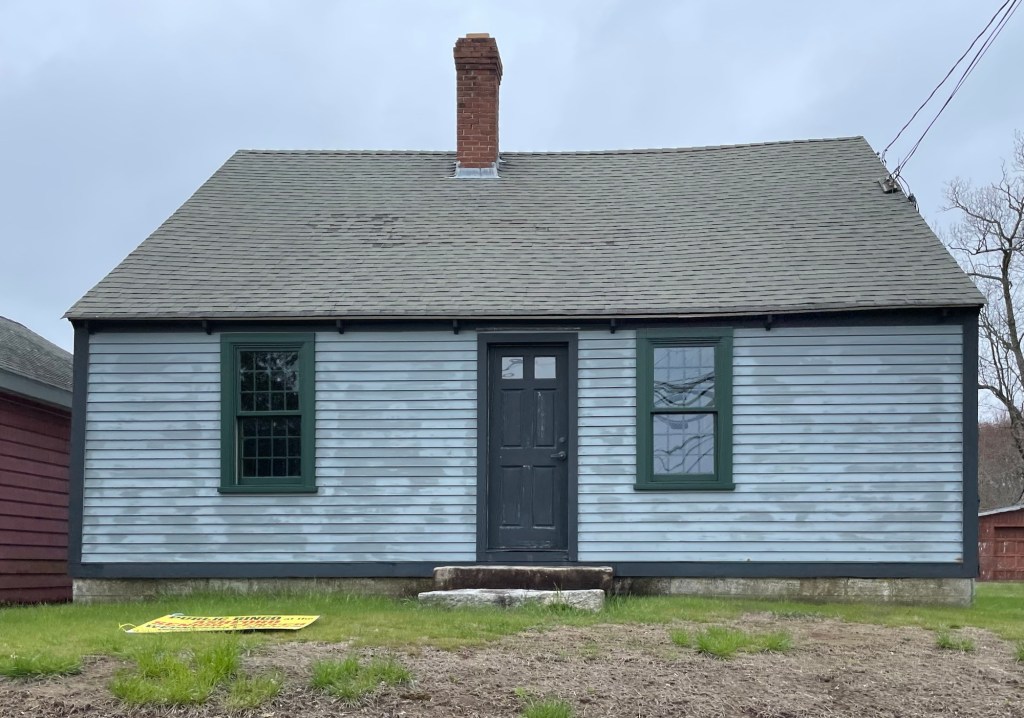
Stebbins-Tremko House // 1773

Ashford, Connecticut is located in a part of Windham County at the northeast part of the state which is sometimes referred to as the Quiet Corner, due to its limited access to larger cities and more bucolic scenery. Formerly known as New Scituate, Ashford was settled in 1710 and incorporated as a town in October of 1714. One of the town’s early houses is this cape style dwelling, built around 1773 for Thomas Stebbins (1748-1826). By the 20th century, the small house was owned by George Tremko (1907-1981) who worked as the town’s postmaster for some years in the post office just nextdoor. After Tremko’s death, the town acquired the property through eminent domain, with the hopes of redeveloping the prominent site for a new library. Luckily, the local historical society advocated for its preservation, and grants were acquired, which helped to restore the 1770s house.