In 1896, Edward L. Bailey, a carpenter and housebuilder, erected this cottage on Haven Avenue in Rockport, Massachusetts. Bailey resided in the house, likely year-round and ran a store on the nearby main street. His cottage served as both a residence and an advertisement for his skilled carpentry, which likely offered him commissions for other cottages nearby. Bailey was also selected as the builder for the town’s Carnegie Library in 1907. The cottage blends Queen Anne and Shingle styles effectively under one roof.
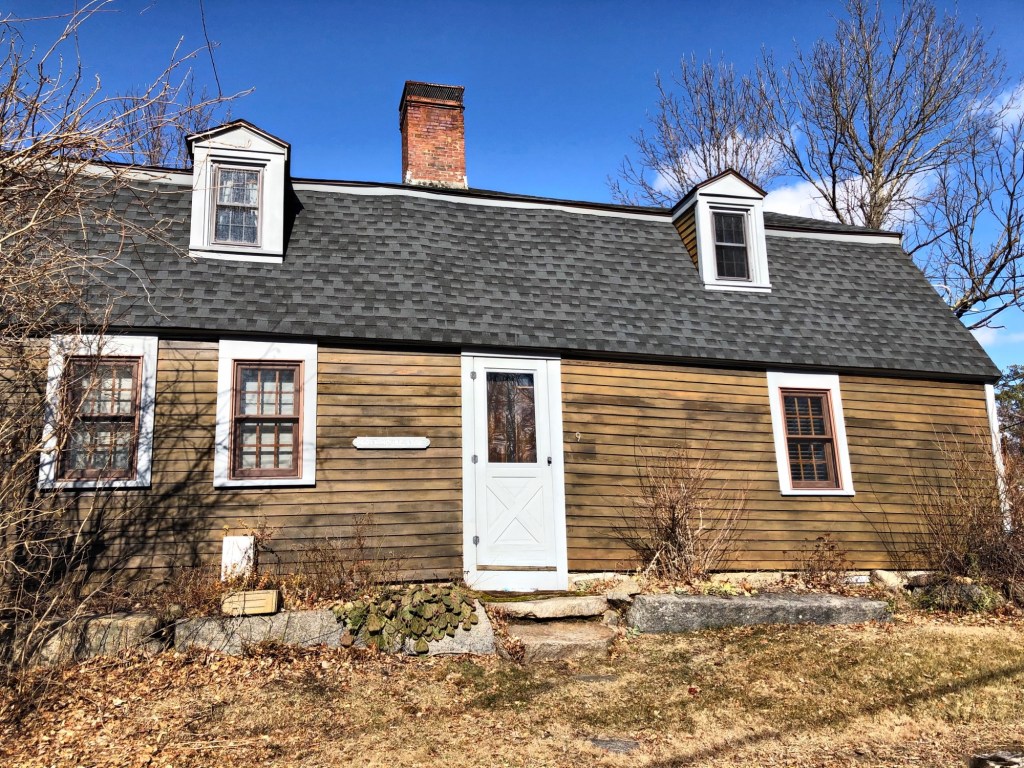
Halibut Point State Park in Rockport is one of the most enchanting places in Massachusetts and it has so many layers of history! Before white settlement, Halibut Point was used seasonally by the Pawtucket people who came to harvest its wild fruits, fish and game on the land. In 1702, Samuel Gott (1677-1748) purchased eight of the 6-acre lots on Halibut Point. At the time, there were no roads to Halibut Point, but Samuel built this house on the land, and he began to farm here. The property passed down the family line and was later owned by Joshua (1754-1846), who came of age just as the War for Independence began. Joshua enlisted with the Revolutionary Army as it was being formed in Boston, and in 1776, he joined General Washington’s forces in the unsuccessful defense of New York. He returned home to lead a long and useful life as farmer and fisherman and was known as Captain Gott. As of the 2010s, the property remained in the same family, handed down through the generations from Samuel Gott over 320 years to today. How cool!
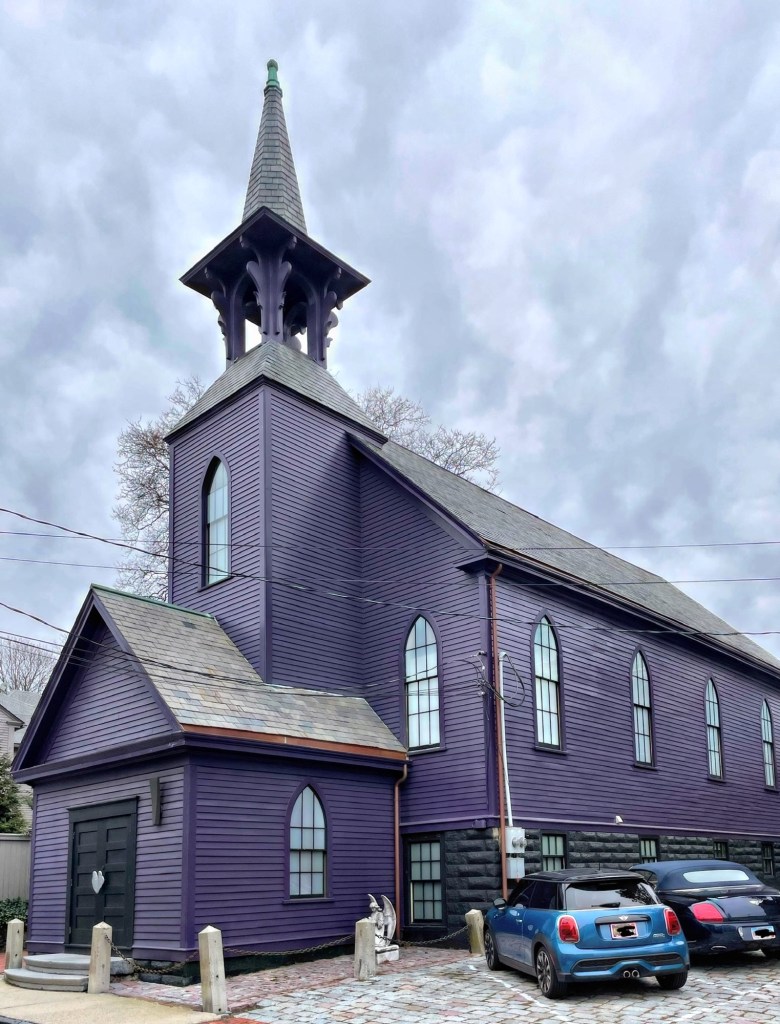
By the end of the 19th century, the summer colony of Newport, Rhode Island continued to see the erection of large summer cottages which required large staffs to maintain them. Scandinavian girls were preferred by the wealthy residents for maids and drivers, and beginning in the 1870s; they joined other ethnic groups, such as the Irish in establishing their own communities in the coastal city. In 1892, organized under the New York Conference of the Augustana Synod, a Lutheran Church for Swedish-speaking residents was established. A small lot on Corne Street was purchased and work began on this small wood-framed church. Completed in 1896, the church was designed by by architect James W. Smith in the Gothic Revival style. It has a central bell tower and a spire and the interior of the church originally had an hourglass pulpit. Gold and white decorations surrounded an oil painting of the risen and ascending Christ. In the 1950s, the congregation purchased land on Broadway in the north end of Newport and built St. Peter’s Lutheran Church. The Corne Street church was sold and is now a private residence.
New Haven, Connecticut is known for its Gothic and Modernist architecture, but as it is located in New England, some good Colonial Revival architecture is not hard to find! The New Haven Museum building on Whitney Avenue was built for the New Haven Colony Historical Society, which was established in 1862 to collect, preserve, and publish historical matter related to the history of the greater New Haven community. The Society was housed in various locations around the city throughout the 19th century until 1929 when it relocated to its present building designed by J. Frederick Kelly, a noted colonial revival architect. The symmetrical building with its eleven-bay facade is notable for its arched recessed portico and rooftop cupola. The building remains occupied by the New Haven Museum to this day.
As Yale’s 1842 Old Library was outgrown by larger class sizes and a growing college library collection, overseers began planning for a new library annex which could support the programming. Architect J. Cleaveland Cady was commissioned to design the Chittenden Memorial Library, this underappreciated structure, which is today hemmed into a cramped space in the yard between a later addition (Linsly Hall) and McClennan Hall. The Chittenden Memorial Library was a gift to the college by U.S. Representative Simeon Baldwin Chittenden in memory of his only daughter, Mary Chittenden Lusk (1840-1871) nearly two decades following her untimely death. The handsome Richardsonian Romanesque style library building also retains its original stained glass window titled, “Education” by Louis Tiffany which today is in the building’s former reading room, now a large classroom. When the library moved to a new building in the 1930s, Chittenden Memorial Library became Chittenden Hall and is classroom space.
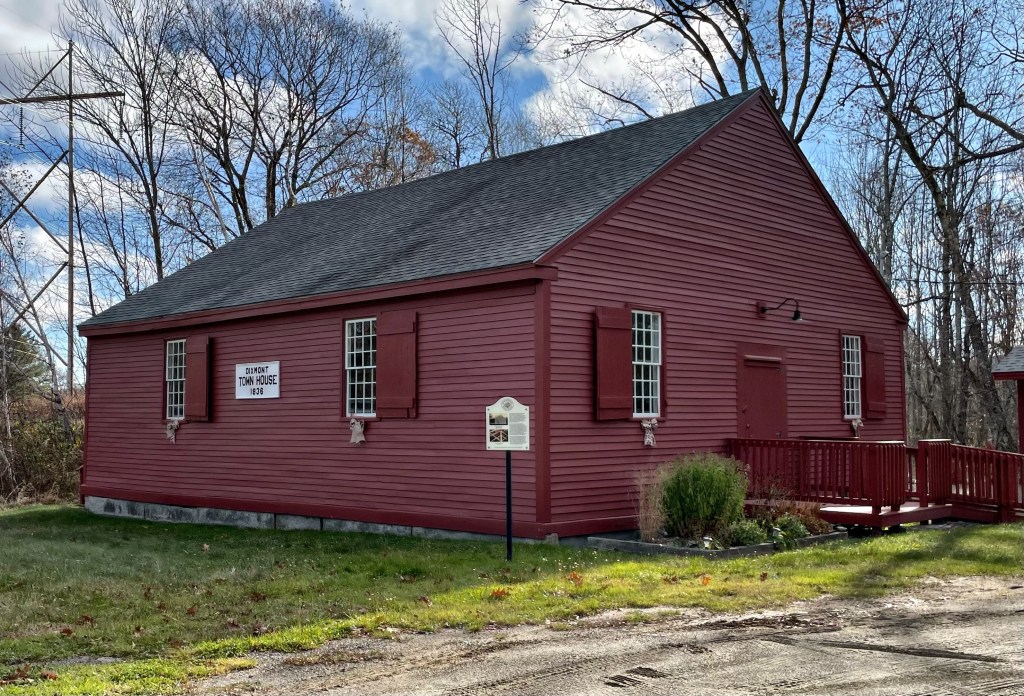
Dixmont, a small rural town in central Maine was originally originally a land grant by the Commonwealth of Massachusetts (of which Maine was then a part) to Bowdoin College, which sold the first settlers their land for profit to build on their campus. As a result, the town was originally called “Collegetown”, which was obviously short-lived. Dr. Elijah Dix (1747-1809) of Boston, who never lived there but took an interest in its settlement, encouraged others to settle there, and when the town was officially incorporated in 1807, it named itself after Dix, as Dixmont. A “malignant fever” broke out among the settlers in the early years, also killing Elijah Dix while in Dixmont on a trip there in 1809, he was buried in the Dixmont Corner Cemetery. Elijah was the grandfather of reformer and nurse Dorothea Dix. The early settlers had this Town House built in the center of the township around 1836 as a vernacular structure. The building (like many early town houses) was used for both secular and religious purposes. This small structure is one of the oldest surviving town houses in the state and served as the town government center until 1952 when it hosted its last town meeting. It was restored in the early 2000s and looks great!
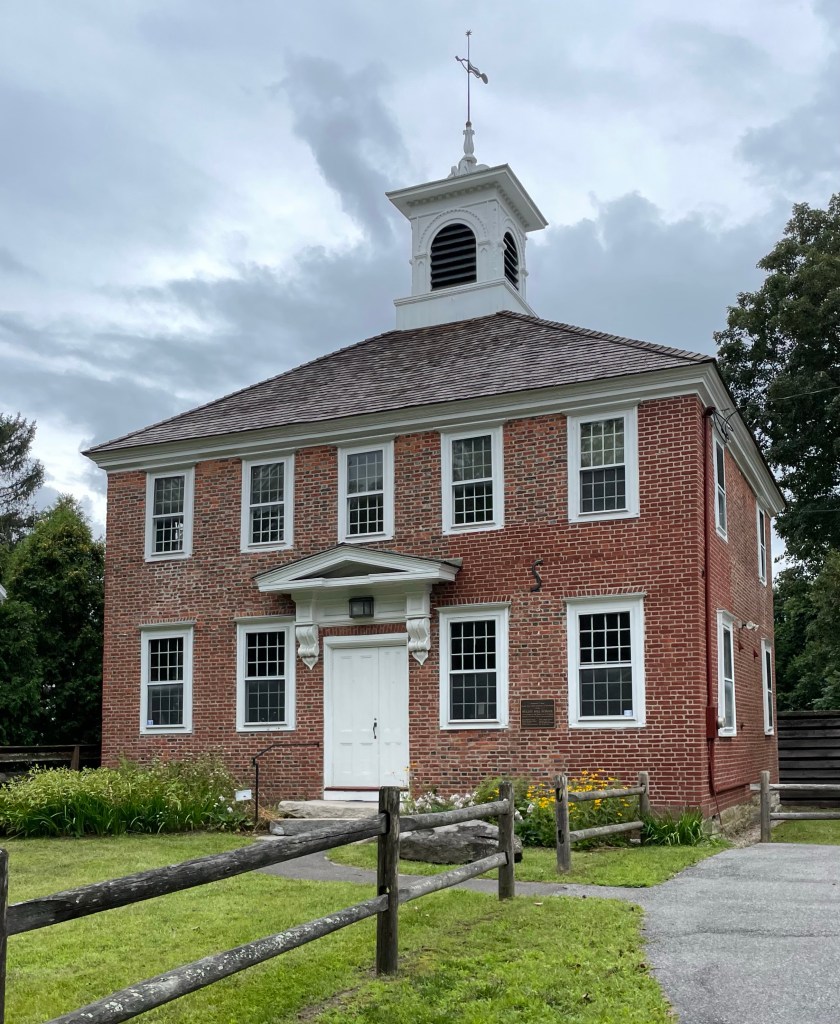
The Bullet Hill School, formerly known as the Brick School, is the oldest public building in Southbury, Connecticut and one of the oldest schoolhouses in America. Originally built in 1762 of locally made bricks, the two-story structure is a well-preserved example of a Colonial-era school building. Some sources date the building to 1790. The building remained in operation as a school for 179 years until December 1941 when the new Southbury Consolidated School, now Gainfield Elementary School, opened in January 1942. The Bullet Hill school is distinguished by its near-square proportions, locally made bricks laid up in Flemish bond, generous window sizes, and a hipped roof. The original cupola, now replaced, served as the model for Southbury’s 1977 Town Hall and other public buildings in town. Today, the former schoolhouse is maintained by the town and operated by the Historical Society as a living museum that is open for class visits and tours.
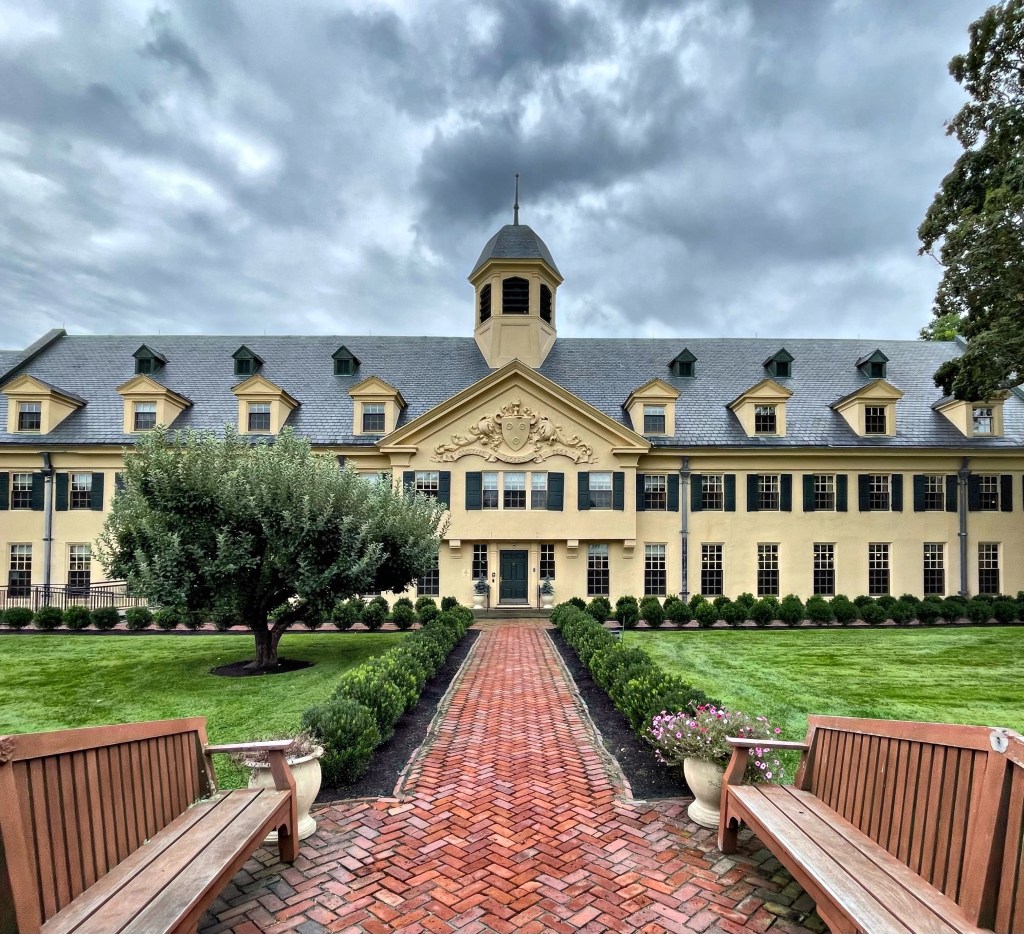
At the heart of the rural community of Middlebury, comprised largely of Connecticut farmers, far from the hustle and bustle of the world, Mary Robbins Hillard (1862-1932) sought to create a girls school to “provide young women with a liberal education in a community which would contribute to the development of their character, independence and sense of responsibility.” To accomplish this, they needed a school, and Mary hired her good friend (and architect) Theodate Pope Riddle to design the private girl’s school campus and main buildings on a site fronting the town green. The school opened in 1909 with125 pupils, slightly over capacity. For the design Theodate Pope Riddle – who was one of the first American women architects and a survivor of the sinking of the RMS Lusitania – took inspiration from English Arts and Crafts and historical precedence in English schools with large open courtyard plans. Originally finished in a gray stucco, the building enclosed a quadrangle at the rear. Inside, administration offices, reception rooms, living rooms, a library, gymnasium, chapel, dining rooms, infirmary, and (of course) classrooms lined the interiors on a closed loop to allow students and teachers access to all parts of the building without ever stepping outside in the cold New England winters. The Westover School remains active and one of the highest ranked private schools in the area today, and with a more cheery yellow coat!
WOW! Would you just look at this absolute stunner in Nashua? The town is not necessarily known for its historic architecture, but like most New England towns and cities, there are some amazing buildings to check out. This example, the James Tolles House, was built in 1890 and is one of the finest residences in the city. The stately residence was built for Mr. Tolles who served as Nashua’s 23rd mayor. The Tolles House stands out for the use of sandstone ashlar construction on the first floor with shingle siding above, carved terracotta panels, and a large, rounded corner tower capped with a domed copper roof. This one is pretty close to perfect!
Inspired by suggestions from books by Andrew Jackson Downing, the Gen. George Stark House is one of the finest dwellings in the Italian villa style in New Hampshire. Located on a triangular plot just north of Downtown Nashua, the house was built in 1856 by a man who, though then only in his early thirties, was one of New Hampshire’s most experienced civil engineers and surveyors, and was the superintendent of the Nashua and Lowell Railroad. General George W. Stark (1823-1892) was born in Manchester, N.H., and as a young man worked on surveys of the canals and factories being built in the late 1830s in his native city. In 1836, during the first days of railroading in northern New England, Stark was employed with the engineers who laid out the route of the Nashua and Lowell Railroad. He climbed the ladder, eventually working as treasurer and assistant superintendent of theHudson River Railroad, subsequently rising to the position of superintendent. He later became superintendent of the Nashua and Lowell Railroad, whose route he had helped to plan, and in 1857, at about the time he saw the completion of his Italianate villa, he became managing agent of the Boston and Lowell line. In the same year, he was commissioned Brigadier General of the Third Brigade of New Hampshire Militia, giving him his title, General. The Stark House was occupied by General Stark and by members of his family until the property was acquired by The First Church of Christ, Scientist, about 1928. Today, it houses offices but retains a distinct residential character regardless.






 Buildings of New England
