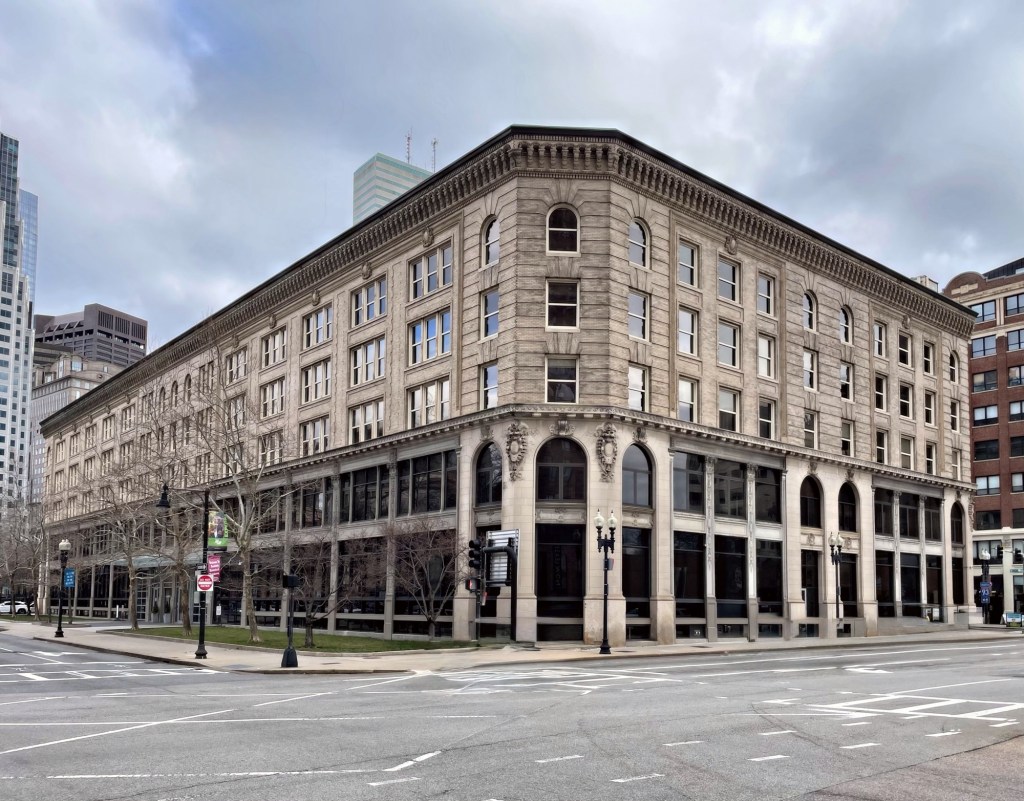
One of the last major 19th century buildings erected in Boston’s Leather District is also one of the finest examples of Beaux Arts architecture in the city. This is the Albany Building, built in 1899, and fills an entire city block. The Albany Building was designed by Peabody and Stearns and built by Norcross Brothers as the offices for the United Shoe Machinery Corporation. Its two-story base is adorned with swags and cartouches and its fifth floor is topped with a complex cornice. The use of beveled corners and ornate detailing break up the massing of the building which otherwise, would read like a box. The building today serves as an important visual gateway into the Leather District and its context of late 19th century commercial blocks centered around the leather and shoe manufacturing businesses.
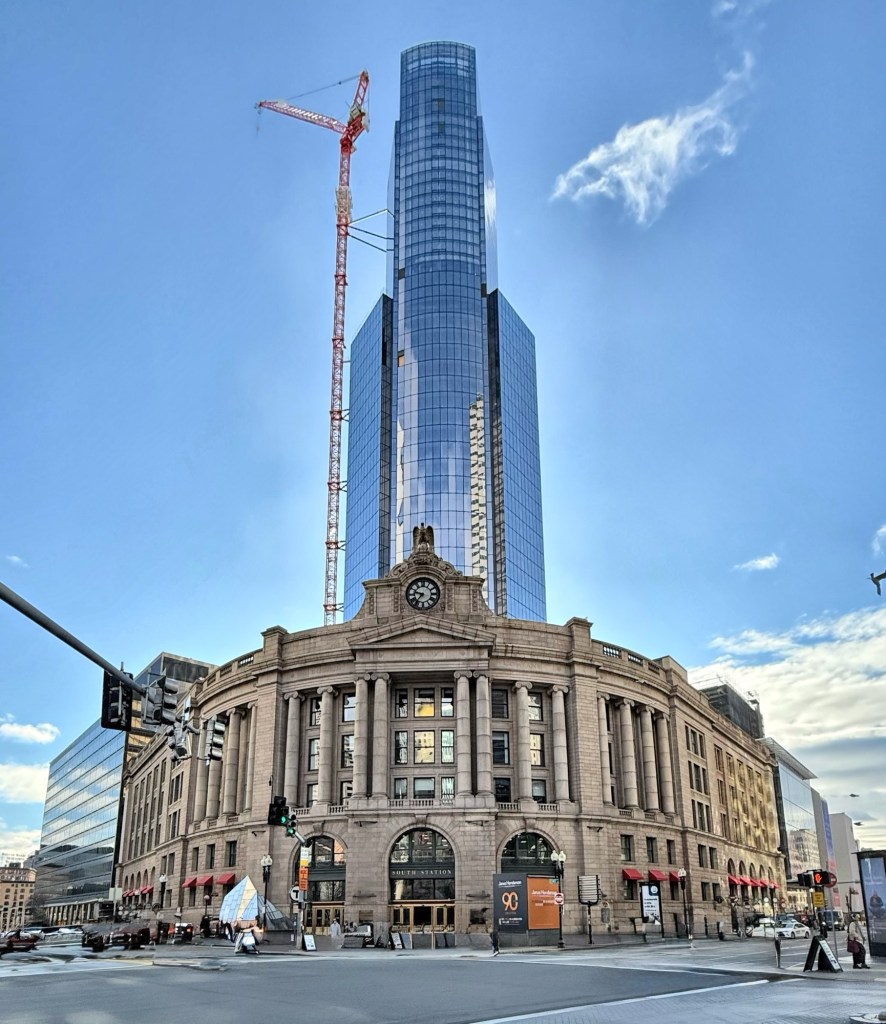
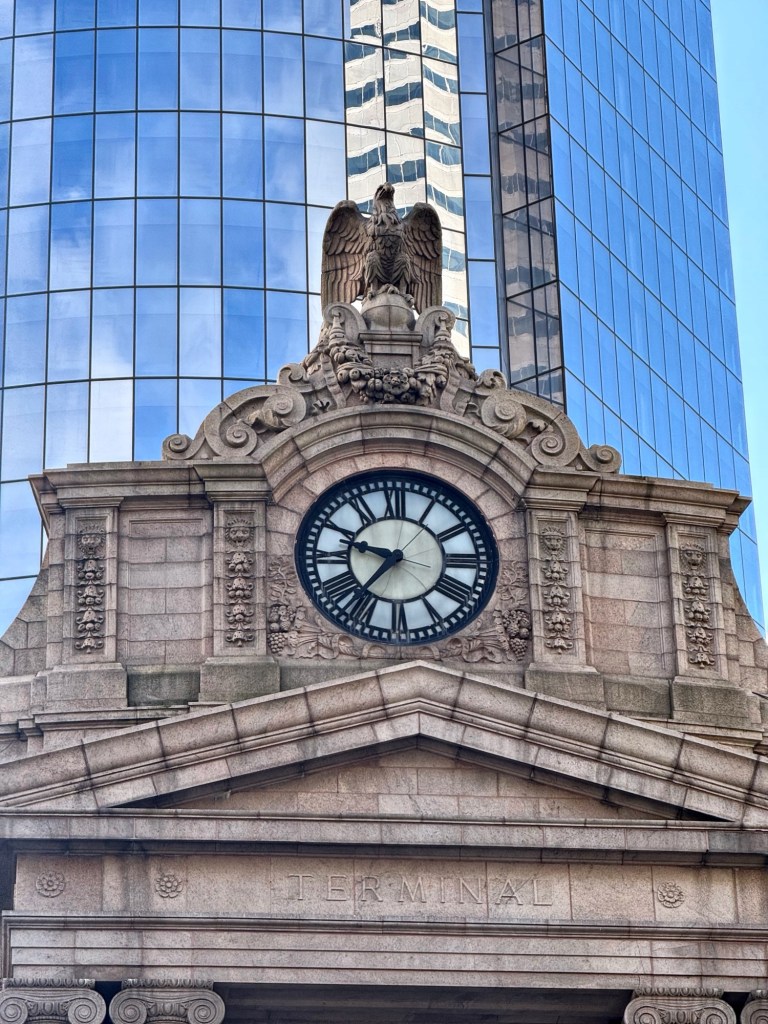
When the railroads serving Boston were first laid out and built, each line stopped at its own terminal which created a dysfunctional and cumbersome travel experience for those entering or leaving the city. The Boston Terminal Company, established in 1897, was charged with the task of consolidating service from the four terminals at a single terminal, a union station (similar to North Station), for routes south of the city. South Station was designed by architects were Shepley, Rutan and Coolidge of Boston and quickly became New England’s busiest transportation center. The five-story Classical Revival style station built of stone is an architectural landmark with three-story Ionic colonnade crowned by a clock surmounted by an eagle, stands above the triple-arched brick masonry lower level corner entrance. While the station handled 125,000 passengers each day during World War II, post-war passenger rail traffic declined in the US. South Station was sold to the Boston Redevelopment Authority in 1965 and (surprise!) they demolished portions of the building and later developed plans to demolish the rest of the station and replace it with a multi-use development including a new train and bus station with large parking garage. Luckily for everyone, the BRA failed in this endeavor and the building remained to the point where public transportation is again invested in and beloved and the building has since been restored. Recently, a glass “crown”, known as South Station Tower, a 51-story designed by Pelli, Clarke & Partners, with new office space, luxury residences, and a redesigned, arched interior concourse (which in my opinion, is the best part). The redevelopment is a push towards transit-oriented development and blends new and old in an innovative way.
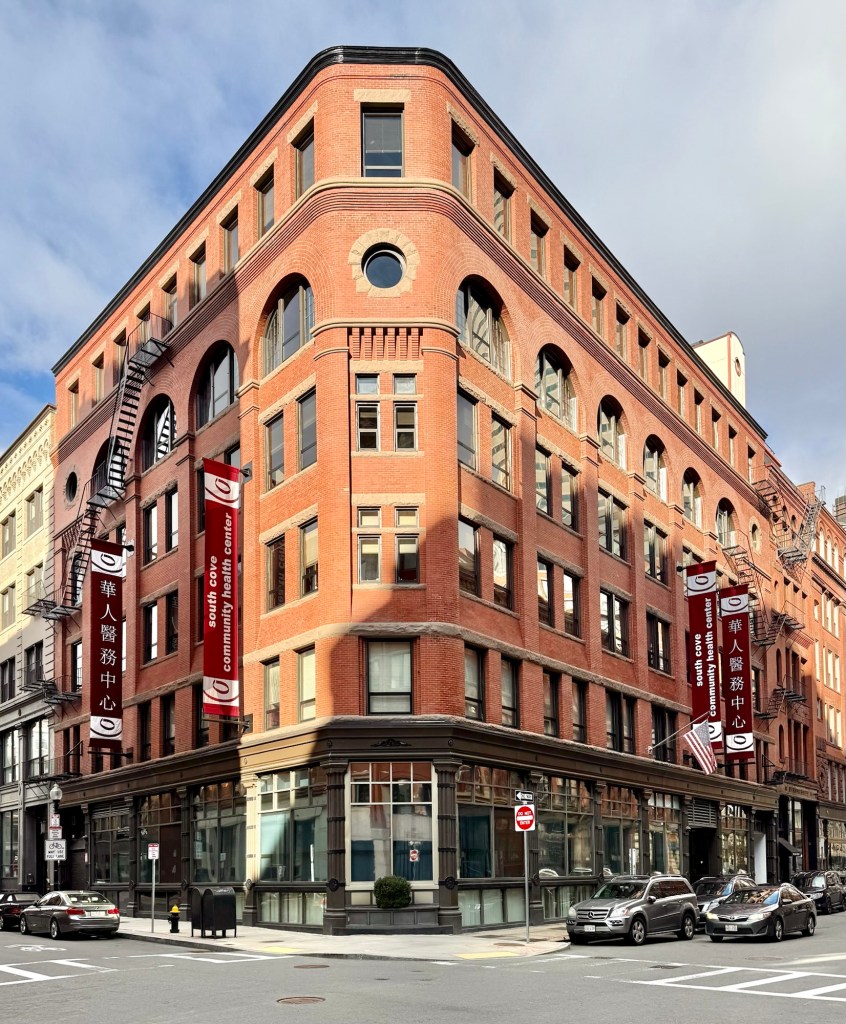
This impressive commercial block is prominently sited at the corner of Beach and South streets in Boston’s Leather District, a wonderful enclave of late 19th and early 20th century mercantile buildings, historically centered around the leather and shoe-making industries. Like many in this block, the building was developed by the Faxon Brothers, some of the major developers of this district and areas of Quincy. Also like many other buildings in the Leather District, the block was designed by 1886 in the Romanesque Revival style, constructed of brick and brownstone with a clipped corner and Syrian arches and an oculus window at the fifth floor. The building was designed by relatively unknown architect, John H. Besarick and today houses professional offices.
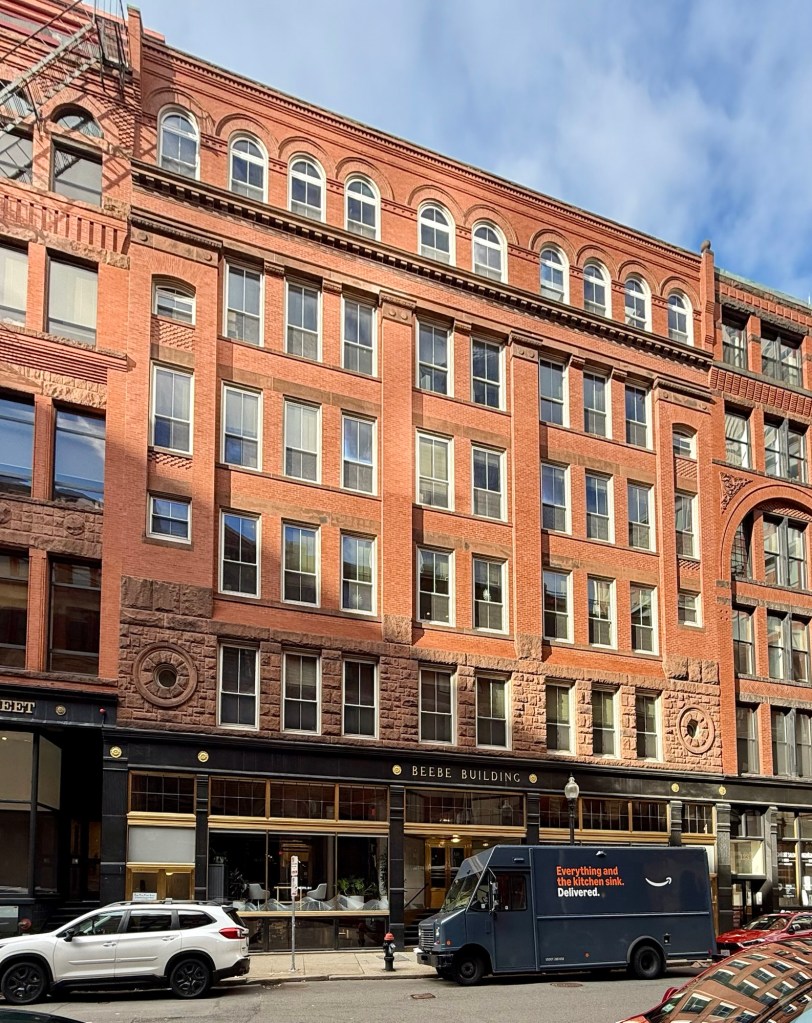
Located at 127-133 South Street in the under-appreciated Leather District of Boston, the 1886 Beebe Building is an excellent vestige of the leathergoods trade and commercial architecture of the late 19th century. This building was constructed by J. Franklin Faxon (1832-1912), a business owner who engaged in real estate development and built a number of commercial blocks in this part of Boston. Rand & Taylor, architects, designed the building in an effective blending of Classical and Romanesque styles with rock faced brownstone ashlar above the storefronts, oculus windows, and segmental arched openings on the top floor. The Classical detailing of the two-story brick pilasters and modillion cornice add to its complexity. The building was originally occupied by the Thomas E. Proctor Leather Company and was later purchased by leather goods company Lucius Beebe & Sons and the storefront was renovated by Hutchins & French in 1930. The building has since been known as the Beebe Building and has been well-maintained by subsequent owners.
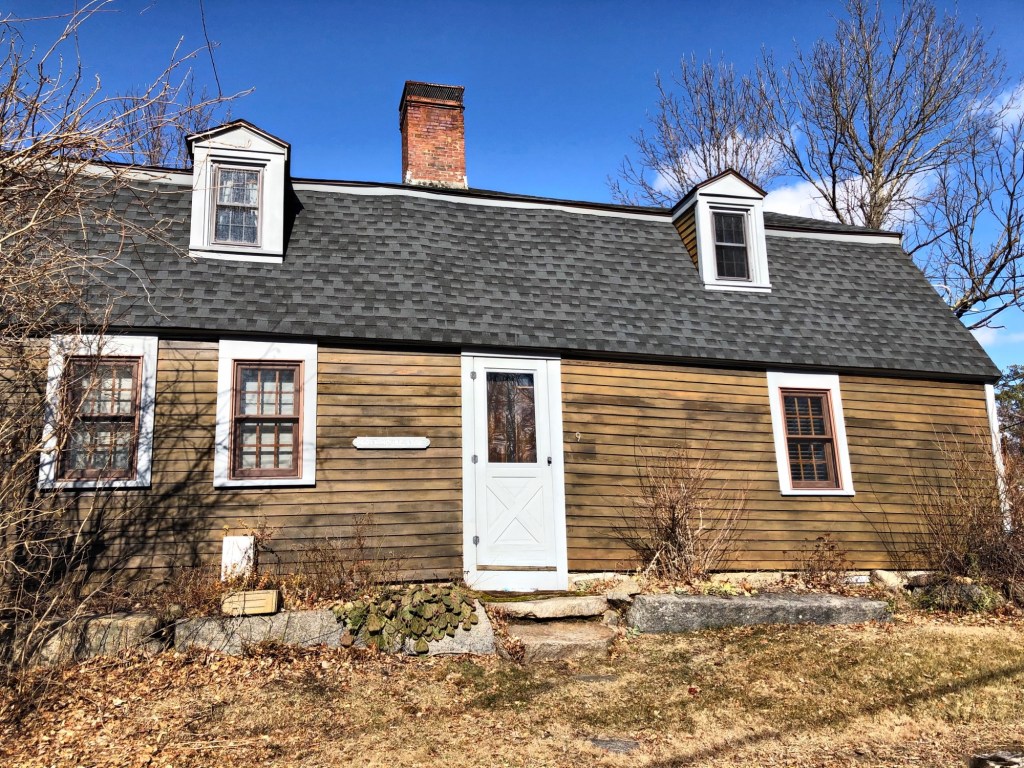
The General Israel Putnam Housein Danvers, Massachusetts, was built circa 1648 by Lieutenant Thomas Putnam on farmland that then consisted of 100 acres. In 1692, his youngest son, Joseph Putnam, lived here, inheriting the property over his half-brother, Thomas Putnam, Jr. (1652-1699), causing friction within the family. During the infamous witch trials and hysteria in Salem Village, Joseph Putnam was one of two people who took notes during the examinations of the first three to be accused of witchcraft in 1692 – Sarah Good, Sarah Osborne, and Tituba. From that point forward, he was one of the most outspoken opponents of the proceedings, which put him in direct conflict with most of the Putnam family, especially that of his half-brother Thomas. Fearing accusations against him by his half-brother, Joseph was said to have kept horses saddled at all times, ready to escape at a moment’s notice. He was never accused, though Thomas Putnam was responsible for the accusations of 43 people, and his daughter was responsible for 62. In 1718, Israel Putnam, the son of Joseph Putnam, and later Commander of the colonial troops at the Battle of Bunker Hill, was born in this house. It is the only extant structure with direct ties to Commander Putnam. During the Battle of Bunker Hill, Putnam is thought to have ordered William Prescott to tell his troops, “Don’t fire until you see the whites of their eyes.” This command has since become one of the American Revolution’s notable quotations. It was given to make the best use of the low ammunition stocks that the troops had. The Putnam House remained in the family into the 20th century, and due to highway and commercial expansion, the property now sits in the middle of a cloverleaf intersection of two highways. The house was given by the Putnam family to the Danvers Historical Society in 1991, but as of 2020, the Putnam family once again owns the property. The house is not holding up well and I could not locate plans for restoration or preservation of it online. This house deserves to be preserved.
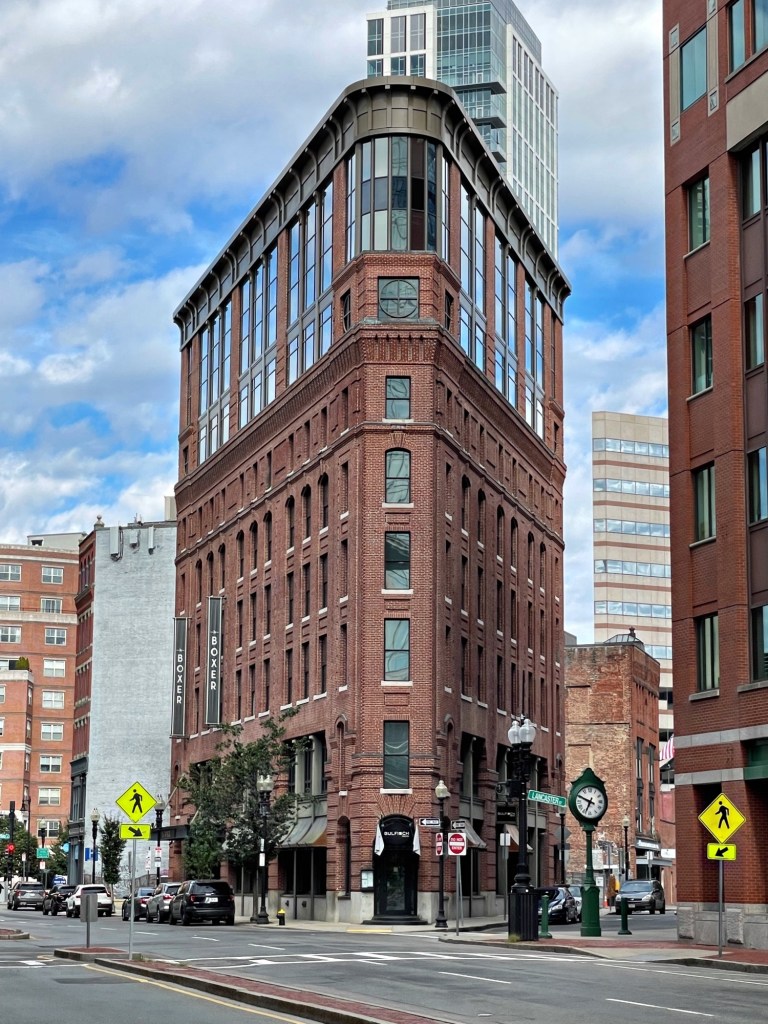
The interesting street-layout of the Bulfinch Triangle area of Boston created some oddly shaped triangular building lots which for decades, saw only small, modest wood-frame structures built upon them. By 1900, Boston’s own Flatiron Building (built two years before New York’s more iconic example) was constructed on this site and it has been an icon ever since. The structure was built by ownerCharles Pelham Curtis III (1860-1948), who was born in Boston and graduated from Harvard Law School and became a police commissioner and attorney in the city before moving into real estate development. He hired architect Stephen Codman to design this commercial block, which was rented out to local businesses and professional offices. The building has been home to a hotel for a number of decades, with a major renovation undertaken beginning in 2000, 100 years after the building was constructed. Three floors were added to the top of the original six-story, which are Modernistic in design with large expanses of windows within three center bays that align with the bays of the original building and which are defined by brick piers. The hotel today, The Boxer Hotel, perfectly blends the history of the building with modernity and style. What a gem of a building!
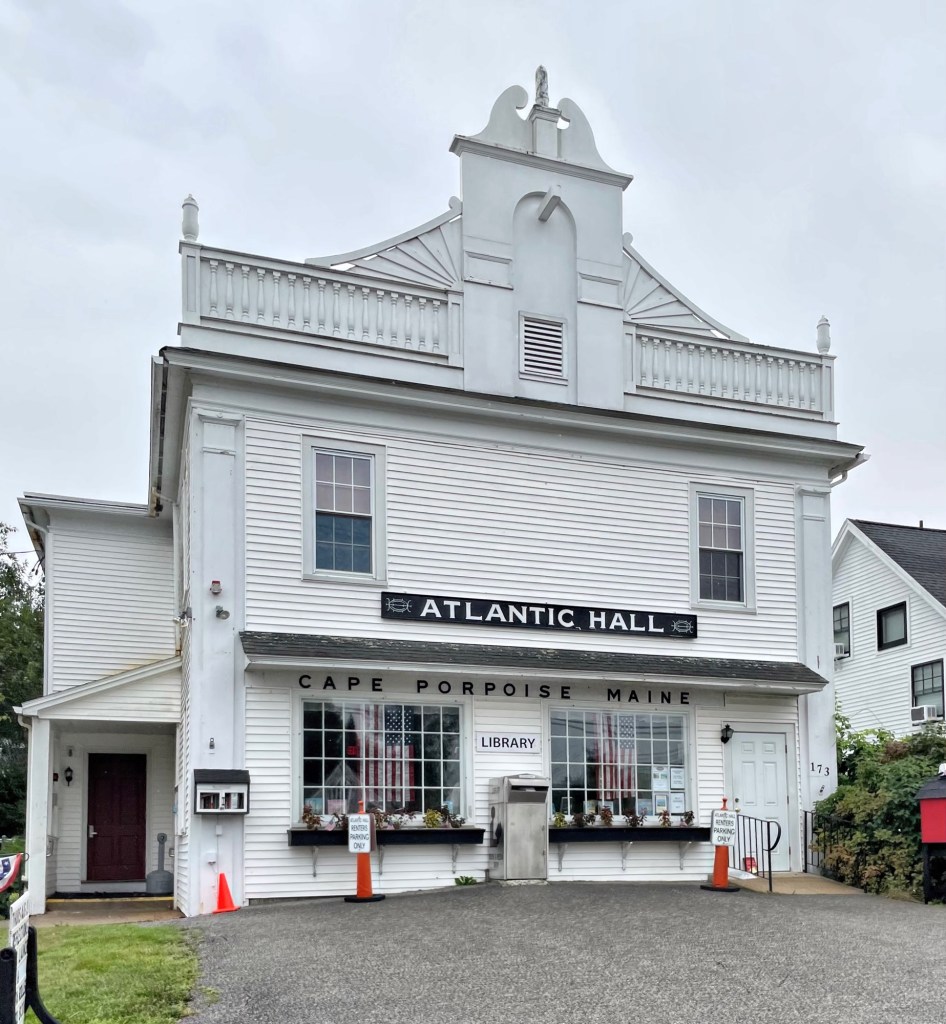
Atlantic Hall is one of the most iconic buildings in the well-visited town of Kennebunkport, Maine. The landmark structure was completed in 1920 as a volunteer fire station, by the Atlantic Hose Company. The volunteer fire-fighting company was founded in April 1906, and different members kept different parts of fire fighting equipment in each of their barns without a consolidated station. With the advent of the automobile, the community raised funds and purchased a Chevrolet hose truck, but had no station to put it. Without having the town pitch in money, residents (both permanent and summer “rusticators”) donated funds and a central location in Cape Porpoise was selected as a site for the new station. Construction started on a modest building in 1914, but was halted during WWI. After the war, local resident, Marion Goodall Marland hired the well known firm of Kilham, Hopkins and Greeley to furnish updated designs for the station, in a more elaborate version of the Colonial Revival style, fitting for the charming town. The building opened in 1920 with an engine room at the first floor and a meeting hall on the second floor. It was in 1958 that the Atlantic Hose Company outgrew its station at Atlantic Hall, and a new fire house was built across the street. Atlantic Hall was renovated for library and event use and has remained a significant piece of Cape Porpoise ever since!
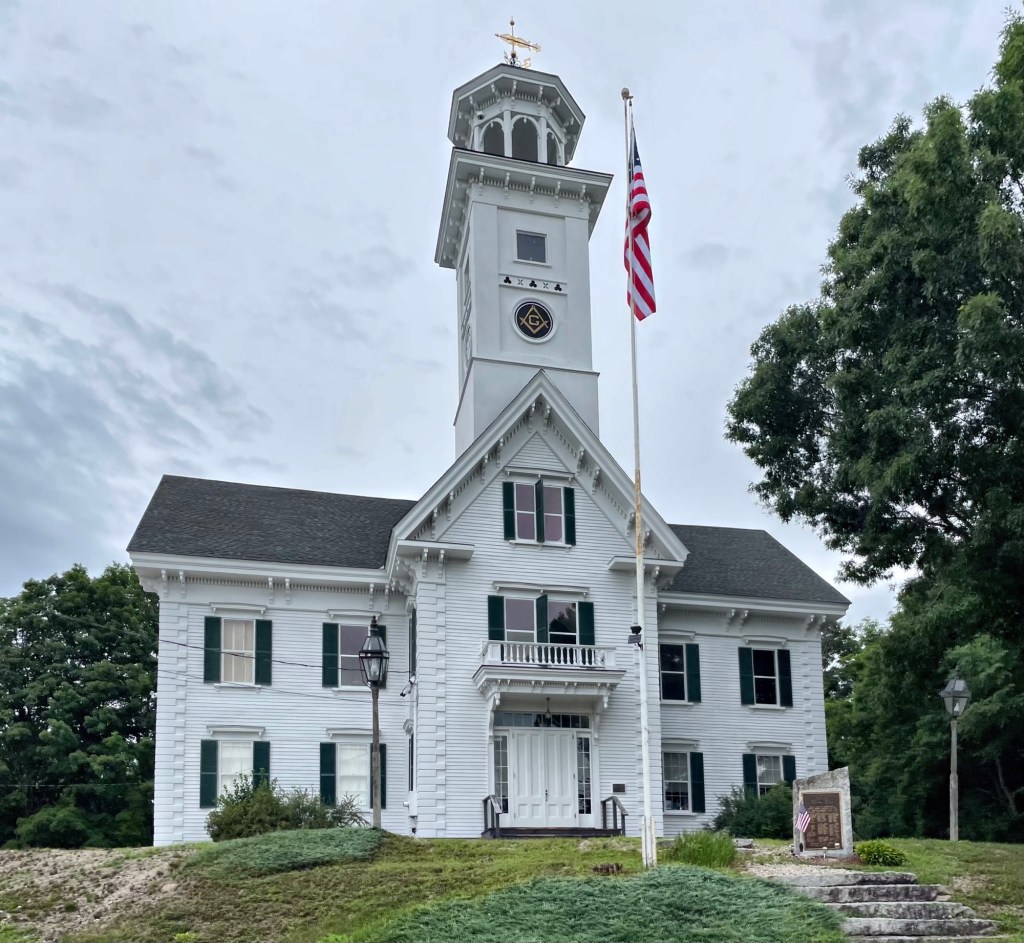
The New England Masonic Charitable Institute building is located in Center Effingham, New Hampshire, and is among the rural town’s most impressive structures. The structure was built in 1858 by the Charter Oak Lodge No. 58 of Free and Accepted Masons as a school to educate orphans of Masonic members, but they also admitted local students. It is the only known school building purposely constructed by Masons in the United States. Classes were conducted from 1861 to roughly 1882 with students boarding with local families. The impressive Italianate style building is dominated by a six-story bell tower supporting an octagonal cupola, and exhibits many architectural details including the corner quoins, paired eave brackets, and dentilled cornice. Charter Oak Lodge No. 58 sold the building to the Town of Effingham in 1891 for one dollar but retained rights to the second floor temple room in perpetuity. The walls and ceilings of the Lodge’s temple space are covered with trompe l’oeil murals attributed to Massachusetts painter Philip A. Butler. Images of classic sculptures, architectural details and Masonic symbols, including the All-Seeing Eye, are incorporated into the paintings. Heavily water-damaged in the late 1980s, they have since been restored. The building remains occupied by the Effingham Public Library, what a library building for a town of just 1,700 residents!
Abraham Malcolm Sonnabend was born in Boston on December 8, 1896, the son of Esther and Joseph Sonnabend. Sonnabend graduated from Harvard College in 1917 in order to enlist at the outbreak of the Great War. At the end of World War I, Sonnabend joined his father’s real estate organization. He married Esther Lewitt in 1920, and by 1927, he had increased his real estate holdings to a net worth of $350,000. Just before the 1929 stock market crash, Sonnabend hired Boston architect Sumner Schein to design this Tudor Revival style home, on a site formerly occupied by a larger Queen Anne style residence. Built in 1928, the Tudor Revival house features clinker brick walls with cast stone trim and a two-story castellated bay all capped by a slate roof. The enterprising A. M. Sonnabend would eventually outgrow this modest Tudor home after he got into hotels as investments. In 1944, Sonnabend (with seven partners) acquired a package of Palm Beach, Florida hotels for $2.4 million including the Biltmore, Whitehall and the Palm Beach Country Club. He would sell the Biltmore to Conrad Hilton for a massive profit. In 1956, Sonnabend created the Hotel Corporation of America (HCA) and grew the business to new heights. The 1928 Sonnabend House is significant architecturally and as the first purpose-built property by the late-developer.
This Federal-style house sits on the heavily trafficked Pompey Hollow Road in the center of Ashford, Connecticut. Early history of the residence is sparse, but by the 1860s, it was the home to Charles Mathewson (1812-1880), who came to Ashford from Woodstock in 1850 and bought a saw and grist mill nearby. The mills were operated here until 1865, when he was succeeded by the firm of Lombard & Mathewson, manufacturers of fertilizers and wholesale dealers in agricultural implements. After successive ownership, the property, which included a 135-acre farm, was purchased by the Catholic Diocese of Hartford in 1921 with the intention of establishing a new parish in the Ashford area. The Diocese assigned Father William J. Dunn, a Connecticut native and son of Irish Immigrants, to this daunting task. Since they had no church building, he partitioned off a section of his own home to serve as a chapel for about 100 worshipers, until the purpose-built St. Philip the Apostle Church was built in the 1930s. The Federal style house here has an elaborated center bay which includes the entrance on the first story and a Palladian window on the second story. The main entrance is flanked by pilasters with Doric capitals which are replicated at the corners of the residence as well.
In 1896, Edward L. Bailey, a carpenter and housebuilder, erected this cottage on Haven Avenue in Rockport, Massachusetts. Bailey resided in the house, likely year-round and ran a store on the nearby main street. His cottage served as both a residence and an advertisement for his skilled carpentry, which likely offered him commissions for other cottages nearby. Bailey was also selected as the builder for the town’s Carnegie Library in 1907. The cottage blends Queen Anne and Shingle styles effectively under one roof.
Halibut Point State Park in Rockport is one of the most enchanting places in Massachusetts and it has so many layers of history! Before white settlement, Halibut Point was used seasonally by the Pawtucket people who came to harvest its wild fruits, fish and game on the land. In 1702, Samuel Gott (1677-1748) purchased eight of the 6-acre lots on Halibut Point. At the time, there were no roads to Halibut Point, but Samuel built this house on the land, and he began to farm here. The property passed down the family line and was later owned by Joshua (1754-1846), who came of age just as the War for Independence began. Joshua enlisted with the Revolutionary Army as it was being formed in Boston, and in 1776, he joined General Washington’s forces in the unsuccessful defense of New York. He returned home to lead a long and useful life as farmer and fisherman and was known as Captain Gott. As of the 2010s, the property remained in the same family, handed down through the generations from Samuel Gott over 320 years to today. How cool!
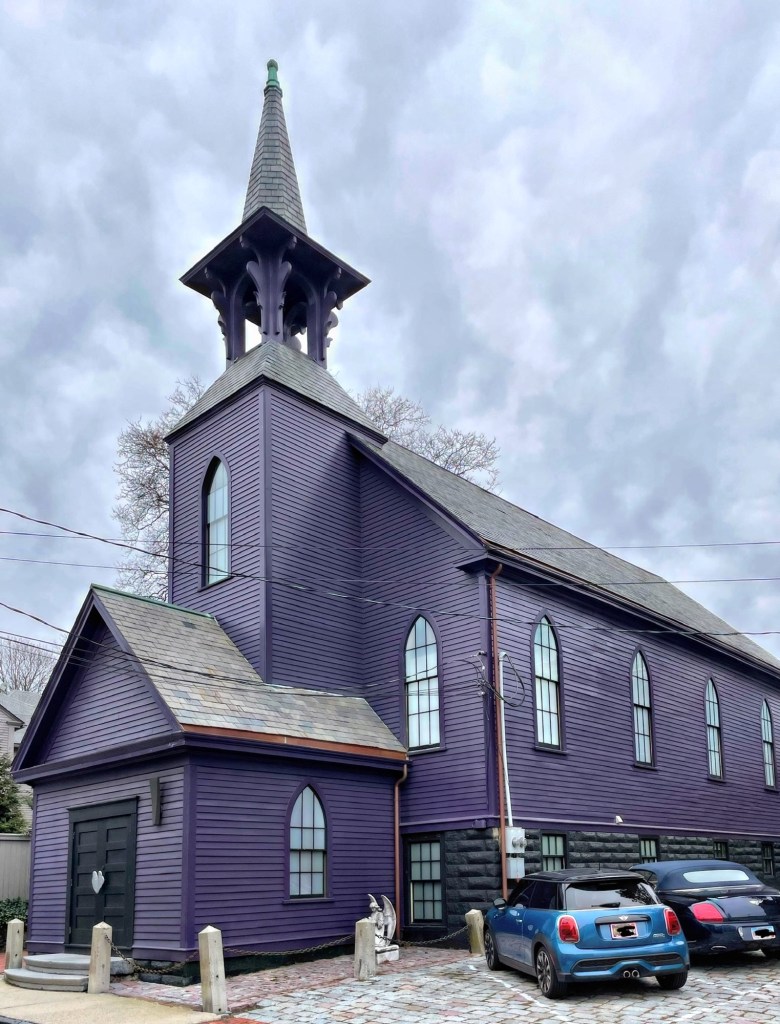
By the end of the 19th century, the summer colony of Newport, Rhode Island continued to see the erection of large summer cottages which required large staffs to maintain them. Scandinavian girls were preferred by the wealthy residents for maids and drivers, and beginning in the 1870s; they joined other ethnic groups, such as the Irish in establishing their own communities in the coastal city. In 1892, organized under the New York Conference of the Augustana Synod, a Lutheran Church for Swedish-speaking residents was established. A small lot on Corne Street was purchased and work began on this small wood-framed church. Completed in 1896, the church was designed by by architect James W. Smith in the Gothic Revival style. It has a central bell tower and a spire and the interior of the church originally had an hourglass pulpit. Gold and white decorations surrounded an oil painting of the risen and ascending Christ. In the 1950s, the congregation purchased land on Broadway in the north end of Newport and built St. Peter’s Lutheran Church. The Corne Street church was sold and is now a private residence.
New Haven, Connecticut is known for its Gothic and Modernist architecture, but as it is located in New England, some good Colonial Revival architecture is not hard to find! The New Haven Museum building on Whitney Avenue was built for the New Haven Colony Historical Society, which was established in 1862 to collect, preserve, and publish historical matter related to the history of the greater New Haven community. The Society was housed in various locations around the city throughout the 19th century until 1929 when it relocated to its present building designed by J. Frederick Kelly, a noted colonial revival architect. The symmetrical building with its eleven-bay facade is notable for its arched recessed portico and rooftop cupola. The building remains occupied by the New Haven Museum to this day.
As Yale’s 1842 Old Library was outgrown by larger class sizes and a growing college library collection, overseers began planning for a new library annex which could support the programming. Architect J. Cleaveland Cady was commissioned to design the Chittenden Memorial Library, this underappreciated structure, which is today hemmed into a cramped space in the yard between a later addition (Linsly Hall) and McClennan Hall. The Chittenden Memorial Library was a gift to the college by U.S. Representative Simeon Baldwin Chittenden in memory of his only daughter, Mary Chittenden Lusk (1840-1871) nearly two decades following her untimely death. The handsome Richardsonian Romanesque style library building also retains its original stained glass window titled, “Education” by Louis Tiffany which today is in the building’s former reading room, now a large classroom. When the library moved to a new building in the 1930s, Chittenden Memorial Library became Chittenden Hall and is classroom space.