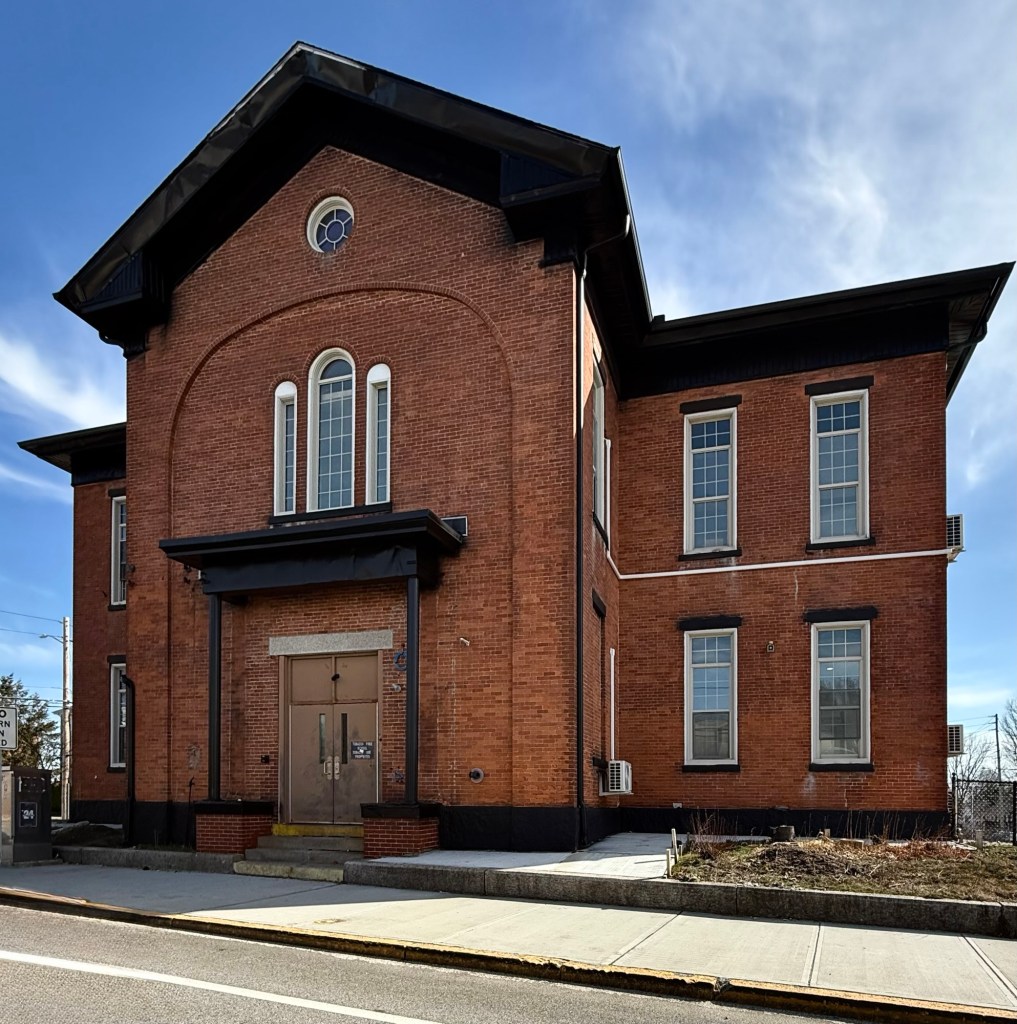
Knox County Courthouse // 1874

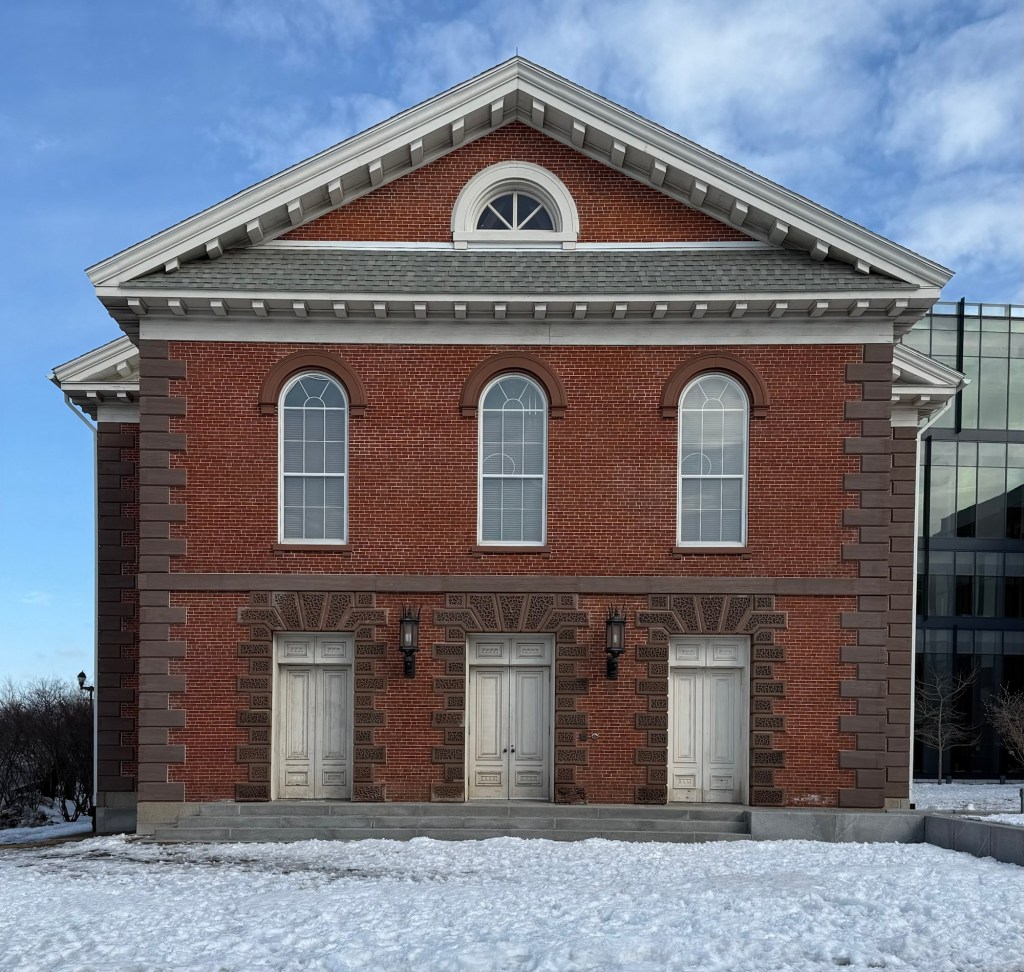
The Knox County Courthouse stands in Downtown Rockland, Maine, and is a landmark example of a Civic building constructed in the Italianate style. Knox County was separated from adjacent Lincoln County in 1860, with the coastal city of Rockland established as its county seat. For its first fifteen years, county offices were dispersed amongst buildings until in 1874 when the county retained Boston architect Gridley James Fox Bryant to design the present building. The building was constructed at a cost of $83,000, well over the anticipated $50,000 cost, and opened in 1875. The first floor accommodated all the county offices, with fireproof storage areas for records. The second floor was be taken up by the courtroom, and at either end were rooms for judges, jury and counsel.

Pennell Institute Building – Gray Town Hall // 1886

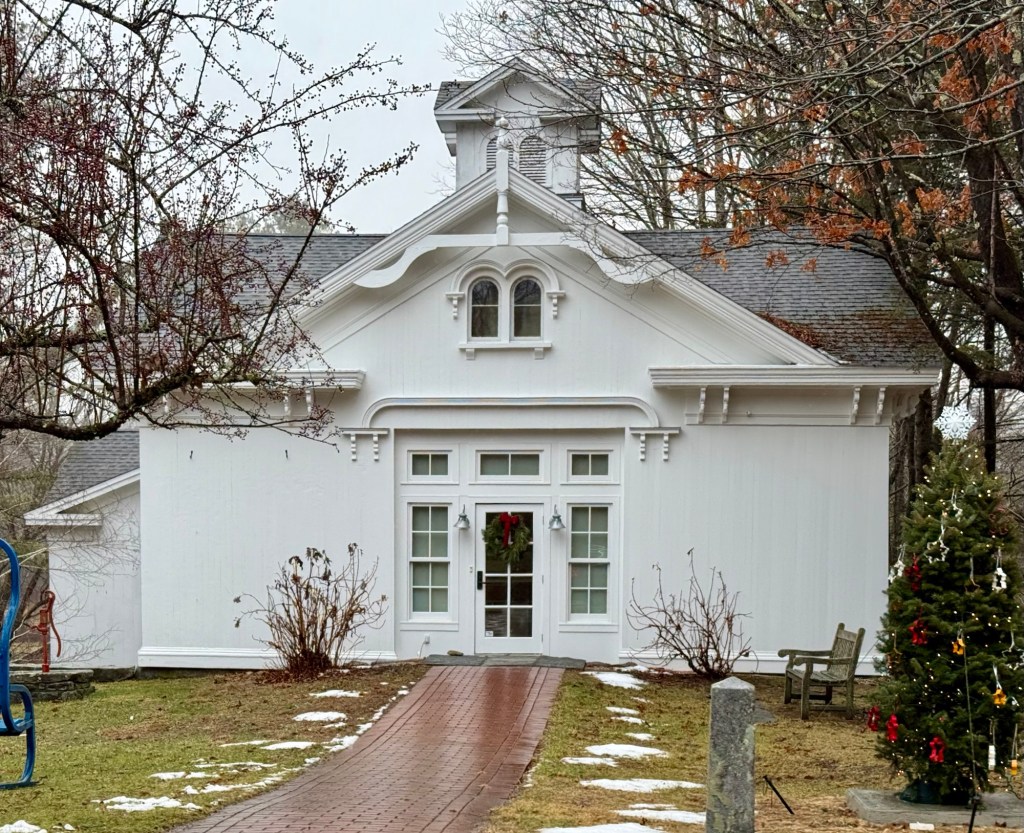
The Pennell Institute was built in 1886 as a privately funded, public school for the town of Gray, Maine. By 1870, Gray High School was located in the former Town Hall, and due to increased enrollment and ever-cramped quarters, demand for a standalone school was of grave importance. As a result, local resident Henry Pennell decided he would help his hometown. Henry Pennell (1803-1884) as a young man, worked as a butcher and traveled to Portland to sell his cuts of meat, later buying and selling livestock. After the Civil War, he dealt in real estate and mortgages, was sheriff of Cumberland County (1857-1858) and served in the State Senate (1872-1873), and became the richest man in the town of Gray. Mr. Pennell, who himself, never had received much formal education, saw the value in it for the youth of the town. Construction started on the school in 1876, where the foundation was laid, but it would take ten years until after the death and bequeathing of his estate in his will, that the building would be completed in 1886. Henry Pennell left the town the school building, the lot it stood on, a trust fund of $25,000 for the school’s general expenses, and a special fund of $5,000 for the library and for laboratory equipment and supplies. The school closed with students educated at a larger, modern building. After disputes between the Town of Gray and the local school district, the building has now been home to the Gray Town Hall, with the town clearly showing pride in their Italianate style building.

Loerzel Beer Hall // 1873

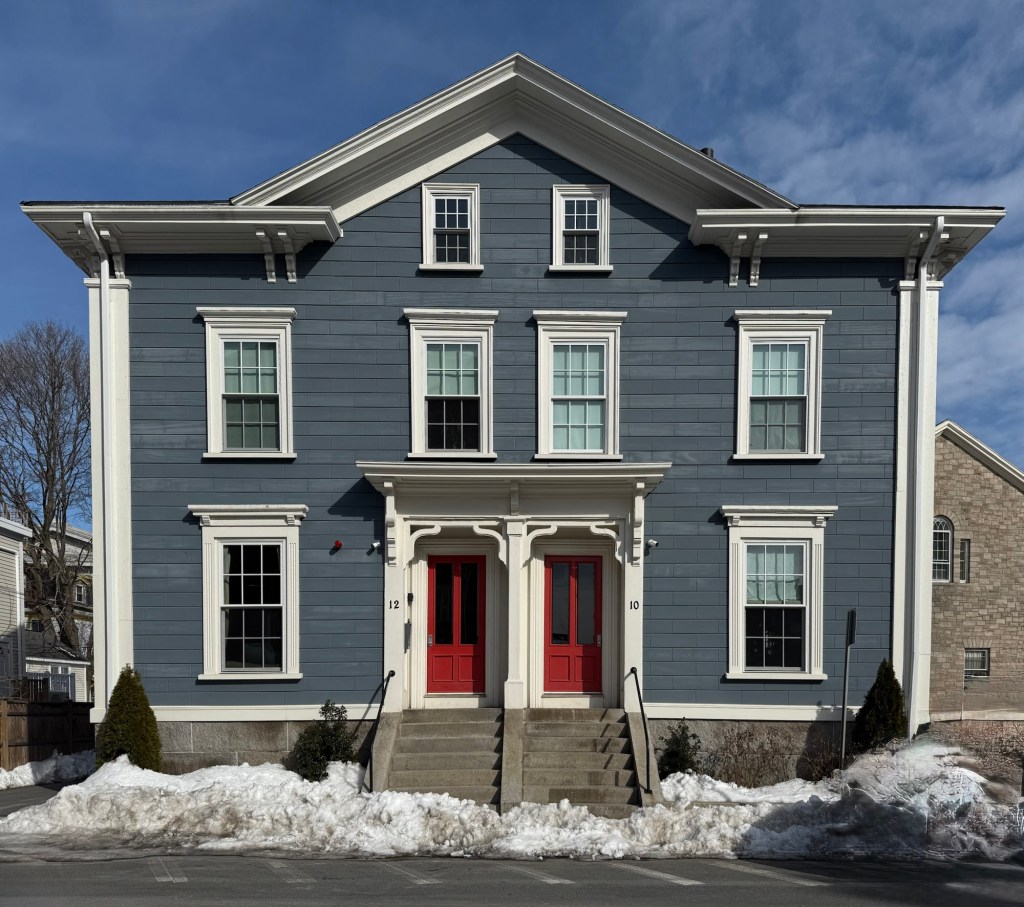
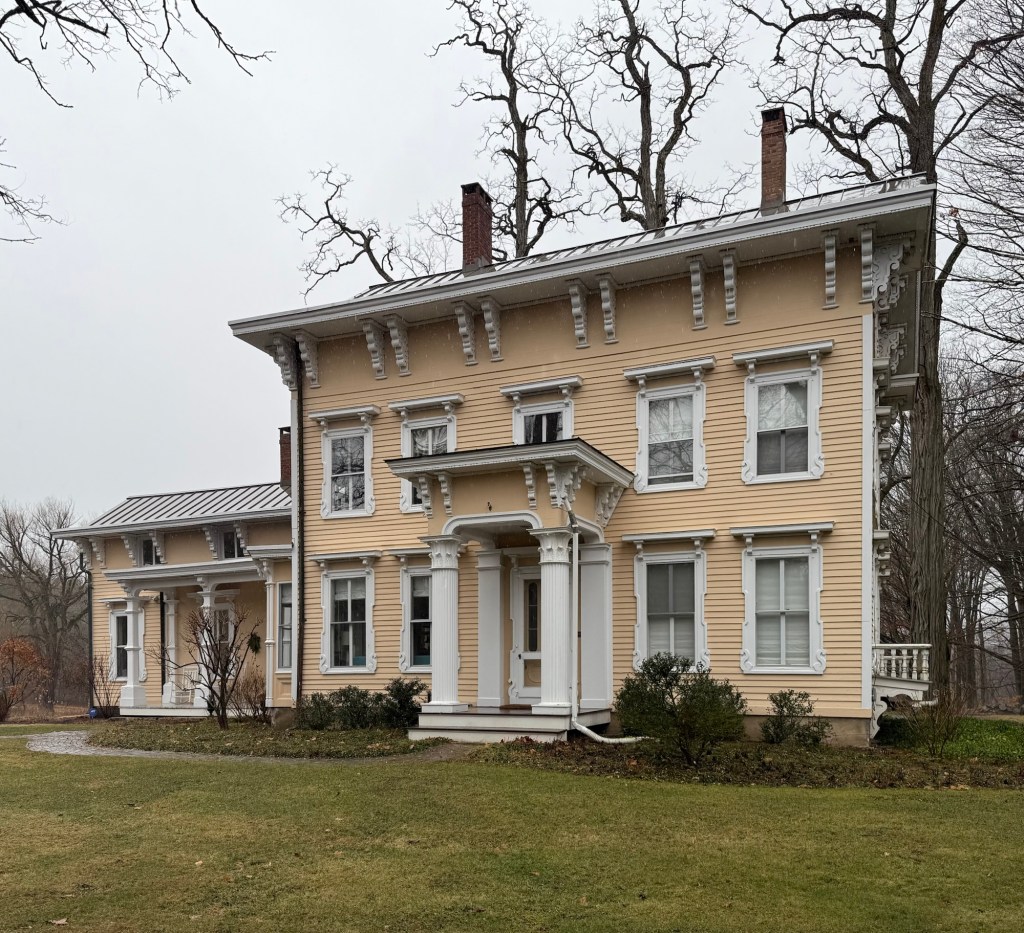
The Loerzel Beer Hall was built in 1873 in Saugerties, New York and is an important historical and architectural landmark in the Hudson Valley town. Operating independently as a brewery and beer hall by German immigrant Lorenz Loerzel (1821-1878), and later by his family for thirty years, the handsome Italianate style building became a popular meeting place for socialization and community for many immigrants who arrived to the town of Saugerties for work. The beer hall remained in operation until Prohibition in 1920. The building appears to now be occupied as apartments.

Highgate Union Methodist Church // 1868

The Highgate Union Methodist Church in Highgate, Vermont was built in 1868 and is a high-style example of the Italianate architecture style in a relatively quiet part of the state. Built of brick, the church’s form is typical for small Vermont churches in the third quarter of the nineteenth century. Here, however, the builders were conscious of Italianate fashion, and they applied its round and segmental arches, corbels, and brackets, painted in a lighter color, with consistency and to remarkable effect.

Hall’s Block // c.1883

This diminutive commercial block sits on Water Street in Warren, Rhode Island while small in size, packs an architectural punch! The late-Italianate style wooden block exhibits its original wooden storefronts, second floor round arched windows with stained glass, and ornate detailing including the brackets, parapet and period-appropriate paint colors which allow those details to pop. The shop was owned in its early days by the Hall family, who sold drygoods. Later, the building was used as an antiques shop on the ground floor with a studio for author and illustrator, David Macaulay on the second floor. These types of smaller-scale commercial spaces are some last remaining (relatively) affordable spaces for small businesses to operate. So lets make sure we

General George Stark House // 1856

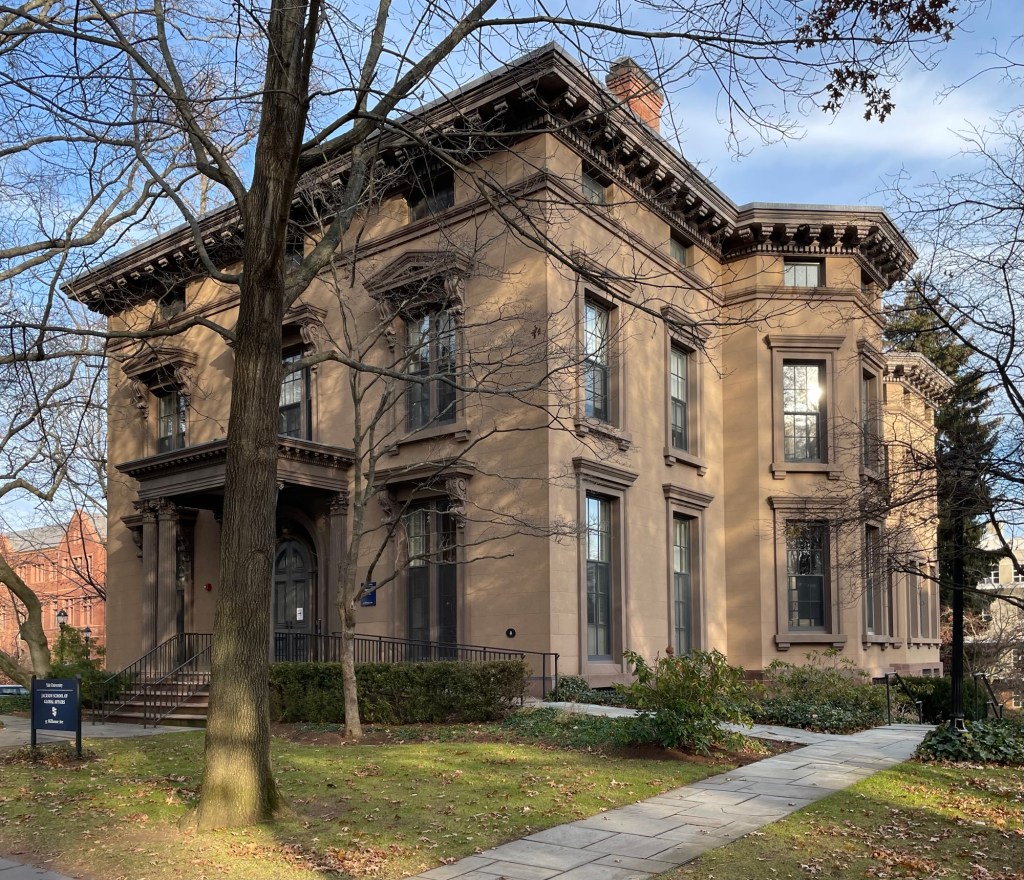
Inspired by suggestions from books by Andrew Jackson Downing, the Gen. George Stark House is one of the finest dwellings in the Italian villa style in New Hampshire. Located on a triangular plot just north of Downtown Nashua, the house was built in 1856 by a man who, though then only in his early thirties, was one of New Hampshire’s most experienced civil engineers and surveyors, and was the superintendent of the Nashua and Lowell Railroad. General George W. Stark (1823-1892) was born in Manchester, N.H., and as a young man worked on surveys of the canals and factories being built in the late 1830s in his native city. In 1836, during the first days of railroading in northern New England, Stark was employed with the engineers who laid out the route of the Nashua and Lowell Railroad. He climbed the ladder, eventually working as treasurer and assistant superintendent of theHudson River Railroad, subsequently rising to the position of superintendent. He later became superintendent of the Nashua and Lowell Railroad, whose route he had helped to plan, and in 1857, at about the time he saw the completion of his Italianate villa, he became managing agent of the Boston and Lowell line. In the same year, he was commissioned Brigadier General of the Third Brigade of New Hampshire Militia, giving him his title, General. The Stark House was occupied by General Stark and by members of his family until the property was acquired by The First Church of Christ, Scientist, about 1928. Today, it houses offices but retains a distinct residential character regardless.

Former Green Mountain Seminary // 1869

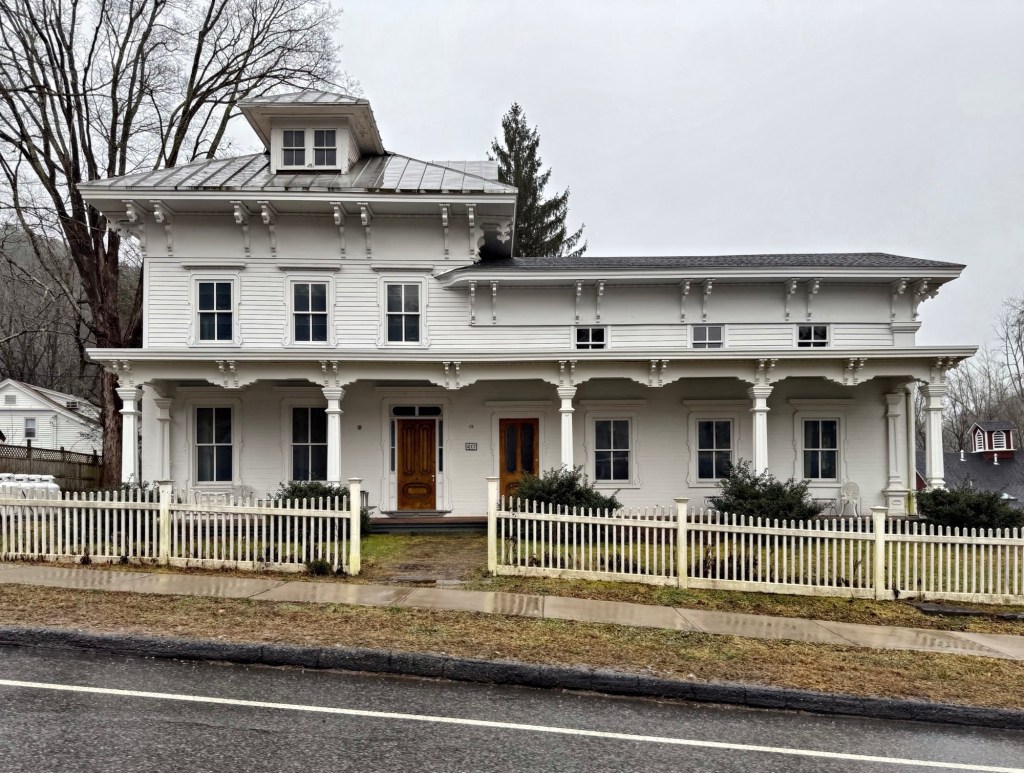
The Green Mountain Seminary building in Waterbury Center, Vermont was built in 1869 as a co-educational Free Will Baptist school. The building is one of the largest and grand examples of Italianate architecture in this part of the state. As originally laid out, the lower two floors were used for educational purposes and included a chapel, while the third floor and attic level were used for men’s housing. Here, men would be trained to be Baptist priests. Upon opening, a catalogue expressed the building’s rural location in the town as a benefit, stating “It is removed from the bustle and distraction of large commercial villages; is free from the haunts of vice and dissipation or temptation to idleness; and is surrounded by natural scenery unsurpassed in its magnificence and grandeur.” The building went through a variety of educational and boarding uses until 1895, when it was deeded to the town for use as a public school building. The building is nearly unchanged as when it was built in 1869, besides the removal of the rooftop belvedere and walkway in the 1940s.

Dike-Harkness House // 1854

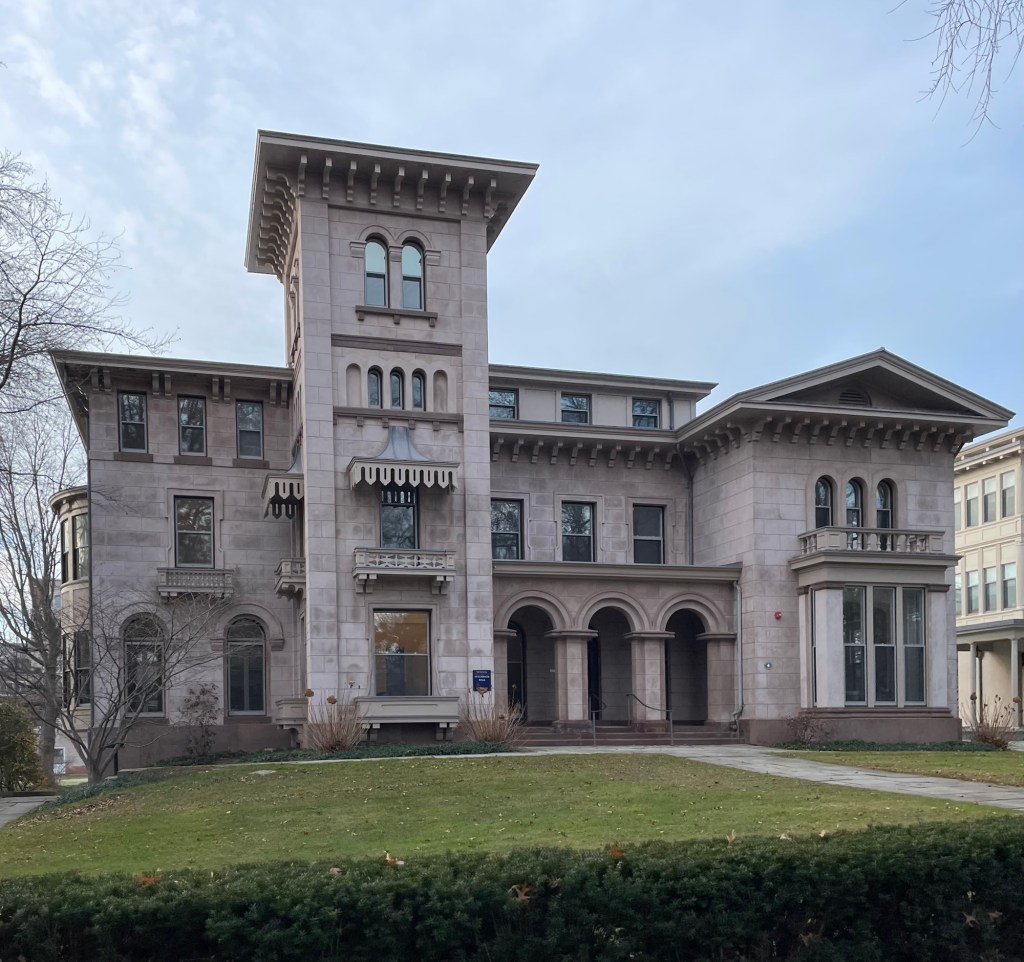
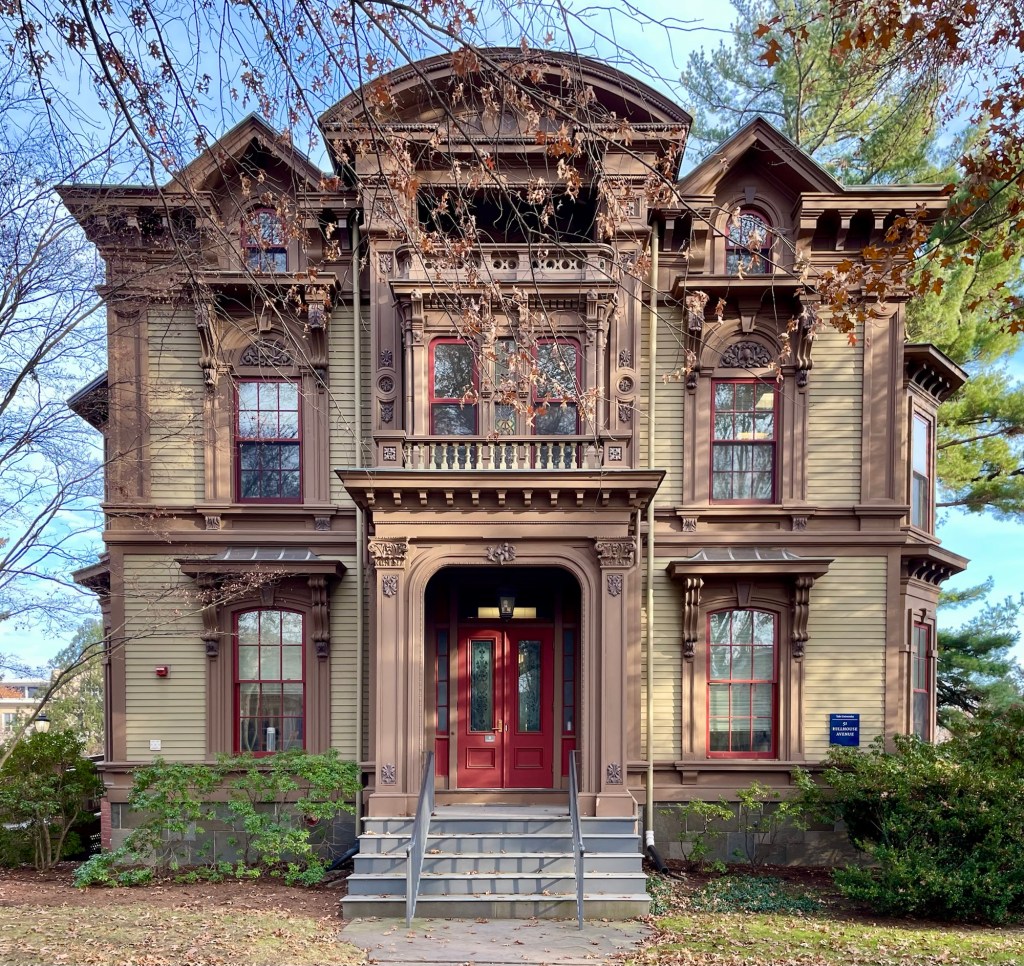
One of the most stunning Italianate style homes in Providence is this stately beauty which is located on Prospect Street. The house was built in 1854 on land sold from Oscar to Henry A. Dike (Dyke), a shoe manufacturer, who erected this stately residence for his family, who only remained there until the early 1860s when it was sold. The home was built on one lot, facing a second house lot, and not the street like many other residences. The property changed hands many times during and soon after the American Civil War, until 1870, when it was purchased by Albert Harkness (1822-1907), a Brown University Classics professor. It was in Professor Harkness’ ownership that the southern house lot was landscaped from plans by Frederick Law Olmsted‘s firm in 1887. The house, which recently sold in 2022, is well-preserved from its massive brackets to the oversized belvedere at the roof!

Roswell B. Fitch Store // 1851

Roswell Burrows Fitch (1833-1908) was born in the seaside village of Noank to parents Elisha and Mary P. Fitch. At twelve years of age he commenced to be self-supporting, and from then until he was fourteen, occupied a clerkship in a general store in town. In his teens, summers were spent aboard ships fishing for a livelihood, and his winters attending school. Upon completing his education, he became clerk in a store, and was afterwards engaged to assume the management of a union store which was erected for the special purpose of being placed under his charge. This building was constructed as the union store in 1851 with eighteen-year-old Roswell becoming an active partner in the business. In his twenties, he slowly bought out, one-by-one, the twelve other owners, until he possessed absolute control. The eclectic Greek Revival and Italianate style building features classical detailing, but with a bracketed cornice and gambrel roof which is capped by a parapet. Mr. Fitch retired from business in 1890 and got to work “Victorianizing” his nearby home. Stay tuned for the next post which features his home in Noank.

Woods-Gerry House // 1860

There are always those houses that just stop you in your tracks… For my last post (for the time being) on Providence, I wanted to share this significant property, known as the Woods-Gerry House, perched atop College Hill. Owner Marshall Woods, who married into the Brown family and was active in the affairs of Brown University. Locally he was also involved on the building committee for St. Stephen’s Church where he was a factor in selecting renowned architect Richard Upjohn to design the church. He must have liked Upjohn so much (or got a good deal) that he hired Richard Upjohn to design his new home on Prospect Street. The exterior of the three-story brick building stands out amongst the other Italianate mansions built in the same decade nearby, but is elevated design-wise with a bowed centerpiece on its east elevation with the handsome new front entrance renovated in 1931 by then-owner, Senator Peter Gerry, who was a great-grandson of Elbridge Gerry, the fifth Vice President of the United States (who had given his name to the term gerrymandering). Today, this significant building is owned by the Rhode Island School of Design and houses the Woods Gerry Gallery. The grounds are also very well designed.