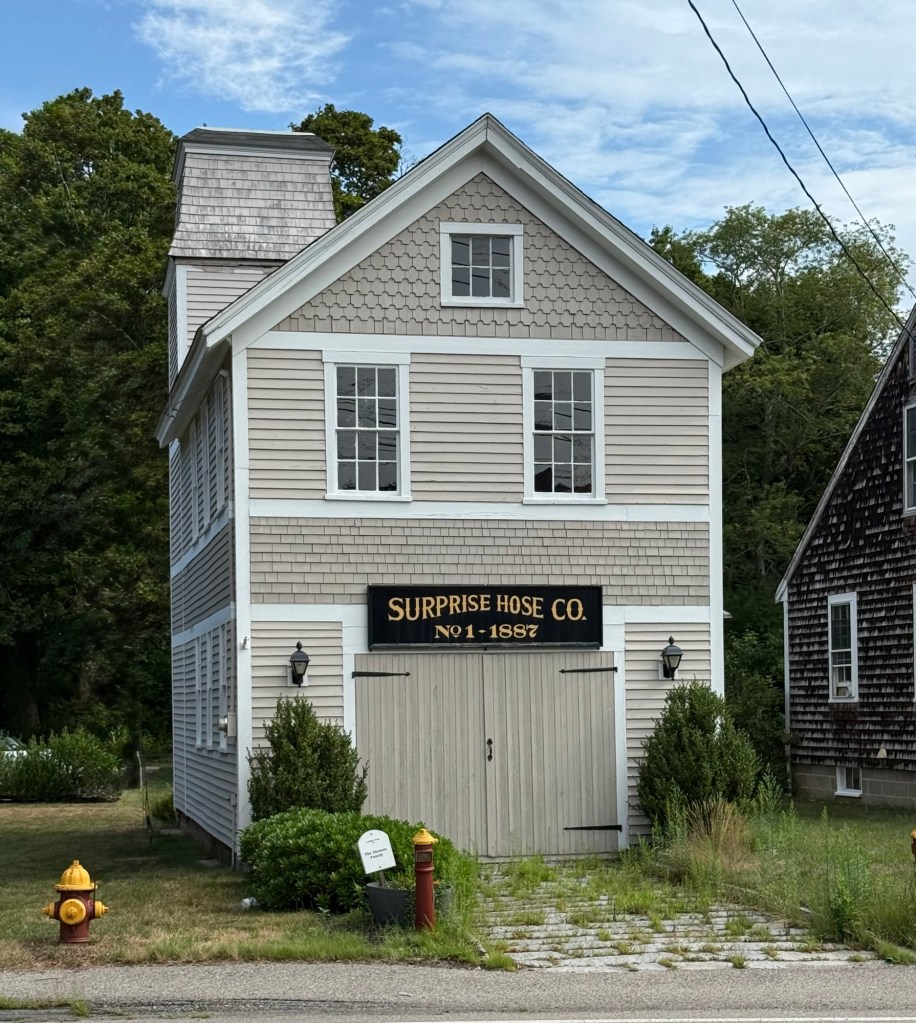
Surprise Hose Company Fire Station // 1888

The Kingston Fire Department was officially established in 1887, and previous to this, the town had generally relied on individual action and volunteers to provide fire protection for the Town and its many buildings. In 1888, the town of Kingston purchased this building, a storage facility constructed in 1860 on Main Street, with the aim to convert the building into a hose hose. Soon after purchasing the structure, funding was set aside to renovate the building, adding a hose tower at the rear of the building, shingle siding, and double doors to make the Hose House more equipped for the fire department. The local fire department, known as the Surprise Hose Company operated here until 1940, when a new, modern facility was built, leaving this structure for storage and hose drying. The building was restored in recent decades and is now a landmark on the town’s Main Street.

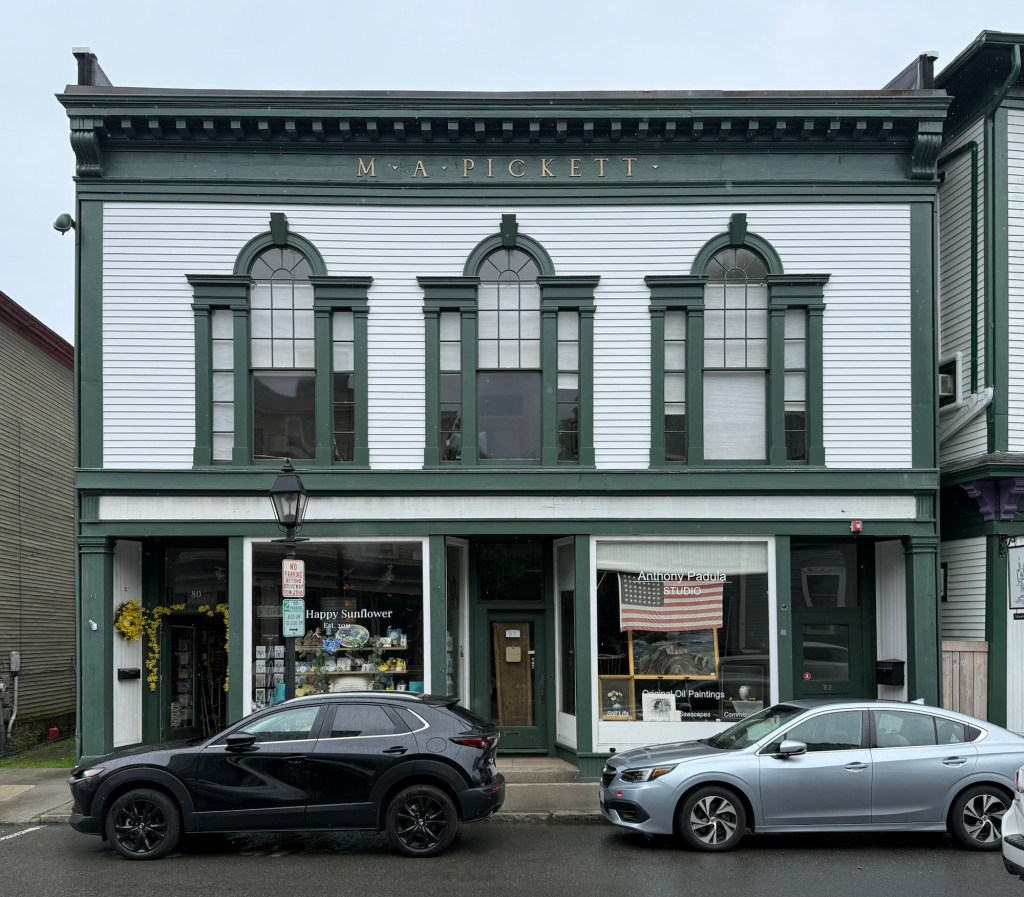
M. A. Pickett Building // 1902

The M. A. Pickett Building on Washington Street in Marblehead is a spectacular example of a commercial building of the early 20th century designed in the Colonial Revival style. The building was designed in 1902 by the firm of Peare & Quiner, who worked mostly in the North Shore of Massachusetts and funded by members of the M.A. Pickett Association, a fraternal organization founded in the late 19th century and named after Moses A. Pickett (1780-1853), who left his entire will to: “comfort the widow and the fatherless, the aged, the sick, and the unhappy”, also donating his home to the use and funding for its preservation. In 1866, a hand-drawn fire engine named after M. A. Pickett, was used by a group of volunteer firefighters, who later would create the club named after Mr. Pickett. The building originally held a barber shop and a creamery on the ground floor with a meeting hall and billiards room above for members of the Pickett Association. Today, the building is lovingly maintained, including the three stunning Palladian windows at the third floor.

Henry Block // 1873

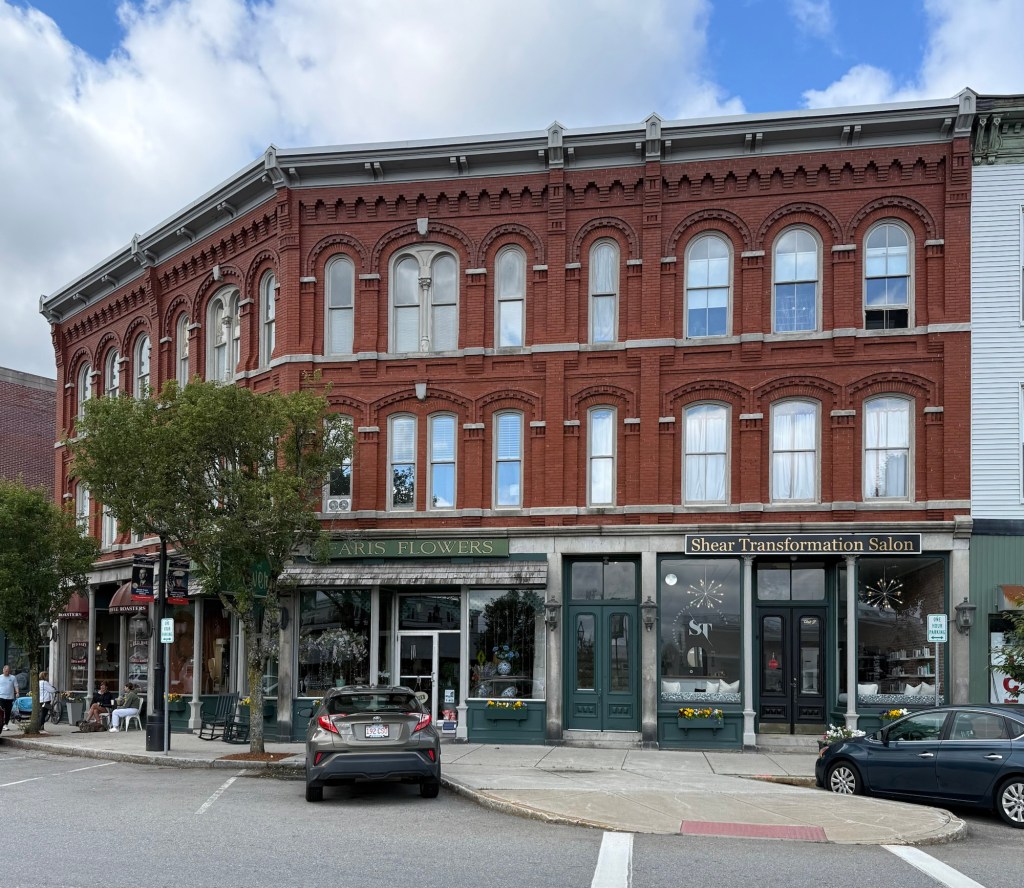
Mid-late 19th century commercial blocks provide human-scaled density, high quality design, and often contain intimate storefronts providing reasonable rent to local businesses. The Henry Block in Westborough, Massachusetts, is one great example of a historic commercial building that checks all of these boxes. The brick building was constructed in 1873 by its namesake, Samuel Gates Henry (1813-1877), a pharmacist and dentist who rented space in an earlier building on the site. When a fire destroyed the old structure, Samuel Henry had this block erected on the site and leased out spaces in the building to other businesses and tenants in the floors above. The block is Italianate/Italian Renaissance Revival in style with the typical round arched windows and bracketed cornice. The granite storefronts even retain some of the original cast-iron supports.

Westborough Arcade // 1890

 The Second Meeting House of Westborough, Massachusetts, was built on this important site in the center of the village in 1749. It was a plain, wooden building and was used for both church services and town meetings, since church and state were essentially inseparable at the time. When a new church was built in 1837, this building was purchased and converted to commercial use. The first floor of the building was raised, and another floor was added underneath. The steeple was also removed. The building then became known as “The Arcade Building,” a kind of mall with small shops opening onto the porch. By the end of the 19th century, the old wooden building was nearing 150 years old and owners decided to demolish the structure, and replace it with a more permanent and stately block. The New Arcade was built in 1890 and is more Romanesque in style. The handsome brick block has retail spaces on the ground floor with residences above, a great example of mixed-use.

Westborough Savings Bank // 1928

The Westborough Savings Bank was incorporated in 1869 and shared space in a building with another bank and the post office. As the population and prosperity grew in the suburban community, so did the Westborough Savings Bank, who would move into a larger space. Just before the Great Depression, the bank sought to build its first purpose-built structure, and they hired the firm J. Williams Beal & Sons to furnish plans for this handsome masonry bank, designed to showcase the strength and stability of the institution. Renaissance Revival in style, the 1928 building is constructed of buff brick with limestone trim. The facade is dominated by large, round arched windows and is framed by pilasters with an off-center entrance. The Westborough Savings Bank would eventually merge into Avidia Bank and the West Main Street building was sold. The handsome building is well-preserved and home to Westborough TV, which makes broadcast media programming that is by, about, and for the entire Westborough community.

Abington Savings Bank // 1930

Built in 1930 for the Abington Savings Bank, this handsome Colonial Revival style building is located in the center of Abington, Massachusetts and has been a bank for almost 100 years! The bank was originally incorporated in 1853 and grew as Abington and adjacent towns saw suburban growth. The corporation hired the firm of J. Williams Beal & Sons, who specialized in commercial developments, to furnish plans for the building, resulting in the present structure. The firm also designed the Abington Mutual Fire Insurance Company Building (1931) across the street and the Dyer Memorial Library (1932), the town library. The brick and limestone building has three main bays, with the center rising above with a gable, resembling as a pediment of a Roman temple. In the gable, a shield with swags is adorned with the letters “ASB” (Abington Savings Bank) with the original incorporation date of 1853. The bank merged with others and eventually became a Sovereign Bank, and later Santander Bank, which remains in the building to this day.

Rockland Security Trust Building // 1912

The Rockland Security Trust Building is a significant Colonial Revival style bank structure located on Main Street in Downtown Rockland, Maine. Built in 1912 from plans by Boston architect Richard Clipston Sturgis, the brick building is trimmed in marble, to provide a visual representation to the financial wealth and stability the bank could provide its clients. The bank closed and the building is presently occupied by an art gallery. Sadly, the rooftop deck railing takes away so much from the building’s presence.

Custom House Block // 1853

This stately commercial block is found on Main Street in Rockland, Maine. The block originally housed the local custom house (before a larger, purpose-built custom house was erected nearby in 1873) with other retail and commercial spaces at the ground floor with offices and meeting space above. The block is a great example of the Italianate style with an intricate brick corbeled cornice and cast iron and marble storefronts. The commercial space occupied by the First National Bank also exhibits a stone medallion with deer set within a wreath over the entrance. The detail that stood out to me most was the cast iron lintels over the windows, with the second floor lintels including a man’s face! The building is well preserved and is today occupied by local businesses.

Norwood Odd Fellows Building // 1912

In the early 20th century, Norwood, Massachusetts, shifted from sleepy rural town to a commercial and population center with a population tripling in size between 1900 and 1930. Located on Washington Street, the town’s main commercial street, the Odd Fellows Building stands as a reminder of the historical importance to charitable and social organizations. Designed by Boston architect Clarence Blackall, the three story building is characterized by a boxy rectangular form, yellow and tan masonry with limestone and granite trimmings, and its somewhat minimal detailing. Built in 1912, the building’s first floor was designed to contain two stores, the second floor housed the club rooms and meeting hall, and third-story containing restrooms and a kitchen. The Classical Revival style building is one of the larger and more significant commercial structures in the town center.

Van Buskirk Block // 1895

Built at the corner of Main and Partition streets in Saugerties, New York, this handsome 19th century commercial building is located next door to the Whitaker Block – featured previously. The Van Buskirk Block was built in 1895 for the Van Buskirk Brothers, who were pharmacists in town. The building has a unique rounded corner, inset brick paneling, and a bold metal cornice at the roof.