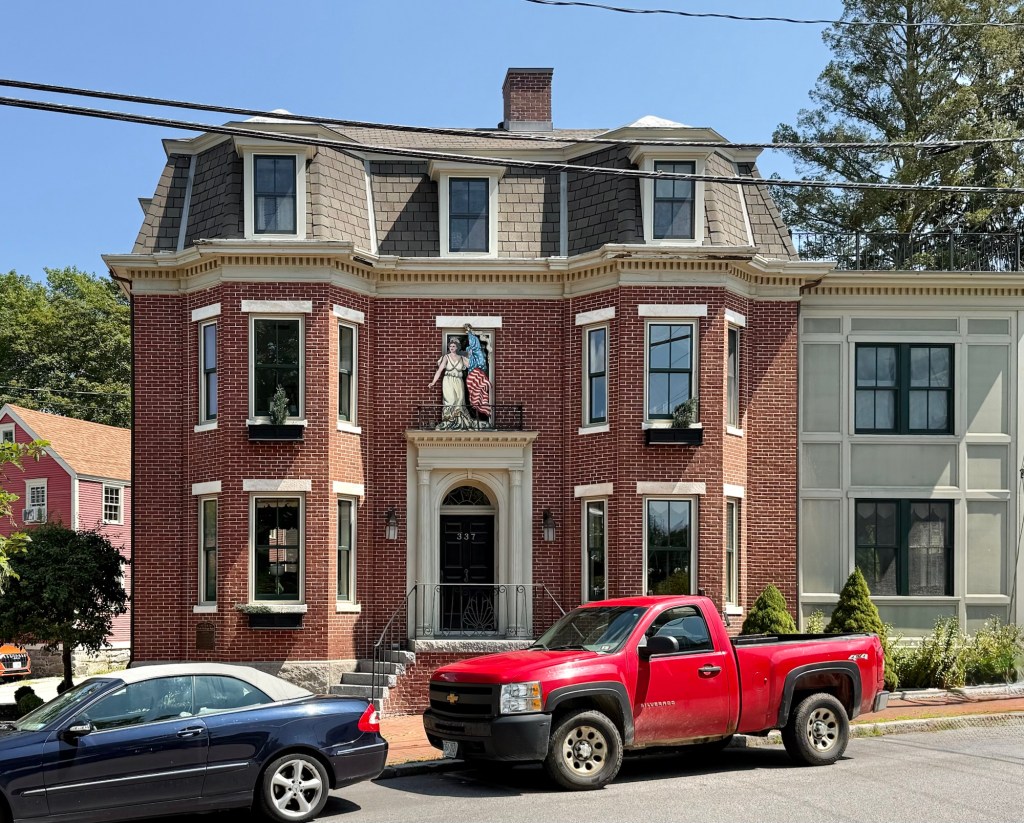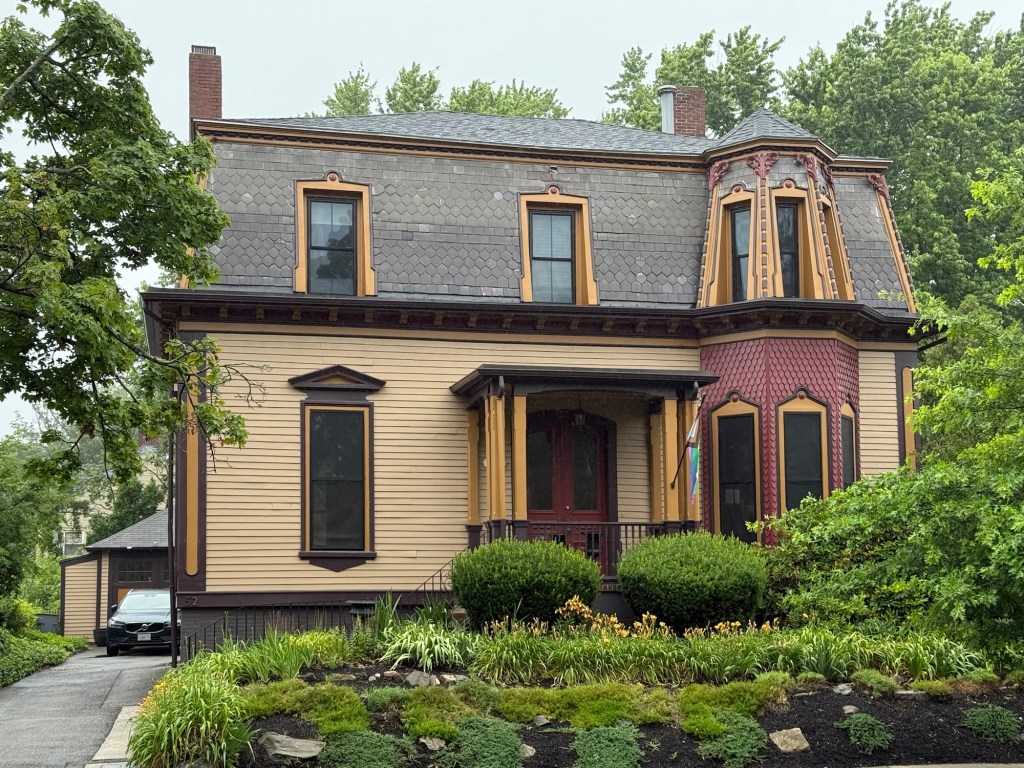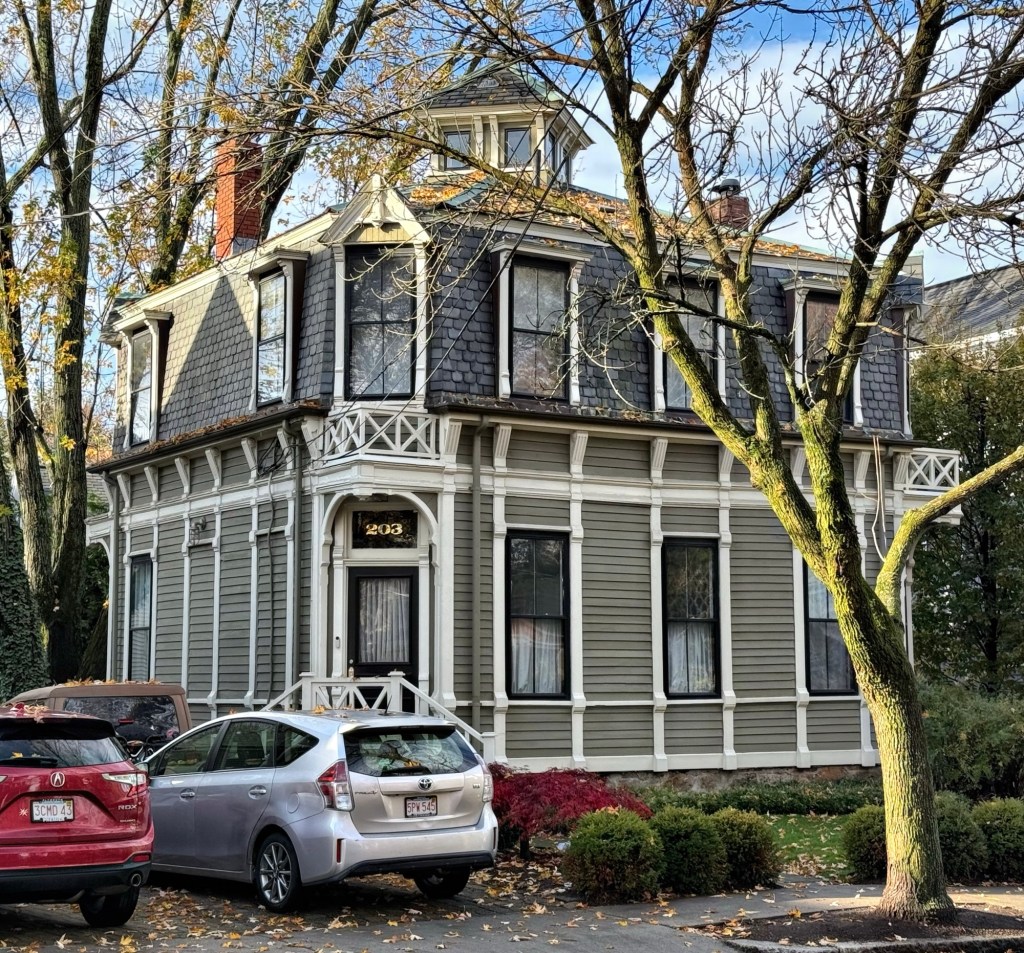
Tatro-Tyng House // 1873

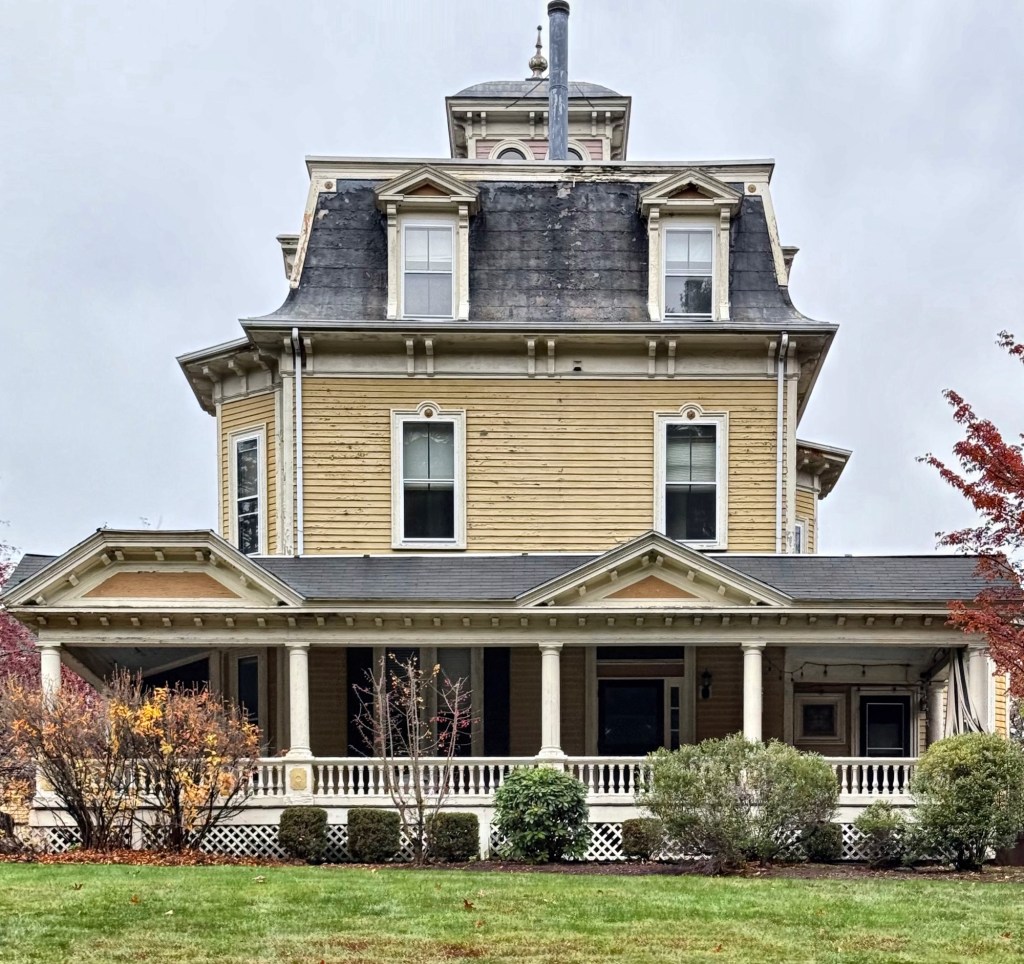
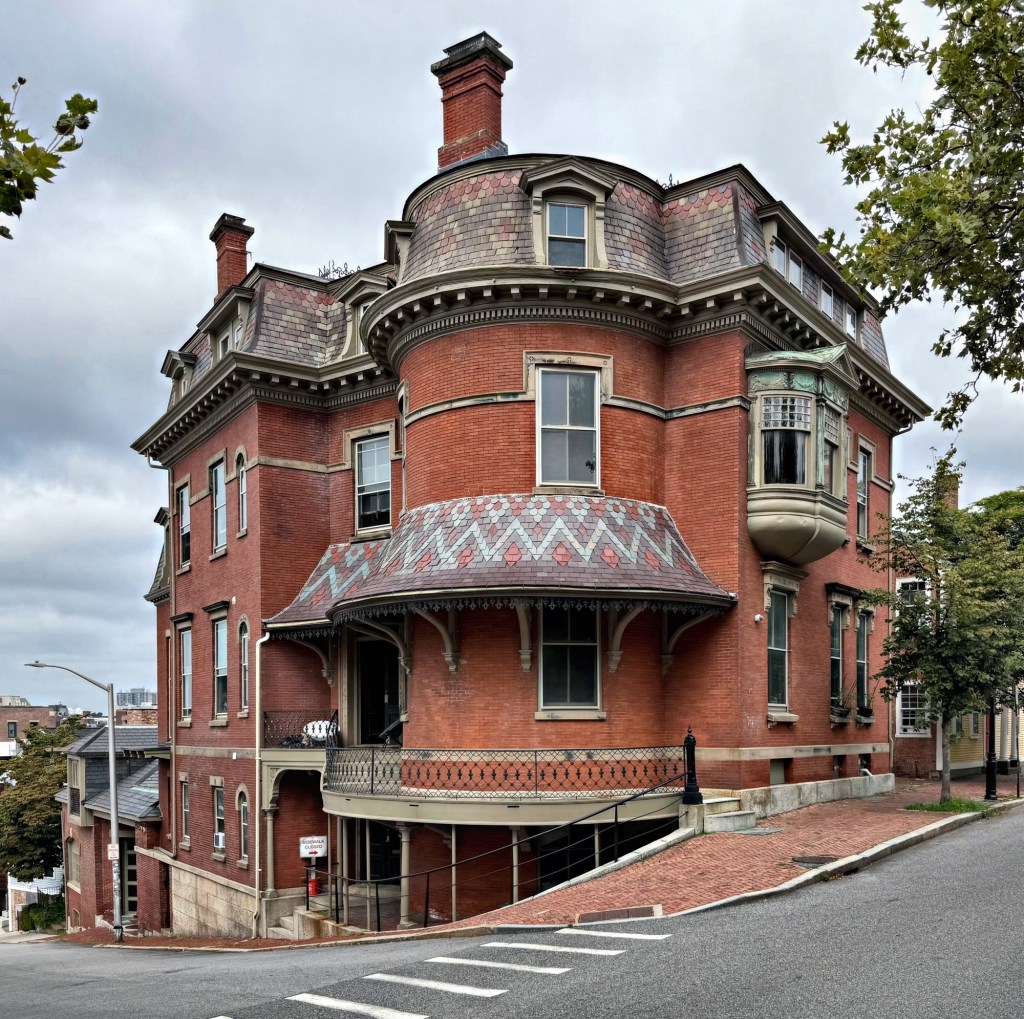
The neighborhood now known as Ashmont Hill had its origins in 1870, when George Derby Welles, who was 26 years old and living in Paris, inherited extensive landholdings in this area from his grandfather’s estate in Dorchester. Welles engaged representatives to subdivide the land. Some parcels were developed with high-style rental properties, managed by his representatives while living abroad, and others were sold and developed by builders, designing homes in the prominent styles at the time. In the early 1870s, the Second Empire style was most popular, though began waning in popularity for Stick and Queen Anne styles. Lots on Welles Street were purchased by Mr. George Tatro, a builder and developer who seemingly designed and built two near identical houses at 48 and 52 Welles street. The houses were completed by 1873 at the time of The Panic, an economic downturn triggered by industrial and railroad over-expansion and consequent bank and business failures. The property was sold, but remained vacant until it was taken over by a bank and then purchased by Catherine Stevens Tyng, the widow of Reverend Dudley Atkins Tyng, who died at just 33-years-old from a freak accident at home. Catherine moved to the area, first settling in Cambridge, to follow her two sons who attended Harvard College, before selling the house and moving to New York. The Tatro-Tyng House is a stunning, and well-preserved example of the Second Empire style, with a shingled bay window and bay dormer in the mansard with applied ornament.

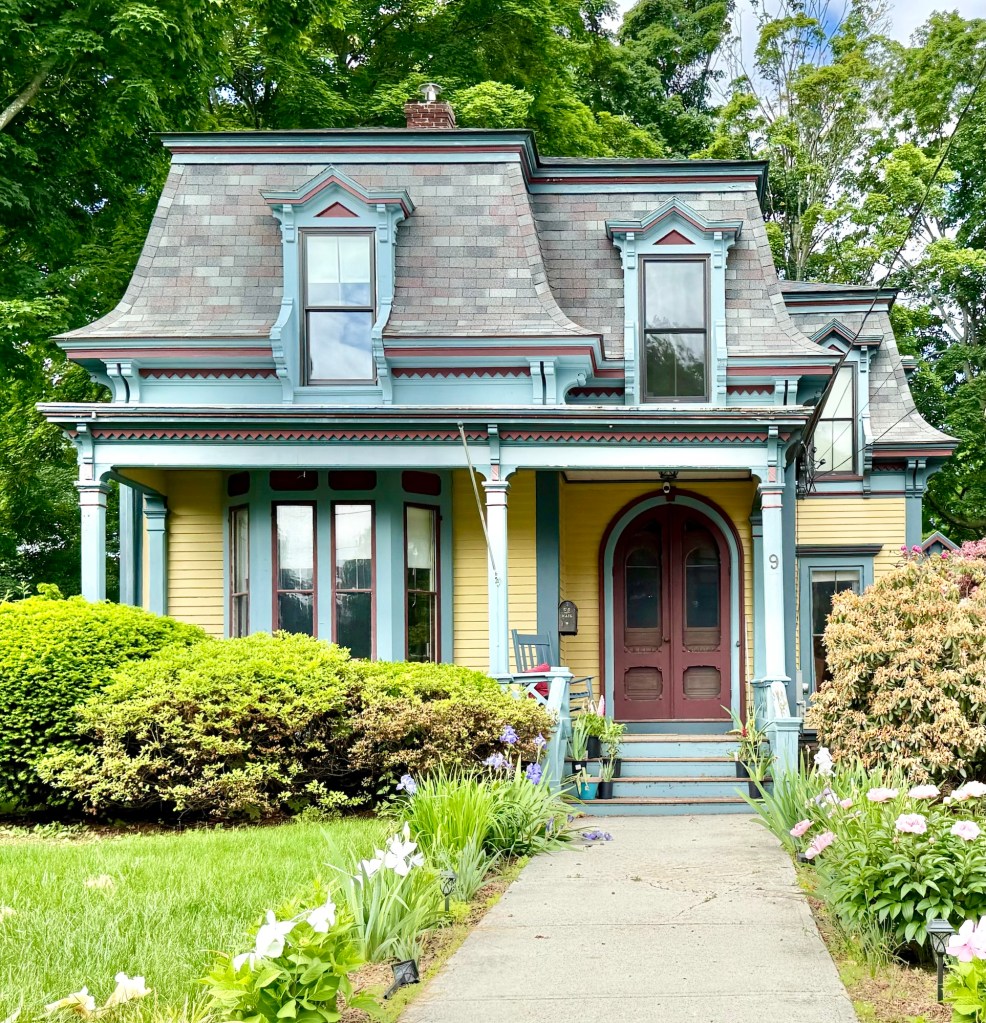
John A. Turner Cottage // c.1875 

One of the most charming houses in Westborough, Massachusetts, can be found on Central Street, in the commercial village of town. The house was built around 1875 as a Mansard cottage, a style that was beginning to wane out of style by this point. The cottage was built for John Addison Turner (1833-1900) and his wife, Mary Ann Fiske. John worked as a superintendent at the National Straw Works factory, a local manufacturer of straw hats and other goods. The Turner House remains one of the best-preserved Victorian-era homes in Westborough and is even painted to highlight the many intricate details. 

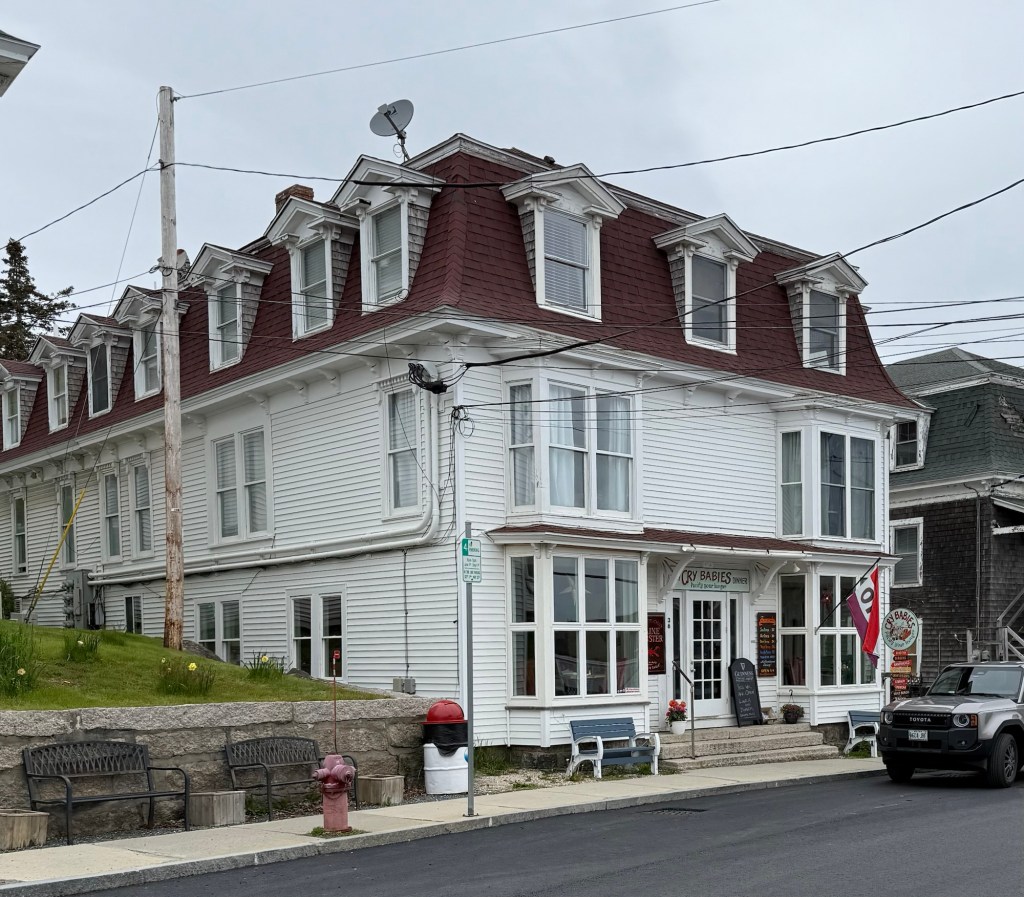
Central Hall // c.1885

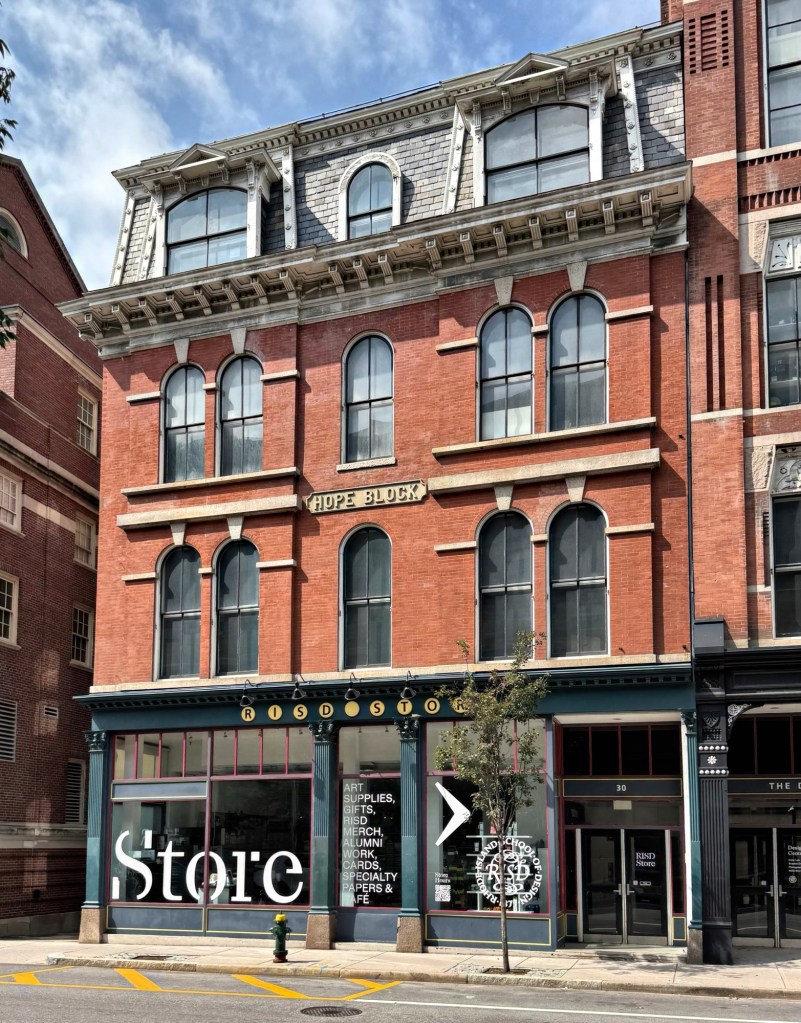
Located next door to the former High School (now the Town Hall) of Stonington, this mansard-roofed commercial building on Main Street is a prototypical example of late 19th century mixed-use architecture seen all over Maine. This building was constructed in the 1880s and known as Central Hall. The building contained retail spaces at the ground floor and tenement housing in the upper floors for workers at local granite quarries. The building is well-preserved and an important contributing building to the working village of Stonington.

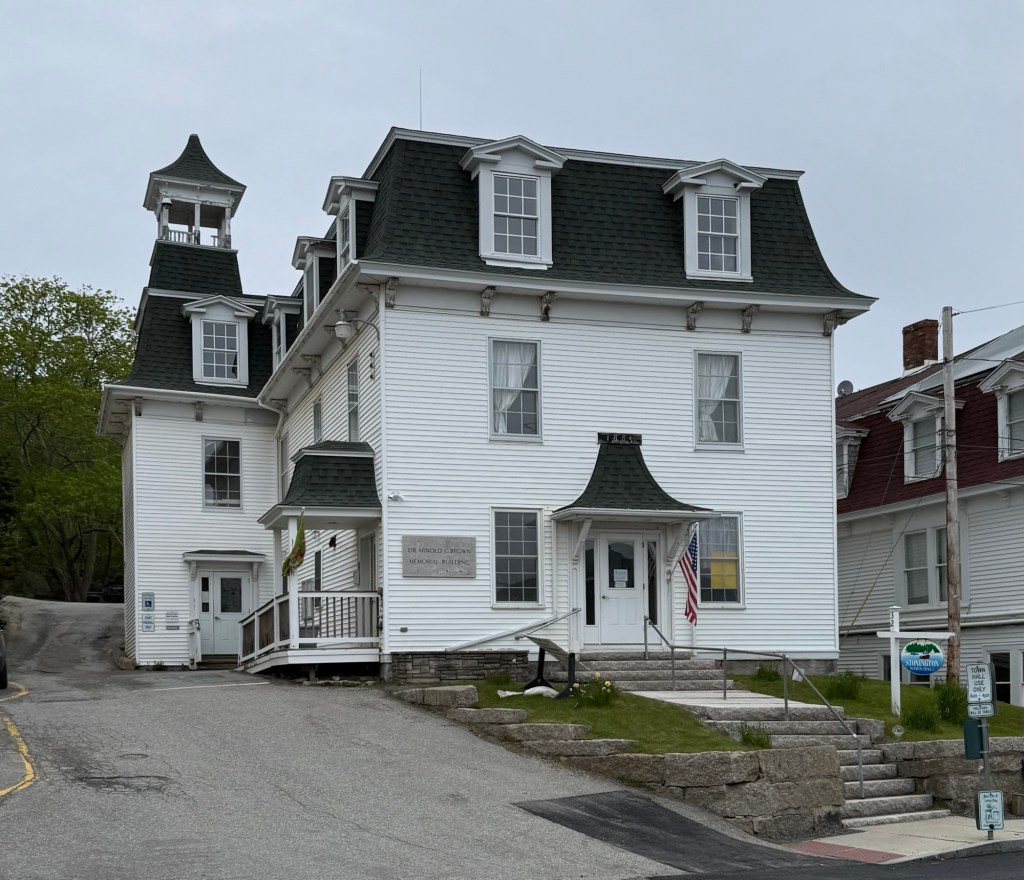
Stonington Town Hall // 1885

Overlooking an archipelago of over sixty islands, the working port town of Stonington, Maine, is one of the more vibrant and active ports in the Pine Tree State. With a population of just over 1,000 residents, the town is consistently ranked among the top lobster ports in the country and is the largest lobster port in Maine. In 2011, 14,854,989 pounds of lobster were landed by Stonington fishermen! The town was originally a part of Deer Isle, with the main village known as Green’s Landing, until 1897 when it incorporated as its own municipality in 1897, choosing the name Stonington after the area’s granite quarries. This handsome mansard building was constructed in 1885 as the village’s school. Named Rockbound School, the building features an intact belltower at the rear. The school would eventually close in the second half of the 20th century, and became the Town Hall of Stonington after a fire destroyed the previous building in the 1970s.

Joseph and Fanny Turner House & Stable // 1872

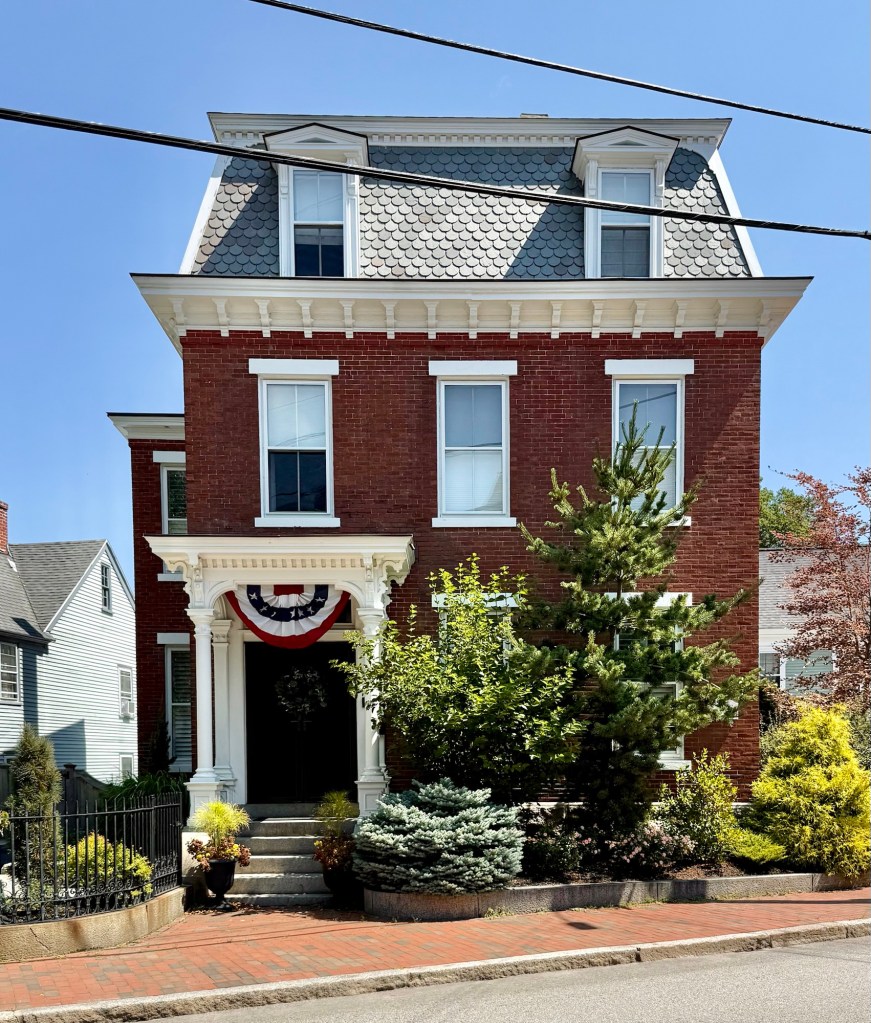
Joseph Stanley Turner (1841-1893) married Fannie Pratt (1849-1930) in 1871 and within a year, had this large, Second Empire style house built on Webster Street in Rockland, Massachusetts, for his family. Joseph Turner was a Civil War veteran and owned a shoe factory in town, making his fortune manufacturing shoes and boots which were sold all over the country. The main house is two-stories with a symmetrical plan with central entrance and projecting portico. An equally significant mansard-roofed stable sits behind and to the side of the main house, and can be classified as an example in the Stick style with applied stickwork at the siding and in the hay door, as well as the pedimented dormer with decorative truss.

Wells-Bullard House // c.1868

One of the finest Second Empire style houses in Brookline can be found on Prescott Street in the fashionable Cottage Farm neighborhood of the city. Built around 1868 by Amos A. Lawrence, who lived in a house nearby, this “cottage” was rented out to John Wells (1819-1875), a Judge on the Massachusetts State Supreme Court until his death. The property remained in the Lawrence family into the 20th century and was later rented to George E. Bullard, a banker. The brick house is notable for its siting at the center of the lot, corner quoins, brick corbelled cornice, arched door and windows, and slate mansard roof.

Benjamin F. Greene House // 1868

Built for Benjamin Franklin Greene, a second-generation mill owner of the Greene and Daniels Thread Company in Central Falls, Rhode Island, this large, Second Empire style house is one of the finest of its style in the entire state. The house is one of only a few high-style residences left from the mid-nineteenth century in Central Falls, when industrialization’s full expansion provided manufacturers such as Greene with fortunes to be expended on their houses. Designed by Providence architect Clifton A. Hall, the ornamentation of the Greene House is extraordinary for its elaboration, relieving the severity of the simple, block-like shape of the house. The central door is set under a flat-roofed porch which is supported by trios of Corinthian columns. Above the porch a trio of round-head windows is set under a “sunbonnet” gabled dormer which caps the central pavilion, is supported by brackets, and encloses a round-head window with a small balcony. What a spectacular home!

Abigail Whelpley House // c.1826

The oldest extant building on Hillhouse Avenue in New Haven is this Federal-period house with later Victorian-era modifications. The Abigail Whelpley House was built by 1826 (with some estimates as early as 1800 and moved to the site) and was a traditional, five-bay, two-story Federal style residence. It is said that the house was built by James Abraham Hillhouse (1789-1841) for his widowed family member, Ms. Whelpley, and her two sons. As of 1849, the property was owned by Noah Porter, later President of Yale, who would alter the house in the 1860s with the addition of a mansard roof and trim, all designed by architect, Henry Austin. The house, now known as Allwin Hall, is maintained by Yale University and contains offices for the program on Ethics, Politics & Economics.

Governor Robinson House – Assumption Church Rectory // c.1870

Located next to the Assumption Roman Catholic Church of Chicopee, this handsome Second Empire style residence is significant not only architecturally, but as the residence of a Massachusetts Governor. This house was built around 1870 for a Frank D. Hale, who resided here until 1878, when the property was purchased by George Dexter Robinson (1834-1896), who moved to Chicopee and eventually got engaged in politics, in 1873 winning election to the Massachusetts House of Representatives, and was elected to the Massachusetts Senate in 1875. In 1876, Robinson was elected to the United States House of Representatives, where he served most of four terms, buying this home about half-way through his time as a Representative in Washington. While serving in Congress, Robinson was nominated to run for Governor of Massachusetts in 1883, he won and served three, one-year terms. After his time as Governor, he went back to his law practice, and in 1892, Robinson took on his most famous client, Lizzie Borden. During the infamous trial, Robinson was also able to cast significant doubt on the reliability of several witnesses to the events surrounding the murders. Lizzie Borden was ultimately acquitted of the criminal charges, and Robinson was a highly visible presence in the media circus that attended the trial. In the 20th century, this handsome property was acquired by the Assumption R.C. Church of Chicopee, who used the house as a rectory for its new church next door. It remains a well-preserved example of the Second Empire architectural style with slate mansard roof crowned by iron cresting.

Langley-Dudley Cottage // c.1870

This charming mansard-roofed cottage can be found at 54 Prospect Hill Street in Newport, Rhode Island. While presently a residence, the cottage was originally built around 1870 as a stable or carriage house for the former Bowen-Newton-Tobin House at 204 Spring Street. After the Bowen heirs sold the property, this structure was owned by Mr. John S. Langley, an furniture dealer (who also made coffins and caskets) with the firm Langley & Bennett. The building may have been used for the storage of horses or as a workshop until it was purchased by Mary B. and Dudley Newton, a prominent local architect. They appear to have converted the former stable into a cottage, and rented the property out for additional income. In the renovation, Dudley Newton preserved much of the original detailing above the cornice, and altered openings to provide windows and doors convert the formerly utilitarian structure into a cottage.