Dexter Asylum // 1828-1958

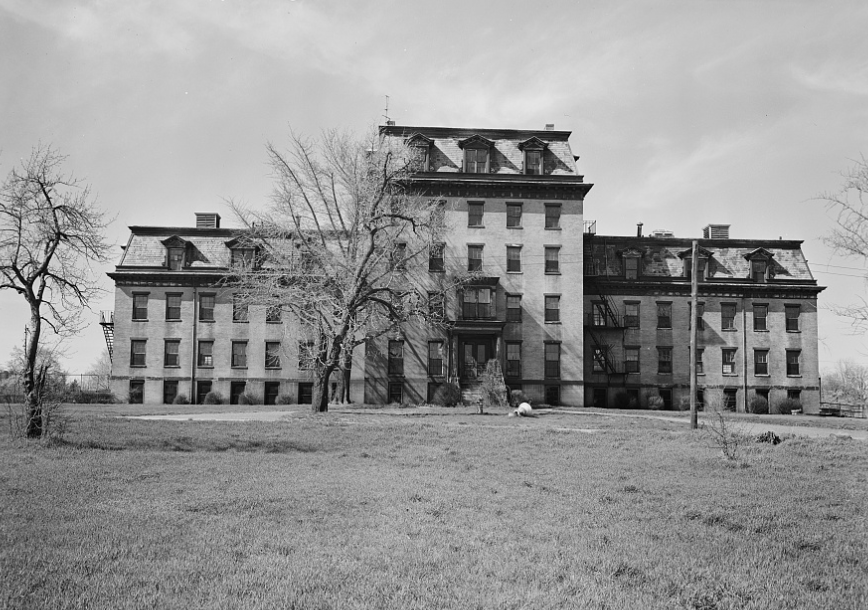
C.1958 photo before demolition. Courtesy of Library of Congress.

Built in 1828, Dexter Asylum was a “poor farm,” an institution housing the indigent, elderly, and chronically unemployed, located in the East Side of Providence, Rhode Island. Poor farms were common before the introduction of Social Security and welfare benefits in the United States, considered a progressive method for dealing with poverty. Ebenezer Knight Dexter (1773-1824) was a wealthy mercantile trader in Providence, who in 1800, built Rose Farm, a gentleman’s farmhouse on what was then, the outskirts of Providence. Upon his death in 1824, he bequeathed to the town 40-acres of the farmland to the north for use as a poor farm or almshouse site. The building was completed by 1828 and was originally three stories, and later expanded with a mansard roof and dormers sometime later in the 19th century. Dexter also stipulated that a stone wall would surround the site, and parts of it remain to this day. As with many poor farms and almshouses of the period, residents worked farmland and cared for pigs and a herd of dairy cows; they lived in this large building, strictly segregated by sex. Residents were essentially inmates, indentured for periods of six to twelve months, and could not leave the property without a ticket of permission. In the interwar period, “inmate” population there declined and changing views on how to assist the poor caused the City to abandon the facility. After decades of legal troubles and stipulations of the Dexter will, in 1956, the plot was auctioned off, and Brown University purchased the site. The grounds are now used by some of the Brown University athletic facilities. The city set aside the money from the sale to create the Dexter Donation, which gives annual grants to assist the city’s poor, providing an enduring legacy of Dexter’s Asylum.

Farwell Hall – Andover Newton Theological School // 1829

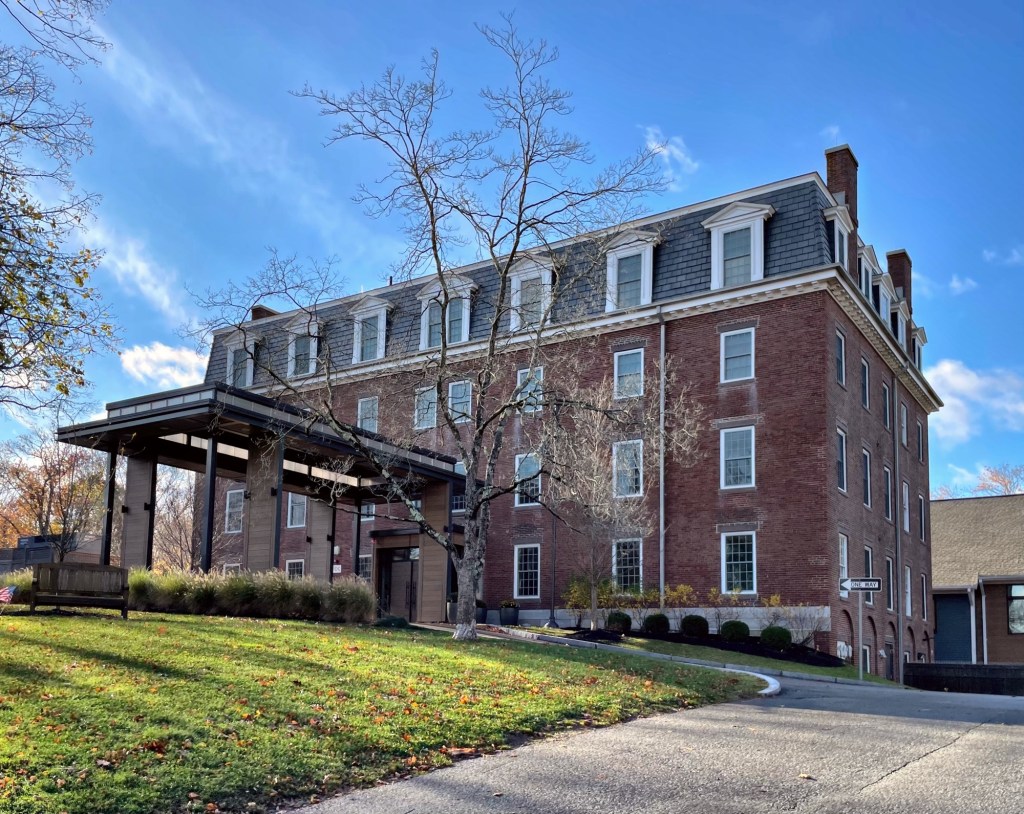
The Newton Theological Institution, a school originally founded for the Baptist ministry, opened on Institution Hill in Newton Center in 1825. The 40-acre campus started with six buildings, including this one, Farwell Hall, built in 1829. Farwell Hall is the oldest extant building on the campus today and is named after benefactor and early founder of the school, Levi Farwell. The brick building began as a late-Federal-designed building with a classic Federal Style window fenestration and Adamesque brick arches on the first story side elevations, but the formerly Federal style building was modernized in 1871 with the addition of a fourth floor via a mansard roof, and a more recent, unfortunate altered entry with projecting roof. After the Andover Newton Theological School sold their campus, the building has since been home to an assisted care facility.

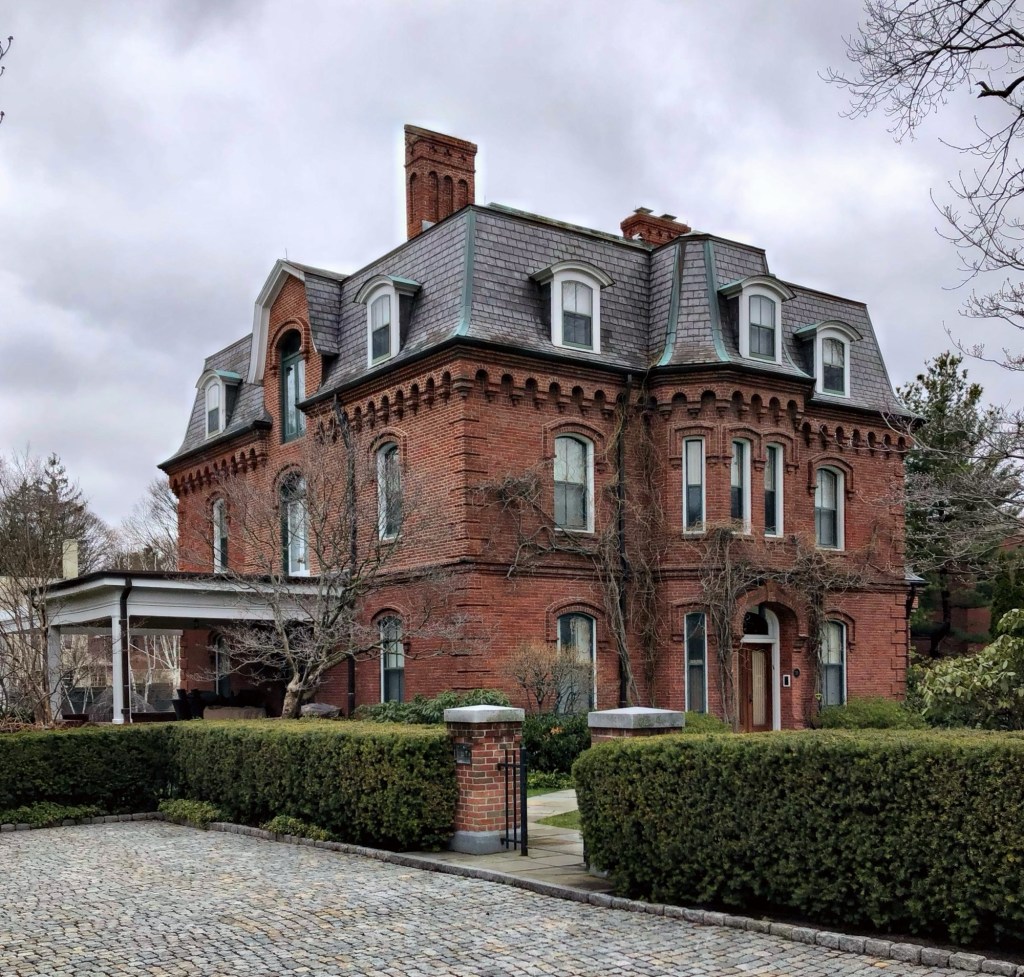
John H. Sanborn Mansion // c.1868

One of the finest Second Empire style residences in Newton, Massachusetts, can be found on Herrick Road in Newton Centre. This is the John H. Sanborn house, built before 1870 for John H. Sanborn, a Boston broker and commission merchant who also served as a Representative to the Massachusetts General Court. The imposing residence is a two-story house based on a rectangular plan, and capped with a bellcast Mansard roof of gray, fish-scale patterned slates. The focal point of the design is the four-story, towered entrance pavilion which dominates the facade.

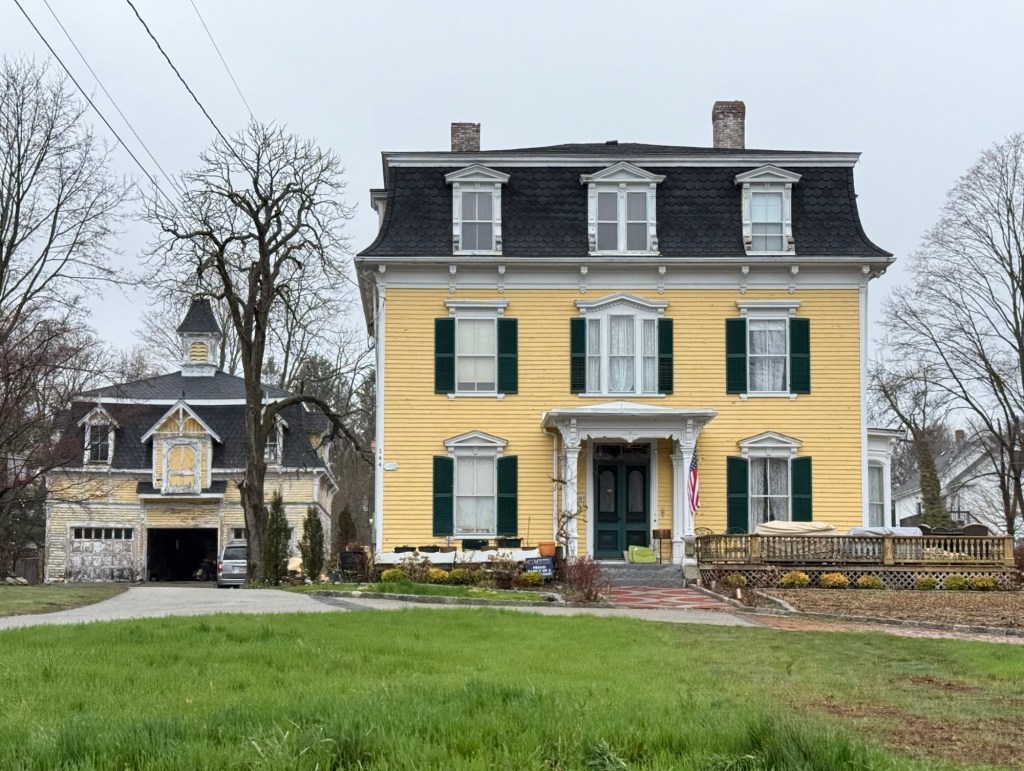
Tenney-Root House // c.1865

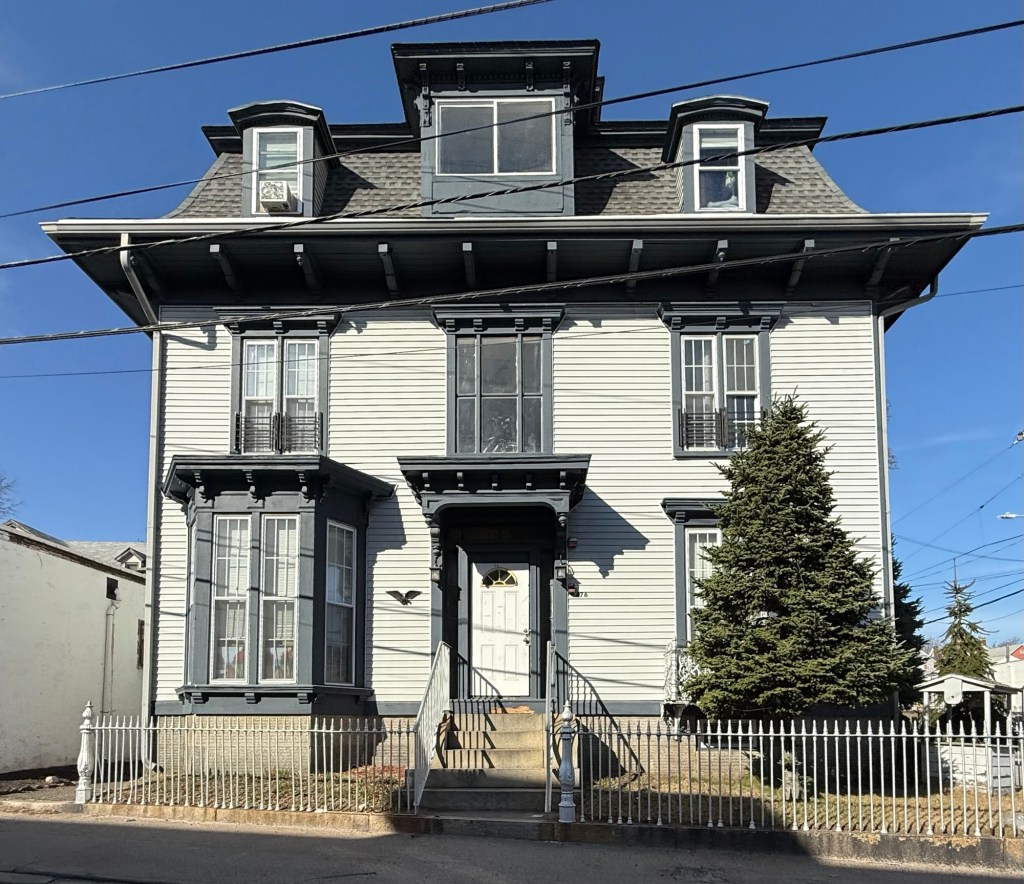
This house in Georgetown Center, Massachusetts dates to the 1860s and appears to have been built for Milton G. Tenney, a shoe manufacturer. By the early 20th century, the home was owned by the third member of the Root family to practice medicine in Georgetown. The first, Dr. Martin Root, established a practice in 1827, serving the community for more than 50 years. His son, Dr. Richmond B. Root, owner of 24 North Street (featured previously), was in turn the father of Dr. Raymond Root (1882-1958), owner of this fancy Second Empire style dwelling. In addition to his private practice, Dr. Raymond Root was a school physician for many years, and served as Town Clerk from 1937 to 1944. The house is Second Empire in style with a mansard roof, window mouldings and two-over-two windows, but features a Colonial Revival portico with what may possibly be a Federal-period entry of fanlight with sidelights, salvaged from his father’s home when that house was renovated.

Former Boston & Lowell Railroad Depot // 1871-1927

Courtesy of Boston Public Library collections

The Boston and Lowell Railroad was established in 1830 as one of the first rail lines in North America. The first track was completed in 1835, and freight service began immediately connecting Boston to the newly established town of Lowell, which had just 6,400 residents at the time (compared to Boston which had 10x that). The original Boston depot was a modest structure, but after the Civil War, it was decided that a new station connecting two of the most important industrial cities in Massachusetts, should be built. Architect Edgar Allen Poe Newcomb and his father’s firm, L. Newcomb & Son, was selected to design a new station on Causeway Street. The French Second Empire masterpiece was built between 1871-1878. Inside, the concourse was lined with oak walls and marble flooring. The depot was added onto in 1893 and incorporated into a Union Station of multiple former lines, and ultimately demolished in 1927 for the first North Station.

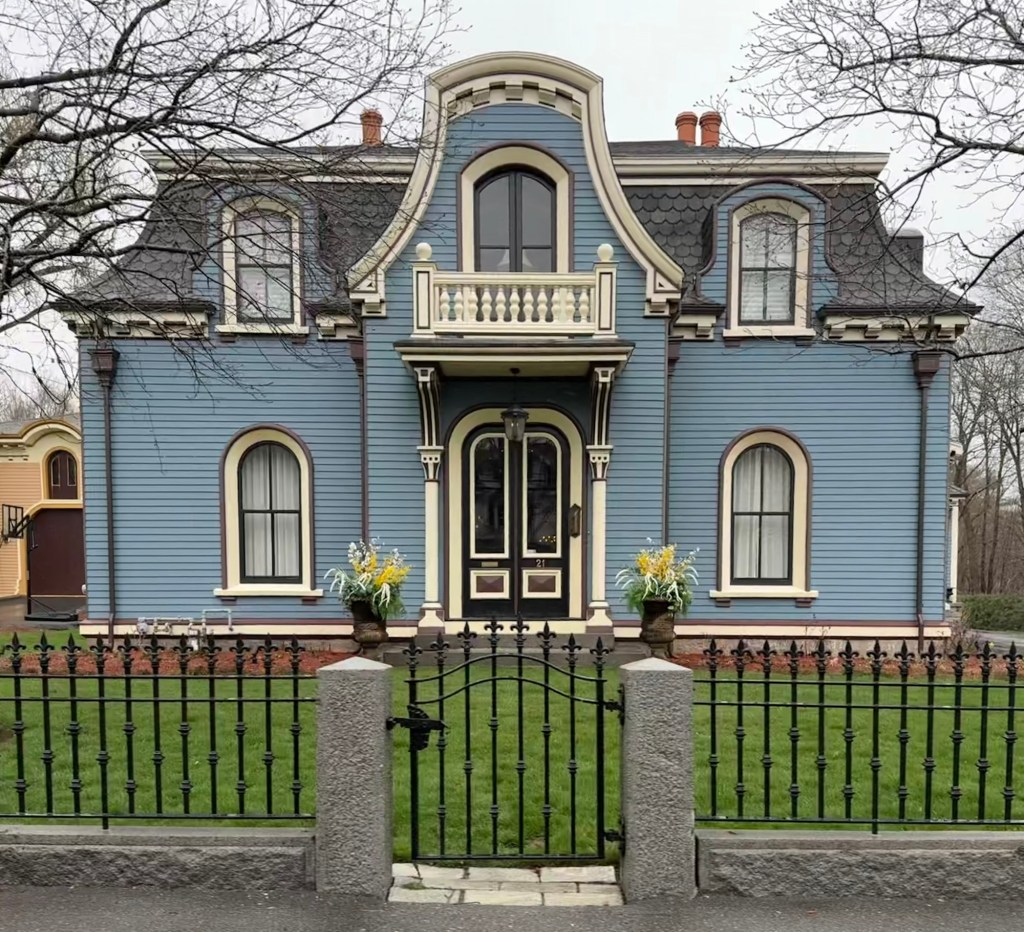
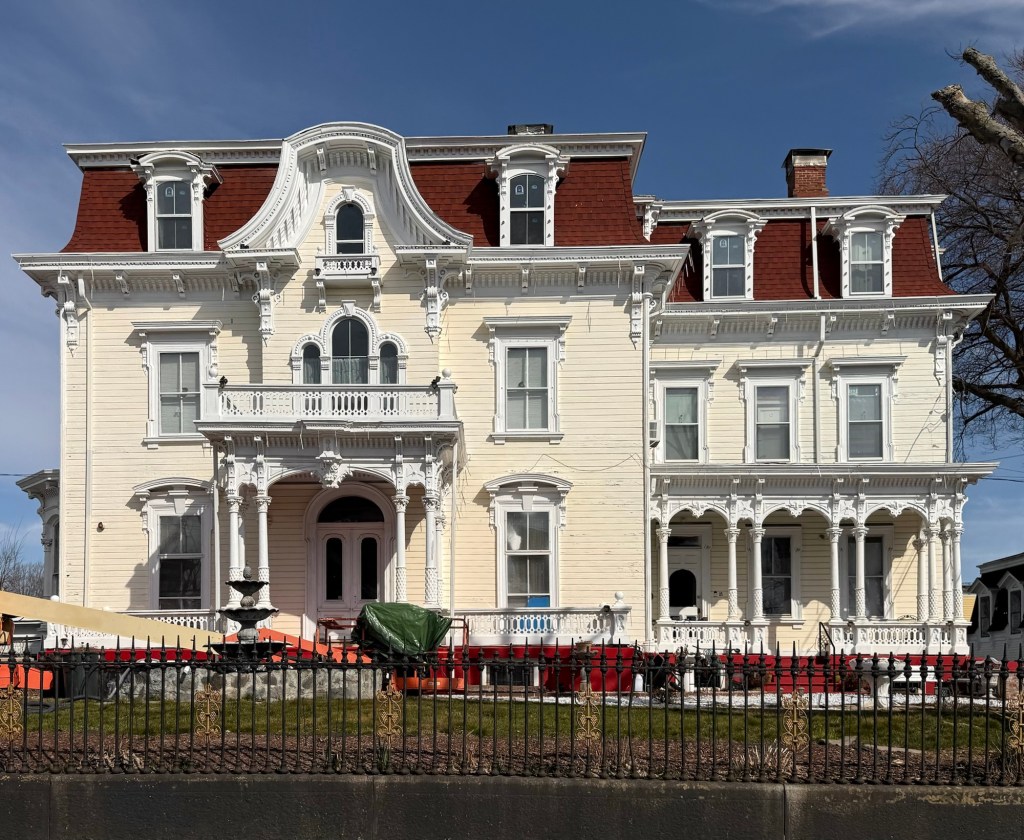
Maple Shade Cottage // 1871

“Maple Shade” is a historic, Second Empire style summer cottage located at 1 Red Cross Avenue in Newport, Rhode Island. The house was built in 1871 from plans by George C. Mason, a prominent local architect who designed many summer homes for summer residents in the late 19th century. He even lived in a home adjacent to this house! Maple Shade was built for John Doughty Ogden and his second wife, Mary C. Moore. John originally married Mary’s older sister Margaret, but remarried after Margaret’s death in 1845. The house gained attention again in 1934, when it served as the venue for the wedding reception of John Jacob Astor VI and Ellen Tuck French, then owned by Donald O. Macrae. The house, like many other former estates in Newport, has since been converted into condominiums, but retains its architectural grandeur and presence in town.

Whitaker Block // c.1870

One of the finest commercial buildings in downtown Saugerties, New York, is the Whitaker Block, a landmark Second Empire style structure from the years following the American Civil War. The structure dates to around 1870 and was first owned by an E. Whitaker and was mixed use with retail at the street and offices above. Additionally, the building was home to the local chapter of the Independent Order of Odd Fellows (IOOF) a fraternal social organization. The three-story with mansard roof building stands out for its architectural details and integrity which largely remain intact to this day.

Bread Loaf Campus – Birch Cottage // c.1900

Welcome back to the Bread Loaf Campus! For more early history and context of the complex, check out the post on the Bread Loaf Inn. By 1900, owner Joseph Battell’s enterprise exceeded the capacity of the original inn, and cottages were added to accommodate more guests visiting his new permanent home in the mountains of Ripton, Vermont. An early cottage built by Battell is this late-Mansard structure, named Birch Cottage. The structure clearly took cues from the Bread Loaf Inn, built over a decade earlier, and originally had two floors of porches wrapping around the entire structure.

James W. Clapp House // c.1869

In 1868, James Wilkinson Clapp (1847-1931) married Eliza Tuckerman and they soon after moved into this large Victorian-era house on St. Paul Street in Brookline. James was the second son of Otis Clapp, a politician, publisher, and promoter of homeopathy. Otis Clapp operated a large homeopathic pharmacy, Otis Clapp & Son, which continued as a business after his death, evolving to encompass different areas of medical technology. It was one of the oldest-operating pharmaceutical manufacturers in the United States by the time it was acquired by Medique in 2008. The business allowed James, at about 22 years old, to build this stately home for him and his new wife to move into. The residence is Second Empire in style with Stick style ornamentation, and while mostly obscured by vegetation all year, it commands the heavily trafficked corner of Brookline.

Sears-Amster Cottage // c.1865

Prior to 1850, the area today known as the Longwood neighborhood of Brookline remained largely farmland on the banks of the Muddy River, the border of Boston. In the first half of the 19th century David Sears (1787-1871) and Amos Lawrence (1814-1886), both prominent Boston businessmen, bought up large tracts of what had been Sewall’s estate. The arrival of the Brookline Branch Railroad (now the MBTA Green Line D branch) served as an impetus to develop the area more fully. Some of the houses built by Lawrence and Sears became homes to friends and business associates, but neither lived in the area. One of the rented houses built and rented by David Sears is this Second Empire cottage likely built in the 1860s. The house was long-rented to wealthy families until the Sears heirs sold the house to Nathan Leo Amster and his wife, Estelle Dreyfus who was raised in Boston. Nathan L. Amster was a railroad executive who eventually became president of the Manhattan Railway Company. When the purchased the cottage, the Amster’s hired Boston architect Clarence Blackall to renovate and “modernize” the home, which added the Classically inspired elements. The couple did not appear to live in the house long, as they spent most of their years in their Fifth Avenue NYC residence. The Sears-Amster Cottage remains an important early house in the Longwood development of Brookline.