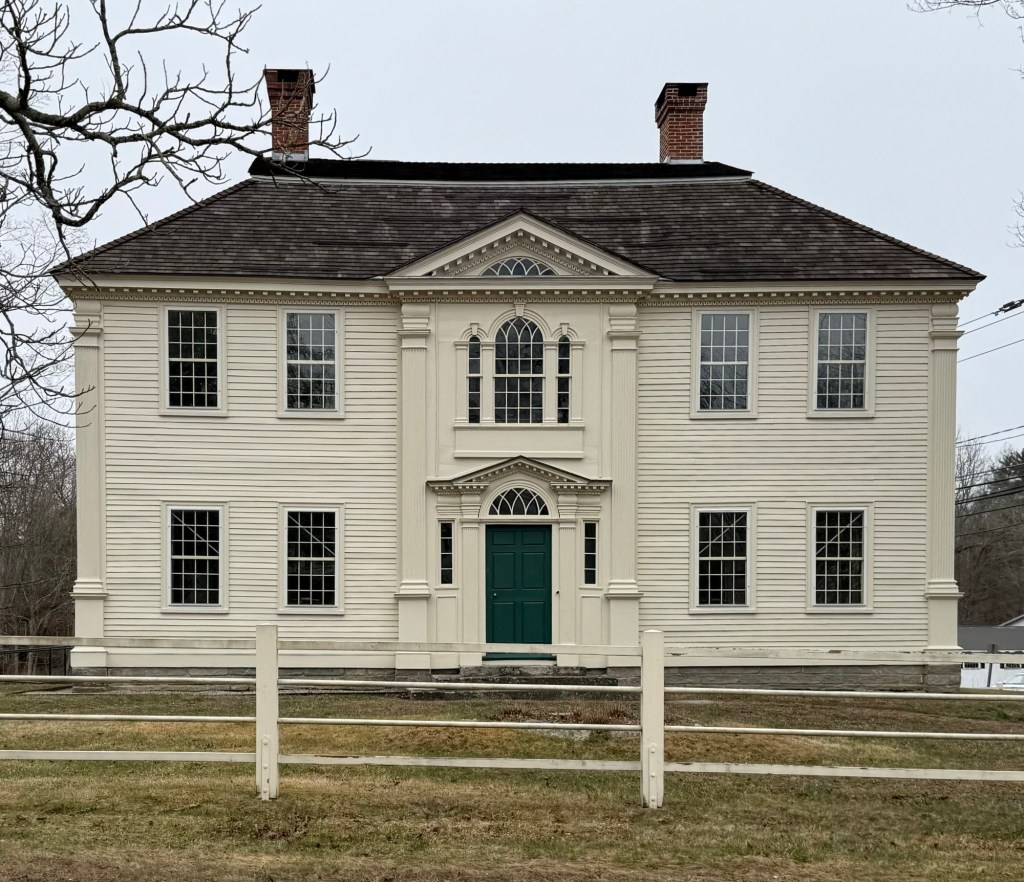
Stephen Hopkins House // 1743

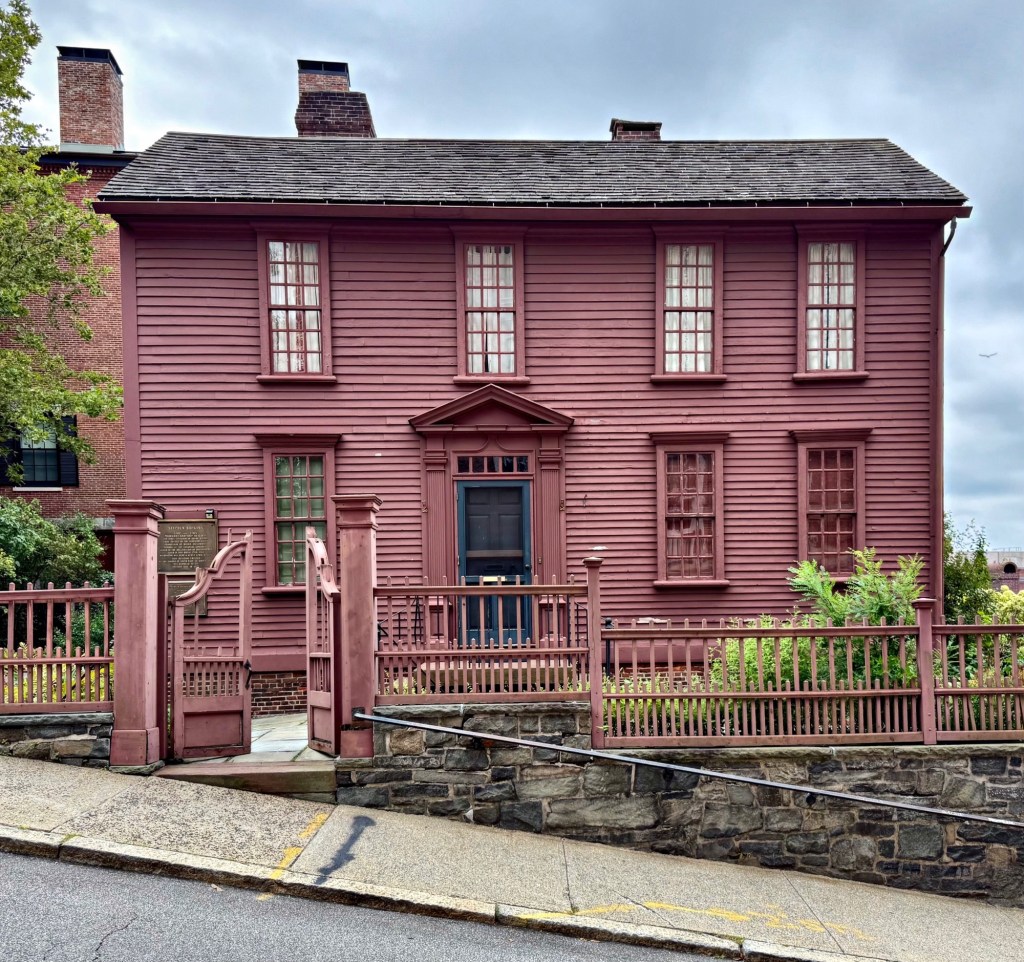
The Stephen Hopkins House is a Colonial-era house in the East Side neighborhood of Providence, and has survived waves of commercialization and redevelopment for nearly 300 years. The home is associated with Founding Father of the United States, Stephen Hopkins (1707–1785), who served as Governor of the Colony of Rhode Island and Providence PlantationsChief Justice of the Rhode Island Supreme Court, and was a signer of both the Continental Association and Declaration of Independence. In 1742, Stephen Hopkins purchased a one-story cottage built in 1707 on Main Street, and enlarged the original house to its present size by 1743, incorporating the original cottage as the rear ell. The eight-room residence was occupied by Gov. Hopkins, his family, as well as enslaved Africans who lived under the same roof until his death in 1785. During his ownership, George Washington slept here, twice. After 150 years of successive ownership, in 1928, the house was moved to its current location at the corner of Hopkins and Benefit Streets to facilitate the construction of the new Providence County Courthouse complex. The Hopkins House was restored by architectural historian and architect, Norman M. Isham, and is owned by The National Society of the Colonial Dames of America, operating it as a historic house museum. The Gov. Stephen Hopkins House is a National Historic Landmark.

First Baptist Church, Providence // 1774

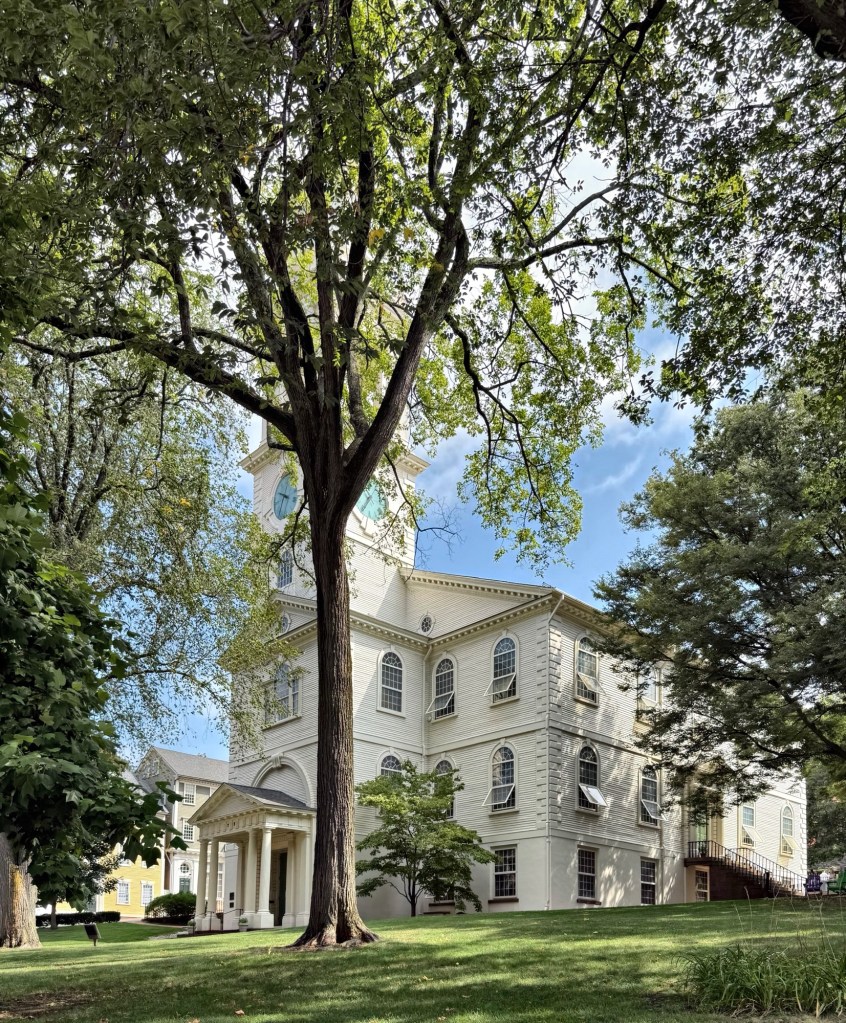
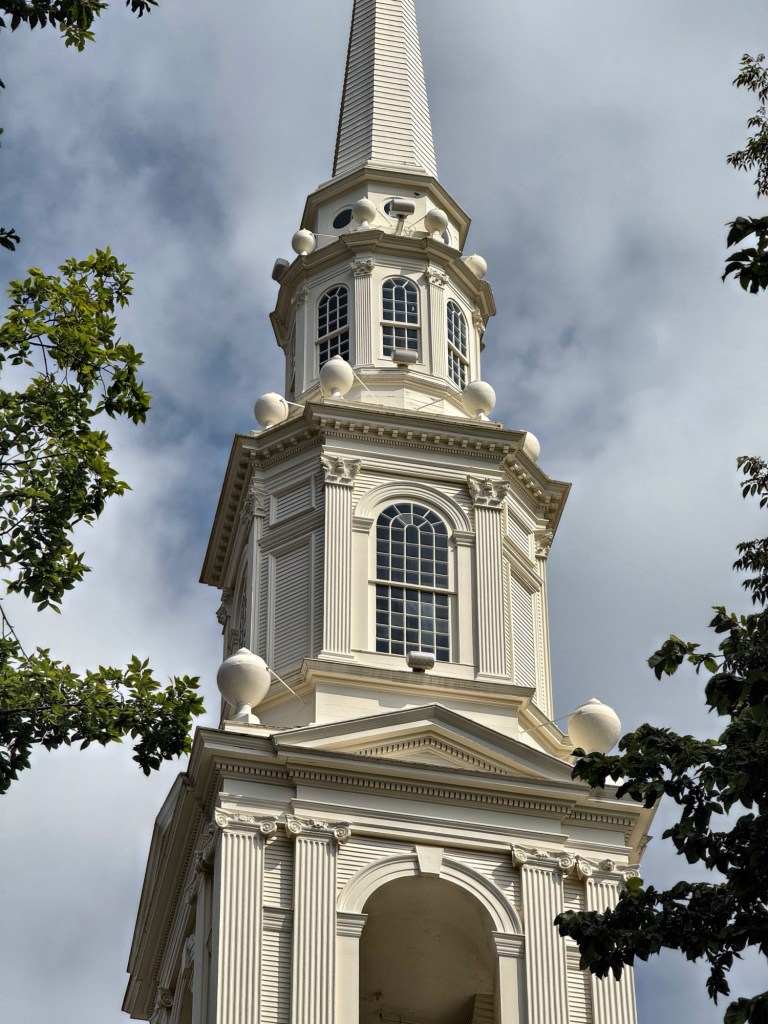
The First Baptist Church of Providence, also known as the First Baptist Church in America is the oldest Baptist church in the United States. The Church was founded in 1638 by Roger Williams, who before building this church in 1774, often met in private residences or in more plain meetinghouses to not show vanity. By the early 1770s, a new building for Providence Baptists was needed, and it was conceived in a very large (and ornate) way. Built to accommodate over 1,200 people (just under a third of the entire population of Providence at that time), this church was built “for the publick Worship of Almighty God; and also for holding Commencement”, referring to the commencement ceremonies of Rhode Island College (later Brown University), also founded under Baptist auspices. The church was designed by local amateur architect, Joseph Brown, who was likely inspired by Sir Christopher Wren’s London churches in James Gibbs’s Book of Architecture (1728). The construction was greatly aided by the fact that the British had closed the port of Boston as punishment for the Boston Tea Party. Many shipwrights and carpenters were thrown out of work and came to Providence to build the meetinghouse there. The structure was dedicated in May 1775, and the 185-foot steeple was added shortly thereafter. This was the first Baptist meetinghouse in New England to have a steeple, and it has survived dozens of hurricanes and hundreds of years of change since. The church is a National Historic Landmark and remains as one of the most significant buildings in New England.

Prudence Crandall’s School for Young Ladies and Little Misses of Color // c.1805

Built c.1805 for Elisha Payne, this architecturally distinguished Federal style mansion in Canturbury, Connecticut is one of the most significant buildings in the state, not only for its architecture but historical significance. In 1831, a young white woman, Prudence Crandall, was asked to open a boarding school for girls in Canterbury. She purchased this mansion and began operations for the school, which was attended by many wealthy girls in town. In 1832, Ms. Crandall was approached by a young Black girl who worked as a servant in town, named Sarah Harris, asking to attend the school. Encouraged by conversations with both Harris and Maria Davis, a Black woman who worked for Crandall and shared copies of the abolitionist newspaper The Liberator with her, Crandall agreed to admit Harris. Almost immediately, residents protested the school’s admission of a Black girl and parents threatened to withdraw their students, Crandall undeterred, closed her school and reopened in 1833, solely for Black and Brown students. Young girls traveled from several states to attend the school. The legislature of Connecticut responded by passing the “Black Law,” which prevented out-of-state Black and Brown people from attending school in Connecticut towns without local town approval. Crandall was arrested, spent one night in jail, and faced three court trials before the case was dismissed. In September 1834, a nighttime mob of men attacked the house, smashing the windows, leading Crandall to close the school out of fear for her students as no protections were afforded to them. These events made national and international news in the 1830s and galvanized the burgeoning abolitionist movement. Crandall would later marry and left Connecticut, never to return. For her vision and brave actions at this school, Prudence Crandall is Connecticut’s official state heroine and the house was designated a National Historic Landmark in 1991.

Joseph Story House // 1811

Built in 1811 for Joseph Story, lawyer, politician, and judge of the United States Supreme Court, this stately brick residence on Winter Street in Salem, Massachusetts, is significant, not only for its architecture, but for its esteemed owners. Judge Joseph Story (1779-1845), who was then Speaker of the House of Massachusetts in 1810, purchased this house lot near the Salem Common, and proceeded to have this three-story brick house constructed. By the time it was finished, Story had been appointed by President Madison to the bench of the United States Supreme Court. He was just 32-years-old when nominated to the bench. The house is also the birthplace in 1819 of Story’s son William Wetmore Story, a well-known sculptor. Judge Story would reside here until 1829, when he moved to Cambridge in order to pursue his work at the new Harvard Law School. The property was sold in 1831 to Robert Upton (1788-1863), a self-made merchant heavily engaged with trade in South America. Robert Upton and his sons were among the most important men in Salem in the 1830s-1850s, for they were able to maintain a successful foreign commerce, and keep ships and men employed, at a time when Salem was otherwise fading as a seaport. The house has been lovingly maintained by centuries of stewards, and the house was designated as a National Historic Landmark in 1973.

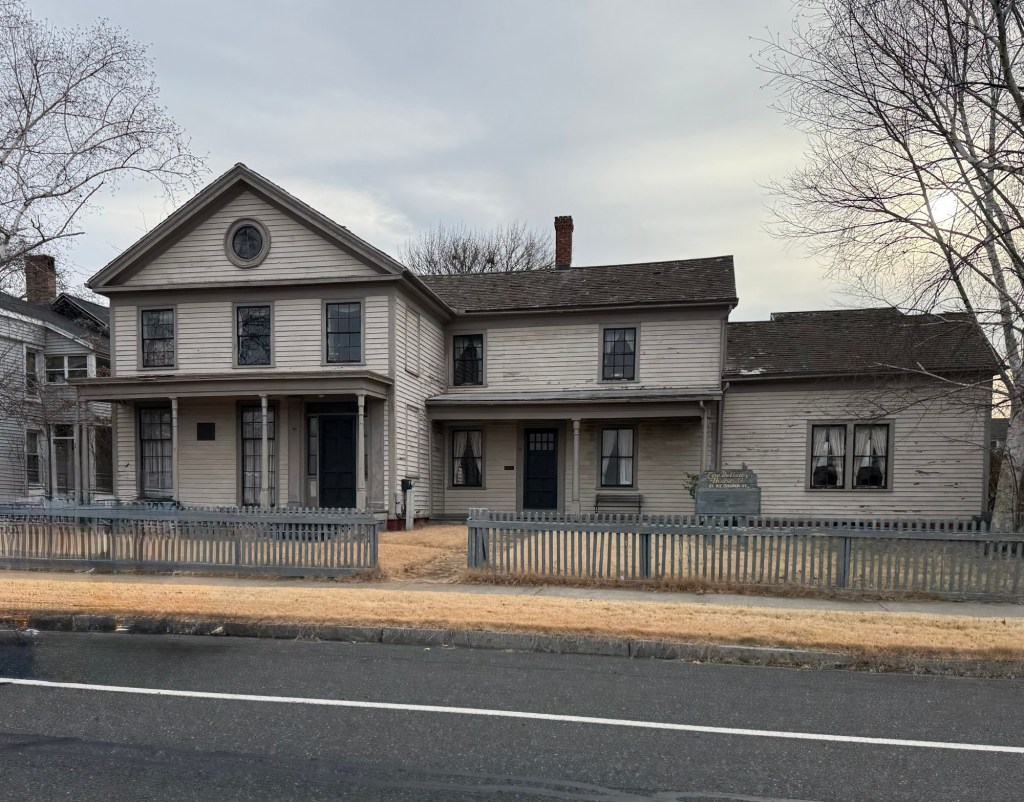
Edward Bellamy House // c.1840

The Edward Bellamy House is the only National Historic Landmark in Chicopee, Massachusetts. Its landmark designation was in honor of journalist and Utopian writer Edward Bellamy (1850–1898), whose home it was for most of his life. The house is located on Church Street in Chicopee Falls, an industrial village in town, which developed around mills and the Chicopee River. Built in for Harmon Rowley, a town selectman and local merchant around 1840, the house would later be purchased in 1852 by Rufus King Bellamy, a Baptist minister, moved the family into this house after its construction. The house, where Edward Bellamy spent much of his childhood is a well-preserved example of a late-Greek Revival residence, and today serves as a museum with rented offices that explores Bellamy’s ideas on social reform, economic justice, and the future of society. From this house, Edward Bellamy wrote  Looking Backward, a utopian novel that was instantly popular. Within a year it had sold 200,000 copies, and by the end of the 19th century had sold more copies than any other book published in America up to that time except for Uncle Tom’s Cabin by Harriet Beecher Stowe and Ben-Hur: A Tale of the Christ by Lew Wallace. His visionary work, which proposed a world free of poverty and class divisions, sparked a nationwide movement and influenced early American socialism. Edward Bellamy died of tuberculosis at his home, ten years after the publication of his most famous book. He was 48 years old. Today, the house stands as a reminder of Bellamy’s lasting legacy and his role in shaping conversations about social progress in the late 19th and early 20th centuries.

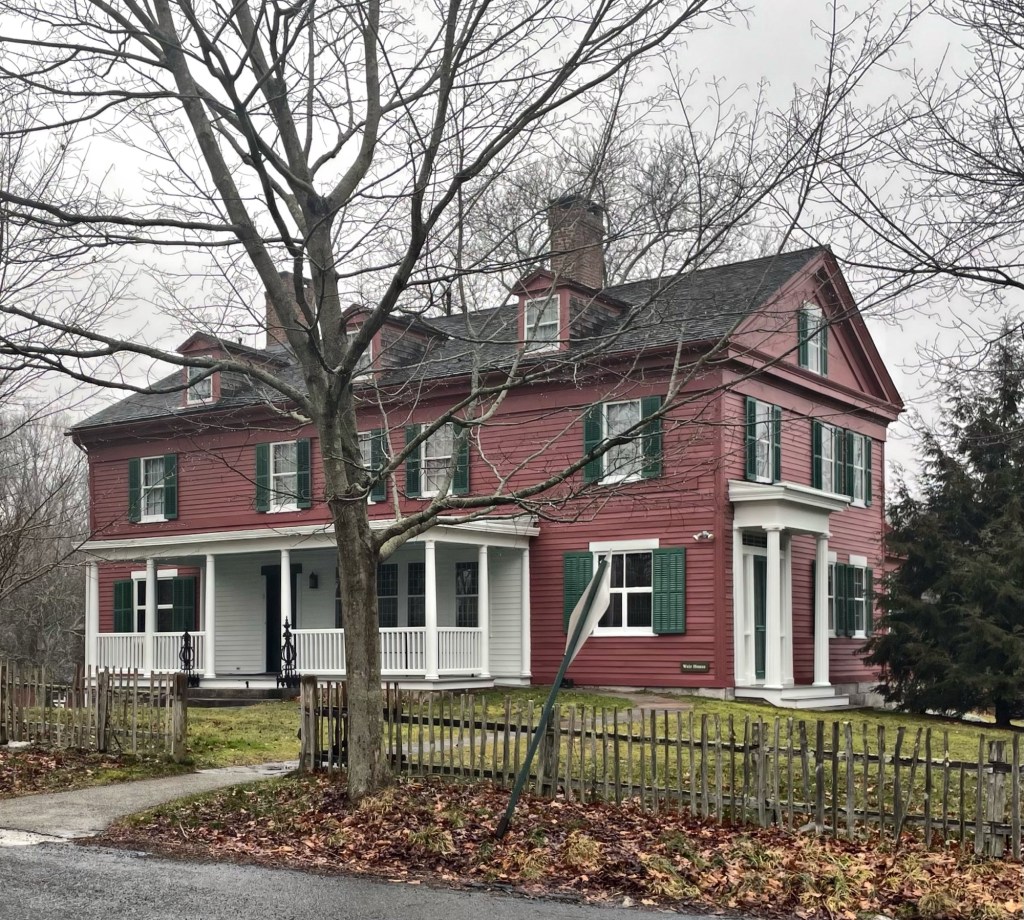
Weir Farmhouse // c.1780

Impressionist painter, Julian Alden Weir was looking to build a home in New York’s Adirondack Mountains when Erwin Davis, an art dealer, offered him a farm in Ridgefield, Connecticut, for a painting he owned plus ten dollars. After a visit in 1882, Weir agreed and acquired the 153-acre farm. The old farmhouse, which dates to the 1780s, and was modified in the Greek Revival style before Weir’s ownership and expanded and renovated again during its time as an artist’s retreat. The house was often filled with family and friends as a popular artistic retreat for Weir’s closest friends, including: Childe Hassam, Albert Pinkham Ryder, John Singer Sargent, and John Twachtman. Weir’s daughter Dorothy Weir, a noted artist in her own right, took over management of the property following her father’s death in 1919. Sculptor Mahonri Young would build a second studio at Weir Farm after the couple married in 1931. The Weir Farm site was designated as a National Historic Site in 1990, but prior to its permanent protection, Weir Farm had been subdivided for housing development in the late 1980s. The Trust for Public Land worked to reacquire the divided land through close to 2 dozen transactions, preserving the site for generations to come.

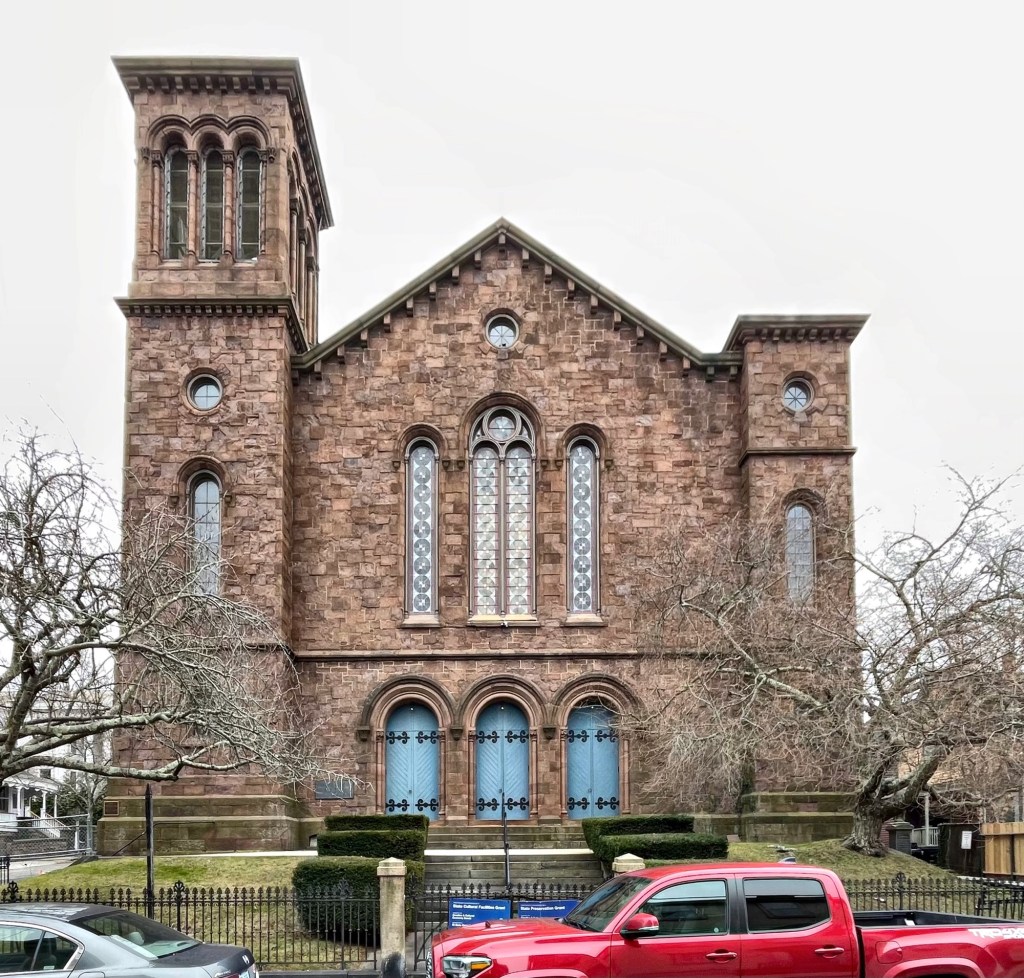
Newport Congregational Church // 1857

The Newport Congregational Church on Spring Street was built between 1855-1857 and serves the United First and Second Congregational parishes of Newport whose history began in the late 17th century. The building, designed by Joseph C. Wells a New York City architect, and redecorated on the interior in 1880 by John LaFarge, is an interesting and well-preserved example of the Romanesque Revival, brownstone churches of the mid 19th century. LaFarge had recently completed work on H. H. Richardson’s landmark Trinity Church, Boston, and sought to provide a more elaborate interior than he was able to in Boston. He produced twenty stained glass windows and a series of murals, which today, represent the only fully integrated ecclesiastical interior he produced. The congregation has shrunk in recent years and moved to nearby Middletown, but it’s vestry was committed to the preservation of La Farge’s work. The LaFarge Restoration Fund was established and since the 1990s, the nonprofit has spent $3 million on glass and mural restoration, architectural stabilization and systems upgrades for their former building. The building is used occasionally as an arts center.

President Calvin Coolidge Birthplace // 1840

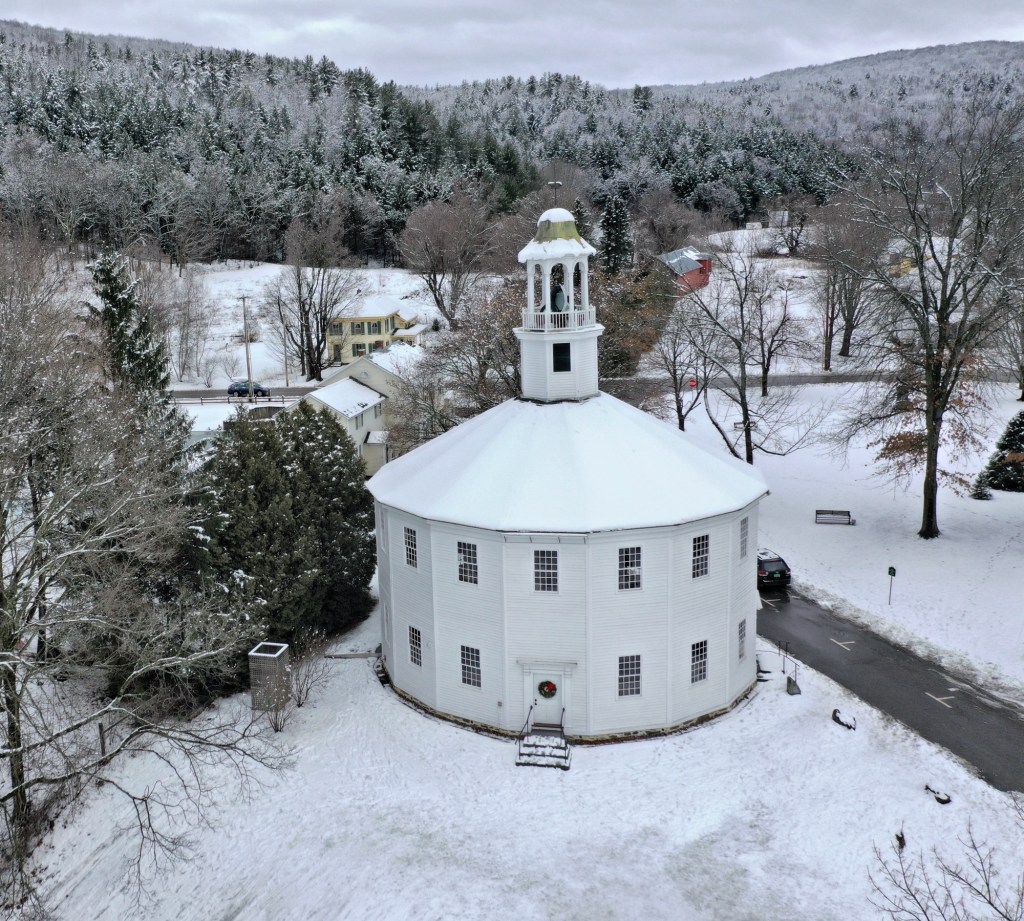
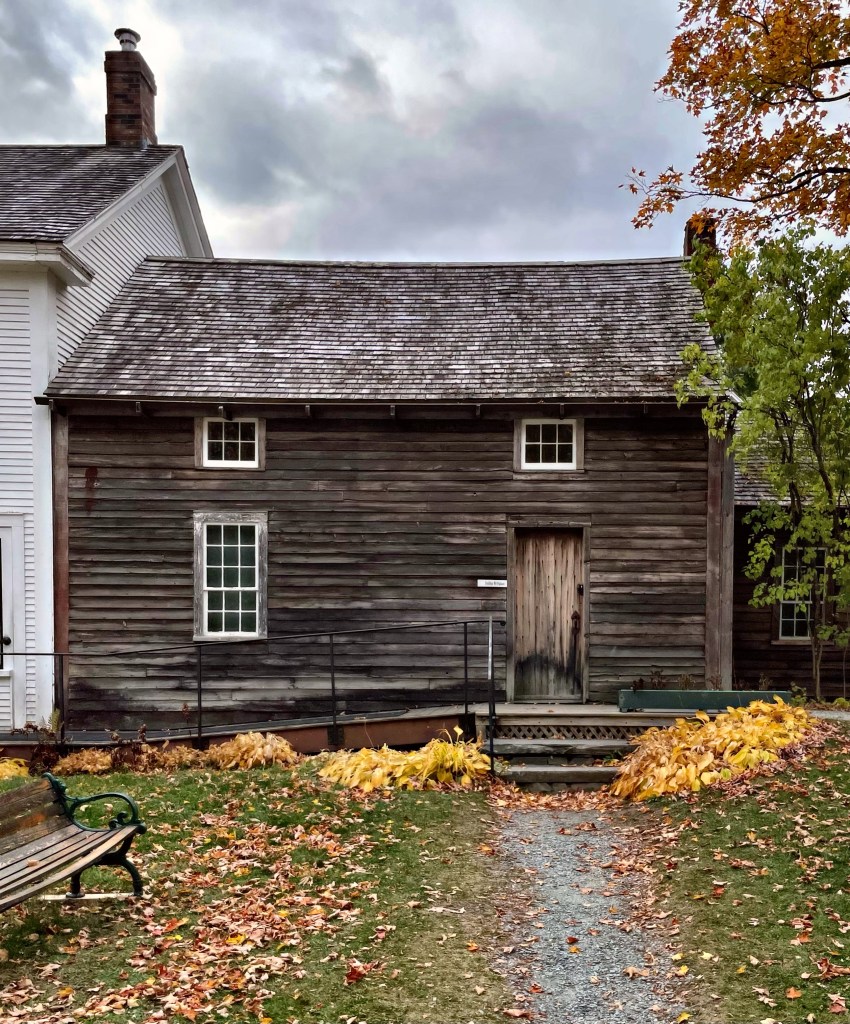
The President Calvin Coolidge State Historic Site in Plymouth, Vermont preserves the birthplace and childhood home of Calvin Coolidge, the 30th President of the United States. This iconic historic village appears much as it was during Coolidge’s lifetime. The homes of the Coolidge family, their relatives and friends are joined by the 1840 church, 1890 schoolhouse, cheese factory, and historic agricultural structures and barns. More on all of these later. First up is the birthplace of President Coolidge. This squat 1 1/2-story dwelling was built in 1840 at the rear of the Coolidge Family store which fronts the main road. By the 20th century, the old home was altered, but was restored in 1971 just in time for the 100th birthday celebration by the State of Vermont for Coolidge, dedicating the village as a historic museum.

Naulakha // 1893

Located on a hillside in rural Dummerston, Vermont, you will find Naulakha, one of the most significant properties in the region. Naulakha (pronounced now-LAH-kuh) was built in 1893 for Rudyard Kipling an english journalist and author born in British India, an upbringing which inspired much of his professional work. In 1892, Kipling married Caroline Balestier, who was born into a prominent New England family. The couple honeymooned in Vermont near Carrie’s family home. The couple would settle in Vermont in a cottage which was soon outgrown, leading the couple to buy 10 acres of land from Carrie’s brother Beatty Balestier and built their own house. The new Shingle-style home they had built was named Naulakha after a book written by Rudyard and Caroline’s late-brother Wolcott. Kipling wanted a home that merged the distinctive qualities of the Indian bungalow with those of the American Shingle Style and he worked closely with his architect, Henry Rutgers Marshall of New York City, a Balestier family friend to achieve this.

The rectangular mass of the home parallels the contours the hill upon which its sited, and sits atop a raised fieldstone basement salvaged from stone walls on the property. From the home, Kipling wrote some of his most influential work, including the Jungle Books (1894, 1895), Captains Courageous (1896, The Seven Seas (1896), and The Day’s Work (1898). Sadly, the Kipling’s moved out of Naulakha after just a few years, largely from familial disputes with Caroline’s brother, Beatty. The family removed to England where they settled, though Rudyard always mentioned how much he missed his secluded life in Vermont. The property was then purchased by the Holbrook family, who made slight modifications to the property, but all maintaining the original design and feeling. In 1992, the British-based Landmark Trust acquired Naulakha as its first American building, later creating the Landmark Trust USA to maintain the property and more. The Landmark Trust USA rents out Naulakha and the adjacent carriage house for short-term rentals to provide revenue for maintaining these properties.

For more on my stay at the absolutely stunning Kipling Carriage House, check out my later blog post here.

John Sullivan House // 1740

John Sullivan was born in nearby Somersworth, and studied law. He settled in Durham to practice law in 1763, and purchased this house in 1763 (it was built in 1740 by Reverend Hugh Adams). It served as his home for the rest of his life, and is buried in the family cemetery nearby. Sullivan was a vocal opponent of British rule in the colonies, and was elected to the First Continental Congress in 1774. In December of that year he led a raid on Fort William and Mary in which the colonial militia seized munitions stored there. He was appointed a brigadier general in the Continental Army in 1775, and served through the American Revolutionary War. He participated in the Siege of Boston, and was captured by the British in the 1776 Battle of Long Island. After being exchanged, he served in the Battle of Trenton, the Philadelphia campaign of 1777, the failed attempt to recapture Newport, Rhode Island, and the 1779 Sullivan Expedition, in which the Iroquois, who had largely sided with the British, were driven from upstate New York. Sullivan’s actions and barbed personality made him enemies in Congress, and he resigned from the army late in 1779. He returned to New Hampshire, where he served as Attorney General 1782-86, and as President (the office now known as Governor) 1787-89. He chaired the state convention that ratified the United States Constitution. His home was designated a National Historic Landmark in 1972, the most prestigious designation (more than listing on National Register of Historic Places). I encourage everyone to read his Wikipedia page, he was a fascinating and polarizing early Revolutionary, that I personally did not know about until researching.