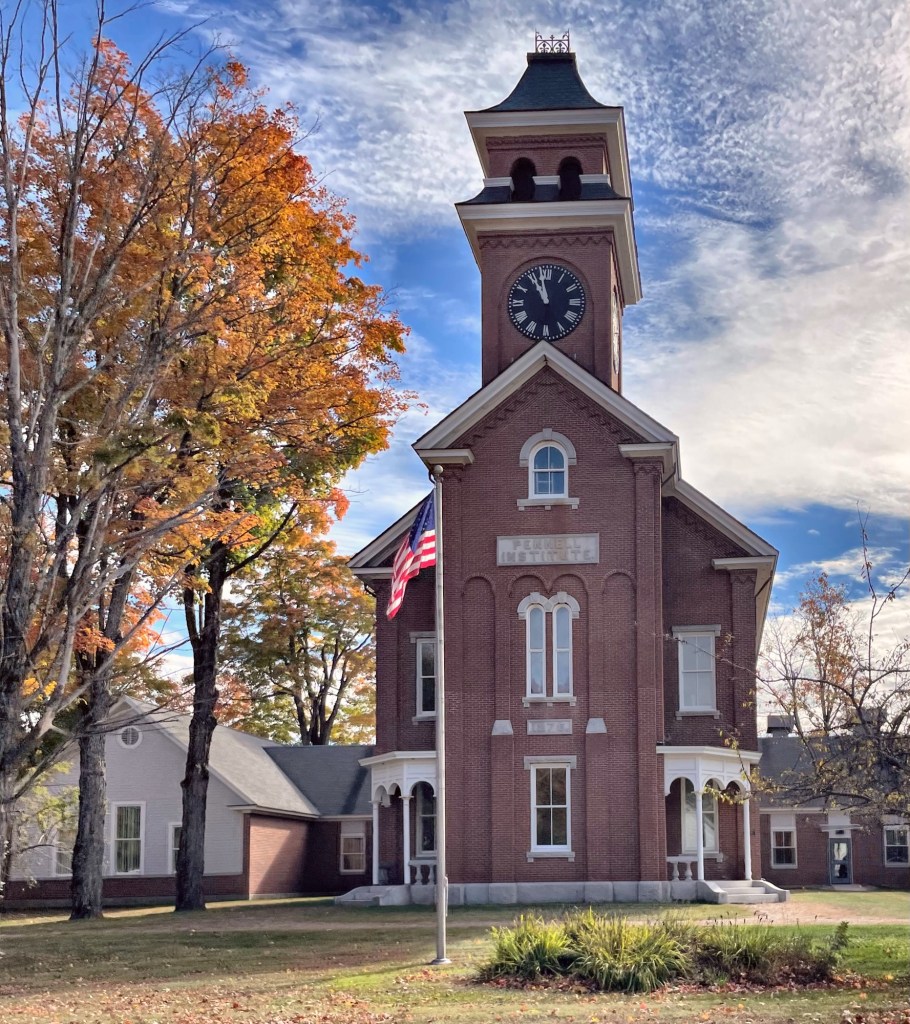
New England Masonic Charitable Institute // 1858

The New England Masonic Charitable Institute building is located in Center Effingham, New Hampshire, and is among the rural town’s most impressive structures. The structure was built in 1858 by the Charter Oak Lodge No. 58 of Free and Accepted Masons as a school to educate orphans of Masonic members, but they also admitted local students. It is the only known school building purposely constructed by Masons in the United States. Classes were conducted from 1861 to roughly 1882 with students boarding with local families. The impressive Italianate style building is dominated by a six-story bell tower supporting an octagonal cupola, and exhibits many architectural details including the corner quoins, paired eave brackets, and dentilled cornice. Charter Oak Lodge No. 58 sold the building to the Town of Effingham in 1891 for one dollar but retained rights to the second floor temple room in perpetuity. The walls and ceilings of the Lodge’s temple space are covered with trompe l’oeil murals attributed to Massachusetts painter Philip A. Butler. Images of classic sculptures, architectural details and Masonic symbols, including the All-Seeing Eye, are incorporated into the paintings. Heavily water-damaged in the late 1980s, they have since been restored. The building remains occupied by the Effingham Public Library, what a library building for a town of just 1,700 residents!

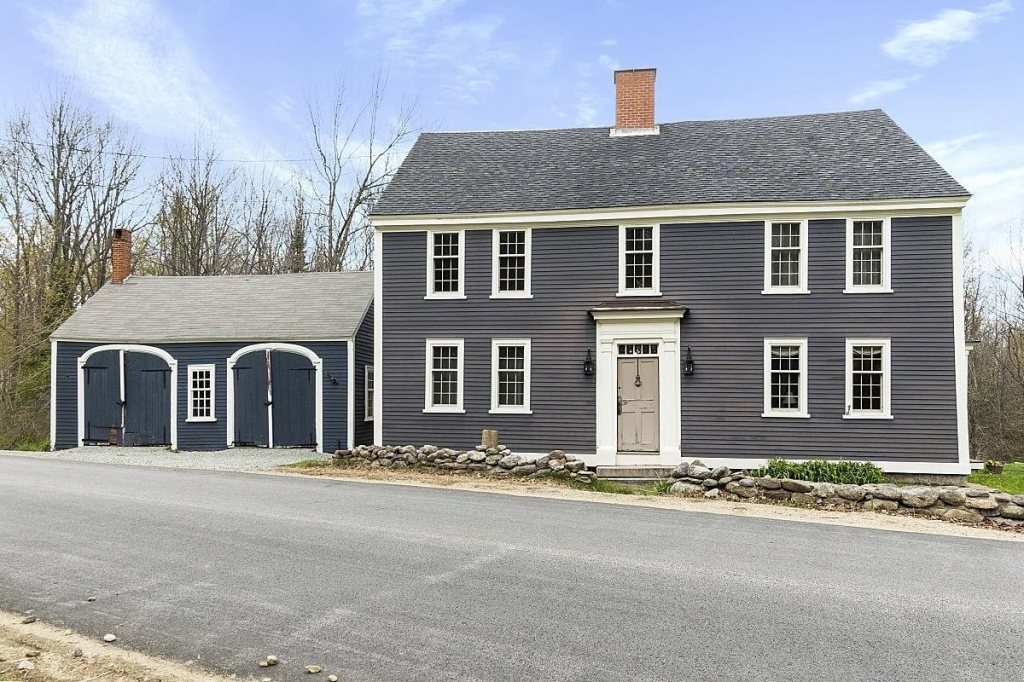
A. M. Donna end House // 1928

Abraham Malcolm Sonnabend was born in Boston on December 8, 1896, the son of Esther and Joseph Sonnabend. Sonnabend graduated from Harvard College in 1917 in order to enlist at the outbreak of the Great War. At the end of World War I, Sonnabend joined his father’s real estate organization. He married Esther Lewitt in 1920, and by 1927, he had increased his real estate holdings to a net worth of $350,000. Just before the 1929 stock market crash, Sonnabend hired Boston architect Sumner Schein to design this Tudor Revival style home, on a site formerly occupied by a larger Queen Anne style residence. Built in 1928, the Tudor Revival house features clinker brick walls with cast stone trim and a two-story castellated bay all capped by a slate roof. The enterprising A. M. Sonnabend would eventually outgrow this modest Tudor home after he got into hotels as investments. In 1944, Sonnabend (with seven partners) acquired a package of Palm Beach, Florida hotels for $2.4 million including the Biltmore, Whitehall and the Palm Beach Country Club. He would sell the Biltmore to Conrad Hilton for a massive profit. In 1956, Sonnabend created the Hotel Corporation of America (HCA) and grew the business to new heights. The 1928 Sonnabend House is significant architecturally and as the first purpose-built property by the late-developer.

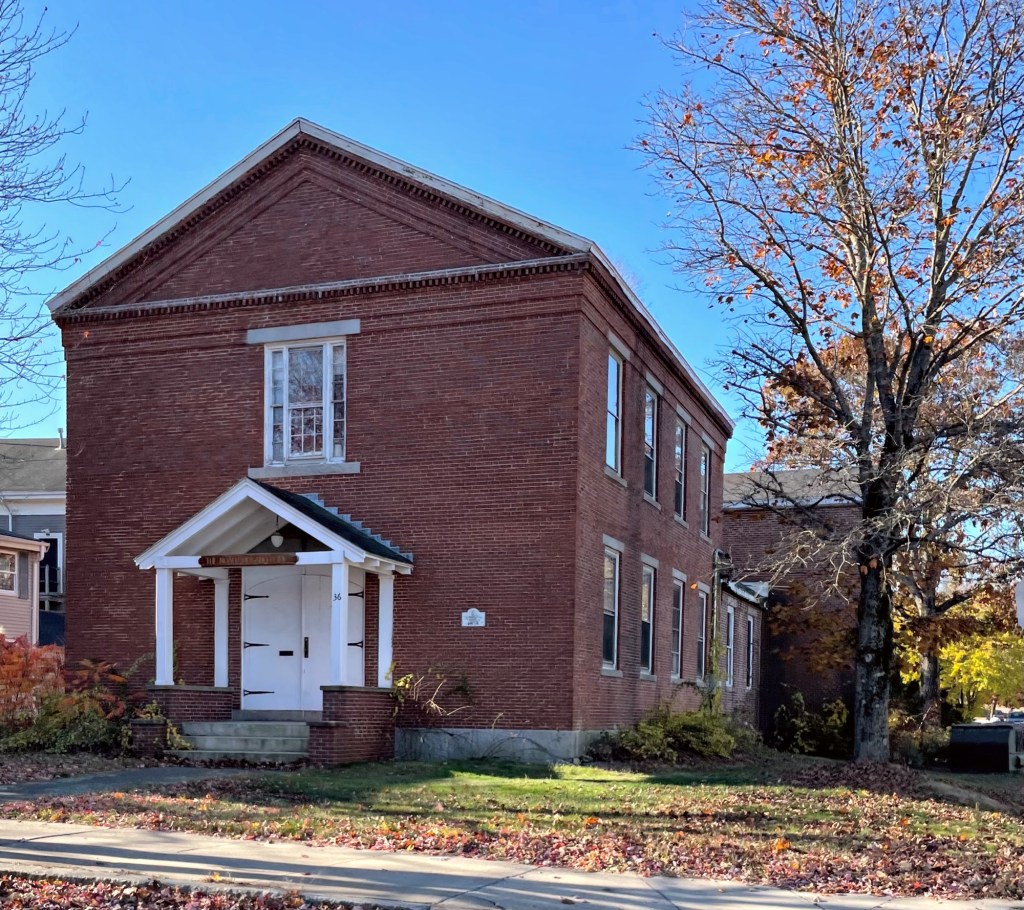
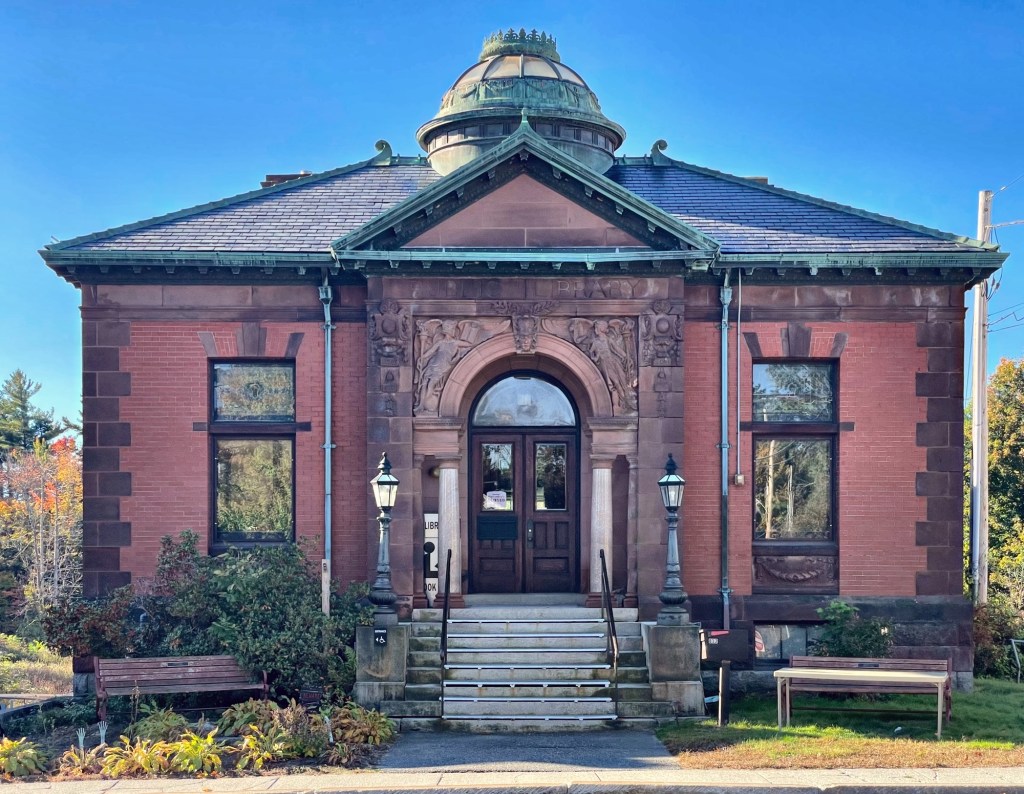
Ashford Academy // 1825

Built in 1825, the Ashford Academy school building is the last remnant of what was Ashford, Connecticut’s once thriving town center. The taverns, church and businesses which were once located here have almost entirely been razed, leaving just this school building as the remaining structure. Ashford Academy was founded about 1825 when a group of citizens raised funds toward adding a second story to a schoolhouse then under construction in the town center. Only one teacher was hired per term, and some years there were no academy classes at all. The last academy session was held in 1875, though the building continued in use as a district school until 1949. The building is significant, not only for its siting and connections with the town’s early days, but also architecturally as a high-style school building for a more rural setting.

Butterfield Mansion – Derby Line Village Inn // 1903

Once described in a local history book as: “The largest, most glamorous home ever built in this [Derby Line] village”, the Butterfield Mansion is one of Northern Vermont’s best early 20th century houses. The house was built between 1901-1903 for Gen. Franklin G. Butterfield (1842-1916) who before this, received the country’s highest award for bravery during combat, the Medal of Honor, for his action at Salem Heights, Virginia on May 4, 1863 during the American Civil War. He would eventually move to Derby, Vermont, where he established the Butterfield Company, who specialized manufacturing axle cutters. Butterfield hired architects, James T. Ball and Gilbert H. Smith of Boston, who also designed the Haskell Free Library and Opera House in town that same year, to design his Colonial Revival mansion and intact carriage house. Today, the Butterfield Mansion is known as the Derby Line Village Inn.

Derby Line Border Station // 1932

Located on the border of Canada in the northern part of Vermont, Derby is a charming town named after Derby, in England.  Located in the region known as the Northeast Kingdom, the area has benefitted from timber, maple sugaring, hop vineyards, and dairy production in its history since it was settled in 1795. This border crossing is located between the villages of Derby Line, Vermont and Stanstead, Quebec, both of which are developed up to the border, and without the security and signage, you’d never guess they are different countries! The cross-border relationship was cemented in part by the construction in 1904 of the Haskell Free Library and Opera House (last post), which straddles the border and provides library services to both communities. This station was formally opened in 1932, when the main building was completed. It is one of several standardized inspection station layouts developed by the United States Treasury Department, and was the largest and most architecturally sophisticated of those built in Vermont in the 1930s. It was built as part of a program to improve border security developed to respond to increased use of the automobile, increased illegal border crossing, and smuggling related to Prohibition. After the 9/11 terrorist attacks, the border was secured and a new station directly on the border was built.

St. Denis Catholic Church // 1838

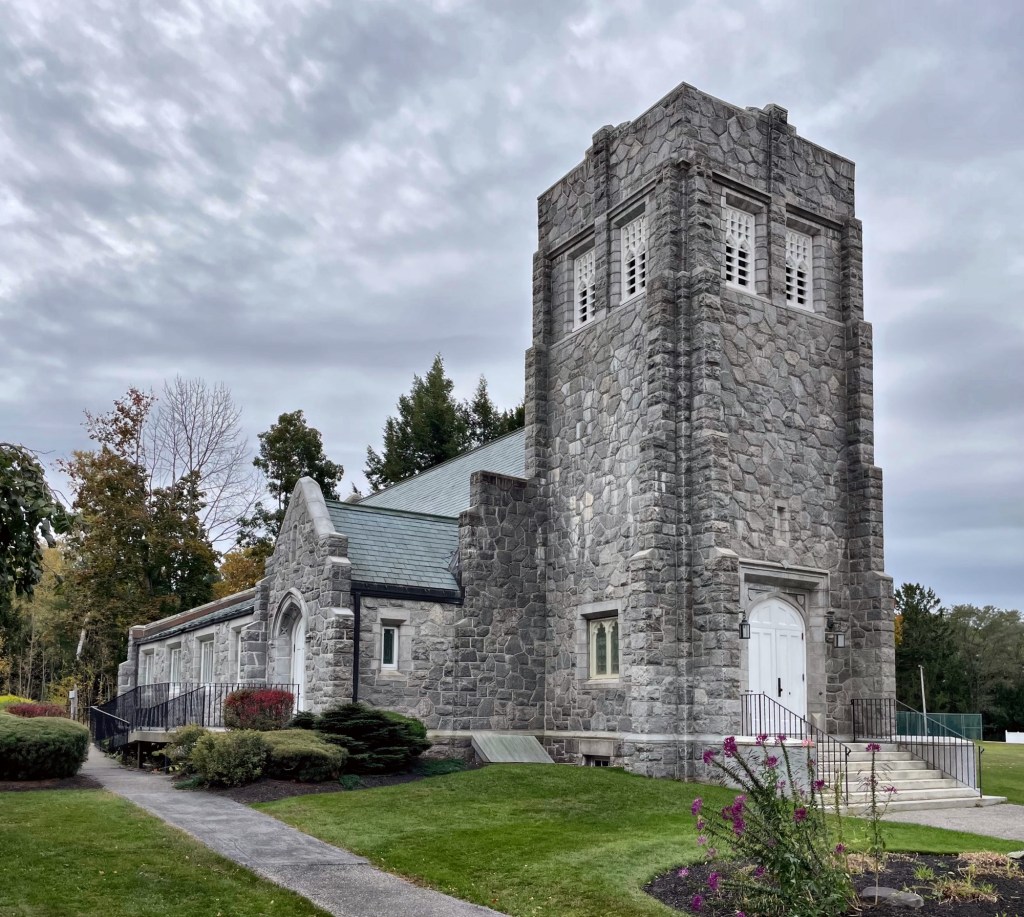
Believe it or not, this church in rural Whitefield, Maine is the second oldest Catholic Church in New England! As Irish and French Canadian families settled in this part of Maine in the early 19th century, Catholic churches were needed to provide worship space for those families. The church community of St. Denis began in 1818 when Father Dennis Patrick Ryan, an Irish immigrant serving at St. Patrick Church in Newcastle (the oldest Catholic Church in New England), moved to Whitefield to serve the influx of Irish Catholics and soon founded the church. Fr. Ryan oversaw the construction on a wood-frame structure built on this site. As more Catholic families settled here, a more permanent building was needed, and between 1833 and 1838, the main portion of the present brick church building was constructed around that original church. The tower was added in 1861, and the stained glass windows also date from later in the 19th century following the growth and prosperity of the church and its members. The St. Denis Parish House was constructed across the street in 1871 and is a lovely Romanesque style building.

Yale University – Yale Art Gallery Building // 1928

One of the most visually stunning and unique buildings in New England is the 1928 Yale Art Gallery building, which is connected to Street Hall (last post) via a skybridge over High Street. Completed in 1928, the Yale Art Gallery was designed by relatively little-known, but significant 20th century architect, Egerton Swartwout. Swartwout graduated from Yale College in 1891 with a B.A. degree and with no formal architecture training, was hired as a draftsman at the illustrious firm of McKim, Mead & White in New York before running his own office, Tracy and Swartwout. Built in a Gothic Renaissance style inspired by Italian buildings such as the Bargello in Florence, the sandstone masonry structure commands the prominent site with a corner tower and facade fronted by five gothic arched windows. Inside, visitors are transported to a historic Italian art museum within the Gallery Wing, with the full-height Gothic windows with walls, floors and ceilings restored and lined in stone.

Yale University – Alumni Hall // 1851-1911

Detroit Publishing Company image

Alumni Hall at Yale was designed and built between 1851-1853, at the northwest corner of Yale’s Old Campus. Its was designed by Gothic specialist architect Alexander Jackson Davis, who completed Dwight Hall (the Old Library) a some years prior. The building had a large, open floorplan on the first floor for large gatherings as well as the entrance examinations, along with the biennial examinations that every student had to take at the end of his sophomore and senior years. As the building turned 50 years old, the campus around it was already looking very different. Shifting priorities for dormitory space in the yard necessitated its demolition for Wright Hall (next post). Alumni Hall was razed in 1911, but its two crenelated towers were salvaged when the building was demolished. They were incorporated into Weir Hall which has been incorporated into Jonathan Edwards College, one of Yale’s residential colleges.

Yale University – Phelps Hall and Gate // 1896

After Lawrance and Welch halls (previous two posts) were built on the eastern edge of Yale’s Old Campus, there was a small space between the two that needed to be enclosed to provide a true cloister for students, shielding them from the noise and ever-developing Downtown of New Haven. Architect Charles C. Haight designed the new hall to resemble a medieval gatehouse. The simple, tall rectangular mass has octagonal towers at each corner with copper domes on top and a crenelated parapet resembling an old English castle spanning between them. On the ground floor is the Phelps Gate, the main entrance to the Old Campus from the east. Its namesake was the late William Walter Phelps, an 1860 Yale graduate who served as a Congressman and as ambassador to Germany and Austria-Hungary. The building holds an important role in the annual commencement ceremonies, which begin in the New Haven Green and pass through to the Old Campus through this gateway.

Dixmont Town House // c.1836

Dixmont, a small rural town in central Maine was originally originally a land grant by the Commonwealth of Massachusetts (of which Maine was then a part) to Bowdoin College, which sold the first settlers their land for profit to build on their campus. As a result, the town was originally called “Collegetown”, which was obviously short-lived. Dr. Elijah Dix (1747-1809) of Boston, who never lived there but took an interest in its settlement, encouraged others to settle there, and when the town was officially incorporated in 1807, it named itself after Dix, as Dixmont. A “malignant fever” broke out among the settlers in the early years, also killing Elijah Dix while in Dixmont on a trip there in 1809, he was buried in the Dixmont Corner Cemetery. Elijah was the grandfather of reformer and nurse Dorothea Dix. The early settlers had this Town House built in the center of the township around 1836 as a vernacular structure. The building (like many early town houses) was used for both secular and religious purposes. This small structure is one of the oldest surviving town houses in the state and served as the town government center until 1952 when it hosted its last town meeting. It was restored in the early 2000s and looks great!

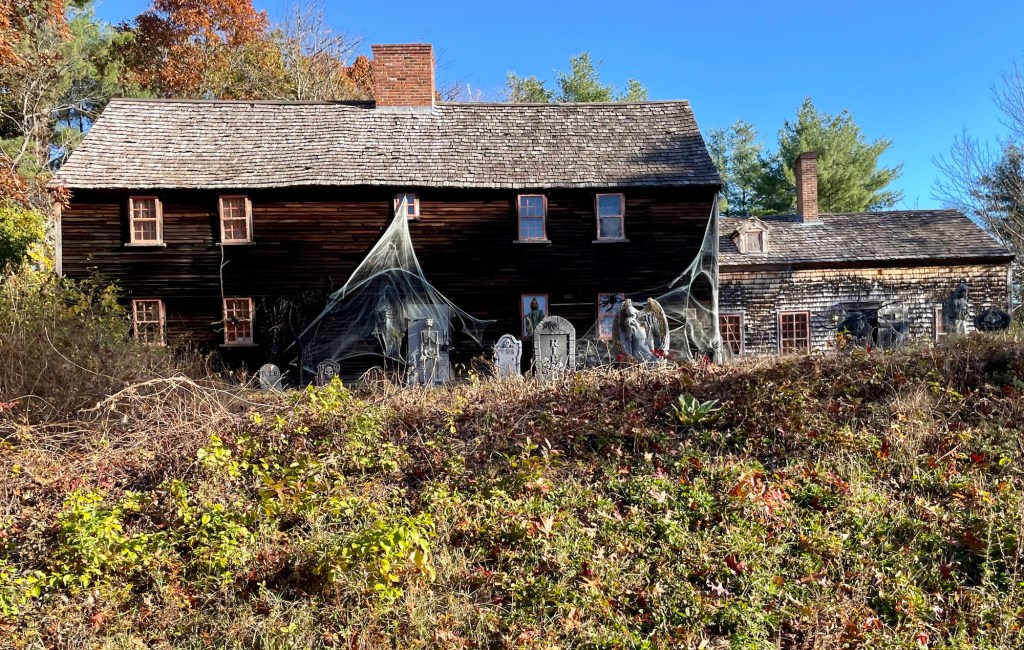
Benjamin Stiles House // 1787

Built for Revolutionary War veteran and local lawyer Benjamin Stiles, this stunning Georgian mansion is unique for its use of brick in construction, a material not too common for some of Southbury’s earliest homes. Local tradition holds that a French engineer in General Rochambeau’s army provided assistance in designing the building, using the metric system, likely on the march from Newport to Yorktown. Benjamin’s father was one of the original settlers who migrated from present-day Stratford to the un-developed Southbury. The hip-on-hip roof with pedimented dormers is really a stunner, and unique for the town!

Bullet Hill Schoolhouse // c.1762

The Bullet Hill School, formerly known as the Brick School, is the oldest public building in Southbury, Connecticut and one of the oldest schoolhouses in America. Originally built in 1762 of locally made bricks, the two-story structure is a well-preserved example of a Colonial-era school building. Some sources date the building to 1790. The building remained in operation as a school for 179 years until December 1941 when the new Southbury Consolidated School, now Gainfield Elementary School, opened in January 1942. The Bullet Hill school is distinguished by its near-square proportions, locally made bricks laid up in Flemish bond, generous window sizes, and a hipped roof. The original cupola, now replaced, served as the model for Southbury’s 1977 Town Hall and other public buildings in town. Today, the former schoolhouse is maintained by the town and operated by the Historical Society as a living museum that is open for class visits and tours.

White Oak Schoolhouse // 1840

When the first white settlers of present-day Southbury, Connecticut, traveled up the Housatonic on rafts in 1673, they spent their first night under a white oak tree in what is now Settlers Park. That section of Southbury became known as White Oak for this early history. As this part of town developed and the population grew, another schoolhouse was needed. In around 1840, this Greek Revival style school building was constructed and has stood proudly on Main Street in the nearly 200 years since. The school now shares the same lot as the Reverend Graham House and has most recently been occupied as an antiques store.

Westover School // 1909

At the heart of the rural community of Middlebury, comprised largely of Connecticut farmers, far from the hustle and bustle of the world, Mary Robbins Hillard (1862-1932) sought to create a girls school to “provide young women with a liberal education in a community which would contribute to the development of their character, independence and sense of responsibility.” To accomplish this, they needed a school, and Mary hired her good friend (and architect) Theodate Pope Riddle to design the private girl’s school campus and main buildings on a site fronting the town green. The school opened in 1909 with125 pupils, slightly over capacity. For the design Theodate Pope Riddle – who was one of the first American women architects and a survivor of the sinking of the RMS Lusitania – took inspiration from English Arts and Crafts and historical precedence in English schools with large open courtyard plans. Originally finished in a gray stucco, the building enclosed a quadrangle at the rear. Inside, administration offices, reception rooms, living rooms, a library, gymnasium, chapel, dining rooms, infirmary, and (of course) classrooms lined the interiors on a closed loop to allow students and teachers access to all parts of the building without ever stepping outside in the cold New England winters. The Westover School remains active and one of the highest ranked private schools in the area today, and with a more cheery yellow coat!

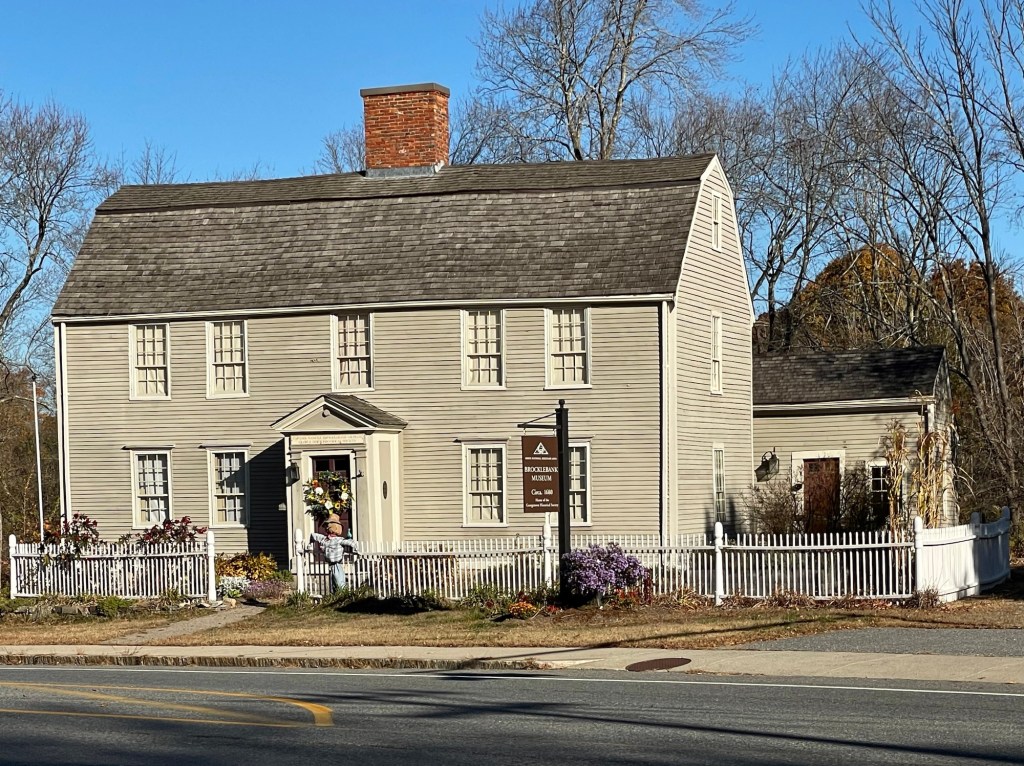
Pomeroy-Belden House // c.1758

This stunning gambrel-roofed Georgian manse is located on Bronson Road in Fairfield’s Greenfield Hill neighborhood, a well-preserved in the northern part of town with large historic homes on large lots. The Pomeroy-Belden House was built in about 1760 for Seth Pomeroy (1733-1770), the son of Seth Pomeroy Sr. (1706-1777) a gunsmith and soldier from Northampton, Massachusetts, who served in King George’s War, the French and Indian War, and the Revolutionary War (at nearly seventy years old). Seth Jr. graduated from Yale in 1753, and would accept the call as the minister of the Greenfield Hill Congregational Church from 1757 until his death in 1770. He had this stately house built for his family during his time as minister. After his death, the house was purchased by Captain David Hubbell who used it as a store until it was purchased by Reverend William Belden, who served as pastor of the Greenfield Hill Congregational Church from 1812-1821. The Georgian mansion features a central double-door entry with traditional door surround, later shingle siding and a gambrel, wood shingle roof punctuated by three small dormers.