Porphyry Hall // 1880

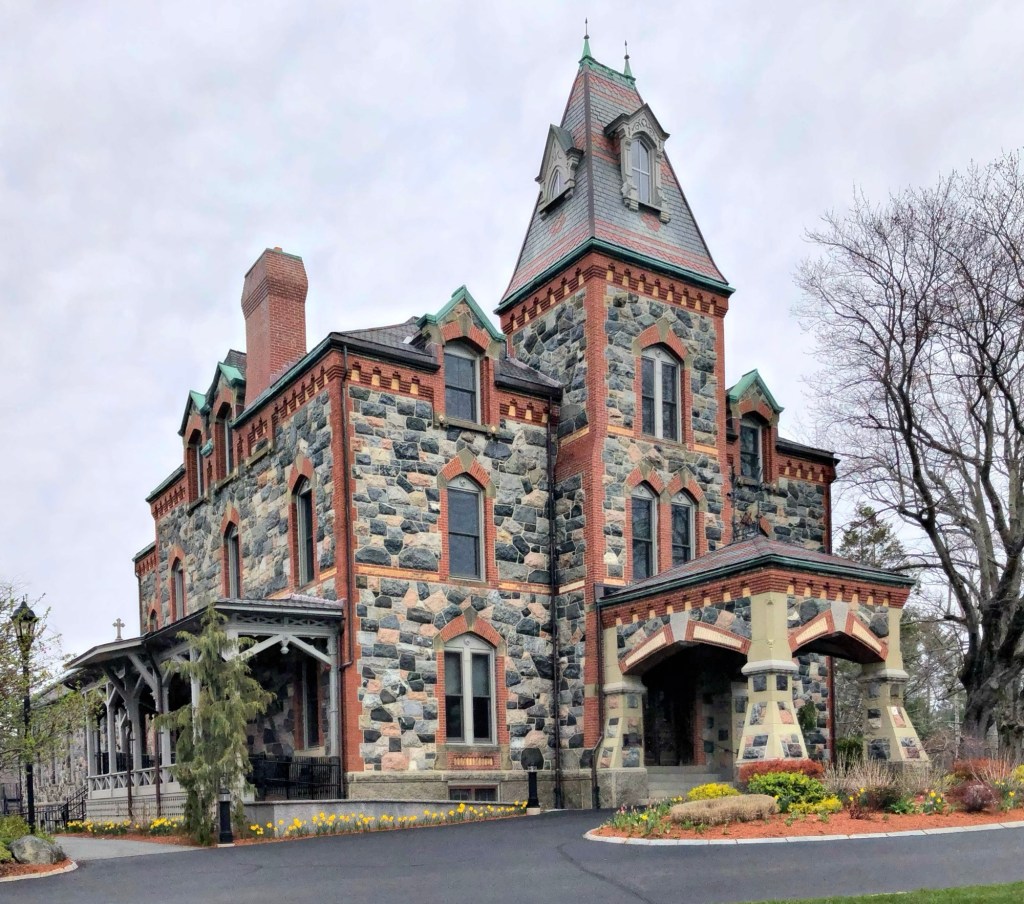
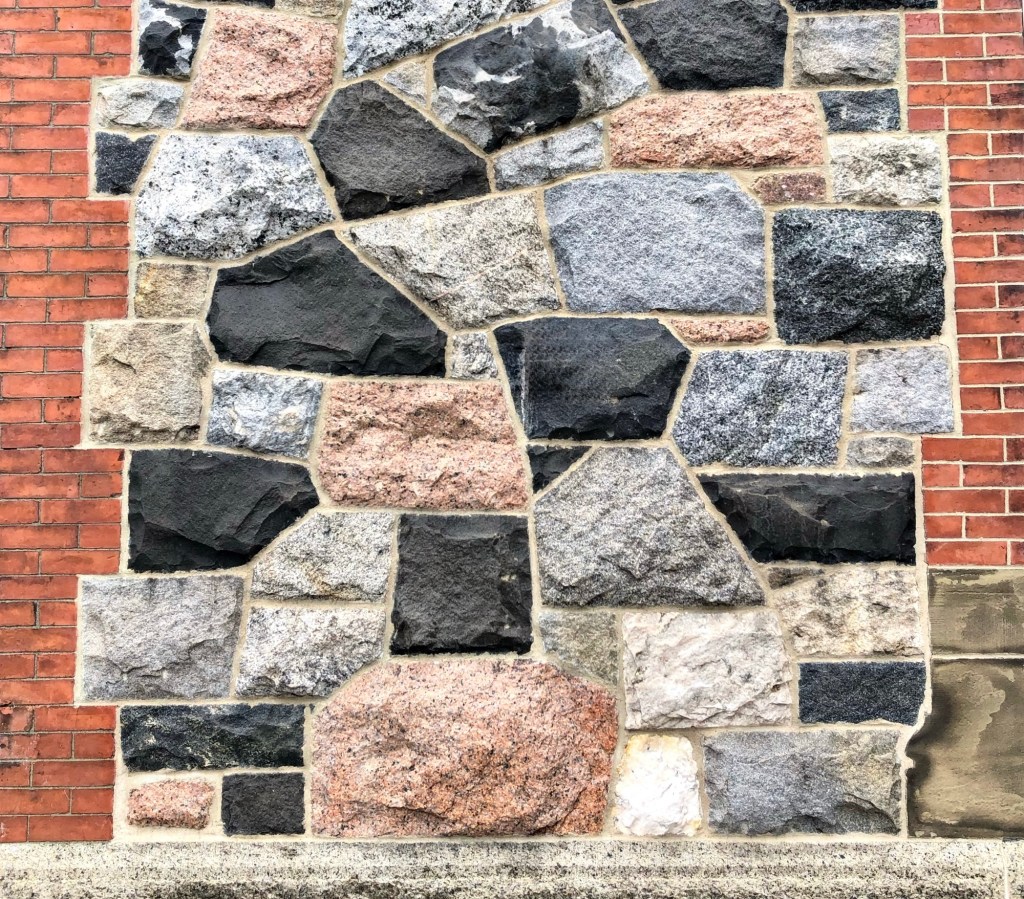
The Jacob E. Spring Mansion, also known as Porphyry Hall, is a high-style estate house located in Danvers, Massachusetts, that is one of the finest and most unique in the state! The house was built in 1880 for Jacob Evans Spring (1825-1905), who was born in Brownfield, Maine, and at the age of twenty, he went to Argentina and amassed a fortune in the wool business in Buenos Aires between 1845 and 1865, when he returned to the United States. Jacob and his wife, Sara Duffy, would purchase a large farm in Danvers and began planning for their family country home. Their residence was built on a high hill over two years and constructed of over 40 types of stones of irregular size and color with door and window sills of Nova Scotia freestone with arches of the doors and windows and corners of brick. The mansion was designed by architect George M. Harding of Boston, and built by several skilled masons over many months. Mr. Spring named his estate, “Porphyry Hall” with Porphyry meaning an igneous rock with large crystals in a fine-grained matrix; suitable for the walls of their mansion. The Spring’s lived lavishly at this home and spent nearly all of their fortune, selling the property after just ten years to the Xaverian Brothers, who opened it as Saint John’s Normal College. In 1907, the compound was re-organized as a Catholic boys prep school. In 1915, a chapel was added to the rear of the building, constructed from gray fieldstone to blend with the main house. Have you ever seen a building like this?
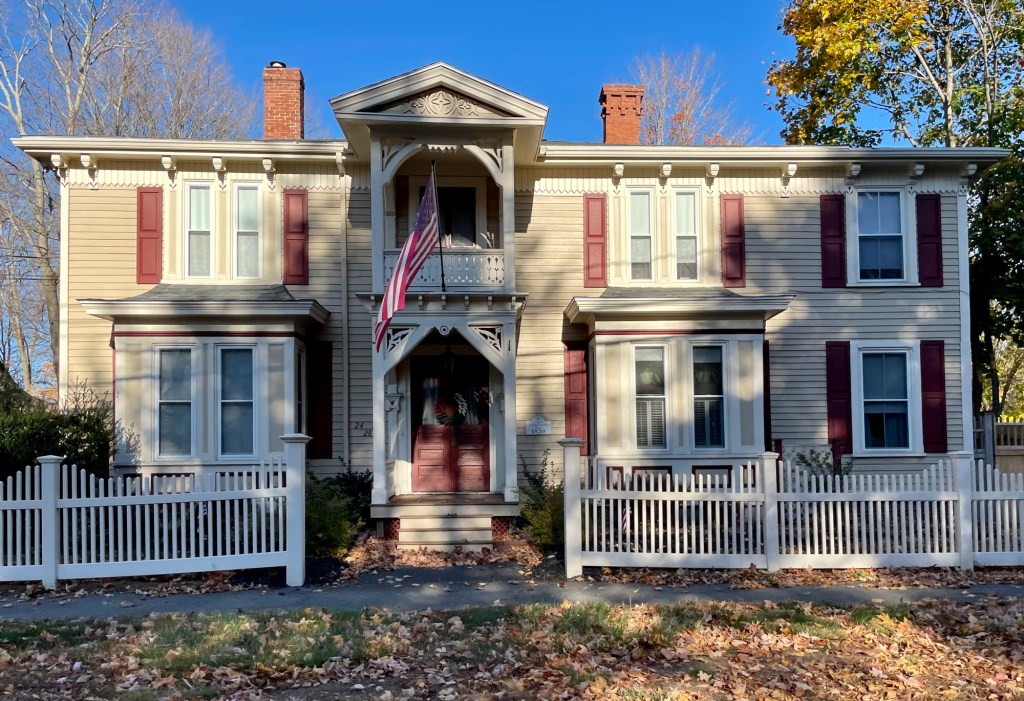
Spofford-Root House // c.1830

The Spofford Family was one of the earliest to settle in present-day Georgetown, with the earliest enclave of homes built along Andover Road in the western part of town. A few generations later, subsequent family members would built in the town center, taking advantage of the growing commercial and business community. This Federal period home (with later alterations) was built around 1830 for Greenleaf Spofford (1801-1887) the same year as his marriage to Emily Willmarth. The couple would move out of town and sold the home to Dr. Richmond Barbour Root (1846-1930),  the second of a highly respected, three generation family to practice medicine in Georgetown. The overlay of machine-sawn Stick Style decorative porch, bracketed cornice and bay windows were likely added by Root sometime after the Civil War. Unlike most owners of Federal and Greek Revival-style dwellings, Dr. Root may have held a valid professional interest in appearing as up-to-date as possible with a “modernized” home that also served as the site of his office and consulting rooms.

Moody-Hall House // 1830

Transitional Federal/Greek Revival style houses are among my favorite. You can see the emergence of Classical architecture blending with American architecture with features of both styles, which work well together. This example can be found on Elm Street in Georgetown, Massachusetts. The dwelling appears to have been built for Dr. George Moody, one of four physicians in Georgetown in 1840, who began his practice in town in 1830. In his first years there, he oversaw patients during Typhus and Dysentery outbreaks and was credited with having determined that a high sulphur content in the local water supply accounted for the increased cases. Dr. Moody died in 1866, and his widow continued to live in the house until her death in 1880, after which it was sold to Mrs. Charlotte Sawyer Hall, the widow of local shoemaker Seth Hall.

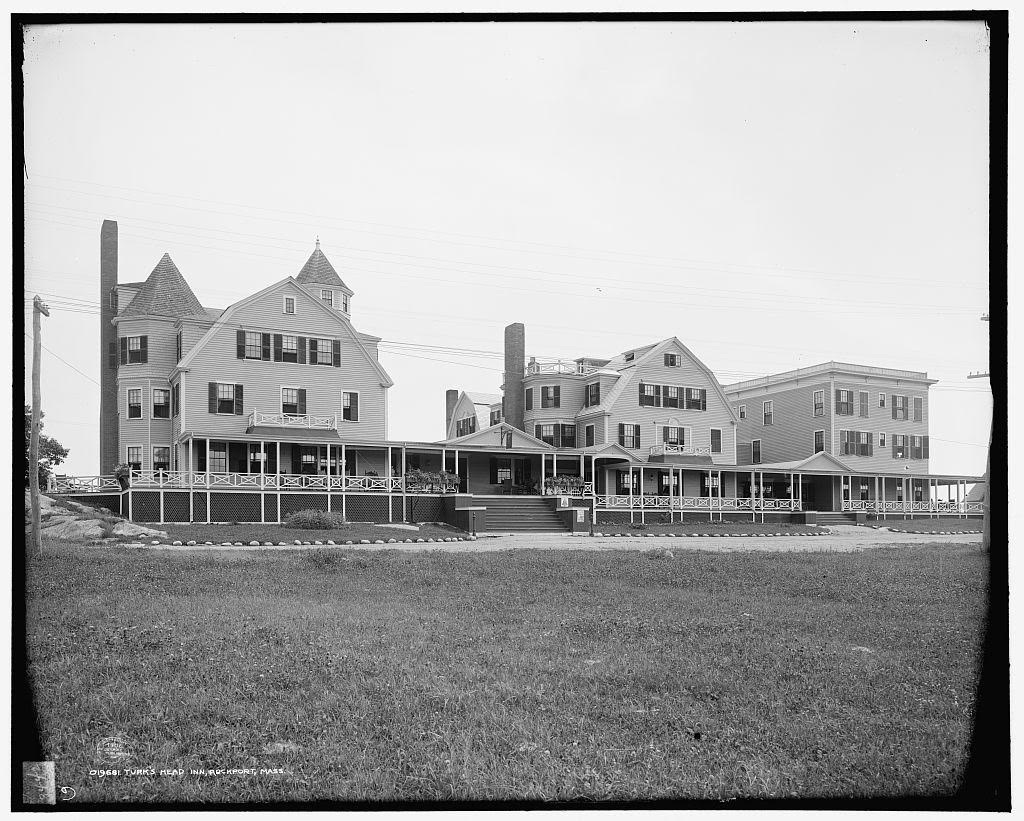
Turk’s Head Inn // 1890-1970

The Turk’s Head Inn was once Rockport’s grandest getaway. For those uninterested in building their own summer cottage to spend the along the coast of Massachusetts, luxury summer resorts provided summer rentals for those escaping the hot and polluted cities in favor of cool ocean breezes. Once situated in the  Land’s End section of Rockport, the Turk’s Head Inn, had sweeping views of the coast and islands in the distance. The initial portion was built from 1889 to 1890 by builder J. M. Wetherill of Rockport based on plans by architect H. M. Stephenson of Boston. It was expanded and became this rambling, E-shaped Colonial Revival structure with a seaboard frontage of two hundred feet and wraparound verandas over three hundred feet in length. Over the years, the Turk’s Head Inn suffered a number of fires, and its central and southeast wings were rebuilt, the latter in 1905 by then owner C.B. Martin. With a peak capacity of 200, the hotel, uncharacteristic of the regional hospitality industry, remained in operation for eighty years before it was closed down, partially destroyed by fire, and the remains removed in 1970.

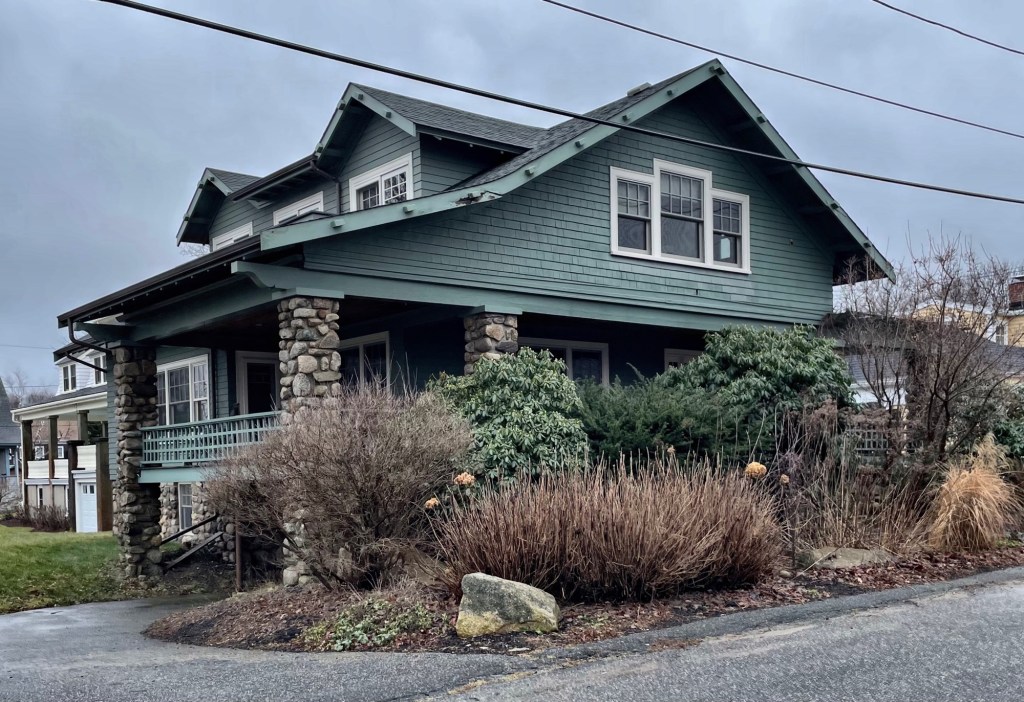
Haskins Cottage // c.1910

Another great turn-of-the-century summer cottage in Rockport’s Headlands neighborhood is this c.1910 Craftsman house on Norwood Street. The listed early owner was L. S. Haskins who likely utilized the house as a summer residence. Architecturally, the cottage follows the Craftsman form with a low-sloped roof with broad eaves, shed dormer, exposed rafters, and rubblestone foundation and columns of stones taken from the site and nearby neighborhood.  

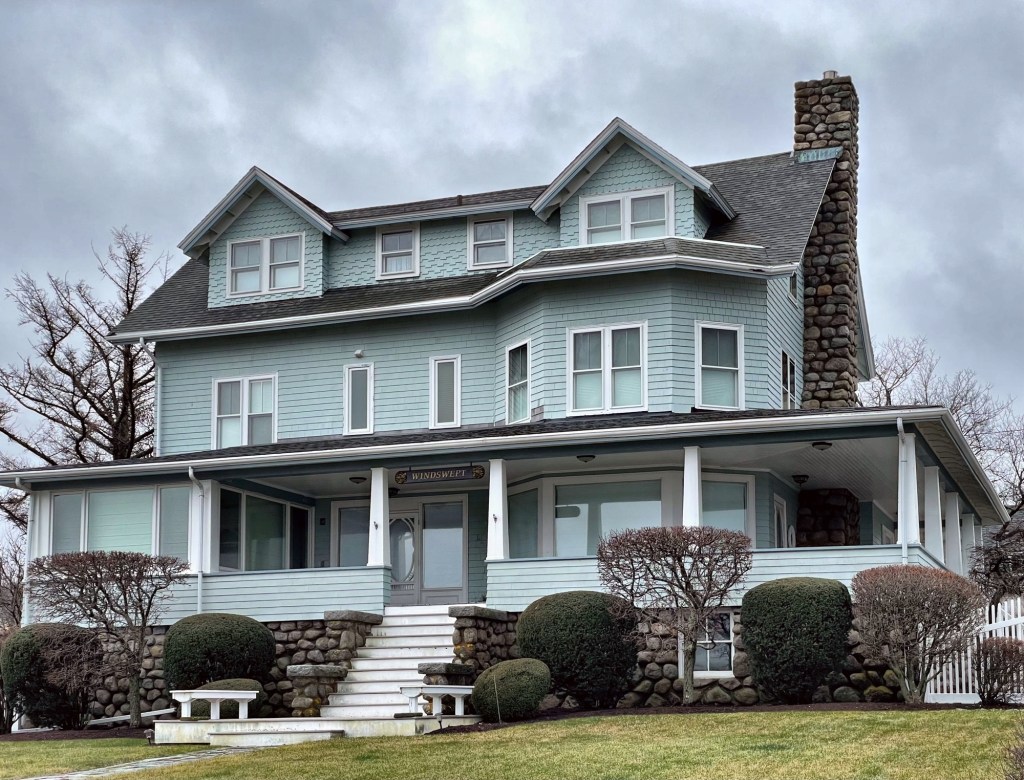
Windswept Cottage // 1909

The coastal towns of Gloucester, Manchester, and Beverly on the North Shore of Massachusetts often are known for their historic summer “cottages” but great examples can be found right here in Rockport! This is “Windswept”, the W. W. Blunt cottage, located in the Headlands section of town, just south of the harbor. Walton W. Blunt worked as the Treasurer and General Manager of the Boston Journal newspaper and resided in Boston, later purchasing multiple adjoining house lots in Rockport for a summer residence. The two-and-a-half story house was designed by a Rutherford Smith, who sought to utilize fieldstone found nearby for the foundation and chimneys and shingle siding above. Detailed descriptions of the new house were featured in a local newspaper in 1909 and mentioned tennis courts on the grounds, an apartment for servants, and a billiard room in the third floor. It is not clear when the house got its name, “Windswept”, but the name is just too fitting!

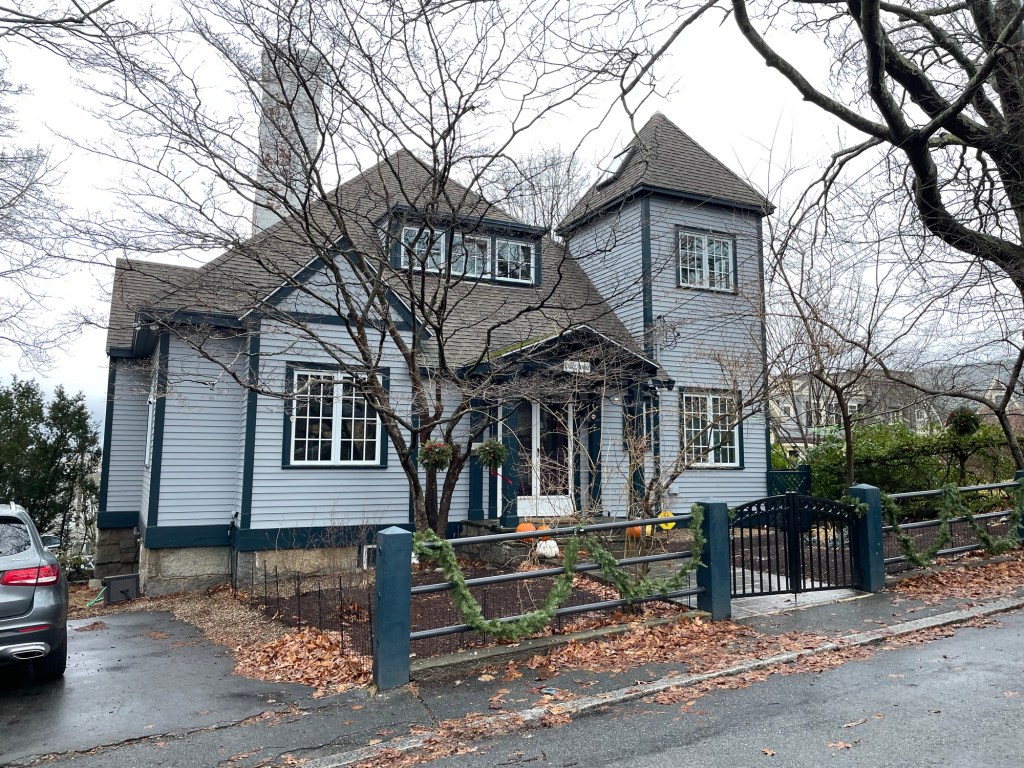
Commercial Cable Company Relay House // 1884

This shingled house in Rockport may look like an ordinary 1880s residence, but it was actually built as an important piece of infrastructure! This is the Commercial Cable Company’s Relay House, built in 1884 to serve as a terminus to a transatlantic cable providing communication across the Atlantic Ocean. Up until 1884, a French company, the Atlantic Telegraph Company, was the sole provider of transatlantic telegraph cables. James Gordon Bennett, editor of the New York Herald, was dissatisfied was the 50 cents per word he had to pay for transatlantic telegraphs. Seeking to break ATC’s monopoly, he convinced millionaire John W. Mackay to create the Commercial Cable Company. That company put down two cables from Ireland to Nova Scotia with two other lines to the United States, one to Rockaway Beach, Long Island, and the other to Rockport. This building housed offices on the first floor and a billiards room for employees on the second floor with machine shop in the basement to service equipment. Cable operations continued from this building until 1935 when newer international communications made cable lines obsolete. The Relay House was converted to residential use, and while it has been altered, it still maintains its significance architecturally and historically.

James Roope House // 1916

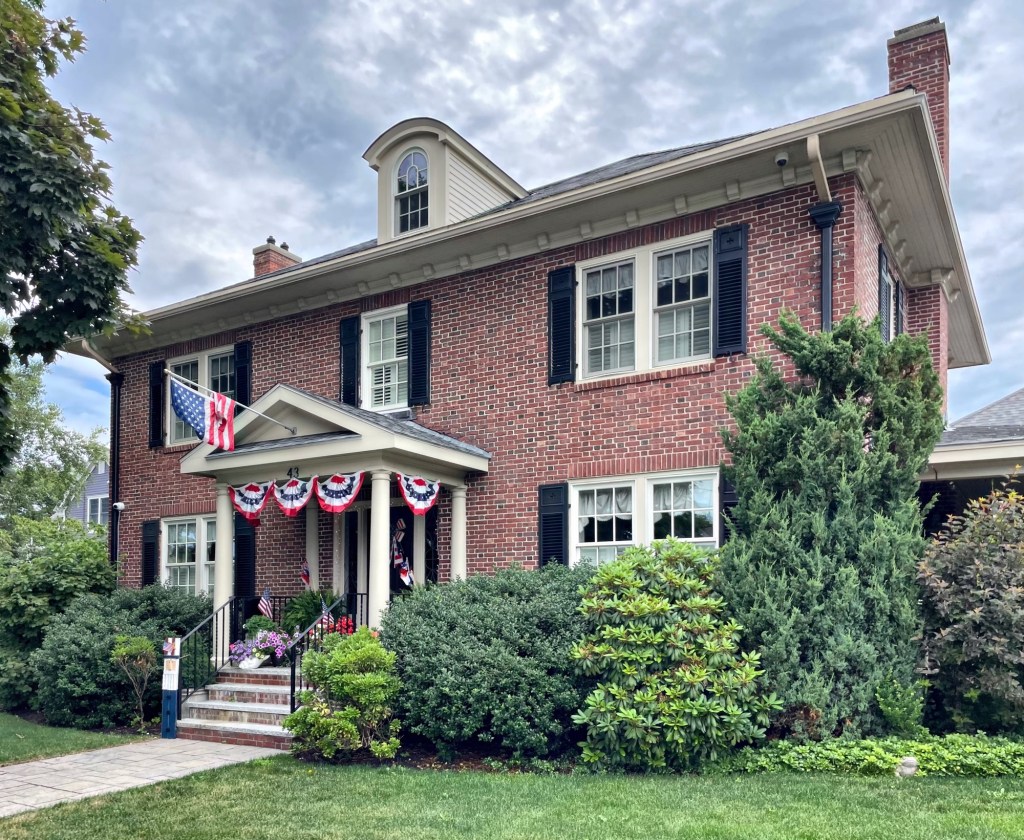
The only historic brick residence located in the charming Salem Willows neighborhood of Salem, Massachusetts is this stately Colonial Revival house at the corner of Bay View and Juniper avenues. The brick dwelling was constructed in 1916 for James Roope, President and Treasurer of the Salem Lumber Company. Designed by Boston architect, Gordon Robb, it is two stories high, with a shallow hipped roof. The central entry has leaded sidelights and a pedimented porch with trellises at the sides.

Patrick Dempsey Cottage // c.1875

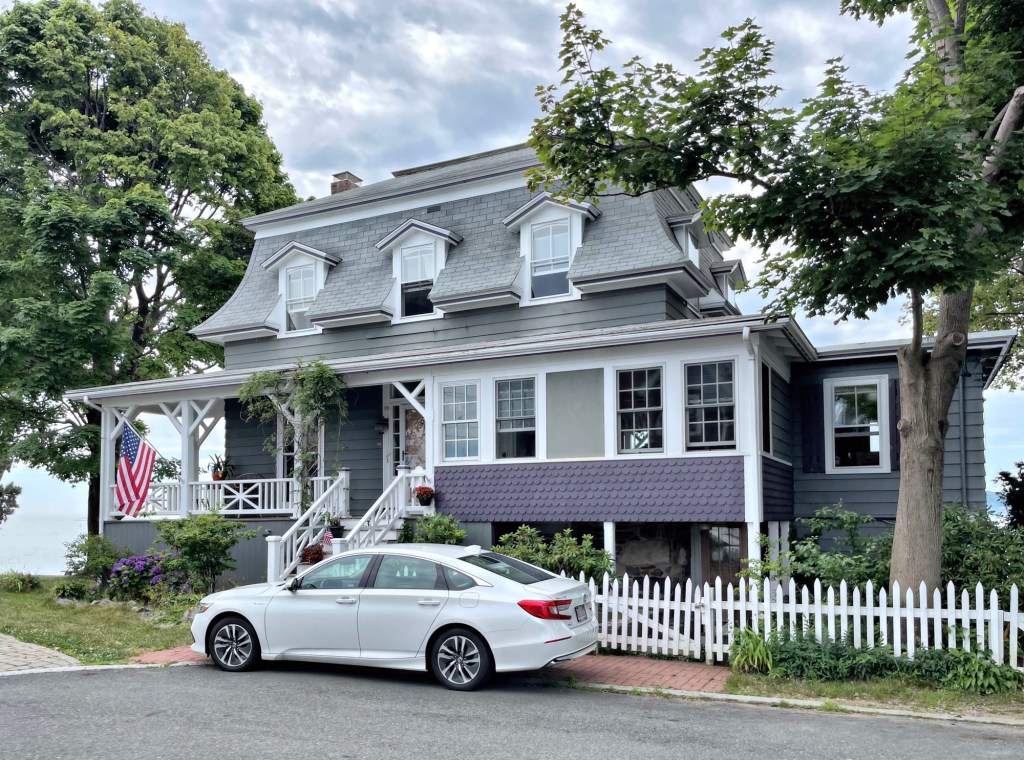
This charming mini-mansard summer cottage is located in the coastal neighborhood of Salem Willows, in Salem, Massachusetts. The neighborhood developed in the 1870s-1900s as a summer colony for middle-income families who wanted a second home away from the hustle-and-bustle of urban living in favor of ocean breezes. The cottage likely dates to the mid-1870s as one of the earliest summer homes in the neighborhood, and historic maps show it was owned by a P. Dempsey. It appears this is Patrick Dempsey (1821-1902), an Irish immigrant who settled in Lowell, Massachusetts, making it big as a liquor dealer and saloon-keeper. The Second Empire style cottage has a partially enclosed porch, but retains much of its original character and is located right on the water with sweeping views of the Atlantic Ocean.

Saunders Cottage // c.1900

Charles Saunders, a carpenter, and his wife Annie Saunders, seemingly built and lived in this Shingle style cottage in the Ocean View summer colony of Rockport. The couple shows up in census records as living here in 1910 while in their 50s. The house likely dates to the 1890s and is a great example of the Shingle style for a middle-class residence. The house features a corner tower and a wrap-around porch with continuous shingle siding and columns. The property was deeded to a Lawrence Regester in 1924 when Annie sold the property after Charles’ death. The shingled cottage has remained in a great state of preservation for its existence!

Haven Avenue Cottages // c.1877

When Andrews Point in northern Rockport, Massachusetts, was opened for development by speculators Eben B. Phillips and George Babson, they envisioned the colony, “Ocean View” as a rival to other nearby summer colonies of Beverly Farms, Gloucester, and Magnolia. Roads were laid out and house lots were plotted with larger lots for big summer cottages along the coast and smaller cottage lots at the interior of the development. The rocky coast and more limited access compared to its rivals, caused Ocean View to lack in sales, but there are still some great remaining cottages to be found here. These two early cottages are great surviving examples of the modest, middle-class homes for summer residents. These two charming Victorian cottages sit side-by-side and were owned by an L. Brigham and Benjamin Lewis and both are in a great state of preservation 150 years later.

Bailey Cottage // 1896

In 1896, Edward L. Bailey, a carpenter and housebuilder, erected this cottage on Haven Avenue in Rockport, Massachusetts. Bailey resided in the house, likely year-round and ran a store on the nearby main street. His cottage served as both a residence and an advertisement for his skilled carpentry, which likely offered him commissions for other cottages nearby. Bailey was also selected as the builder for the town’s Carnegie Library in 1907. The cottage blends Queen Anne and Shingle styles effectively under one roof.