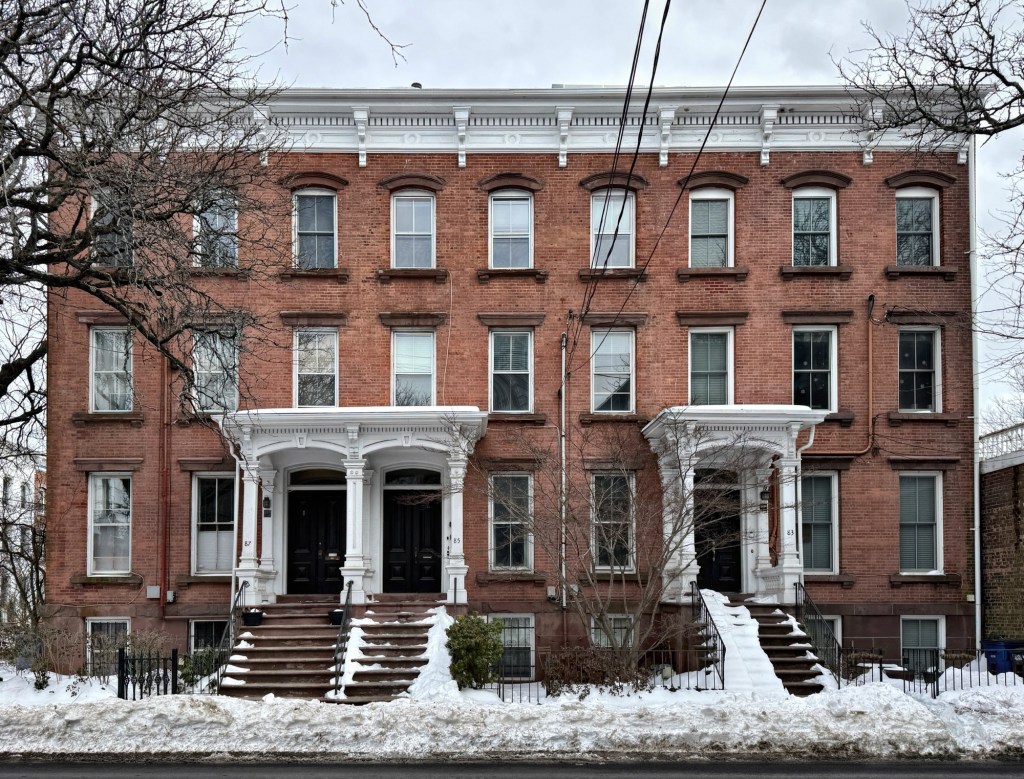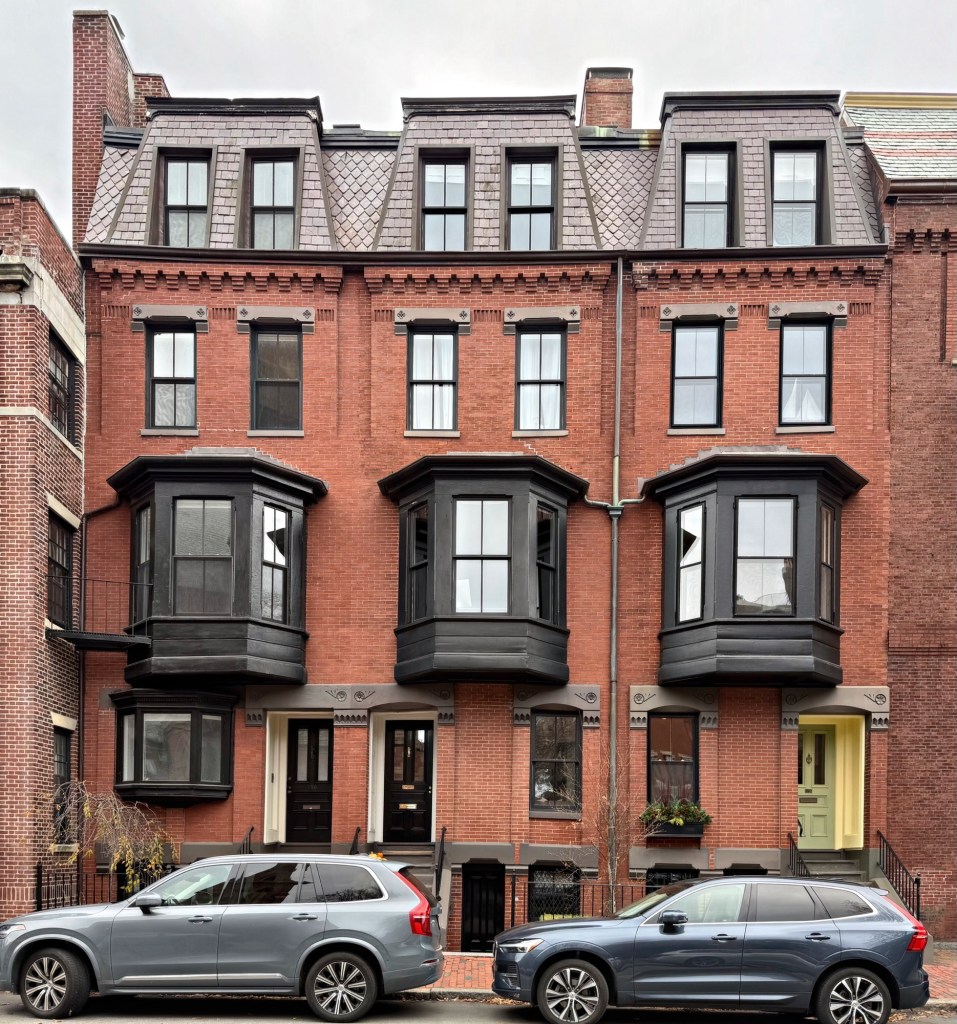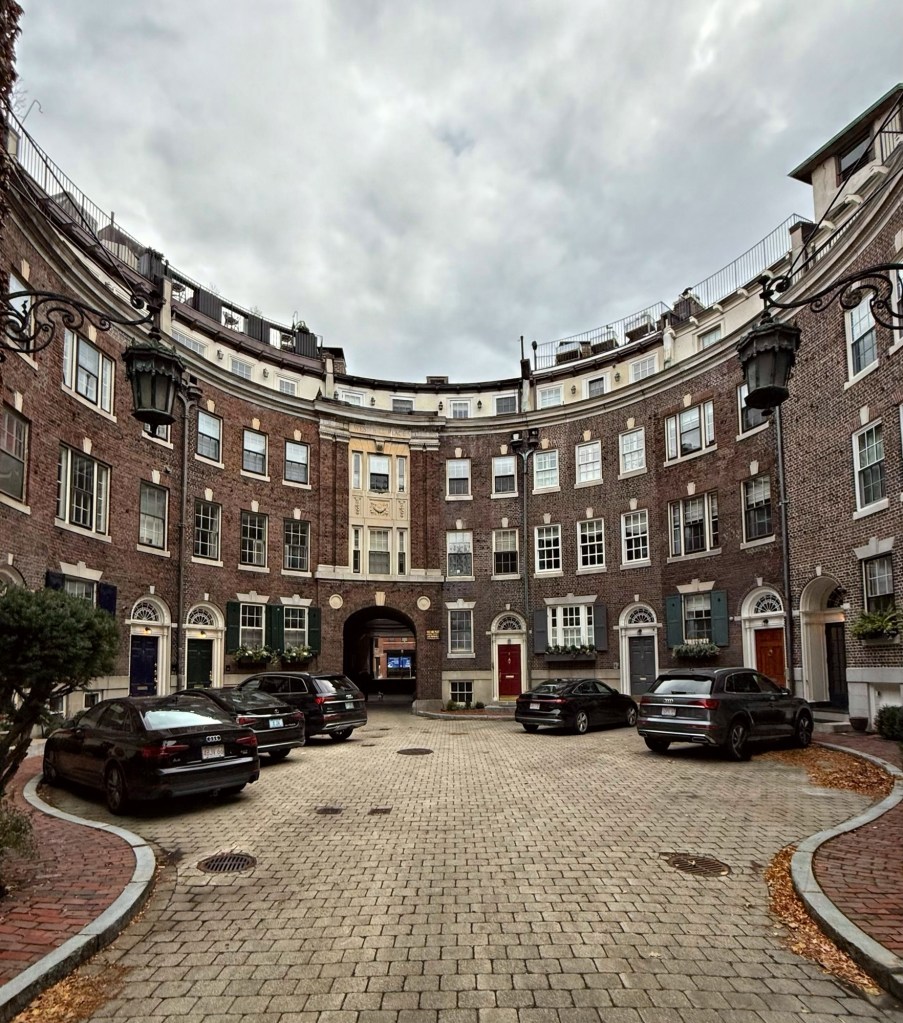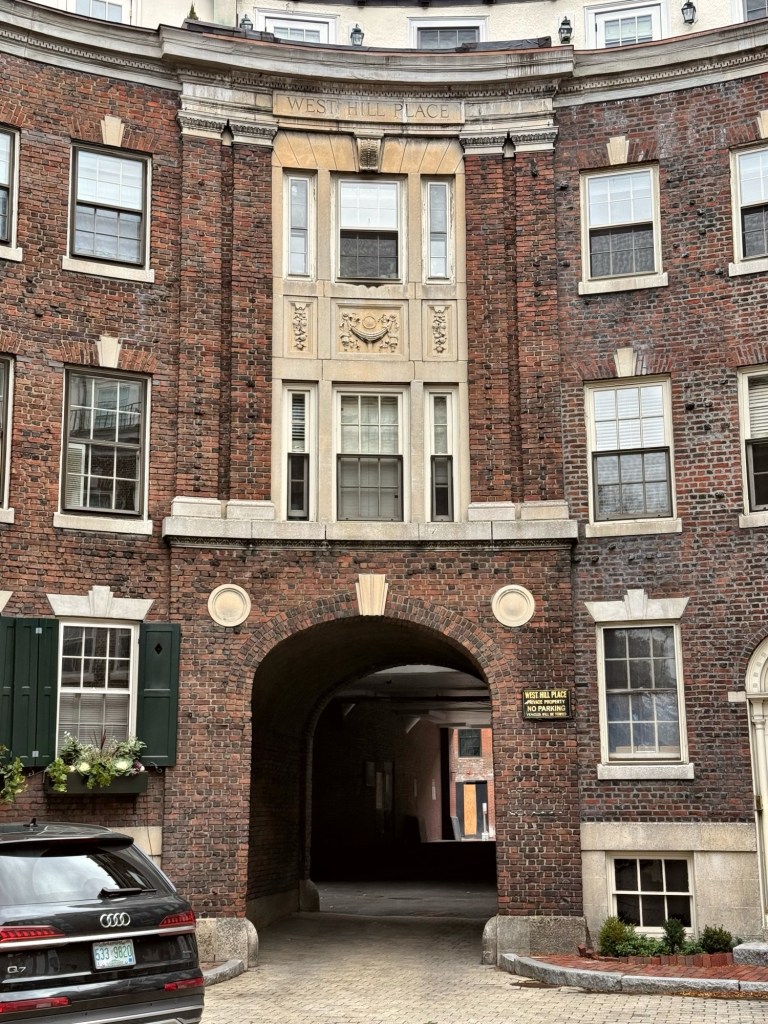
Ives Rowhouses // 1814

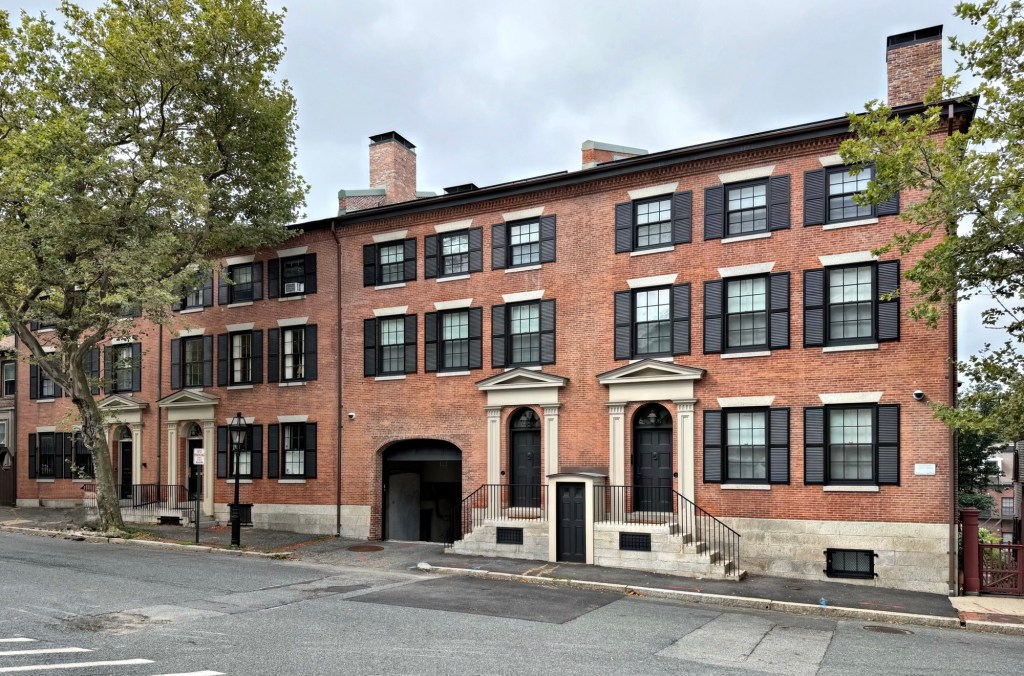
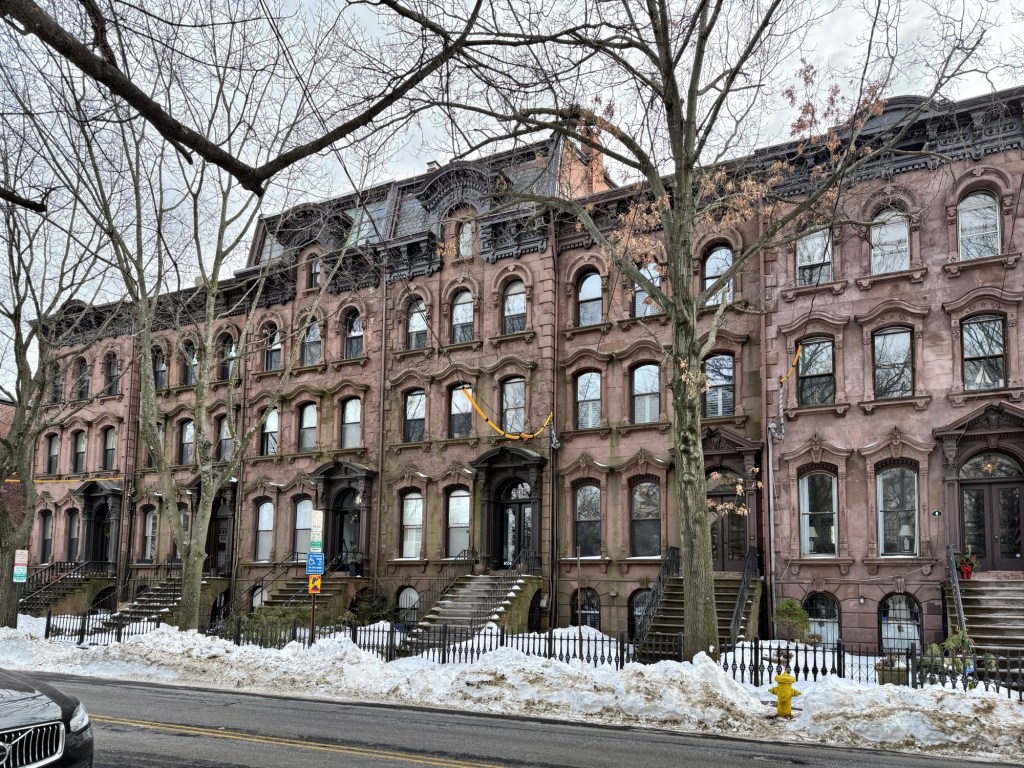
The Ives Rowhouses stand at 270-276 Benefit Street in Providence and are an important and intact example of a Federal period row from the early 19th century. These four, three-story brick rowhouses were built between 1814-19 as investment property for Thomas Poynton Ives, a successful local merchant and partner in the firm of Brown & Ives, who lived nearby on Power Street. Each of the houses has a three-bay facade with pedimented fanlight doorways. The one residence was significantly altered in 1948 by the massive archway for vehicular access at the rear. The houses stand out in Providence, as fairly uncommon rowhouses, which never took off quite like they did in Boston and other New England cities. The row is today neighbors with the National Historic Landmark Hopkins House.

Eddy Block // 1812

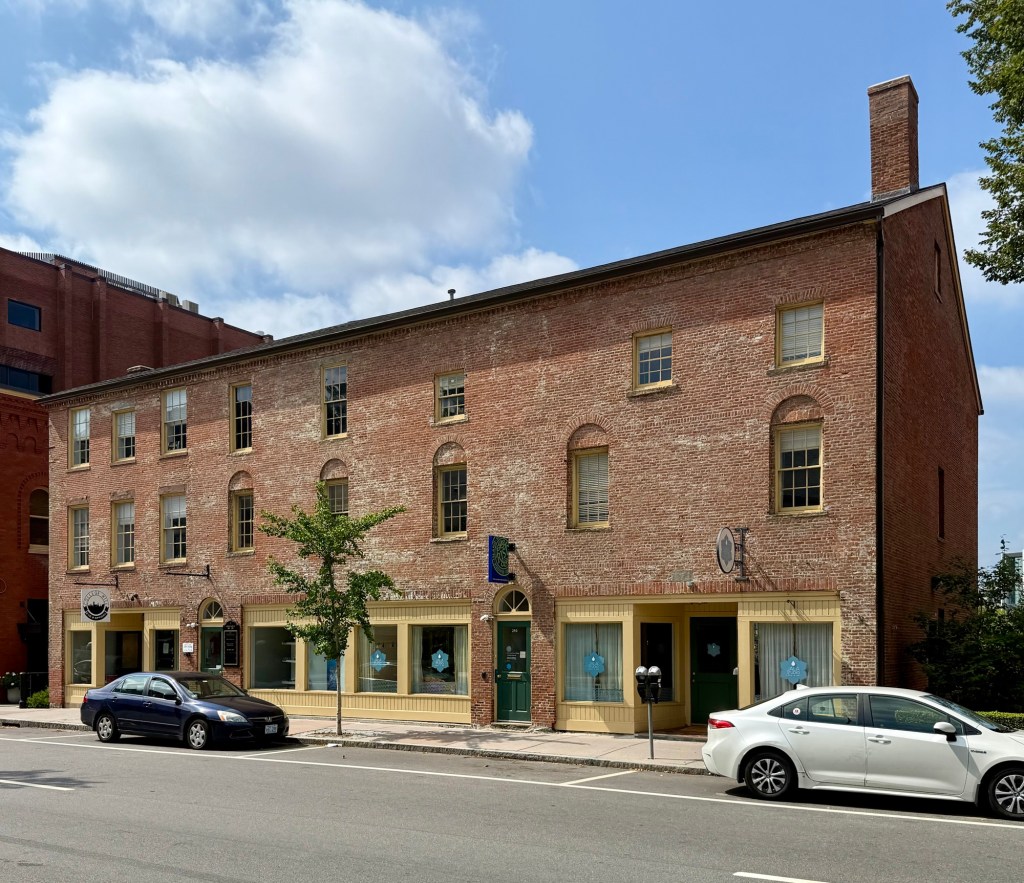
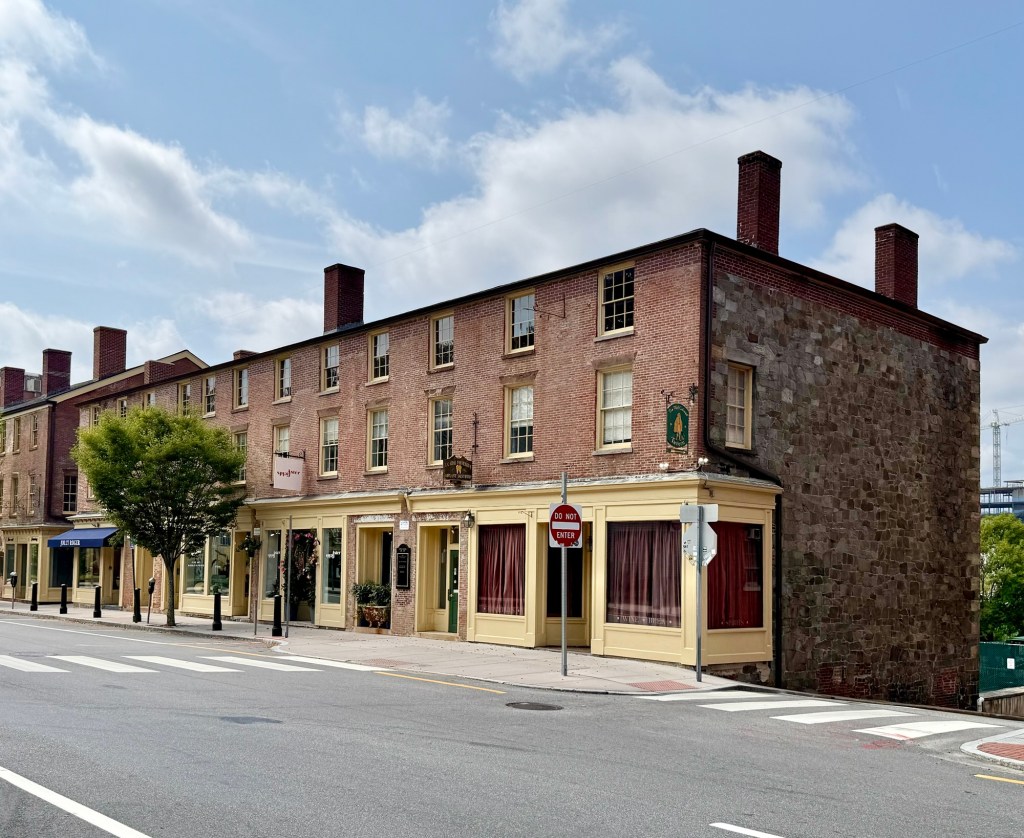
The last of the three similar brick rowhouse blocks on South Main Street in Providence’s East Side is the most altered, but maintains much of its architectural integrity and street-presence. Like the Comstock and Clark-Nightingale blocks further up South Main Street, the Eddy Block was built in 1812, at the beginning of the 19th century for a wealthy merchant, Moses Eddy (1766-1823), who owned and operated packet ships that transported mail and other goods between Providence and New York. The building is one of the oldest rowhouses in Providence, and its three-bays contain an interesting mix of alterations and original details that were changed or preserved over-time. Like the other two rows nearby, the Eddy Block was gutted, and rehabilitated in the 1970s as part of the Urban Renewal plan for Providence’s East Side.

Comstock Block // 1824

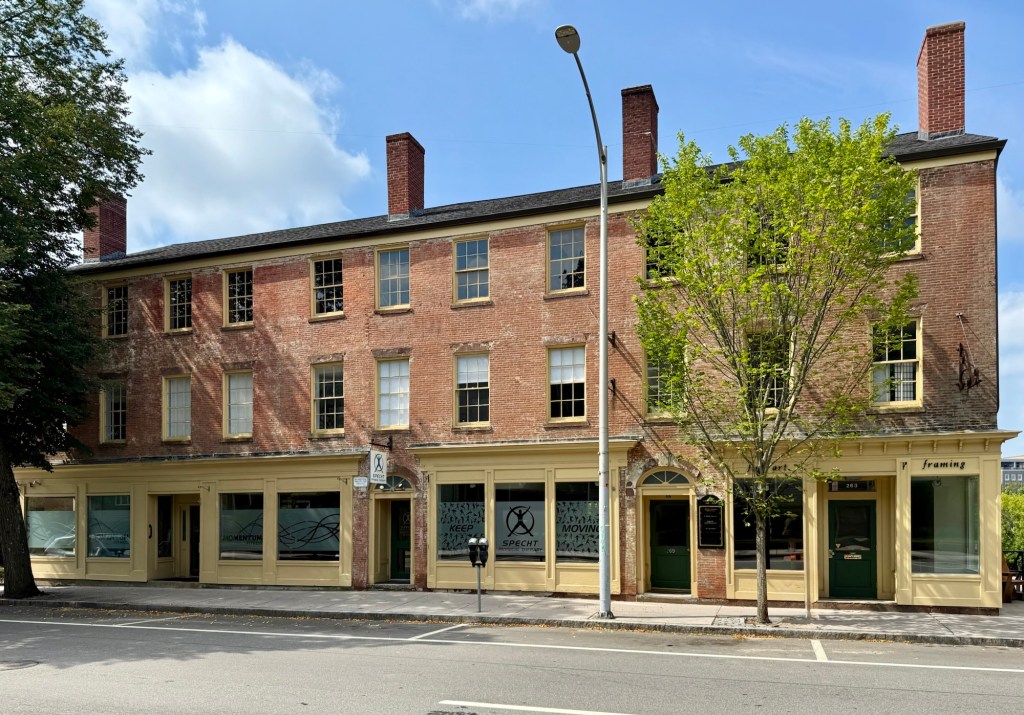
Located next to the Clark-Nightingale Block on South Main Street in Providence’s East Side, the Comstock Block echoes the form, materials and rhythm of the older building, but employs some additional architectural detailing courtesy of a local architect. The Comstock Block at 263-273 South Main Street was built in 1824 from plans by architect, John Holden Greene, who designed many stately buildings in Providence during the early 19th century. The typical fanlights over two of the entrances are common in nearly all of Greene’s Providence buildings. Joseph and William Comstock owned the block which seems to have operated as residential rowhouses, possibly with storefronts at the ground floor. This block, like much of the street, was acquired, gutted and rehabilitated as part of the East Side Urban Renewal project of Providence in the 1970s, luckily for us, this handsome block was not demolished like so many other great buildings of the time.

Clark & Nightingale Block // c.1815

In the early 19th century of Providence, wealthy merchants dabbled in real estate and urbanism, not only as an income-producing investment, but also to serve as a buffer to obscure unsightly industrial and wharf uses from their mansions on College Hill. This is the Clarke & Nightingale Block, a c.1815 vernacular Federal style row of residences above commercial storefronts on South Main Street. The block was developed by the heirs of wealthy merchants, Joseph Innes Clark (1745-1808) and Joseph Nightingale (1747-1797), and constructed of brick and stone, providing a handsome structure facing the wealthy residences to their east, and obscuring the view of industrial buildings closer to the river. The block was gutted and rehabilitated as part of the East Side Renewal project in the early 1970s. Arguably the only thing Urban Renewal did right was select restoration of significant buildings within seas of the destruction and scars on the landscape the program left behind.

Folger Block // 1831

Built the same time as the stately brick, Folger House on Main Street (last post) in Nantucket, owner Philip H. Folger (1792–1865) in 1831 erected these rowhouses quickly selling them for profit. Each of the five connected dwellings were sold to private owners, and have seen alterations over time adding to the intrigue on this block. The Folger Block is comprised of five Federal-style, 2.5-story, wood-frame buildings with wood-frame party walls between each unit. Each row house sits atop a raised brick basement and has a side-gable roof pierced by twin front-gable dormers. Charming door surrounds include sidelights and transoms to allow light into the entries.

The Boardman Rowhouses // 1899

Built between 1899-1901, the Boardman rowhouses of North Adams, Massachusetts were constructed by developer and hardware dealer Walter Penniman and his wife Susan Boardman Penniman to serve as much-needed middle-class housing for workers in the growing city. The name “Boardman” was likely taken from Susan’s maiden name. The entire row is comprised of nine rowhouses, all with a front porch, as well as servants’ quarters on the third floor. Each residential unit is fronted by a porch of granite block with Tuscan columns supporting a shed roof. Entrances are recessed behind round-arched openings, also composed of granite blocks. While much architectural details on the second story are obscured by synthetic siding, the
building’s gables retain simple bargeboarding, and eaves are bracketed. The Boardman’s designer was Edwin Thayer Barlow who opened an architecture practice in the town in the 1890s. The rowhouses are still some of the finest example of middle-class housing built in North Adams in the 19th century.

Harriswood Crescent // 1889

Harriswood Crescent was built in 1889-90 at the height of Roxbury’s development as a streetcar suburb which coincided with the electrification of the streetcar lines in Boston. The area of Roxbury in which the Crescent is located, known at the time as Boston Highlands due to its rocky terrain and steep grades, was an extremely desirable residential location. As land values raised, middle and upper-class families looked for varied housing types that fit their demands. Seen as a great investment of the family estate, the heirs of wealthy businessman Horatio Harris (1821-1876) redeveloped lots on one side of a rocky park for fine townhouses, which were named Harriswood Crescent. The name was probably chosen for its historical associations with Boston’s Tontine Crescent and the great Georgian crescents of London and Bath in England. Architect J. Williams Beal designed the row, which was one of his first commissions upon returning to Boston in 1888 after employment as a draftsman at McKim, Mead & White and a long study in England to view architecture. Built at 15 separate units, the row of Tudor style houses is among the only of such developments in Boston, and New England at large.

Joshua Bennett Townhouse // 1834

Just steps from the iconic Louisburg Square in Boston’s exclusive Beacon Hill neighborhood, a man named Joshua Bennett in 1834, purchased two recently completed townhouses built by housewrights Samuel H. Mitchell and Loring Dunbar. Joshua Holden Bennett (1792-1865) was born in Billerica, Massachusetts and split his time between his hometown and Boston. Bennett and his family owned the two identical bowfront houses until about 1930, likely renting them out to middle-upper class families. The home on the right (pictured) was later purchased by Benjamin B. Gillette an organist at a local church. After WWII, property values in Beacon Hill began to falter and this property and its neighbor became lodging houses of rented rooms to a more wealthy clientele than those on the North Slope of the hill. The home last sold in 1989 for $753,000 and is estimated at a value today at over $4,000,000!

Jacob Wirth Building // 1844

Comprising twin bowfront Greek Revival rowhouses, the Jacob Wirth Restaurant buildings on Stuart Street are scarce survivors of a century of urban change in an area in which the building type once abounded. Built by developer housewrights quite active in the area, the twin houses were soon sold to “gentlemen” for rental purposes. Jacob Wirth, a German emigrated to Boston from Bingen, Germany, and began work as a baker before getting into the restaurant business. Wirth bought the left building seen here in 1878 as his dwelling above and ran his authentic German restaurant below. Due to the success of the restaurant, he purchased the adjacent home in 1889 and constructed the storefront that now unites them. Jacob Wirth ran the restaurant until his death in 1892, which was then managed by his son, Jacob Wirth Jr., who also managed it until his death in 1965! In 2018, Jacob Wirth’s, the second oldest continuously operated restaurant in Boston, closed its doors following a fire. The future is somewhat uncertain for the space, but as it is landmarked, there are protections (even at the interior) of the building.

Did you get a chance to eat at Jacob Wirth’s before it closed?

Wheatland Rowhouses // 1874

This series of four rowhouses at 233-239 Marlborough Street were built together in 1874 for George Wheatland. Designed as two sets of symmetrical pairs, the four homes together contribute to the character of the Back Bay neighborhood while standing out for their use of materials and detailing. George Wheatland Jr. was a developer of over 100 properties in the Back Bay after the Civil War, and through his business partnerships and savvy land acquisitions and developments, became one of the wealthier residents of the neighborhood. Wheatland was born in Salem, MA and attended Harvard Law School before starting work as an attorney. Within a couple years, he was called to serve in the Civil War and fought for the Union Army, participating in the Siege of Port Hudson in Louisiana! When he returned, he used his legal knowledge and business connections to acquire and develop the filled, newly developable land in Back Bay. These four homes are constructed of brick with scored stucco on the main facade to resemble brownstone, which was more expensive. A large central oriel bay window is situated at each home with the fourth floors incorporated into a mansard roof with Stick style detailing at the dormers.