Former Broad Street School // 1861

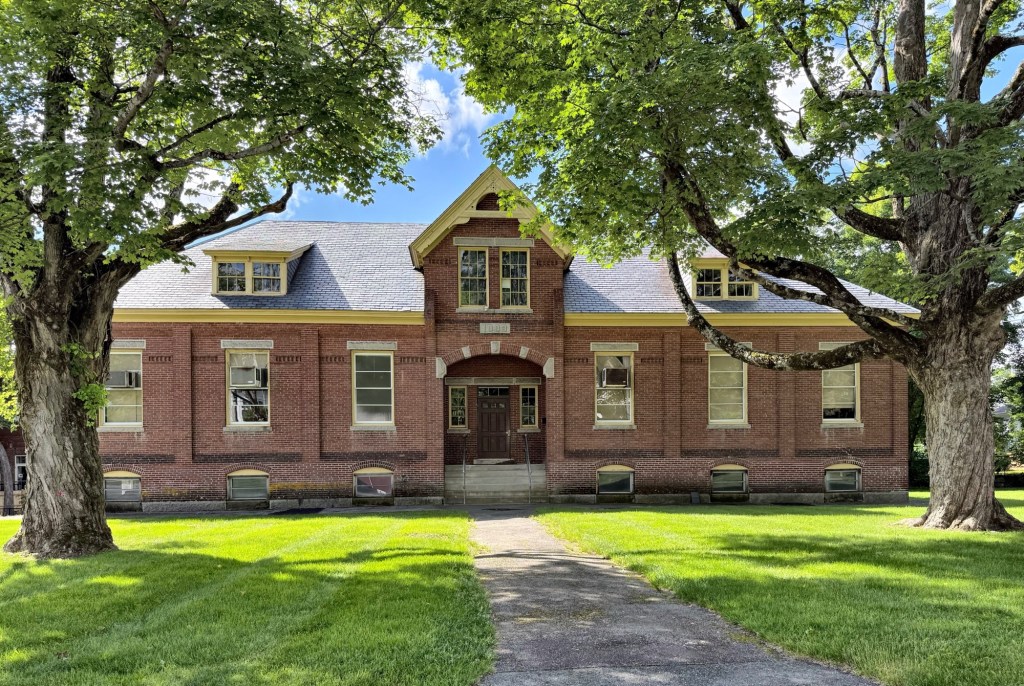
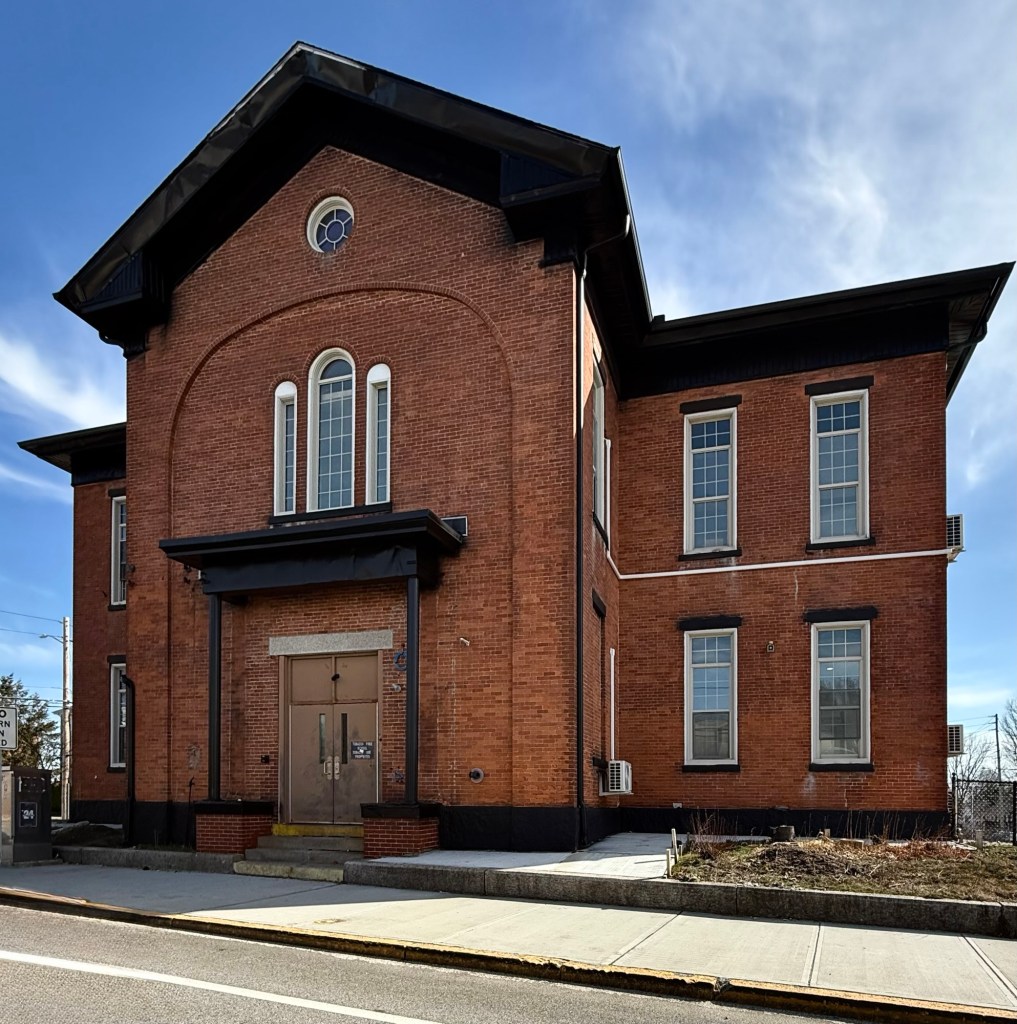
The oldest extant school building in present-day Central Falls, Rhode Island, is this brick schoolhouse, constructed in 1861, to serve as the main village school. The rather plain two-story brick building was built just before the Civil War, during a period of rapid industrialization and growth in Central Falls, when it was then the dense core of the town of Smithfield, Rhode Island. The building contained classrooms for pupils from elementary through high school. Italianate in style, the rather unadorned building does feature oversized windows with some containing rounded tops, deep eaves, and a subtle recessed arch in the central bay on the facade. The school has been vacated for some time, and in 2024, plans materialized to convert this building into affordable housing. Hopefully the renovation/restoration is thoughtful for such a significant piece of the city’s history.

Old Chicopee High School // 1917

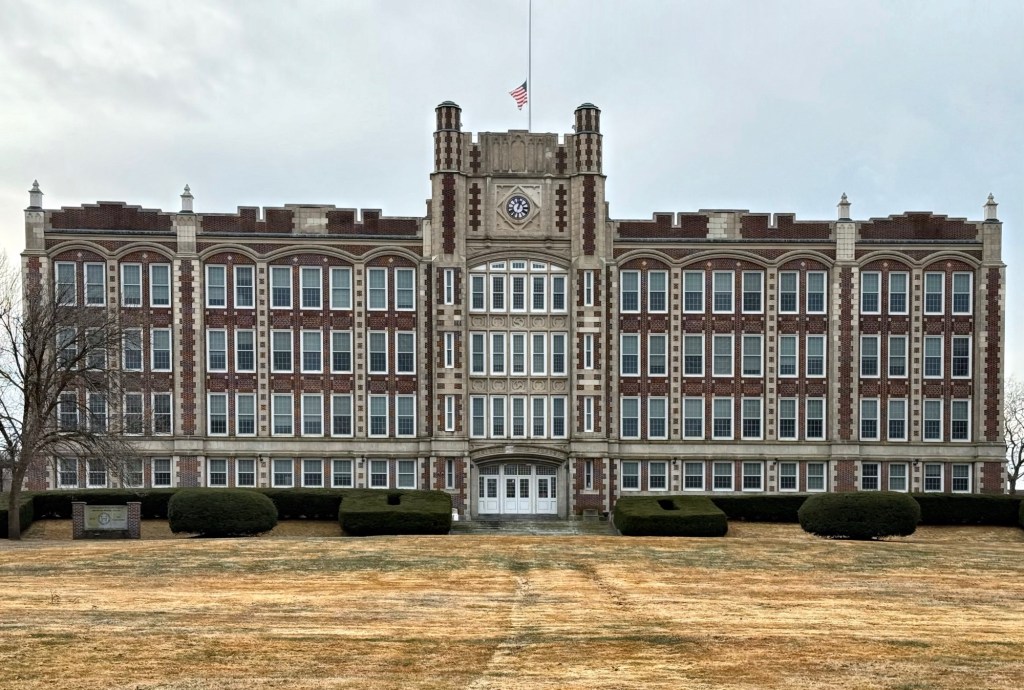
The Old Chicopee High School building is located at 650 Front Street, between the two major population hubs of Chicopee Center and Chicopee Falls and is one of the finest examples of Collegiate Gothic/Neo-Gothic Revival architecture in Massachusetts. The school building was constructed in 1917 from plans by architect, George E. Haynes as a central high school, a single building where pupils from all over the city could be educated. The population growth of Chicopee in the early decades of the 20th century necessitated additions and reworking of the spaces of the building, eventually outgrowing the building after WWII. In 1961, plans for a contemporary high school were completed and this building became a middle school for the City of Chicopee. Architecturally, the building stands out for its siting and high-quality design. The main facade features a central clock tower which contains the main entrance. The use of brick with cast stone trim and the castellated parapet add much dimension to the large building. The City of Chicopee have done a commendable job maintaining this important landmark.

Holy Name Science High School // 1925

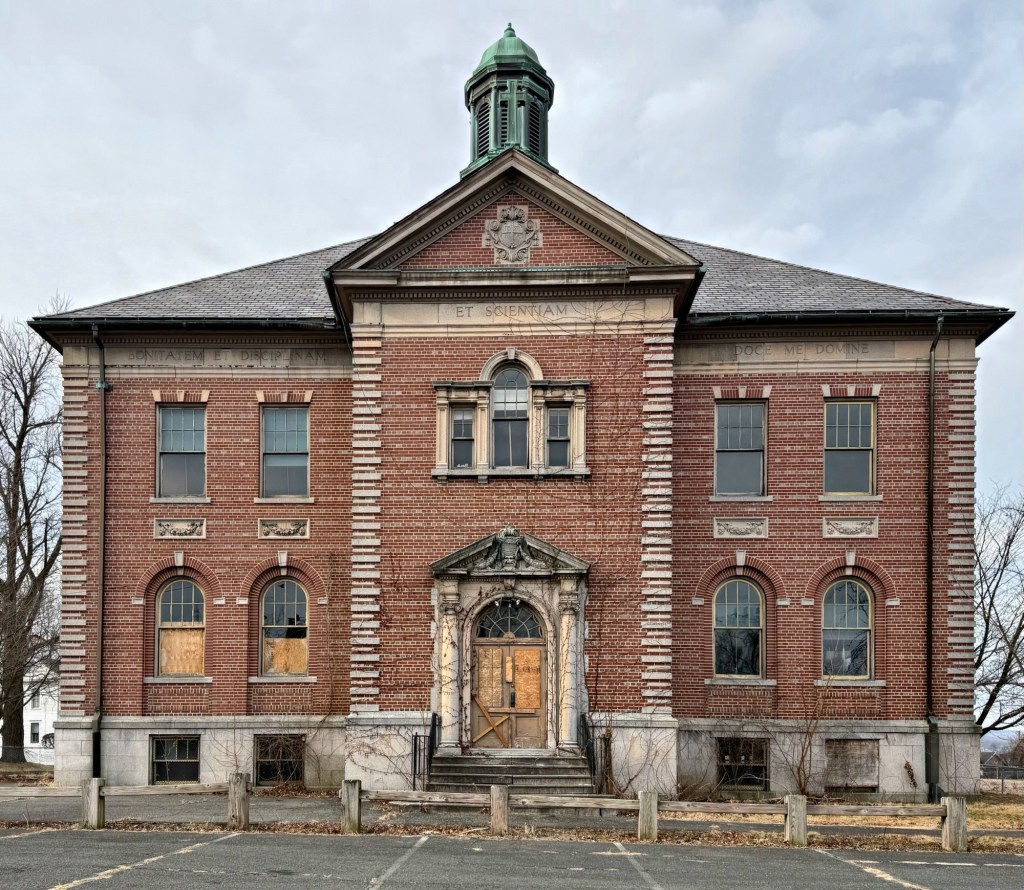
The third and final extant building on the former Church of the Holy Name of Jesus complex in Chicopee, Massachusetts, is this former school building, a stunning example of Colonial Revival architecture. Located behind the former church and rectory buildings, this three-story building was built in 1925 as a “Science” building to accompany an existing girl’s high school. Inside, the building had a “Commercial” department, where young girls could learn important skills like banking, stenography, and typing; with the second floor containing traditional science classrooms and labs along with the school library. Springfield-based architect, John W. Donahue, who specialized in ecclesiastical buildings in Western Massachusetts, designed the building in the Colonial Revival style with brick and stone construction, an elaborate entrance and Palladian window on the second floor facade. The school building closed in the late 20th century, and has seemingly sat vacant ever-since. I sincerely hope this important building could be incorporated as much-needed housing for Chicopee residents!

Alvord School // 1894

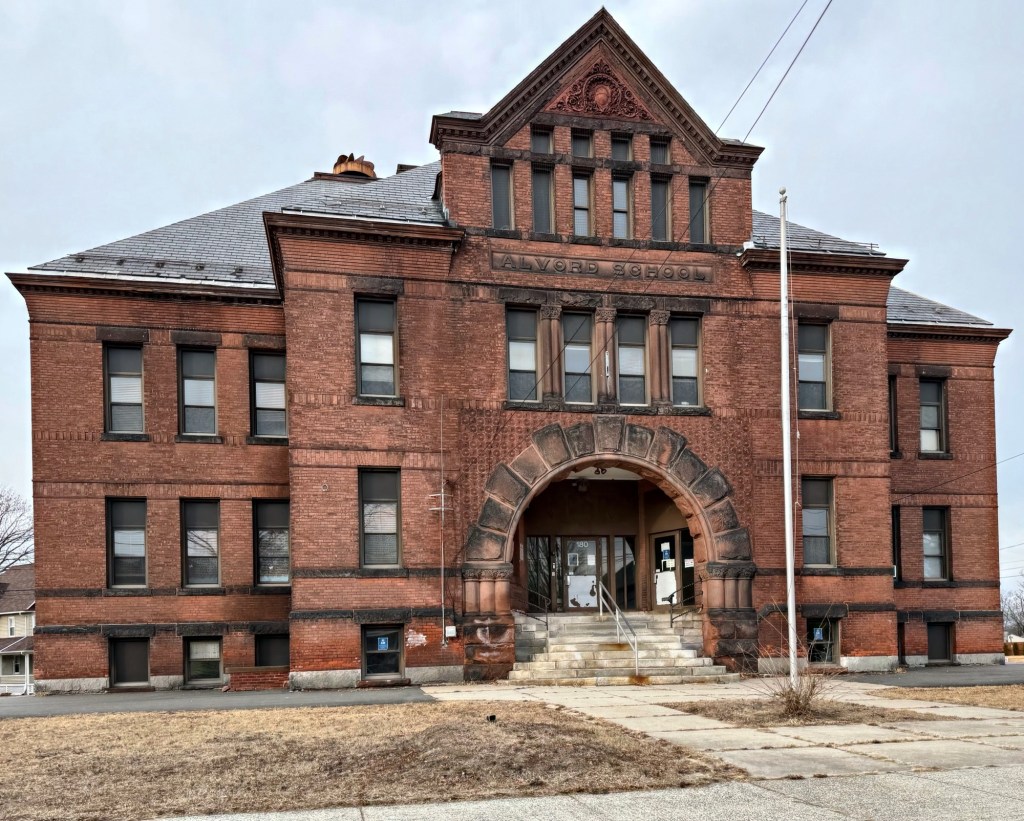
When the old Broadway school in Chicopee Falls became neighbors with the Overman Wheel Company, an early bicycle manufacturing company, there was so much noise and distraction that the Chicopee School Committee voted to sell the school and build a new school building down the street. A triangular lot on Broadway was purchased and Springfield architect, Francis R. Richmond, was chosen to design the new building in 1894. The school was dedicated to Dr. Samuel Alvord, a Chicopee Falls resident who was first principal of the local high school and local doctor that died in 1892. The Alvord School is a great example of a Richardsonian Romanesque school building of brick and brownstone, with recessed entry within a Syrian arch and decorative terracotta tiles. The school would close in the second half of the 20th century, and today is known as the Helen A. O’Connell Administration Building, a municipal office building.

John Northrop House // c.1814

Cornwall’s Foreign Mission School, which began operations in 1817, was virtually unique in the United States, educating both Native Americans and young men from around the globe, including Hawaiian, Bengali, and Japanese. The school was created for the purpose of educating youths of “heathen” nations, to convert them to Christianity, educate them, and train them to become preachers, translators, and teachers back in their native lands. The problematic nature of the school’s seemingly forced assimilation, causing the erasure of cultures, paired with the disdain for foreign students in town lead to much animosity towards the school in Cornwall. The tension reached a head when in 1824, John Ridge, a student at the Foreign Mission School and the son of a Cherokee leader, began a courtship with Sarah Northrop, the white daughter of the school’s steward. A year later they married. Additionally, in 1826, another Foreign Mission School student, Elias Boudinot (John Ridge’s cousin), fell in love with a young Cornwall girl named Harriet Gold, they married in 1826. These marriages were generally opposed to and racism caused support for the school to dissolve, closing by 1827. This c.1814 house was the home of John Northrop, the father of Sarah Northrop, and steward to the Foreign Mission School. The family home, seen here, was also used to house some students while they attended the school. The Northrop House remains one of the few extant buildings with direct ties to this school. The house is one of 65 National Historic Landmarks in Connecticut.

Adelphic Institute Building // 1847

Located across from the North Cornwall Congregational Church in Cornwall, Connecticut, this vernacular, Greek Revival building was constructed by 1847 as the Adelphic Institute, a private school. The Adelphic Institute was founded by Ambrose Rogers, son of Deacon Noah Rogers of the Congregational Church in the village, on land and adjacent to the house he had inherited from his father. The school would eventually relocate to New Milford, Connecticut, in 1860 and this building was converted to a parsonage and meeting room for the church and village. It is now privately owned on the property of the old Rogers house.

Old Goshen Academy Building // 1824

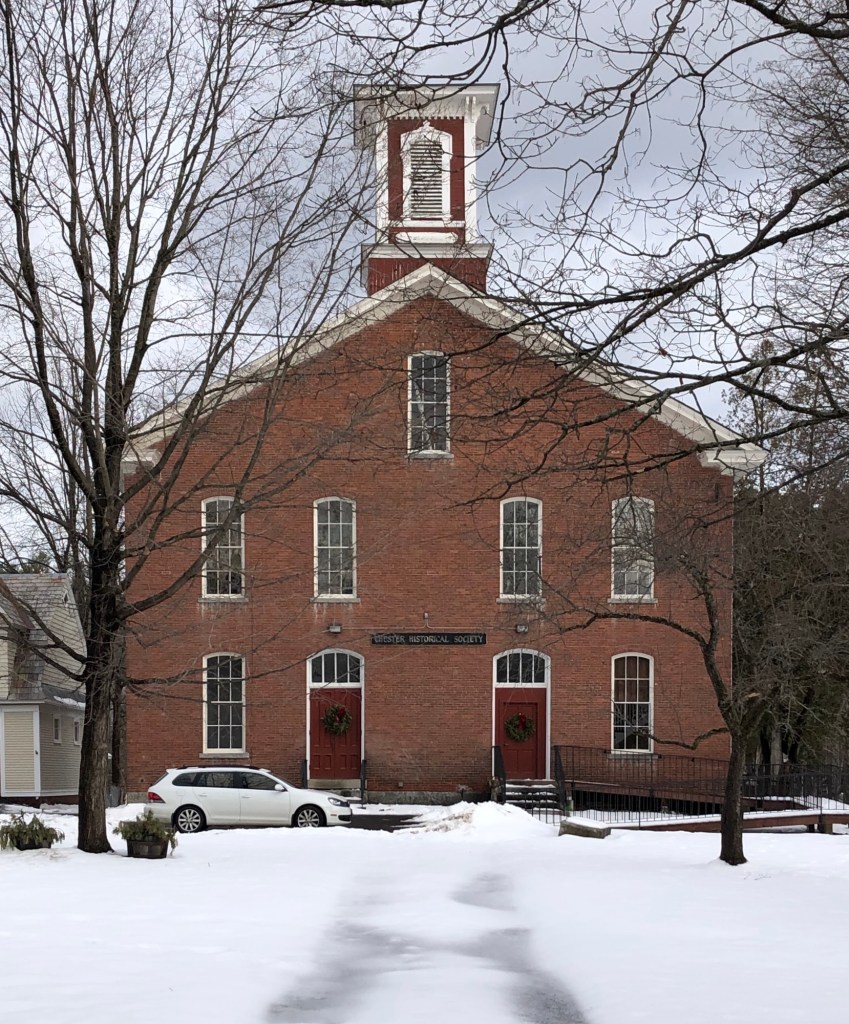
The former Goshen Academy building is located in the central village of the rural town of Goshen, Connecticut, and it is an important vestige of early education in the small town. The Goshen Academy building was built in 1824 from funds by shareholders of the institution. The academy featured a lecture room on the second floor with smaller classrooms downstairs. The academy would eventually close, and it has been occupied by the Goshen Historical Society.

Xavier Hall // 1911

Xavier Hall was built between 1910-11 on the campus of St. John’s Prep School in Danvers, Massachusetts. The building was constructed by the Xaverian Brothers as classrooms as the first purpose-built structure in what would become a large campus. The Neo-Gothic Revival style building was sited adjacent to Porphyry Hall, an 1880 estate house that the new school purchased in 1891, which was later expanded by the addition of a rear chapel. Edward T. P. Graham, an architect best known for his design of Roman Catholic churches and associated buildings, was hired to design the stately structure built of brick and limestone.

Wadsworth School // 1897

The former Wadsworth School of Danvers, Massachusetts, was built in 1897 as a district schoolhouse for the growing town and is one of the finest examples of a school building designed in the Colonial Revival style in the state. The large building held four classrooms (two on each floor) for over 200 pupils with stairhalls at either entrance and was designed by local architect, William H. Pearce. The school was in use until the 1970s when the town consolidated many of the schools, selling this building as excess. The property was converted to offices and given a preservation restriction by the town, protecting it as a local landmark for generations to come!

Perley School // 1898

The Perley School, formerly known as the “The Perley Free School” is an architecturally and historically significant school building in Georgetown, Massachusetts, constructed in 1898 as a result of the former high school being lost to fire. The original funding for the Perley School was made possible by donations from the estate of John Perley. John Perley (1782-1860) was born in town and operated grocery stores, later getting involved in land speculation. He never married nor had children and lived frugally despite having a small fortune, that would end up being distributed to extended family and as gifts to the town, including funding this building and in the local Congregational church. He died in 1860 and was buried in a local cemetery, marked by the town’s most ornate memorial. The Colonial Revival style school would suffer a catastrophic fire in 1935, but was largely rebuilt and added onto, showing the community’s resolve and determination. It remains today as the town’s elementary school.