Seamans Block // 1888

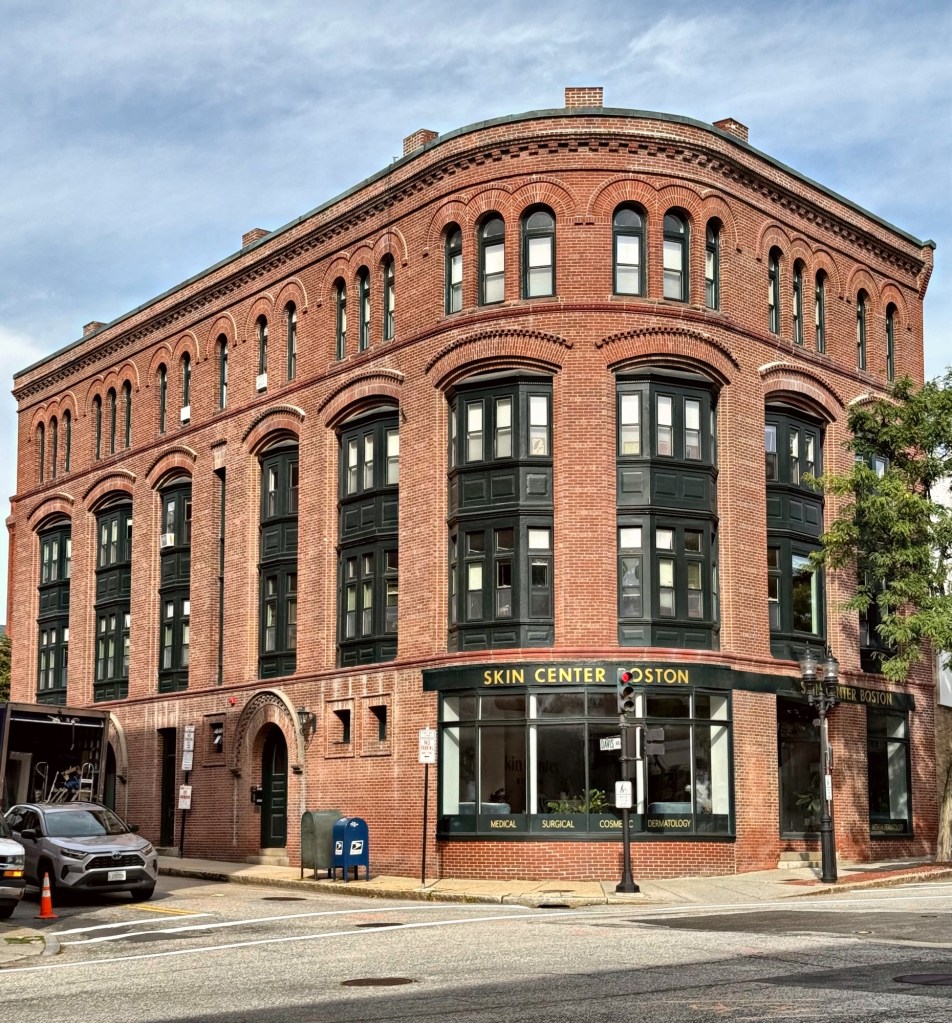
One of the more impressive commercial blocks in Brookline is located at the corner of Washington Street and Davis Avenue in Brookline Village. The Seamans Block was developed by its namesake, James Manning Seamans (1834-1908), a wealthy grocer who operated a store from the building. The handsome masonry block was built from designs by the firm of Shepley, Rutan and Coolidge, a successor firm to H.H. Richardson. As partner of the firm, Charles H. Rutan lived just down Davis Avenue, it is likely that he was in charge of this design. The structure follows the Richardsonian Romanesque style, popularized by Richardson through the rounded corner and heavy arches, but is done entirely in brick rather than adding brownstone or terracotta detailing. The building has long been an excellent example of a historic “mixed-use” block with ground floor retain and apartments above, something that many new developments try and emulate today. 

Wayland Public Library // 1900

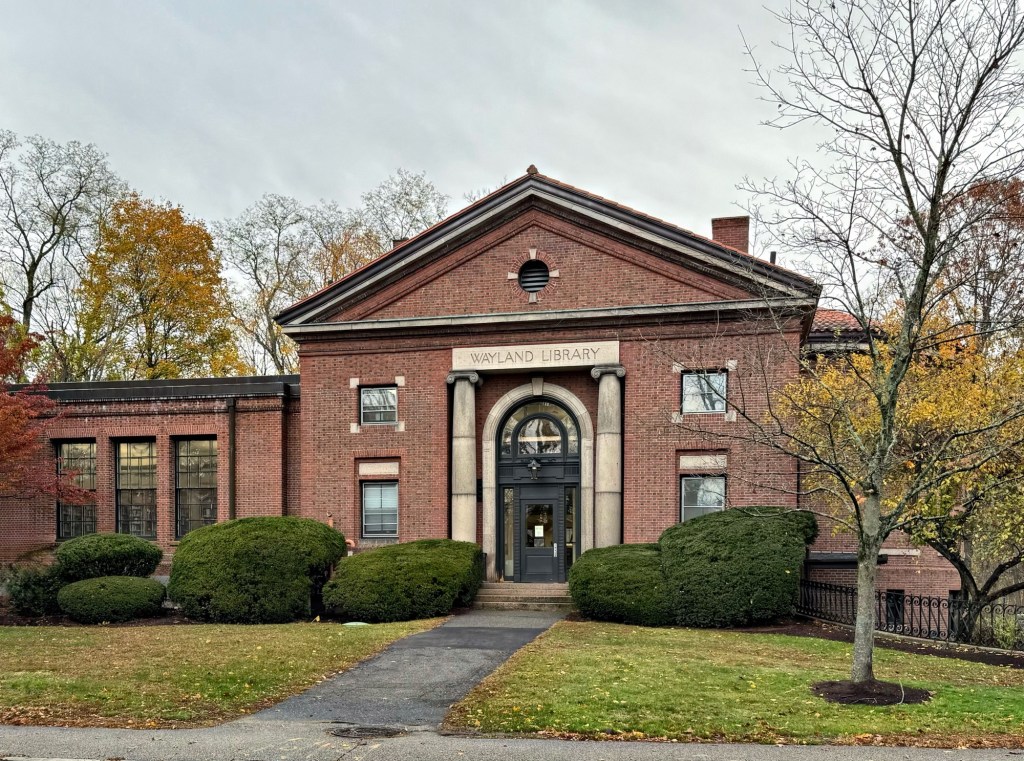
The Wayland Public Library is not only significant architecturally, but also historically as it was founded in 1848, with some claiming that it is the second free public library established in the United States. The first physical space for the Wayland Public Library was established in 1850 using a small room in the Town House. The Town House was outgrown and replaced in the 1870s by a large, Victorian Town Hall (razed in 1957) with designated space in the building for the expanded town library. As Wayland became an affluent Boston suburb in the late 19th century, wealthy resident, Warren Gould Roby (1834-1897), who lived just north of the town hall, donated land and $25,000 to the town for the purpose of constructing a library
that would be as fireproof as possible. Designed by architect, Samuel Mead of the firm, Cabot, Everett & Mead, the handsome building is said to have been inspired by Mead’s travels to Italy where he gained an interest in Roman architecture and Renaissance art. The influence is seen on the exterior with the Romanesque Revival style and on the interior with an ornate frieze around the rotunda. The building was expanded in 1988 by Tappe Associates and remains one of the great early 20th century libraries in New England.


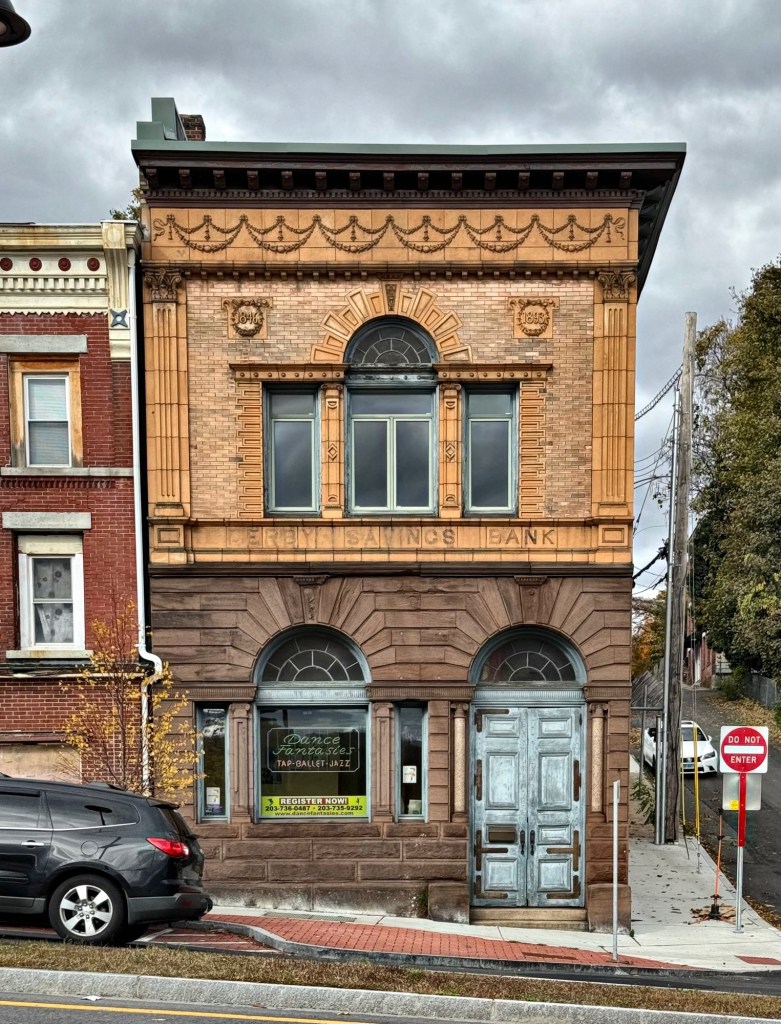
Former Derby Savings Bank // 1893

The former Derby Savings Bank stands at the corner of Main and Caroline streets and is one of the many handsome commercial buildings in Derby, Connecticut, which have been preserved. Designed in the Romanesque and Classical Revival styles, the building is adorned by terracotta, brick, and brownstone, with medallions depicting the date of incorporation (1843) and the date of this building (1893) which flank the Palladian window at the second floor. The bank occupied this structure from the date of its completion in 1893 until it built a new banking facility farther down Main Street in 1923. The bank again built a new building during the period of urban renewal in Derby’s downtown in 1976 when the modern structure at Main and Elizabeth streets was completed. The Modern bank is presently used as the City Hall.

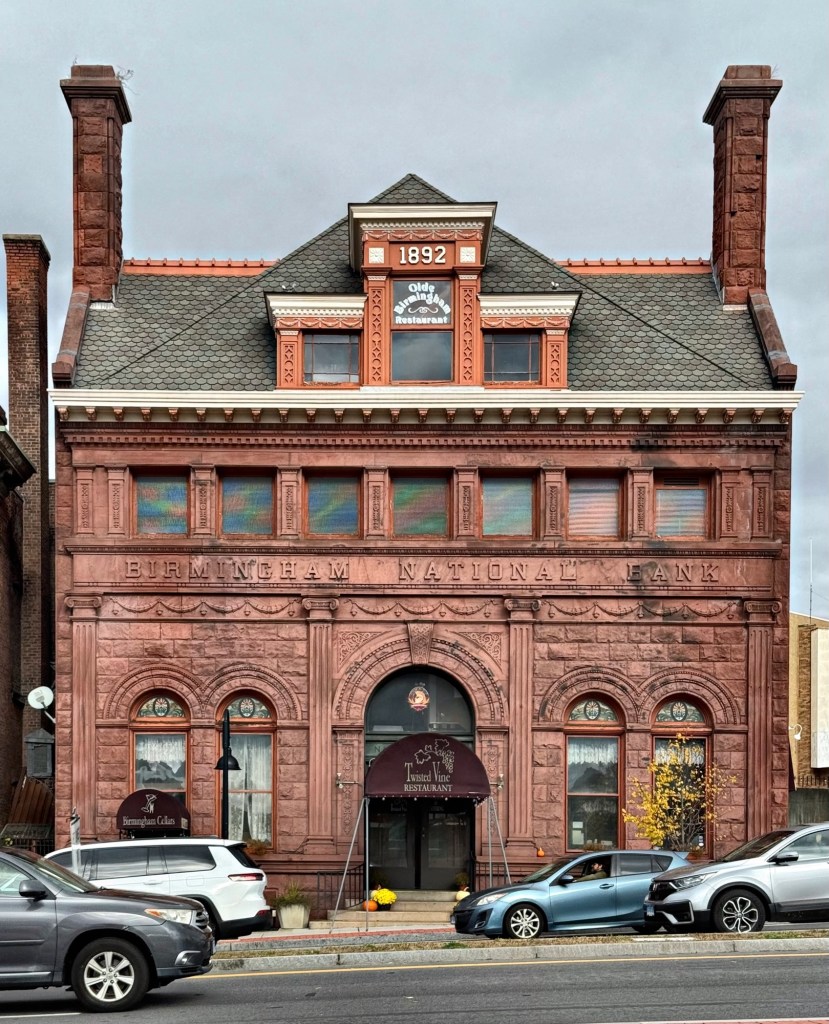
Former Birmingham National Bank // 1892

The former Birmingham National Bank building on Main Street in Derby, Connecticut, is one of the finest buildings in the former industrial village of Derby (originally named Birmingham). The bank was originally chartered in 1848 as the Manufacturers Bank of Birmingham, with Edward N. Shelton as its first president, and became a national bank after the Civil War. Designed by architect Warren R. Briggs and constructed in 1892, the building features an elaborately detailed facade of red sandstone with terracotta trim in the Sullivanesque and Romanesque Revival styles. Like many local and regional banks in the mid-late 20th century, the bank merged with others and the building was vacated. Today, the former Birmingham National Bank building is occupied by the Twisted Vine restaurant.

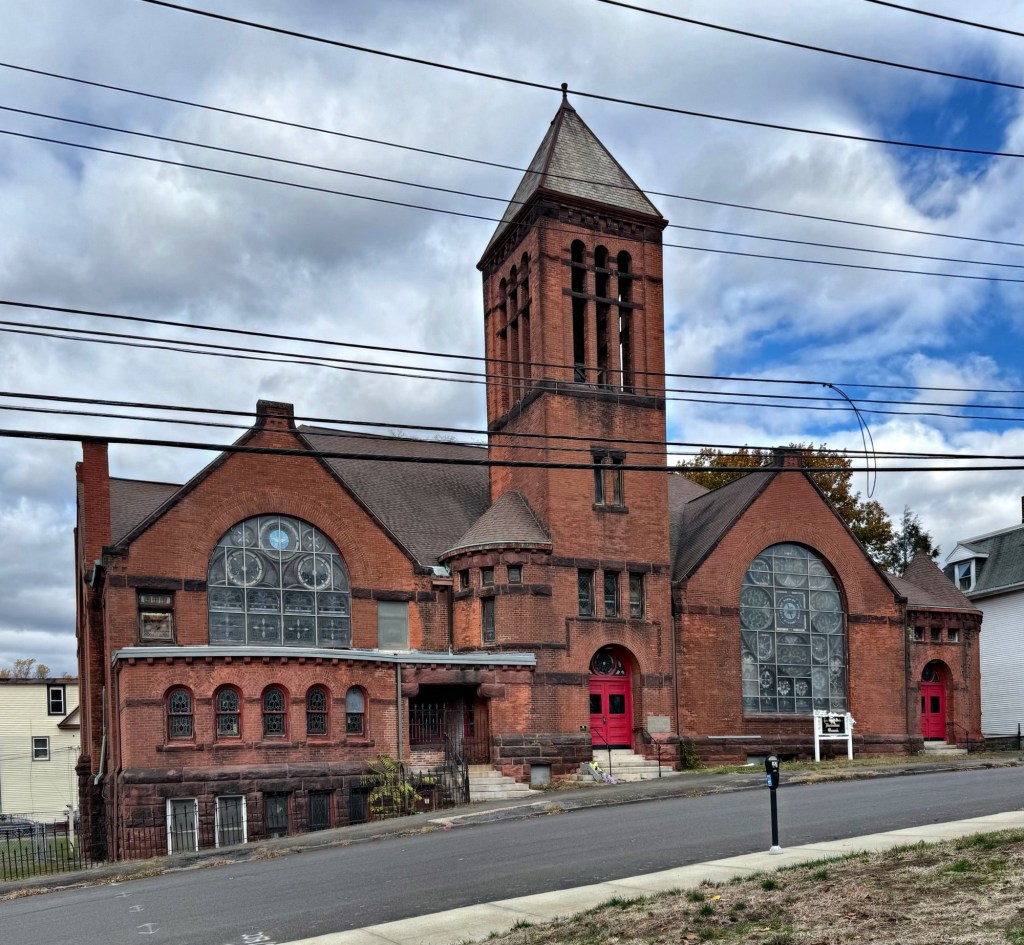
Derby United Methodist Church // 1894

The former Derby United Methodist Church (now the Ghana United Methodist Church) is located at the northern edge of the Town Green in Derby, Connecticut, and is a great example of a ecclesiastical building constructed in the Romanesque Revival style. Its large round arches, tall square tower, and heavy detailing in brick and brownstone place it in the Romanesque Revival mode, all with stained glass throughout. The church was built in 1894 and dedicated in early 1895. The stately church building was designed by George Washington Kramer (1847-1938), an architect who designed many Methodist churches in the midwest and east coast.

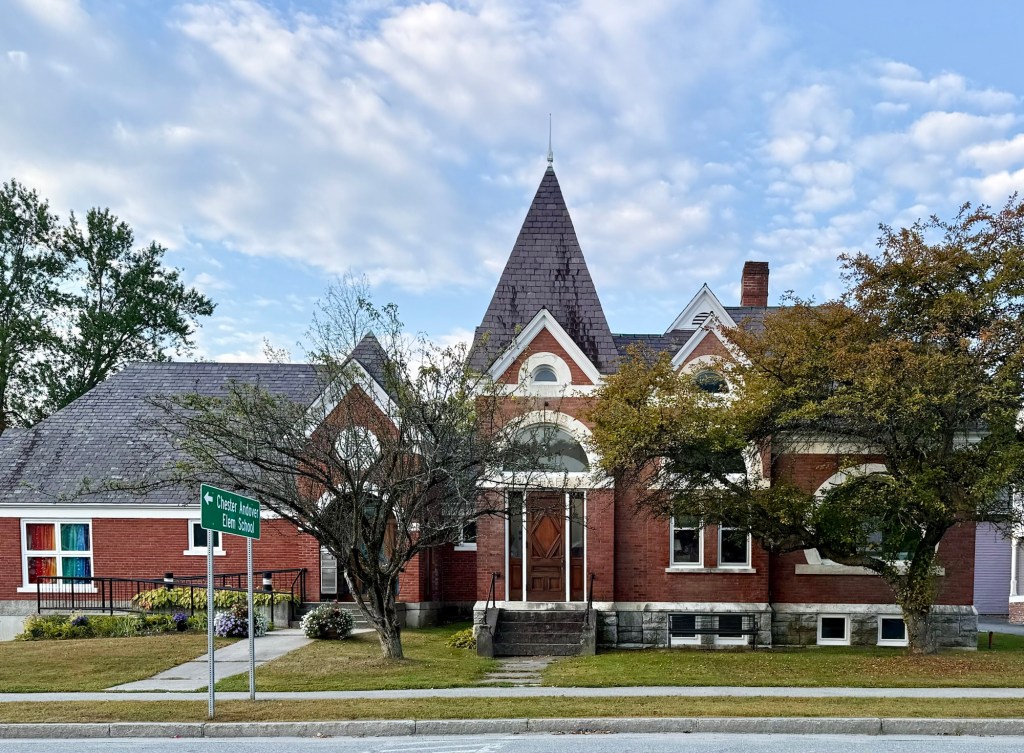
Whiting Library // 1891

The Whiting Library in Chester, Vermont, was designed by architect George H. Guernsey, and is said to be the only building in the village designed by a regionally significant architect. For the design, Guernsey created an eclectic library blending Romanesque and Queen Anne influences that strikingly enhance the library’s relatively modest physical stature. The building was named to honor Chester physician, Laurin G. Whiting and his wife, Abigail, who donated funds for the land and building. The polychromatic brick and granite building features unique gables, corner tower, and arched openings, which were carried over to a lesser scale into an addition a few decades ago.

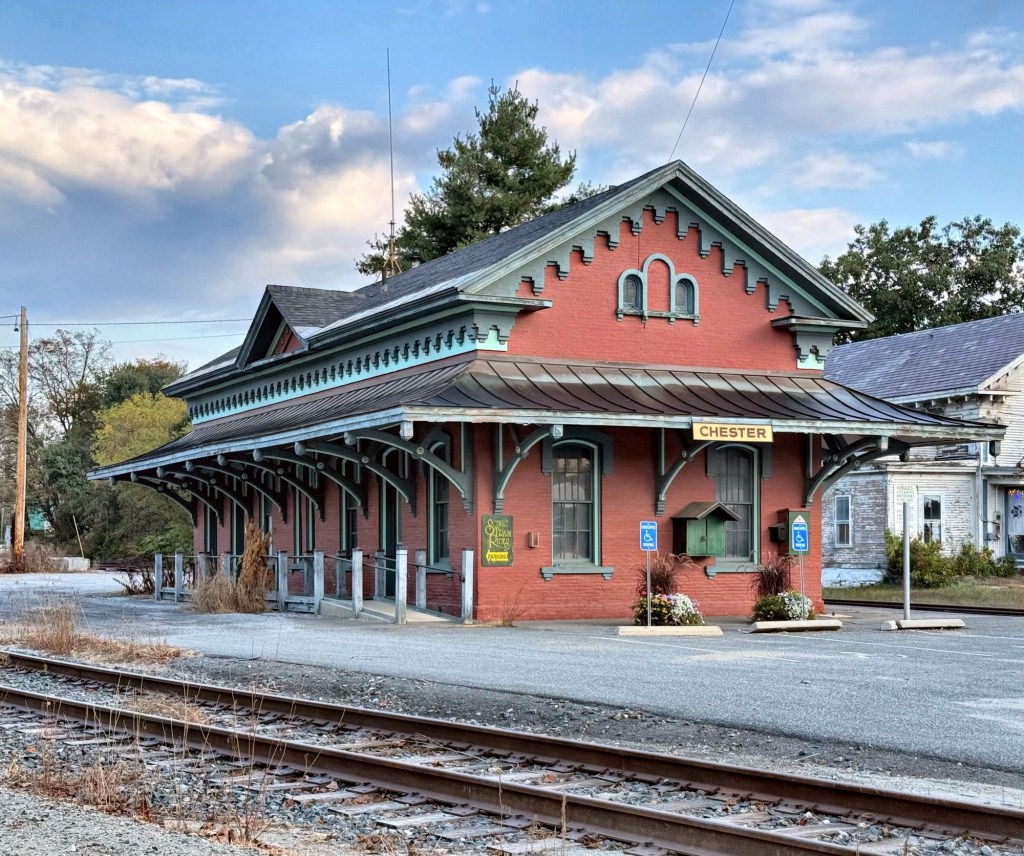
Chester Depot // 1872

The first public train arrived in Chester, Vermont, on July 18, 1849, and in December, the Rutland & Burlington Railroad opened the first rail line across Vermont linking the Connecticut River valley at Bellows Falls and Lake Champlain at Burlington. A fire destroyed the first station in 1871, and the Vermont Central Railroad built the current station within a year. The State of Vermont purchased the line in 1963, leasing it in part to the Green Mountain Railroad. Exceptional in Vermont, this brick station retains its high-style Italianate design and continues in railroad use. The station can be classified as Italianate/Romanesque in style and has a corbeled cornice, windows capped by brick hood moldings, and a projecting trackside awning. It appears that the station is not in active use, does anyone know more?

South Main Street Engine House, Providence // 1892

Built as a neighborhood fire station by the City of Providence in 1892, this handsome brick structure on South Main Street showcases how infrastructure and civic buildings can (and should) still contribute to the streetscape. Constructed along a streetscape of early 19th century brick buildings, the local architectural firm of Stone, Carpenter & Willson, sought to take cues of the materiality and massing of nearby structures, but employ new detailing and vocabulary for the fire station here. The result is a Romanesque style fire station with a pair of round-arched engine portals surrounded by stone facing, with the showstopping second floor and roofline with ornate brickwork around the arched windows and multi-staged corbeled cornice. The building with its smaller engine doors became obsolete with newer, larger fire trucks, and the building has since held a variety of commercial uses, today as a up-scale Italian restaurant.

Lyman School for Boys – Manual Arts Building and Powerplant // c.1900

The former Lyman School for Boys was established in Westborough as the Massachusetts State Reform School in 1847, the first state-operated reform school in the country. Initially located on the eastern shore of Lake Chauncy and dominated by a single massive building, but its early history was plagued by conflict between inmates and administration. In 1885, legislative action authorized the Trustees to purchase and prepare a new site, the first in the state system to be developed on the dispersed cottage plan, the school thrived throughout the 19th century and into the 20th century until its eventual closure in about 1974. Much of the campus was designed by architect, William G. Preston, likely including this industrial building, which was used as a Manual Arts training building. Here, young men would learn trades, where upon graduation, they would be able to enter the workforce. The building appears to have been extended decades later with the addition of a powerplant wing, in a more Arts and Crafts style. The handsome building has been vacant for over 50 years and is literally a shell of its former self. With much of the old Lyman School campus razed for uninspiring replacement buildings, it would be a shame to see this building not restored and adaptively reused.

Westborough Arcade // 1890

 The Second Meeting House of Westborough, Massachusetts, was built on this important site in the center of the village in 1749. It was a plain, wooden building and was used for both church services and town meetings, since church and state were essentially inseparable at the time. When a new church was built in 1837, this building was purchased and converted to commercial use. The first floor of the building was raised, and another floor was added underneath. The steeple was also removed. The building then became known as “The Arcade Building,” a kind of mall with small shops opening onto the porch. By the end of the 19th century, the old wooden building was nearing 150 years old and owners decided to demolish the structure, and replace it with a more permanent and stately block. The New Arcade was built in 1890 and is more Romanesque in style. The handsome brick block has retail spaces on the ground floor with residences above, a great example of mixed-use.