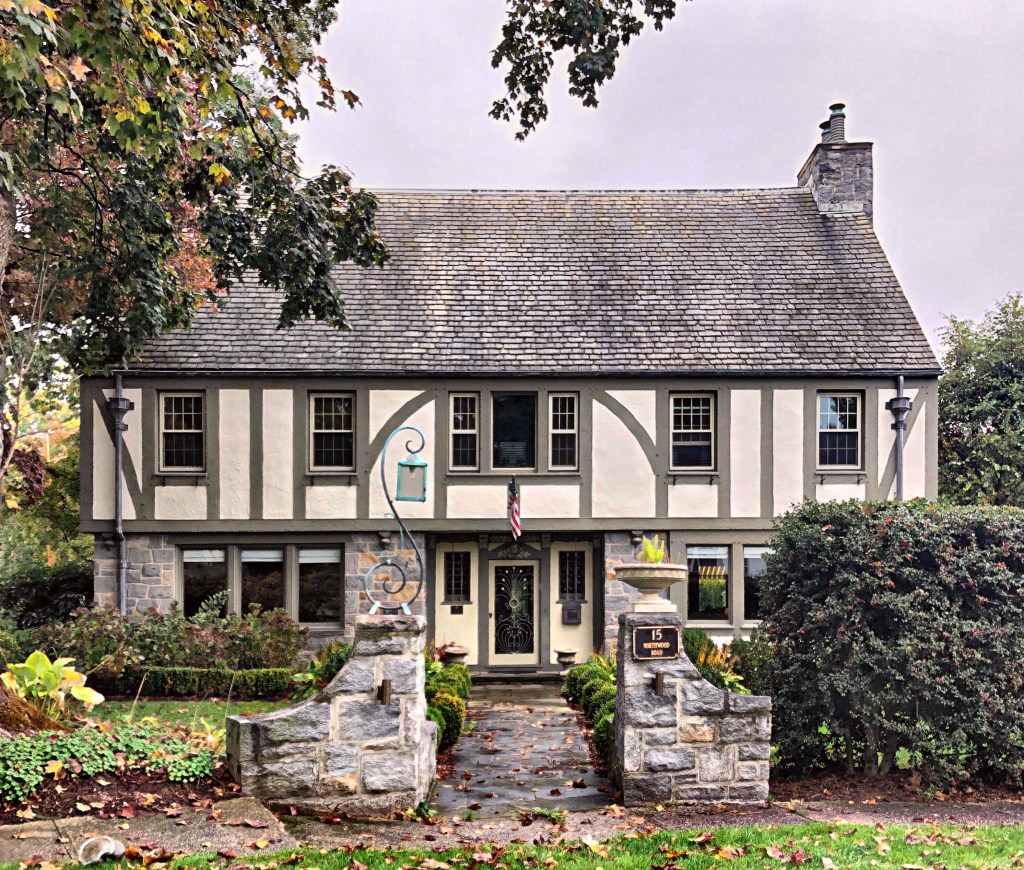
Baker-Mason House // 1897

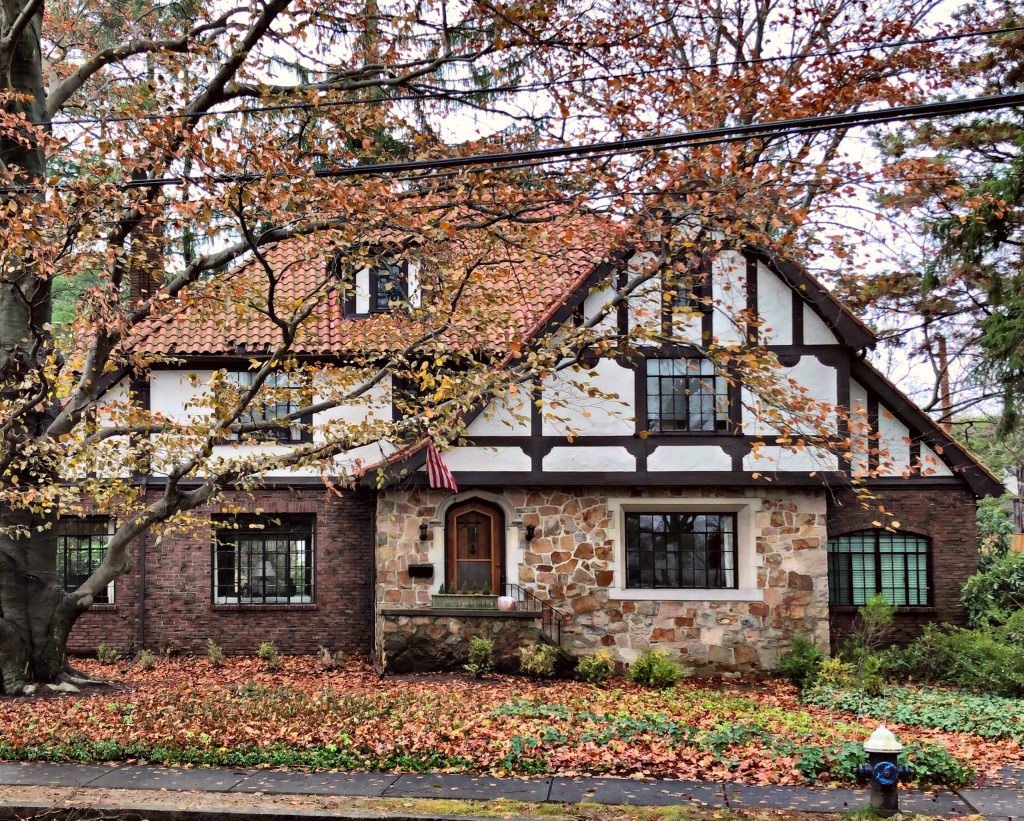
Eclectic homes that can not be pigeonholed to a single architectural style are among my favorite as they blend features elegantly into a single, unique composition. This house on Windsor Road in the Waban village of Newton, Massachusetts is an example of an “eclectic” late 19th century home. This old house exhibits elements of the Queen Anne and Tudor Revival styles. The house was built in 1897 for Daniel and Ida Baker. After their death, the home was purchased by a James H. Mason, who got it for an estimated $25,000 in 1909. A listing at the time mentions the property included a 14-room house and large stable, the latter still stands at the rear of the lot (since converted to a car garage).

James R. Bancroft House // 1924

At the very end of Windsor Road in Waban Village, Newton, you will find this large, stuccoed Tudor home. The property was one of the last developed on the street and was designed by Newton-based architect William J. Freethy. The first owner of the house was James R. Bancroft, a nationally known economist who taught at Boston University and for years served as President of the American Institute of Finance. The Bancroft House is a refined example of the Tudor Revival style with stucco siding without half-timbering or other masonry detailing which is seen in so many other examples nearby.

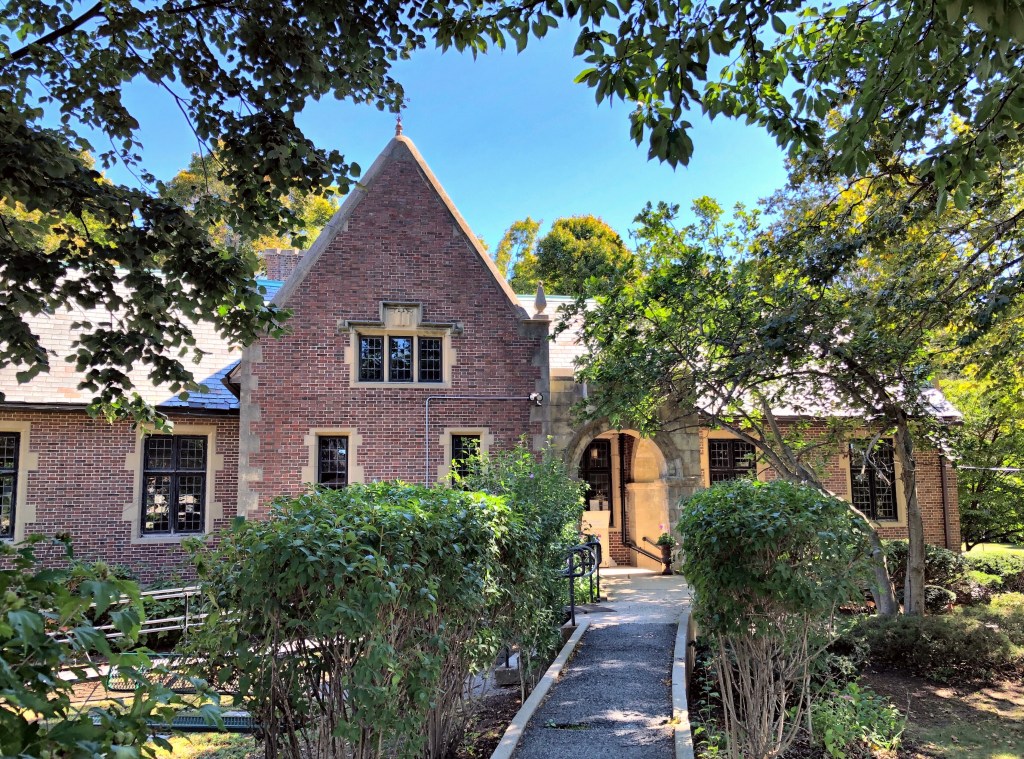
Albert Parlin School // 1931

Albert Norton Parlin (1848-1927) was born in Everett, Massachusetts to Ezra Parlin and Nancy Pickering-Parlin. At a young age, Albert lost both his parents – his mother passed in 1853 at the age of 26 and his father passed in 1858 at the age of 37, both succumbing to “consumption” (tuberculosis). At the age of nine, young Albert had become an orphan, and was raised by his grandmother at the Pickering Estate. He found his first job as a floor-sweep and errand boy in a retail cloak store. At seventeen, Albert Parlin began working with Magee Furnace Company, a Boston-based company where Mr. Parlin spent twenty-eight years of his professional career, moving up the ranks to become treasurer of the company. After he became successful, he gave back to his hometown, when in 1892, he donated his familial home and money to the City of Everett for the erection of the Parlin Memorial Library, to honor his late son. Parlin was not done giving to his hometown. He also left funds and a large piece of land to the City of Everett for a new Junior High School in 1915. The architectural firm of Desmond & Lord was commissioned to design the school which is set deep on the lot to give the building a beautiful front lawn. The 1931 building blends Art Deco and Tudor Revival styles with a large central panel.

Edmund and Ethel Sprague House // 1929

In the inter-war period, Norman Revival houses took off in popularity (though never at the same level as Tudor or Colonial Revival styles), partially due to returning soldiers who served in Normandy France in WWI. Many plans include a small round tower topped by a cone-shaped roof, resembling the grain silos of the ancient Normandy style. The architecture is characterized by steep, conical roofs or hipped roofs and round stair-towers. The style is much less common in the Boston area, but this notable example in Waban Village, Newton, was too good to pass by without snapping a photo! The home was built around 1929 for Edmund and Ethel Sprague. Edmund is listed in directories as a landscaper for trees and shrubs.

Ellis House // 1926

In the land of storybook Tudor houses, this one might just be the most magical of them all! Located on Chestnut Street in Waban Village of Newton, you’ll find this stone Tudor cottage set behind a circular drive. The house was built in 1926, in the interwar period (between WW1 and WW2), a period of rapid suburban development in this part of Newton. The house was first occupied by a Seymour Ellis, who according to newspapers, had a rabid dog! The house exhibits a strong gable to the street which incorporates a massive chimney inside. The gable also sweeps out to form a catslide roof, that incorporates an arched garden gate.

Emmett House // 1917

This refined brick Tudor Revival house in the Waban Village of Newton was built in 1917 for Lila and James Emmett. The couple hired Boston architect Edward B. Stratton to furnish plans for the home, which fits in to the early 20th century neighborhood. The symmetrical home has two gables at the facade which frame the central bay with a segmental pediment at the entrance.

Windle House // c.1912

William “Willie” Winfred Windle (yes that is a real name) was born in Millbury at the height of the town’s industrial growth and prosperity. He ran the W.W. Windle Mill just west of downtown and with his wealth, was able to buy a house lot on one of the most fashionable residential streets in town. His home was built in the early 20th century and is a stunning example of Tudor Revival architecture. In 1911, Windle traveled to England to inspect mills there and was likely inspired by some of the residential architecture he viewed on the trip. The house elegantly blends stone walls with half-timbered wood, with a prominent entry. The timber and stone entrance porch which has decorative bargeboard and corbels, has been enclosed. The home remained in the Windle family at least into the 1940s, when it was occupied by William Winfred Windle’s son, Winfred Woodward Windle. By the 1970s, the home was occupied as the Millbury Society of District Nursing.

Fairholme // 1875

One of a handful of massive summer cottages in Newport that have always remained a single-family house is this beauty, known as Fairholme. Originally built in 1875, the summer cottage was built in the popular Stick style for Philadelphia arts patron and engineer Fairman Rogers by architect Frank Furness, also of Philadelphia. The estate was purchased, expanded and modernized at the turn of the 20th century by Philadelphia banker John R. Drexel (1863-1935) and his wife, Alice Troth (1865-1947). It is likely that Philadelphia architect Horace Trumbauer was hired by the Drexel’s to modernize the home, as he was hired in 1903 to design their Manhattan townhome. The enlarged home in the Tudor Revival style saw a couple successive owners, all uber wealthy bankers and industrialists. The waterfront mansion which neighbors The Breakers and Anglesea (both featured on here previously), sold in 2016 for $16.1 Million!

“Breakwater” – Charles W. Lippitt Mansion // 1899-1924

Photo courtesy of Providence Public Library

Rhode Island is home to some amazing old homes, but “Breakwater”, the Charles W. Lippitt Mansion was NOT one of them! Former Governor, Charles Warren Lippitt (1846-1924), the son of Governor Henry Lippitt, wanted to be a member of Gilded Age society in Newport, after spending his time in Providence all year, so he had this absolute fortress built. Poor taste did not run in the family, as his father’s Providence mansion was very tasteful (featured on here previously). Breakwater was built on the southern tip of Newport, ironically across the street from Edith Wharton’s tastefully designed cottage, Land’s End (also featured on here recently). Wharton used the term “White Elephants” to describe the influx of massive, masonry mansions that replaced the traditional wooden cottages, similar to what she observed with the Vanderbilt estate, The Breakers. It is understood now why Edith Wharton abruptly moved when this monster of a house was built right next door! Architect Robert H. Robinson designed the fortress – erh I mean house…- and it remained on the site only until Lippitts death in 1924, when the castle was demolished by his son to make the property more marketable for sale. The property was purchased in 1926 by John Russell Pope, an architect, designed his own Tudor style home, “The Waves” (featured on here previously) atop the ruins of the previous estate. MUCH better!

“The Waves” // 1927

If anyone knows me, I absolutely LOVE Tudor and French Norman style houses, but they are much less common compared to the Colonial Revival style, which dominated residential architecture in New England for nearly a century. Located on Ledge Road, at the southeasternmost peninsula of Aquidneck Island in Newport, you’ll find this absolutely giant estate as you conclude walking Newport’s iconic Cliff Walk. “The Waves”, was built in 1927 by architect John Russell Pope (1874-1937) as his own residence. He built it over the ruins of the former Gov. Lippitt Mansion which was previously built on the site and demolished by Lippitt’s heirs. In designing The Waves, Pope wanted to focus on the natural, rocky site and build a structure that would blend in. The Tudor style mansion features stucco and stone siding, half-timbering, and a complex roof covered in slate, all in a U-shaped form. Years after completing his home in Newport, Pope would become even more well-known for designing major public buildings in Washington D.C., including the National Archives Building (1935), the West Building of the National Gallery of Art (1941), and the Jefferson Memorial (1943). After Pope’s death, the massive home became the first mansion in Newport to be converted to condos, a great preservation tool that maintains these massive mansions, and allows for them to be utilized today.