This tiny building next to the John Palmer House featured previously was built in 1854 by Thomas Snow as an income-producing property. According to the sign, Snow was a grocer in town and must have rented the small building, which was developed on a small sliver of land, formerly a side garden. I’d guess that the building was originally 1 1/2-stories with the brick first floor added underneath sometime later. The house is vernacular Greek Revival in style and the scale is exactly what makes Marblehead so charming to get lost walking in!
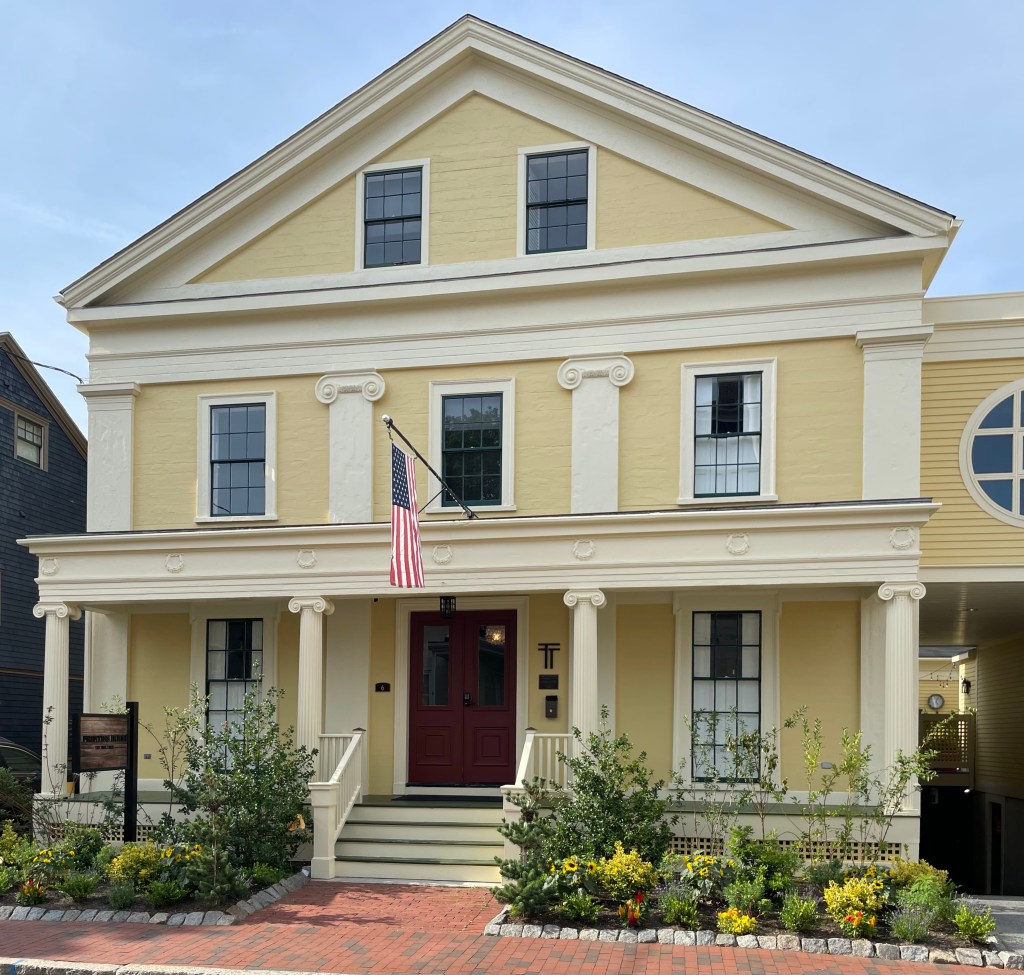
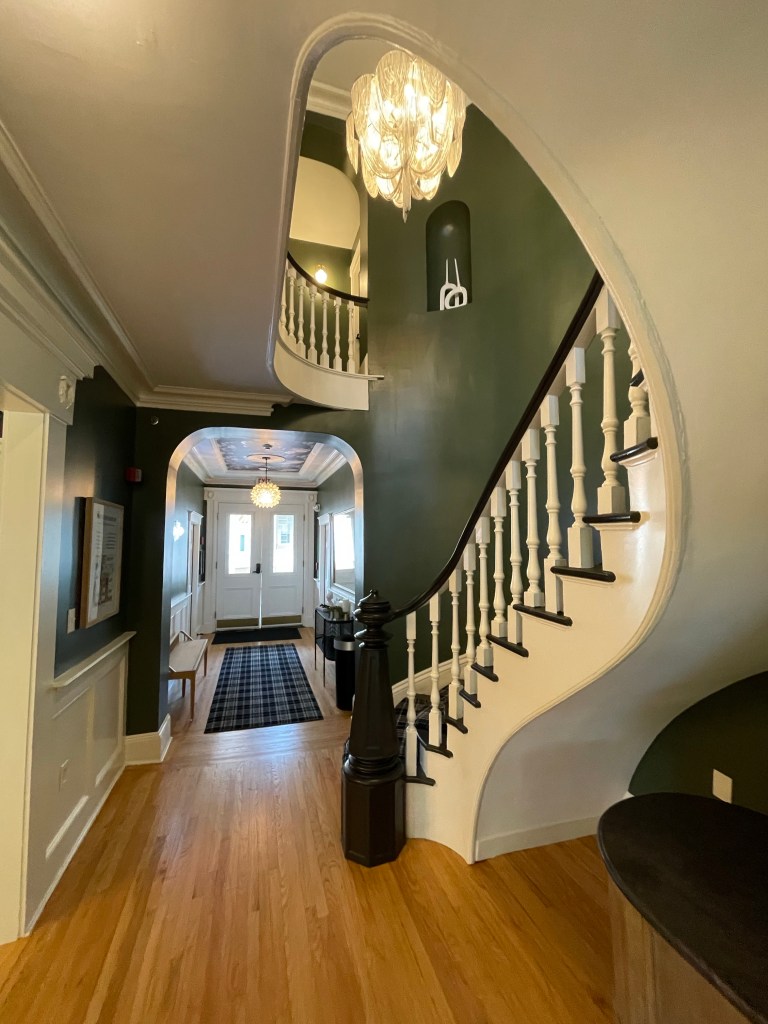
This past weekend, I took a little “stay-cation” in Cambridge, and I am so glad I did! I stayed at the Prentiss House, a highly significant Greek Revival house near Porter Square. The Inn is operated by Thatch, a company that offers short-term hotel stays, long-term apartments, and co-living arrangements in the Boston area. They recently acquired and renovated this amazing old house and its a great place to stay!
The home was built in 1843 by William Saunders a well-known housewright for his son, William Augustus Saunders about the same time as his first child, Mary was born. Sadly, Mary died at just six years old and was buried at Mount Auburn Cemetery with her grave guarded by a tiny stone dog. The Saunders Family resided at the home for over 50 years until William and his wife’s death at the end of the 19th century. The original location of the mansion on Massachusetts Avenue necessitated its move to the newly laid out Prentiss Street to save it from commercial development pressure and the wrecking ball. The home was moved to its present site in 1925 for the erection of a one-story block of stores on Mass. Ave. In 1992, the home was purchased by local artist, Charlotte Forsythe and she began the journey of transforming the home into the Mary Prentiss Inn. An addition by Bell/Fandetti added rooms and subterranean parking to the building at that time. The Inn was purchased by Thatch in 2021, who modernized the rooms.
The house reads like a Greek Temple, not with a full portico, but by using colossal applied pilasters and an entablature carried across the gable, suggesting a classical pediment. Ornamental wreaths adorn the full-length porch and interior mouldings.
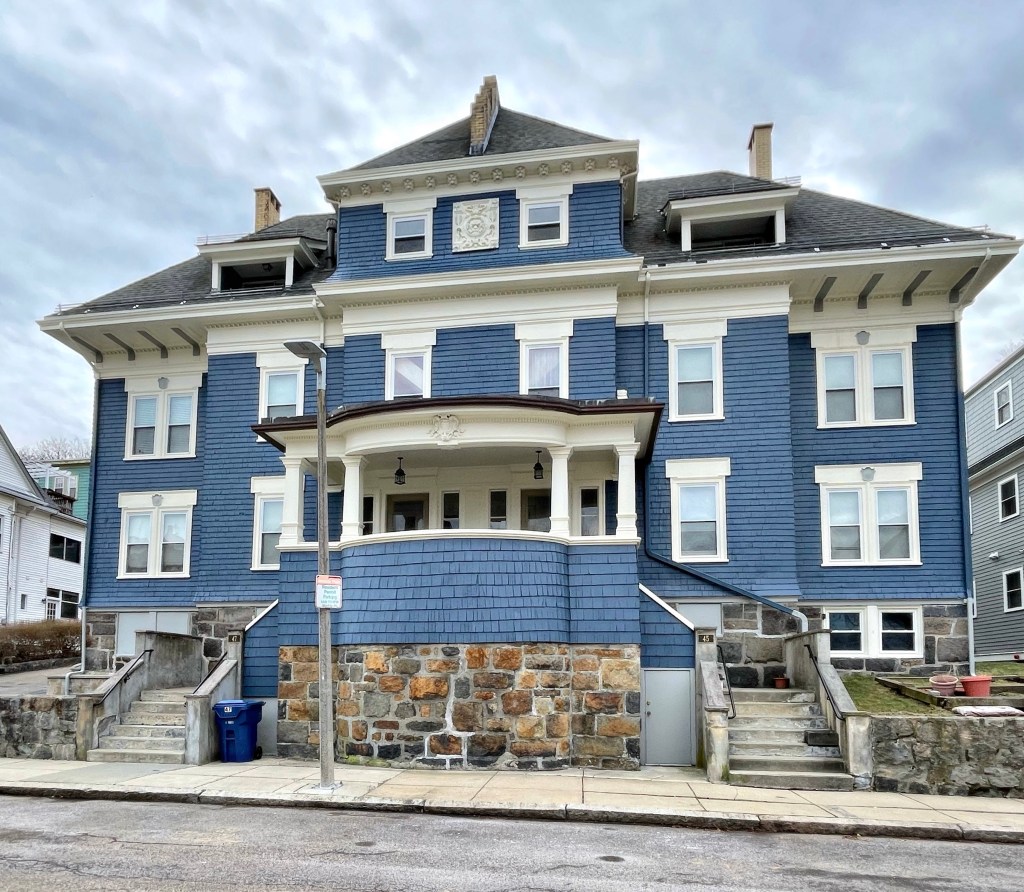
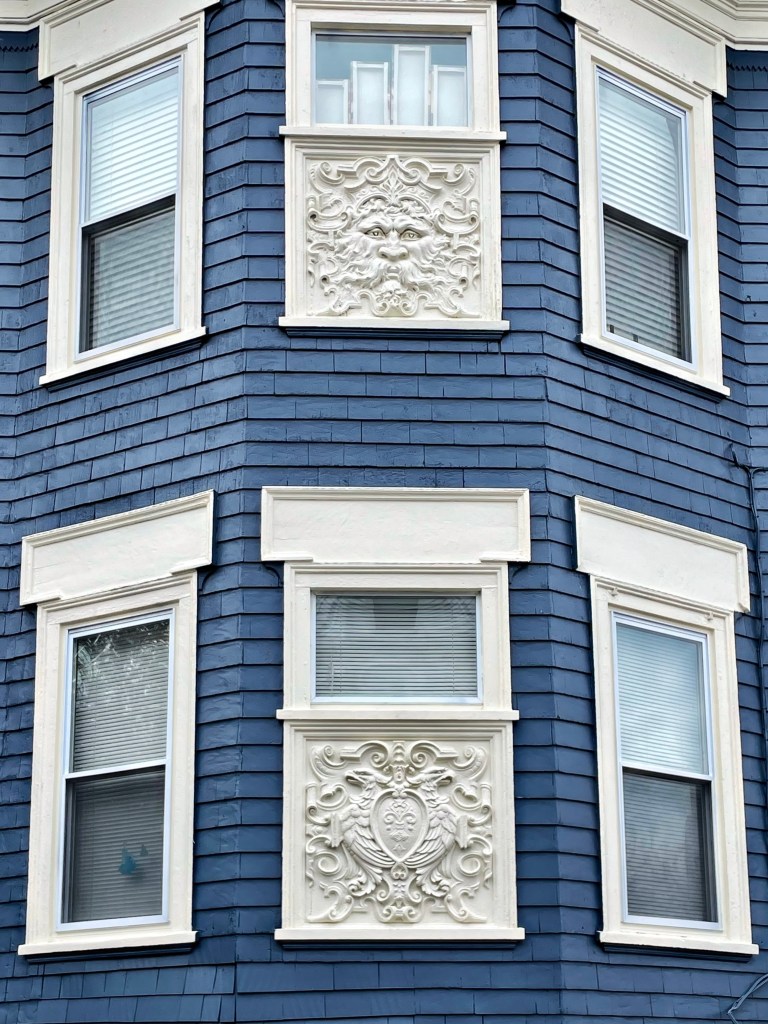
In 1896, architectural sculptor Charles Emmel purchased land in the rapidly developing Forest Hills section of Jamaica Plain, Boston. He hired local architect George Zimmer, to design a massive double-house which would serve as an income-producing investment, and could also be a sort of advertisement for his sculpture work. The result is this massive Colonial Revival style property, perched atop a puddingstone foundation. Architectural ornament has been lovingly preserved, a testament to the owners of the building today and the amazing work of the original owner, Mr. Emmel. I found myself staring at the building for a while when walking by, looking at all the hidden detail and architectural ornament which adds so much to the building.
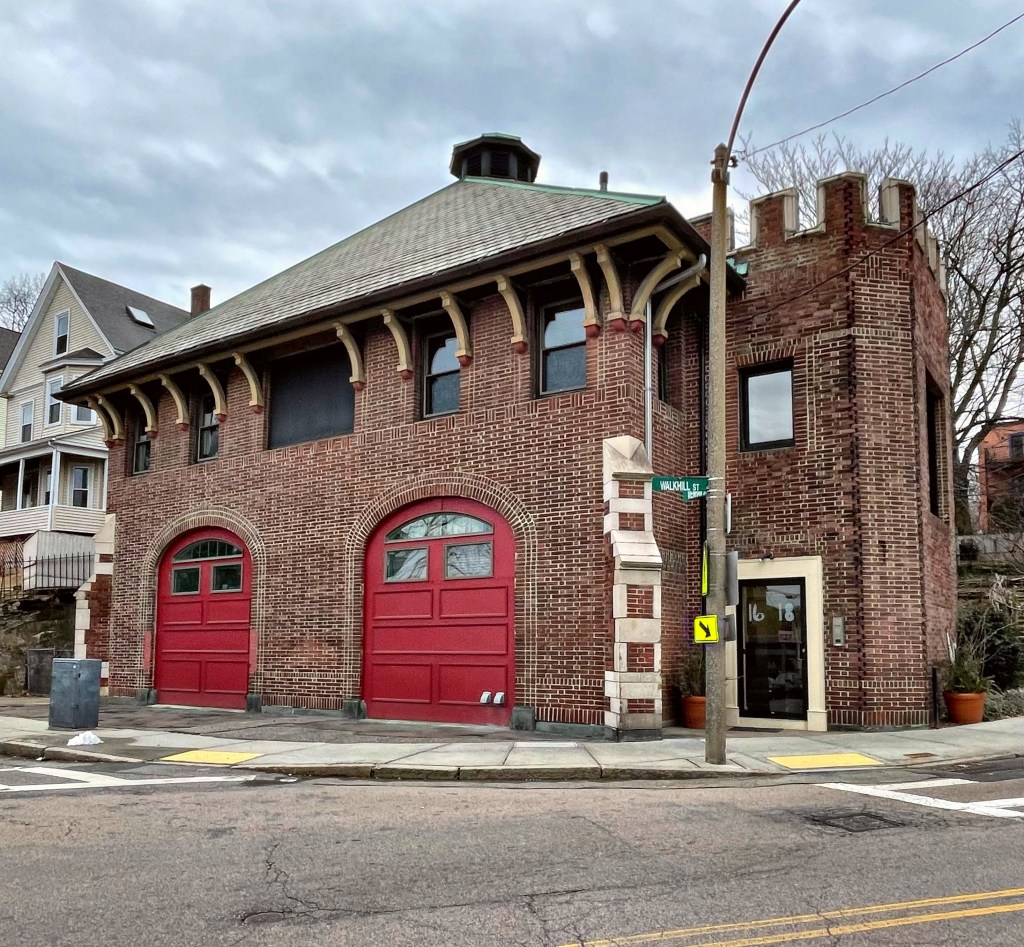
Just a block from the Bethel AME Church (last post) in Jamaica Plain, Boston, you will find this absolutely charming old fire station. The station was built in 1909 about the same time as the new Forest Hills Train Station was completed, signaling a huge population and development boom in the area. To provide emergency and fire service to the newly developing neighborhoods surrounding the train station, the City of Boston hired the architectural firm of Moller and Smith to design a new station that would allow for horses and related apparatus as well as a new fire automobile to enter the building. The Arts and Crafts style building is constructed of brick supported by structural steel finished with Carolina pine at the interior. The building retains its pyramidal hipped roof in slate and a unique corner tower capped with a castellated parapet.
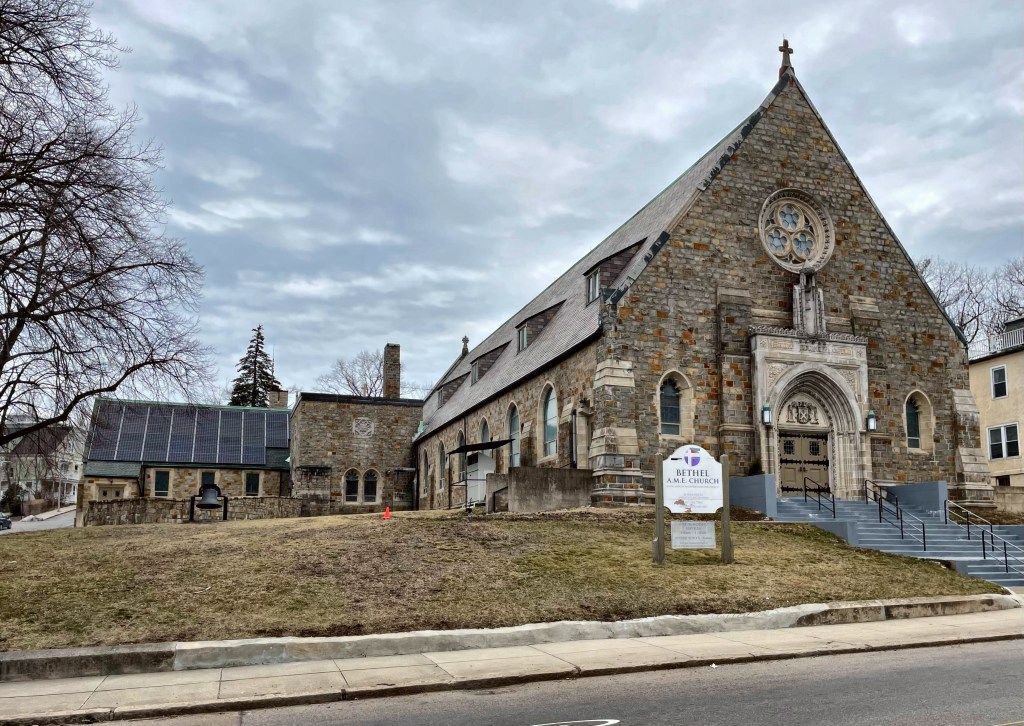
During the rich Arts and Crafts movement of Boston, dozens of churches and their associated buildings were constructed using principles of the movement, which sought to incorporate English design with hand-crafted detailing, moving away from the mass-produced features and architecture seen in the Victorian-era/Industrial Revolution. After WWI, the Forest Hills neighborhood of Boston saw a massive influx of residents and housing construction, leading to the desire for a new neighborhood church. The Roman Catholic Archdiocese commissioned Boston architects Timothy O’Connell and Richard Shaw, who specialized in ecclesiastical design to build the new church. Opened in 1921, the building is constructed of random ashlar walls with buttresses, lancet windows, and a large rose window, all nods to Gothic architectural precedent. Demographic changes and declining church attendance led the parish, for the first time in 1995, to accept aid from the archdiocese to meet expenses. Unable to justify keeping the church open, the Archdiocese sold the church to Reverend Ray Hammond and the Reverend Gloria White-Hammond, a husband-and-wife pastoral team, who started a local African Methodist Church (Bethel AME Church) in the neighborhood.
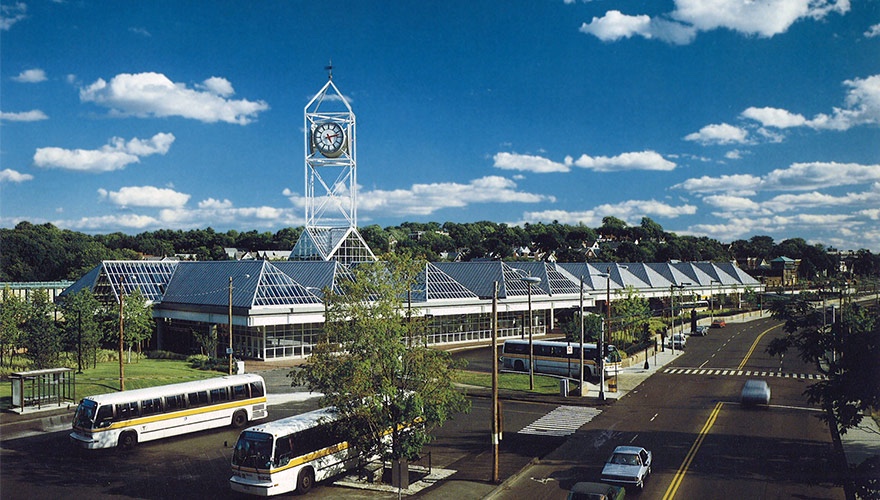
While the demolition of the 1909 Forest Hills Station in Jamaica Plain (last post) was a huge architectural and historic loss for the city of Boston, the present building is a landmark in its own right. The present building was built in 1987 as a pivotal project in the MBTA’s Southwest Corridor Improvement Program, which was largely unfinished (thanks to neighborhood pushback and protests against the proposed highway to cut through the neighborhoods). The existing station, designed by local firm Cambridge Seven, is situated between two important points in Boston’s “Emerald Necklace” park system, and thus was given the appearance of a greenhouse by the architects. The distinctive clock tower, rising 120 feet above the station, signals the station location and is a nod to the days when stations once had prominent clocks to help passengers keep tabs on the time, before the days of cellphones!
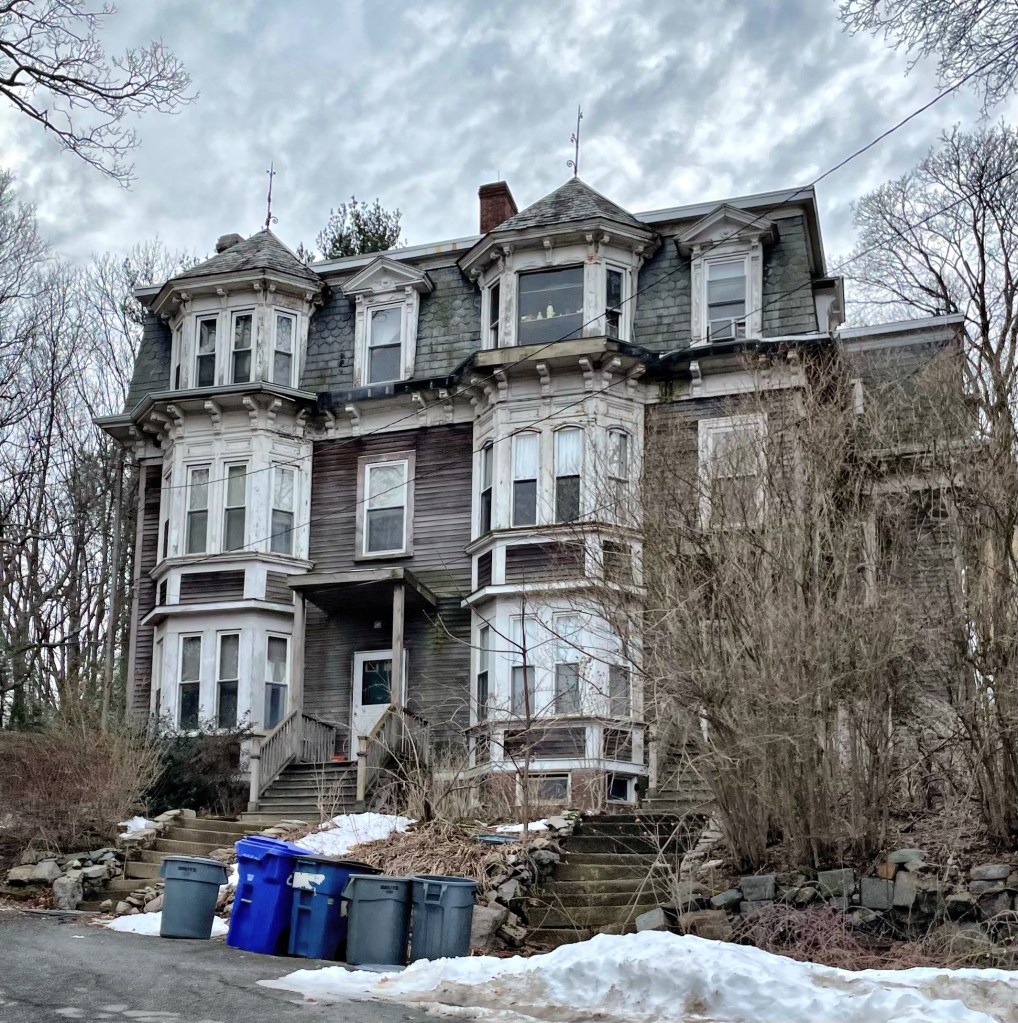
Isaac Harris Cary’s land holdings adjacent to Forest Hills Cemetery in Jamaica Plain, Boston, saw a surge in value when the cemetery and Forest Hills Station were constructed, opening up the area for development. After Isaac’s death in 1881, his unmarried daughter Susanna, built this large Second Empire style building contributes to the varied 19th century architecture of the street. This double-house was constructed around 1884, seemingly as a rental property which provided Susanna income while residing nearby. The two units suffer from some deferred maintenance, but are excellent examples of the Second Empire style in a double-house form.
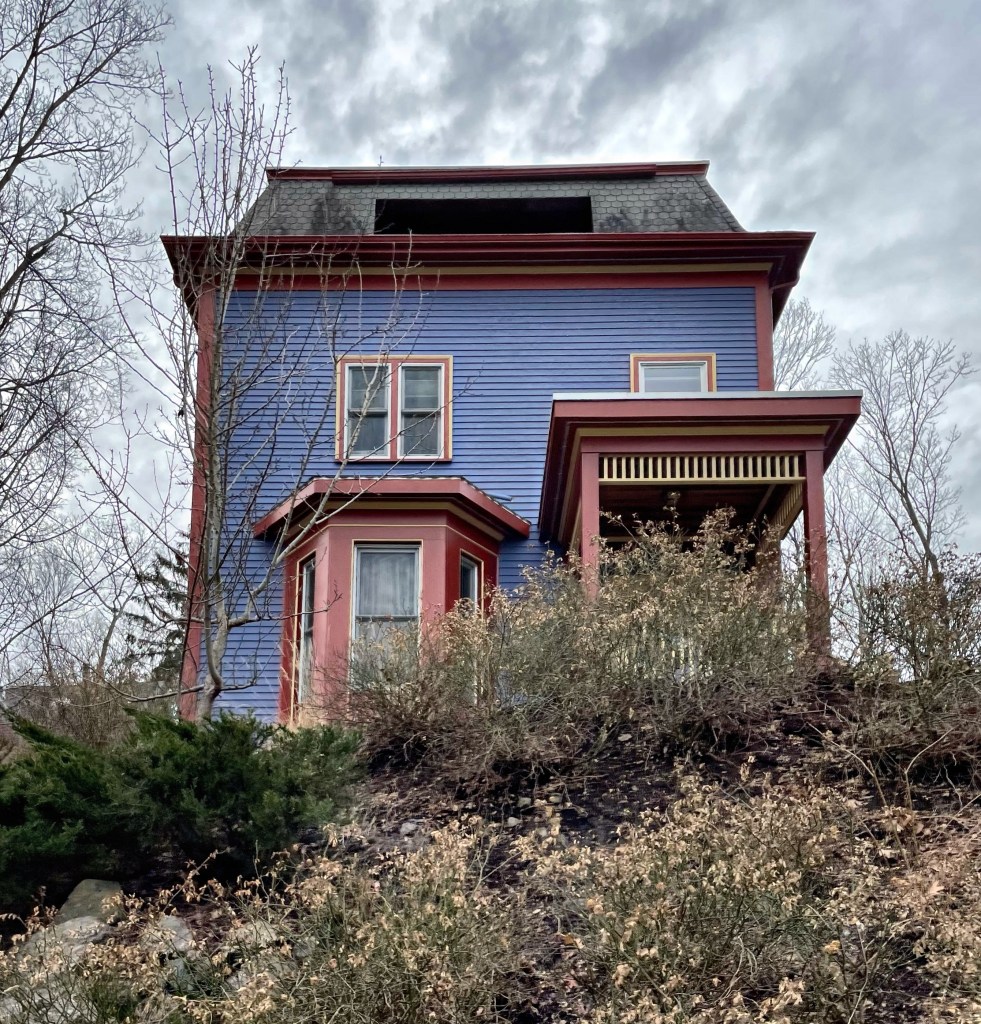
Isaac Harris Cary (1803-1881) was born in Charlestown, MA to an established, old New England family. He eventually settled in West Roxbury, an area that is now known as Jamaica Plain, where he operated a tannery along a branch of Stony Brook, a tributary of the Charles River. Isaac built this home and a couple income-producing rental properties on a hill adjacent to the newly established Forest Hills Cemetery. The Second Empire style home today features bright colors and a modern recessed window set into the mansard roof, likely providing views to Boston’s skyline.
This historic rowhouse in the South End of Boston was home to the Women’s Service Club, a social and volunteer organization made up of Black women to uplift Black Bostonians of varied backgrounds, including soldiers, students, migrants and mothers. “464,” as some locals admiringly called it, was formed in the early 20th century as Boston. The city, once known as “Freedom’s Birthplace” and the “Athens of America” as a hub of abolitionist activity leading up to the Civil War, saw extreme segregation in housing and education for its Black residents by the early 20th century. From this, local activist Mary Evans Wilson organized a knitting group in 1917 to support soldiers of color fighting in World War I. An estimated 350 women joined the group, donating their talents to produce scarves and gloves for servicemen. Humanitarianism guided the activity of the Women’s Service Club’s over the next half century. This building was purchased in 1919 and operated as part-meeting space and part-settlement house. “A Home Away from Home,” as some described it, the building offered affordable shelter to female workers, migrants, and college students barred from on-campus housing due to racist policies. One of the club’s most prominent members was Melnea Cass (1896–1978), who served as its President for more than fifteen years. Cass initiated the Homemakers Training Program which certified domestic workers so they would be assured a liveable minimum wage, social security and other benefits. The club continues to do great work, but could use funding to restore the landmark building!
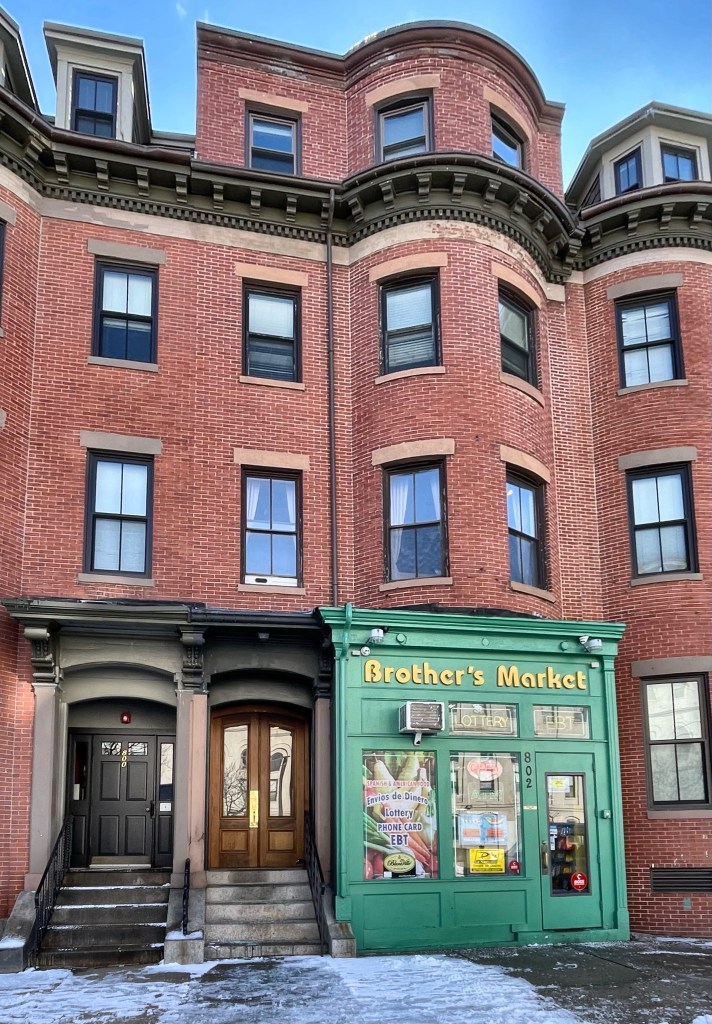
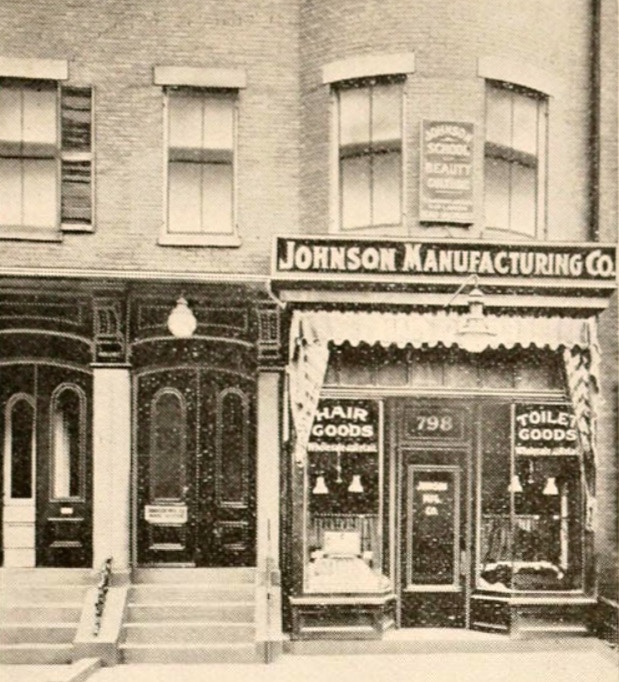
Boston’s South End neighborhood has so much history that NEEDS to be showcased. From the repetitive architecture of beautiful brick and stone bowfronts, to the history of African American activism, enterprise, and stories, the neighborhood is a gem of Boston. This building was constructed around 1865 for Thomas H. Snow (1833-1908) as his home. Snow was a wine and spirit merchant who had a store in Faneuil Hall Square. While that is interesting, Mr. Snow is not the highlight of this building, that comes later in 1899, when the building was rented to Madame Mary L. Johnson, a wig maker, scientific scalp specialist, and hair culturist. Mary Johnson and her husband, Dr. W. Alexander Johnson, were Black and ran one of just 200 Black-owned businesses in the city of Boston by the beginning of the 20th century. At their storefront, they sold hair goods at Johnson’s Hair Store. Sold all over the United States since 1900, their famous “Johnson Hair Food” was “the most scientific pomade yet discovered for growing, beautifying and softening the hair,” they claimed. In connection with their hair product outfit, Madame Johnson operated Johnson’s School of Beauty Culture, where a variety of services including manicuring, shampooing, scalp massage, facial massage, hairdressing, and scalp treatment were offered. The school provided young Black women in Boston technical training and skills, which there were limited options at the time. Mr. Johnson also was President of the Boston Negro Business League, which helped bolster Black businesses at the turn of the century.
Set along Beacon Street, one of the finest streets in Boston, this townhouse has uninterrupted views of the Boston Common and Public Garden. The house was built around 1825 after a large fire destroyed nearly all the homes on the block. Build it and they will come, and the upper-class Boston elite did! Attorney William Minot (1783-1873) purchased the land here as early as 1817, and is said to have hired Peter Banner, the English architect who designed Park Street Church, to design the first house on this site, which stood less than 10 years. Minot had a new home built in the 1820s and lived there until his death in 1873. By the late 1920s, Christian Archibald Herter lived here. Herter held a number of important offices in state and national government, serving as the Speaker of the Massachusetts House of Representatives, Governor of Massachusetts, and President Eisenhower’s Secretary of State (1959 to 1961). It was Herter who likely added the Federal Revival features on the house, including the porch, dormers and updated door surround.
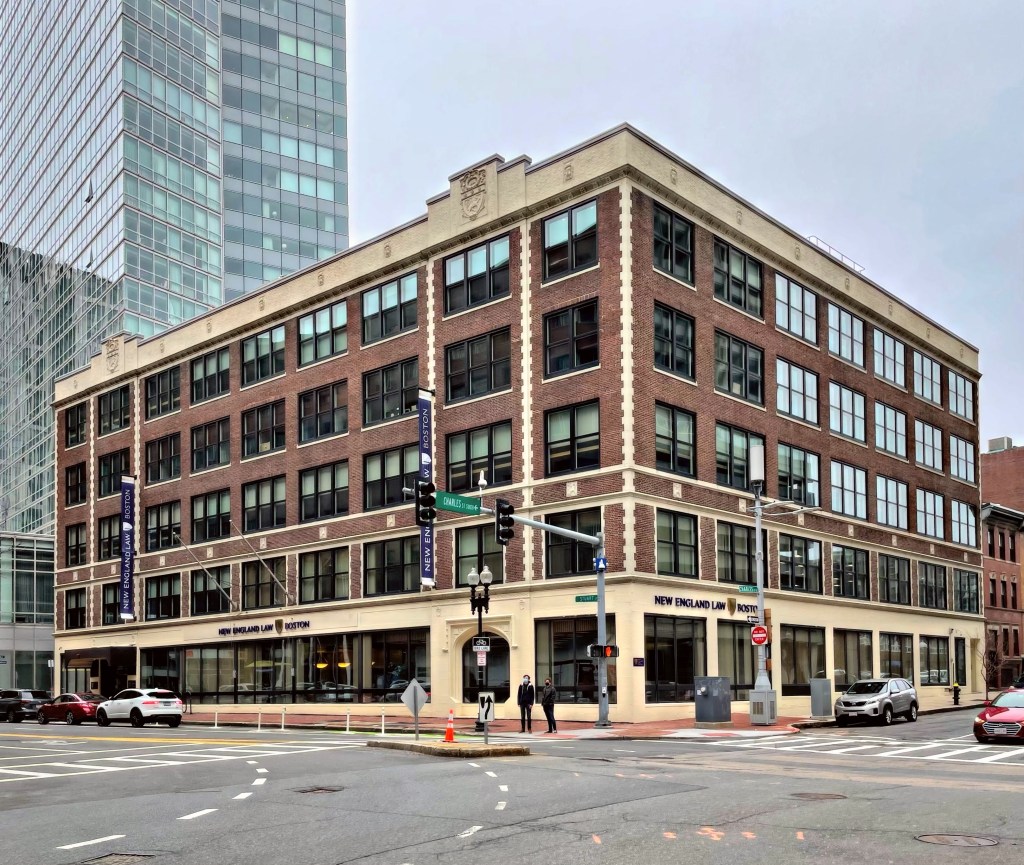
In 1921, Stuart Street was widened and extended between Boston’s Back Bay and Bay Village neighborhoods, which necessitated razing of all buildings along the route. From this, new lots were platted along the street where once thriving businesses were. Some relocated and others rebuilt. In 1927, the Park Square Corporation purchased seven contiguous lots at the corner of Stuart and Charles Streets and began construction of a large office building with storefronts on the ground floor. The Burdett Building opened in 1928. The building was built for Burdett College, which was founded in 1879 and focused on business and shorthand courses for students as a junior college. Architect Thomas H. James wanted the building to be like the new buildings at Princeton and Yale. The design featured Gothic inspired entrances and stone carvings of books and lions. Burdett College occupied the building until the 1950s and it was subsequently sold. By 1980, the building was acquired by the New England School of Law, who occupy it to this day as a place of learning.
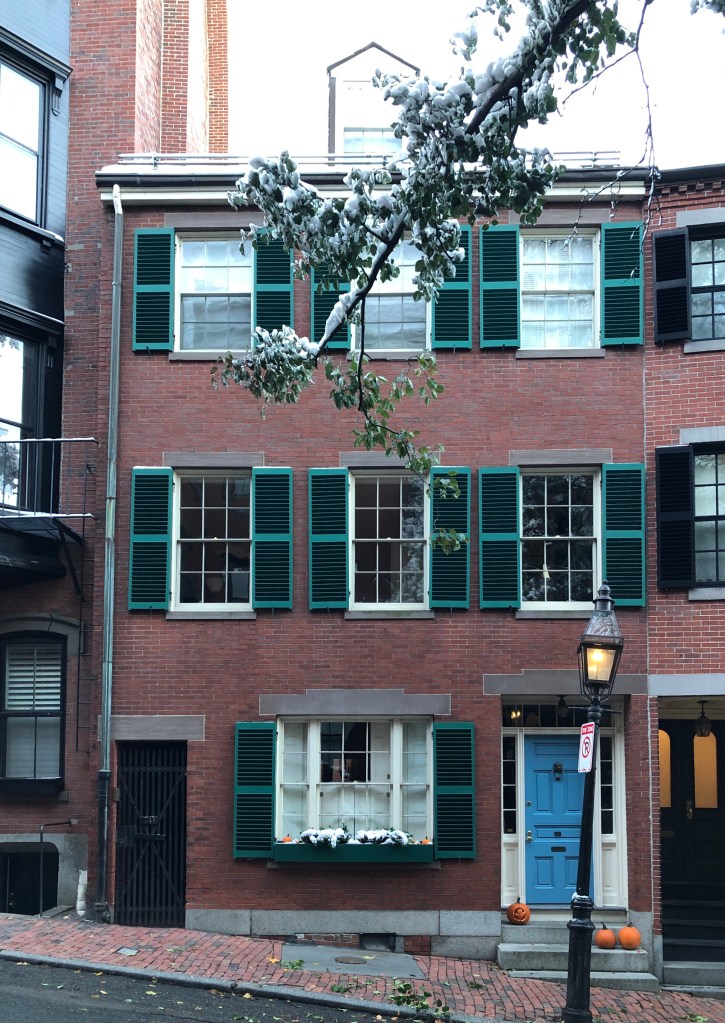
One of my favorite houses in Boston is this absolutely perfect townhouse on Pinckney Street in Beacon Hill. This house was built on speculation in 1829-1830 for Hollis Chapin by architect John Kutts. Kutts was active as a Boston architect between 1828 and 1838, but he is much less well-known compared to his peers today. I hope someone who is a better researcher than me stumbles upon this article because I would love to learn more about this architect! Kutts (possibly also Kutz) is a unique name for Boston, so it is likely he was a German immigrant who settled in Pennsylvania before moving up here. Back to the house. It was finished and sold in 1830 to Ebenezer T. Pope for four thousand dollars. The home was quickly bought and sold a couple more times as the values on Beacon Hill continued to grow. The property was purchased in the 1870s by Noah Bodge, as a rental property and it remained in the family through the 1920s. The home retains all the original details and provides a needed pop of color with the door and shutters.
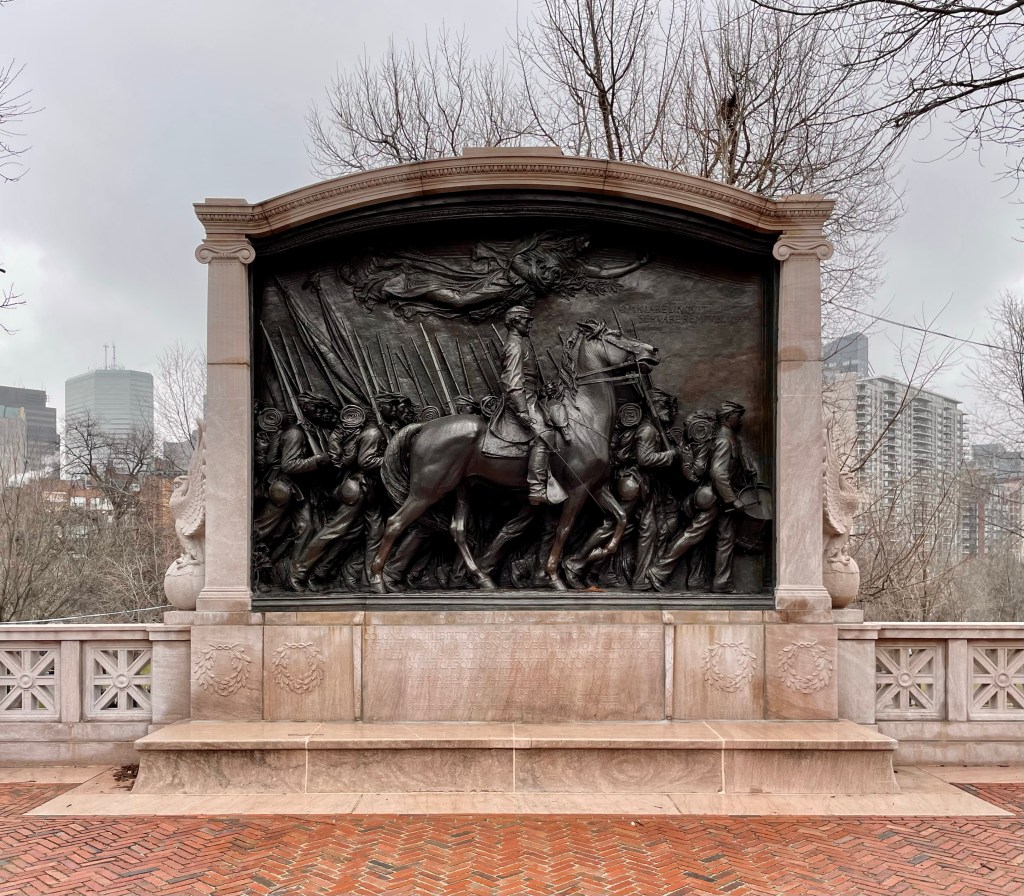
Commissioned from the celebrated American sculptor Augustus Saint-Gaudens in the early 1880s and dedicated in 1897, The Shaw 54th Regiment Memorial (aka the Robert Gould Shaw Memorial) has been acclaimed as the greatest American sculpture of the 19th century. The memorial was designed by famed artist Augustus Saint-Gaudens, and it is a stop on the Boston Black Heritage Trail, commemorating the valiant efforts of Colonel Robert Gould Shaw and the men of the 54th Massachusetts, one of the first Civil War regiments of African Americans enlisted in the North. In July 1863, the regiment was sent to South Carolina where an assault was planned on Fort Wagner guarding Charleston harbor. Shaw had asked to have 54th Regiment lead the attack. Of the 600 men in the attack that day, there were 285 casualties, and Col. Shaw was killed, but the men never wavered in the battle and demonstrated great courage and determination. Following this display of valor, other black regiments were formed, and by the end of the war, 10% of the union army was made up of African American soldiers.
The monument in Boston shows the 25-year-old Shaw seated on his horse, with his regiment as it marched down Beacon Street on May 28, 1863 to depart the city to fight in the South. The concept of Shaw on horseback with marching soldiers was inspired, at least in part, from a painting Saint-Gaudens saw in France, Campagne de France 1814, by Jean-Louis Ernest Meissonier, which depicts Napoleon on horseback with rows of infantry in the background.While Shaw is the centerpiece of the monument, the significance of the monument is the Shaw Memorial is the first civic monument to pay homage to the heroism of African American soldiers in the U.S.
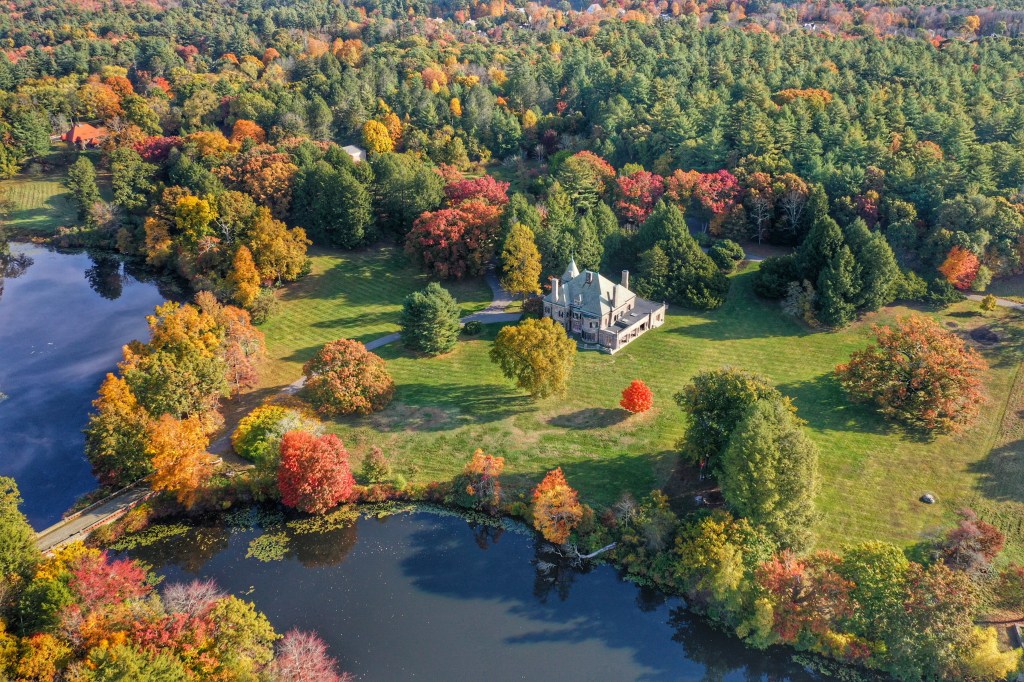
The country estate of Frederick Lothrop Ames (1835-1893), “Langwater” sits in North Easton amongst a collection of some of America’s greatest architectural treasures, all thanks to the Ames Family. The Ames family was a wealthy family which had lived in Easton for many generations. Frederick’s grandfather Oliver Ames Sr. founded the Ames Shovel Works in Easton, Massachusetts. The Shovel Works earned the family a huge fortune, during a time when aggressive canal and railroad expansion was built by the hands of thousands of men using shovels. Frederick’s father Oliver Jr. was president of the Union Pacific Railroad during the building of the transcontinental railroad. Frederick’s cousin Oliver Ames was governor of Massachusetts 1887–1890. Frederick himself was Vice President of the Old Colony Railroad and director of the Union Pacific railroad. At the time of his death, Ames was reported to be the wealthiest person in Massachusetts. With this immense wealth, Frederick built a castle where he would spend most of the year, overseeing his various businesses, in his hometown of Easton, Massachusetts. The mansion was designed by architect George Snell and built around 1860, with a couple additions and updates until Frederick’s death. A few years before his death, Frederick hired famed architect Henry Hobson Richardson, who he already worked with in designing the Oakes Ames Memorial Hall(Easton’s Town Hall), to design a gate house leading to Langwater (more on that later).