Pagoda Building // c.1850-1917

For the last on this series of Lost Boston buildings, I present this little-known landmark which was once neighbors to the Old State House. The Pagoda Building as it was named, was located on the corner of Washington and State Streets and was one of the tallest buildings on the street upon completion. The seven-story building of Quincy granite exhibited round arched windows and an interpretation of a belvedere at the roof which served as a penthouse. The building’s upper six stories were residential, including the spectacular Oriental penthouse at the top, with retail space at the ground floor. The architect was a recent immigrant from Britain named George Snell, who clearly made a name for himself, later entering a partnership with James R. Gregerson. The Pagoda Building, which was originally an early “skyscraper” in Boston was quickly surpassed in height and floor plate size and was deemed inadequate for such a prominent location. It was demolished by 1917.
Trinity Place Station // 1900-1964

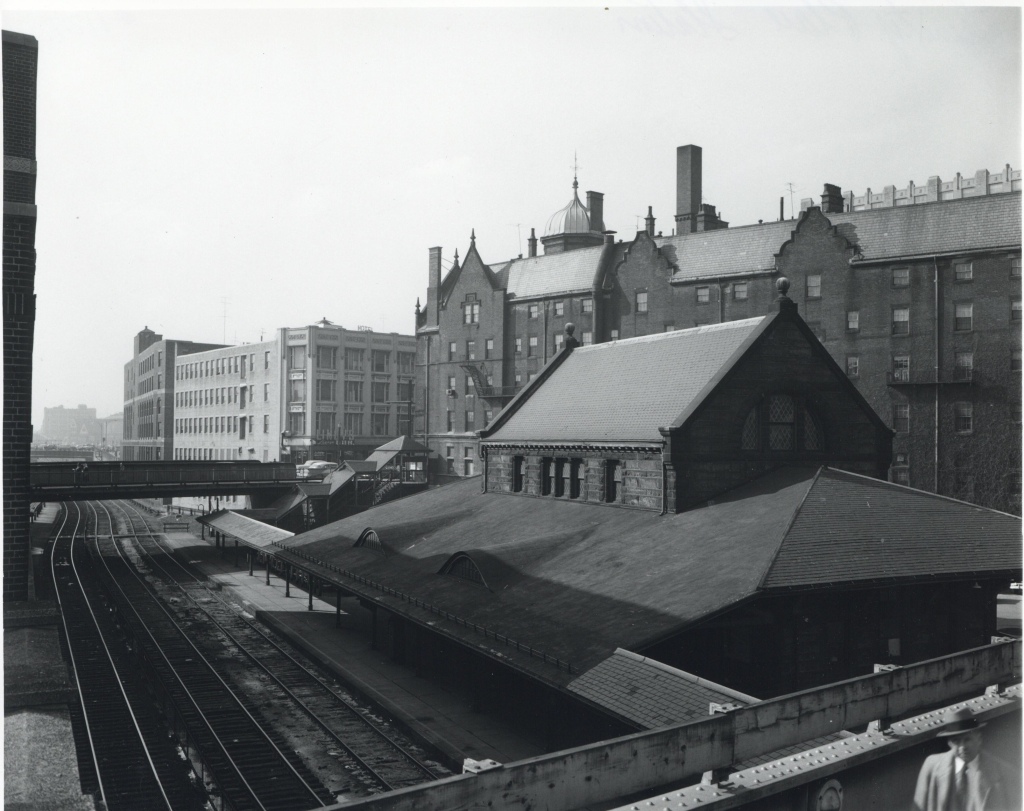
Trinity Place Station was the Boston & Albany Railroad’s second depot for trains running outbound from its newly completed South Station. The depot was designed by Alexander Wadsworth “Waddy” Longfellow, Jr., who from Harvard University in 1876, later studying architecture at the Massachusetts Institute of Technology and the École des Beaux-Arts in Paris, and then worked as senior draftsman in Henry Hobson Richardson‘s office upon his return to the United States. A. W. Longfellow was also the nephew of poet Henry Wadsworth Longfellow. He designed the station of pink granite with a covered platform 375 feet in length. The building long served train commuters leaving the ever-changing Back Bay neighborhood. Consolidated lines led to the station being deemed obsolete, and it was scheduled for demolition. Much of the old line route would be cleared for the right-of-way for the Mass Pike Expansion into Boston. The demolition on Trinity Place was postponed until early 1964 to allow for scenes of the movie, “The Cardinal” to be filmed there.

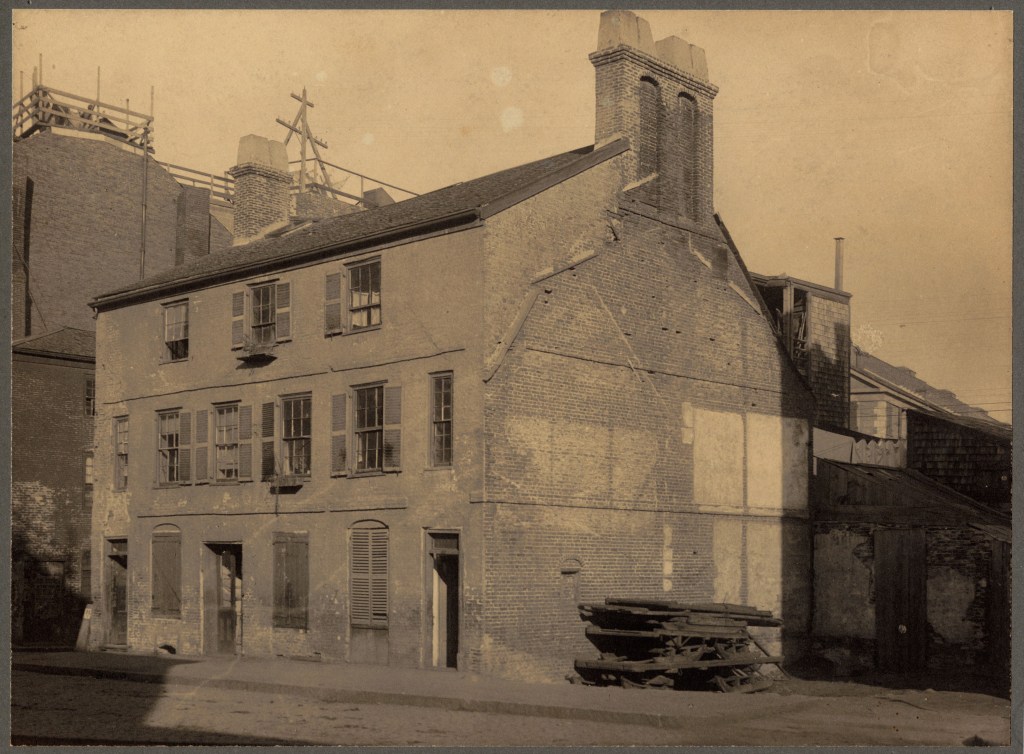
Frank Howard Tattoo Shop // c.1870-1960s

Ever so often, I stumble across a historic photo and I end up spending way too much time falling down rabbit-holes uncovering a cool history. This is one of those times.

Frank Howard Packer (1857-1925) was born in Providence, Rhode Island and worked at his father’s jewelry store there, later moving to Chicago. Out west, Frank was first tattooed by a friend, and he was hooked. Frank started using his body as a canvas, and when he ran out of space, his wife Annie was covered with tattoos. The couple were discovered by Barnum & Bailey’s Greatest Show on Earth and were hired to tour the country alongside other acts. Frank was the “Original Tattooed Man” and Annie was the first tattooed woman to tour with Barnum & Bailey. At these shows, Frank and Annie would show off their tattoos and then tattoo spectators for money. Eventually, they had enough money to open a tattoo parlor in a Civil War-era building on Court Street in Boston. The space was originally shared with a barbershop, but it later expanded to the entire floor of the building. Annie died in 1911 and Frank remarried a few years later and seemingly began to wind down his tattooing career. He died in 1925. The old shop building was demolished in the 1960s as part of Boston’s Urban Renewal period.

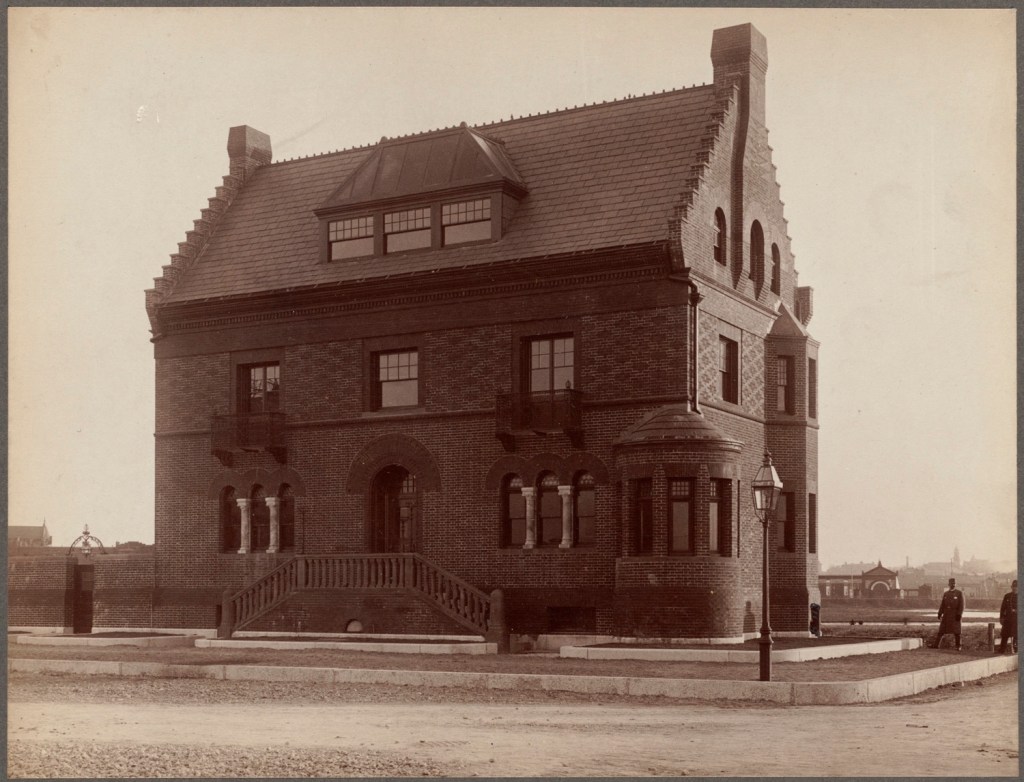
Kate and Charles Page House // 1888-2001

C.1888 photo courtesy of BPL collections

In 1888, Kate and Charles Page purchased a house lot in the sparsely developed Fenway section of Boston. The corner lot at Westland and Parker (renamed Hemenway) provided views to natural scenery and access to many Boston amenities. The couple worked with architect Herbert Langford Warren, who had previously apprenticed under the great H. H. Richardson. Warren took many of the common motifs seen in Richardson’s own style, but he was also a fan of the Arts and Crafts Movement, with its love of fine handicraft. You can see that in the elaborate diaper-patterned brick and in the stepped gables. The gables were a revival of a motif from old Flemish, Dutch, and Scottish architecture, sometimes called corbie-step gables, because corbies (crows) liked to stand on the steps. The interior was just as stunning, with massive brick arches, fanciful woodwork, and a prominent stairhall at the entrance. The couple was likely inspired to hire Warren by their son, Walter Gilman Page, a young artist who maintained a studio space in the home for some time. The home was sold out of the family by 1912. In 1917, the whole house was lifted up one story and a strip of retail stores was inserted beneath it. The original arched entryway then became a second-floor window. It was replaced with a taller building by 2003. Interestingly, upon the opening, the Commissioner of the Boston Parks and Recreation Department and long-time Boston Preservation Alliance Executive Director stated that the 1888 house “looked like a missing front tooth” and was happy to see it demolished.

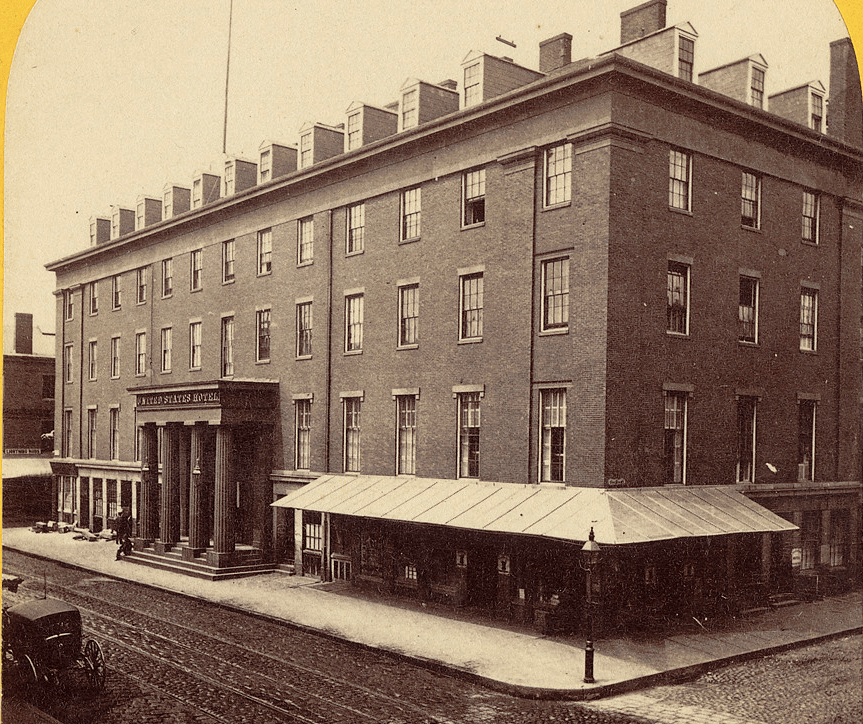
United States Hotel, Boston // 1839-1930

On August 18, 1929, the United States Hotel in Downtown Boston closed its doors for good. Once housing and feeding over 700 guests per night, the hotel saw severely declining numbers by the time of the Great Depression. Construction on the hotel commenced in 1837, and it was completed two years later in 1839. The hotel was operated by the Messrs. Holman and Clark, who saw an immediate success due to the hotel’s location central to Boston’s major train stations. The hotel (which first contained 300 rooms) did so well that the building was expanded numerous times with undulating additions to maximize light and air into the many rooms. At the hotel, over 150 employees served the guests at their rooms, the dining halls, bathing facilities or the stables which had drivers ready at a moments notice. The United States Hotel was one of the finest establishments in Boston and was thought to be the largest in the country by the middle of the 19th century. The size and amenities however was the downfall of the iconic hotel as Boston’s train stations saw fewer passengers in the early decades of the 20th century. Owners of the hotel sought to squeeze out every last dollar from the complex before they locked her up for good, hosting an auction on everything from beds to a chair said to have been sat on by Charles Dickens during his stay. The hotel was razed in 1930.

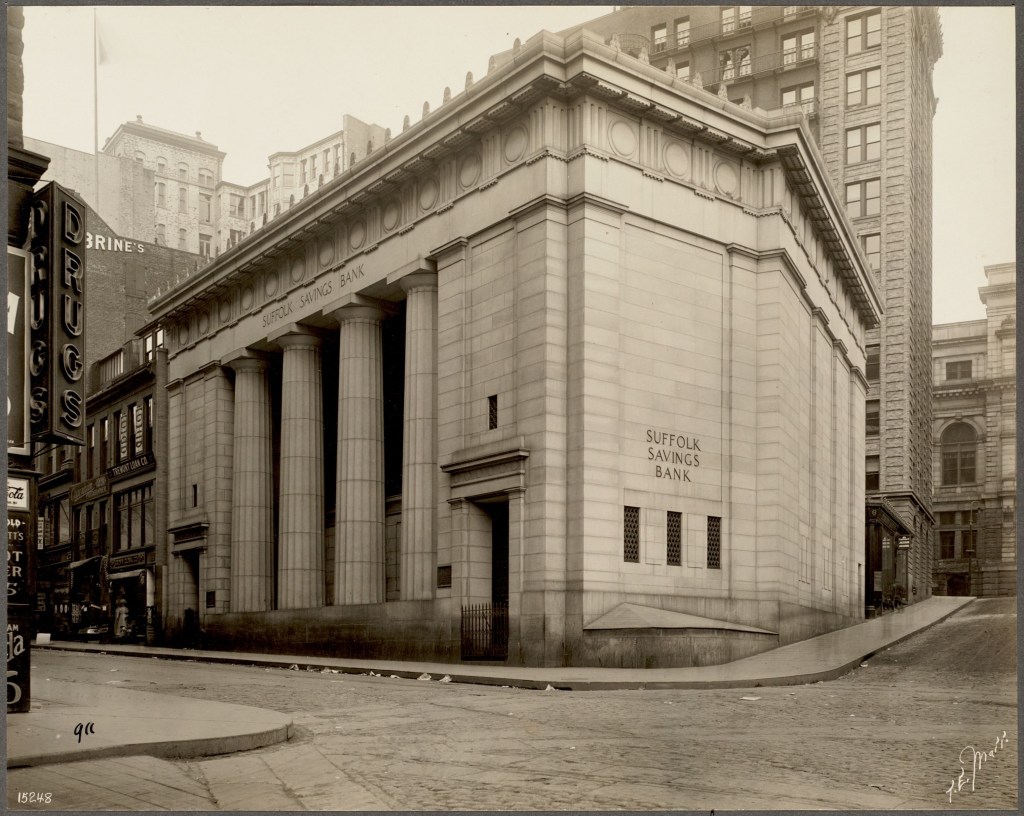
Suffolk Savings Bank // 1906-1967

The Suffolk Savings Bank for Seamen and Others was incorporated in 1833 as a banking institution catered to seamen and merchants who received their earnings after a trip in cash, and wanted a secure place to store their funds. At the time, these men were among the richest in the city, and the bank did very well. It later became a national bank in 1865 and membership boomed. The bank grew and grew until the early 20th century, and it needed a new banking house that showcased their stability, but also provide a visual embodiment of the security their institution provides. The bank’s board hired world-renowned architect Cass Gilbert to design a new building, which would be located on one of the busiest corners in Downtown Boston at the corner of Tremont Street and Pemberton Square. The Classical Revival building was constructed of Hallowell Granite and featured four monumental columns recessed into the Tremont Street facade. Minimal windows allowed for security, while a domed skylight covered in a cap provided light into the rounded banking room below. Inside, the walls and floors were of marble with a tile coffered ceiling. The building lasted until 1965 when Urban Renewal brought the wrecking ball. The bank was demolished by 1967 for the present Center Plaza building in Government Center.

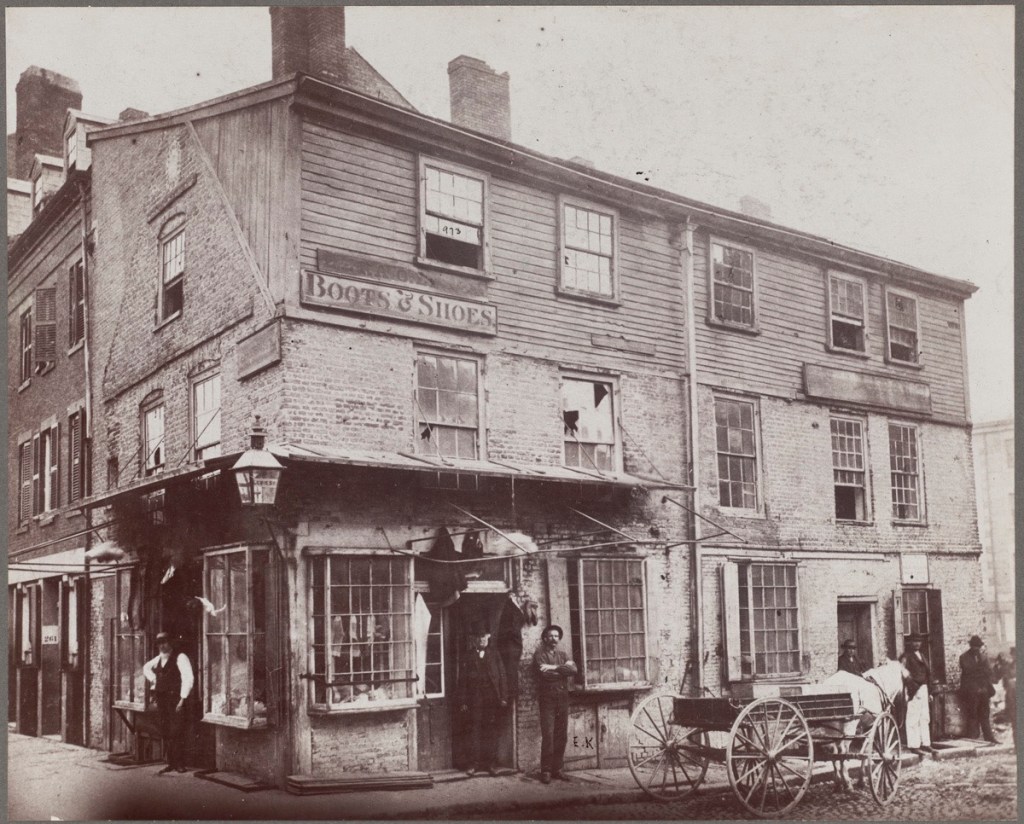
King’s Head Tavern // 1691-1870

Another of Boston’s Lost buildings is the King’s Head Tavern, an old establishment that was built in the early days of Boston and rebuilt following a fire in 1691. It stood on the corner of Lewis and North Streets, in the North End near Scarlett’s Wharf. Due to its proximity to the harbor and wharfs, it became the first place weary sailors stopped to get a drink on solid ground. The two-story, brick tavern was capped with a gambrel roof, which was later filled with wooden additions giving the structure a boxy look. The establishment was named the King’s Head Tavern after a popular London tavern of the same name. Like much of the North End, surging immigrant populations put immense strain on the built environment and many older buildings were demolished in the late 19th and early 20th centuries for tenement housing. The old King’s Head Tavern was demolished in 1870, just two years after the photo was taken.

Downe-Tremere House // c.1674-1896

Image c.1896 courtesy of Boston Public Library.

One of the finest First Period Houses to have been built in New England was this brick mansion, formerly on North Street in Boston’s North End. On December 29, 1674, John Paine conveyed his property including a dwelling house to William Downe his new son-in-law. It is unclear when the house was built, but it was completed by the time of sale to William. Luckily, the house was constructed of brick, which likely saved it from the Fire of 1676. In later centuries, the building was converted to commercial use. After the Civil War, the property was owned by the Tremere Family, who rented out commercial space and held tenements in the floors above (the third floor was added, filling in the space between the two end chimneys which were added in the early-19th century. The property was razed in 1896 for the present tenement building on the site.

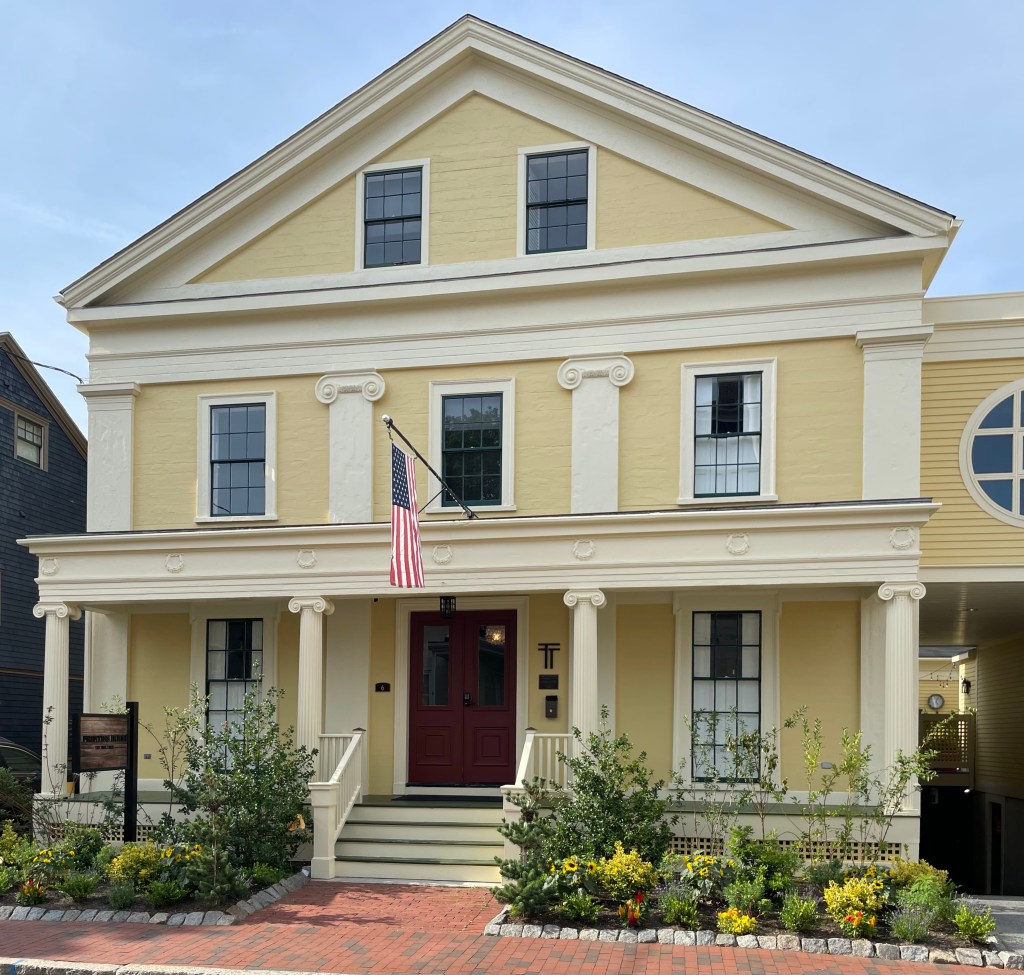
Prentiss House // 1843

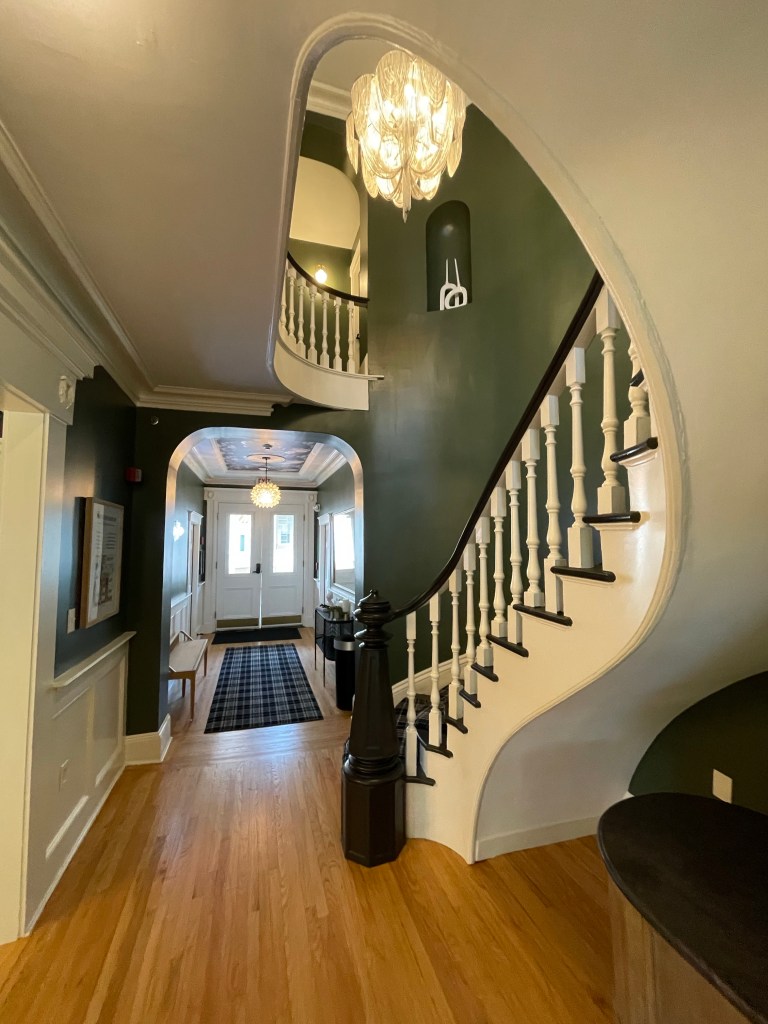
This past weekend, I took a little “stay-cation” in Cambridge, and I am so glad I did! I stayed at the Prentiss House, a highly significant Greek Revival house near Porter Square. The Inn is operated by Thatch, a company that offers short-term hotel stays, long-term apartments, and co-living arrangements in the Boston area. They recently acquired and renovated this amazing old house and its a great place to stay!

The home was built in 1843 by William Saunders a well-known housewright for his son, William Augustus Saunders about the same time as his first child, Mary was born. Sadly, Mary died at just six years old and was buried at Mount Auburn Cemetery with her grave guarded by a tiny stone dog. The Saunders Family resided at the home for over 50 years until William and his wife’s death at the end of the 19th century. The original location of the mansion on Massachusetts Avenue necessitated its move to the newly laid out Prentiss Street to save it from commercial development pressure and the wrecking ball. The home was moved to its present site in 1925 for the erection of a one-story block of stores on Mass. Ave. In 1992, the home was purchased by local artist, Charlotte Forsythe and she began the journey of transforming the home into the Mary Prentiss Inn. An addition by Bell/Fandetti added rooms and subterranean parking to the building at that time. The Inn was purchased by Thatch in 2021, who modernized the rooms.

The house reads like a Greek Temple, not with a full portico, but by using colossal applied pilasters and an entablature carried across the gable, suggesting a classical pediment. Ornamental wreaths adorn the full-length porch and interior mouldings.

Emmel Rental Houses // 1896

Tucked behind the massive Emmel Building (last post), you will find these two charming houses on the dead-end street in Jamaica Plain, Boston. Like the Emmel Building, these two homes were built by Charles Emmel, an architectural sculptor and real estate investor, who hired local architect George Zimmer to furnish plans for the buildings. The two transitional Queen Anne houses feature some of Emmel’s architectural decoration, from the lion’s head corbels to the decorative lintels above the windows, these homes really stand out!

Emmel Building // 1896

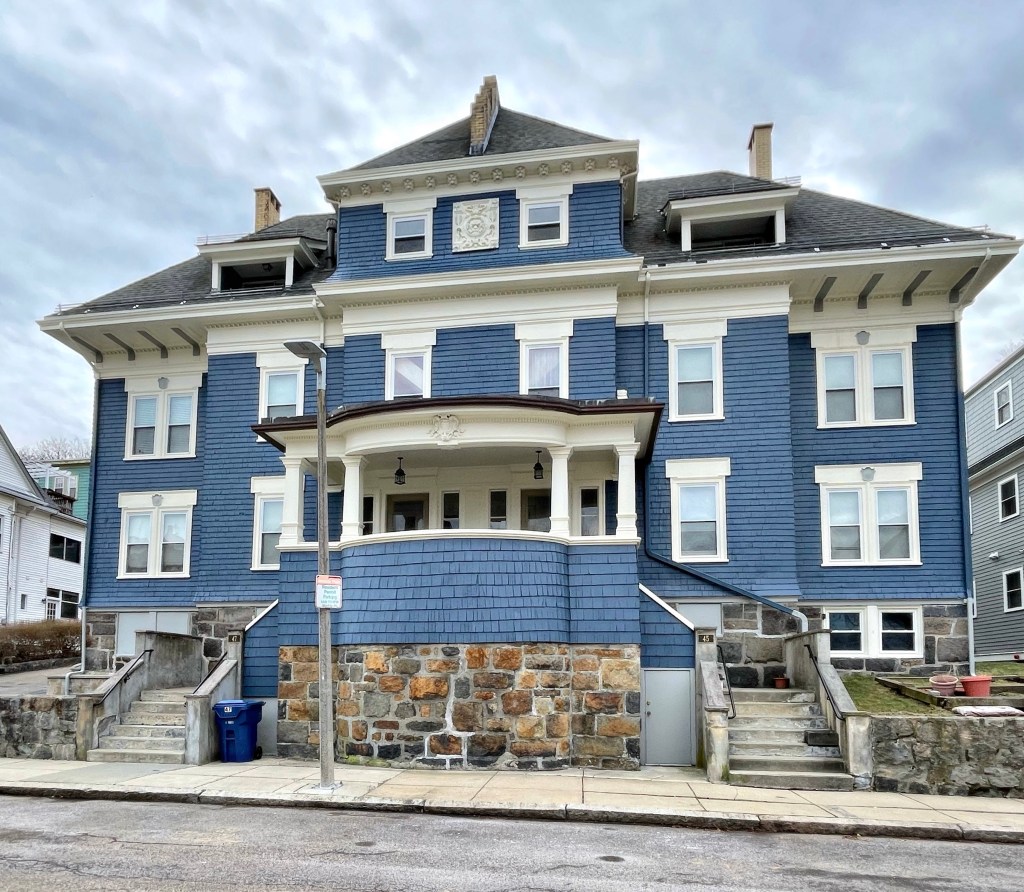
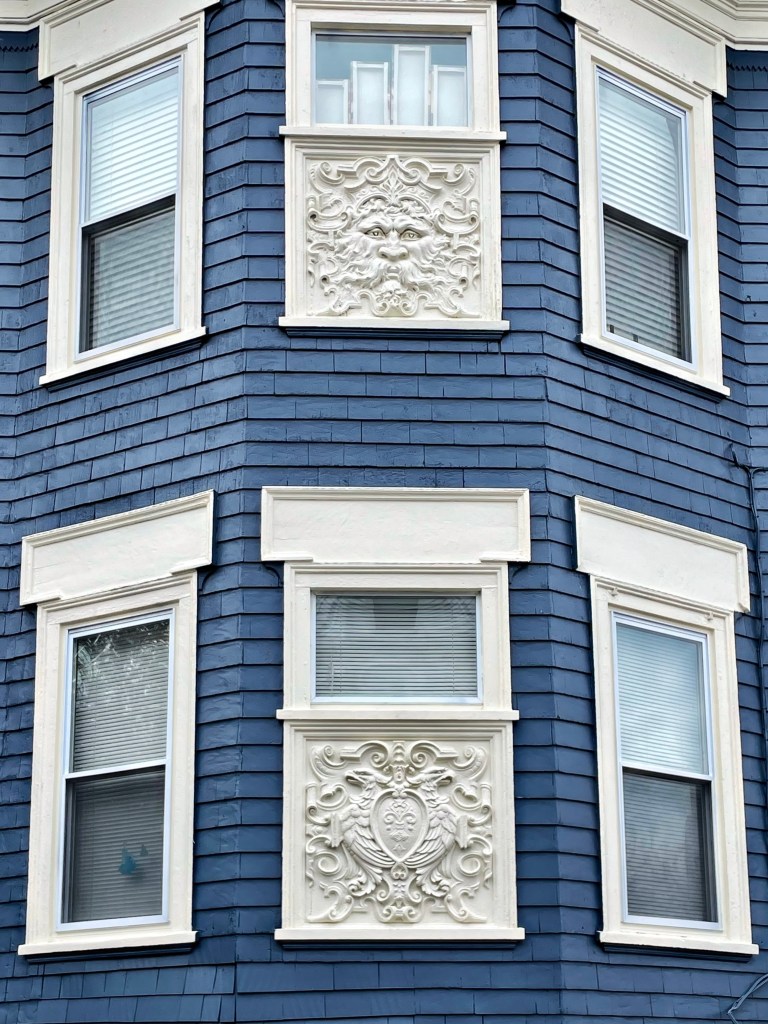
In 1896, architectural sculptor Charles Emmel purchased land in the rapidly developing Forest Hills section of Jamaica Plain, Boston. He hired local architect George Zimmer, to design a massive double-house which would serve as an income-producing investment, and could also be a sort of advertisement for his sculpture work. The result is this massive Colonial Revival style property, perched atop a puddingstone foundation. Architectural ornament has been lovingly preserved, a testament to the owners of the building today and the amazing work of the original owner, Mr. Emmel. I found myself staring at the building for a while when walking by, looking at all the hidden detail and architectural ornament which adds so much to the building.

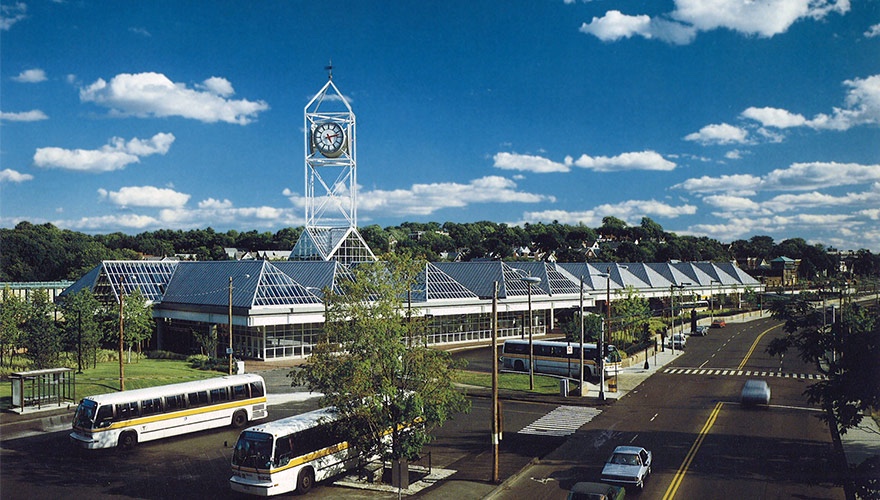
Forest Hills Station // 1987

Photo courtesy of Cambridge Seven

While the demolition of the 1909 Forest Hills Station in Jamaica Plain (last post) was a huge architectural and historic loss for the city of Boston, the present building is a landmark in its own right. The present building was built in 1987 as a pivotal project in the MBTA’s Southwest Corridor Improvement Program, which was largely unfinished (thanks to neighborhood pushback and protests against the proposed highway to cut through the neighborhoods). The existing station, designed by local firm Cambridge Seven, is situated between two important points in Boston’s “Emerald Necklace” park system, and thus was given the appearance of a greenhouse by the architects. The distinctive clock tower, rising 120 feet above the station, signals the station location and is a nod to the days when stations once had prominent clocks to help passengers keep tabs on the time, before the days of cellphones!

Women’s Service Club of Boston // c.1860

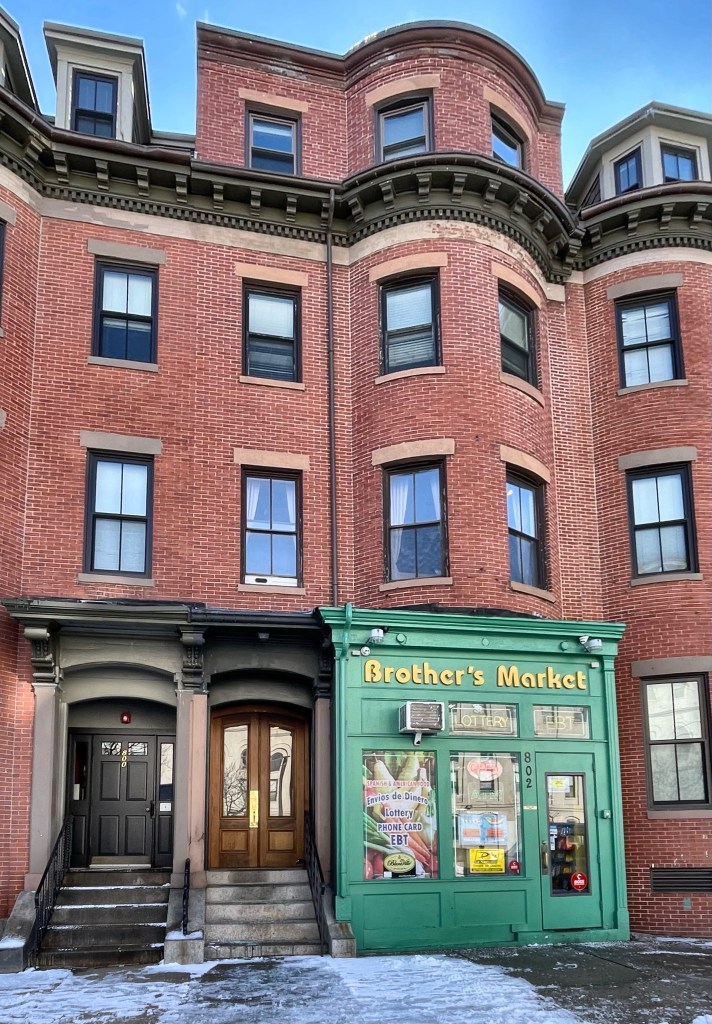
This historic rowhouse in the South End of Boston was home to the Women’s Service Club, a social and volunteer organization made up of Black women to uplift Black Bostonians of varied backgrounds, including soldiers, students, migrants and mothers. “464,” as some locals admiringly called it, was formed in the early 20th century as Boston. The city, once known as “Freedom’s Birthplace” and the “Athens of America” as a hub of abolitionist activity leading up to the Civil War, saw extreme segregation in housing and education for its Black residents by the early 20th century. From this, local activist Mary Evans Wilson organized a knitting group in 1917 to support soldiers of color fighting in World War I. An estimated 350 women joined the group, donating their talents to produce scarves and gloves for servicemen. Humanitarianism guided the activity of the Women’s Service Club’s over the next half century. This building was purchased in 1919 and operated as part-meeting space and part-settlement house. “A Home Away from Home,” as some described it, the building offered affordable shelter to female workers, migrants, and college students barred from on-campus housing due to racist policies. One of the club’s most prominent members was Melnea Cass (1896–1978), who served as its President for more than fifteen years. Cass initiated the Homemakers Training Program which certified domestic workers so they would be assured a liveable minimum wage, social security and other benefits. The club continues to do great work, but could use funding to restore the landmark building!

Johnson’s School of Beauty Culture // c.1865

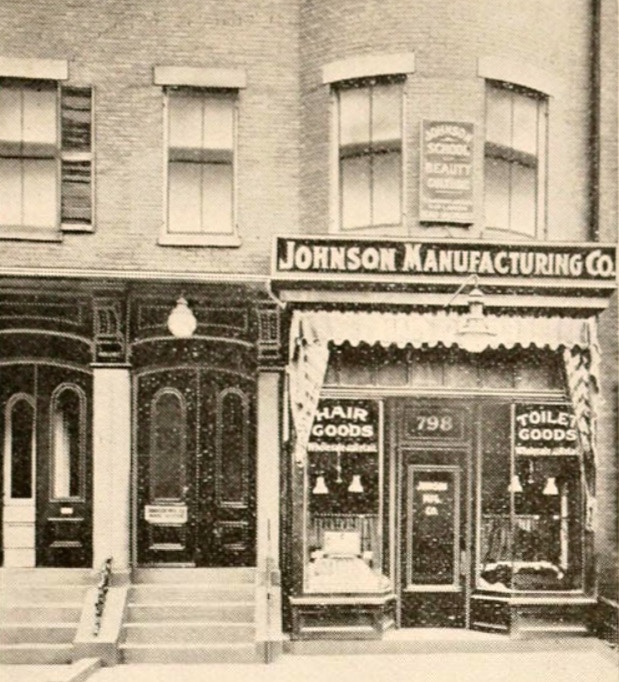
Boston’s South End neighborhood has so much history that NEEDS to be showcased. From the repetitive architecture of beautiful brick and stone bowfronts, to the history of African American activism, enterprise, and stories, the neighborhood is a gem of Boston. This building was constructed around 1865 for Thomas H. Snow (1833-1908) as his home. Snow was a wine and spirit merchant who had a store in Faneuil Hall Square. While that is interesting, Mr. Snow is not the highlight of this building, that comes later in 1899, when the building was rented to Madame Mary L. Johnson, a wig maker, scientific scalp specialist, and hair culturist. Mary Johnson and her husband, Dr. W. Alexander Johnson, were Black and ran one of just 200 Black-owned businesses in the city of Boston by the beginning of the 20th century. At their storefront, they sold hair goods at Johnson’s Hair Store. Sold all over the United States since 1900, their famous “Johnson Hair Food” was “the most scientific pomade yet discovered for growing, beautifying and softening the hair,” they claimed. In connection with their hair product outfit, Madame Johnson operated Johnson’s School of Beauty Culture, where a variety of services including manicuring, shampooing, scalp massage, facial massage, hairdressing, and scalp treatment were offered. The school provided young Black women in Boston technical training and skills, which there were limited options at the time. Mr. Johnson also was President of the Boston Negro Business League, which helped bolster Black businesses at the turn of the century.

Burdett Building // 1928

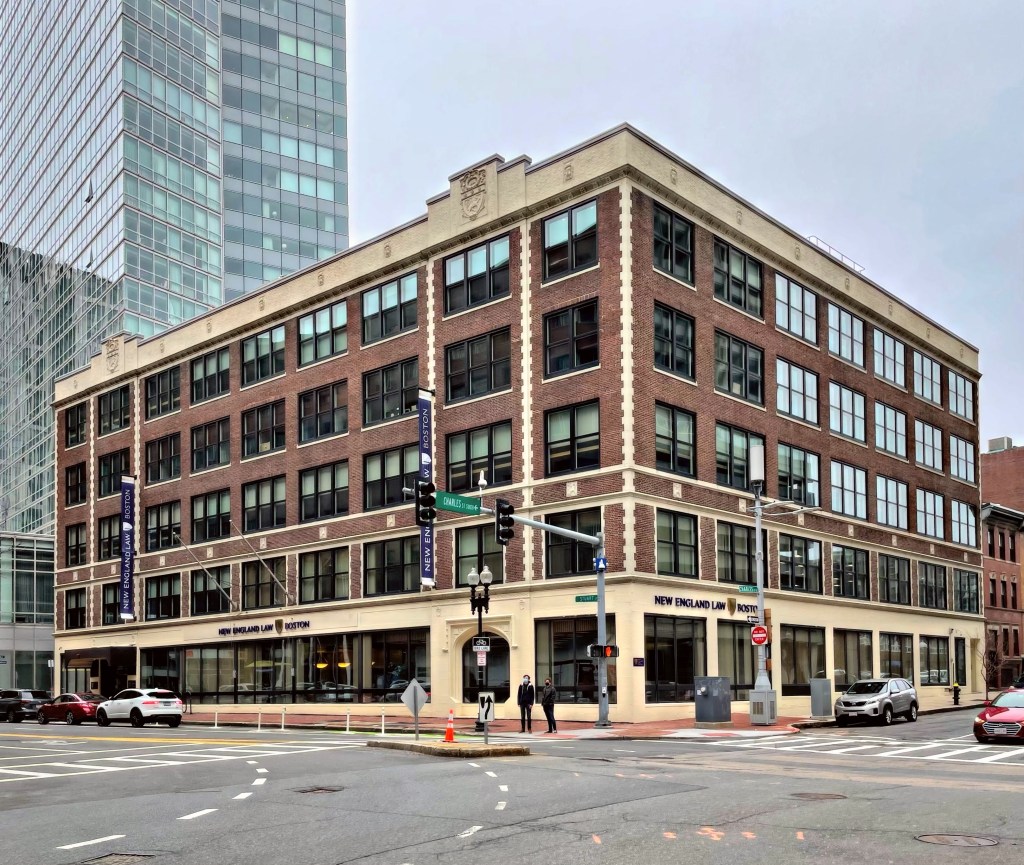
In 1921, Stuart Street was widened and extended between Boston’s Back Bay and Bay Village neighborhoods, which necessitated razing of all buildings along the route. From this, new lots were platted along the street where once thriving businesses were. Some relocated and others rebuilt. In 1927, the Park Square Corporation purchased seven contiguous lots at the corner of Stuart and Charles Streets and began construction of a large office building with storefronts on the ground floor. The Burdett Building opened in 1928. The building was built for Burdett College, which was founded in 1879 and focused on business and shorthand courses for students as a junior college. Architect Thomas H. James wanted the building to be like the new buildings at Princeton and Yale. The design featured Gothic inspired entrances and stone carvings of books and lions. Burdett College occupied the building until the 1950s and it was subsequently sold. By 1980, the building was acquired by the New England School of Law, who occupy it to this day as a place of learning.