Tebbetts-Bowditch House // 1856

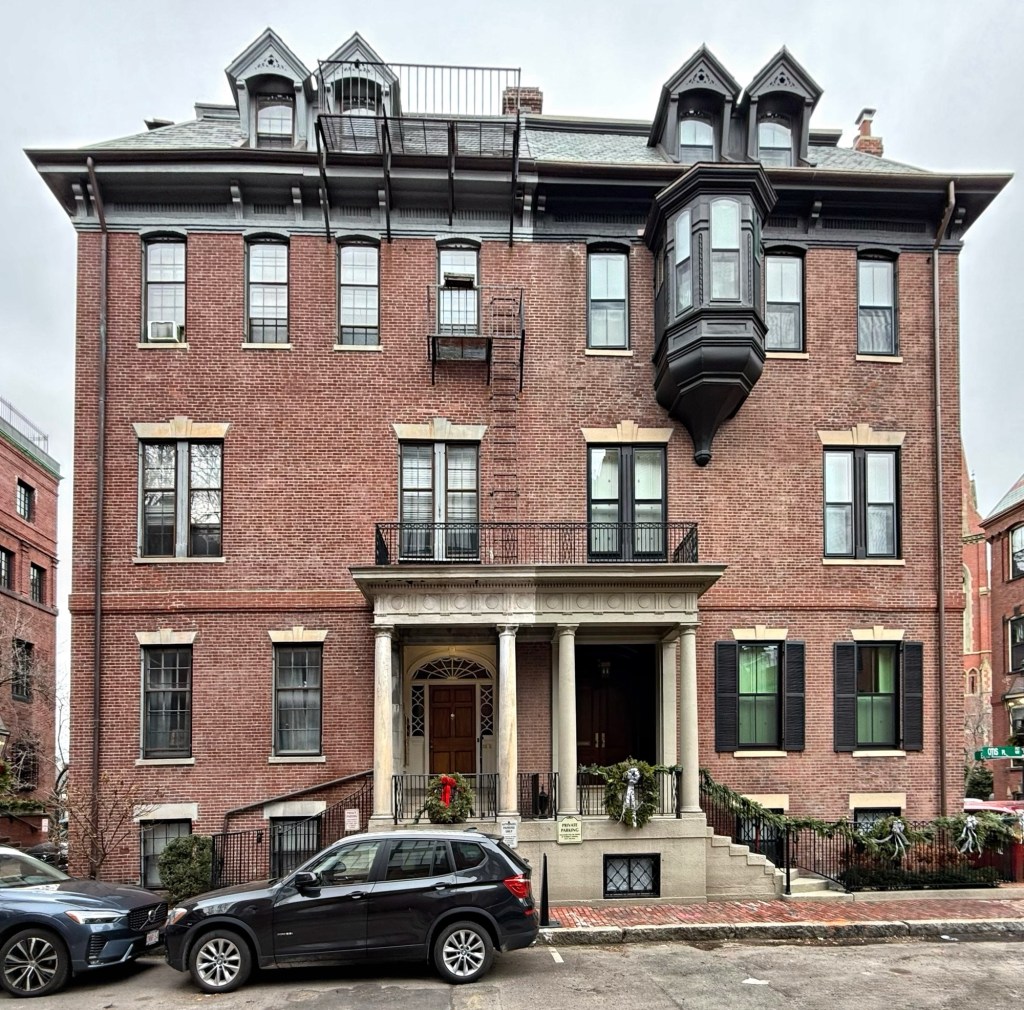
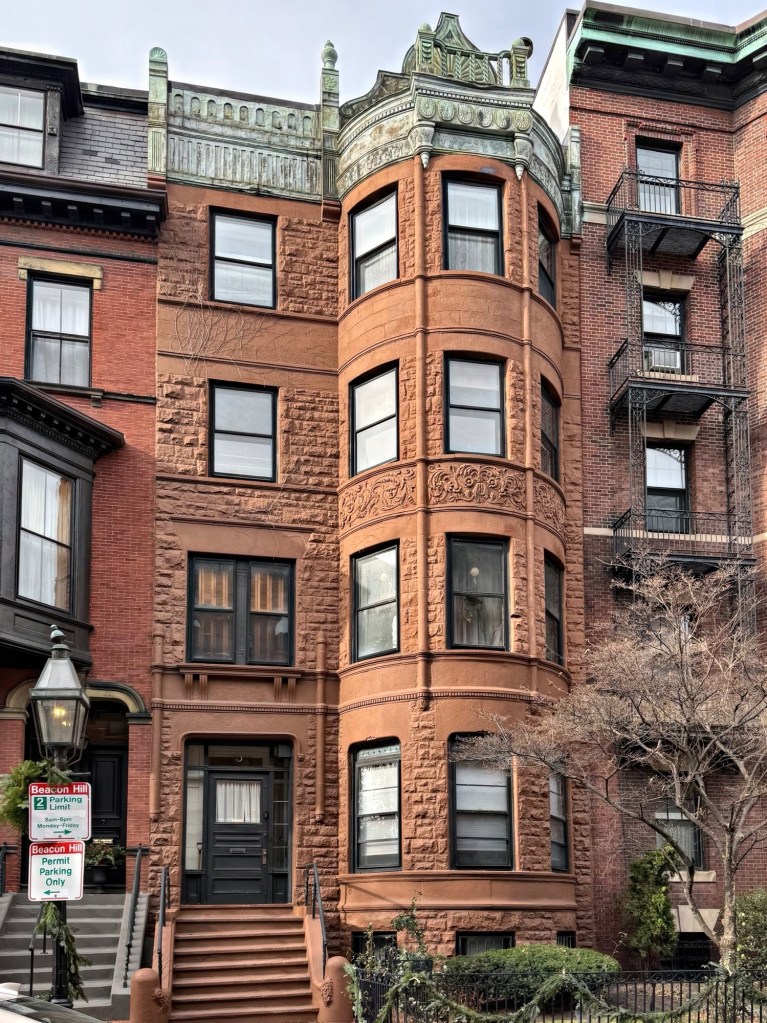
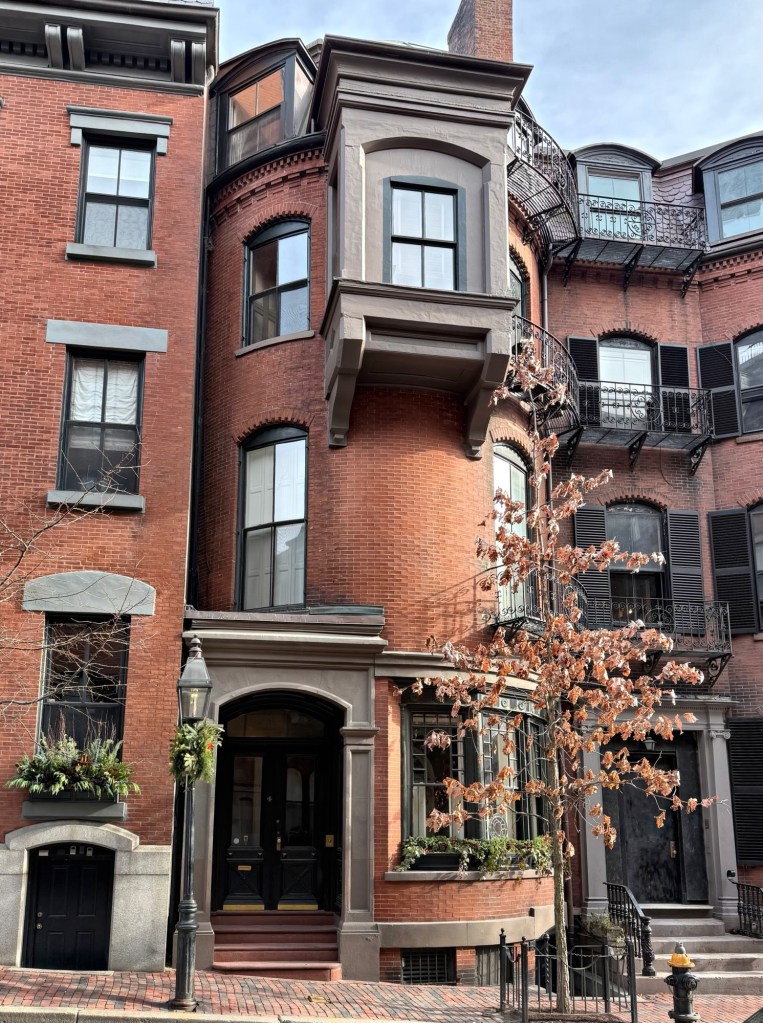
The townhouse at 4 Walnut Street in Beacon Hill is among the most architecturally unique buildings in the neighborhood. The main facade consists solely of a bowed front, which contains a deeply recessed entry to the side. To the right of the entrance, a later tripartite window exhibiting Queen Anne/Colonial Revival multi-pane sash pierces the southern half of the bow front.  At the third story, a massive wooden oriel window projects over the street below and contains a window set within a recessed panel. Above, the mansard roof ties in with its neighbor. The residence was built in 1856 and purchased by William C. Tebbetts, a dry goods merchant who was partner in a Downtown firm. By 1890, the residence was owned for a short period by Ernest W. Bowditch (1850-1918), a celebrated landscape architect and engineer. By the 1930s, the property became a boarding house, primarily for single women and widows. Today, the former single-family home contains eight apartments and from the exterior, presents some Victorian flair and quirkiness not commonly seen on the South Slope of Beacon Hill. 

Henry S. Grew Townhouse // 1856

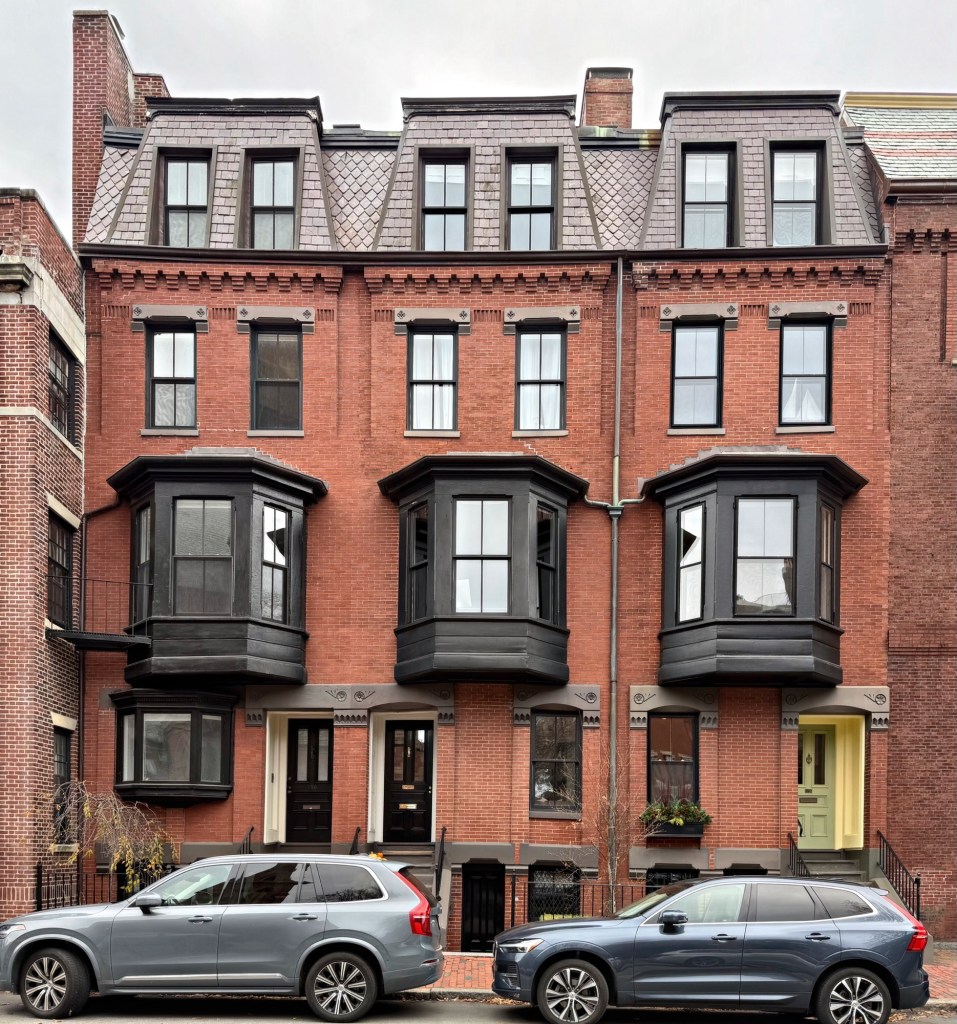
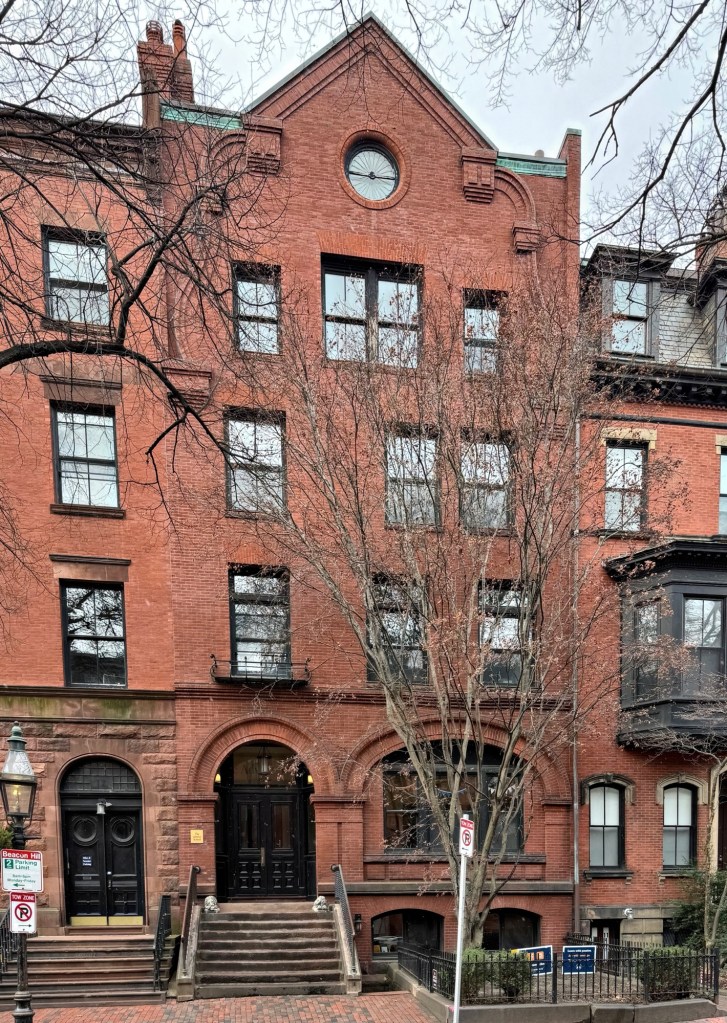
Built in 1856, the townhouse at 2 Walnut Street is a unique Second Empire style townhouse erected on one of the last undeveloped lots on the South Slope of Boston’s exclusive Beacon Hill neighborhood. The three-story, brick residence is capped by a mansard roof and its facade is dominated by a full-height octagonal bay, which at the center on each floor, is a recessed brick panel in lieu of windows. The property was originally owned by Henry Sturgis Grew (1834-1910) a real estate developer and politician who split his time between this residence and a large estate called Grew’s Hill, that grew to several hundred acres and contained an active farm, part of which was later incorporated into Stony Brook Reservation. Henry Grew’s daughter, Jane Norton Grew, would go on to marry John Pierpont Morgan Jr. (J. P. Morgan) in 1890. The Grew House was modernized in the 20th century with a Classical door surround, but otherwise, it maintains the appearance of when it was built in 1856. 

Callender-Sedgwick House // 1802

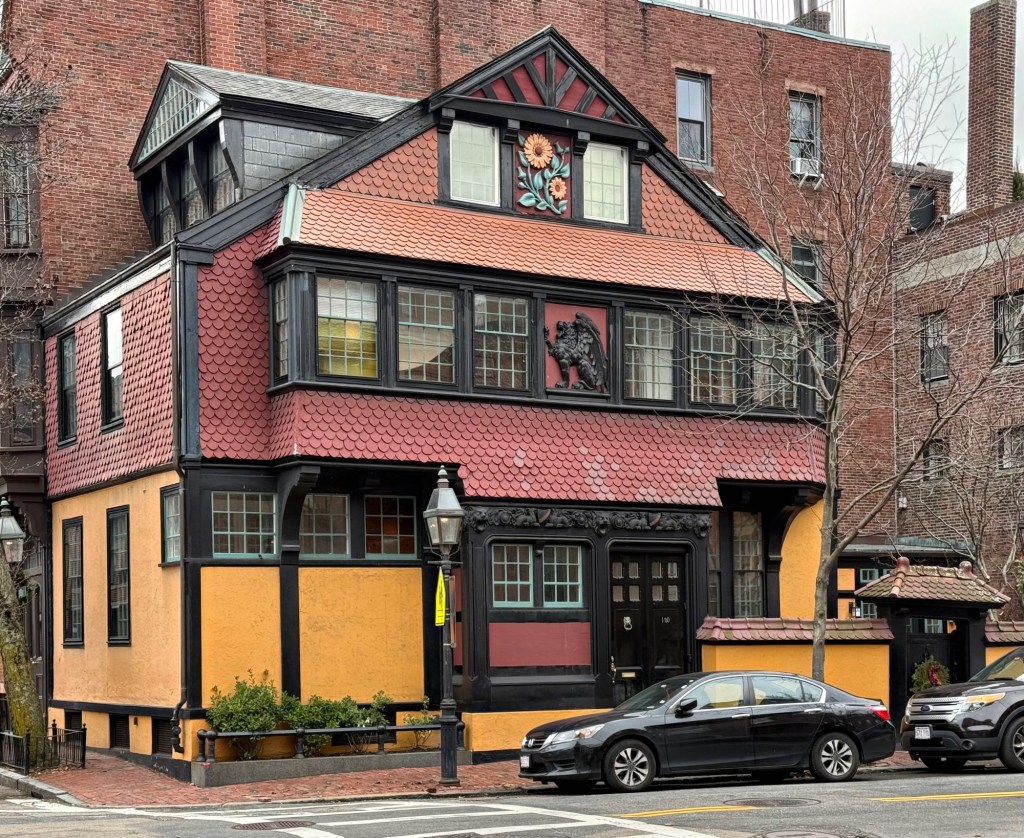
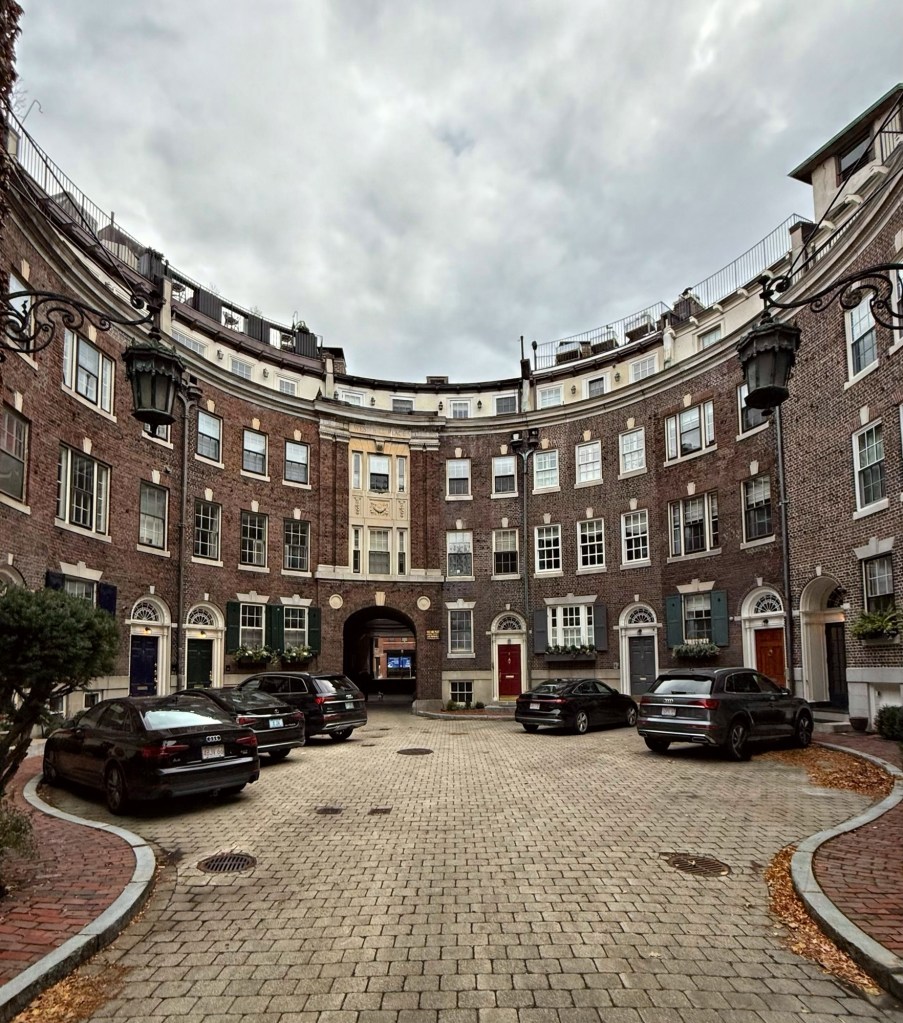
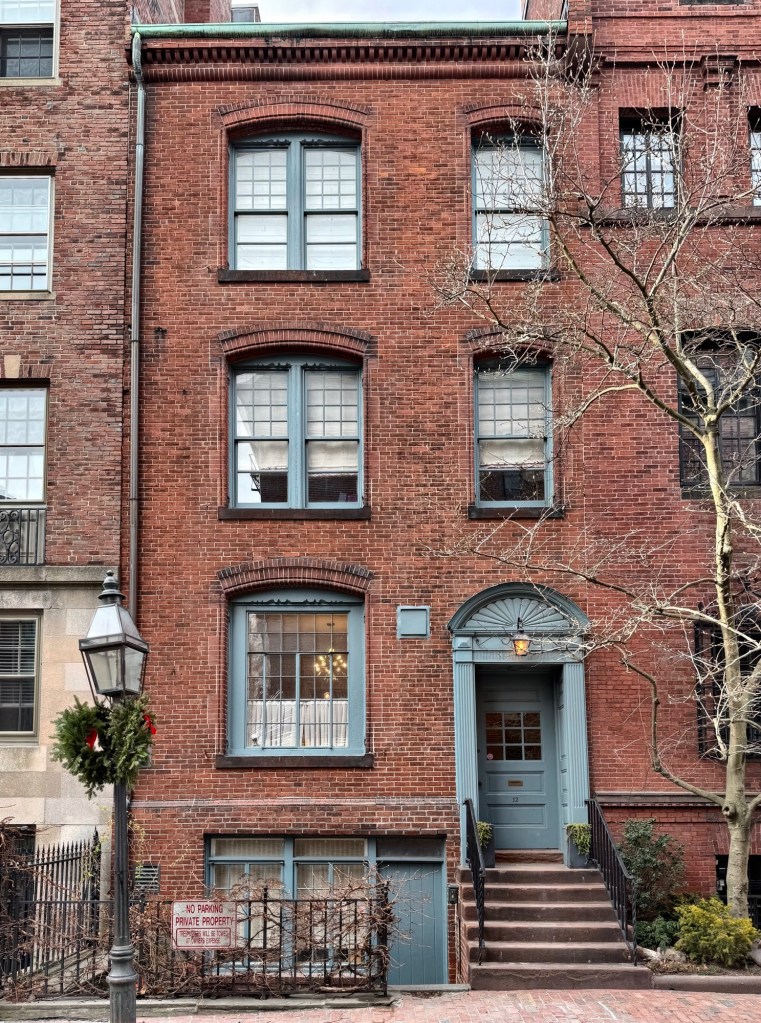
Built in 1802, this large residence at 14 Walnut Street is among the oldest extant mansions on the South Slope of Beacon Hill and includes a large hidden garden behind a granite block retaining wall. John Callender, Clerk of the Supreme Judicial Court of the Commonwealth, purchased land at the corner of Mount Vemon and Walnut streets for $2,000 and immediately started construction on his requested “small house finished for little money $5,000-$7,000”, but this was anything but modest. The house originally had its primary facade facing Mount Vernon Street, but in 1821, Walnut Street was lowered by city officials, so Callender had the granite retaining wall built for the garden and new entry built on Walnut Street. Mr. Callender lived here until his death in 1833 and the property was purchased by members of the Lyman family and later by Harriot Curtis (1881-1974) an early amateur female skier and golfer who used her fortune as a philanthropist, funding medical facilities in Boston for impoverished immigrants and served as dean of women in Hampton Institute in Virginia, an HBCU from 1927-1931. The most significant owner, Ellery Sedgwick (1872-1960), lived here from 1908 until his death in 1960. Sedgwick worked as editor of the Atlantic Monthly (now known as The Atlantic), and under his ownership, the magazine became one of the most circulated magazines in the world. The Callender-Sedgwick House features unique flushboard siding, providing a seamless surface that resembles a masonry wall when painted earth tones and a 19th century oriel window. The brick end elevation is punctuated with bays of hung windows and the recessed entry with a long, granite garden wall which has been well-preserved by owners.


Lyman-Paine Mansion // 1824

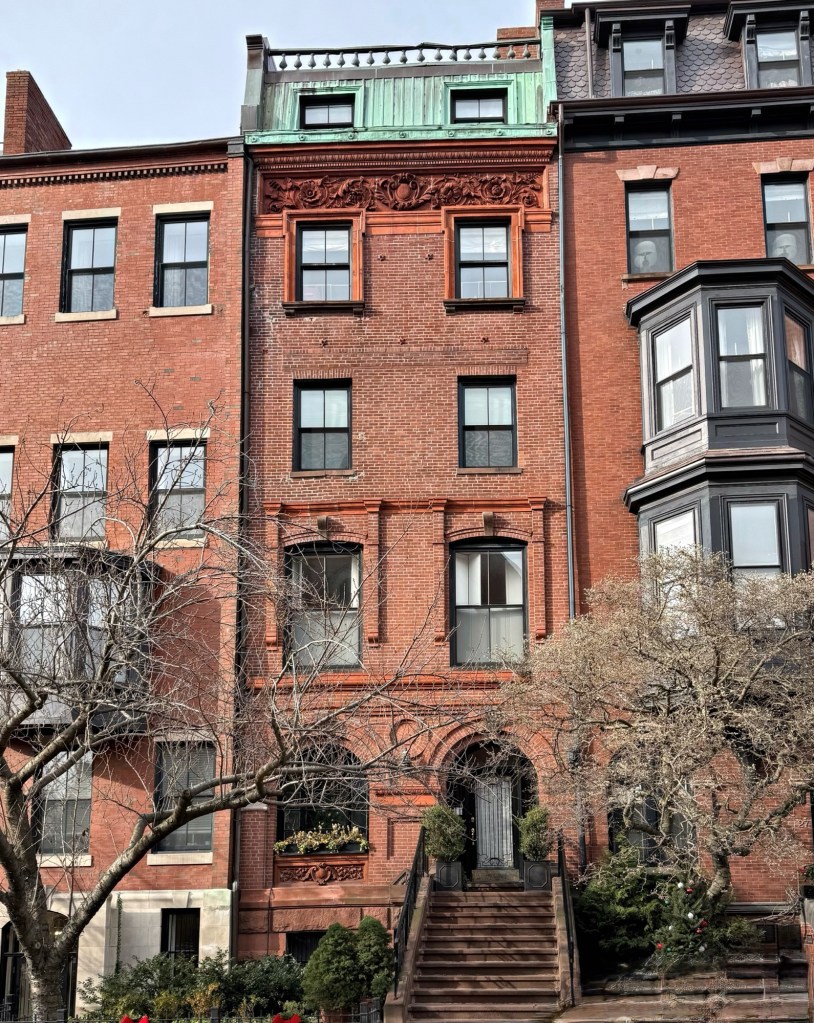
The Lyman-Paine Mansion at the corner of Joy and Mount Vernon streets in Boston’s Beacon Hill neighborhood is an architecturally significant Federal style house designed by a skilled architect and was owned by members of prominent local families. This four-story mansion was designed in 1824 by architect Alexander Parris for George Williams Lyman (1786-1880), a shipping merchant who became one of the Boston Associates, a group of wealthy Bostonians who funded the expansion of New England textile mills, which helped grow many industrial communities all over the region in the 19th century. This house served as Lyman’s winter estate, his summer mansion was the the Lyman Estate, “The Vale”, in Waltham, which he had inherited from his father. Upon George Lyman’s death in 1880, Lydia Lyman Paine, George’s youngest daughter, inherited this Beacon Hill mansion. Lydia’s husband, Robert Treat Paine, was a graduate of Harvard and a successful local attorney. Mr. Paine retired from law in 1872 to become the treasurer for the new Trinity Church building committee, where he averted a fiscal crisis during the mid-1870s when Henry Hobson Richardson’s cost overruns in designing the new Copley Square church threatened its completion. In addition to his pro bono work with Trinity’s finances, Paine was deeply interested in improving the quality of life of the working class, founding building and loan associations and institutes to allow immigrants to buy homes in the Boston area. In addition to their Joy Street mansion, the Paines had a country estate called Stonehurst, which is adjacent to the Vale in Waltham; it was renovated by Richardson. The mansion was converted to apartments (now condos) in the mid-20th century, and maintains its unique, vernacular Federal character, with asymmetrical facade and oddly placed and shaped windows.

Lyman-Gray House // 1834

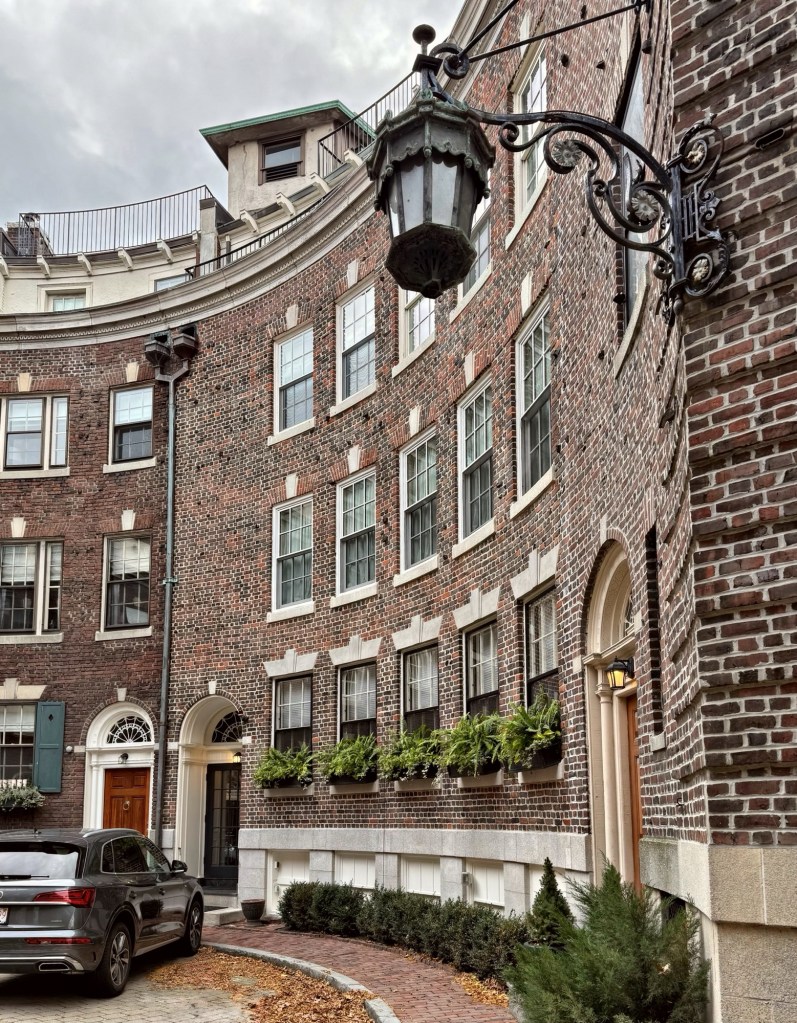
Mount Vernon Place is a short, dead-end street in Boston’s Beacon Hill neighborhood. The street was once an entire block of eight rowhouses, and was developed in the 1830s on land formerly owned by John Hancock and his family. The residences numbered 1-5 Mount Vernon Place were torn down during the 1910s to accommodate the expansion of the landscaped grounds of the State House, leaving just 6, 7, and 8 Mount Vernon Place. The center rowhouse, 7 Mount Vernon Place, was built in 1834 and is believed to have been designed by Alexander Parris, a prominent local architect who designed Quincy Market and mastered the Federal and Greek Revival architectural styles with many notable buildings all over the east coast. The residence has a three bay facade and brownstone sills, lintels, and door surround and has been preserved for nearly two centuries. The house was long-owned by George W. Lyman, an industrialist who lived nearby on Joy Street. The residence was rented for decades until it was purchased by Francis C. Gray a physician, and inherited by his grandson, Ralph Weld Gray, an architect through the 1940s.

Codman-Gillet House // 1928

Built in 1928 as an accurate reproduction of an 18th-century residence the Codman-Gillet House at 60 High Street in Brookline is significant architecturally in the Colonial Revival style but also as a preserved house by the architectural firm of Howe, Manny and Almy. Lois Lilley Howe and Eleanor Manning were among the first women graduates of the M.I.T. School of Architecture, and the firm was joined in 1926 by Mary Almy. Their firm was the first all-woman architecture practice in Boston and the second in the U.S. Howe was the first woman elected a Fellow of the American Institute of Architects. The house was built for William Coombs Codman, a trustee of various real estate trusts, and was likely rented or sold for investment. The first long-time owner/occupants of the residence were Mr. and Mrs. Fernand Gillet and who both taught at the New England Conservatory of Music. Fernand was the principal oboist of the Boston Symphony Orchestra from 1925 to 1946. The Codman-Gillet House features many traditional Colonial Revival elements including: the corner quoining, window trim, a pedimented projecting entrance, and hipped roof with large central chimney.

King-Murdock House // c.1894

Located on Ashmont Street in the Ashmont Hill neighborhood of Dorchester in Boston, this handsome Colonial Revival style residence was one of many large homes constructed here at the end of the 19th century. This house was built by 1894 for owner Franklin King and rented to tenants for supplemental income. Franklin King was part owner of the E & F King Company, a major paint and stain manufacturer in Boston. Franklin died in 1898 and the property was inherited by his son, Samuel Gelston King, who continued to rent the home. A notable renter of the house was Harold Murdock, a cashier and amateur historian and author who wrote various books of everything from the American Revolution to the Reconstruction of Europe. The architect is said to be Clarence Blackall of Cambridge, which makes sense as this house is clearly the work of a trained architect. Symmetrical in plan, the center-hall residence features a preserved entry portico, hipped roof, and detailed dormers.

George Derby Welles Rental House // c.1872

From the 1780s until 1870, almost all of Ashmont Hill (west of the present train station) was a farm, with the large farmhouse dating to about 1720, located at the corner of Washington and Welles streets, now the home to the Codman Square Branch of the Boston Public Library system. The farm was owned for a time by General Henry Knox. Sometime before 1850, the estate and mansion came into the possession of the Honorable John Welles, who died in 1855. The property would eventually be deeded to John Welles’ grandson, George Derby Welles, who was then just 26 years old and living in Paris with his wife, Armandine V. Derby. Welles wasted no time in developing the property through his agent, Boston Attorney Edward Ingersoll Browne. Streets were laid out and house lots were platted and sold, with some early properties built with much of the neighborhood developing by the turn of the century. The old Knox-Welles farmhouse would be razed by 1889, but the remainder of the neighborhood has since become a landmark neighborhood of Victorian-era homes. This mansard double-house at 67-69 Ocean Street dates to around 1872 and is one of the earliest properties in the area. Blending the Second Empire and Stick architectural styles, the handsome double house is said to have been designed by architect Luther Briggs for George D. Welles and rented to tenants.

Roughwood // 1891

Roughwood is a historic estate house on Heath Street in Brookline, Massachusetts. The main residence and the various outbuildings on the grounds were designed by the Boston architectural firm of Andrews, Jaques and Rantoul, and built in 1891 as the summer estate of William Cox, a wholesale dealer in the footwear industry. Mr. Cox died in 1902 and the property was sold to Ernest Dane, the year before he married Helen Pratt, the daughter of Charles Pratt, a wealthy New York businessman and philanthropist. Mr. Dane was a banker who served as President of the Brookline Trust Company. The Dane’s owned the property for decades until the property was eventually purchased by Pine Manor Junior College in 1961. The estate house remained a centerpiece of the campus. In the early 21st century, Pine Manor College saw financial distress, and was saved by Boston College, who acquired the campus and its existing students as Messina College, which opened in July 2024 for over 100 first-generation college students. Architecturally, Roughwood is a high-style example of the Queen Anne/Shingle style of architecture. The mansion is built with a puddingstone and brownstone first floor and a second floor of varied patterns of wood shingles, all capped by a slate roof. The facade is dominated by towers and dormers and the great rustic entrance portico with dragon’s head brackets. To its side, a 1909 Tudor Revival addition served as a music room for the Dane’s family and while stylistically unique, is designed with impeccable proportions.

William Potter Rental House // 1889

William W. Potter, a shoe manufacturer and businessman, and his wife, Isabella Abbe Strickland Potter, lived in the Longwood section of Brookline and became active in the surround areas development in the last decades of the 19th century. William bought land off Kent Street and began to lay out house lots, becoming a developer overseeing construction of stately Queen Anne Victorian rental properties marketed to upper-middle-class residents. For this house on Francis Street, he commissioned architects George Rand and Bertram Taylor, who were known for producing stylish residential designs for the middle class in the Boston area. The massive property was a duplex, providing units to two lucky families! The building has just about every hallmark feature of the Queen Anne style including: the conical roof on a rounded corner bay, a complex roofline, asymmetrical plan, varied siding/materials, and applied ornamentation. In the 1920s, the house was owned by Simmons College, and used as a boarding house. Luckily, the property was restored and now is one of the finest residences in the neighborhood.