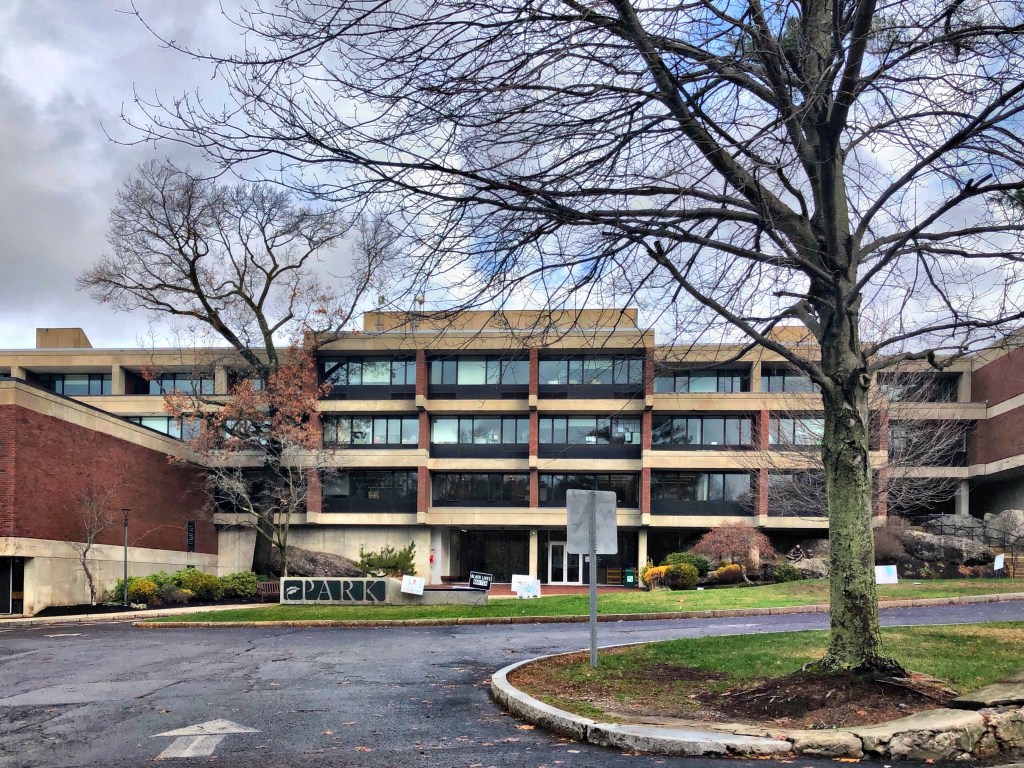
The Park School – Main Building // 1971

Founded in 1888, The Park School, one of the premier private schools in the Boston area began off Walnut Street in Brookline in half of a house. Founded by Miss Caroline Pierce, the school was officially incorporated in 1923 and named to commemorate Julia Park, principal from 1910-1922. The school occupied the former Hill Estate before the school board voted in 1967 to look for a new campus, with space to grow. James and Mary Faulkner donated 14-acres of rolling fields and woods to the school for their new campus. The Park School hired architect Earl Flansburgh of Cambridge to design the new, Modern school building. The Brutalist building allowed for large, open classrooms with the flexibility for the school to adapt as its needs changed. The school is built of reinforced precast concrete as a stack of modular classroom and office spaces with wall-length windows for more natural illumination of rooms. Since the 1970s, the school has expanded a couple more times, notably with a 1990s addition by Graham Gund. The school remains one of the most desired in the region and fits well within its landscape.
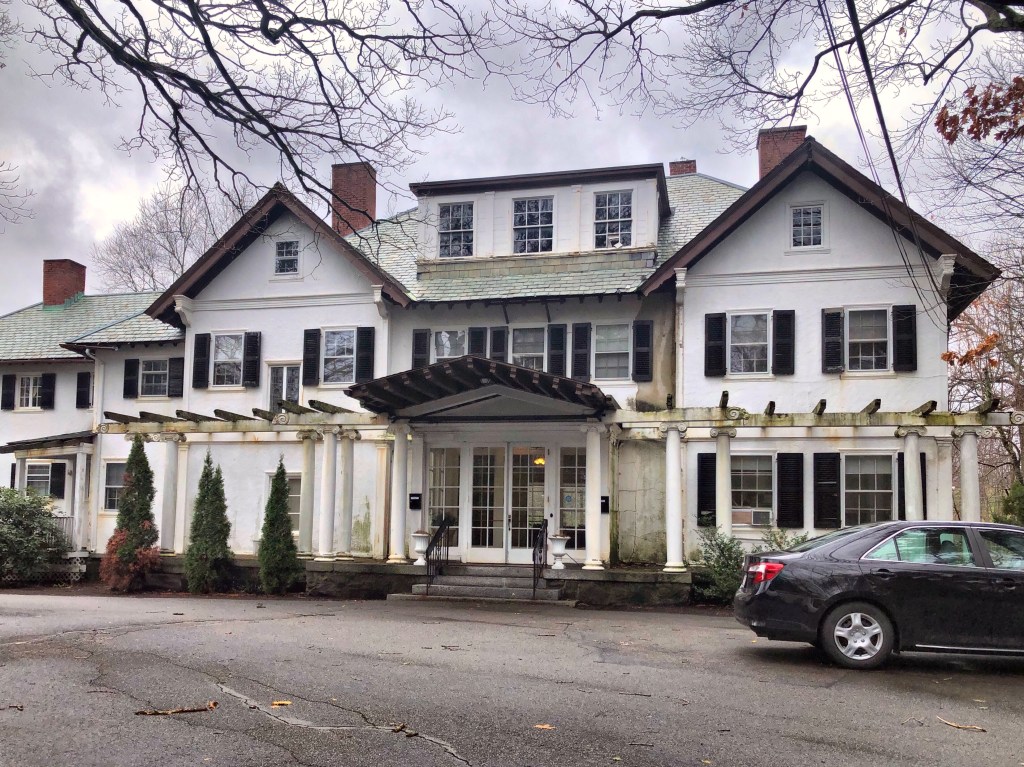
Hartt House // 1899

The area just west of Jamaica Pond between Boston and Brookline can be characterized as a neighborhood of well-preserved 19th and 20th century homes and large, former estates converted to institutional use. The Hartt House in Brookline, off Goddard Ave, was built in 1899 for Arthur Hartt and his wife Augusta Batchelder. Arthur worked as a clerk with the New England Mutual Life Insurance Company in Downtown Boston and built a couple large estates in Massachusetts, including a summer home in Marion. The Colonial Revival home sits on a hill, setback off the street, with a landscape designed by the Olmsted Brothers. The property was bought in the 1970s by the Hellenic Association of Boston, who turned the home into offices and the former barn into a chapel. The home appears to be suffering from some deferred maintenance, but is in overall good shape.

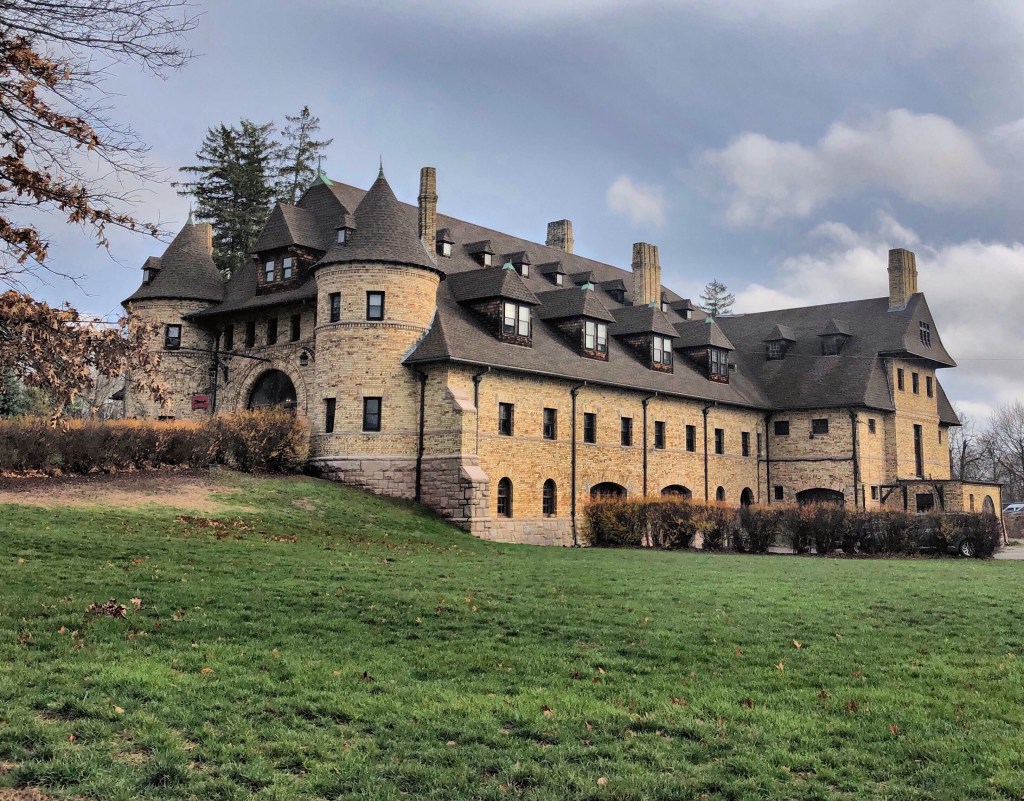
Larz Anderson Carriage House // 1889

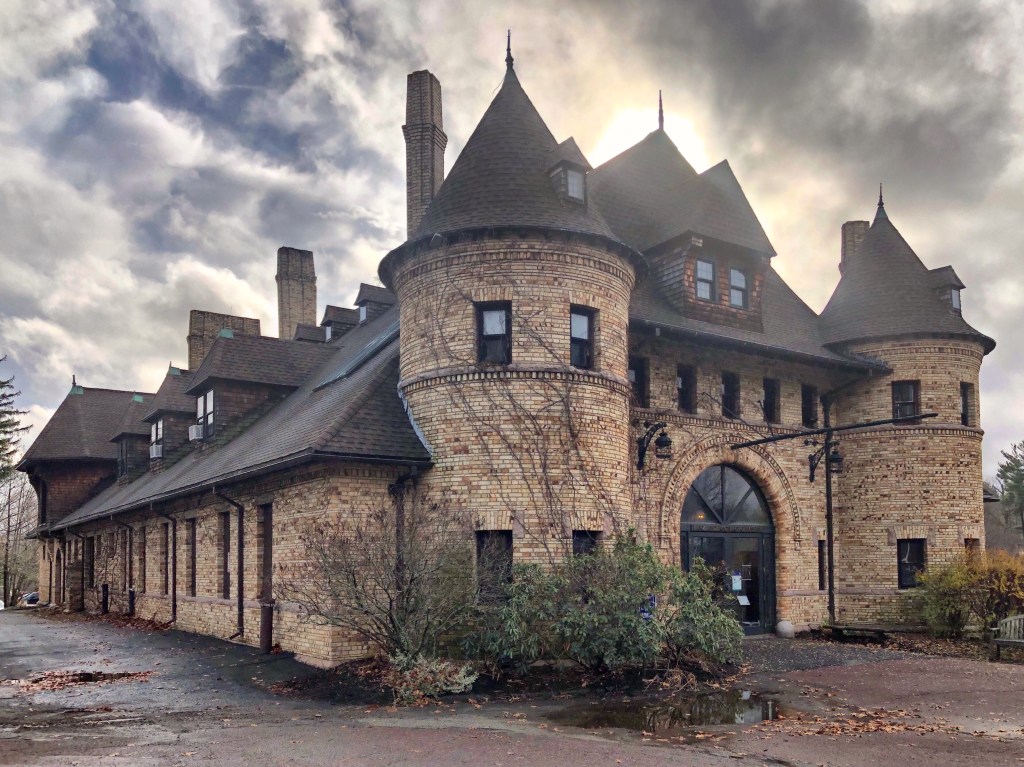
This large and imposing brick and stone structure, located in Larz Anderson Park in Brookline, was once the carriage house of “Weld”, the estate owned by Larz and Isabel Weld Anderson. Constructed in 1888, it was inspired by the Chateau de Chaumont-Sur-Loire in France and designed by Edmund M. Wheelwright, the city architect of Boston. First constructed to house a working stable, it later served to house and maintain the Andersons’ growing automobile collection. After Isabel Anderson’s passing in 1948, the collection was entrusted, at Isabel’s bequest, to the Veteran Motor Car Club of America. The VMCCA then established the nonprofit organization that is now known as the Larz Anderson Auto Museum. The former mansion suffered from vandalism in the 1950s and caught fire, later demolished by the Town, who could not afford to rebuild the home.

Pastan Houses // 1936 & 1963

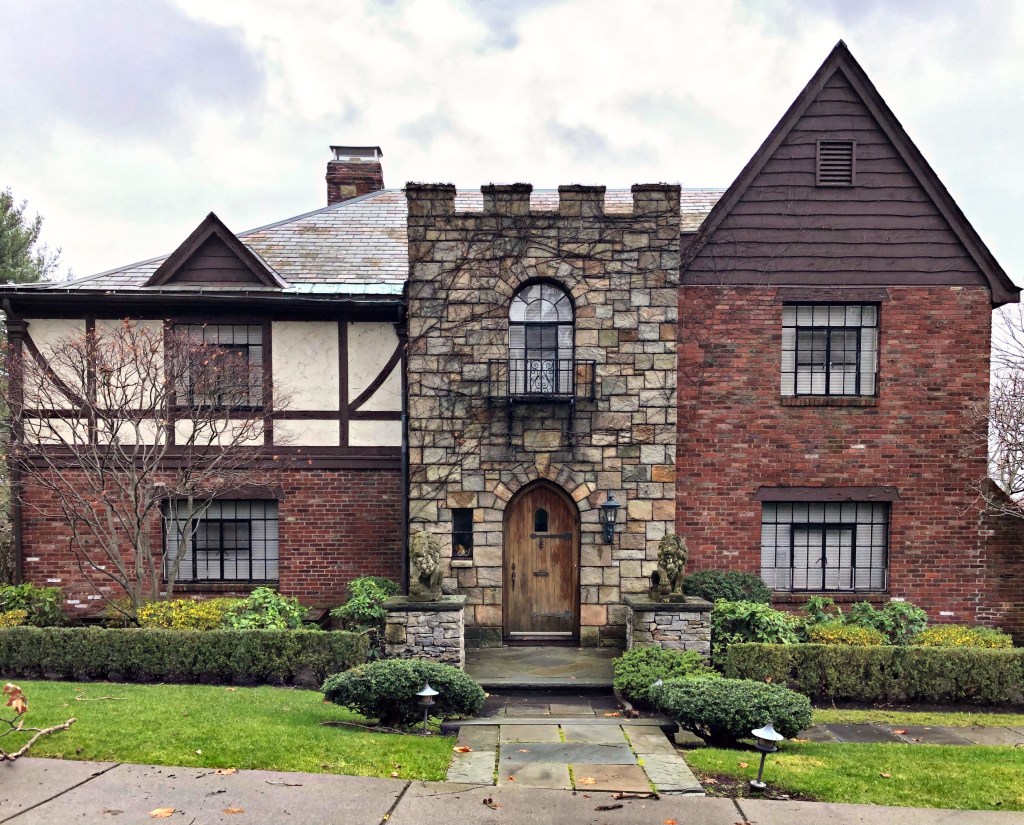
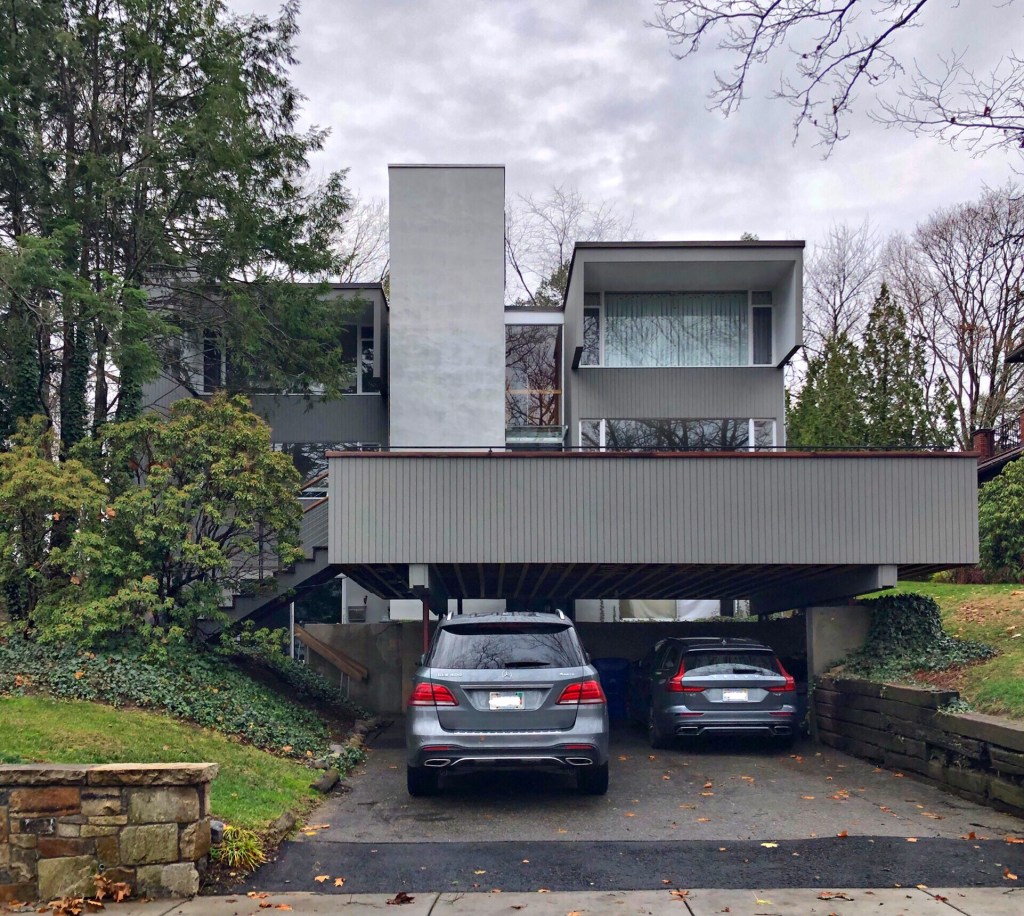
Located across the street from each other in Brookline, the Pastan Houses are an excellent example of how architectural tastes can change from one generation to another. The William Pastan House was constructed in 1936, and is Tudor Revival in style. The home has a projecting square entry tower with castellated roofline and interesting mixture of materials and textures. The first owner, William Pastan raised his family in the home, attending the synagogue a couple blocks away. By 1963, Pastan’s son, Harvey became a successful engineer and built a home near his parents for his own family, though in a very different aesthetic. The Modern home features boxy forms, prominent covered parking spaces, and expanses of glass.

Which house would you prefer, William’s (1936) or Harvey’s (1963)?

Jennings House // 1949

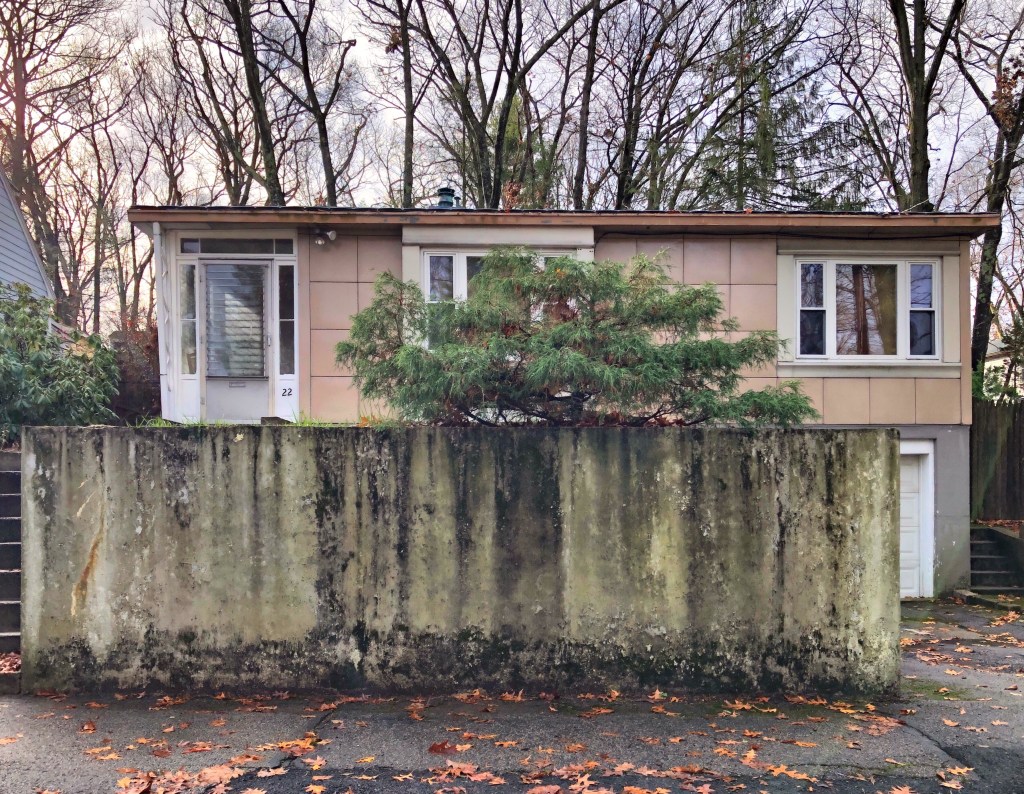
Tucked away on an un-assuming side street in South Brookline, you will find this oddly fascinating home. Without architectural history knowledge, you may think it is just a normal 1940s house, but it’s actually a Lustron House! Between 1948 and 1950, the Lustron Corp. built prefabricated metal homes across the U.S. as part of an effort to combat the housing shortage for returning soldiers post–World War II. Despite these futuristic homes being considered low-maintenance and highly durable, only about 2,500 were constructed, as the structures were seen as too costly and complex to manufacture and assemble. The homes came in just three models and came in four available colors: “Surf Blue,” “Dove Gray,” “Maize Yellow,” and “Desert Tan”. The home is covered in porcelain enamel metal panels set into a steel frame which can be replaced when damaged. At the interior, the homes had metal-paneled interior walls with mostly pocket-doors for space saving. This home in Brookline was built for Edmond and Helen Jennings, in the Westchester model in the Desert Tan color. The only major alteration is the enclosure of the porch, but it retains a high degree of integrity from when it was assembled in 1949.

What do you think of this iconic 1940s home and style?

Glacy House // 1930

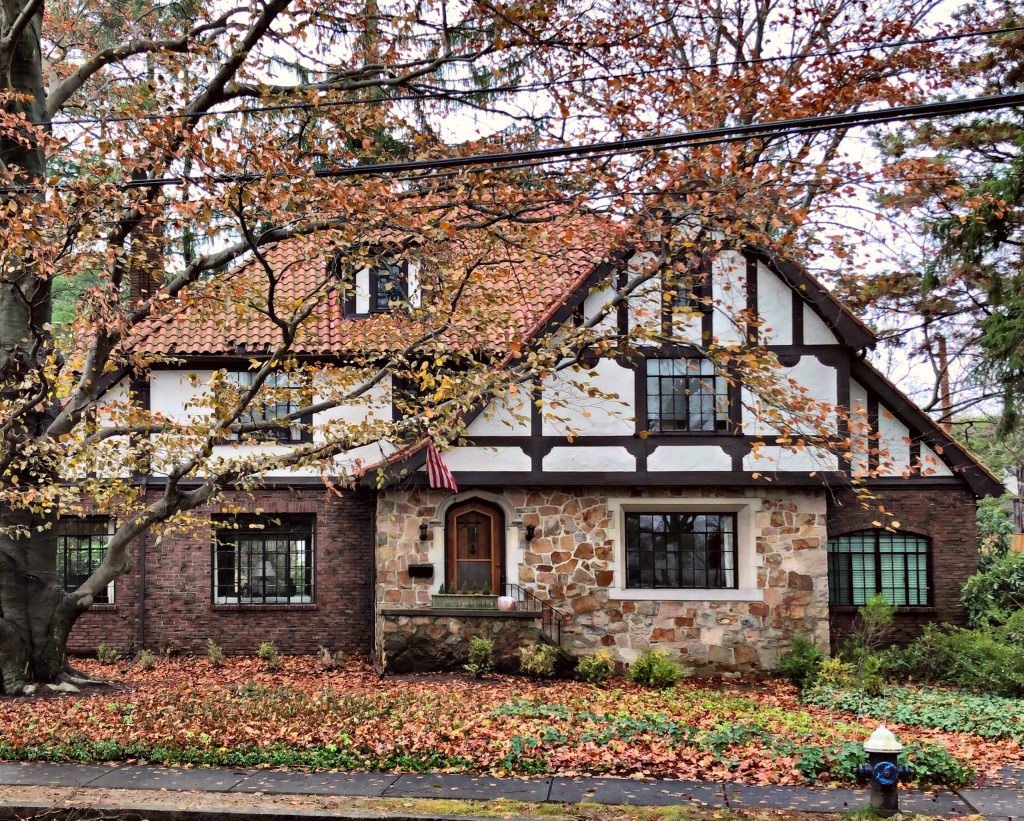
Residential architecture of the early decades of the 20th century is among my favorites as the Tudor Revival movement took off and was sometimes mixed with other revival styles at the time, creating really unique homes. The Glacy House in South Brookline, MA was built in 1930 as one of the earlier homes in the Walnut Hill development. It was likely designed and built by Walter L. Fernandez, a contractor who appears to have design-built a handful of spec homes to help get the neighborhood’s development going in the early stages. This home was originally occupied by George and Mary Glacy. George later worked as Vice President of the Boston & Maine Railroad, though he later got into legal trouble for hiring companies for railroad projects where he had financial interests, becoming indicted in an antitrust case by a Federal grand jury. The home features a first floor constructed of stone and brick with half-timbering on the floor above. The building is topped by a terracotta red tile roof, which is fairly uncommon for the region.

Webber House // 1935

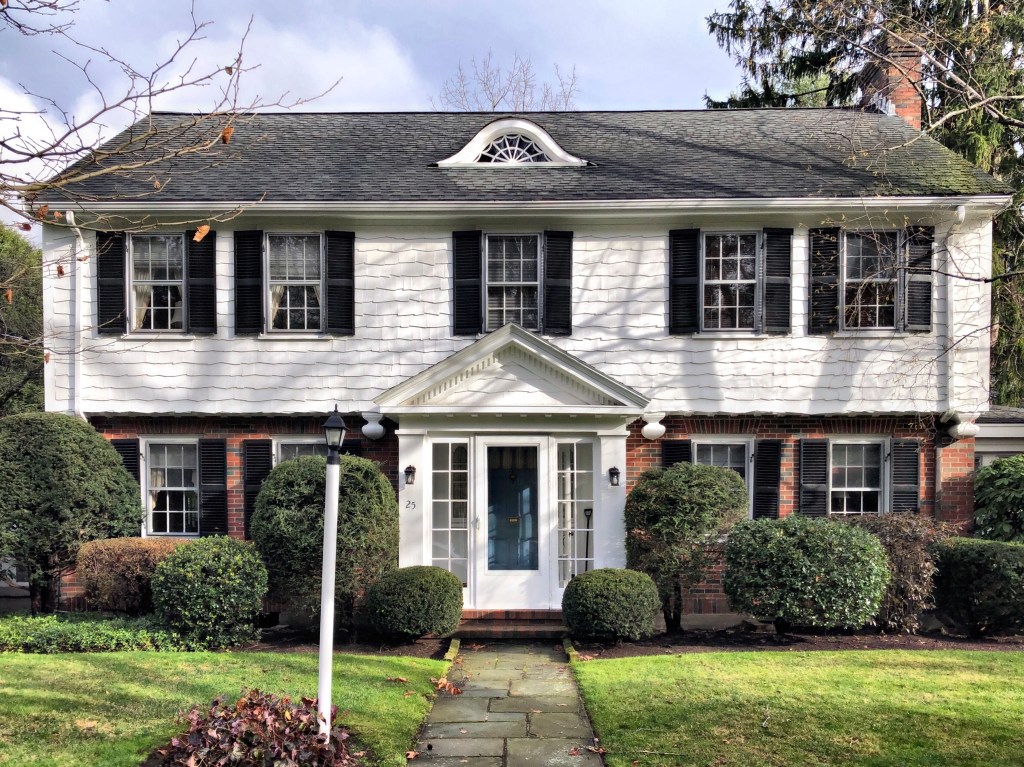
Located in South Brookline, a neighborhood of mostly early-mid 20th century architecture, you can find amazing residential designs for middle-class suburban families in the Boston area. This home was built in 1935 for Max and Rebeccah Webber in the Garrison Colonial Revival style. The home, designed by architect Harry Morton Ramsay, is characterized by a second-story shingled overhang with decorative pendants reminiscent of 17th century American homes. Adding some extra flair, an eyebrow dormer can be found at the roof, as well as a glazed projecting entry porch with a broad pediment and corner pilasters.

Commonwealth Trust Company // 1908-c.1974

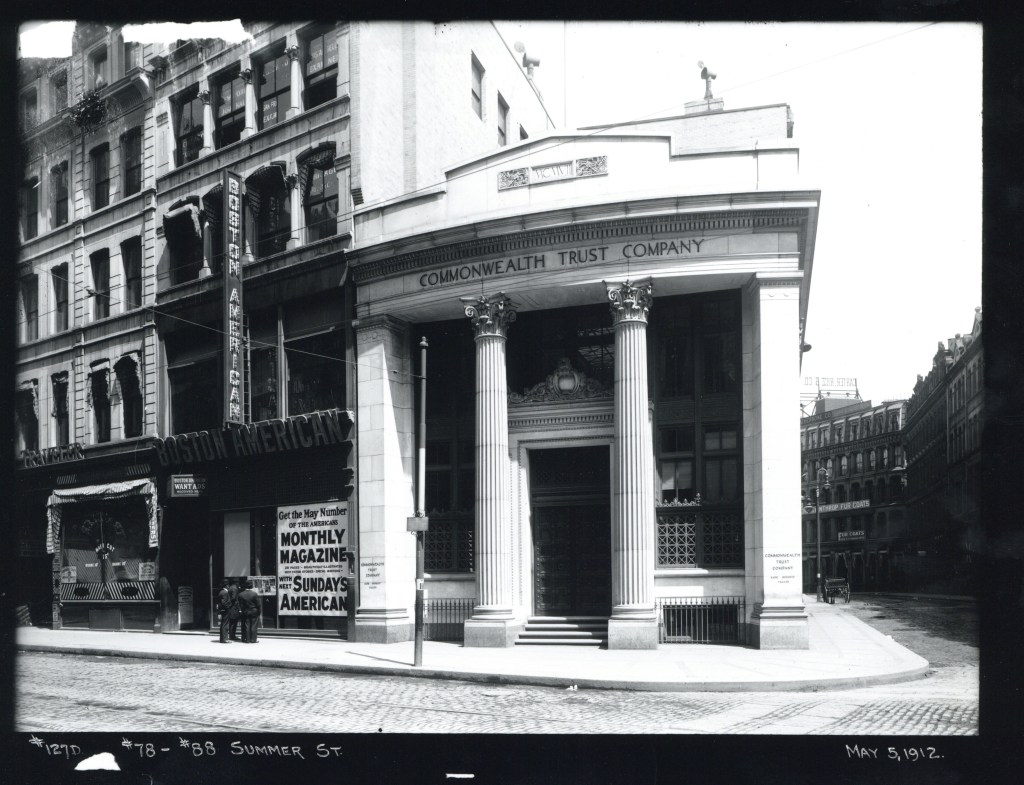
Ca. 1910 image courtesy of Boston Public Archives.

Located at the corner of Summer and Devonshire Streets in Downtown Boston, the Commonwealth Trust Company’s two-story marble banking house commanded the corner, despite its short stature. The building, completed in 1908, was constructed with Lee marble and decorated with ornate wrought and cast-iron grilles over windows. The building was designed by the architectural firm of Parker, Thomas & Rice in the Classical mode with large, fluted Corinthian columns and boxed corner pilasters framing the recessed center entrance, Corinthian pilasters ran along the side facade. At the inside, the building was coated with Cararra and Blanco marble with paneled oak offices. At the ground floor, offices and banking stations framed the outer walls, with the safety deposit boxes located on the second floor. The building was demolished by the 1970s and replaced with a one-story minimalist Modern building (I could not figure out why the former building was razed). The new building was demolished after a few decades with a larger building, better fitting the commercial district.

Frederick Collins House // 1847

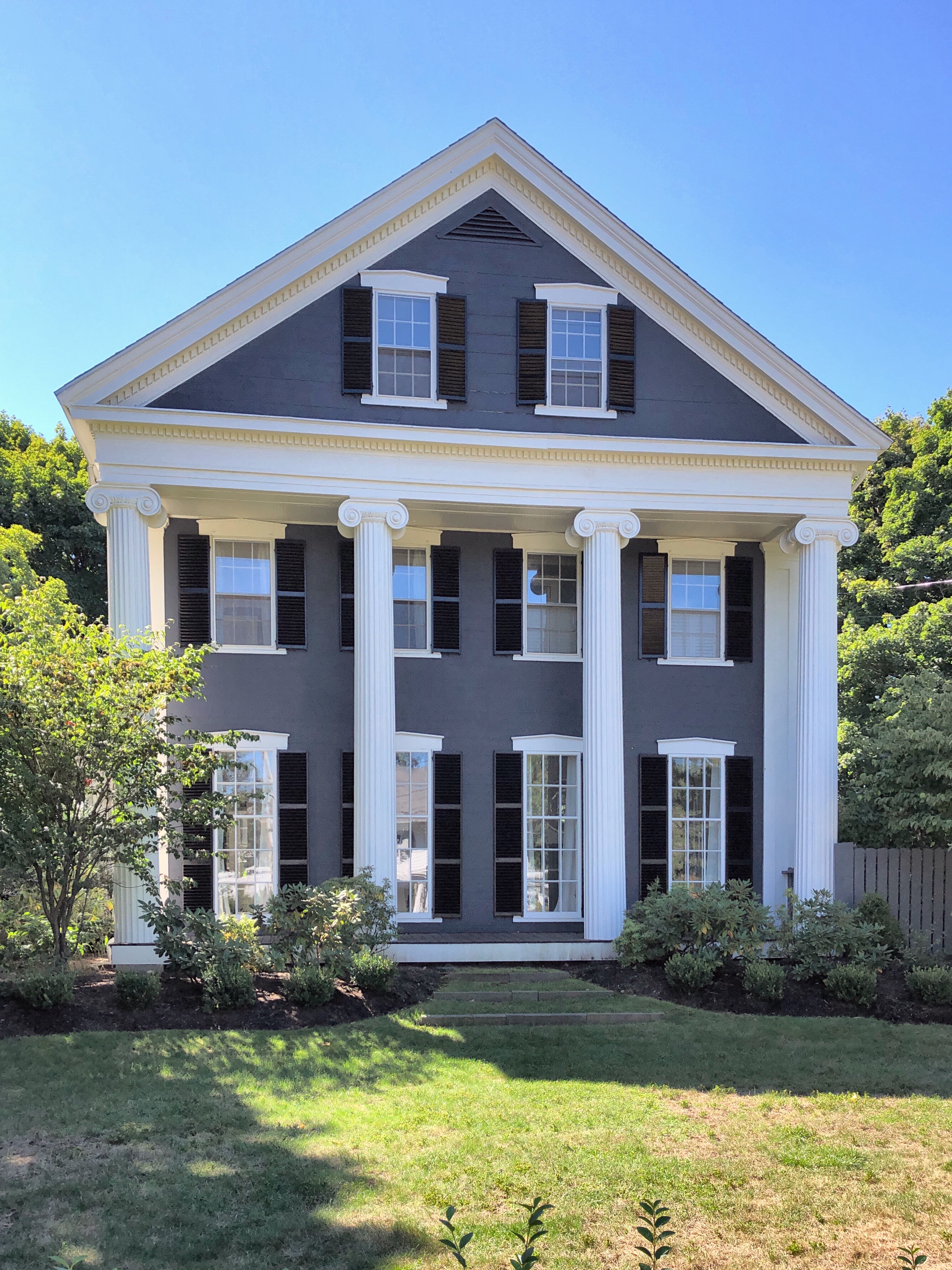
This house was built in 1847 by Frederick A. Collins on land owned by his father, Mathias Collins III. Frederick Collins (1818-1892) had this house built just after his marriage the same year to Amelia M. Revere, purportedly a grandniece of Paul Revere. Prior to his marriage, Frederick A. Collins lived in Newton Upper Falls and started a glue factory with his brother, which
by 1855, had grown to three three factories and which folded upon the death of his brother Edward Collins in 1879. Collins was active in local affairs, serving in later life on the City Council. The home remains a significant monumental temple-front Greek Revival house in the Boston area. It was designated as a Newton Landmark, meaning it will be preserved for future generations to appreciate.

William Strong House // 1896

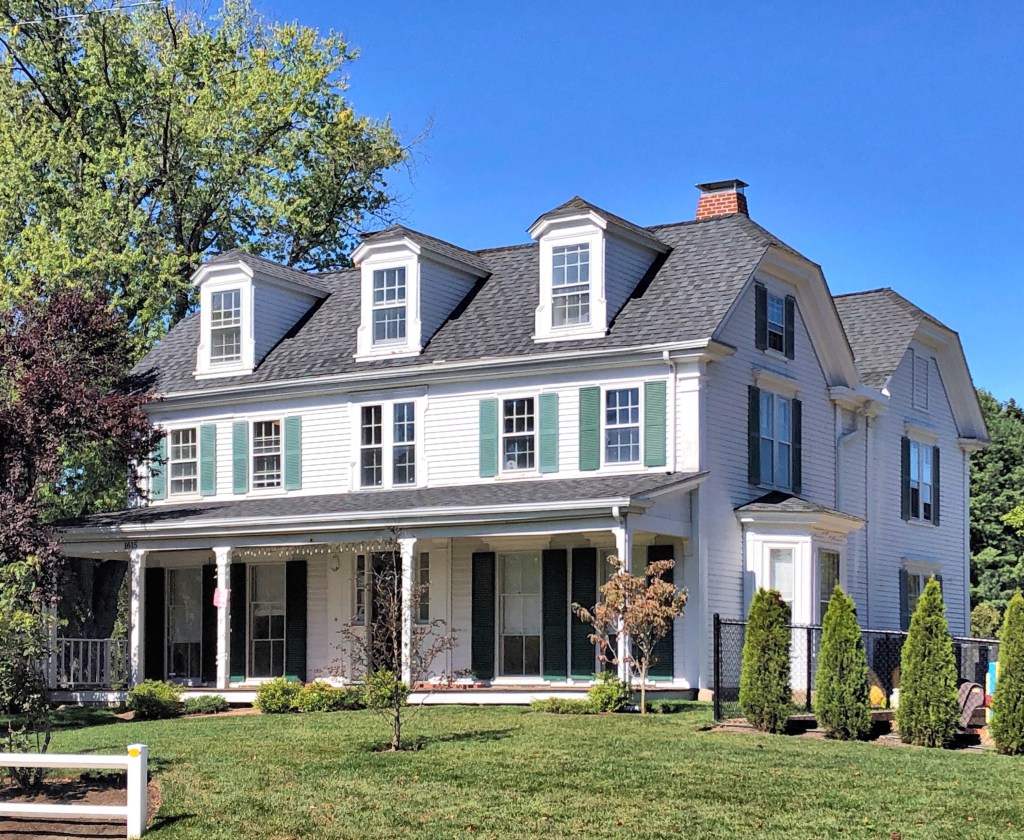
William C. Strong purchased the old Wyman Farm in present day Waban Village in 1875, consisting of 93 acres of open land and rolling hills. He subdivided some of the land after the completion of the Waban Station, later developing the Strong’s Block, the premier commercial block in the village. To kick off the development along Windsor Road, he hired architect Herbert Langford Warren, the Dean of Harvard’s Architecture School (who also owned a historic farmhouse nearby) to design a couple homes for sale. This stunning house is notable for the prominent gable end gambrel roof, shingle siding, and porte-cochere.

Staples-Crafts Farm // 1750

In 1688, John Staples, settled in the untouched landscape seven miles west of Boston, now known as Waban Village in the town of Newton. John was a weaver by trade but he ended up as the first public school teacher, the town clerk, a policeman, and an alderman. John married and lived in a modest farmhouse for decades here, witnessing the birth of a new nation nearby. The couple had no children of their own but raised some of Mary’s relatives including Moses Crafts, who would eventually take over the home. Craft rebuilt the house on the original foundation around 1750, constructing a colonial farmhouse two and a half stories high with five windows and two rooms across, one room wide.

Joseph Crafts died in 1821 at the age of 85, leaving no will and considerable
debts owed. The Judge of Probate ordered the property to be auctioned, and
Joseph’s son, Moses Crafts II, made the winning bid of $5.50 for the house,
barn, and a large tract of land! In 1824, Moses Craft II sold the property to his cousin William Wiswall, who gave the house a Federal period remodeling.

By the late 19th century, the home and ample farm land were acquired by William Strong and his wife Mary. William, President of the Massachusetts Horticultural Society, used the property for some time as a nursery, with apple orchards and rose gardens. After his petitioning for a train station in Waban, he parceled up the farmland into large house lots for sale, seeing the neighborhood shifting to a suburban village. He soon after built the Strong Block, the first commercial building here.

Strong’s Block // 1896

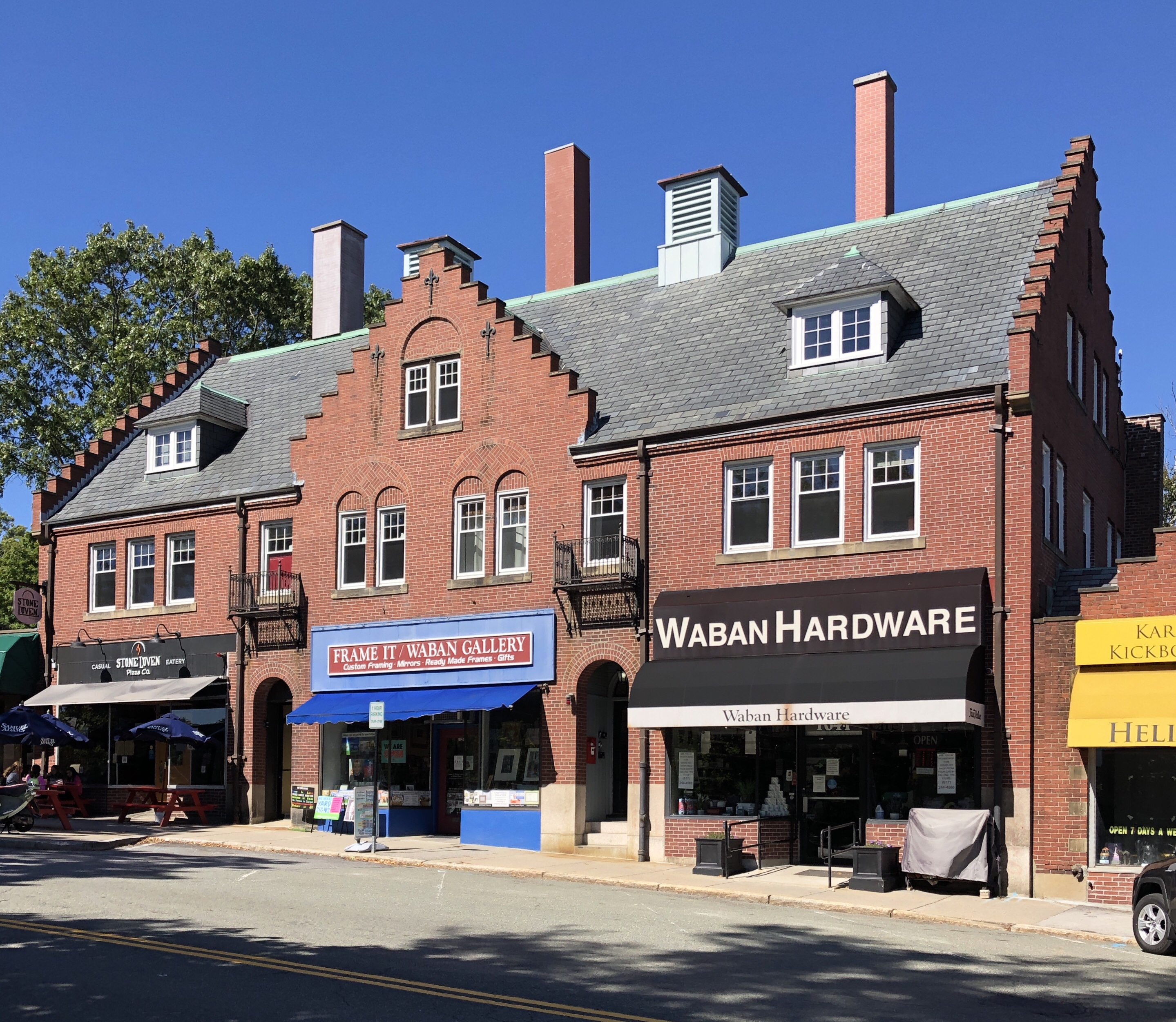
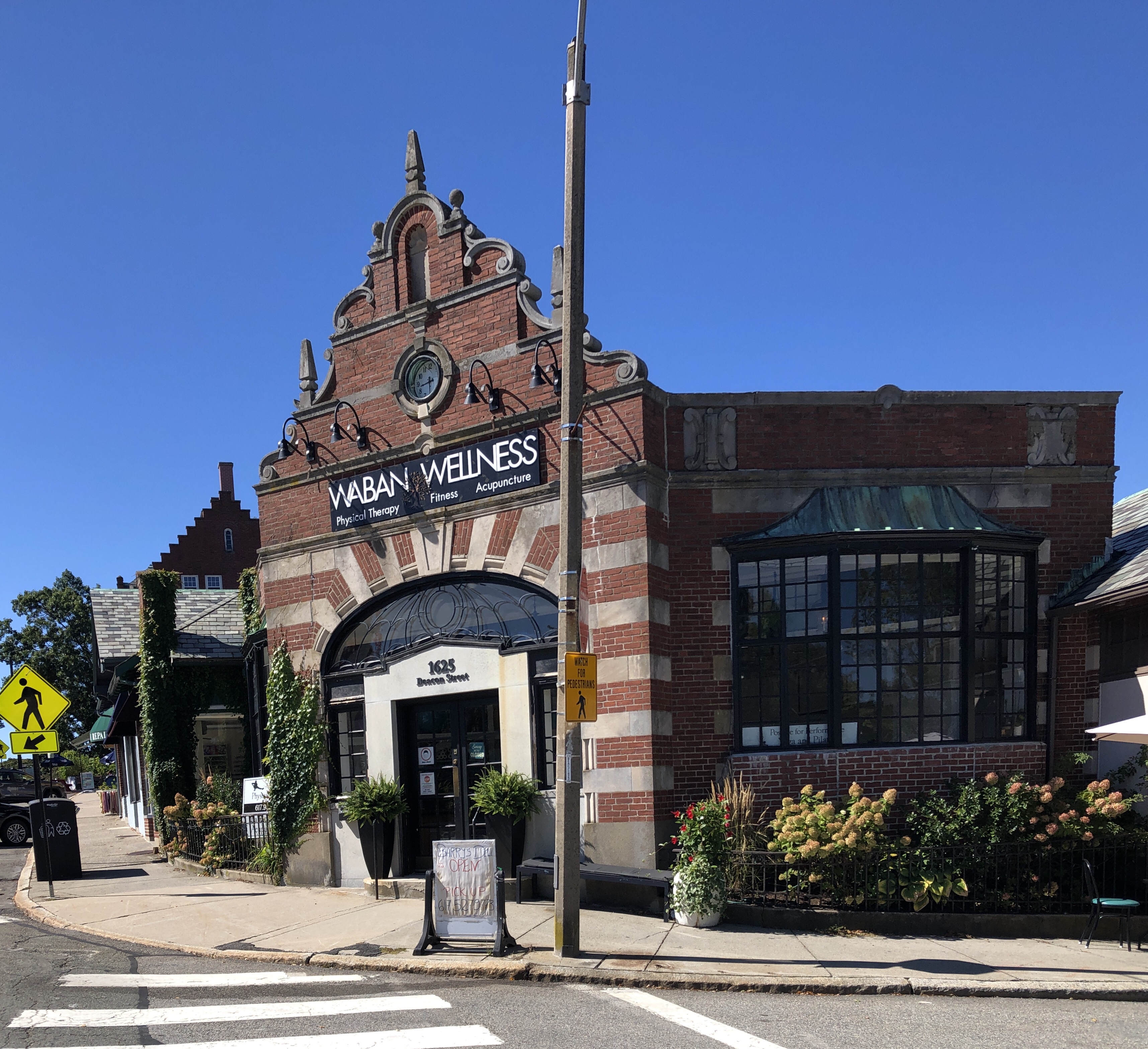
William C. Strong, a prominent local citizen who resided nearby, had this stylish commercial block built to serve the expanding population of the village which eventually became known as Waban. After the completion of the Waban Train Station, the demand for neighborhood retail became apparent and William Strong was an early developer to realize this. He hired Lewis Bacon, an architect who resided nearby, to design the commercial block. The result is a stunning Dutch Revival building with gables showcasing stepped parapets. The upper stories were apparently used as apartments when completed. Notwithstanding Strong’s efforts, the Waban commercial district developed rather slowly. It was not until 1924 that the row of one-story shops was added to its right. The addition was designed by Edward B. Stratton, who followed suit with Tudor and Jacobean motifs, to compliment the Dutch Revival block.

Lewis H. Bacon House // 1892

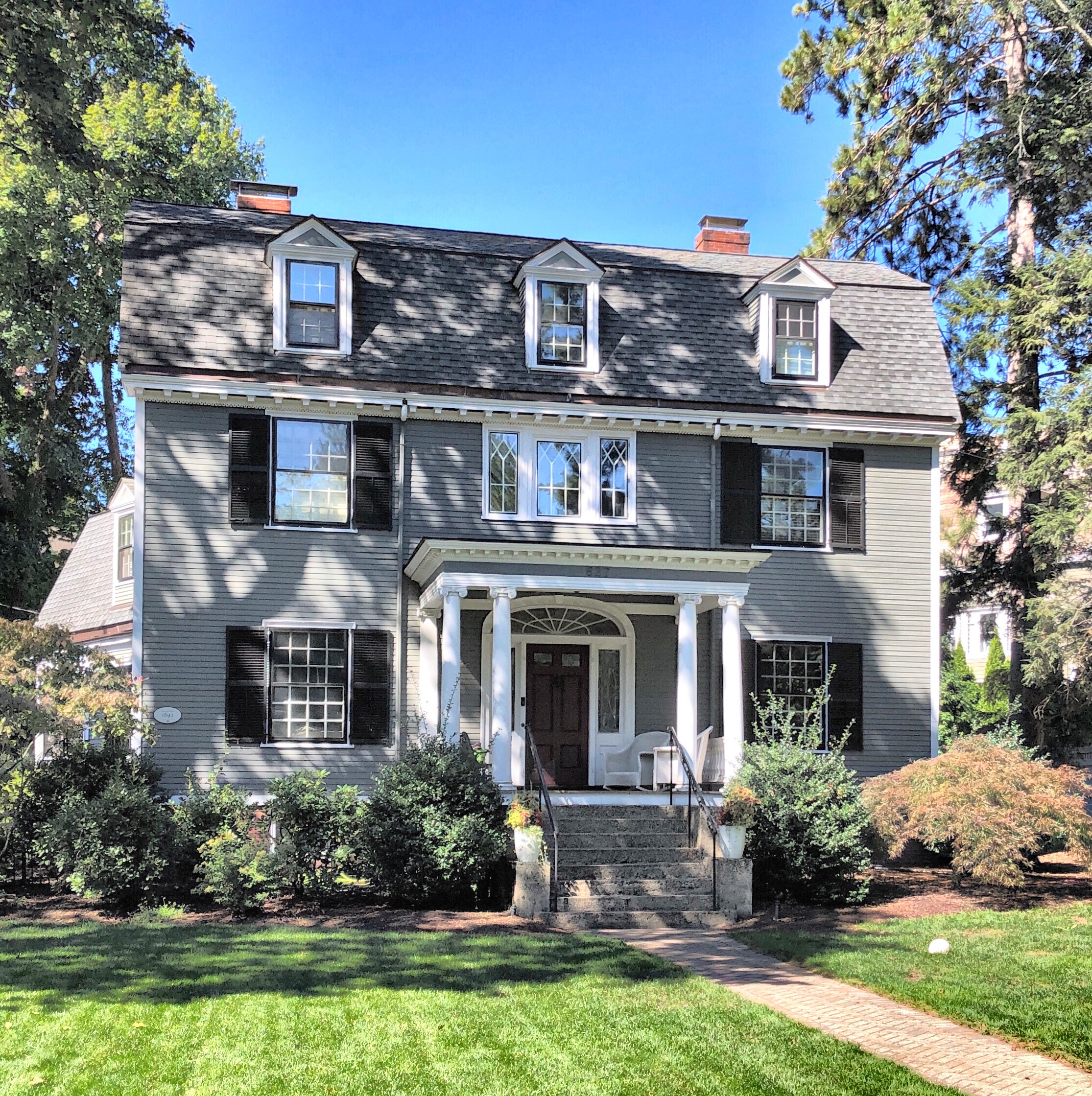
Another architect-designed home for their own use in Waban Village in Newton, is this house on Chestnut Street. Built in 1892, the Colonial Revival home is set far off the street with a commanding presence and symmetrical facade. The home was designed and occupied by Lewis Howard Bacon (1857-1941), a former chairman of the Newton board of appeals and a member of the school committee and the board of aldermen in Newton, also a practicing architect. He studied architecture in the office of Samuel Lane, architect of Cleveland, 1877-80, when he moved to Boston as a draughtsman and supervisor of construction for the firm of Sturgis & Brigham, 1880-1886. For four years he was a member of the firm of Morrison & Bacon (1888-1892), before embarking on his own practice in an office in Downtown Boston. He resided in this home until his health failed and he moved to a nursing home where he died.

Church of the Good Shepherd, Waban // 1896

For the small population living in the farming village of Waban in Newton, MA, every Sunday, they had to take a horse and carriage or walk to church in a nearby village. The Waban Christian Union was the first religious organization to be established in Waban, 1894-1895 after seeing a suburbanization of the village. The church was to be for services of the Protestant Episcopal Faith, though the group claimed no allegiance to the Diocese, nor was it organized according to the laws of the church. It was independently owned by a corporation that felt the need for a religious association in the community. This church structure was constructed in the
summer of 1896 at a cost of $5000 with William F. Goodwin, a charter member of the group (and resident nearby), donating his services as the architect. The organization leased the space to a pastor for $200 a year, later selling it to the congregation, known now as the Church of the Good Shepherd.

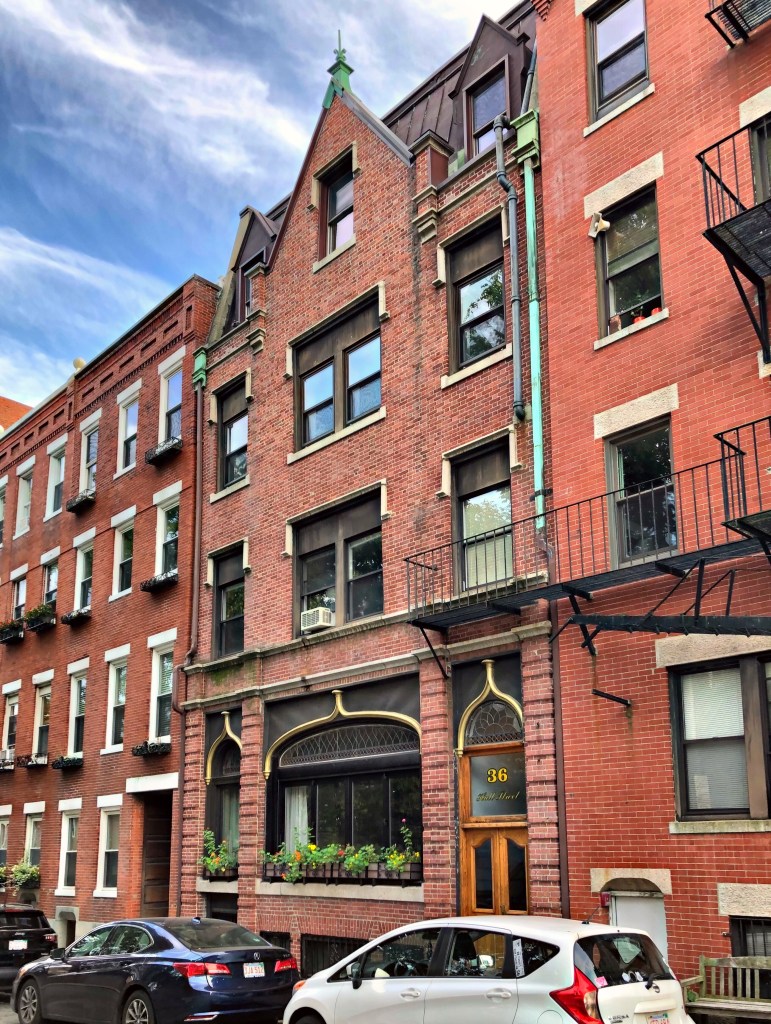
Hull Street Medical Mission // 1901

Constructed for the Woman’s Home Missionary Society of the Methodist Church of New England, this building was associated with the Hull Street Medical Mission from the time of its construction, in 1901, to about 1950. The mission was one of a number of church-related social service programs established in the North End in the late 19th and early 20th centuries to address the needs of recent immigrants, namely the Russian Jews, Italians, and Portuguese residing in this area of the neighborhood. In 1909-1910 alone, 14,574 treatments were given in the clinic, providing a huge medical service to the widely low-income immigrant community of the North End [29th Annual Report, 154]. The Medical Mission closed in the early 1950s and the property was later sold and converted to apartments. It was designed by architect Walter Forbush, who utilized ogee arches and leaded glass windows, adding much flair to the building’s design.