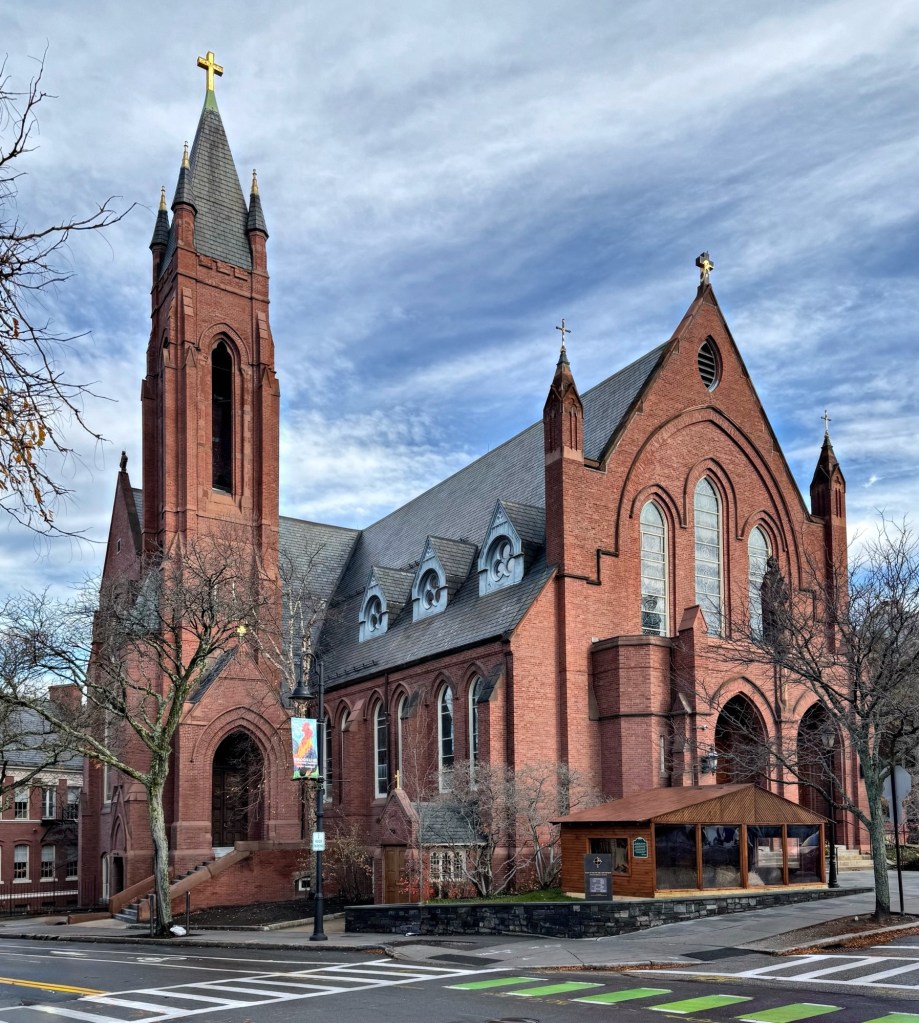
St. Mary of the Assumption Catholic Church, Brookline Village // 1880

St. Mary of the Assumption church was the first Catholic Church established in Brookline, Massachusetts, in 1852 when a congregation of Catholics began to congregate to worship together at the old Lyceum Hall. The congregation primarily consisted of Irish immigrants who settled in Brookline, where they often found work at the many large estates and building the new branch railroad in town, but desired a true house of worship close to their homes. By 1853, a modest wood-frame Gothic Revival style church was built in the Village, but was quickly outgrown. In 1873, the pastor of the congregation, Irish-born Rev. Lawrence Morris (1845-1900) began purchasing land at the corner of Harvard Street and Linden Place to establish a new church, large enough to comfortably fit the congregation and various church-related buildings. In 1880, the firm of Peabody & Stearns was hired to furnish plans for the Victorian Gothic edifice in brick and brownstone. Although the church was designed in 1880, it was not dedicated until 1886, and at this time, Pope Leo XIII sent a chalice to the Parish in honor of the completion of this church, the first in America to be named Saint Mary of the Assumption.
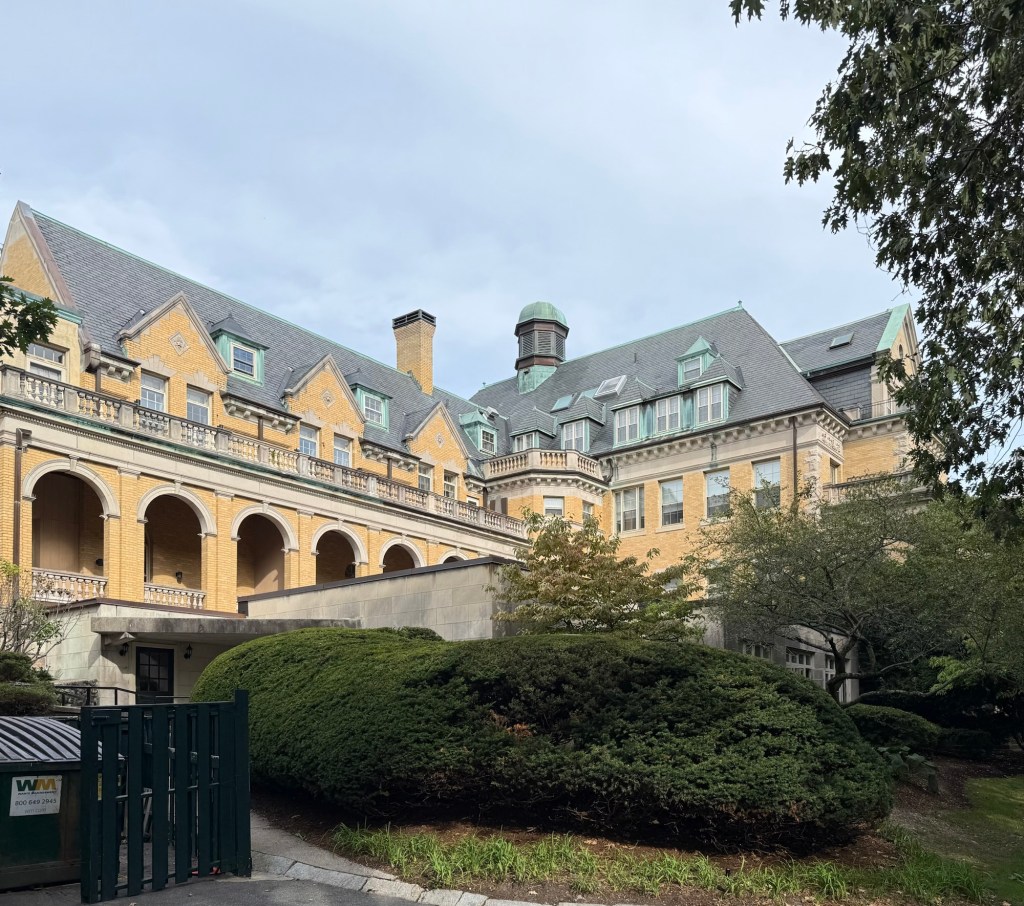
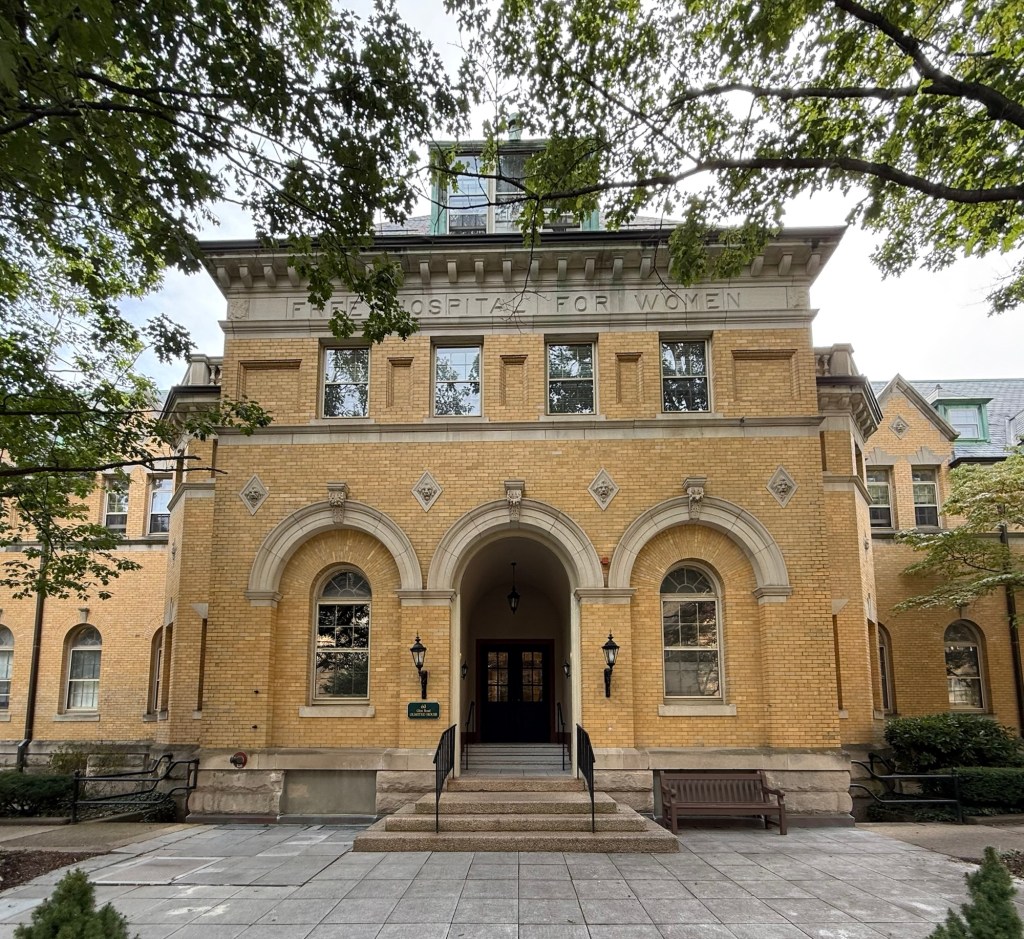
Boston Free Hospital for Women // 1895

This handsome yellow brick building, designed by architects, Shaw and Hunnewell, was completed in 1895 as the Boston Free Hospital for Women. The hospital was organized in 1875 in a converted rowhouse in Boston’s South End, and after relocating once, it was decided that a purpose-built hospital was needed for the growing demands of the institution. A site in Brookline on the Muddy River, overlooking Frederick Law Olmsted’s Riverway and Olmsted Park, was purchased and the hospital was opened in 1895. The brick and limestone hospital building is somewhat Chateauesque in style and when opened, had no electricity and no telephone. The hospital is historically significant as the first teaching hospital for Harvard and as the first hospital in the country to apply radiation treatment for cancer, along with being a major research facility in fertility, especially the work of Dr. John Rock (who lived nearby) on the development of the birth control pill and research on in-vitro fertilization. The Free Hospital for Women merged with the Boston Lying In
Hospital (now part of Brigham & Women’s), which closed its Brookline Campus in the 1960s. In 1984, the firm of Childs, Bertman and Tseckares oversaw the conversion of the buildings to condominiums, called The Park, with sympathetic new construction.

Thomas Aspinwall House // 1896

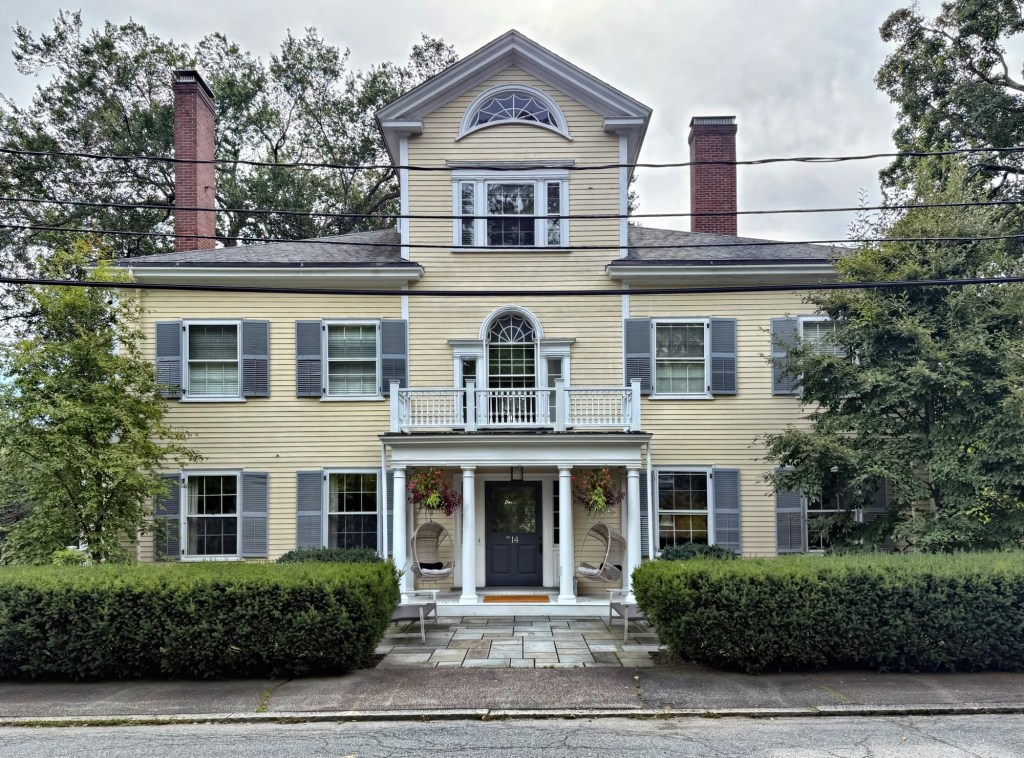
The Thomas Aspinwall House at 14 Hawthorn Road in Brookline was constructed in 1896 by architects, Ball & Dabney. The stately home was built for Thomas Aspinwall as a near copy of his great-grandfather’s 1803 Federal style house on Aspinwall Hill, the William Aspinwall House. Both residences feature a four-tier central bay with Palladian and lunette windows with a columned portico at the entrance. His grandfather, Dr. William Aspinwall graduated from Harvard in 1764 and studied medicine in Connecticut and in Philadelphia before beginning his medical practice in his hometown. He was one of the Brookline men who marched west and fought British troops as they retreated from Lexington and Concord in April 1775. He was put in charge of a hospital in Jamaica Plain during the Revolutionary War and later ran a hospital for smallpox victims in Brookline. His 1803 Federal style home was demolished in 1900 as the Aspinwall Hill area of Brookline was developed, but luckily, a replica remains on the other side of town, here on Hawthorn Road!

William & Sara Warren House // 1911

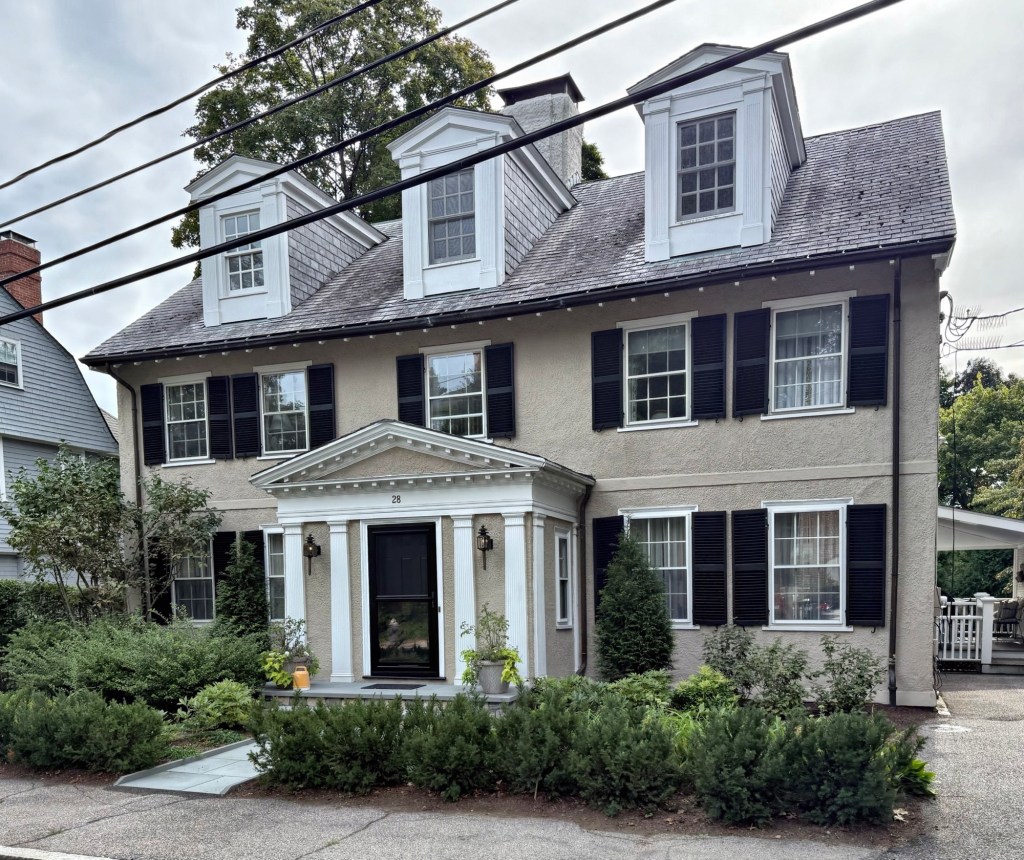
Built in 1911, this Colonial Revival style house rendered in stucco, is located at 28 Hawthorn Road in the Pill Hill neighborhood of Brookline, Massachusetts. The residence was built for William Marshall Warren (1865-1953) and his wife, Sara Shields Warren (1874-1964) from plans by the firm of Gay & Proctor. William M. Warren served on the faculty at Boston University as Professor of Philosophy and later as Dean of the College of Arts and Sciences, promoted by his father, William Fairfield Warren, who was President of the University. The Warren House features a symmetrical five-bay facade with central entrance within a projecting pedimented vestibule framed by four pilasters. The pilasters are replicated in the three dormers at the roof, set below the central chimney.

Rowe House // 1911

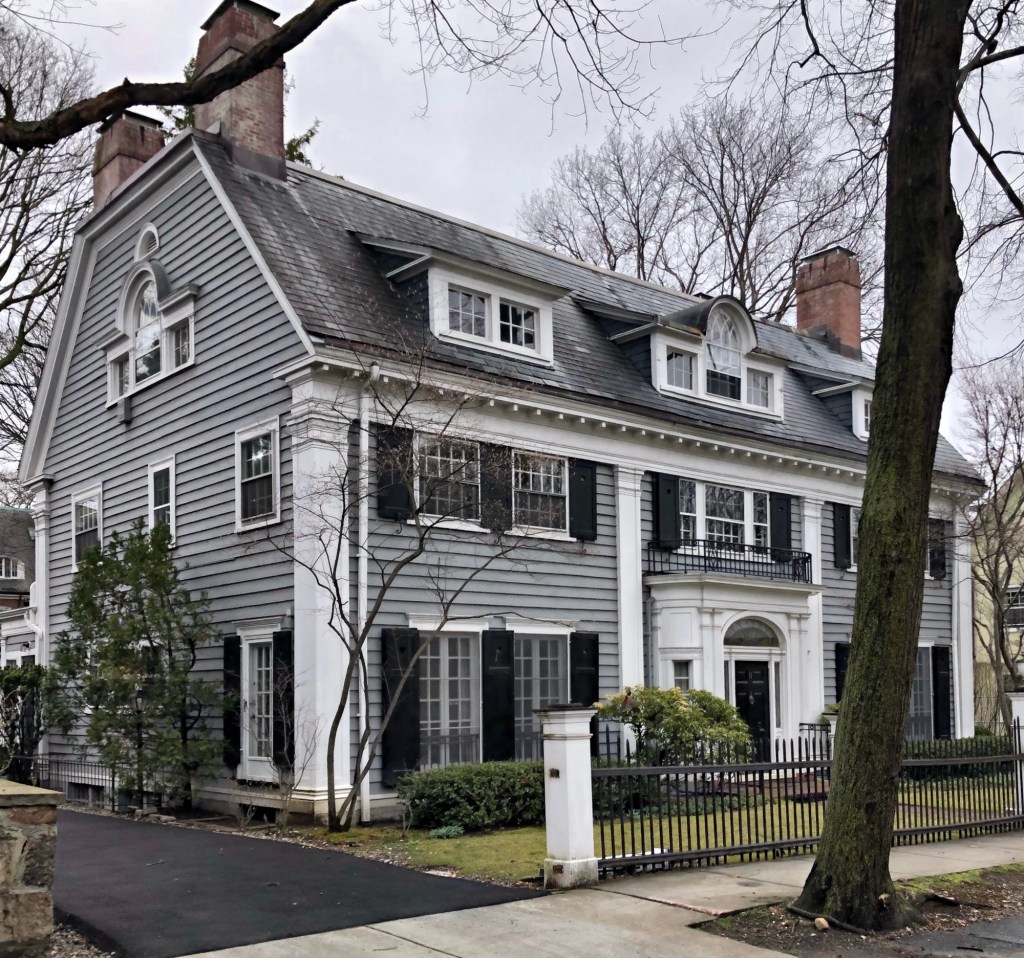
The Rowe House at 11 Mason Street is an over-the-top, and high-style example of the Colonial Revival style, showcasing the oversized proportions and scale that architects in the early 20th century followed when referencing Colonial American architecture. The house here was built in 1911 for Edward Prescott Rowe (1879-1936) and his wife, Eleanor Livingstone. Designed by the firm of Rowe & Keyes of Boston and New York, the commission was likely a relative of Mr. and Mrs. Rowe. The symmetrical house features a broad gambrel roof with Palladian windows in the side gable and central dormer at the facade, large pilasters breaking up the bays on the facade, a projecting Colonial Revival entry, and squat windows at the second floor terminating at the entablature above. The property even retains its Colonial Revival gateway.

Dexter-Hall Cottage // 1851

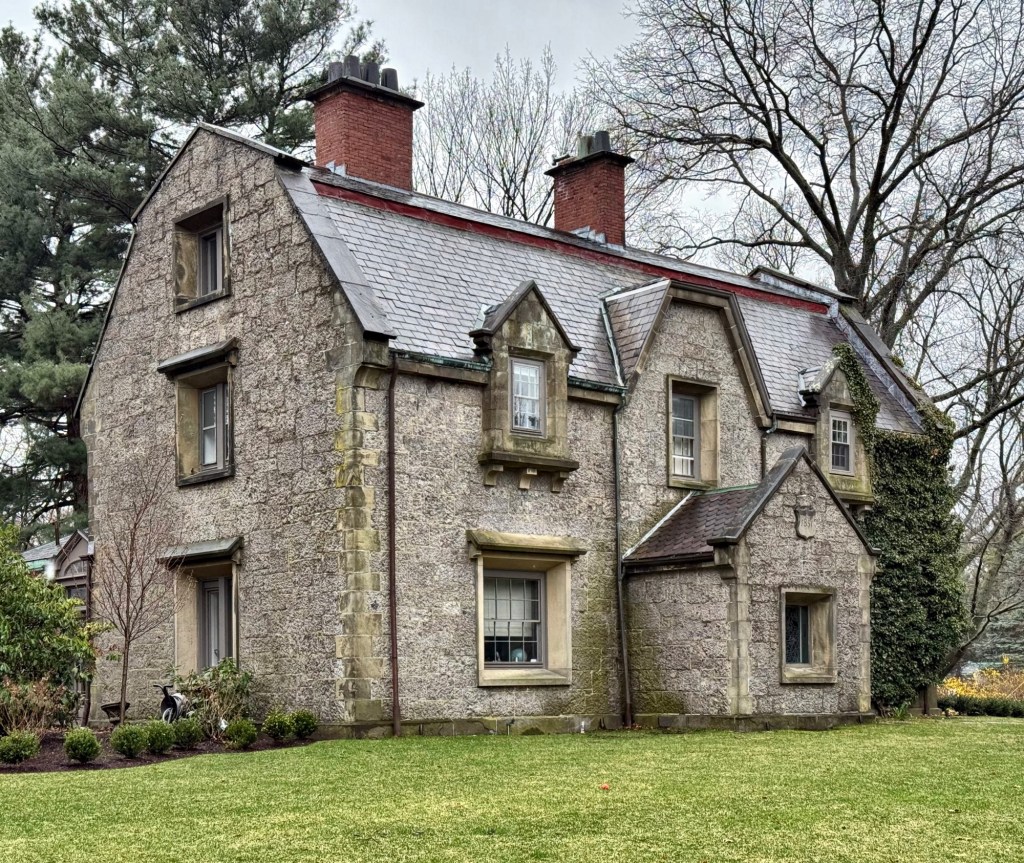
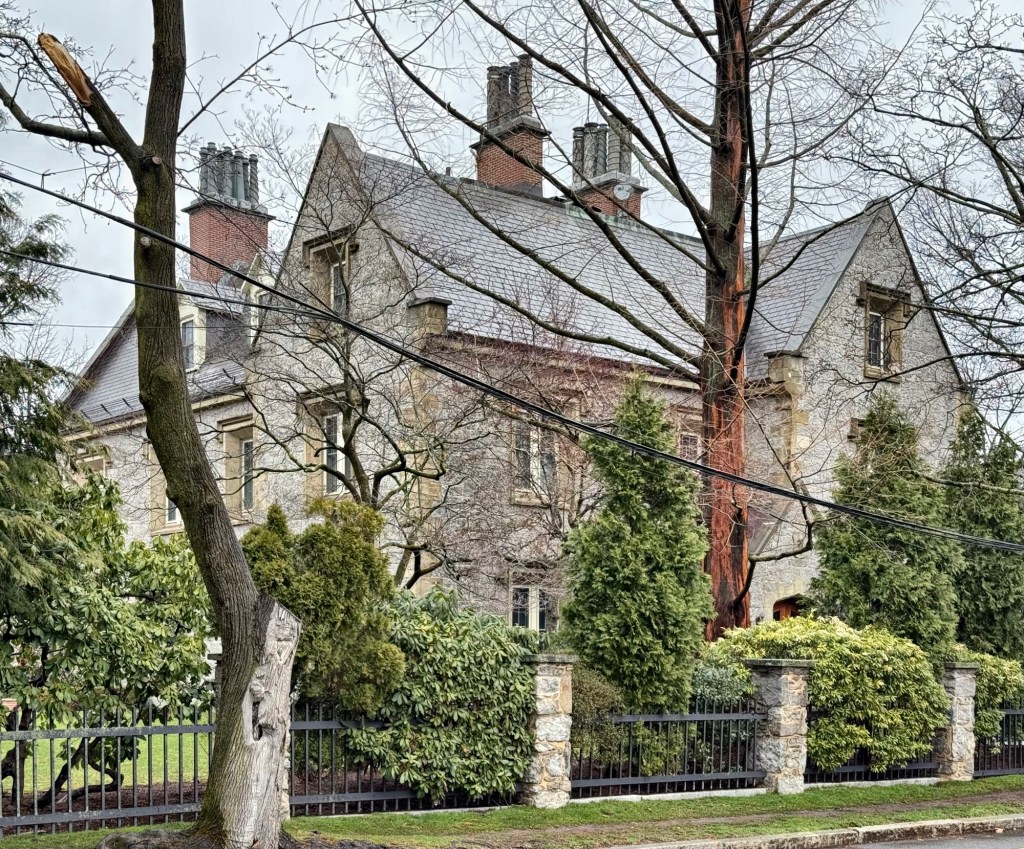
Built across the street from the Amos A. Lawrence House in the Cottage Farm neighborhood in Brookline, the Dexter-Hall Cottage is an early Gothic Revival style residence built in the first period of the district’s history. Architect, George Minot Dexter was gifted a desirable house lot in the neighborhood from Amos Lawrence as a reward for his designing his own property, and in turn, designed this cottage in 1851 in the the same mode as the Lawrence House. The stone cottage has a three bay façade with enclosed center entry. On the second floor are wall dormers as well as a central jerkinhead dormer with a gambrel slate roof. The property was later owned by George M. Dexter’s daughter, Emily, and her husband, Thomas Bartlett Hall. The house remained in the Hall family through at least the 1920s.

Amos A. Lawrence House // 1851

Cottage Farm area of Brookline is one of the finest neighborhoods in all of New England. The area was developed thanks to Amos A. Lawrence (1814-1886), a wealthy second-generation Bostonian, who provided much of the capital and enthusiasm for the growth of the cotton industry in New England prior to the Civil War. Lawrence’s involvement in the industry aided the development of the Massachusetts mill towns of Lowell and Lawrence, whom the city was named after. In 1851, Amos Lawrence purchased 200 acres of land from David Sears, who himself developed the equally beautiful Longwood neighborhood of Brookline on the other side of Beacon Street. Amos began to subdivide the land, working with the architect George Minot Dexter and landscape architect and surveyor, Alexander Wadsworth, who designed Mount Auburn Cemetery in Cambridge, to create an early picturesque residential suburb. With houses designed in the newly popular Gothic Revival and Mansard styles and several small parks, the area became known as Cottage Farm. This stone house was designed by George M. Dexter and was the country residence of Amos Lawrence, who had other homes built nearby and rented out to wealthy friends and family. By 1888, the property was owned by Amos’ daughter, Hettie S. Cunningham, who later, subdivided the estate into five house lots, and moved this stone house to the corner of Ivy and Carleton streets. Expressive of English architectural traditions over the more ornate Gothic Revival popularized by Andrew Jackson Downing, the Lawrence House is one of the finest residences in the Boston area. Built of granite with limestone trim and set behind landscaping and a perimeter fence, the mansion is surprisingly hard to get decent photos of, but it is a stunner. Today, the house is owned by Boston University and is known as Sloane House.

New England Fireproof Construction Co. Apartments // 1917

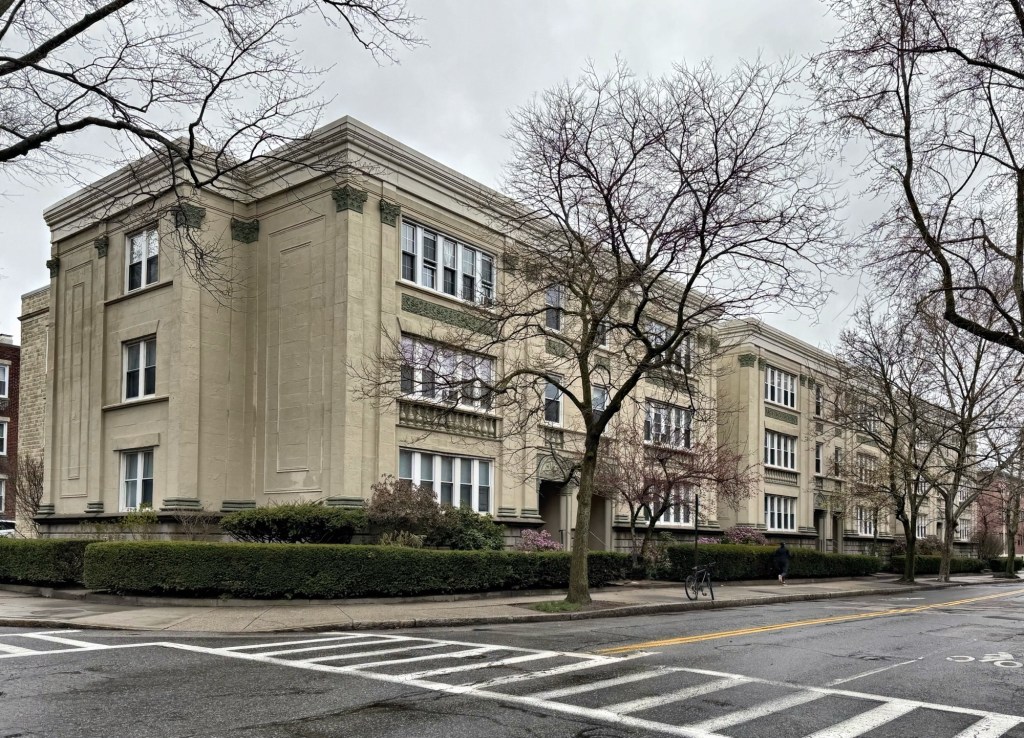
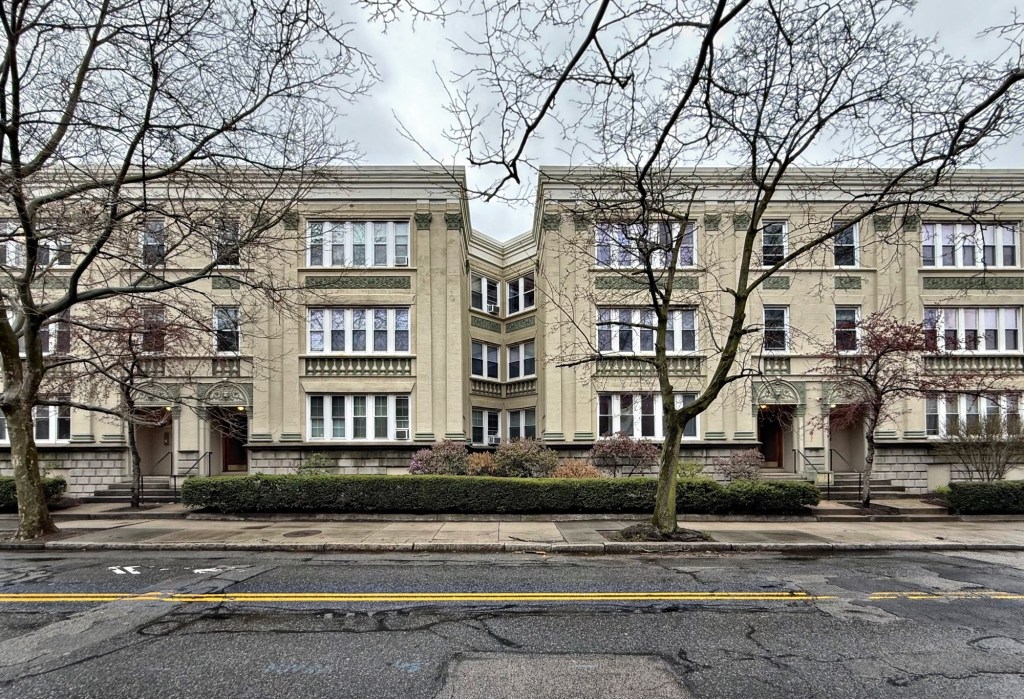
One of the most unique and architecturally pleasing buildings in Brookline has to be these apartments on Egmont and St. Paul streets that break the mold of traditional brick or wood-frame apartment houses. Built in 1917 by the New England Fireproof Construction Company as an example of how cheaper cement material can be used effectively and beautifully to design and construct high-quality housing. The company hired architect G. Bertram Washburn to design the buildings which utilize concrete block and cast concrete details with the facades embellished with pilasters capped with Corinthian capitals, engaged balusters, and modillioned and corniced entrances decorated with a lion’s head over each doorway. Additionally, a special touch is the recessed wells in the facade which not only break up the massing of the building, but provide additional light and air into the apartments inside. 

Louis C. Page House // 1906

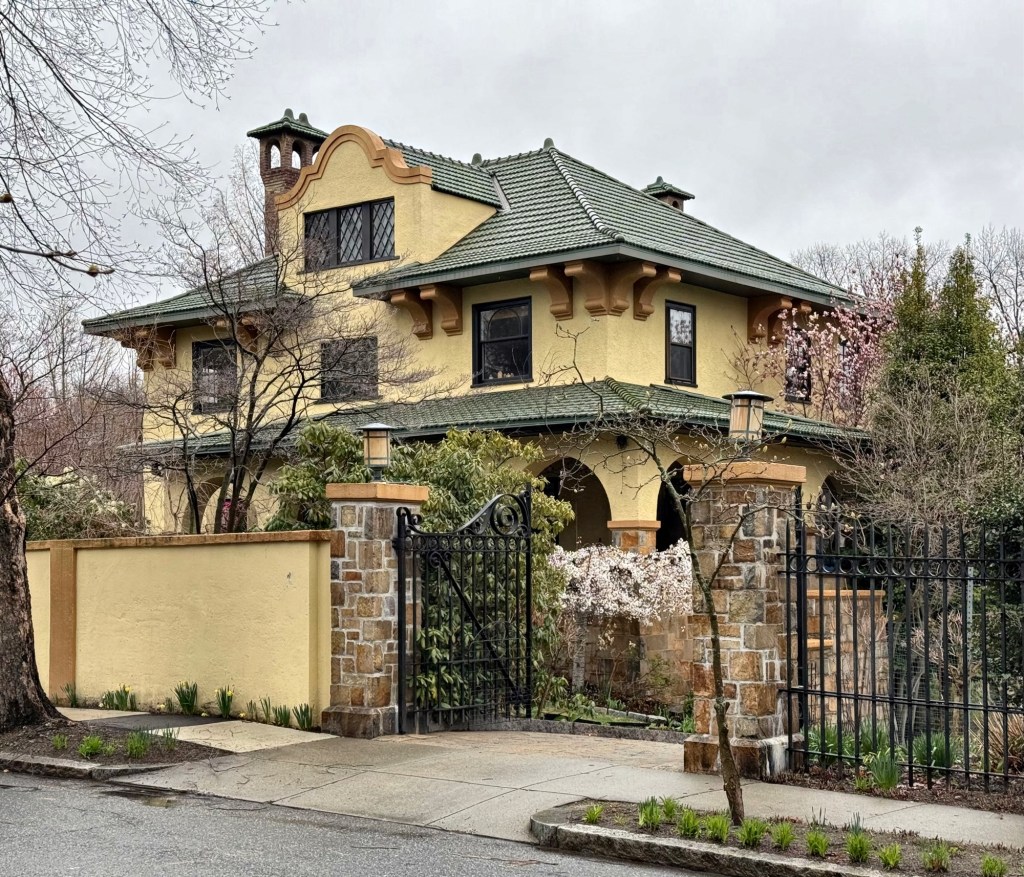
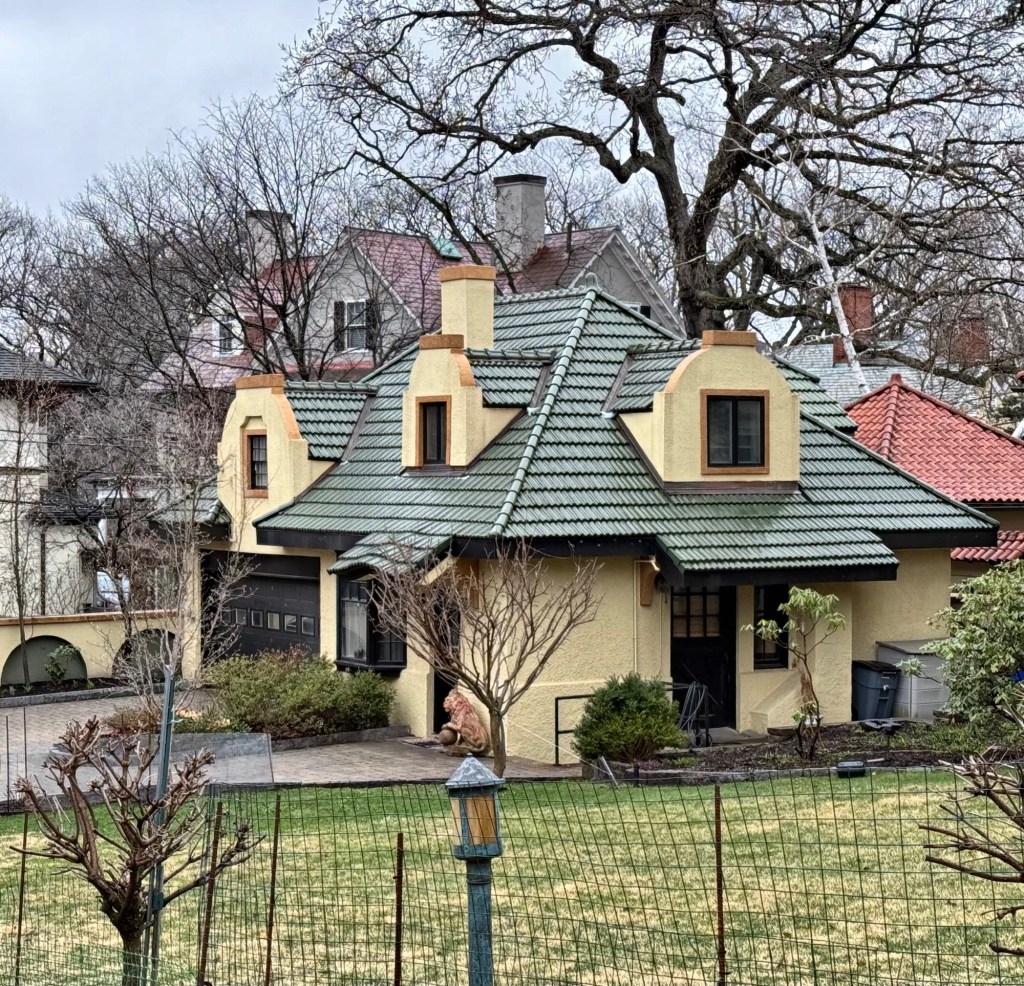
As Paul Hunt, the son of famous painter, William Morris Hunt, and the nephew of famed architect Richard Morris Hunt, built his house in Brookline, Massachusetts, he also began constructing this neighboring property which was to be sold upon completion (that is one good way to pick your neighbors!) On an oversized lot on Powell Street, Paul Hunt worked with his architect, Milton W. Stratton of Bar Harbor, to furnish plans for a similar style home to his own next door. The Mission Revival style mansion is set behind a tall, stucco and metal fence, and is constructed of wood and covered with stucco siding and capped by a lovely green tile roof. Main architectural details include the Mission-style dormer and the chimneys with round arched tops that are capped with small hipped roofs, creating a whimsical addition to the house. When finished, the property was sold to Louis Coues Page (1869-1956), a wealthy publisher with offices in Boston. Louis C. Page would hire local architect Edward B. Stratton, in 1916, to design a detached automobile garage in a style mimicking the main house. What an incredible property. 

Paul and Caroline Hunt House // 1905

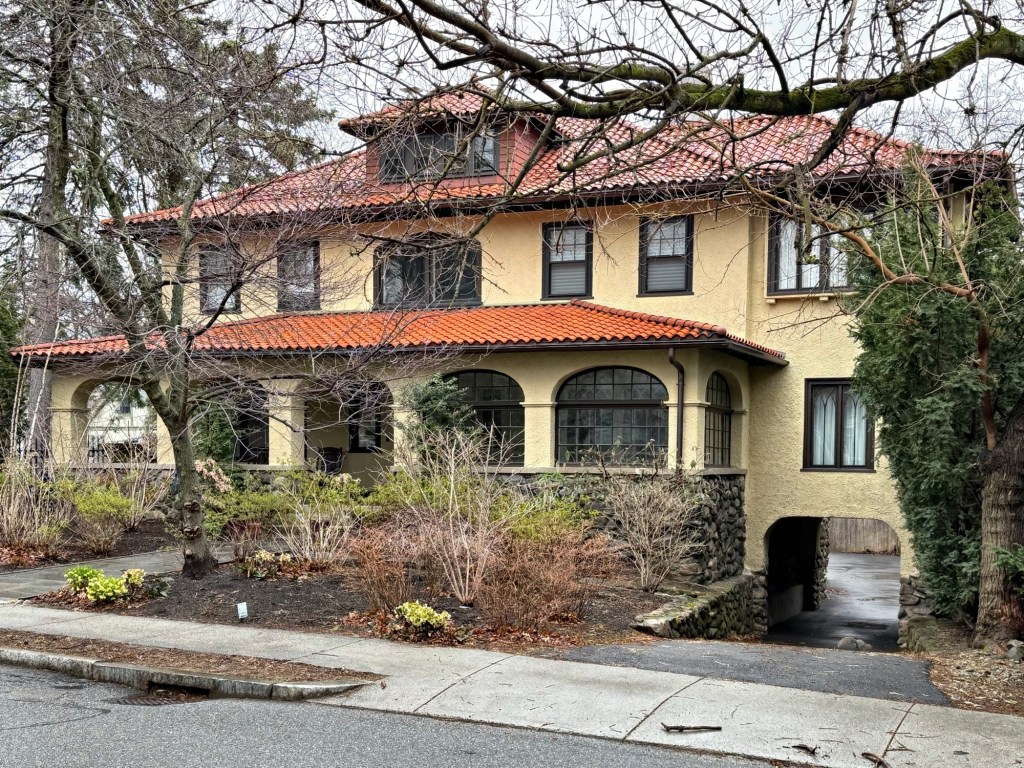
Paul Hunt, the son of famous painter, William Morris Hunt, and the nephew of famed architect Richard Morris Hunt, built this house in Brookline, Massachusetts for $15,000 for him and his wife, Caroline. Paul had been involved in real estate development in Bar Harbor, Maine, where his mother had a summer cottage, and while not an architect himself, he was very interested in design and took a keen interest in developing estates with the family funds. While developing property in the summer enclave of Bar Harbor, Maine, Paul met the Bar Harbor architect, Milton W. Stratton, and the two collaborated in the construction of houses there and two adjacent homes in Brookline. The two-story house is wood frame construction with a stucco finish on the exterior. Spanish Colonial Revival in style, the roof is hipped with terra cotta tile, as is the roof of the verandah which extends across the facade. In 1911, Paul Hunt worked with architect William Ewing Harding to add the two-story wing on the side of the house, which is built over the driveway, creating a really unique (though not as functional) design element.