Houghton House – Yawkey Family Inn // 1890

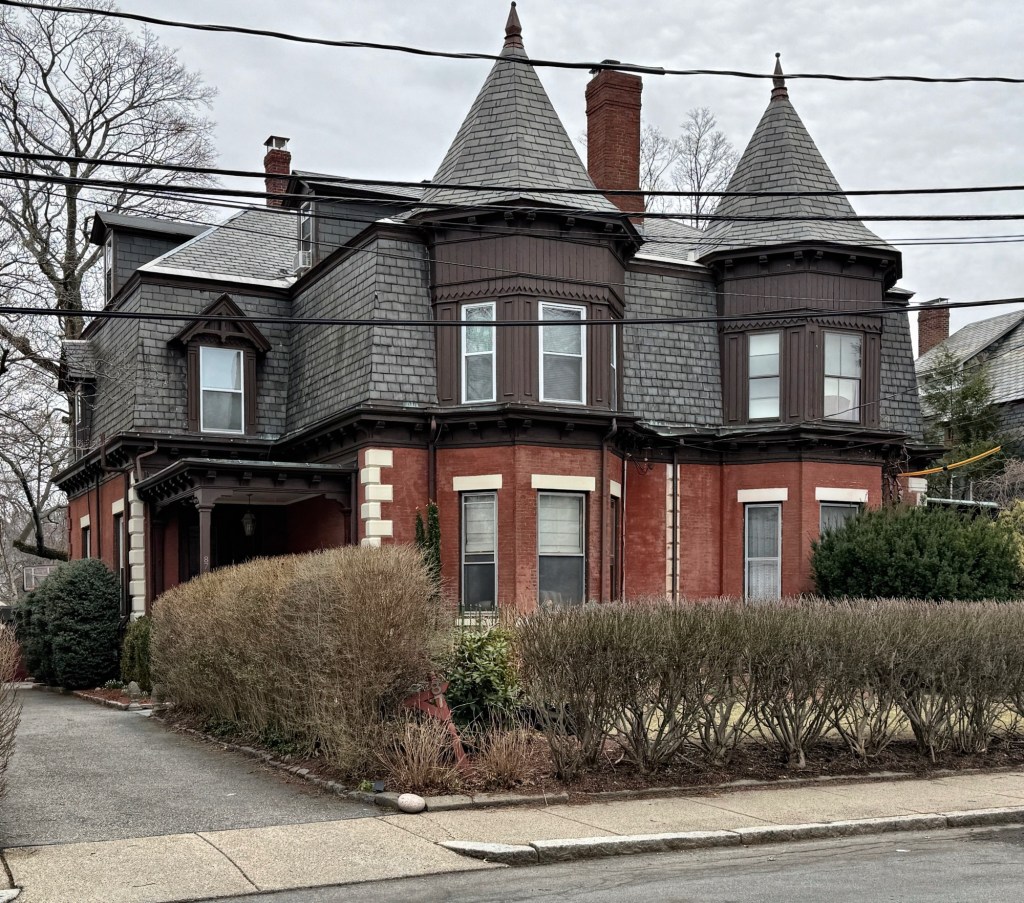
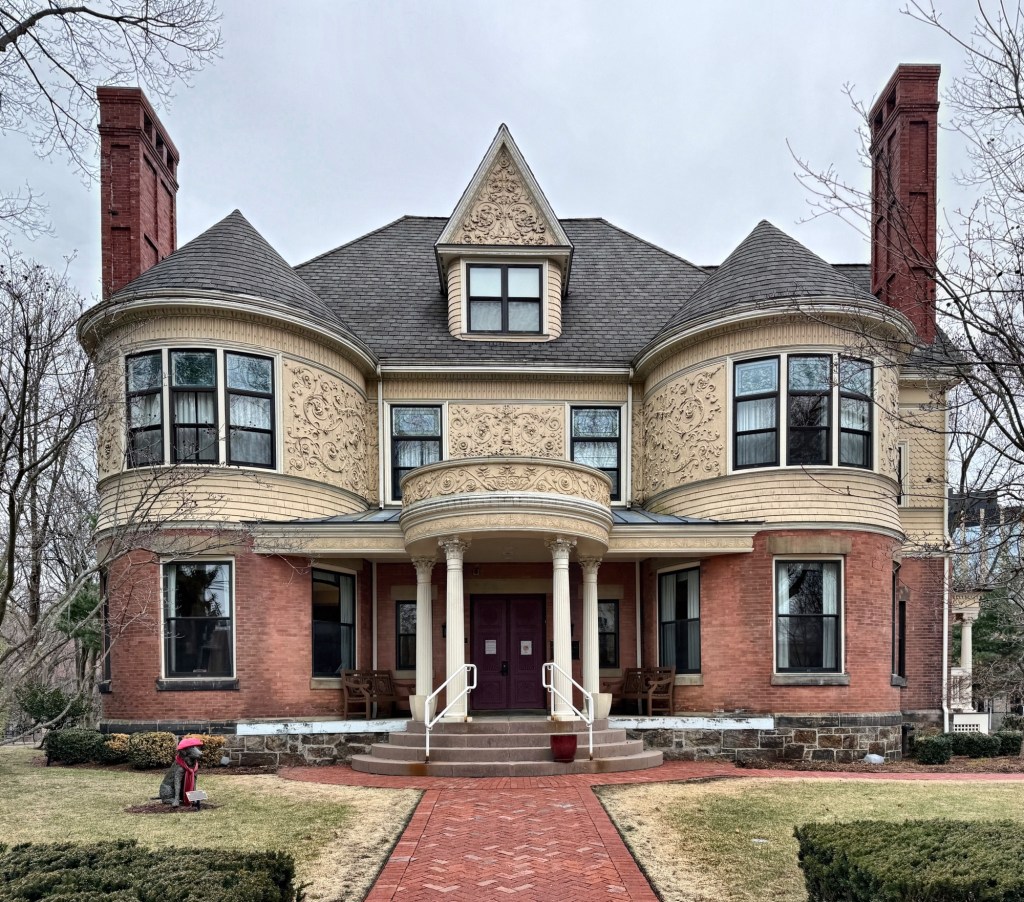
Built on the site of an earlier house at 241 Kent Street in Brookline, this grand, Queen Anne style house has seen a life as a single-family home, fraternity house, and ultimately, the Yawkey Family Inn, a temporary residence for patient families undergoing procedures and treatments at Boston Children’s Hospital. A landmark example of the Queen Anne architectural style, the handsome near-symmetrical residence has paired conical towers at the facade, a brick first floor, paneled chimneys, and elaborate carvings in the entry portico, second-story bays, wall surfaces and gabled dormer. Planning for the new mansion began in 1889 when owners, Harriet and Andrew Jackson Houghton, owner of the Vienna Brewery in Boston, hired architect, James Templeton Kelley, to furnish plans for their new suburban mansion. Sadly, Andrew Houghton died in 1892, shortly after the house was completed, and Harriet remained here until her death in 1925. After this, the property was sold to the Beta Upsilon Association for use as a Fraternity House for the Beta Theta Pi Fraternity of MIT and later as a fraternity house for a Northeastern University frat. In 2009, the property was purchased, renovated and expanded to the rear as the Yawkey Family Inn, ensuring its preservation and remaining as a quieter neighbor to the surrounding residents than its previous use.
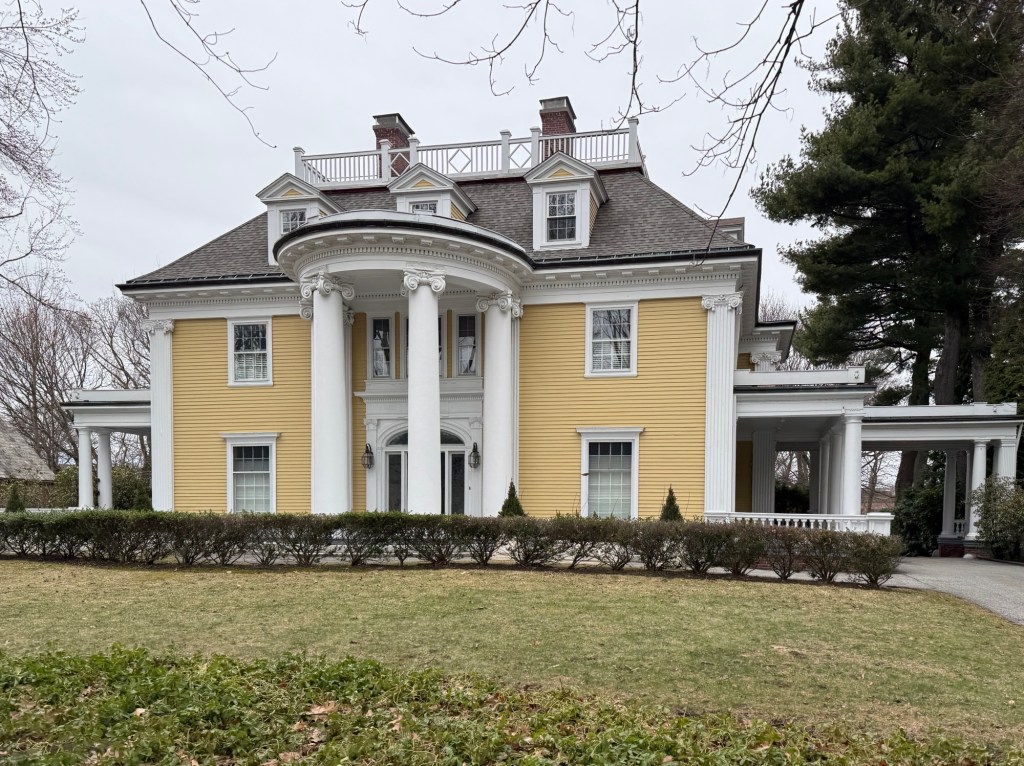
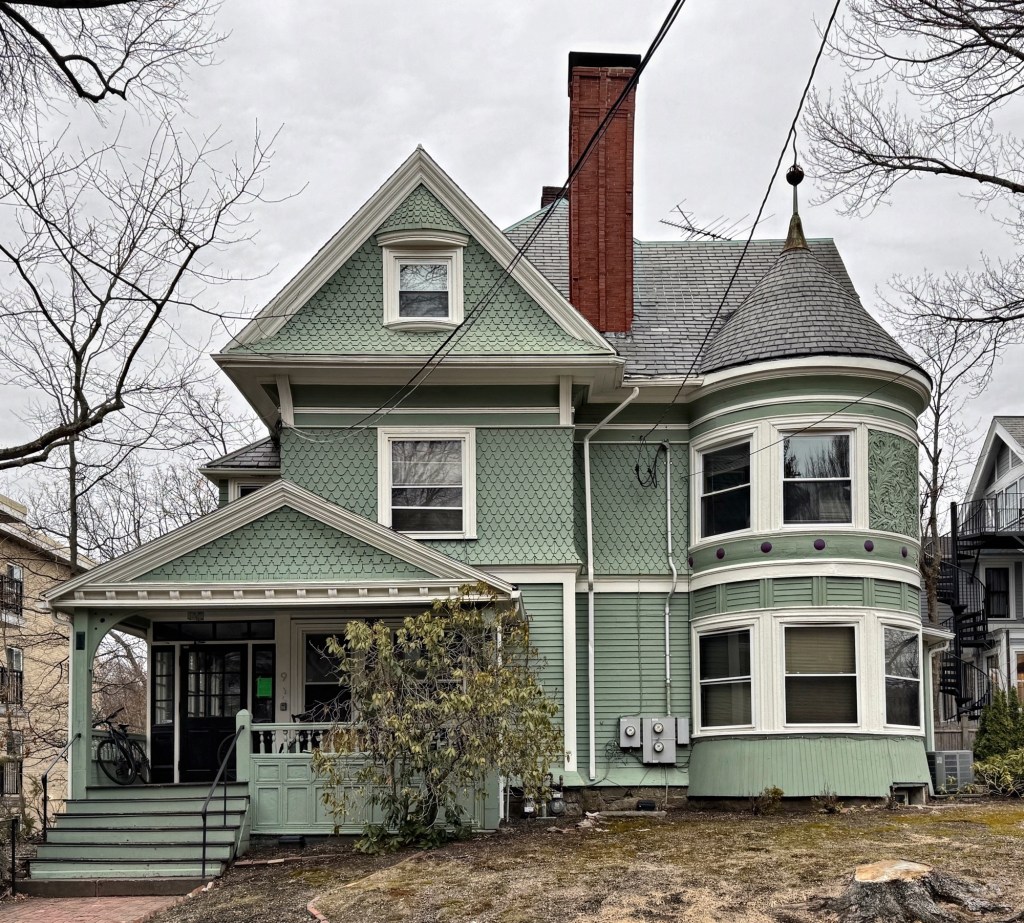
Silas Peavy House // 1905

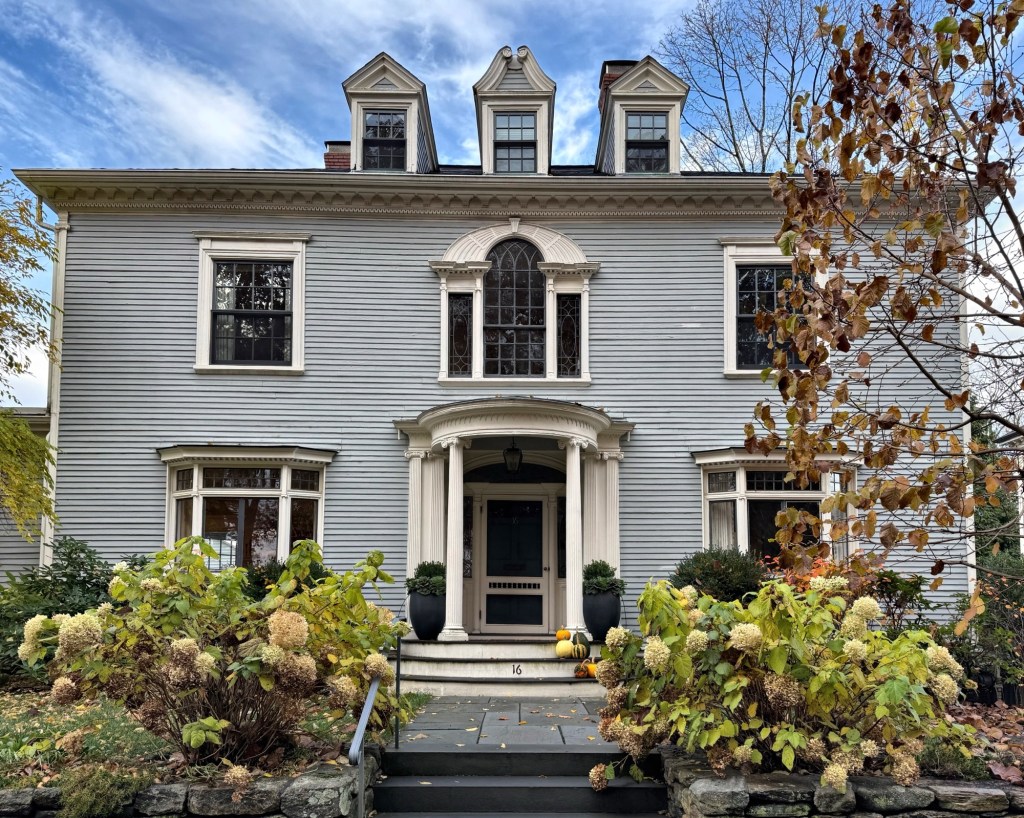
Silas Peavy (1858-1939) was born in Waterville, Maine, and with his brothers, Gustavus and Leopold, worked at his father’s clothing and merchandise store. The family moved to the Boston area and established J. Peavy and Brothers, continuing the family business in Boston with locations in New York. In 1904, Silas Peavy purchased a house lot on Kent Street and hired the architectural firm of Hartwell & Richardson to design a house there for his family. Peavy likely moved to this neighborhood as it became a Jewish enclave around the turn of the 20th century. The Silas Peavy House is an excellent example of the Neo-Classical style with symmetrical facade, porte cochere on the side, and monumental elliptical portico supported by two-story Ionic columns.

George and Alice May House // 1883

Built in 1883 for George Putnam May and his wife, Alice (Walworth) May, this Queen Anne style residence on Francis Street in Brookline, Massachusetts, contains all of the traits of the architectural style. George P. May was employed at the Walworth Manufacturing Company a plumbing pipes and equipment manufacturer founded by James J. Walworth, who was Alice May’s uncle. The property was subdivided on Alice’s fathers estate which fronts Kent Street nextdoor. I wonder if George wanted to live in the rear yard of his father-in-law! For their Brookline residence, the couple hired architect, S. Edwin Tobey, who paid great attention to detail. The May House features an asymmetrical plan, varied siding types, complex rooflines, and a corner tower with conical roof.

Potter-Leland House // c.1888

Francis Street in Brookline, Massachusetts, has some of the finest Queen Anne Victorian residences in the Boston area. This is the Potter-Leland House, built by 1888 by William Potter, a wealthy shoe manufacturer and businessman who developed rental housing in the neighborhood not far from his house on Kent Street. Various exterior wall textures, irregular massing, and turned posts on the front porch contribute to the Queen Anne character of this house, but the real showstopper is the rounded bay projection with three, 25-over-2 (yes you heard that right) curved sash windows! The property was later purchased by Herbert M. Leland, a broker.

Mary E. Paul Triple Decker // 1898

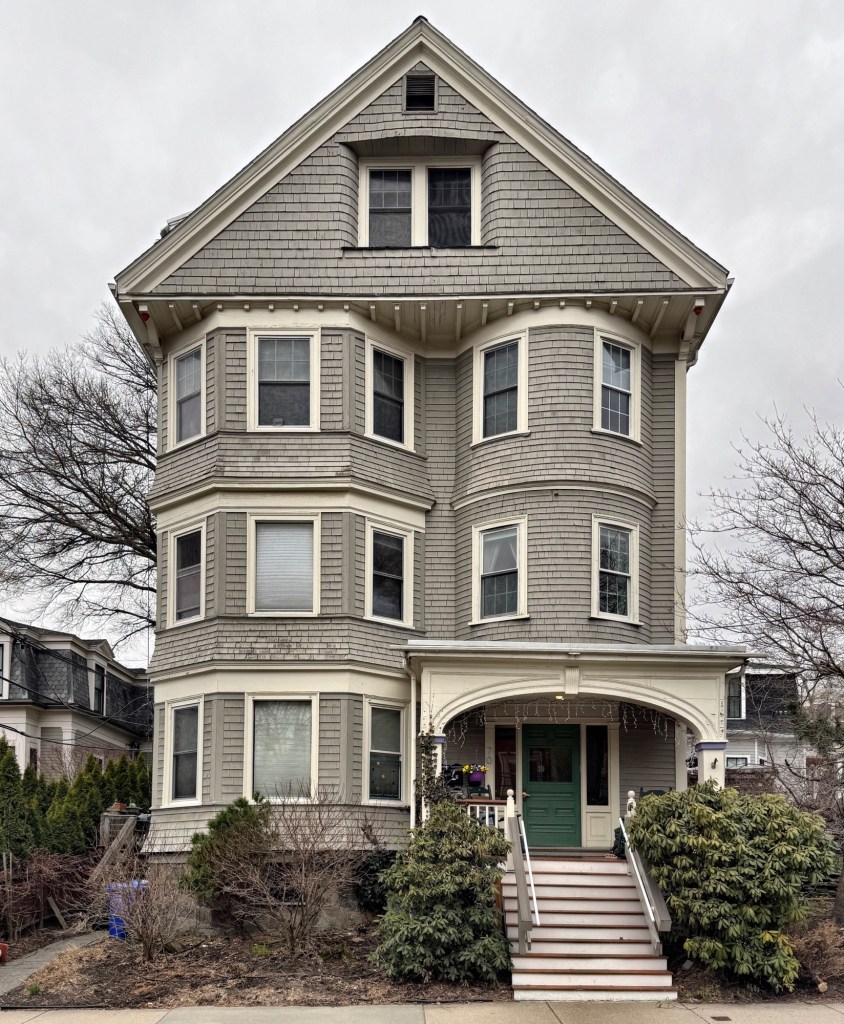
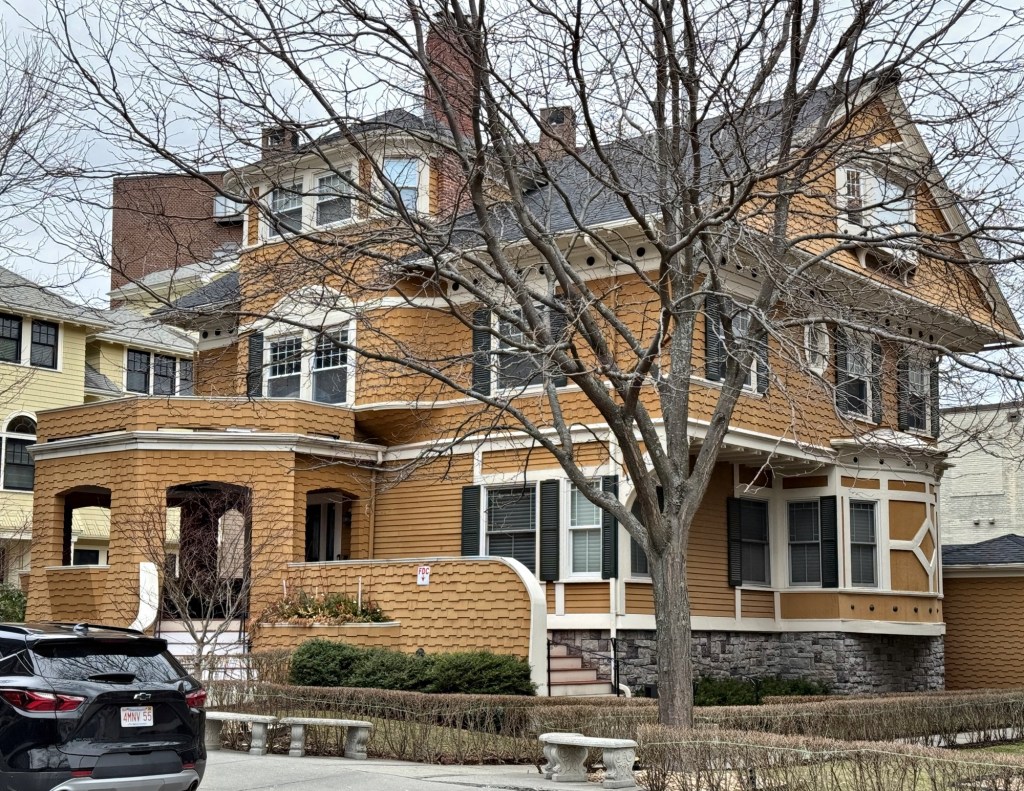
The Triple Decker is a popular housing form that between 1880 and 1930, saw an estimated 15,000 examples built in Boston and surrounding cities. The unique construction of three flats stacked on top of eachother provided density and lowered housing costs for three families and supplying the housing needs of huge numbers of new immigrants and working class families, providing an important path to homeownership. Often, a family could purchase a property, building a triple decker and could live in one unit while renting the others to pay for the mortgage and taxes, providing upward mobility for those who so long were priced out of owning their own home. By the late 19th century however, strong and organized pushback against the housing type occurred, led by groups like the Immigration Restriction League, who were “convinced that Anglo-Saxon traditions, peoples, and culture were being drowned in a flood of racially inferior foreigners from Southern and Eastern Europe,” sound familiar? Led by Prescott Farnsworth Hall, a Brookline resident, the group advocated to limit immigration from areas they deemed “lesser” and locally, fought to ban the construction of triple deckers in Massachusetts, ultimately succeeding in part when in 1912, Massachusetts passed a law allowing cities and towns to ban triple deckers by preventing construction of any ‘wooden tenement’ in which ‘cooking shall be done above the second floor. While major catastrophic fires like the Great Chelsea Fire of 1908 were fresh in people’s minds, a leading cause for the legislation was likely to limit upward mobility of groups of people from owning real estate. The Mary E. Paul Triple Decker, pictured here, was built in 1898 in the Shingle style, contributing to the rich architectural and social character of the surrounding neighborhood.

James H. F. Standish House // 1874

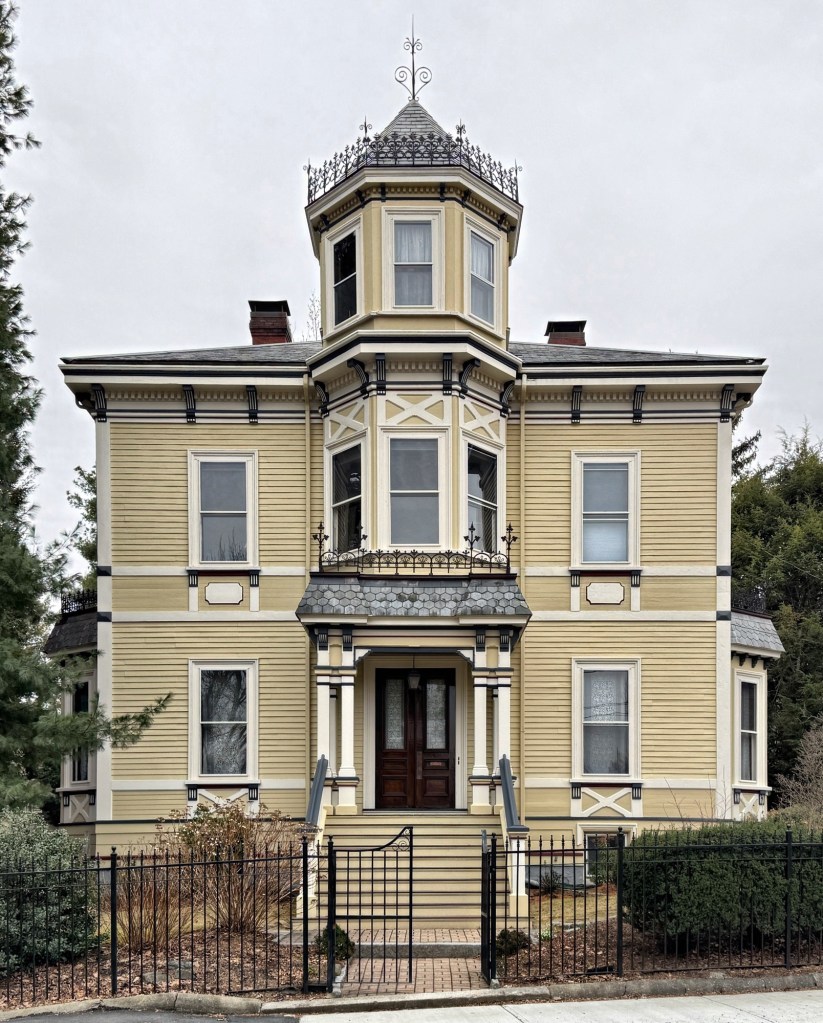
In 1873, James H. F. Standish (1811-1887) purchased a house lot on the corner of Francis and Toxteth streets in Brookline and set out building his forever home for his wife, Sarah. James and Sarah originally lived in Bath, Maine, where he worked as a builder and mason, constructing many large homes there before relocating to Brookline where he likely remained busy as Boston and its surrounding communities experienced a period of rapid development and suburbanization. James surely built this house and rear stable himself in the interpretation of the Stick and Italianate styles for his family, who moved in by 1874. Sadly, Sarah died unexpectedly in 1876 of heart disease, and James would sell their Brookline home. The Standish Home has been preserved by subsequent owners, including the central cupola, bracketed and dentilled cornice, stickwork and iron cresting. The Standish House was individually listed in the National Register of Historic Places in 1985 as a well-preserved, evocative example of Victorian period styles in a residence.

Gibson-Dukakis Double-House // 1881

Built in 1881 as an eclectic example of a Second Empire and Queen Anne style Victorian double-house, this charming residence on quiet Perry Street in Brookline, Massachusetts, shows that gentle density like double-houses and three-deckers provides needed housing without disrupting neighborhood character. The property was built for George Gibson and subsequently rented to two families as an investment. In the mid-20th century, half of the double-house was purchased by Michael Dukakis and his wife, Katharine “Kitty” (Dickson) Dukakis. Michael Dukakis would become a prominent politician, first being elected as a Member of the Massachusetts House of Representatives in 1963 later serving two terms as Massachusetts Governor. He was later nominated by the Democratic Party for president in the 1988 election, but ultimately lost to the Republican nominee, George H. W. Bush.

George B. Dexter House // 1885

An expression of the Shingle style in all her beauty, the George B. Dexter House on Sewall Avenue in Brookline was built in 1885 both as a residence and a billboard advertising the owner’s business, really. The residence was built for George B. Dexter (1854-1935) a partner in the Dexter Brothers Company a paint and stain manufacturer that was a favorite of architects in the late 19th and early 20th centuries. For his Brookline residence, George Dexter hired architect S. Edwin Tobey to design this Shingled masterpiece with continuous shingle siding with rounded bays and a shingled piazza to showcase the stain products of his company. According to articles, Dexter also stained and painted the interior a variety of colors to showcase the wide range of options his company had. George Dexter would move to Pill Hill neighborhood in a new home just a decade after having this residence built, likely caused by the development of apartments and commercialization in the Coolidge Corner area by the turn of the century. The Dexter House was converted to a two-family in the 1920s and today has three condominium units, with owners clearly taking great pride in this significant residence.

George P. Davis House // 1893

This Colonial Revival style single-family house on Emerson Street in Brookline Village, was built in 1893 on the former Emerson Estate, that was subdivided by the heirs of Elijah Emerson as Brookline Village filled in during the late 19th century. This house was seemingly built for Elijah’s daughter, Sarah C. Emerson Davis, and her husband, George Peabody Davis from plans by Boston architect, Olin Wesley Cutter. Of particular note, the Davis House features a symmetrical facade with round entry portico, Palladian stairhall window with leaded glass, and pedimented dormers, with the center dormer in a swan’s neck pediment. The oddly proportioned pilasters with tiny Ionic capital on the corners of the house were great to see as well!

Charles H. Rutan House // 1889

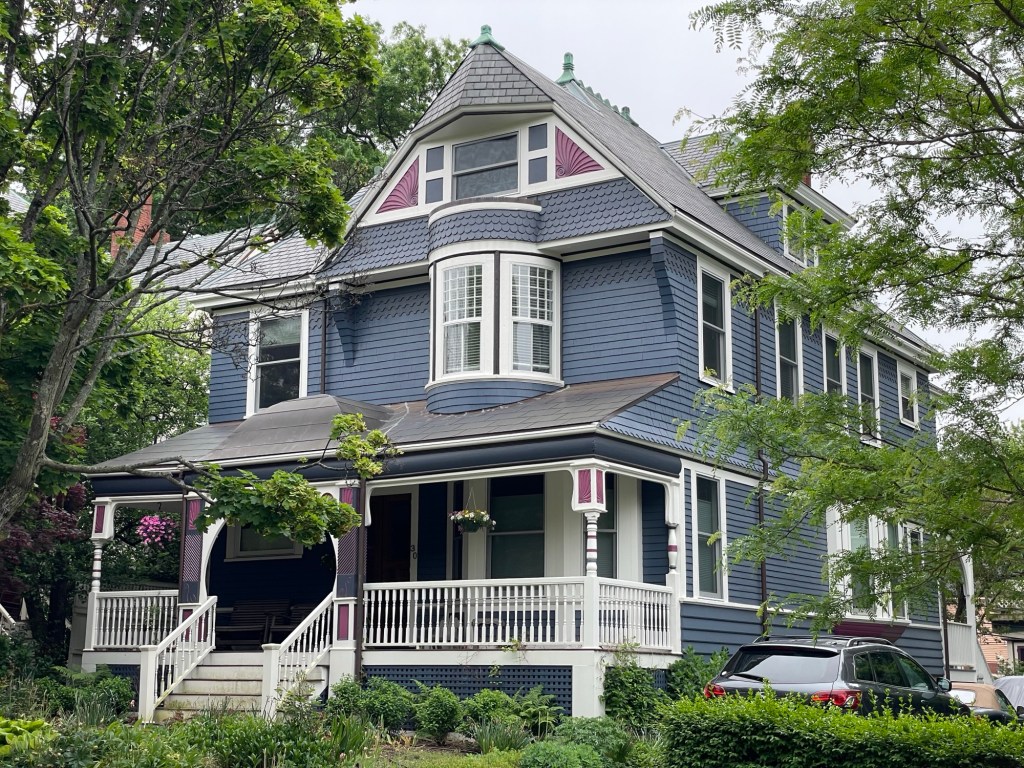
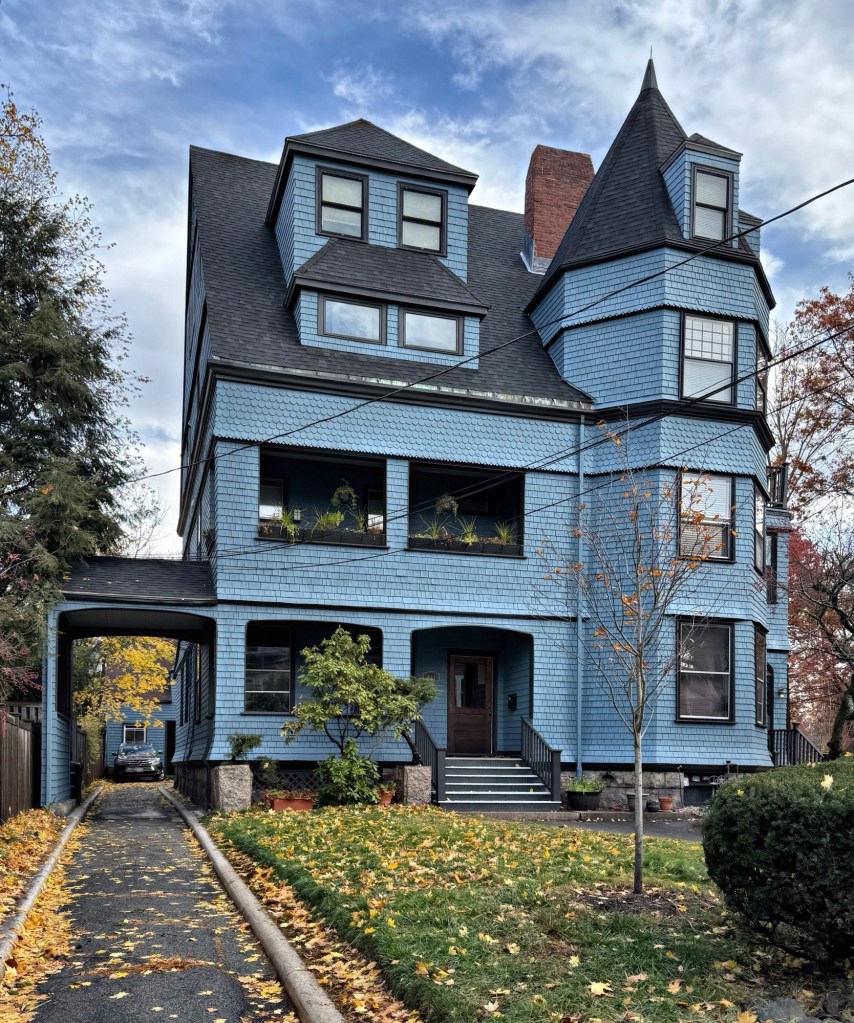
In 1889, prestigious architect Charles H. Rutan, purchased a house lot from the heirs of Elijah Emerson on the family estate and oversaw construction of his own residence in Brookline Village. Charles Hercules Rutan (1851-1914) was born in New Jersey and moved to Brookline in 1874, where he worked in the office of famed American architect, Henry Hobson Richardson. After Richardson’s death in April 1886, at the height of his career, Rutan and two other senior employees, George Foster Shepley and Charles Allerton Coolidge, took charge of the studio and its uncompleted work. Soon after, the three formed a formal partnership, Shepley, Rutan & Coolidge, to succeed to Richardson’s practice, and in 1887 moved the office to Boston. From his new position as head of a prominent firm, Rutan designed this handsome Queen Anne/Shingle style mansion for his family, where he lived until he suffered from two debilitating strokes in 1912, when he and his wife moved to an apartment on a nearby street. Besides the blue color, the house retains so much of its original architectural integrity and is one of the most significant residences in the Brookline Village neighborhood.