Rowe House // 1911

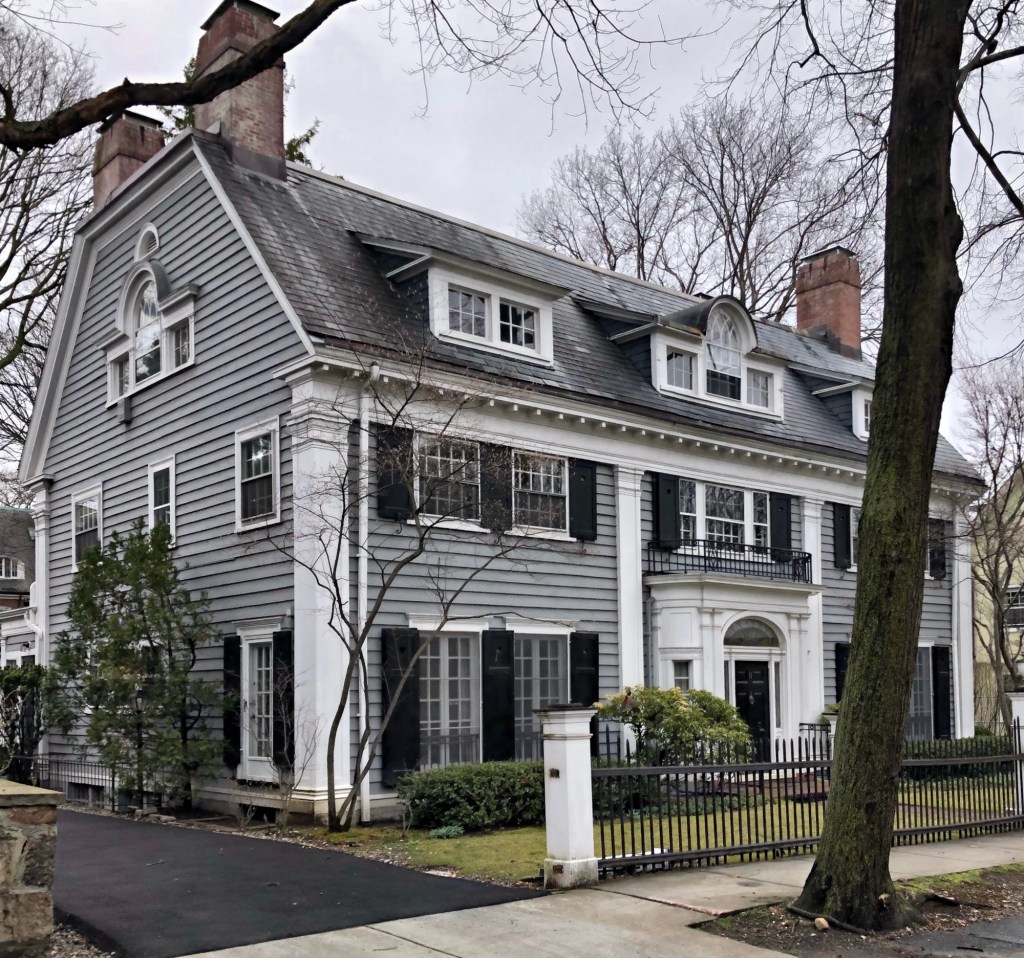
The Rowe House at 11 Mason Street is an over-the-top, and high-style example of the Colonial Revival style, showcasing the oversized proportions and scale that architects in the early 20th century followed when referencing Colonial American architecture. The house here was built in 1911 for Edward Prescott Rowe (1879-1936) and his wife, Eleanor Livingstone. Designed by the firm of Rowe & Keyes of Boston and New York, the commission was likely a relative of Mr. and Mrs. Rowe. The symmetrical house features a broad gambrel roof with Palladian windows in the side gable and central dormer at the facade, large pilasters breaking up the bays on the facade, a projecting Colonial Revival entry, and squat windows at the second floor terminating at the entablature above. The property even retains its Colonial Revival gateway.
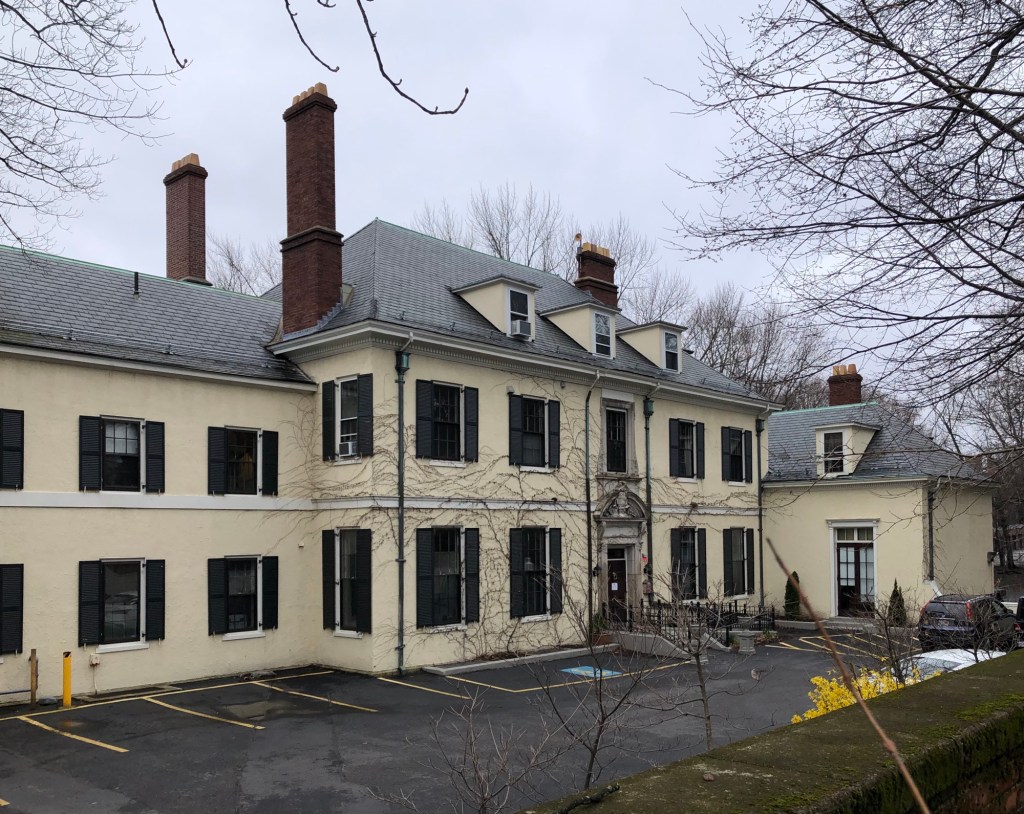
John Endicott Peabody House – Ivy Street School // 1910

This stately mansion is located at 200 Ivy Street in the Cottage Farm neighborhood of Brookline and was built in 1910 for Martha and John Endicott Peabody. Designed in a Renaissance/Colonial Revival style by architect John Worthington Ames, the house has since been converted to institutional use, but retains much of its original character. John Endicott Peabody (1853-1921) was a businessman and later got involved with the arts in Boston. The building was acquired for institutional use beginning in the 1950’s and was occupied as the St. Dominic’s Institute and has been owned by the Massachusetts Association for the Blind since 1976, and today is occupied by the organization’s Ivy Street School, a special education residential and day high school for neurodivergent youth to help prepare pupils for adulthood with the tools they need to achieve their greatest independence. The brick house is covered in stucco and features an elaborate stone door surround, symmetrical facade, and massive chimneys.

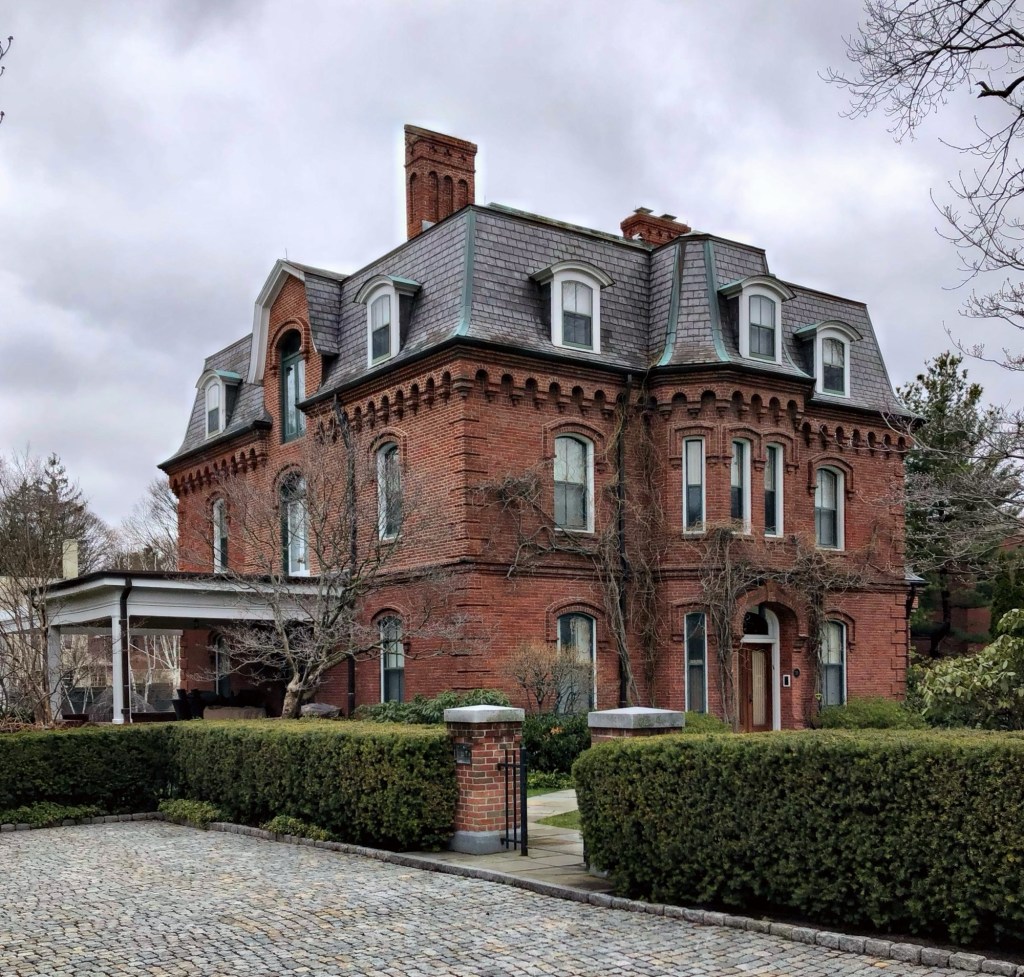
Wells-Bullard House // c.1868

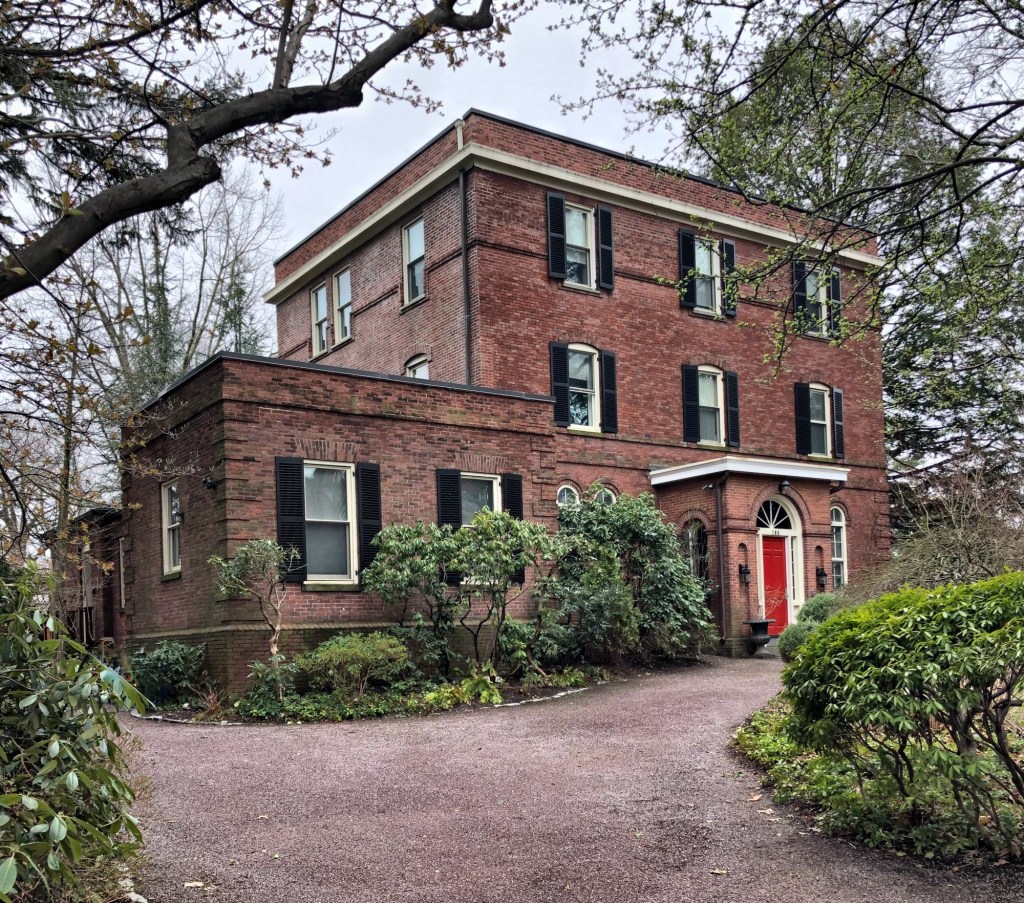
One of the finest Second Empire style houses in Brookline can be found on Prescott Street in the fashionable Cottage Farm neighborhood of the city. Built around 1868 by Amos A. Lawrence, who lived in a house nearby, this “cottage” was rented out to John Wells (1819-1875), a Judge on the Massachusetts State Supreme Court until his death. The property remained in the Lawrence family into the 20th century and was later rented to George E. Bullard, a banker. The brick house is notable for its siting at the center of the lot, corner quoins, brick corbelled cornice, arched door and windows, and slate mansard roof.

Lawrence-Parker House // 1864

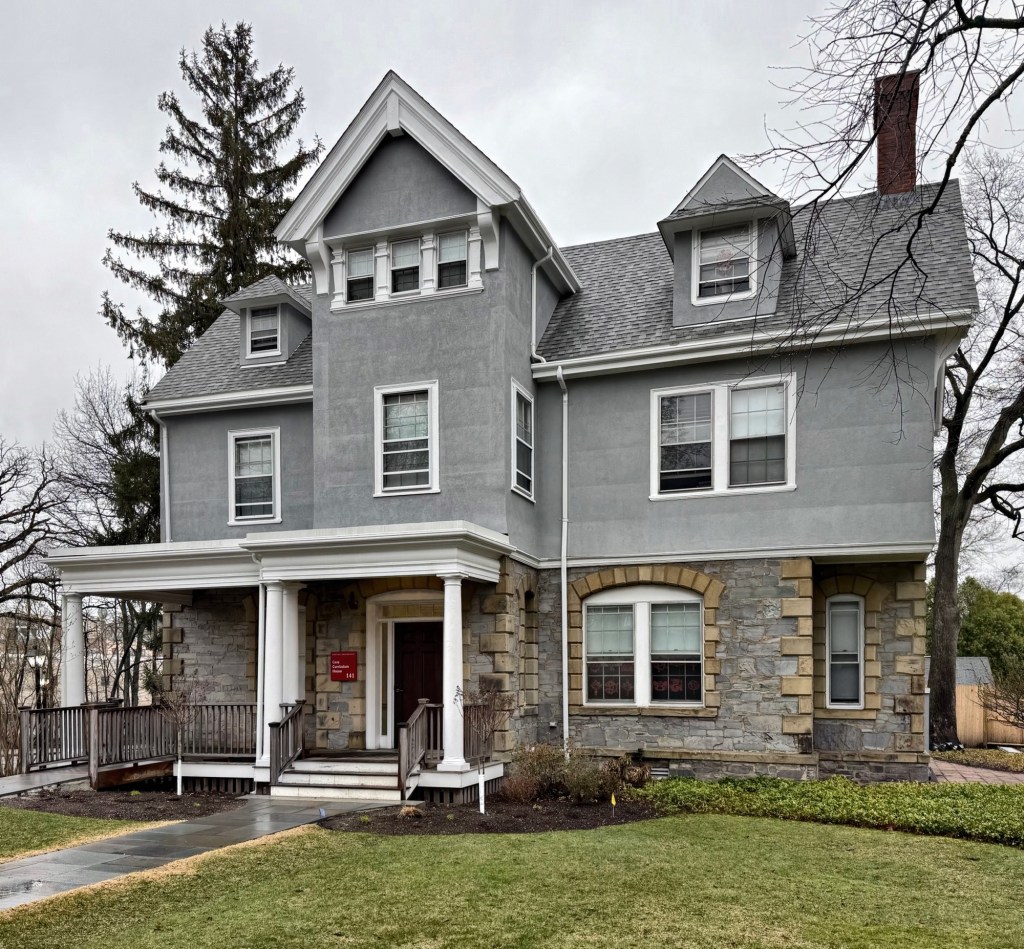
Built in 1864 as one of the rental properties owned by Amos A. Lawrence as part of his exclusive Cottage Farm neighborhood in Brookline, this house has been extensively altered and even moved but retains significance as a surviving mid-19th century “cottage” in the neighborhood. The house was likely constructed as a one-story, stone cottage with a second floor contained within a mansard roof. In 1903, Mrs. Francis W. Lawrence hired the well-known architect and Brookline resident, Julius A. Schweinfurth, to make extensive alterations to the cottage, replacing the mansard roof with a new second floor with gable roof, along with a new porch. Schweinfurth’s design included wood shingle siding for the upper floors, which were replaced with stucco in 1970. The house was moved to its current site at the corner of Carlton and Mountfort streets in 1929 when the street was re-oriented to follow the old Boston & Albany Railroad tracks. When moved, the cottage was occupied by Philip Stanley Parker, a judge, and his wife, Eleanor. Today, the cottage is owned by Boston University and known as the Core House.

Renton Whidden House // 1912

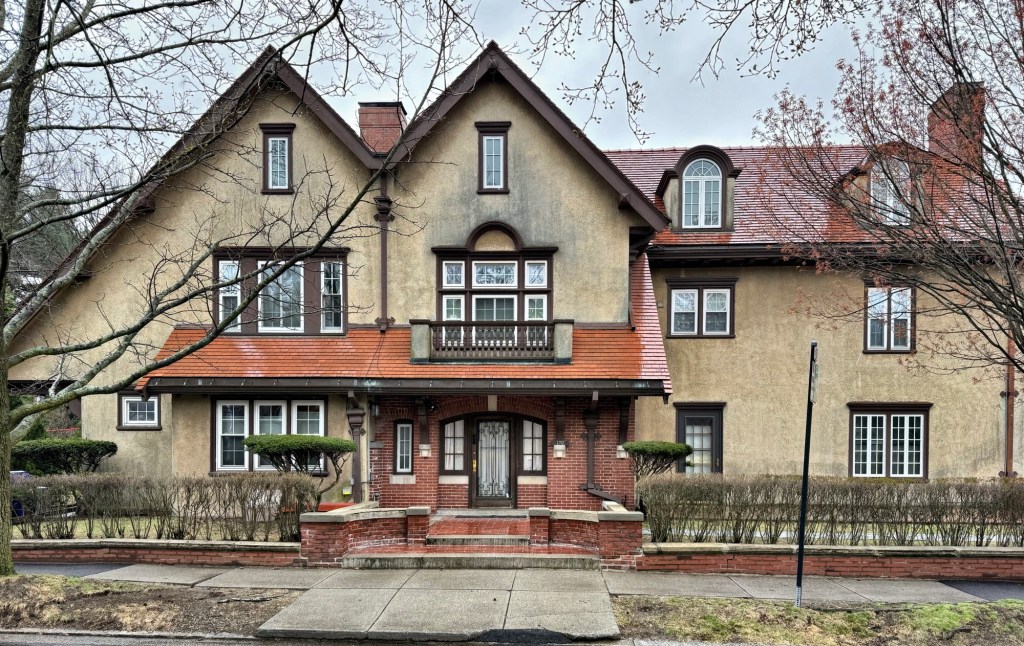
One of the finest Arts and Crafts style “cottages” in the Cottage Farm neighborhood of Brookline, Massachusetts, can be found on Ivy Street as the Whidden House. The property here was developed by Renton Whidden (1859-1942), a real estate developer and politician elected into the Massachusetts House of Representatives, who purchased a house lot from Thomas B. Hall, who owned a house next door. Renton Whidden hired architect, Arthur Hunnewell Bowditch, to furnish plans for the large home, which was completed in 1912. The stucco house features a brick entrance with projecting roof off the front, a unique twin gabled facade, segmental arched dormers, and a Palladianesque window and balconette above the front door.

Almy-Palfrey House // c.1858

The area was developed thanks to Amos A. Lawrence (1814-1886), a wealthy second-generation Bostonian, who provided much of the capital and enthusiasm for the growth of the cotton industry in New England prior to the Civil War. Lawrence’s involvement in the industry aided the development of the Massachusetts mill towns of Lowell and Lawrence, whom the city was named after. In 1851, Amos Lawrence purchased 200 acres of land from David Sears, who himself developed the equally beautiful Longwood neighborhood of Brookline on the other side of Beacon Street. Amos began to subdivide the land, working with the architect George Minot Dexter and landscape architect and surveyor, Alexander Wadsworth, who designed Mount Auburn Cemetery in Cambridge, to create an early picturesque residential suburb. With houses designed in the newly popular Gothic Revival and Mansard styles and several small parks, the area became known as Cottage Farm. This house was built for Amos Lawrence as an early, brick Mansard home, and rented out to Frederick Almy, a wealthy Boston attorney. The property was sold out of the Lawrence Family and later purchased by John Gorham Palfrey (1875-1945) a lawyer, who modified the house by removing the mansard roof and replacing it with a full third story with a brick veneer to match the walls below to give it a more Colonial Revival design.

Charles Mason Cottage // 1853

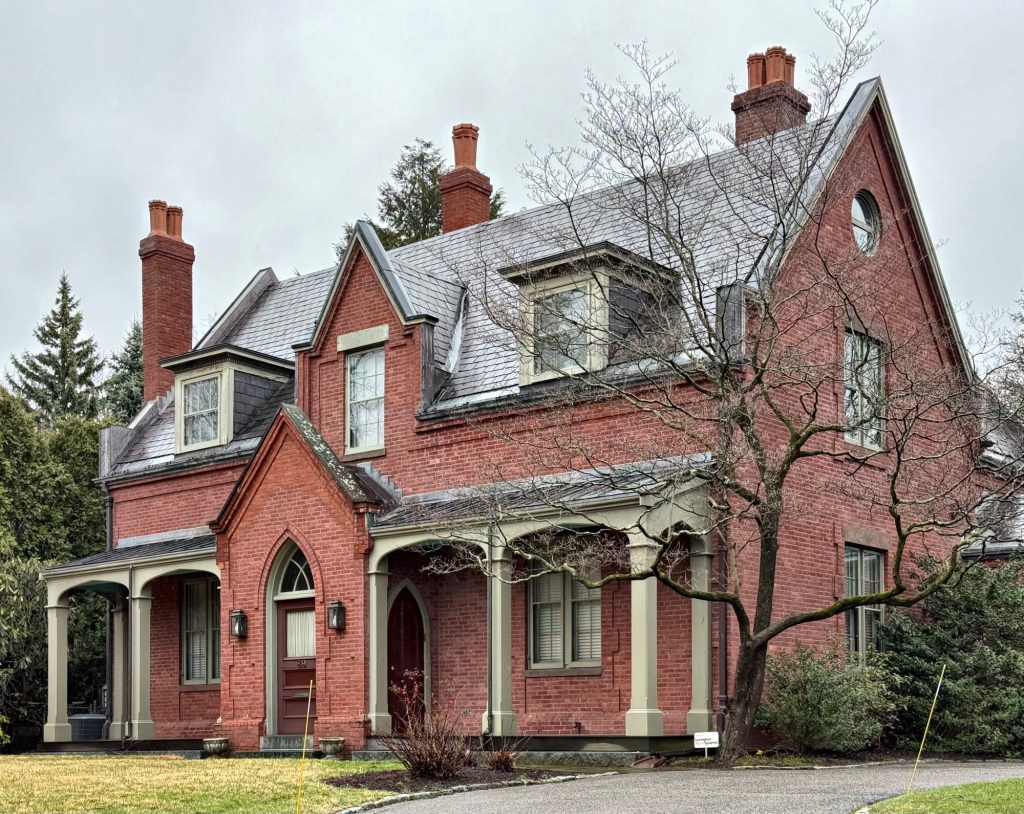
The Charles Mason Cottage at 89 Carlton Street is one of two extant brick cottages built by Amos A. Lawrence as part of his Cottage Farm neighborhood in Brookline, Massachusetts. The Gothic Revival style cottage was built around 1853 and owned by Lawrence for rental purposes. By 1861, this house had been sold to Reverend Charles Mason (1812-1862), who married Amos Lawrence’s late sister, Susanna. The property was inherited by the couple’s daughter, Mary and her husband, Howard Stockton, a lawyer and onetime president of American Bell Telephone Company. The Mason Cottage is unique for its brick construction, projecting entry with porches on either sides, lancet doors and window, wall and shed dormers at the roof, and the original windows with chimney pots.

Harry W. Cotton House // 1905

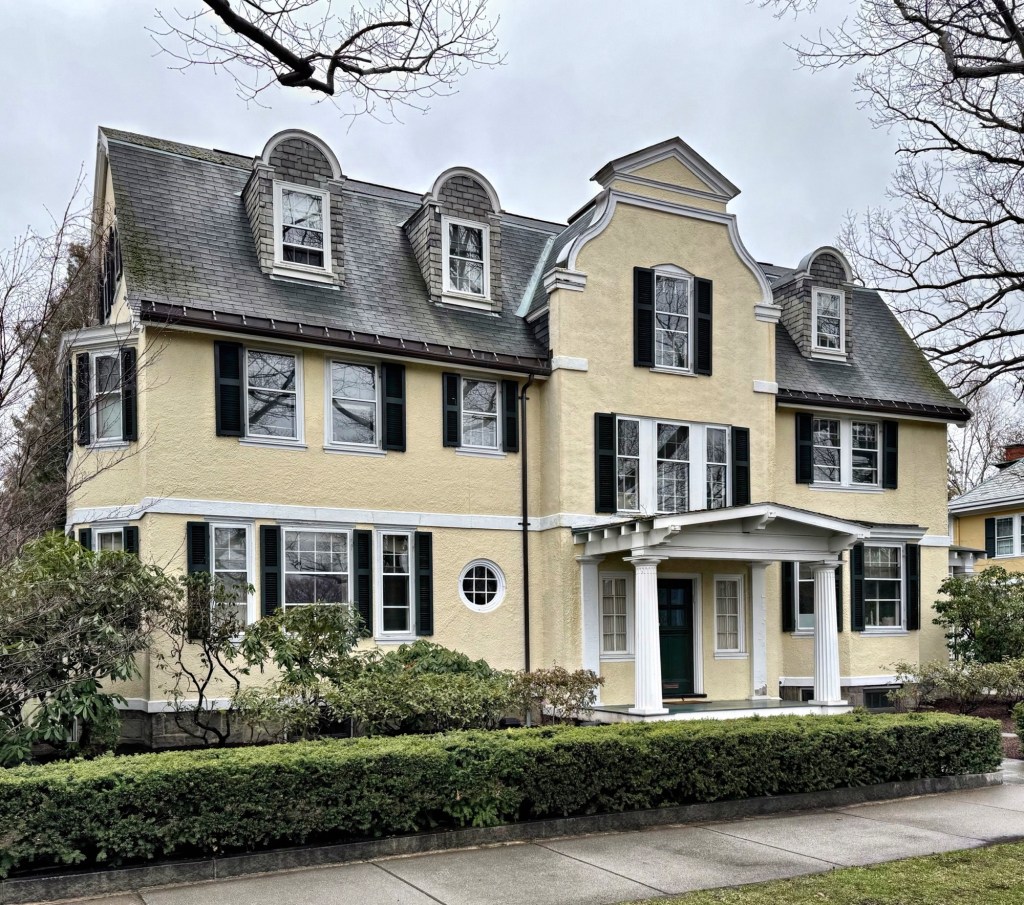
In 1905, George H. Cotton and his wife, Cora S. Cotton, purchased a house lot on Amory Street in Brookline and hired famed architect, William Gibbons Rantoul, to design this home for their son and daughter-in-law. George Cotton was a manufacturer of brass tubing and also the founder of the Belmont Springs Water Company and maintained homes in the Back Bay of Boston and in Belmont. His son, Harry W. Cotton, also worked for the American Tube Works and lived in this home with his family. The Cotton House is an architectural blending of Dutch Renaissance Revival and Arts & Crafts styles. The stucco siding and entry portico are in the Craftsman style, while the prominent Flemish gable on the central pavilion and round arched pediments for the dormers are in the Flemish mode.

Partridge House // c.1908

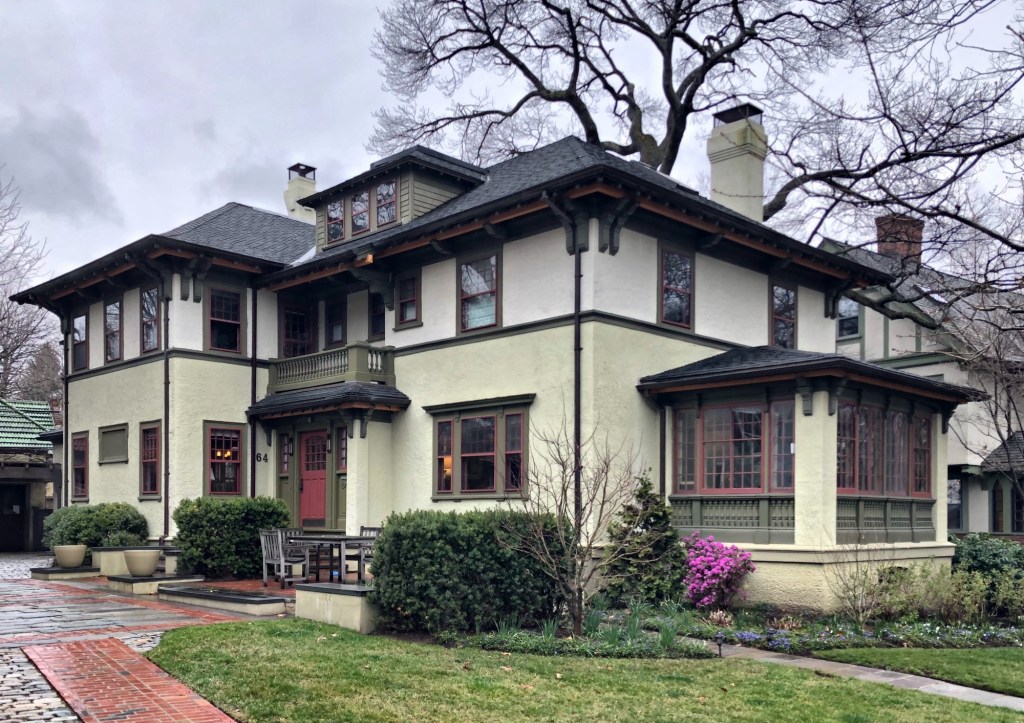
Located on Amory Street in Brookline, this handsome Arts and Crafts style residence dates to about 1908 and while clearly Craftsman in style, does appear to follow the horizontality and form of the Prairie School of architecture, popularized by famed architect, Frank Lloyd Wright. While the architect of this house is unclear, we do know that the first owners were Mr. Frank T. Partridge and his wife, Edith Stevens Partridge. The stucco house features a horizontal belt course, shallow hip roof with broad eaves supported by brackets, and elaborate entry and porches. The colors enhance the architecture of the home perfectly. 

Charles H. Owens House // 1906

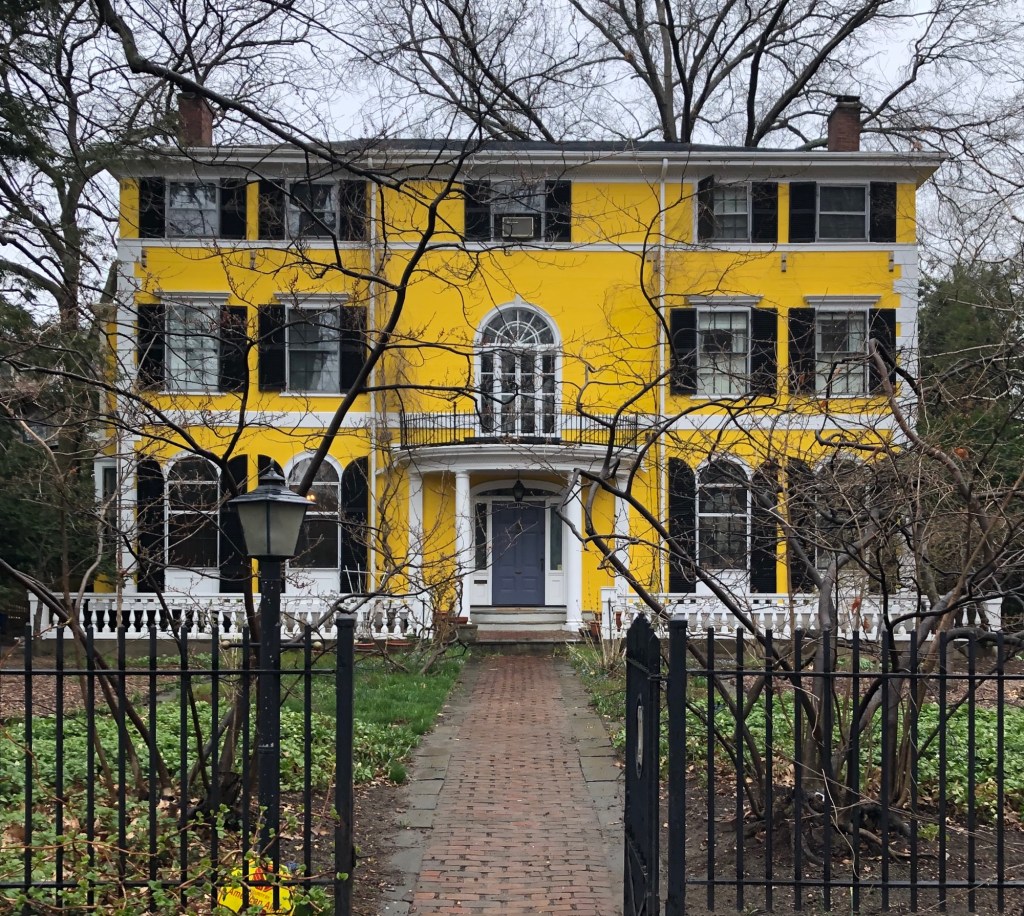
This stately house on Powell Street in Brookline, Massachusetts, was built in 1906 for Charles H. Owens, Jr., and his wife, Nellie. Charles was a “house decorator”, who built the house next door just two years earlier before moving into this larger home in 1906. Both houses were designed by the architectural firm of Loring & Phipps, who Owens likely collaborated on commissions with in his career. The house is 2 1/2-stories with a shallow hip roof and is an excellent example of an academic interpretation of the Colonial Revival style. The principal facade has flush board siding with round-arched windows on the first floor along with a squat fanlight transom over the center entrance.