Juniper Hill Cemetery Gate Lodge and Chapel // 1869 & 1913

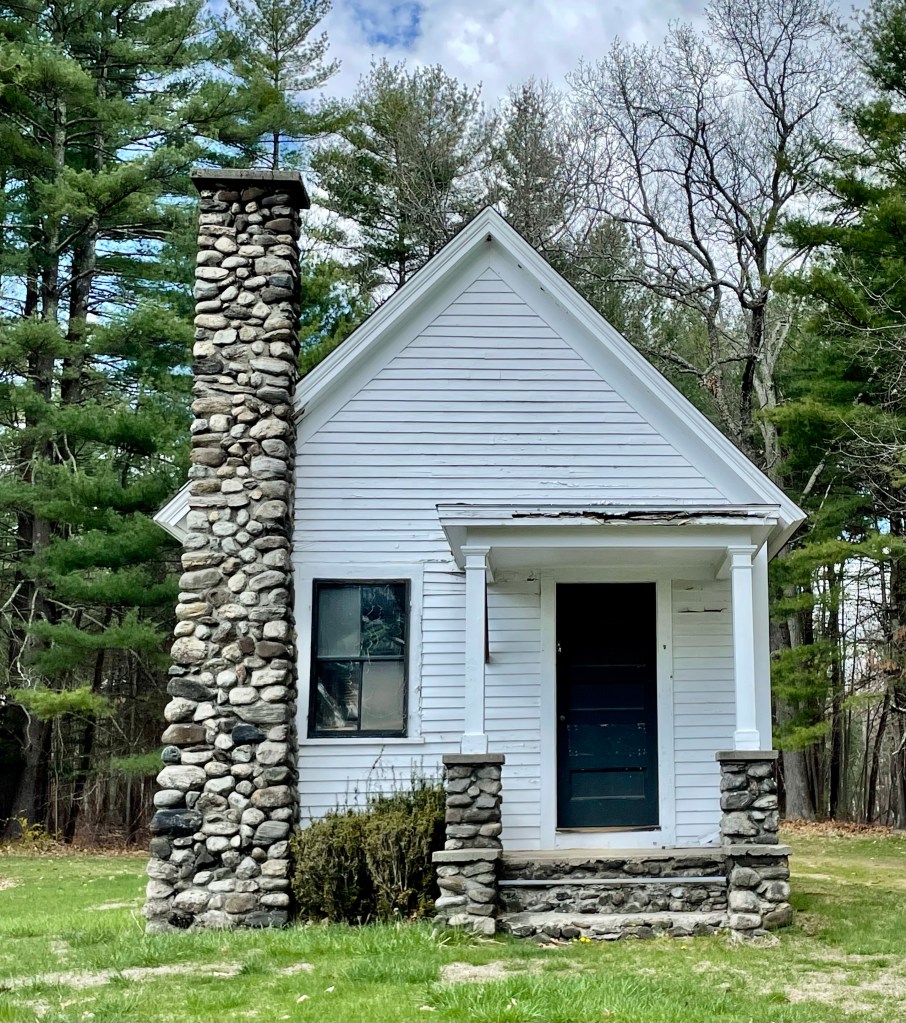
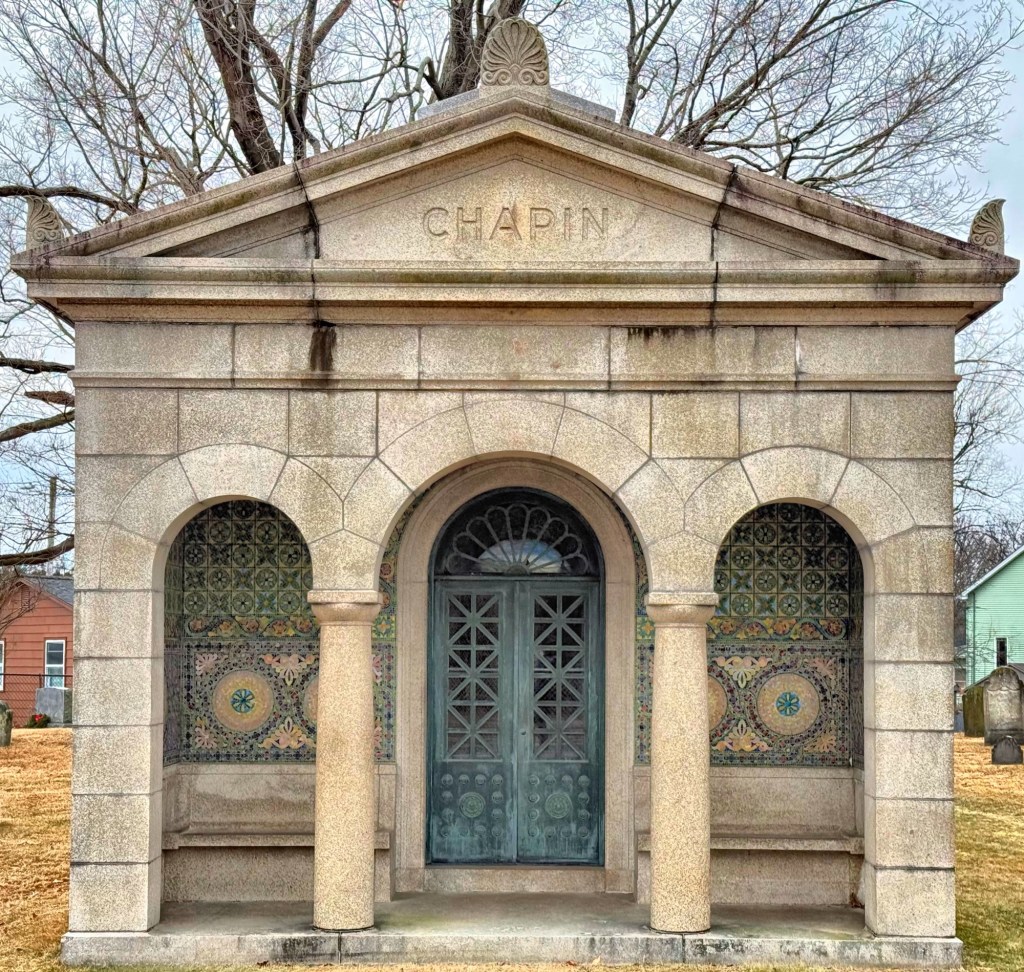
As Bristol grew to be a dominant financial center in Rhode Island in the mid 19th century, prominent families there decided that their loved ones (and later themselves) needed a place of beauty to rest eternally. In 1855, descendants of Levi DeWolf, of the infamous slave-trading family, donated 22-acres of land for use as a cemetery. The old Levi DeWolf home remains fronting Hope Street, featured previously as the Reynolds-DeWolf House. It is a fine example of the mid-19th century rural cemetery movement, with winding lanes and paths. The landscape was designed by Niles Bierragaard Schubarth, who had done similar work at other Rhode Island cemeteries. Upon the opening of Juniper Hill, many families relocated their loved ones from other cemeteries in town here, so the families could be interred nearby each-other. The cemetery has three main structures; a gateway, the gate lodge, and a chapel/receiving tomb. The gate is a massive stone archway set at the entry to the cemetery, and was built in 1876 by the Smith Granite Company of Westerly, R.I. The Gate Lodge was built years earlier is located at the side of the entry into the grounds, and is a stone Victorian Gothic Revival building, designed by Providence architect Clifton A. Hall and constructed of granite quarried on the site during construction of the landscape. Yards away, the charming Amory Chapel and Receiving Tomb, built in 1913, is a 1-story stuccoed structure with a tile roof, designed by the firm of Angell & Swift of Providence. The small chapel stands out as it is a rare example of the Spanish Revival style, but has seen better days, and is apparently being used as a tool shed.

Samuel Jones House and Leg Grave //

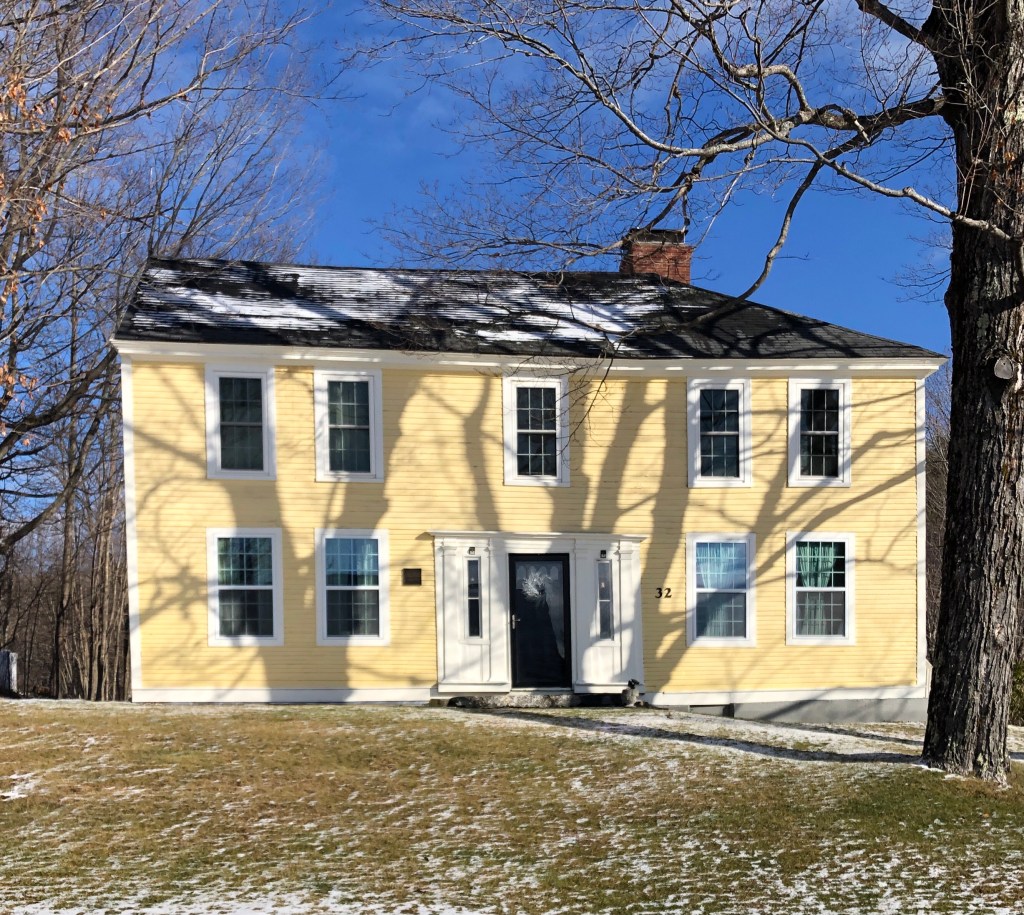
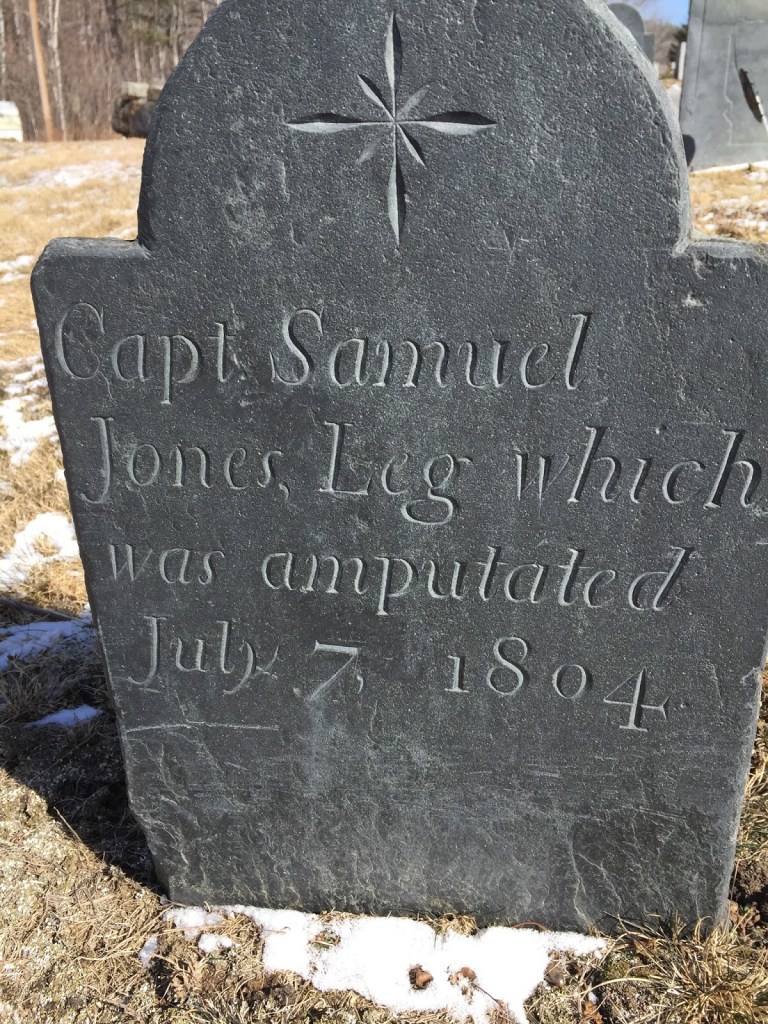
Samuel Jones Jr. was born in Hillsboro in 1777. His family was among the first to settle in that town in the 1770s. Jones married Deborah Bradford in 1799, and the couple soon settled in Washington, New Hampshire that next year. Samuel ran a tavern out of the new family house which was built around that time. When he was 27 years old, Jones was helping a friend hoist and move a building on logs, when his leg became was caught and crushed by the building. His friends brought him to his house where he laid on a table awaiting a doctor. This occurred in the days prior to knowledge of anesthesia so his friends and neighbors treated him with whisky or rum. When the leg was removed they decided it should have a “proper burial” so it still rests with its marker in the old cemetery in Washington. Samuel survived the amputation and later moved to Boston, where he worked at the Customs House and later moved to New York where the rest of his body was buried upon his death in 1851.

Forest Hills Cemetery Bell Tower // 1876

The bell tower at Forest Hills Cemetery is an octagonal Gothic revival structure located on Snowflake Hill just past the entrance gate and administration building and was completed in 1876. The 100-foot tower is constructed of Roxbury puddingstone and trimmed with granite. The roof is clad with granite tiles and topped with an ornate copper weathervane. Originally its swinging bell tolled, but it has since been replaced with an electronic carillon. The bell tower rises dramatically from massive
outcrop of Roxbury puddingstone known as Snowflake Hill which is offset by smooth lawns and Victorian planting beds. While the large trees surrounding partly obscure the tower, it truly is a stunning building.

Forest Hills Cemetery, Entrance Gate // 1865

Forest Hills Cemetery was founded in 1848 by Henry A. S. Dearborn, then mayor of Roxbury. He designed this magnificent cemetery to offer the citizens of his community a place to bury and remember friends and family in a tranquil and lovely setting. Forest Hills embodies the ideals of the rural cemetery movement, which begun at nearby Mount Auburn Cemetery, in Cambridge in 1831, which was co-founded by Dearborn. Many rural cemeteries have elaborate entrance gates, possibly serving as a dramatic transition from the secular world to the spiritual realm of the cemetery, and perhaps as a metaphor for the journey from life to death. This entrance gate was built in 1865, replacing an earlier Egyptian Revival gate constructed in 1848. Designed by Charles Panter, the gate is constructed of local Roxbury puddingstone, with three arched openings with ornate iron gates surmounted by decorative scrolled ironwork. The central gateway is
framed by two conical spires and a central stone pediment, all topped with stone crosses.

Forest Hills Cemetery, “Boy in a Boat” // 1886

While this funerary sculpture is not a building, I couldn’t help but share one of the most captivating graves in New England for Halloween, “The Boy in a Boat”. Louis Ernest Mieusset (1881-1886), just four years old, died of Nephritis, a kidney inflammation and Scarlet Fever. His mother, Madame Louise Mieusset, took every penny she had saved for the boy’s education and put it towards a commission of a funerary sculpture, depicting her late son’s playful spirit. Madame Mieusset worked as a hat-maker in Boston, barely scraping by until her death in the 1930s. She died penniless, and wished to be buried near her beloved son, but she did not have enough money set aside to be interred in the cemetery and was set to be buried in a pauper’s lot, until (legend says) Boston Mayor James Curley paid her burial expenses, allowing for her eternal rest with her late son Louis. The sculpture is carved of white marble and depicts Louis playing in a boat with a tennis racket in one hand and a shell in another. The funerary sculpture is enclosed in a bronze and glass vitrine to protect it as the marble was believed to be too soft to stand up to weathering, the artist is unknown.