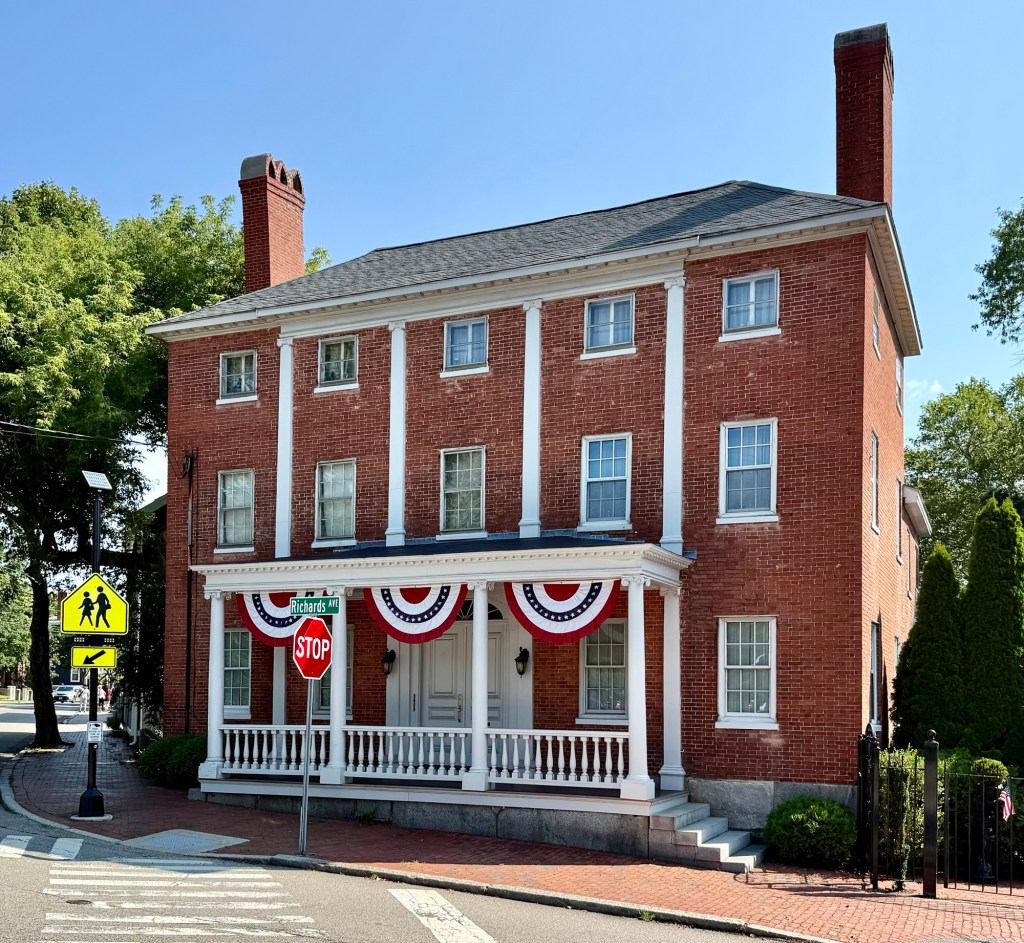
Long-Ladd House // 1812

The Long-Ladd House at 3 Richards Avenue in Portsmouth, New Hampshire, showcases the versatility of the Federal style, an architectural style that dominated American architectural tastes from the 1780s through the 1830s. This house dates to 1812 and was built for George Long (1762-1849), a sea captain and trader until engaging in politics in his later years. He remained in the home until his death in 1449, leaving the property to his only heir, Marcy, and her husband, Henry Hurd Ladd. The Long-Ladd House is constructed of brick with the facade dominated by four, full-height pilasters breaking up the bays. A center portico shelters the main entrance which is adorned by a fanlight transom and classical surround. In a city full of Federal style homes, this one really stands out!
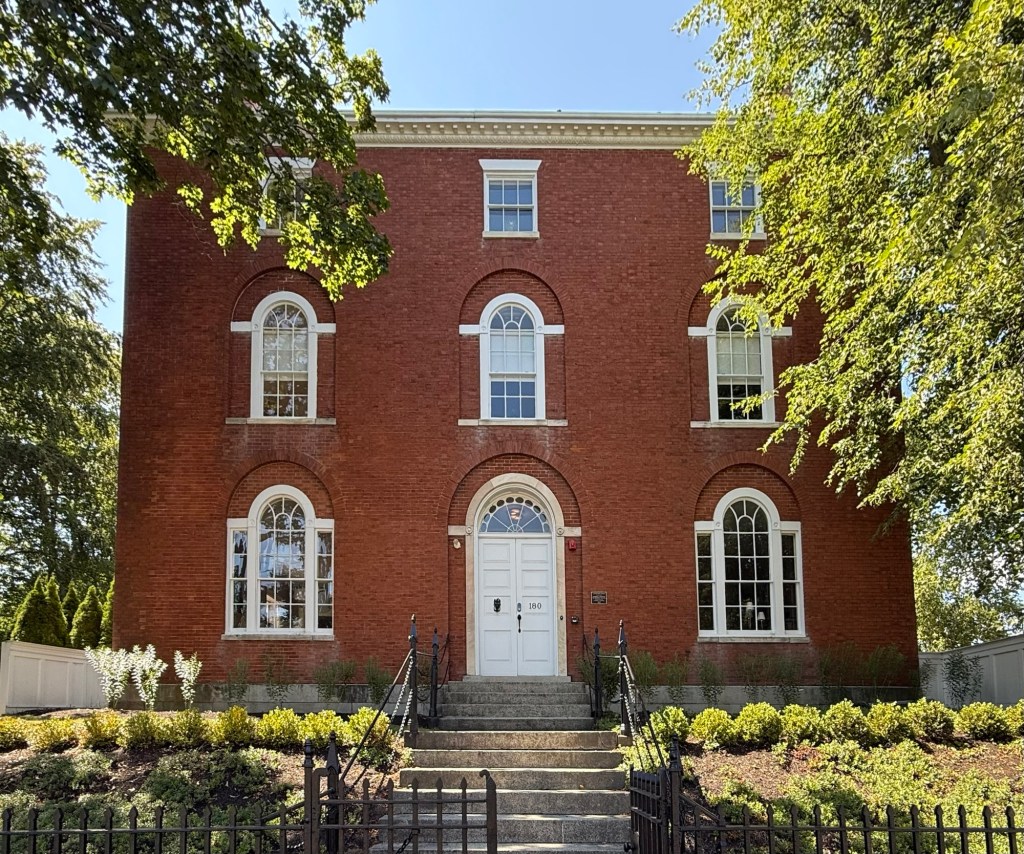
Larkin-Ladd House // c.1813

The Larkin-Ladd House at 180 Middle Street in Portsmouth, New Hampshire, is a three-story, masonry Federal-style residence with symmetrical facade, built for one of the city’s wealthiest merchants. Samuel Larkin (1773-1849) was born in Charlestown and moved to Portsmouth, marrying Ann Jaffrey Wentworth, a daughter of Col. Joshua Wentworth. During the War of 1812, Samuel Larkin made his fortune as an auctioneer, selling the contents of English ships captured by local privateers. It is believed that fourteen privateers and their crews worked out of Portsmouth Harbor and are said to have captured an estimated 419 British ships! With the profits from stolen goods from these British ships, Larkin purchased lots on Middle Street and began construction of this stately residence. He (and mostly his wife), had twenty-two children, although roughly half of them died before reaching adulthood. By the late 1820s, financial hardship fell on Larkin and he sold this property, moving into his house next door, which before this was his original residence and later rented to boarders. The Federal style mansion was later owned by Henry H. Ladd, a prosperous Portsmouth shipping merchant, who also served as President of New Hampshire Bank and Portsmouth Savings Bank. The Larkin-Ladd House is undoubtedly one of the finest Federal style residences in New England, and stands out for its entrance, flanked by Palladian windows and the slightly recessed elliptical surrounds at the first and second floor windows. Additionally, the historic stable, also from the 1810s, maintains much of its architectural integrity.

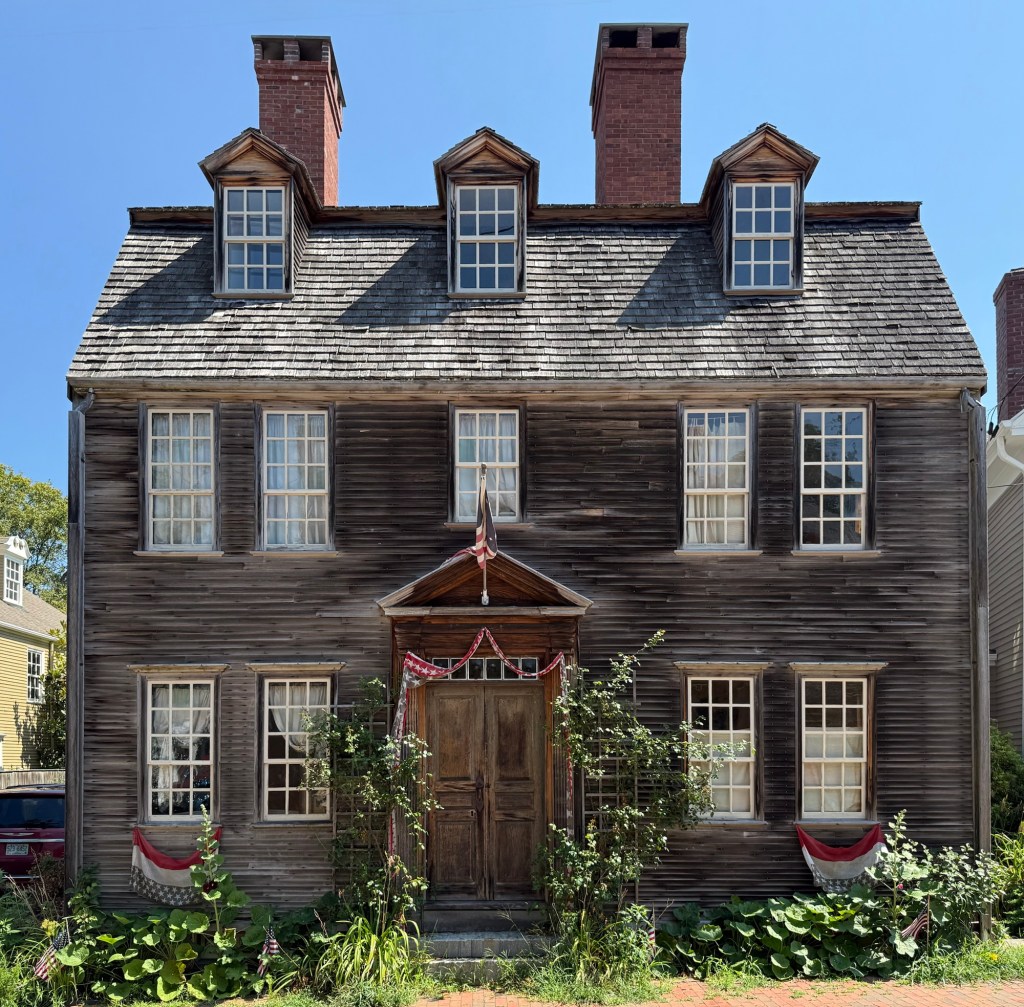
Shillaber House // c.1768

The Shillaber House on Washington Street in Portsmouth, is one of the most photogenic residences in the charming port city. The Georgian-style residence was likely built in the late-1760s, after Joseph Shillaber (1725-1791), a potter, purchased land here in 1766. The residence is of a typical form for 1760s Portsmouth, with a gambrel roof with pedimented dormers and a slightly off-center entry with Georgian style pilasters and pediment. In the later half of the 19th century, the house was “Victorianized” with a bracketed door hood and bay windows at the facade, but the house would be restored by later owners to a version close to its original conditions. The exposed clapboard siding adds to the home’s unique charm.

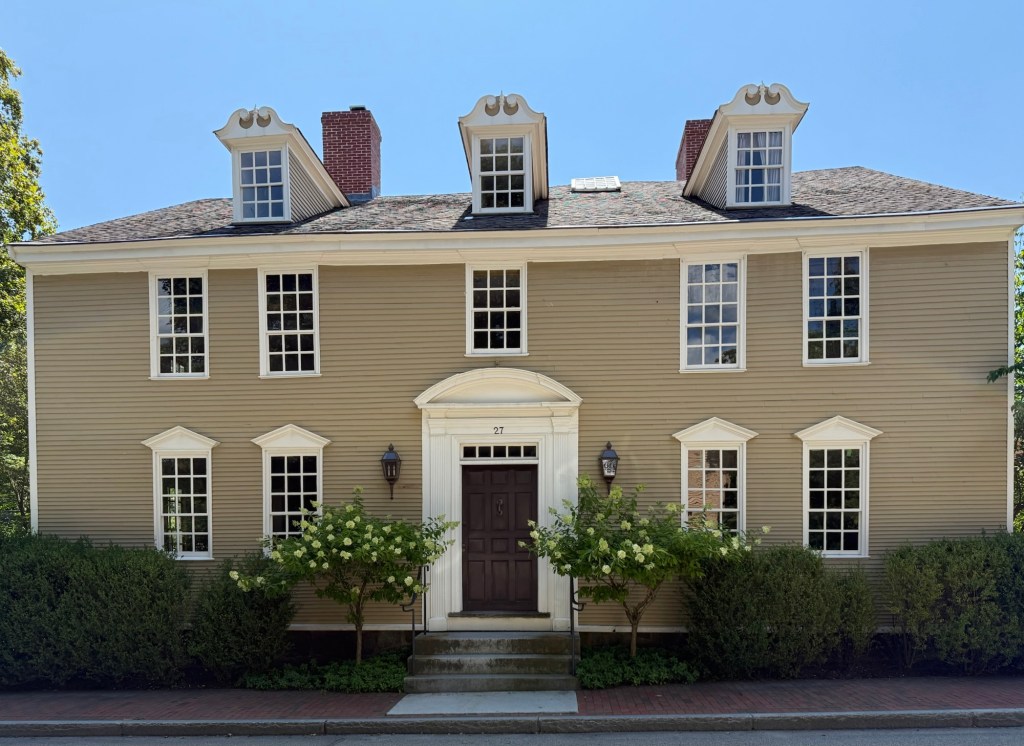
Joshua Wentworth House // 1770

The Joshua Wentworth House at 27 Hancock Street in Portsmouth, New Hampshire, is a high-style Georgian residence built before the American Revolution, and was almost demolished in the name of “urban renewal.” The house has a side-gable roof with three broken-pediment dormers and a wood paneled door with segmental entablature, pilasters, and a five-light transom. Joshua Wentworth (1742–1809) the namesake of the house, was a grandson of John Wentworth (1671–1730), who had served as an early Lieutenant Governor for the Province of New Hampshire, and was himself, a merchant and State legislator. The house was originally located in the North End of Portsmouth, but in the 1970s, urban renewal and local politicians sought to raze portions of the town to “revitalize” the port town. If only they knew that Portsmouth would be the largest tourist draw in the state just for people to see historic, walkable neighborhoods! Businessman Harry Winebaum acquired the house and sought to preserve it. The solution: move the house by barge to the south side of town near Strawberry Banke. Luckily for us, the house was moved in 1973 and was restored. It is a private residence.

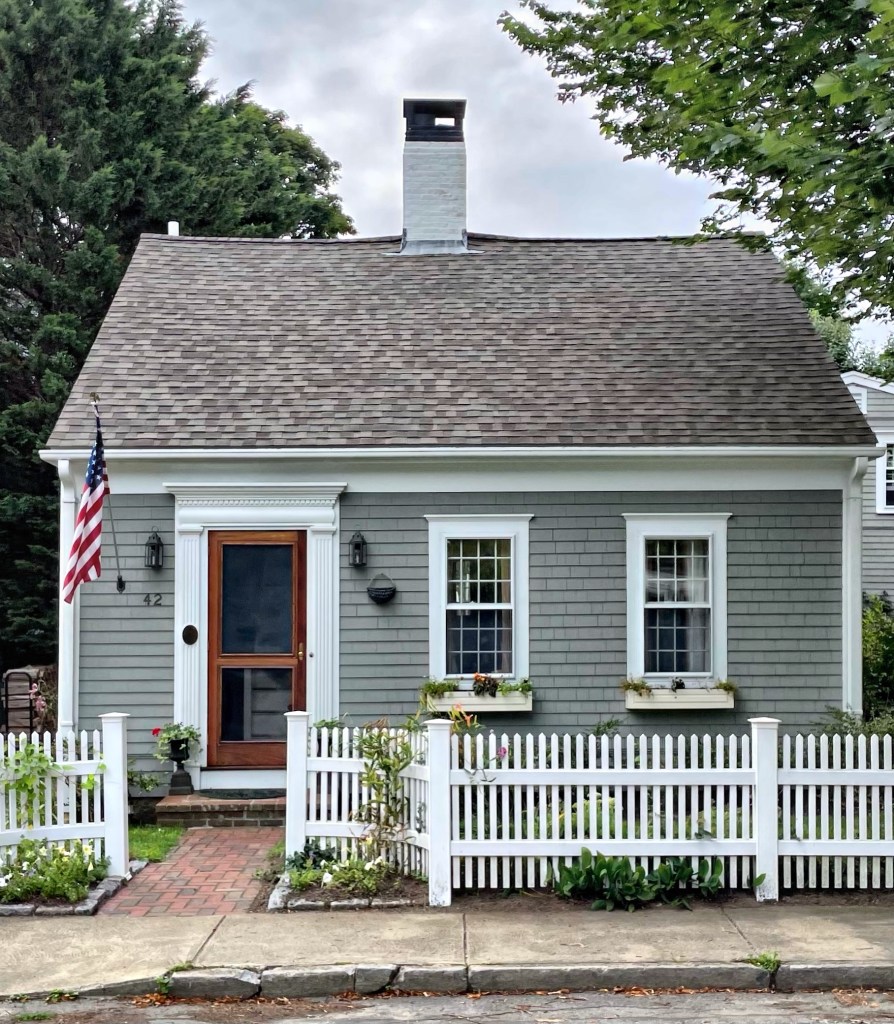
Briggs House // c.1850

This tiny half-cape house in Marion was built in the mid-19th century for Timothy Hiller Briggs (1822-1877), a whaler. Based on the Federal/Greek detailing on the house, it is also likely the home was built much earlier for Timothy’s father, Silas, a sea captain, and was willed to his only son upon his death in 1833. Timothy died at the young age of 54 and his widow, Josephine, maintained the cottage until her death in 1924! The home is a half-cape as it has an off-center door with two bays of windows at the facade. A full-cape would be symmetrical with a central door and two windows on either side. The central chimney would provide heat to all rooms in the cold winter months.

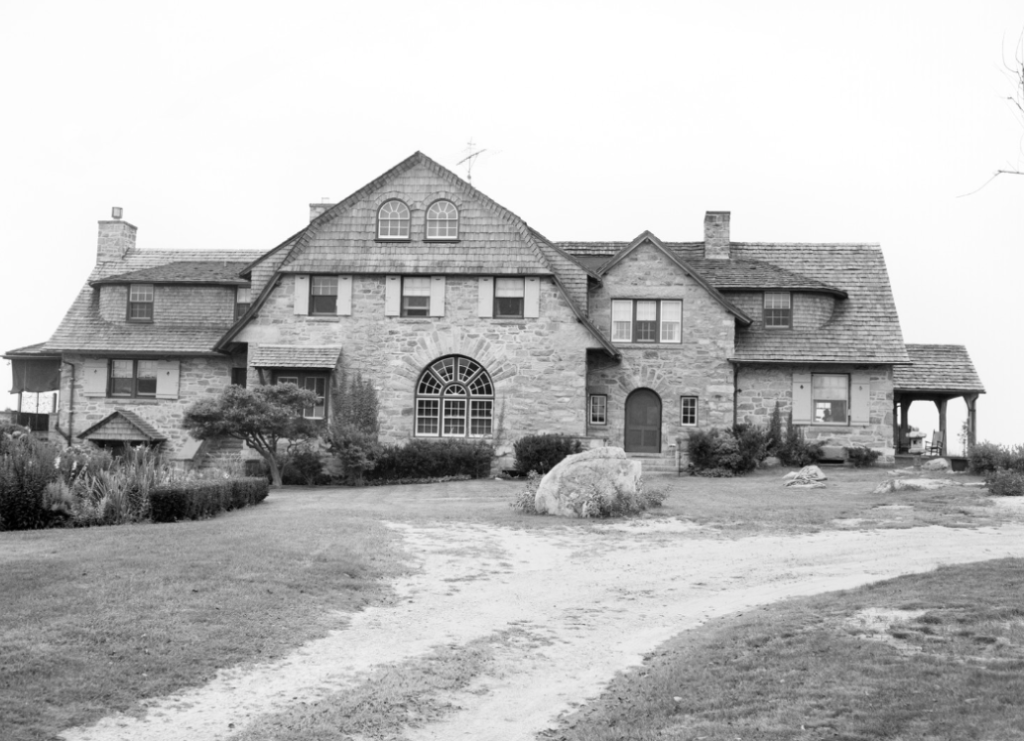
Henry C. White Estate // 1913

White Estate, c.1970, taken by Wayne Andrews

Henry Cooke White (1861-1952), the patriarch of an extremely artistic family, purchased undeveloped land on a coastal part of Waterford, Connecticut in 1891. When passing through the area he found a vantage point overlooking the water, he was overwhelmed by the panoramic view of Long Island Sound, writing in his memoirs, “…I was convinced that this was my Promised land.” Not long after, he built a summer cottage on what became known as White Point the following year. The Whites wintered with his parents in Hartford until they built a year-round home in Waterford in 1913, designed by Wilson Eyre, a Philadelphia architect, after he was inspired by Charles Lang Freer’s home in Detroit. The rustic Shingle style house was constructed of ashlar stone masonry with shingles above, which is sited perfectly on the rocky shoreline. Also on the site is a boat house and garage (which I could photograph from the street) in similar detailing. Henry‘s son and grandson both followed his footsteps: Nelson Cooke White (1900-1989), who was born at White Point, and inherited his father’s love of the sea, became a noted marine and landscape painter; and Nelson Holbrook White (1932-) who was taught by his grandfather and later studied in Italy how to perfect his painting.

Mary English Cottage // 1911

This shingled beach cottage on the southern tip of New London, Connecticut sits in the Neptune Park community, which was laid out by real estate speculators as summer homes, primarily for local families. The Post Hill Improvement Company made up of professionals, purchased the beach and the surrounding land for $25,000 and began selling off the land adjacent to the beach. Then, once developable lots were sold and many cottages were built, they sold the beach alone back to the City for the same sum of $25,000. Like many such developments, deed restrictions were placed on properties, and ensured that only a dwelling house, with a minimum value of $2,500 if not waterfront and $3,000 if waterfront, could be constructed on the lots. This formerly Colonial Revival cottage was built in 1911 for Mary R. English, and would have cost at least $3,000. The shingled home was later given the tower and other details, but retains much of its charm.

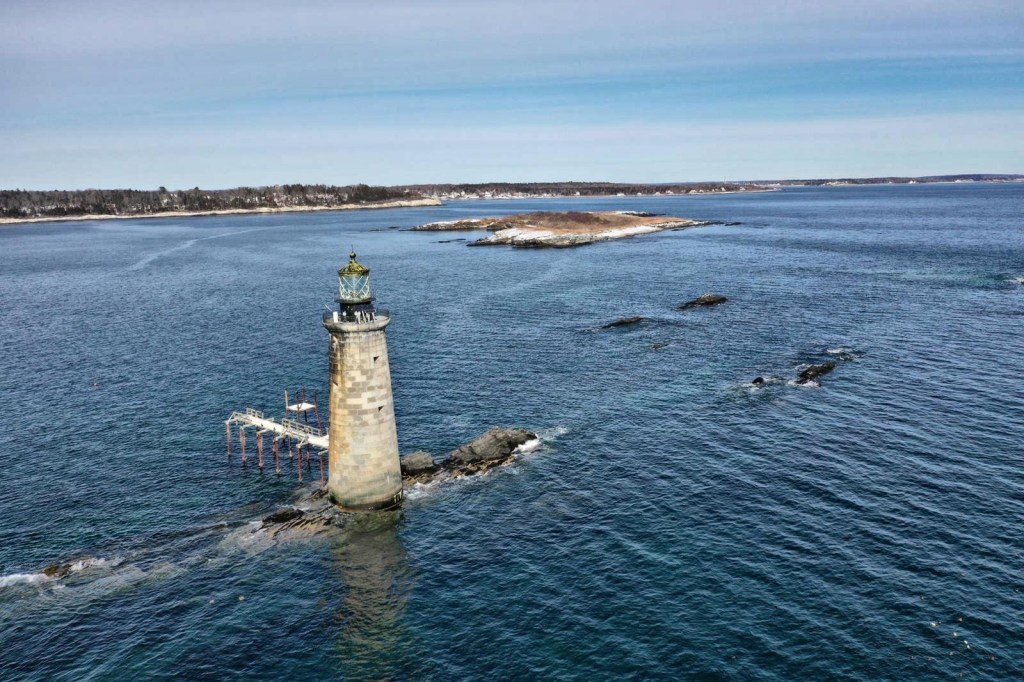
Ram Island Ledge Lighthouse // 1905

Ram Island, about a mile offshore from Portland Head near the entrance to Portland Harbor in Maine, is surrounded by dangerous ledges. For as long as ships have been navigating Portland Harbor, they have crashed into the rocky shore, losing supplies and lives. Because of this, a Congressional act on June 28, 1902, authorized the construction of a lighthouse and fog signal on Ram Island Ledge, to work together with the Portland Head Light to guide ships through the treacherous channel. The next year, the federal government purchased Ram Ledge from two Cape Elizabeth families for $500, to erect a new lighthouse. Before the lighthouse could be constructed, at least two ships, the Glenrosa and the Cora & Lillian schooner sunk in the bay. As the ledge was underwater for much of the year, a stone tower was required. Granite from Vinalhaven was shipped in and a crew of 25 men built the tower which was complete in 1905. The iconic double flash of light has guided sailors ever since. The lighthouse was manned by multiple keepers until the late 1958, when an underwater power cable was laid between Portland Head and Ram Island Ledge, allowing the ledge lighthouse to be automated. In 2008, the structure was deemed “excess to the needs of the United States Coast Guard” and auctioned off. After a bidding war, a local doctor from Maine purchased it for an estimated $190,000.