Graham Apartments // 1904

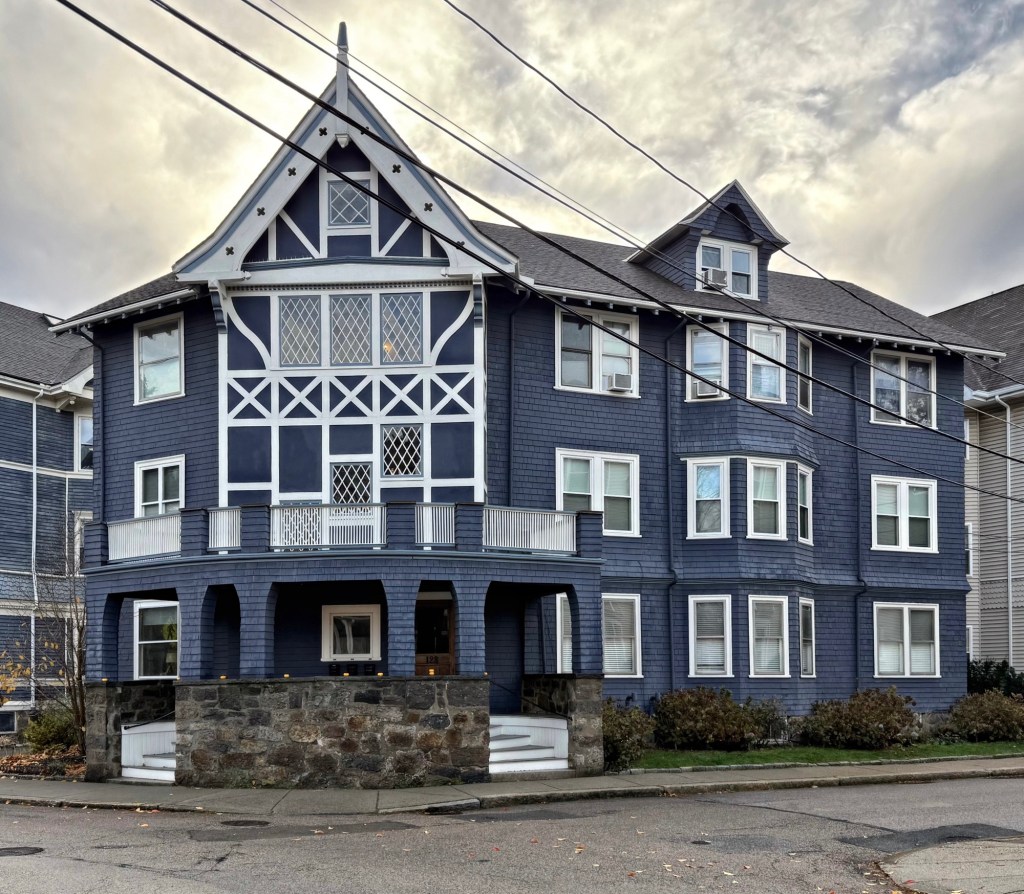
This handsome, and unique example of a three-decker in the English Revival style is located on a corner lot at 128 Davis Avenue in the Emerson/Brookline Village neighborhood of Brookline, Massachusetts. Built in 1904 from plans by architect and genealogist, J. Gardner Bartlett, whose work focused on colonial New England and the English origins of colonial families. Trained as an architect at MIT, he gave up architecture for genealogy, but still occasionally designed buildings in the Boston area. The building here was developed for Richard Graham, an Irish immigrant, who along with his wife, operated a laundry business in the village. The use of a shingle and stone entrance porch and entrance bay with stucco half-timbering and diamond-pane casement windows stand out architecturally as one of the few examples of a three-decker built in this style in New England.

John E. Thayer Mansion // 1883

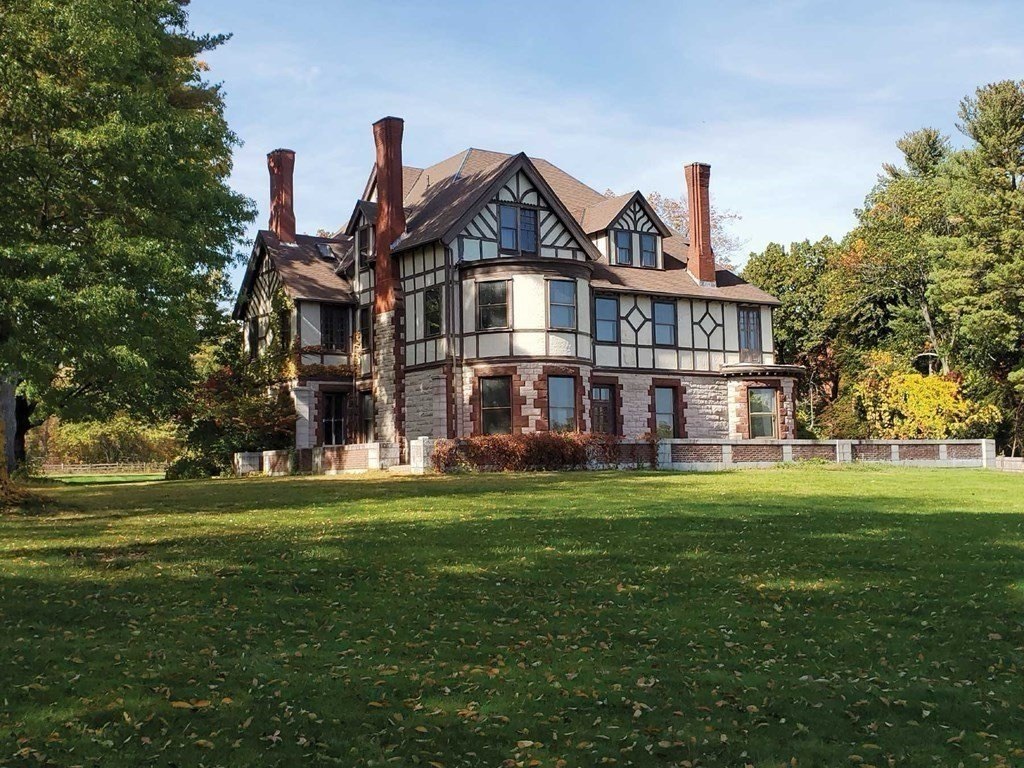
Photo from real estate listing.

A lesser-known residence built for a member of the wealthy Thayer Family is this stately Queen Anne mansion tucked away in South Lancaster, Massachusetts. The John E. Thayer Mansion was built in the 1880s for its namesake, John Eliot Thayer (1862-1933), who graduated from Harvard College in 1885 and engaged in business before becoming one of the world’s most prominent ornithologists. John began collecting and housed his collections in several wooden buildings close to his home in Lancaster, but when these became unsafe and crowded he built a beautiful brick building in 1903 nearby, opening it to the public as a museum a year later. John Thayer hired esteemed Boston architect, John Hubbard Sturgis, who was then working with his nephew, Richard Clipston Sturgis, to design the English Queen Anne style country mansion. The residence features a stone first floor with wood-frame above that is given half-timbering treatment, suggesting the English design. John Thayer’s country mansion was a short walk away from his twin brother, Bayard Thayer’s mansion, and his other brother, Eugene’s country house, both in Lancaster. The house remained in the Thayer family until the 1960s, and was recently sold to new owners. The interiors are some of the best preserved for a country estate I have seen and worthy of the Thayer name. 

Edward Stanwood House // 1880

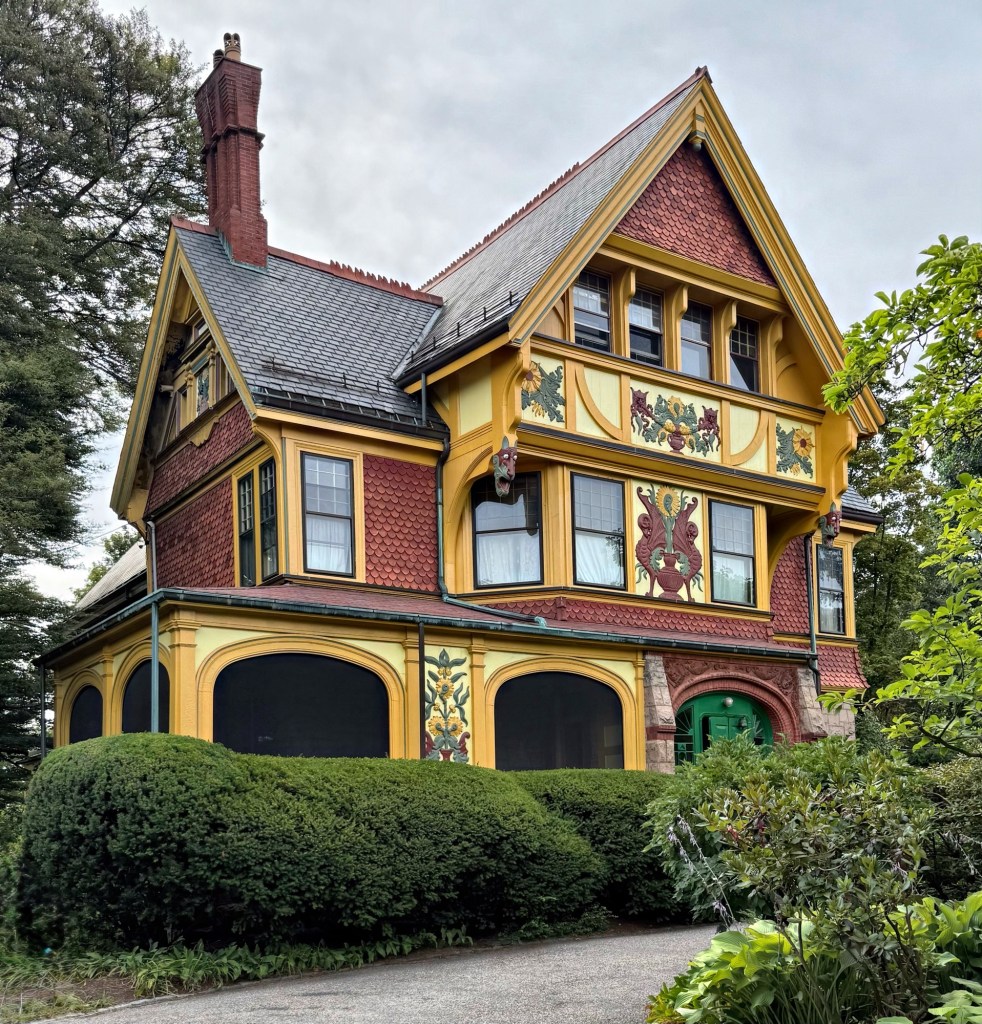
The Edward Stanwood House at 76 High Street in Brookline, Massachusetts, is one of the finest and exuberant examples of the English Victorian Queen Anne style, notable for its varied wall textures and materials, unique form, and applied ornament. The house was built in 1879-1880 for Edward Stanwood, who was for many years the editor of the Boston Daily Advertiser, and a children’s magazine, The Youth’s Companion. The ornate residence was designed by Clarence Sumner Luce, with interiors by Thomas Dewing. The Stanwood House features a well-preserved exterior and period-appropriate paint scheme, highlighting the bas-relief sunflower ornament and gargoyles. Of particular note is the use of hung tile siding, overlaid to give the appearance of fish scales and the roof cresting.

Arthur B. Bernard House // 1928

A playful interpretation of a medieval English cottage, with its stucco cladding, half-timbering, weatherboards in the gable ends and ornamental well enclosure in the front yard, can be found on Woodland Road in Brookline. The whimsical cottage was built in 1928 for Arthur B. Bernard, the son of the president of the New England Leather Company in Boston’s Leather District. Arthur would follow his father’s footsteps and join the business himself. Architect and builder, Fred S. Wells of Newton designed and constructed the house (and others in the area in the same style). What’s your favorite part of this house?