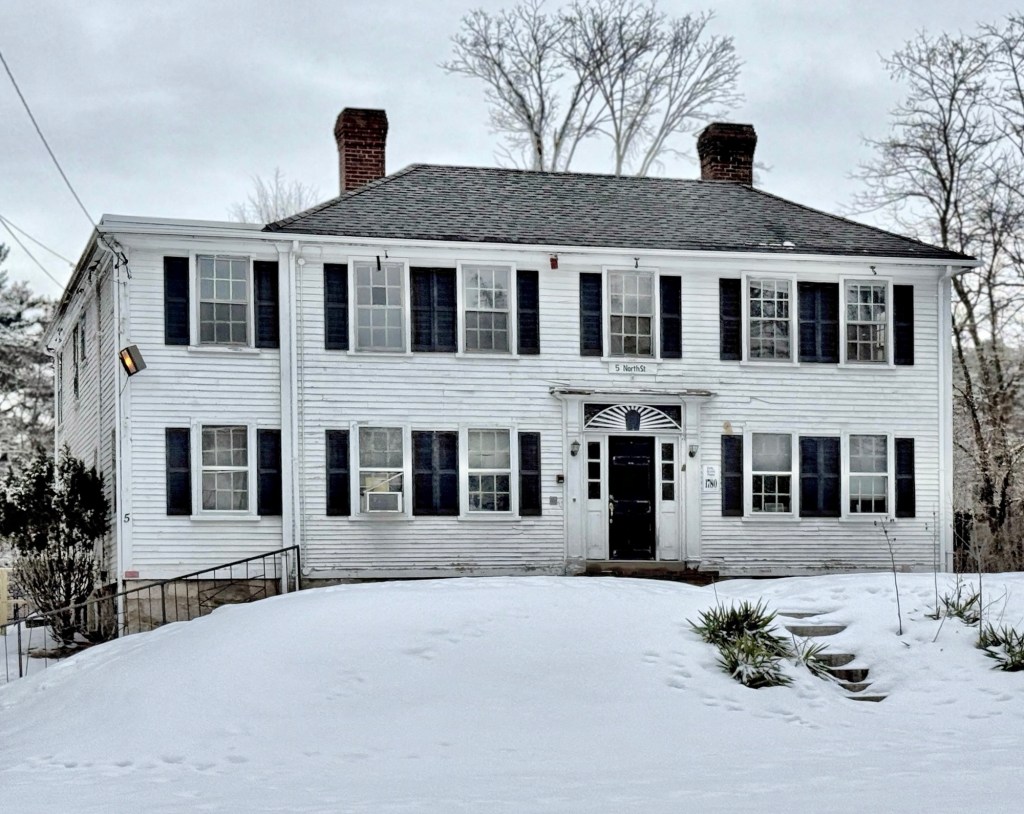
James Baldwin House // c.1785

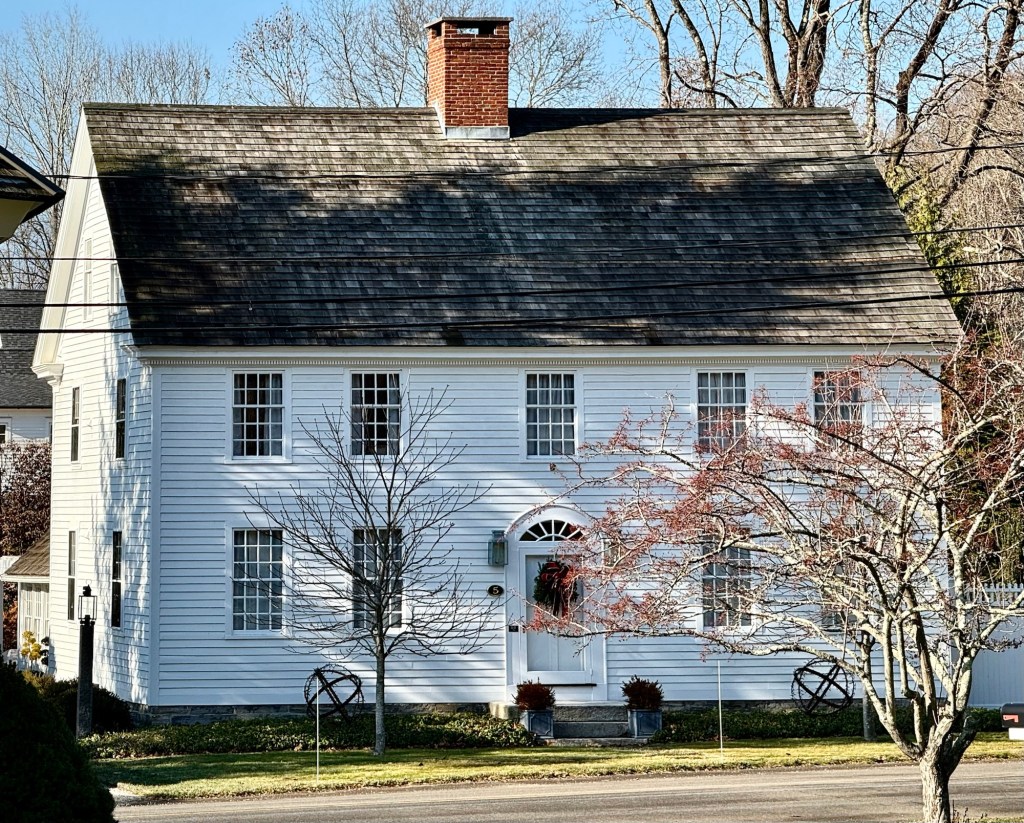
James Baldwin (1742-1818) lived in present-day Chester, Connecticut, and upon the outbreak of the Revolution, joined the forces of Capt. Richard Douglass’ company as a private and fought for liberty. Upon the conclusion of the war, Baldwin returned to Chester and had this house built facing the village green. The transitional late-Georgian and Federal style house has a center chimney and very simple trim with an elliptical fanlight transom over the central door. The house has a wood shingle roof, typical of the early houses of the time. Pvt. Baldwin died in 1818 and his property was inherited by his daughter, Lydia Baldwin Sawyer and her husband, David Sawyer, and later in the 19th century by their eldest daughter, Lucina Morgan, and her husband, Jonathan. The home has been meticulously preserved by the later owners, important as one of the early surviving homes near the village green.

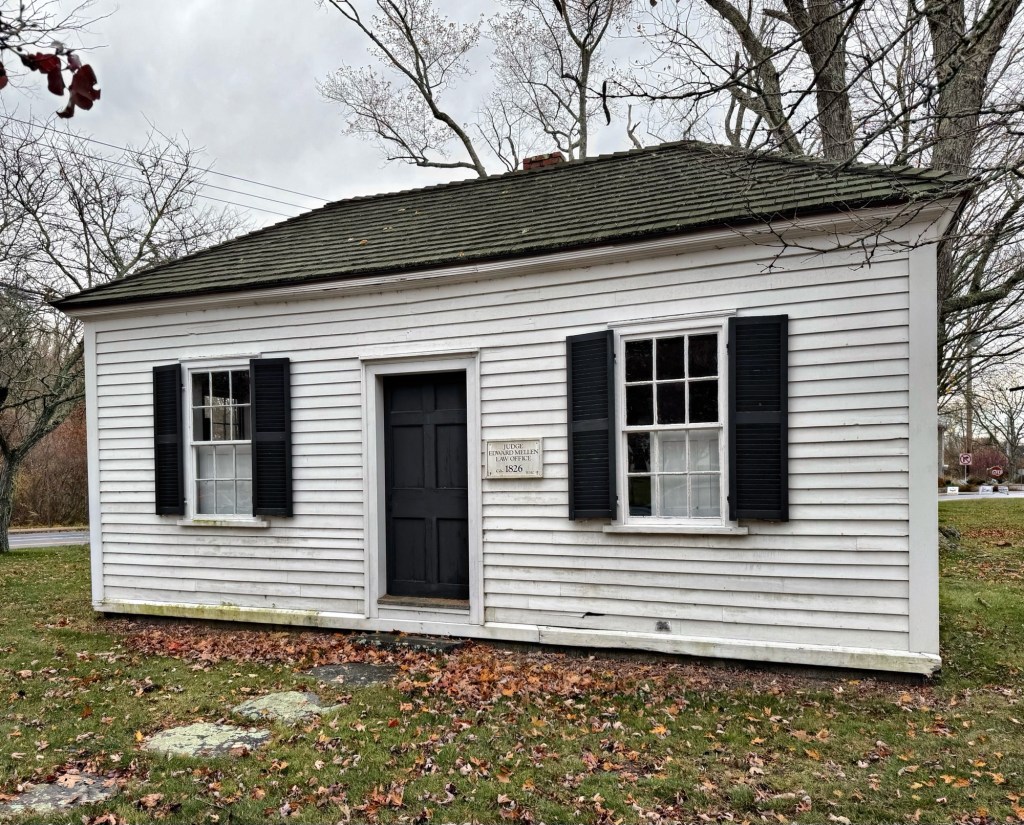
Mellen Law Office // c.1829

Samuel H. Mann (1801-1838), a lawyer, acquired the Dr. Ebenezer Ames House on Cochituate Road in 1829, only a month before his marriage to Isabella Ross. At about that time, Mann built this small law office across the road from his home, where he would practice law. It is not clear why, but within a year, Mann sold the house and this law office to Judge Edward Mellen (1802-1875), who was appointed Chief Justice of the Massachusetts Court of Common Pleas in 1855 and practiced law in Wayland until his death in 1875. After his death, the law office sat largely vacant until during World War II, when a newsletter to soldiers, The Village Bugle, was published here. After this, a couple of businesses used the former law office in the 1950s and 1960s until the owner donated the lot to the Town of Wayland in 1971. The diminutive building is a charming, and well-preserved example of a vernacular, Federal period professional office building that mimics the form and materials of the Ames House to which it was long affiliated with.

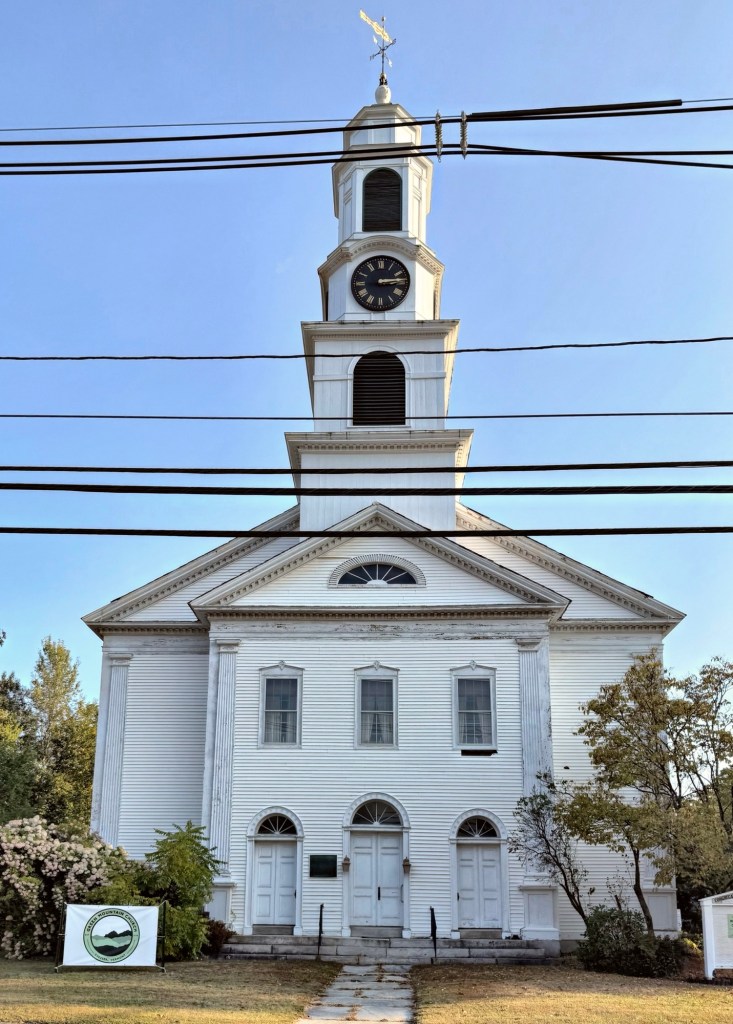
Chester Congregational Church // 1828

A significant landmark in Chester, Vermont, the Congregational Church of Chester is a sophisticated interpretation of ecclesiastical Federal architecture. Built in 1828, the soaring, five-stage clock-and-bell tower with bellcast cap and weathervane rises above a pedimented three-bay entrance pavilion with semi-elliptical fanlight, a common motif in the style. It is believed that local carpenters, Comfort Carpenter Dresser and his son, Charles Dresser, built the church, likely from planbooks for specific details. The church originally served as the Union Meeting House for Congregational, Methodist, and Universalist parishioners until around 1848, when other churches set off to build their own structures, after this, the Congregationalists remained here. Today, due to years of dwindling membership and a small population in the surrounding area, the church is “replanting” to reactivate membership and realign with community needs. Hopefully this significant church will be preserved in the future, possibly through preservation grants!

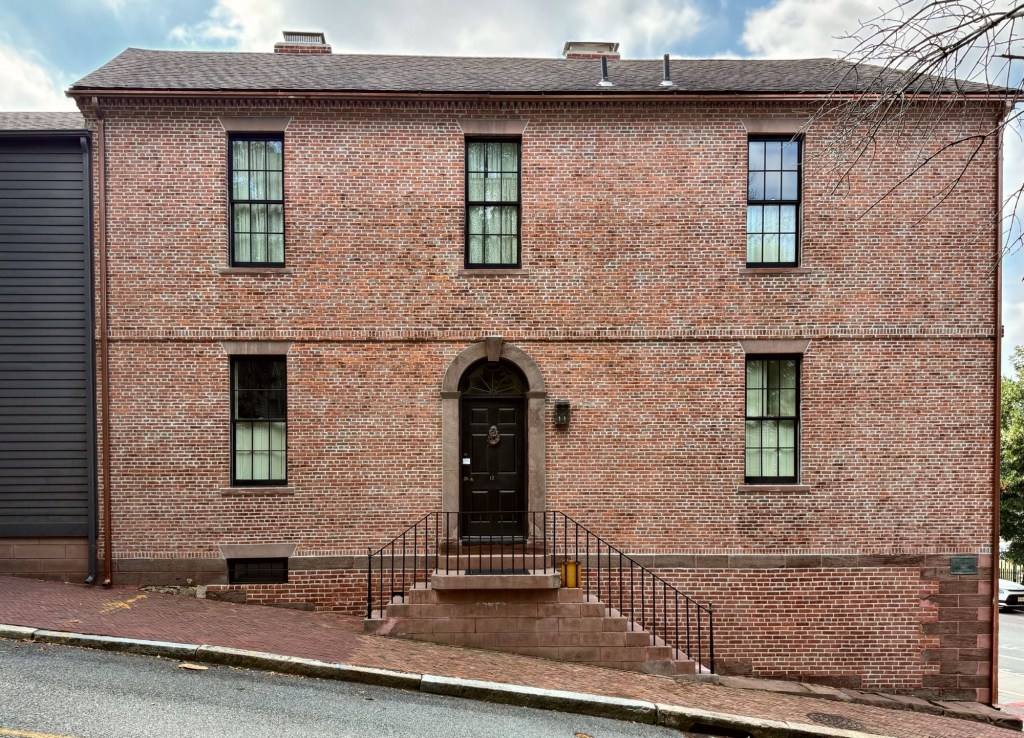
John Larchar House // c.1820

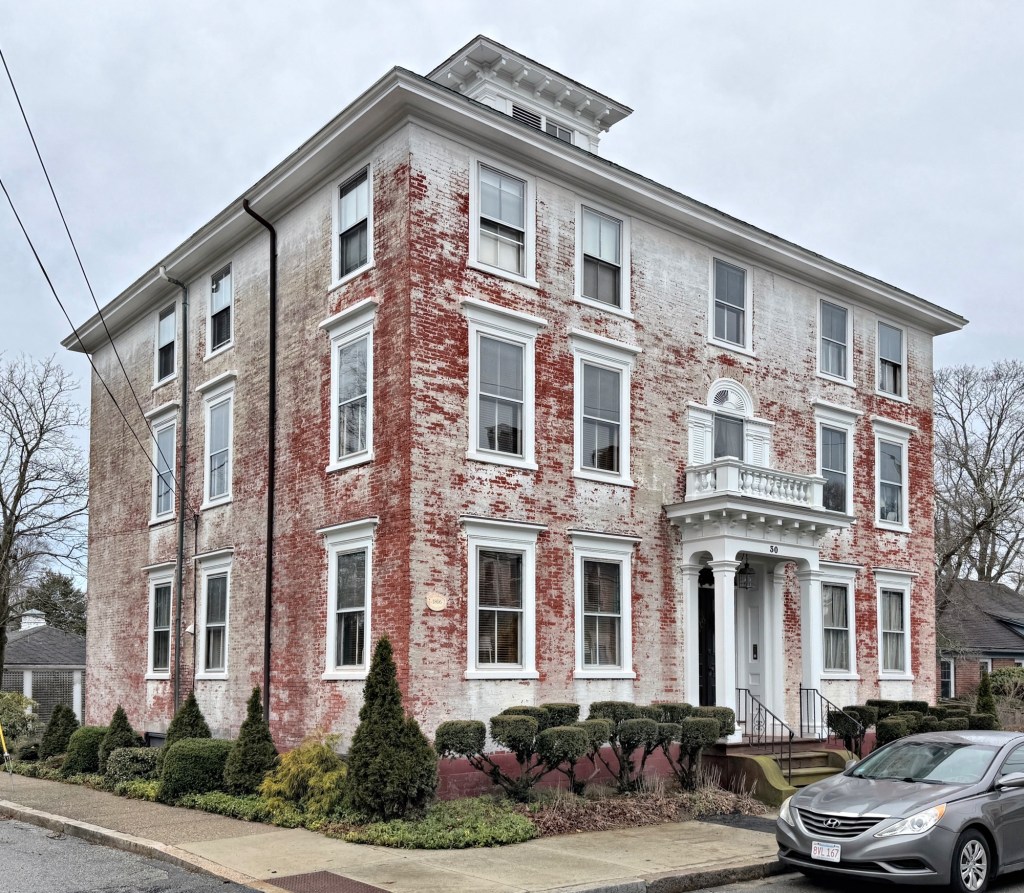
The John Larchar House at 282 Benefit Street in Providence is one of the many stately Federal period homes in the city designed by great architect, John Holden GreeneJohn Larchar (also spelled Larcher), was born in Providence in 1787 and worked in local businesses, eventually becoming a bank director that was involved in many mercantile pursuits. The residence remained in John’s family long after his death in 1863, and has been maintained so well by subsequent owners. The 2½-story, brick Federal house features stone trim, four chimneys, a central elliptical fanlight doorway, modillion cornice and amazing 12-over-12 windows. The cupola at the roof appears to be a is a mid-19th-century addition, possibly after John’s death. The garage and two-story side addition dates to the 1960s but does not detract from the architectural integrity of the home. 

Tillinghast House // c.1800

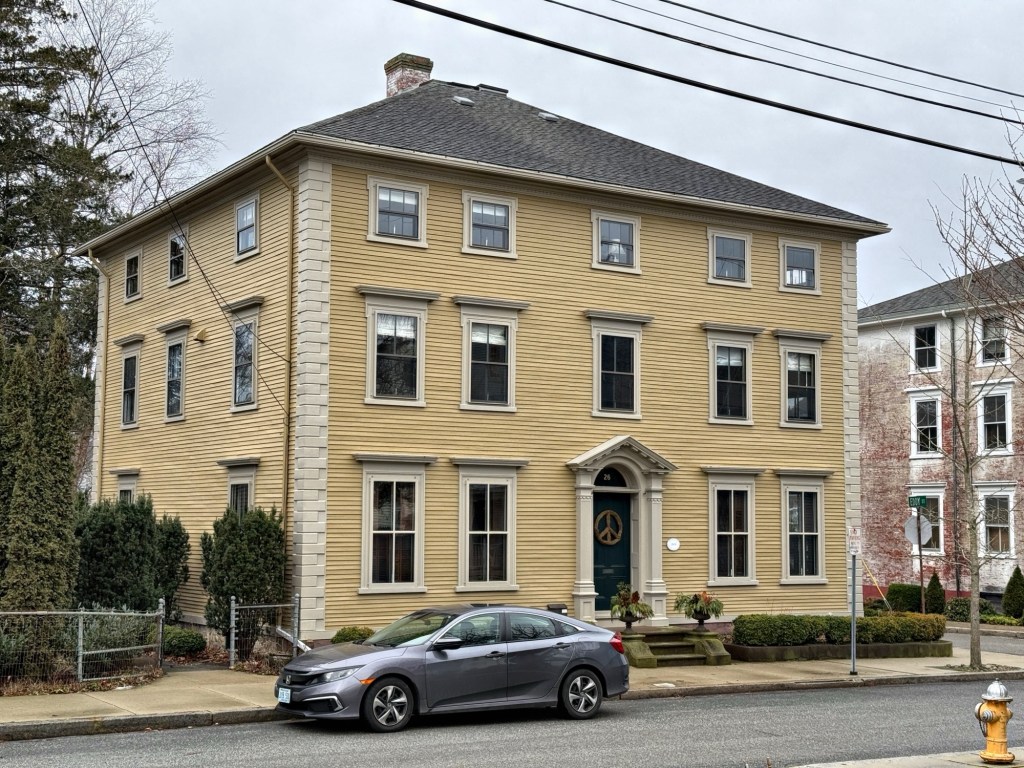
The Tillinghast House at 10 James Street in Providence, Rhode Island, was built around 1800 by Captain Joseph Tillinghast (1734-1816), and it was occupied by a number of his children in the early 19th century. By 1818, with Joseph already deceased, the Federal style home was owned by two of his daughters, Mary, and Amey Tillinghast, who operated a small store from the basement. The two-and-a-half-story, brick Federal house is set on a high basement all with brownstone trim at the stringcourse (between first and second stories) and at the entrance. The house was restored in the late 1970s, along with a new clapboard addition by designers, Luigi Bianco and Georgia Patterson Boomer, of Bianco/Boomer. Without nearly as much ornate detail as many other Federal style homes in the East Side area of Providence, this residence proves that high-quality materials and strong proportions can make a home truly stand out!

Walker – Russell House // 1797

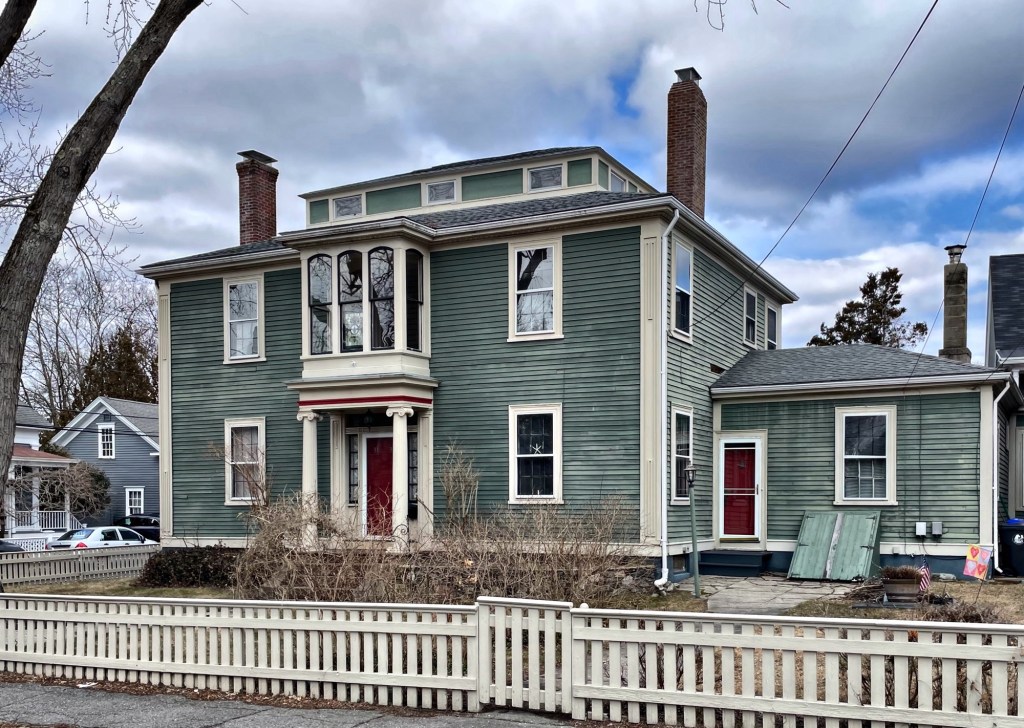
In 1797, housewright Calvin Walker acquired a house lot on Transit Street in Providence’s Fox Point/East Side neighborhood and built this Federal period residence for his family. The three-bay Federal style home was a side-hall form with off-center entry and a monitor roof. In 1824, Calvin sold the residence to his daughter, Mary and her husband, Daniel Russell, a grocer and shoemaker, for $250. By the 20th century, the house was altered with later siding and a new entry, which were later restored by later owners, back to the home’s original grandeur. The blind fan with engaged columns adorned by rounded capitals, really enhances the design. The Walker-Russell House remains as an excellent example of a Federal style residence in Providence built for middle-class residents. 

Larkin-Ladd House // c.1813

The Larkin-Ladd House at 180 Middle Street in Portsmouth, New Hampshire, is a three-story, masonry Federal-style residence with symmetrical facade, built for one of the city’s wealthiest merchants. Samuel Larkin (1773-1849) was born in Charlestown and moved to Portsmouth, marrying Ann Jaffrey Wentworth, a daughter of Col. Joshua Wentworth. During the War of 1812, Samuel Larkin made his fortune as an auctioneer, selling the contents of English ships captured by local privateers. It is believed that fourteen privateers and their crews worked out of Portsmouth Harbor and are said to have captured an estimated 419 British ships! With the profits from stolen goods from these British ships, Larkin purchased lots on Middle Street and began construction of this stately residence. He (and mostly his wife), had twenty-two children, although roughly half of them died before reaching adulthood. By the late 1820s, financial hardship fell on Larkin and he sold this property, moving into his house next door, which before this was his original residence and later rented to boarders. The Federal style mansion was later owned by Henry H. Ladd, a prosperous Portsmouth shipping merchant, who also served as President of New Hampshire Bank and Portsmouth Savings Bank. The Larkin-Ladd House is undoubtedly one of the finest Federal style residences in New England, and stands out for its entrance, flanked by Palladian windows and the slightly recessed elliptical surrounds at the first and second floor windows. Additionally, the historic stable, also from the 1810s, maintains much of its architectural integrity.

Governor Goodwin Mansion // 1811

The Goodwin Mansion of Portsmouth, New Hampshire, is a landmark example of the Federal style of architecture and served as the home of Ichabod Goodwin and his wife, Sarah Parker Rice Goodwin. The home was built in 1811 and was originally located elsewhere in town, across from Goodwin Park, until it was moved to Strawbery Banke, saving the home from demolition. Ichabod Goodwin (1794-1882), a retired sea captain, purchased the home in 1832 and moved in with his wife, Sarah, and daughter, Abigail. The same year, he partnered with Samuel Coues to establish the shipping firm of Coues & Goodwin, importing raw materials, such as cotton, produced by enslaved people in the Southern States and elsewhere. Mr. Goodwin was the governor of New Hampshire upon the outbreak of the Civil War and was a prominent businessman until his death. Ichabod’s wife, Sarah, raised their children and planned the elaborate garden, which Strawbery Banke recreated where the mansion stands today. The Goodwins kept their home updated with all the latest technology, such as gas lighting, coal grates and running water from the Portsmouth Aqueduct Company, which brought water into houses through wooden pipes. It remains a significant house museum and architectural landmark in Portsmouth.

Joshua Delano House // c.1785

One of the finest Federal period houses in Kingston, Massachusetts, a town full of amazing Federal homes, can be found at 93 Main Street, set away from the street on a sizable lot. The residence here was likely built in the 1780s or 1790s as one of a series of Delano Family houses near Rocky Nook, a peninsula at the end of the Jones River, where many new ships were built and traversed their way to Plymouth Bay and ports in the Indies and beyond. The Delano Family had built the Delano Wharf and Warehouse and operated extensive salt works just north of the wharf on the Nook, along with owning many seafaring vessels, many of which were built by Kingston shipbuilders. This house was seemingly built for Joshua Delano and is architecturally unique with brick end walls, hip roof with a monitor which projects in the center of the hip, and a classical entry portico sheltering the projecting door surmounted by a fanlight transom. The property has recently been purchased. Hopefully the new owners treat this architecturally and historically significant residence with the care she deserves. 

Rev. Samuel Dana House // c.1809

The Reverend Samuel Dana (1778-1864) was appointed the minister of the Old North Congregational Church in Marblehead in 1801, and remained in his position for 36 years. During his rectorship, he started a Sunday School, the congregation built chapel on Pearl Street in 1819 and the Old North Church stone church in 1825. Before all of these accomplishments, he had this stately Federal style mansion built on Washington Street, a short walk to his place of worship. The house appears to have been built shortly after his marriage to Henrietta Bridge in 1808. The house and its design rivals many of the Salem Federal period houses, and stands three stories with five bays and a center entry. A Doric portico shelters the door which is surmounted by a fanlight transom and sidelights.