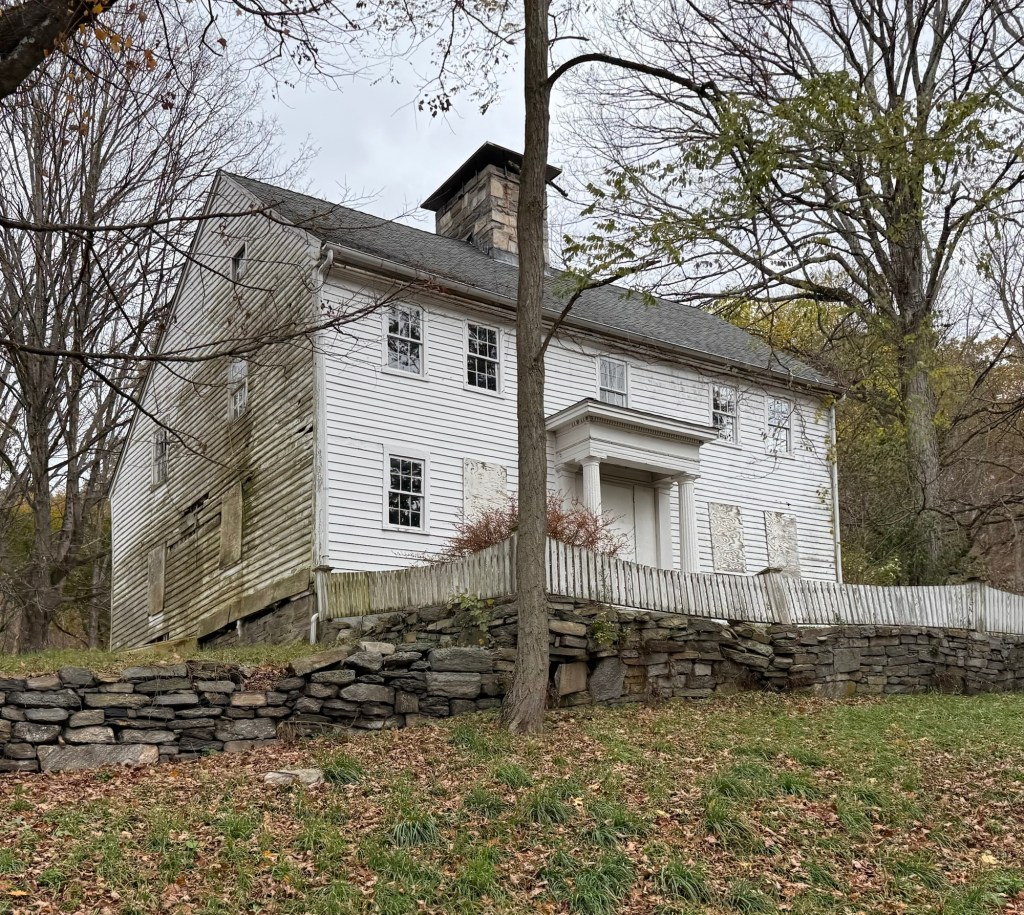
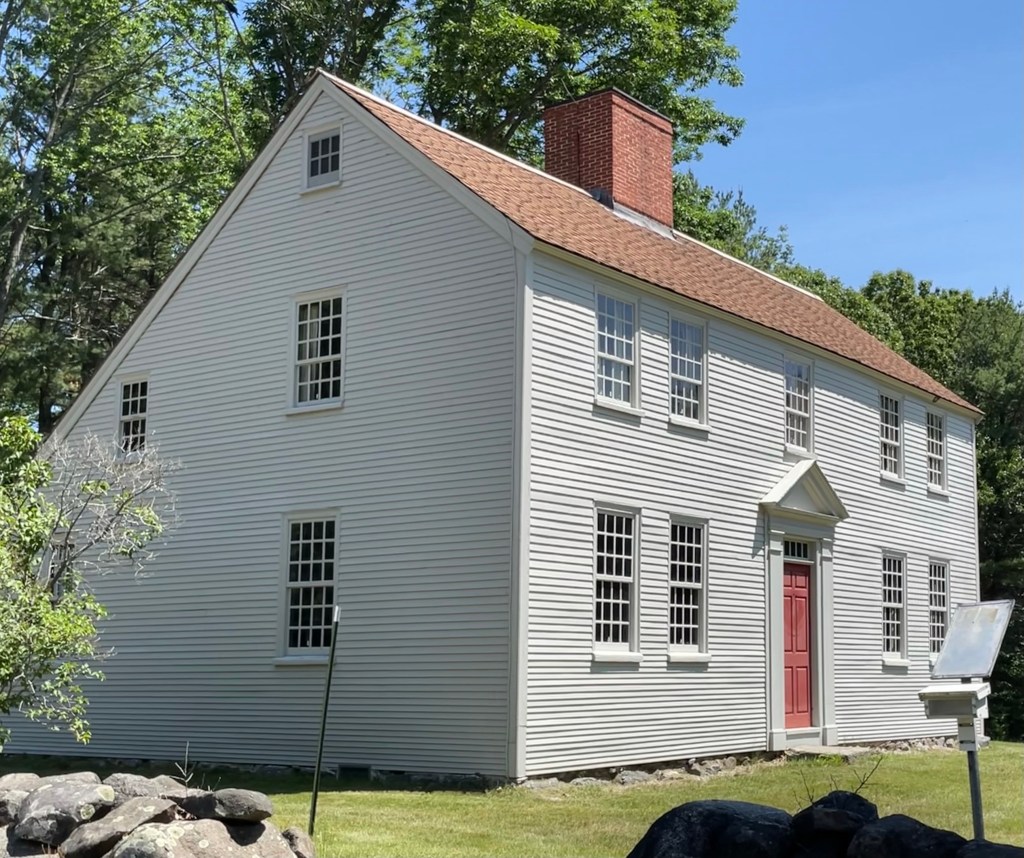
Smith-Curtiss House // c.1714

The Smith-Curtiss House, which is possibly the oldest extant building in Derby, Connecticut, has sat vacant and decaying for years and is owned by the State of Connecticut. Believed to have been built sometime between 1714 and 1740, this historic saltbox farmhouse at 411 Hawthorne Avenue is slowly decaying due to lack of maintenance and funding. Early ownership is difficult to determine, but by the 19th century, the property was owned by Ms. Alice E. Curtiss. The old estate was sold by Ms. Curtiss in 1913 to Frances Osborne Kellogg, a businesswoman, philanthropist and environmentalist, as part of her 350-acre dairy farm and land-conservation holdings. The Smith-Curtiss House was used as a residence for the herdsmen who ran the farm nearby. Before her death in 1956, Frances deeded the property to the state as a public park, and allowed her head herdsman life-occupancy of this house for the remainder of his life. The State of Connecticut assumed possession of this house in 1981. The building has suffered from deferred maintenance since this period, with the State attempting to lease the building to tenants. I hope that local and statewide preservation groups can mobilize to secure grants and funding to restore this important property.

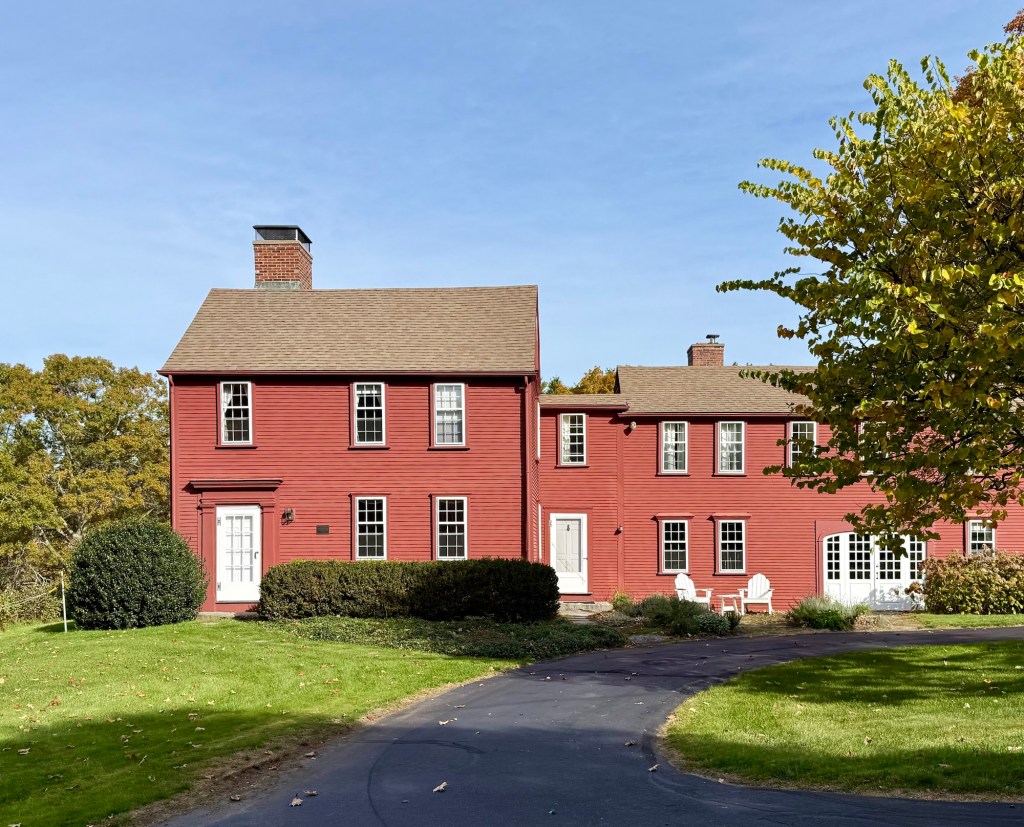
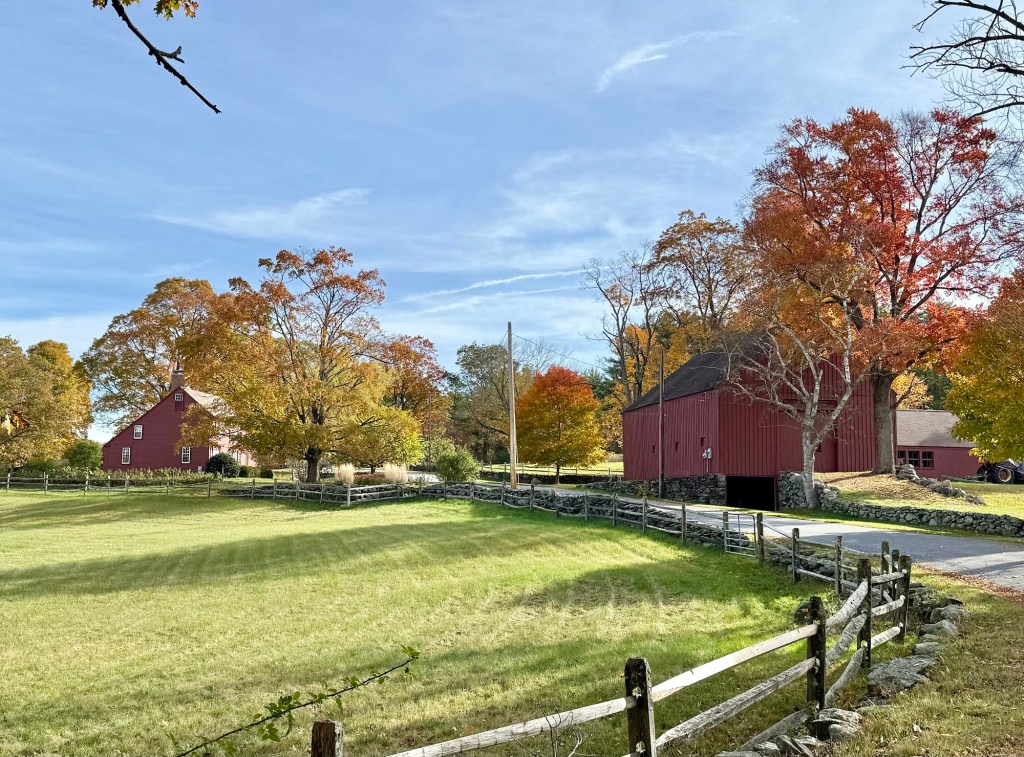
Whitcomb Inn and Farm // c.1708

The Whitcomb Inn and Farm in Bolton, Massachusetts, is believed to be the oldest extant building in the rural community and is believed to have been built around 1708. The oldest portion of the farmhouse, the three-bay, two-story, side-hall house, was likely built when David Whitcomb (1668-1730) acquired the land from his father. David married Mary Hayward in 1700 and the couple had many children, necessitating additions to the old farmhouse, including the rear saltbox with a “Beverly jog” (a section of the rear addition projecting beyond the side of the original structure) that was built in the 1710s. The building underwent stylistic changes in the 19th century, most of which were removed during a major restoration in 1937–38 by Philip Phillips, a Harvard professor in Archaeology, who drew the plans for the restoration of the old house and 1850s barn. Professor Phillips was also a conservationist, and donated some of his land, which directly abuts the highway (built in 1962) was donated to the town and is now known as Split-Rock Trail. The Old Whitcomb Inn and Farm was listed on the National Register of Historic Places in 2002, ensuring that any future highway expansion or re-routing would require preservation of this significant home.

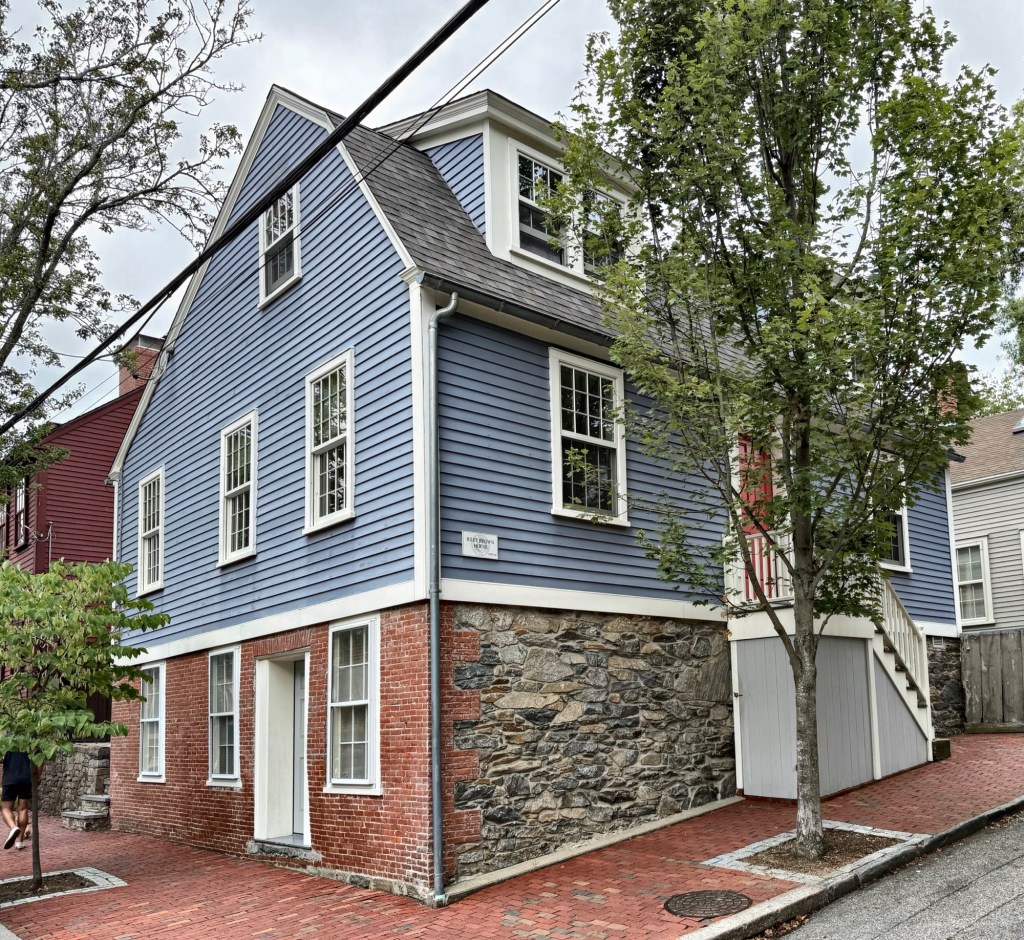
Brown-Crocker House // c.1836

In 1829, Riley Brown, a housewright, purchased a house lot at the corner of Thayer and Transit streets in Providence, and by 1836, built this charming gambrel-roofed cottage, which is one of the most charming in the city. Riley Brown lived in the house next-door at 6 Thayer Street (1829) and on available land, built this 1-1/2-story dwelling on a full-height raised basement on speculation. It is possible that the house could have dated to the 18th century, and was possibly moved to the site from a nearby location, given the distinct gambrel roof and Georgian qualities. The residence here was sold in 1836 to John Crocker, who resided here with his family until his death in 1865. The Brown-Crocker House stands out for its unusually high basement of brick and stone, with a stair ascending up to the central entry and the gentle saltbox roof off the rear. Two shed dormers were likely added in the 20th century to make the house’s second floor more liveable.

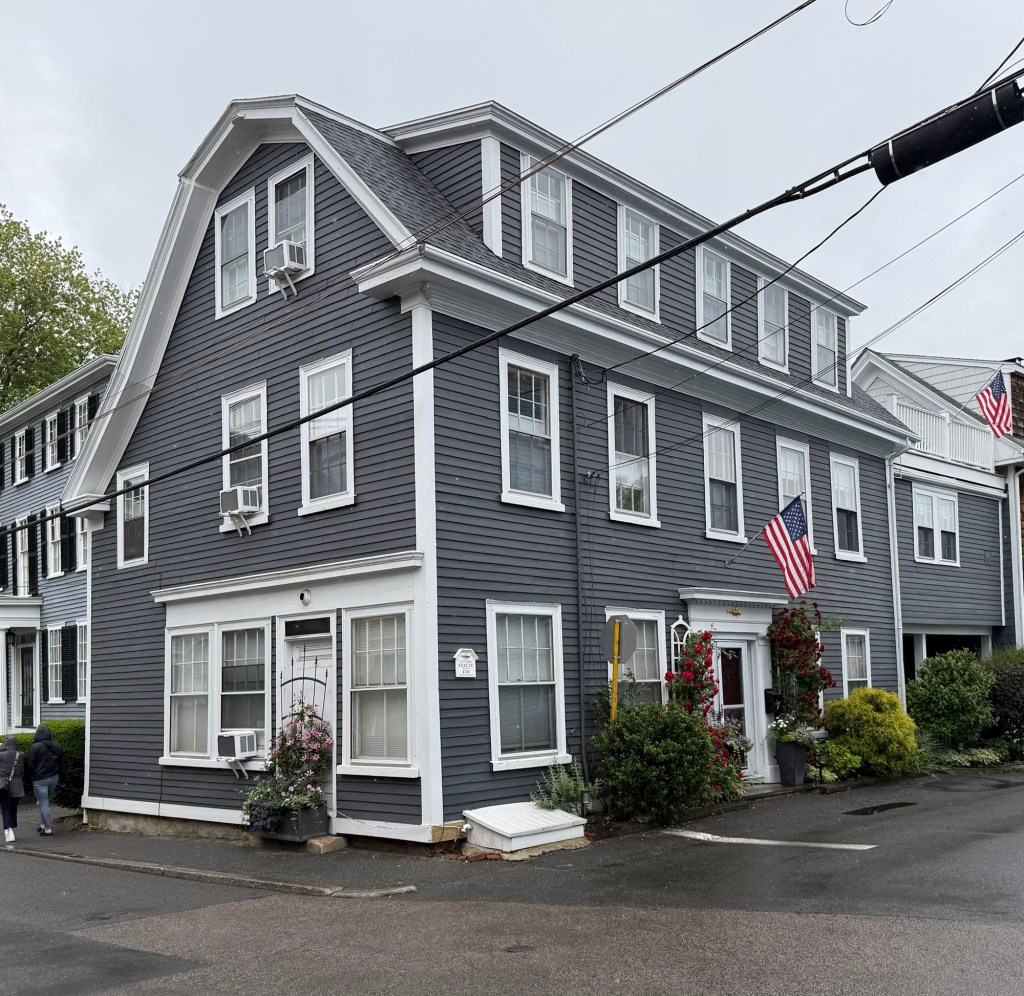
Captain John Stacey House // 1731

In 1731, Captain John Stacey, a merchant and shipowner in Marblehead, had this gambrel-roofed house built on family land. Due to its orientation from the main street, a passageway allowed access to the rear of the property where other buildings were constructed by the family. By 1850, the house was jointly owned by Hawkes and Brown, with Mr. Hawkes operating a store in the first floor corner room. Eventually, by 1912, Brown had bought the whole building and moved his meat market into the store in this building. The property was later purchased and restored by Donald Mackenze Stacey (1916-1998), a contractor and descendant of the home’s original owner, John Stacey. Donald was a veteran of the U.S. Navy and served in World War II, before moving back to Marblehead and worked in the building trade. In town, he restored antique clocks, furniture, and buildings, including the Old Town House and Abbott Hall, the current town hall

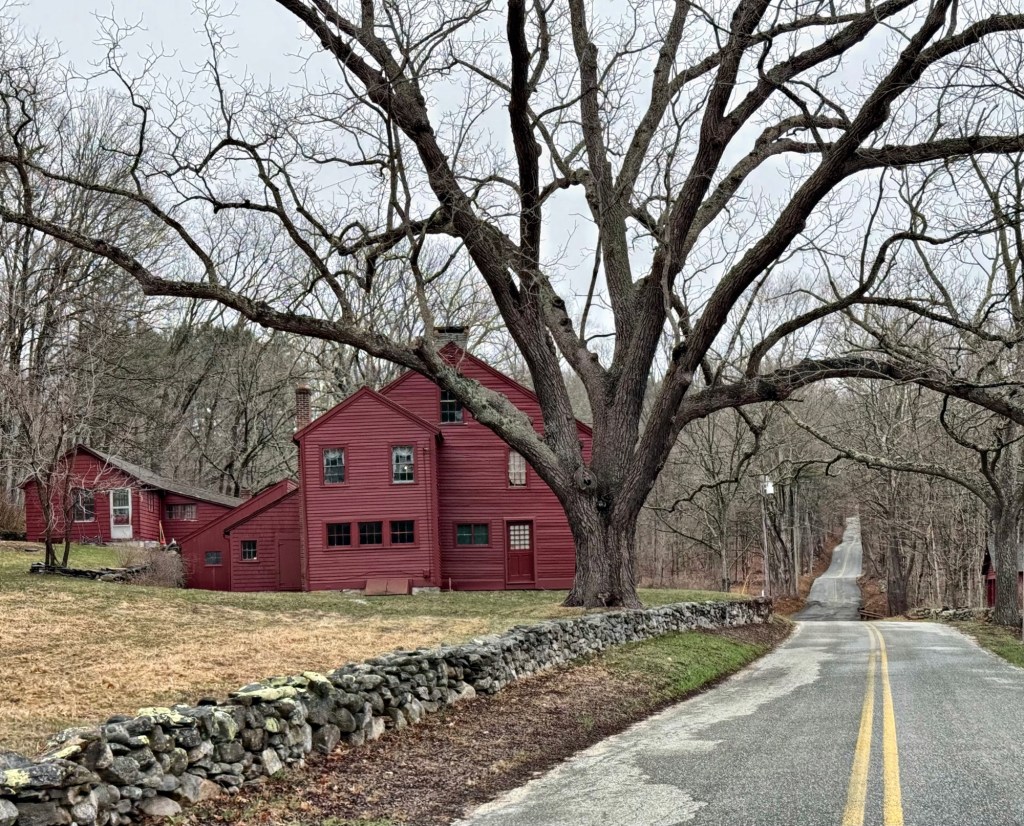
Edward Waldo House // c.1715

The Edward Waldo House in Scotland, Connecticut, is a vernacular Georgian house with saltbox roof and wings which from its erection about 1715 until 1971 was owned by members of the Waldo family. Edward Waldo (1684-1767) purchased land here along the Shetucket River in 1702 and by 1715, erected this house. The saltbox house which Edward Waldo built was one of the first houses in the town of Scotland and would remain in successive generations of the family for centuries. The house was the birthplace of Samuel Lovett Waldo (1783-1861), a portraitist who was a founder of the National Academy of Design as well as Daniel Waldo, chaplain of Congress, 1856-1858, and was one of seven Revolutionary War veterans who, having survived into the age of photography, were featured in the 1864 book The Last Men of the Revolution. The last Waldo owner, Miss Ruth Waldo died in1975. She insured the preservation of her family homestead by bequeathing the house, its contents, and about 15 acres of land to the Antiquarian & Landmarks Society of Connecticut Inc. and the surrounding acreage to the Connecticut Forest and Park Association, creating an enduring legacy for centuries to come. The house, set amongst a quiet country road, is evocative of early days in Scotland, Connecticut, and is one of the finest-preserved Colonial homes in this part of the state. 

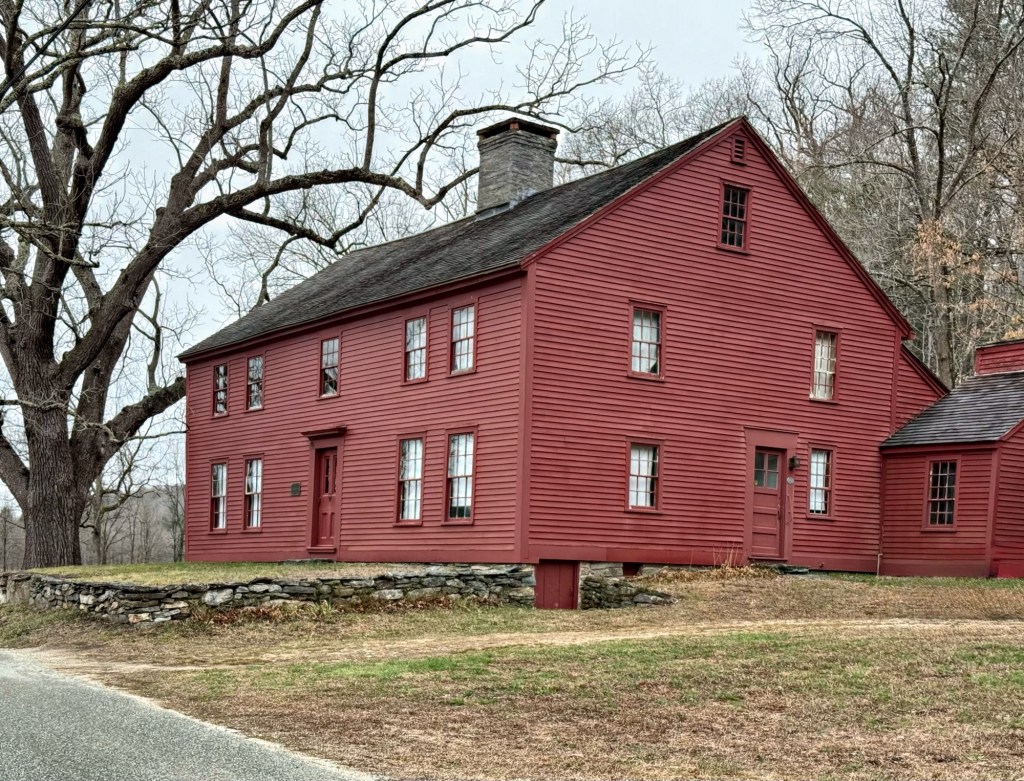
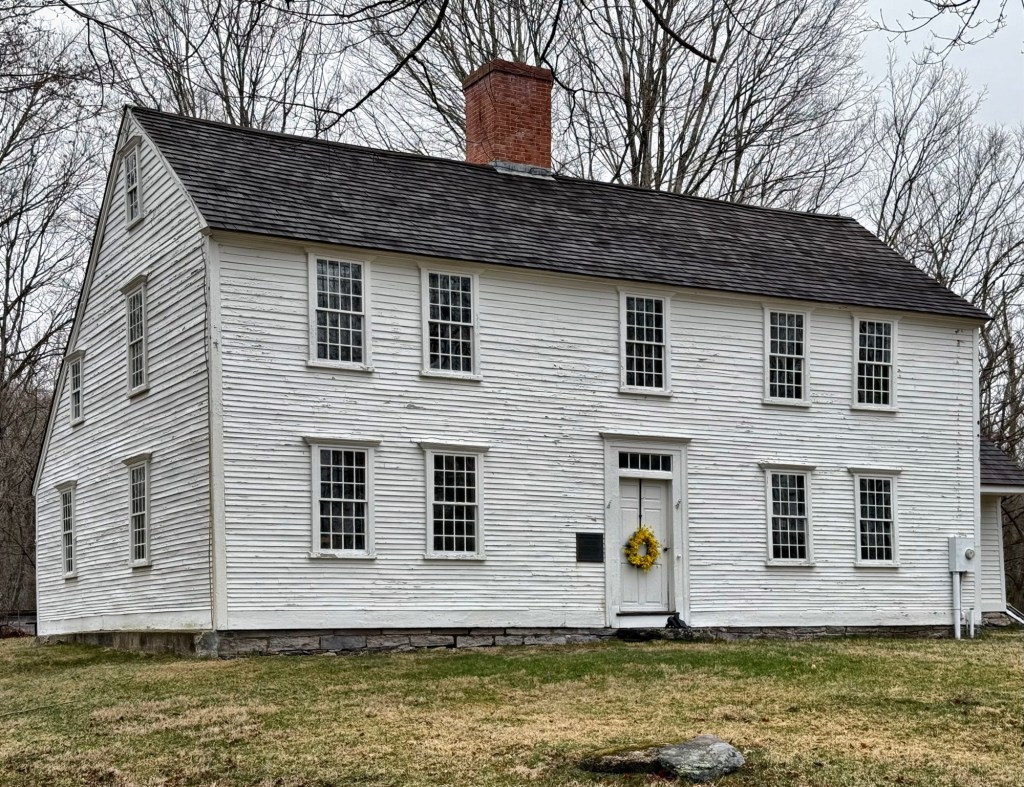
Huntington Homestead // c.1715

The Huntington Homestead in Scotland, Connecticut, was the birthplace and boyhood home of Samuel Huntington (1731–1796), a Founding Father, a signer of the Declaration of Independence and a distinguished statesman during the Revolutionary War and early Republic. The remarkably well-preserved site includes an eighteenth century house on its original foundation surrounded by acres of farmland and is now protected as a museum. The house was built sometime between the transfer of land in 1715 from Deacon Joseph Huntington to his son Nathaniel, and Nathaniel’s marriage in 1723 to Mehetabel Thurston. As originally constructed, the house consisted of a two-story structure with an end chimney on the west end and one large room on each floor. By the time of Nathanielís death in 1767, the house had been doubled in size with the addition of two rooms west of the chimney, giving the house its current five-bay form. The Georgian style Colonial-era home features a symmetrical facade, twelve-over-twelve windows, and a saltbox roof and is one of the finest Colonial-era homes in this part of the state.

Old Newington Parsonage // c.1725

The Old Parsonage in Newington, NH, is a rare survivor from the 1700s in the tiny town. It is one of few extant “saltbox” houses to be found in the New Hampshire seacoast. Like most houses of this type, the parsonage has a lean-to that was added a few years after the house was built. Like the nearby meeting house, the parsonage has long been inextricably connected to the public life and the identity of Newington. Unlike the much-altered meeting house, the parsonage retains the appearance of the 1700s and has been extremely well-preserved, giving a glimpse into 18th century life in Newington. The parsonage is estimated to have been constructed in 1725 when Richard Pomeroy, the first Sexton of the church, sold the property here for 19 pounds, with no mention of a dwelling. It was acquired by a John Knight (1685-1765). After his death, the dwelling was sold to the Town of Newington and restored to be used as a parsonage.