Captain John Felt House // 1757

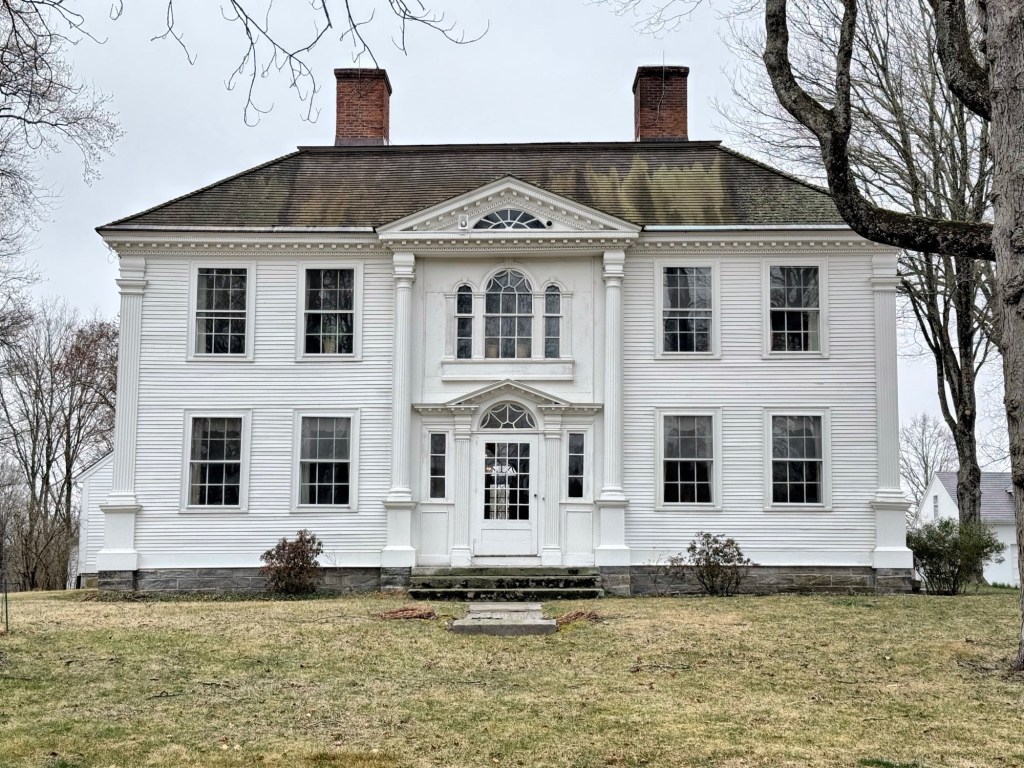
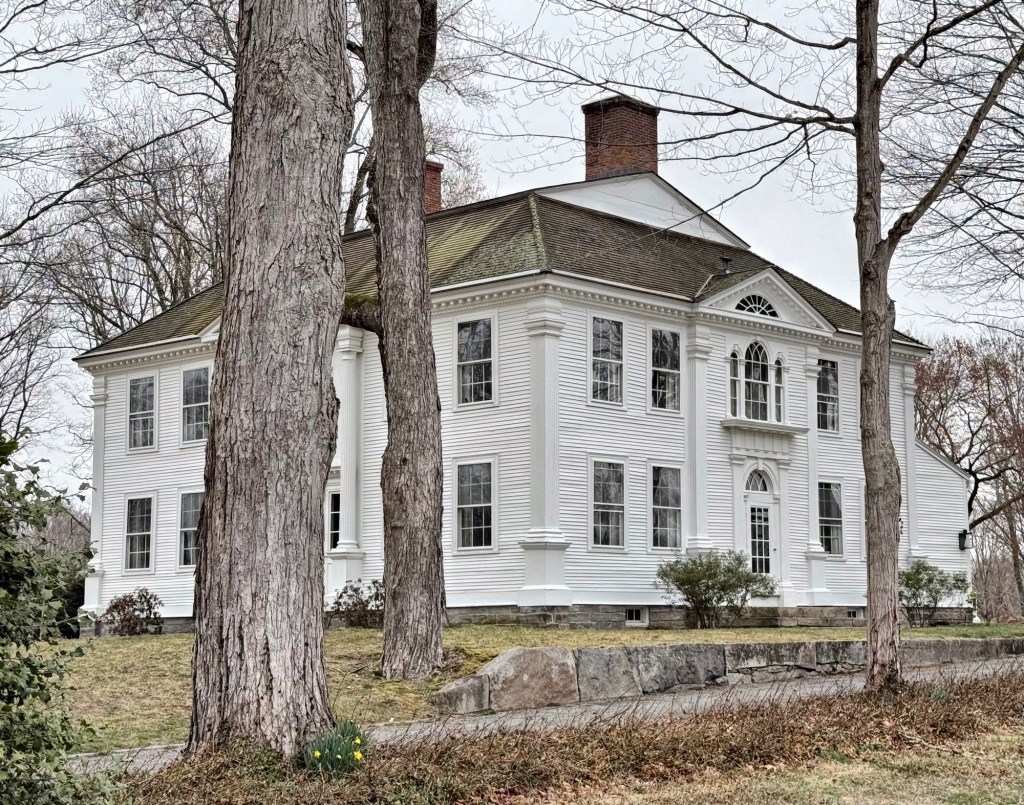
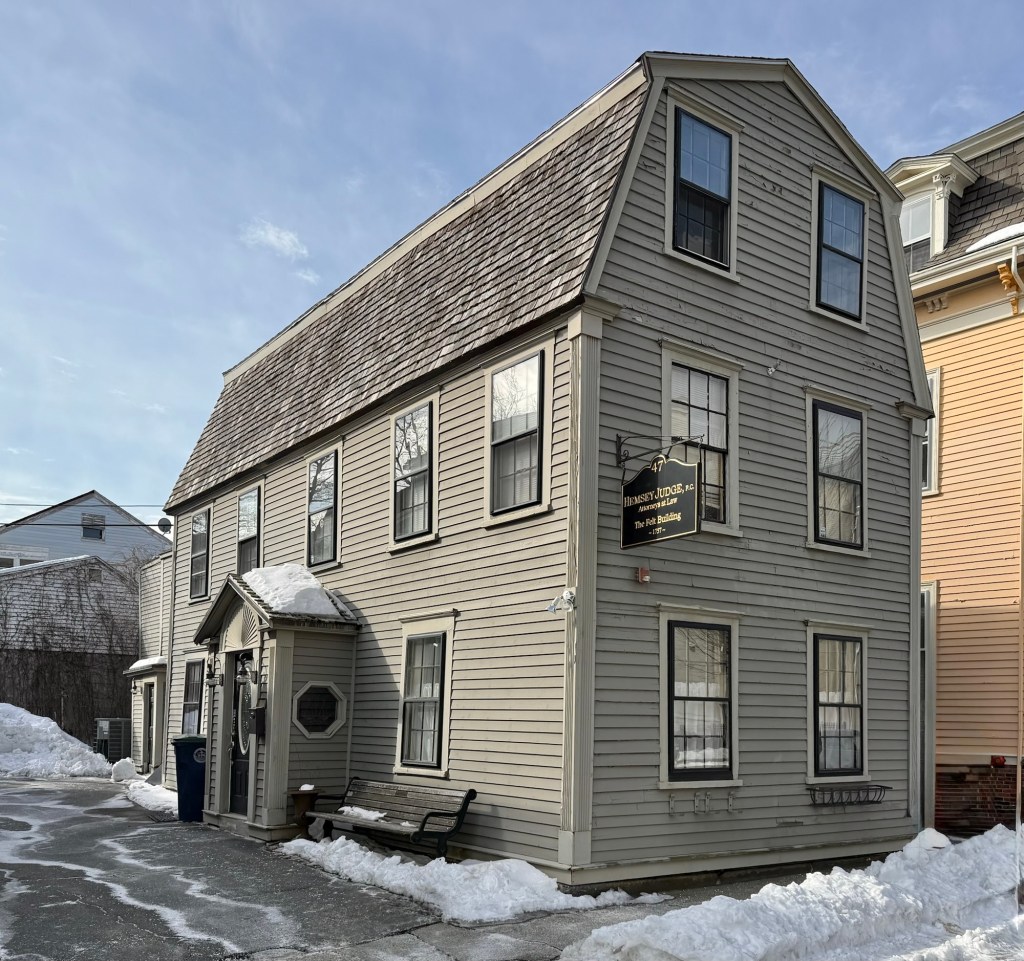
The Captain John Felt House on Federal Street in Salem, Massachusetts, is a surviving Georgian residence with ties to the American Revolution. In May 1757, John Felt purchased a lot on present-day Federal Street from Benjamin Lynde for 52 pounds, and began building his family home here. John Felt, a Salem native, worked as a “shoreman,” but was primarily an owner of vessels involved in the coasting trade, also owning a large warehouse to store the goods from the West Indies brought in by his ships. Felt’s title of “Captain” came from his involvement in the Essex county militia. Captain Felt was a key figure in Leslie’s Retreat, also called the Salem Gunpowder Raid, which took place on February 26, 1775, in Salem. British Colonel Alexander Leslie led a raid to seize suspected cannons from a makeshift Colonial armory in Salem. Instead of finding artillery, Leslie encountered an inflamed citizenry and militia members ready to stop his search. These colonists flooded Salem’s streets, preventing Leslie’s passage and forcing him to negotiate. Ultimately, the Salemites convinced the British Regulars to stand down and return to Boston. No shots were fired, and no one was seriously injured—but tensions were high and a skirmish was evident until Captain Felt stated, “If you do fire, you will all be dead men.” Had a soldier or a colonist gone rogue and fired their weapon, the American Revolution might have begun in Salem, and not Concord just weeks later. After the Revolution, Captain Felt sold his house and moved to present-day Danvers. After centuries of successive ownership by merchants, today, the Felt House is used (at least in part) as professional law offices.

Hilt-Rayner Houses // 1844

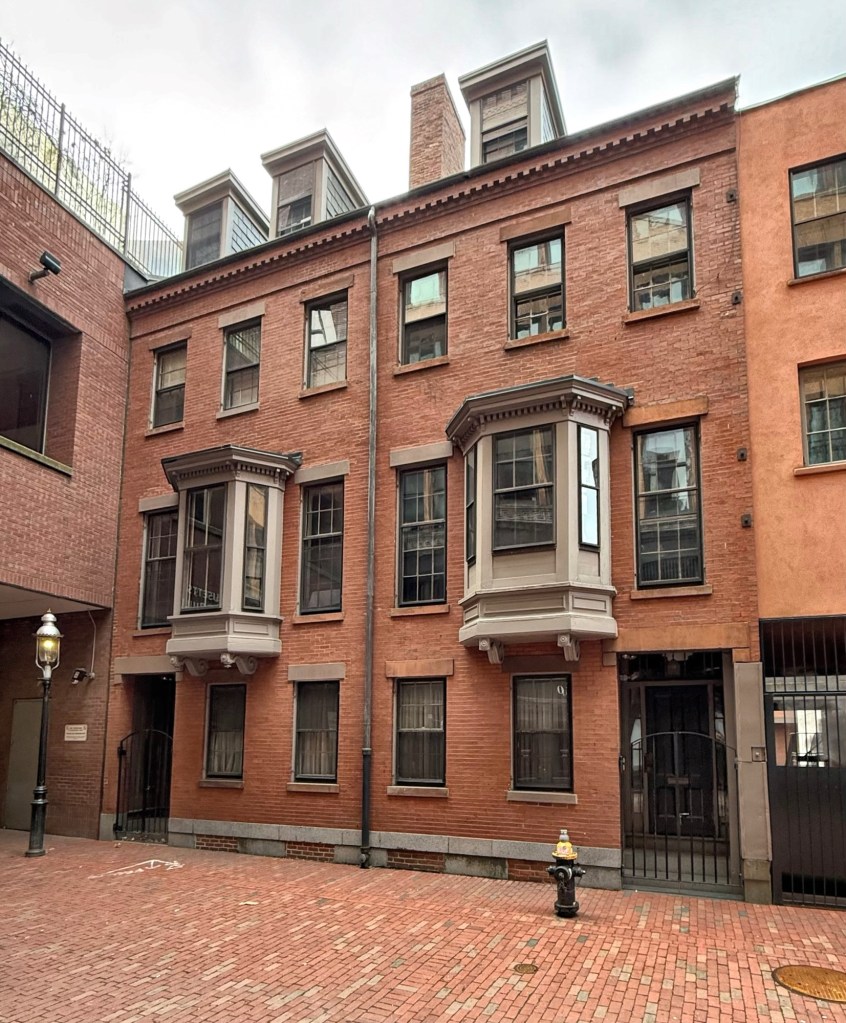
This is your reminder to get lost and explore your city or town. Tucked off Boylston Street sits Boylston Place, a short, dead-end way that is passed by thousands every day, many not knowing about the little enclave of surviving 19th century buildings there. At the end of the street, the Hilt-Rayner Double House remains in great condition and a reminder as to the residential character of the area in the first half of the 19th century. The houses were built by Henry Hilt, a housewright who owned one unit after completion. The other unit was owned by Thomas L. Rayner, who appears to have rented the unit out. The late example of the Greek Revival style in the rowhouse form is well preserved through nearly 200 years of use. Beginning in the 1920s, the two homes were acquired by the Tavern Club, a private social club established in 1884 in the house next door. It remains owned by the Tavern Club today.

Edgar Allan Poe Birthplace // c.1805-1965

Courtesy of BPL archives

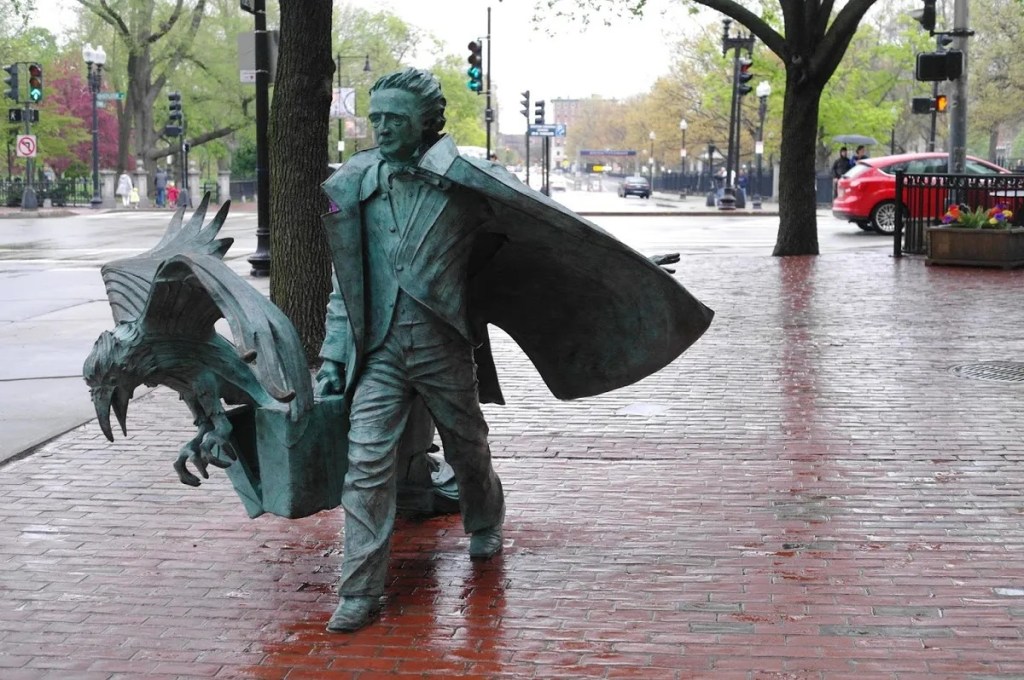
Famed author Edgar Allan Poe was born in this house on Carver Street in Boston, Massachusetts, on January 19, 1809, the second child of American actor David Poe Jr. and English-born actress Elizabeth Arnold Hopkins Poe. His father abandoned the family in 1810 and his mother died a year later from pulmonary tuberculosis. He would be adopted by John Allan, a merchant and slaver in Richmond, Virginia, his adopted family gave him the name “Edgar Allan Poe”. He would live a somewhat nomadic life, moving around often to cities all over the East Coast until his death in 1849 in Baltimore. Although it was his birthplace, Poe’s troubled early childhood likely contributed to his disdain for Boston, where he often referred to Bostonians as “Frogpondians,” after the frog pond on Boston Common, though as an insult. The poet’s seminal work The Raven was published in January 1845 to widespread success. Several months later, Poe was invited to read at the Boston Lyceum with the support of James Russell Lowell, a Harvard professor and editor of The Atlantic Monthly. It did not go well. His childhood home on Carver Street would be razed by 1962 and is presently a surface parking lot for an electrical substation. The city would honor its macabre author by renaming an alley off Boylston Street, Edgar Allan Poe Way, and in 2014, the City commissioned a public statue titled, “Poe Returning to Boston“. Designed by Stefanie Rocknak, the statue depicts Poe walking, facing away from the Boston Common. His figure is accompanied by an oversized flying raven; his suitcase lid has fallen open, leaving a “paper trail” of literary works embedded in the sidewalk behind him.

Blaisdell-Carter House // 1890

The Blaisdell-Carter House is a great example of a Queen Anne style home in Chicopee, Massachusetts. The house was built in 1890 for Harriet P. Blaisdell following the death of her husband, Samuel Blaisdell, a cotton broker, in 1888. Mrs. Blaisdell hired David B. Griggs, a builder in Chicopee under the firm D. B. Griggs & Sons, to design and build the residence, which sat across the street from Griggs’ own home. Harriet would pass away just three years after her home was built, and the property would eventually be sold to Nathan P. Ames Carter (1864-1959). The residence sits on a large lot and exhibits varied siding, asymmetrical plan with porches, additions, and steep gable roofs, and the use of irregular windows of varied sizing and locations. While the second floor porch has been enclosed, the house retains much of its original fabric and has not been covered by vinyl or aluminum siding, a rarity in Chicopee.

Thompson-Sperry House // 1803

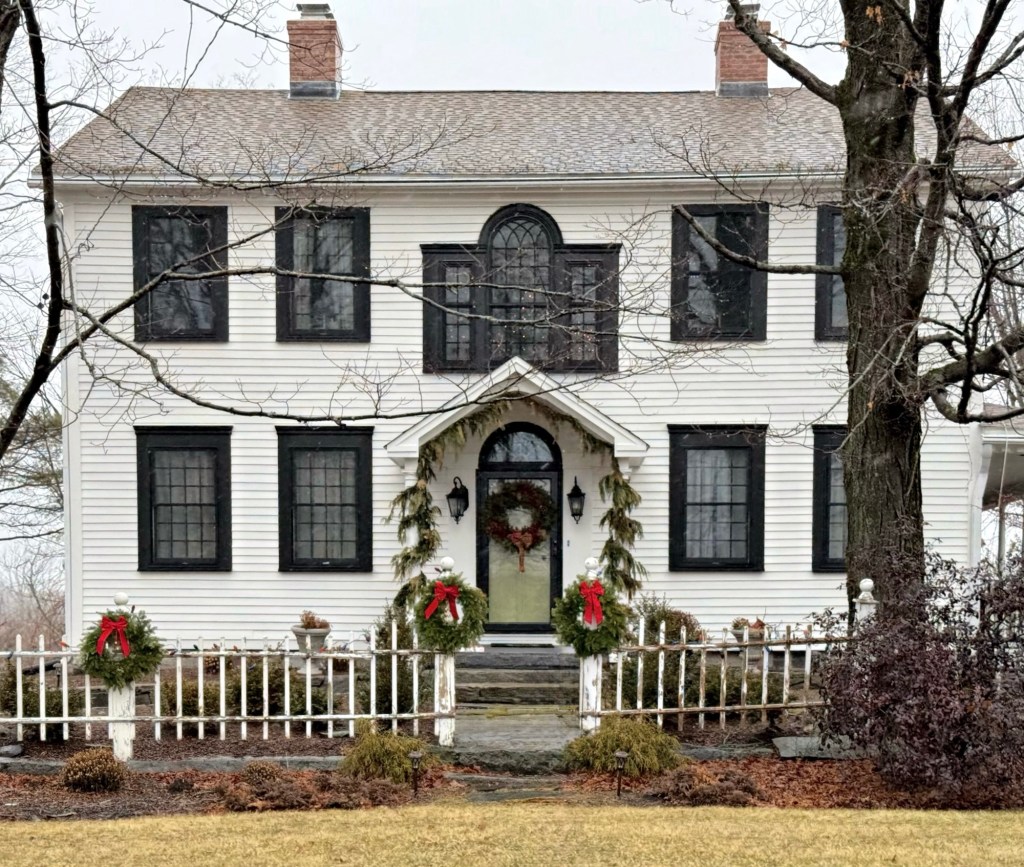
In 1803, General David Thompson (1766-1827) and his wife, Sybil (Norton) Thompson, moved into this recently completed Federal style residence on North Street, the main road through Goshen Village, Connecticut. David Thompson was a merchant and partner in the firm Wadhams & Thompson, occupying a store nearby the Congregational Church. Business partners David Thompson and David Wadhams built near-identical houses across the street from each other, though the Wadhams house has since been gut renovated and lost much of its original fabric. The Thompson House stands out for its Palladian second-story window, glazed with interlacing arcs. The property was owned at the end of the 19th century by Albert Sperry, a Civil War veteran.

Henry A. Waldron House // 1893

The period of the late 19th through early 20th centuries provided architects the opportunity of blending the two prominent styles, Queen Anne and Colonial Revival into a single composition, and as a result, this period has provided some of the most whimsical yet stately homes in New England. This modestly sized residence sits on Stimson Avenue, one of the finest streets in Providence, and despite its unassuming size, packs an architectural punch with its materials and detailing. The Henry Waldron House was built in 1893 for Henry A. Waldron, a clerk in Providence. From deed research, it appears a member of his family, Nathan Waldron, a wealthy grocer, purchased the site in 1891 and likely funded some or all of the construction of the residence there. The architectural firm of Hoppin, Read & Hoppin is credited with the design of the residence, which employs a Colonial Revival form with the gambrel roof and Columned and ornate entrance porch with fan motif, while the use of varied siding materials and octagonal tower with pyramidal roof veers into the Queen Anne style.

Joshua Silvester House // 1857

This large house sits on Peabody Avenue in Danvers, Massachusetts, and is thought to be the oldest house built of cement in the United States! Joshua Sylvester Silvester (1803-1888), the house’s original owner, was born in Wiscasset, Maine, and began working in the shoemaking business, expanding his products in England, taking many business trips there. While in England, he is said to have particularly admired Charles Dickens’s estate, Gad’s Hill, and modeled his Danvers home after it. Joshua Silvester not only designed this house, but directly supervised its construction which is of hand-poured cement/stucco by two masons imported to town to work on the house. The fifteen-room residence with octagon-shaped barn was complete by 1858. In 1880, the property was purchased by Isaac B. Howe of Clinton, Iowa. Howe was a civil engineer who had helped to lay out the Transcontinental Railroad and had been superintendent of the Iowa division of the Chicago and Northwestern Railroad. Howe died within a year of moving to Danvers,
but his family continued to live in the house for many years.


Jeremiah Page House // 1754

In 1754, a 32-year-old brickmaker Jeremiah Page built this large, gambrel-roofed Georgian house in Danvers, Massachusetts, for his young family. Jeremiah and his first wife, Sarah, raised nine children here and dreamed of liberty from England. Following the Tea Act, passed by British Parliament in 1773 that granted the British East India Company Tea a monopoly on tea sales in the American colonies, Page was said to have demanded that “none shall drink tea in my house.” One evening when her husband was out, Sarah Page is said to have invited several women from the neighborhood up to the porch atop the Page House’s gambrel roof to enjoy tea. Larcom quotes Page as telling her friends, “Upon a house is not within it,” thereby finding a loophole around her husband’s directive. This legend was enshrined in the poem “The Gambrel Roof” (1874) by Lucy Larcom, who knew Sarah Page’s granddaughter. Jeremiah Page would fight in the Revolution, serving as a Captain. The Page House remained in the family for two more generations, Sarah Page’s daughter in-law, Mary Page died in 1876 and her will put the property into a trust with the stipulation that once there were no longer any Page descendants to live there, the historic house was to be torn down. After Mary Page’s daughter Anne Lemist Page died in 1913, the trustee planned to demolish it according to her wishes. The Danvers Historical Society sprung into action and sued to oppose the will, fighting to preserve this significant home. They won, and relocated the home a block from Elm Street to its present site on Page Street, where it stands today. The Danvers Historical Society maintain the structure to this day, including the “porch” at the roof where the tea party once took place.

Nelson House // 1797

This residence sits on the historic Elm Street in Georgetown, Massachusetts, and is one of the best late-Georgian style dwellings in the town. The house was built in 1797 for Nathaniel Nelson (1767-1853), a banker who worked in Newburyport, just years after his marriage to Sally Chaplin. Nathaniel descended from Thomas Nelson (1615-1648), who was among the twenty families who had come to the New World in the winter of 1638 with the Puritan cleric Ezekiel Rogers (1590-1660). With Rogers most of these families settled at Rowley, incorporated in 1639 with Georgetown later setting off from Rowley, creating their own town in 1838. Nathaniel and many of his family worked as tanners, preparing the skins of animals into leather, and had shops in the area. Mr. Nelson was such an esteemed member of society, that when the War of 1812 broke out, he was asked to store money and gold from Newburyport in his basement, away from the coast, hiding it from the British forces. After successive ownership, the residence was purchased in 1936 by Everett A. and Mary A. Spaulding. A Georgetown native, Everett Augustus Spaulding made colonial revival furniture under the corporate name Spaulding Colonial Reproductions. The residence remains in spectacular condition, with its large central chimney, symmetrical façade, portico, and hipped roof punctuated by pedimented dormers.

Samuel Perley House // c.1784

Built around 1784 for Reverend Samuel Perley, this Federal style home is one of the finest in the town of Gray, Maine. Samuel Perley (1742-1830) was educated at Harvard College and while there, met and befriended John Adams, who would later become the second President of the United States. The two maintained a lifelong friendship. Perley came to Gray in 1784 as a pastor of Gray’s first church. He likely had this house built at the time or purchased an existing house and updated it and the house is said to have Moses Eaton stencilling inside. At one point, Rev. Perley and his wife lived on one side of the house while his son Isaac, his wife, and their twelve children lived on the other.