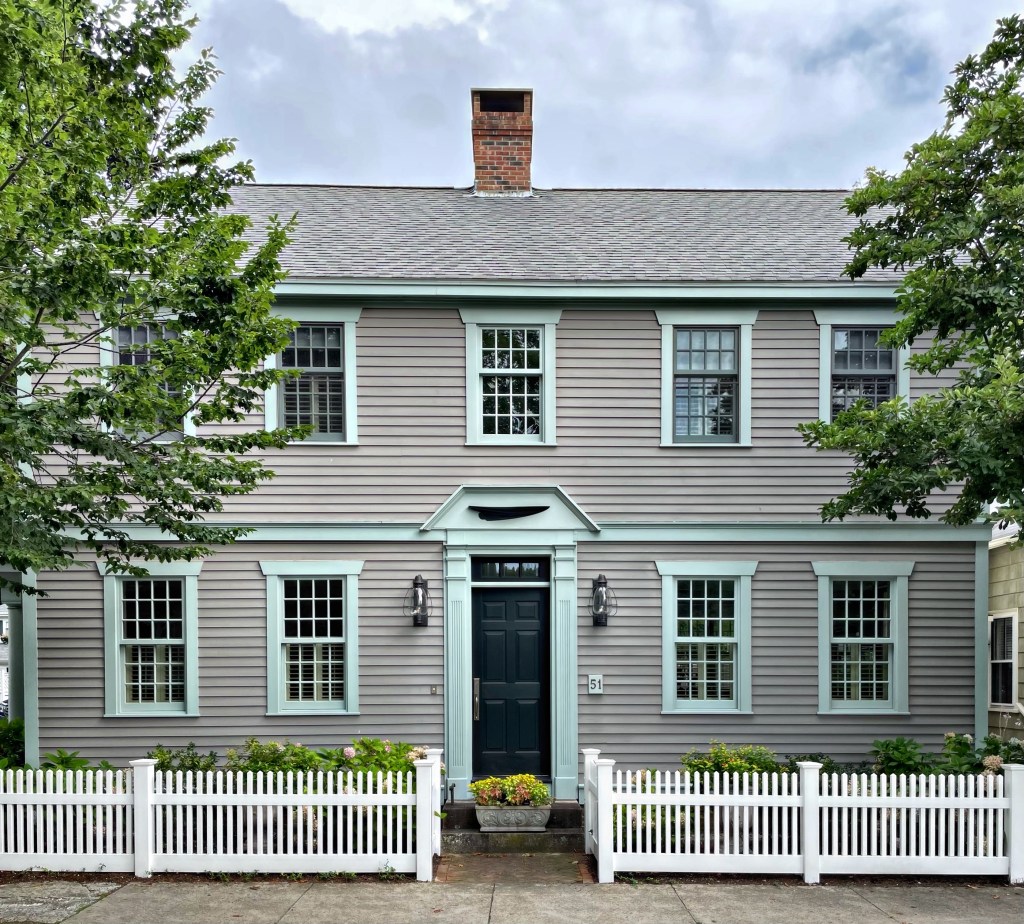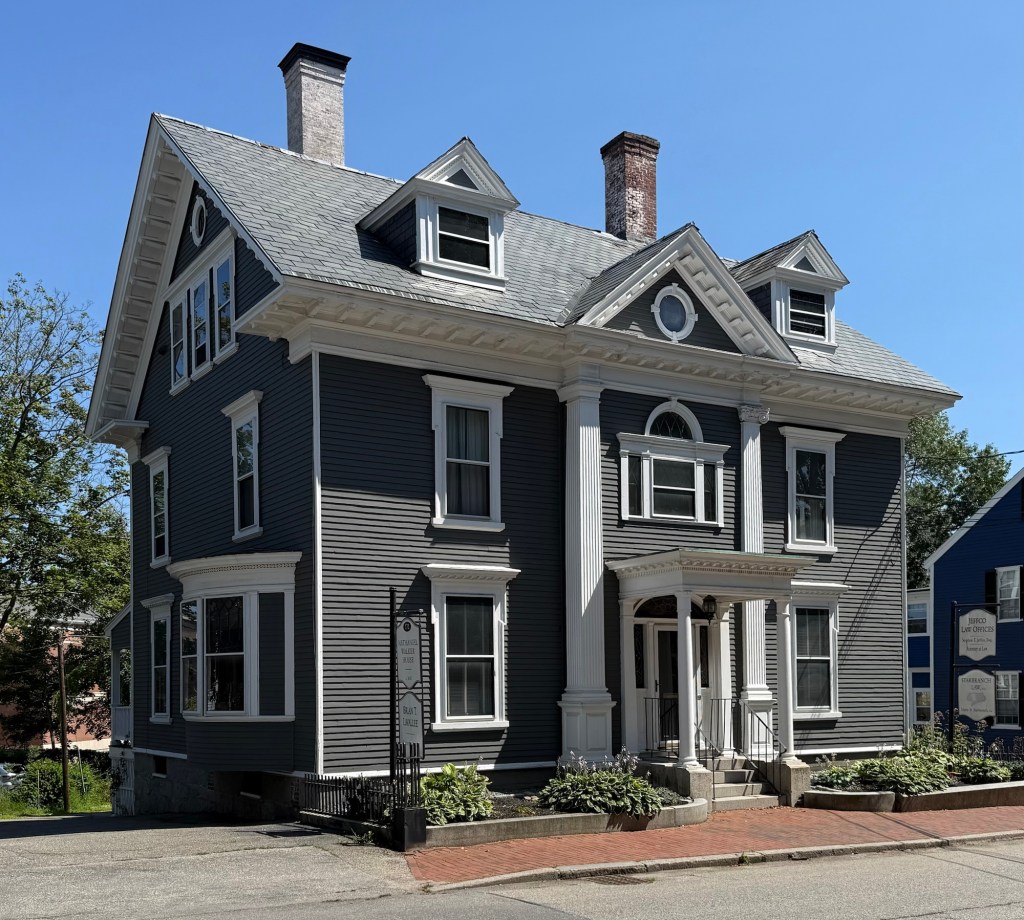
Walker House // c.1857

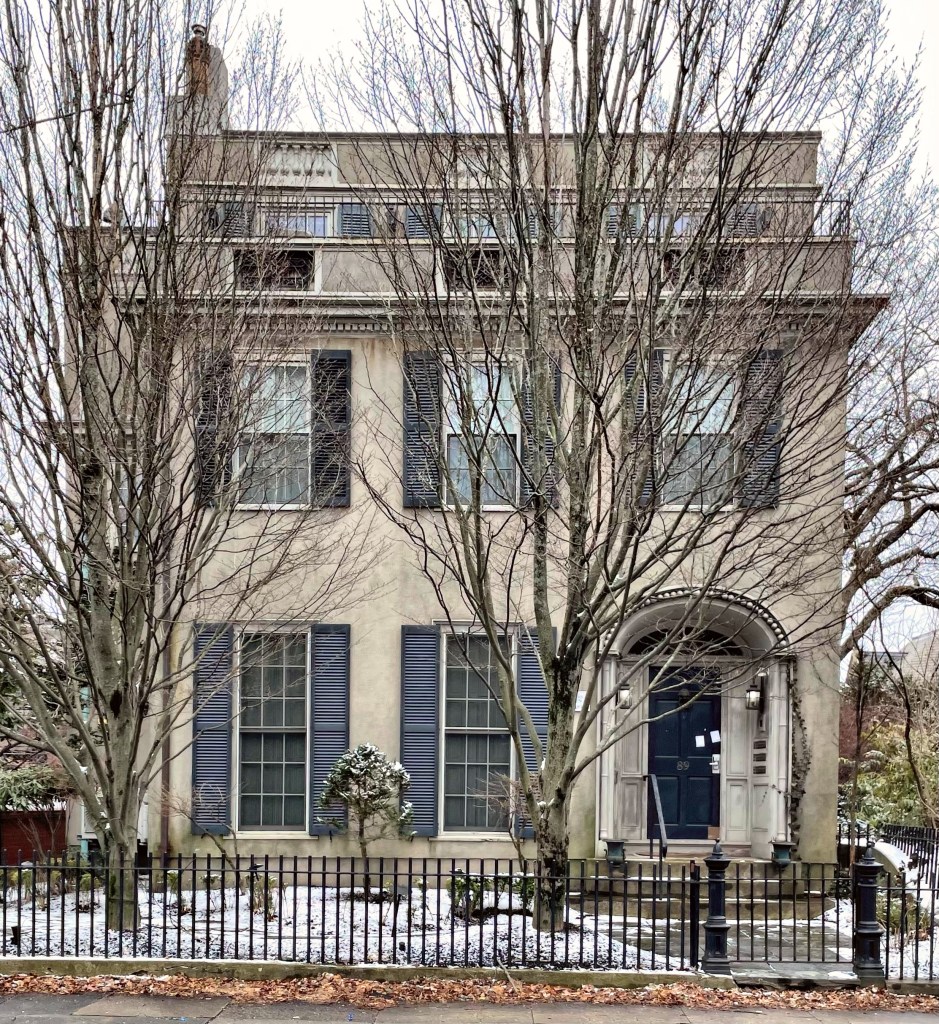
The Walker House at 171 Middle Street in Portsmouth is a wood-frame Italianate-style residence that was greatly modernized at the turn of the 20th century into the Colonial Revival style, showcasing how differing styles can actually blend together fairly harmoniously. The house was built around 1857 for Nathaniel Kennard Walker (1807-1880), a ship owner who operated a hat shop in town. After his death in 1880, Nathaniel’s youngest son, Arthur Willard Walker (1855-1906), inherited the home, and some time after his marriage in 1886, modernized the family home in the then fashionable Colonial Revival style, popular in many New England towns as a callback to historical designs. Original details of the Italianate style that remain include: the overhanging bracketed eaves, wide cornice, centered gable at the roof, and the window trim. Colonial Revival additions to the Walker House include: the entrance with leaded glass fanlight transom and sidelights, entry portico, two-story fluted pilasters at the facade, and Palladian window at the second floor stairhall.
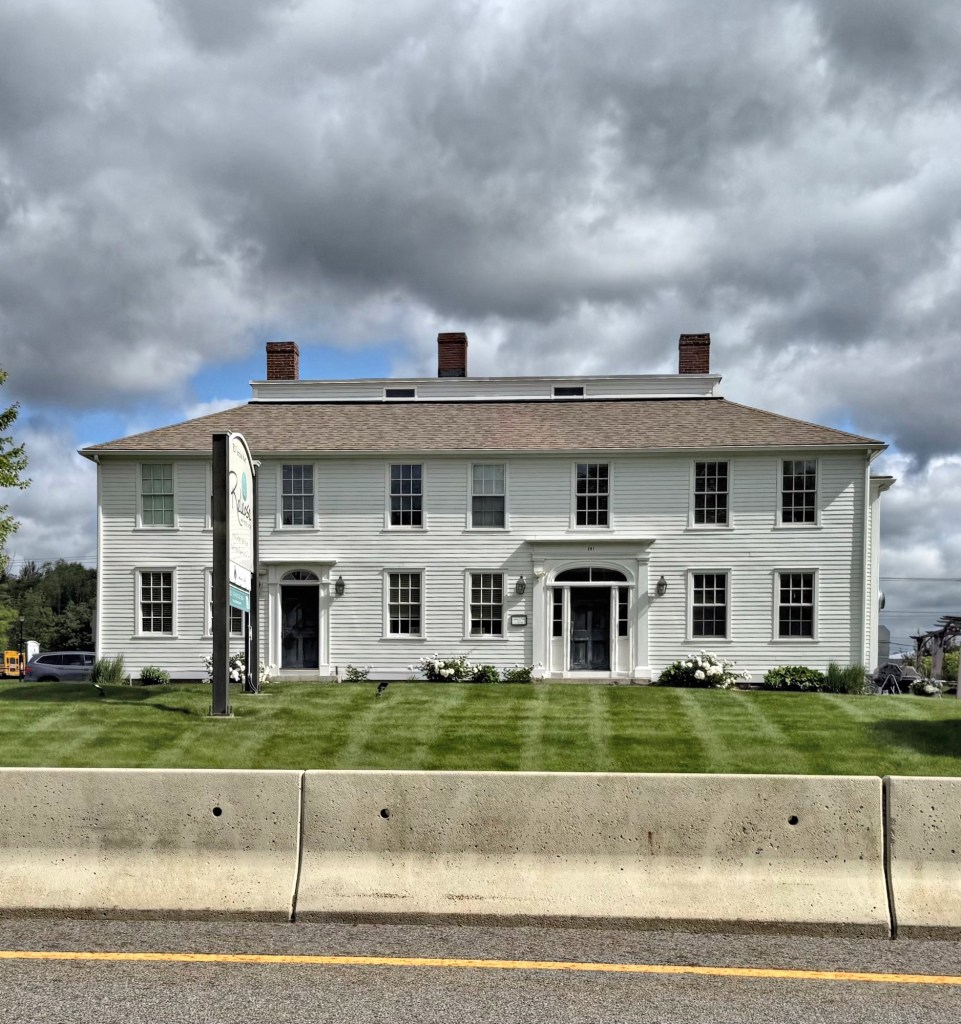
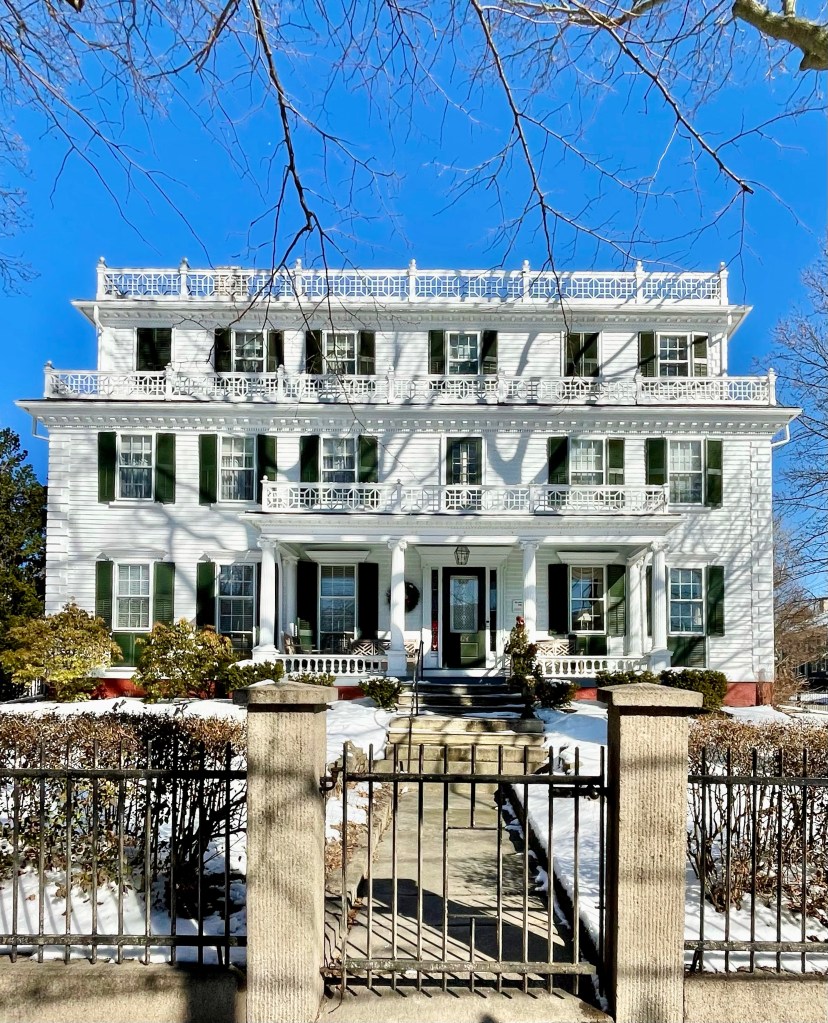
Nathan Fisher House // 1822

In 1820, Nathan Austin Fisher (1796-1851) purchased land along the Boston-Worcester Turnpike in Westborough, Massachusetts with the aim to build a home for his new wife, Susan T. Lothrop. By 1822, he had built a five-bay, center-hall Federal style estate house on the property and the couple began to raise their family. By 1826, Nathan and his brother-in-law, Joseph Lothrop, had opened a store in a section of Fisher’s house, which had been added for that purpose, presumably the western (left) three bays of the structure. Joseph Lothrop would build a Federal style residence on the opposite side of the turnpike that same year. When the railroad came to Westborough, turnpike traffic slowed, and the new rail line went through the center of town, bypassing the Fisher House and store, causing it to fail. Fisher and Nothrop would eventually leave Worcester County, and the property was sold numerous times until 1919, when this property was purchased by the Lyman School. The Fisher House became a residence for younger, special-needs boys to insulate them from the main population of Lyman, a reform school for the education and vocational training of wayward boys. In 1938, the house was converted back to a two-family home and used by families of Lyman School employees until the Lyman School closed in 1972, leaving the iconic Nathan Fisher House vacant for decades. After a failed attempt to convert the property into a house museum, the property was purchased by a local business, Release Well Being Center, and has been lovingly restored and maintained ever-since!

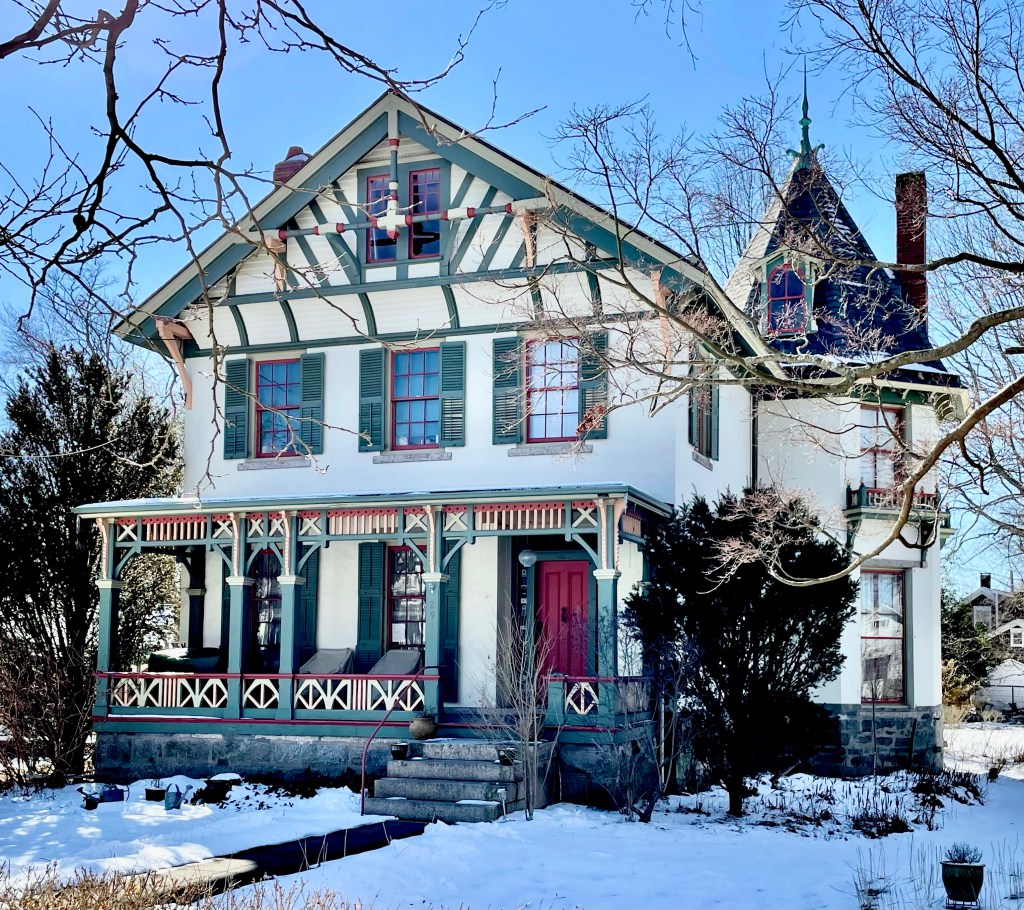
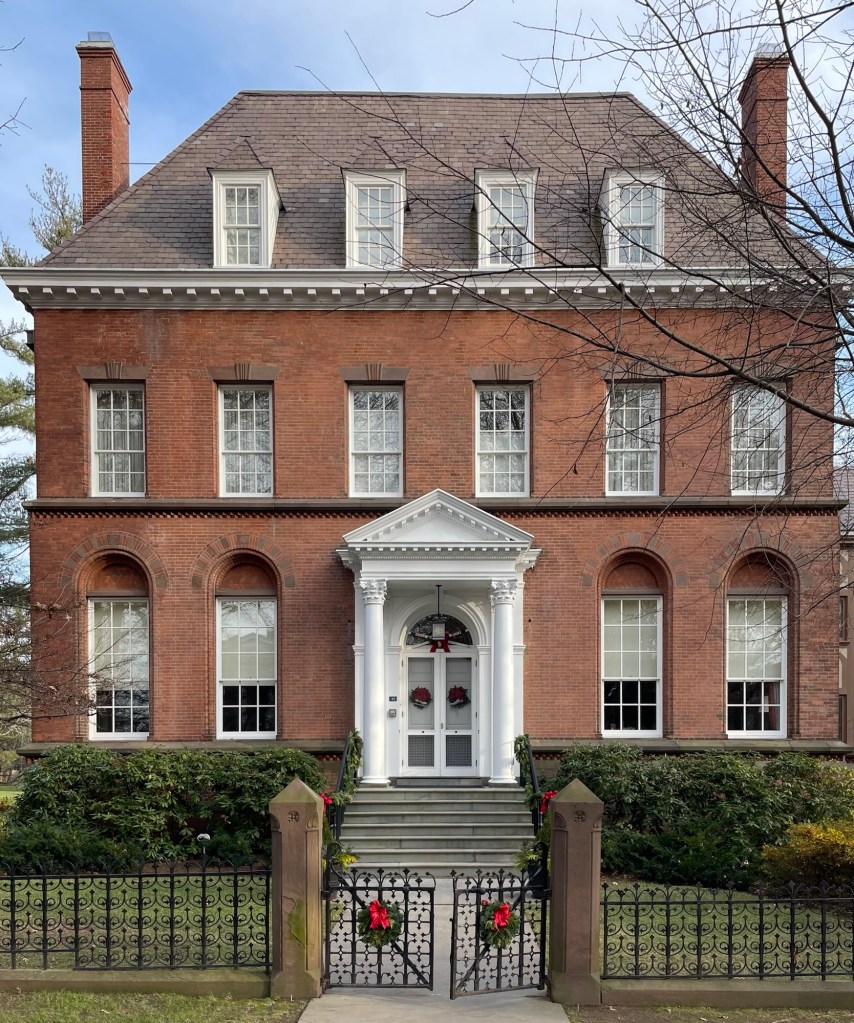
Farnam House – Yale President’s House // 1871

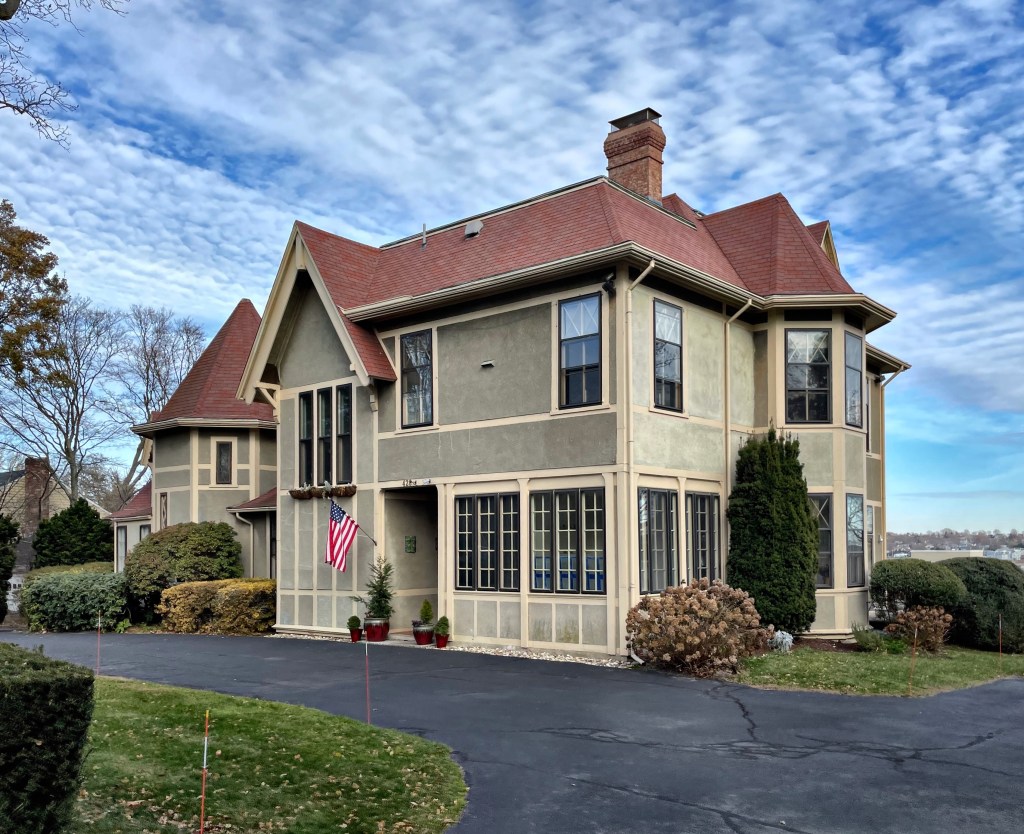
In 1871, wealthy engineer and philanthropist, Henry Farnam (1803-1883), purchased a house lot on the desirable Hillhouse Avenue in New Haven, Connecticut, where he would live out his final days in retirement. Mr. Farnam made his fortune beginning in 1839, when he was instrumental in building the railroad connecting New Haven to New York. In 1850, he moved to Illinois where he partnered with Joseph E. Sheffield to build the Chicago, Rock Island and Pacific Railroad, becoming that railroad’s president in 1854. In 1868, Farnam moved back to New Haven when he hired Russell Sturgis, Jr., to design and oversee construction on his home there. Henry Farnam also worked with Sturgis on Farnam Hall at Yale, where he is the benefactor and namesake of the building. Henry Farnam died in 1883, and in his will, he stipulated that he would gift his property to Yale College under the condition that his son, Henry W. Farnam, could live there until his death. Henry Walcott Farnam was an economist, and served as president of the American Economic Association. In 1933, the property ownership was officially transferred to Yale University, who in 1936, renovated the property, changing its appearance from Victorian Gothic to Colonial Revival. Architects, Richard A. Kimball and Ellery Husted furnished the designs for the stately residence. Since that time, the Farnam House has served as the residence of the Yale President.

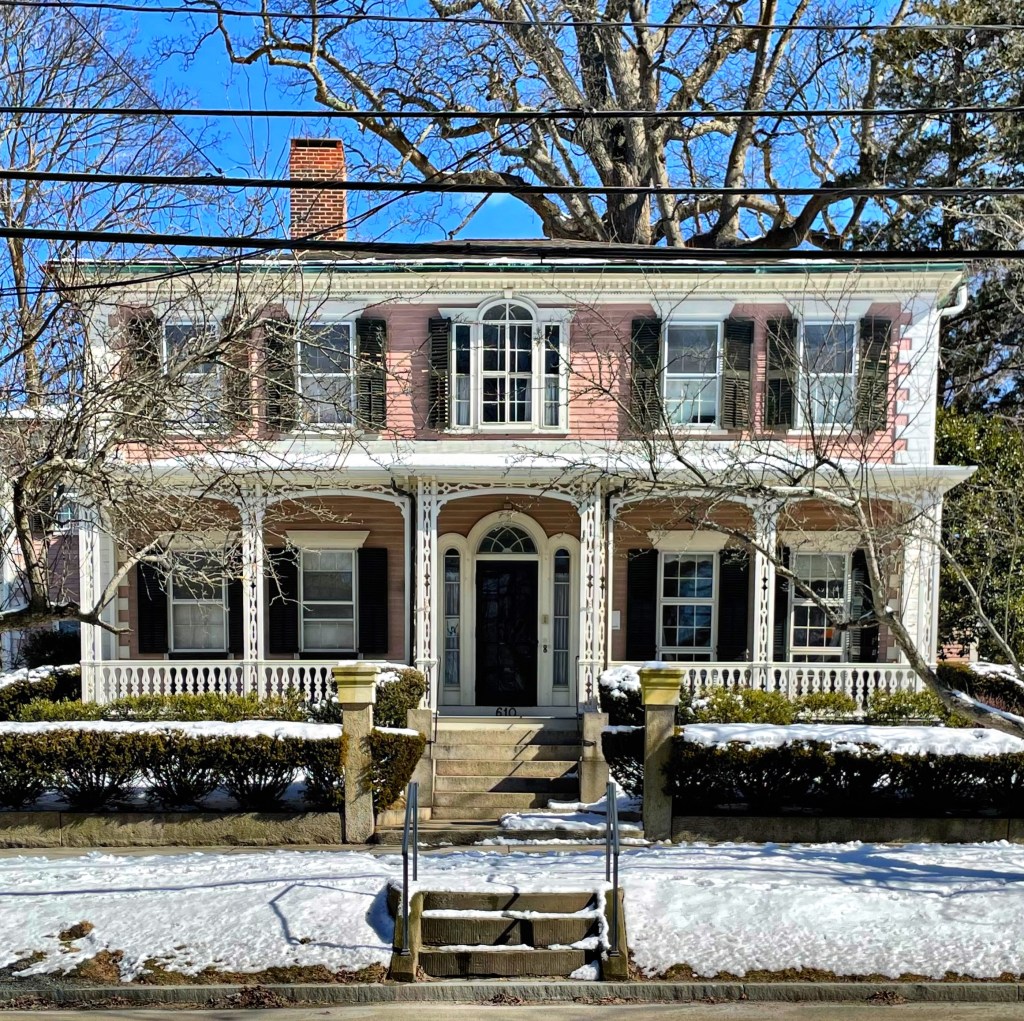
Benjamin Bliven House // 1849

Although Benjamin Bliven built this house, he never owned the property, but the name lives on! This house on Angell Street in Providence was originally constructed in 1849 in the Greek Revival style, popular at the time. Bliven, a musician, rented the property to tenants until the deed was transferred to Abby W. Watson, wife of Robert W. Watson (owner of the property next door and featured on this account previously). The first owner-occupants were Grace A. and Eugene H. Greene, who bought the property in 1898. The house was completely remodeled in the early decades of the 20th century with Regency/Colonial Revival detailing. Changes including the former roof with its gable-end facing the street boxed off, a new modillion cornice with parapet above; recessed attic story with balustrade; small wing to the east. The stucco siding and Federal entry is icing on the cake!

“Morningside” // 1872

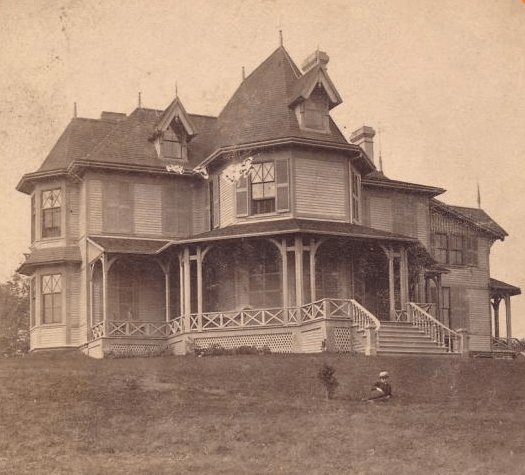
While many of the summer cottages in Newport retain much of their architectural and historical integrity, it is not always the case. This cottage, named “Morningside” barely resembles its original 1873 design. The summer home was built for William Barton Rogers (1804-1882), a scientist, educator, and best-known as founder of the Massachusetts Institute of Technology. He sought a place of rest and leisure, away from the stresses of Boston and running a new college, so he hired the Boston firm of Cabot & Chandler to design a Stick style cottage for him to spend the summer months at. In his diary for October 11, 1872, Mr. Rogers wrote, “Removed [from Cliff House Cottage] to our new home on Gibbs Avenue, at 4.30 o’clock. I have decided to name the place ‘Morningside.'” The house was his respite from stresses and he loved to spend time here with his family. President Rogers died after collapsing during a speech at MIT’s 1882 commencement exercises. His last words were “bituminous coal.” After the property sold out of the Rogers estate, the house was remodeled with stucco siding and much of the original Stick detailing was removed or covered. Morningside is now divided into condominiums.

Morningside c.1880s

President Grover Cleveland Summer Home // c.1886

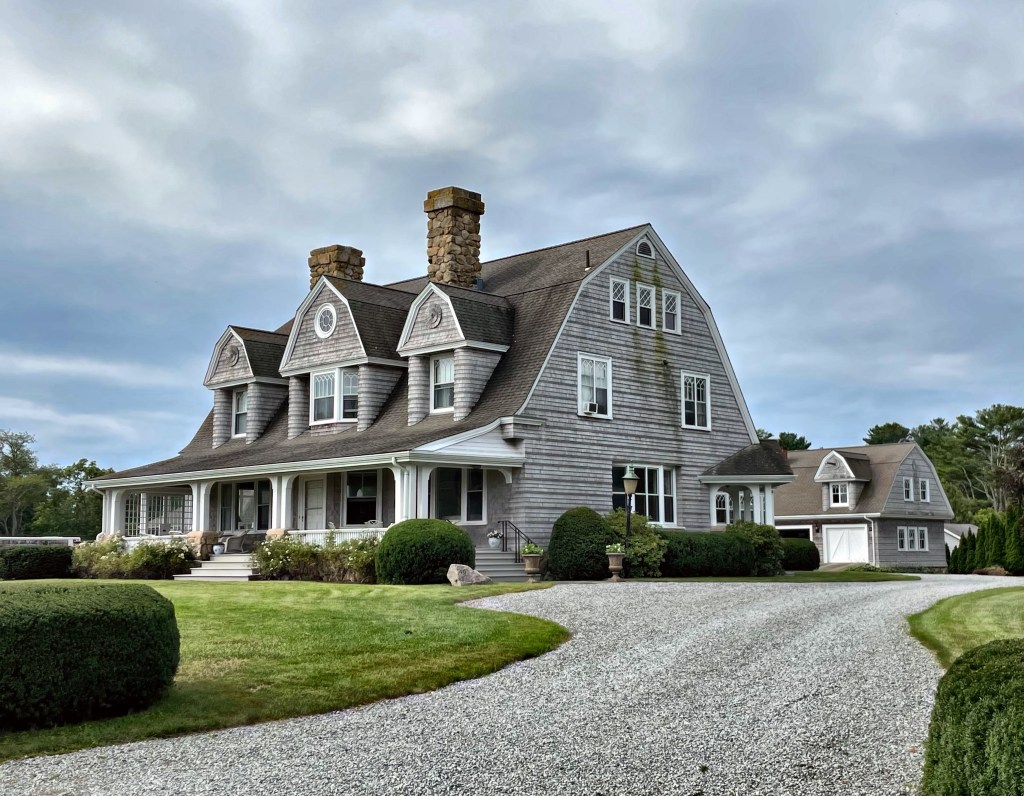
My favorite home in Marion, Massachusetts is this summer cottage on Water Street, overlooking Sippican Harbor. The home is said to have been built from a c.1840s house and enlarged by Reed as a summer home in the fashionable Shingle style. H. R. Reed, an agent for the Revere Sugar Refinery in Boston was well-connected in town and hosted President Grover Cleveland with Rev. Percy Browne ( a summer resident) at his cottage during the summer months. Evidently, Reed added the rubblestone elements, modified the porch, added a tower on the south elevation, the massive dormers at the roof, and is responsible for the exquisite Colonial Revival-style interior, from architect James Templeton Kelley. The home is arguably best known as the summer White House of Grover Cleveland, the only U.S. president to marry in the White House and the only two-time president to serve non consecutively – from 1885-89 and from 1893-97. The Cleveland’ Family summered in Marion between their time in the White House. In 1891, the President hoped to purchase the home, but could not settle upon a reasonable price, so he bought Grey Gables, a summer cottage in nearby Buzzards Bay (no longer extant).

Look-Coggeshall House // 1828

Believe it or not, this beautiful home was once a one-story Cape house! Built in 1828, the home was constructed for Captain Hiram Look, a sea captain, and his new wife Kezziah (Kezia) within a year of their marriage. They had two daughters. Hiram died in 1865, possibly related to the Civil War, which ended that year. After his and his widow’s death, the home was willed to their daughter and her husband, Bernard Coggeshall, who was likely a descendant of the Coggeshall Family of Bristol, RI. The Look daughter died in 1890, and Bernard remarried a year later. Sometime after 2008, this home was enlarged, giving it the second story we see today. If you look closely at photos from before 2008, you can see the matching door surround, window lintels, and window spacing seen today. While the home is completely different, the “updated” version is still appropriate and conveys the home’s history.

What do you think?

Bradford-Norris House // 1792

William Bradford (1729-1808), who would become Deputy Governor of Rhode Island from 1775 to 1778, came to Bristol to practice medicine by 1758. When he arrived, he rented Mount Hope Farm (featured before), before building a home in town. When the British Navy bombarded Bristol on October 7, 1775, his home was among the buildings destroyed. He afterward went aboard ship to negotiate a cease fire, saving what was left of the town. In 1792, he built a 2 1/2-story Federal style, boxy house on this lot, close to the street. The home was willed to his son Hersey, who resided there until the 1840s, when he mortgaged the house to Francis Dimond, who resided in a Greek Revival temple front home (also featured on here previously). He gifted the modest Federal home to his daughter, Isabella, possibly as a wedding gift upon her marriage to Samuel Norris, a sugar refiner. Mr. Norris and Isabella hired architect Russell Warren, who designed her father’s home nearby, to renovate the house in the spring of 1845, moving the house away from Hope Street. The house was given its third floor and additional bay, along with the ornate design which characterizes it to this day, including the Ionic porch and Chinese Chippendale balustrade. The house remained in the Norris family until 1942 and is now a B&B.

DeWolf-Guiteras House // c.1835

This incredibly unique and flawless home in Bristol was apparently built by the infamous James DeWolf. Historic records state that the slave trader built the home for his son William Henry, but that is unlikely as he was the owner of the family mansion, Linden Place at that time. Therefore it is likely that another of James’ sons William Bradford DeWolf was gifted the home, roughly at the time of his marriage in 1835. The home was a 2 1/2-story Greek Revival home. By the 1880s, the property was sold to Dr. Ramon Guiteras, a urologist, who had the house stuccoed, fashionable Stick style trim applied across the facade, a full-width bracketed porch, and two-story octagonal tower on the side. The home is now owned by the neighboring church who restored it in the 1970s and maintain it beautifully to this day.

Luther-Babbitt House // 1809

In 1809, Giles Luther built this two-story, 5-bay, hip-roof Federal house, which has been substantially enlarged and altered over the years in succeeding styles. Original detailing on the facade includes the Palladian window, modillion cornice, quoins, and wide-beaded window casings with splayed lintels. Giles Luther (1775-1841), a shipmaster, merchant, and farmer, was more importantly the first Grand Marshall of the Bristol Fourth ofJuly Parade, which is believed to be part of the oldest Fourth of July celebration in the country. In 1825 Luther’s business failed; the Commercial Bank took this house and sold it in 1828 to Jacob Babbitt. Babbitt owned part of a wharf in town and in his will of 1849, he left the “use and improvement” of this house to
his son Jacob, Jr. (1809-1862). The younger Babbitt was wealthy and likely made the mid-19th century modifications to the home, including the Italianate triple-arched door and full-width porch with delicate cut-out posts and railings. The home was occupied for much of the 20th century by the Bristol Nursing Association, and sold in the 1970s to a private owner. The home was for a period ran as a bed & breakfast but appears to be back to a private residence today.