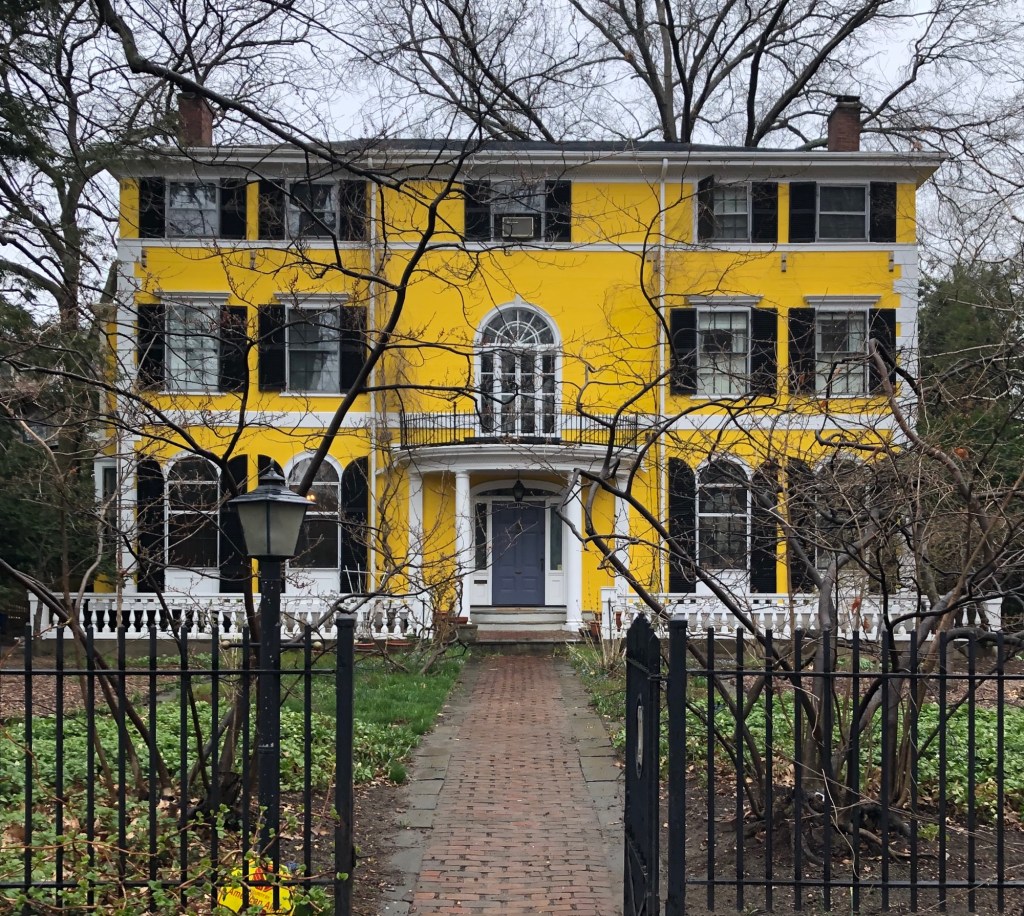
Dr. Gridley Thaxter House // 1798

The Dr. Gridley Thaxter House on Washington Street in Abington, Massachusetts, is one of the most significant properties in the South Shore town, not only for its architecture, but also its owners. The house was built in 1798 for Dr. Gridley Thaxter (1756-1845), a ship’s surgeon in the Navy during the American Revolution. He married Sarah Lincoln (1761-1810), the daughter of Benjamin Lincoln of Hingham, a Major General in the Revolution and served from 1781 to 1783 as the first United States Secretary of War. Dr. Thaxter and his new bride acquired land in Abington, and moved there where he would serve as the town’s doctor. After his death, the property was inherited by Elizabeth Thaxter Hunt, the couple’s daughter, and her husband, Joseph Hunt. It was Elizabeth, who added the Italianate window hoods and a cupola (since removed) at the roof, “modernizing” the family homestead.
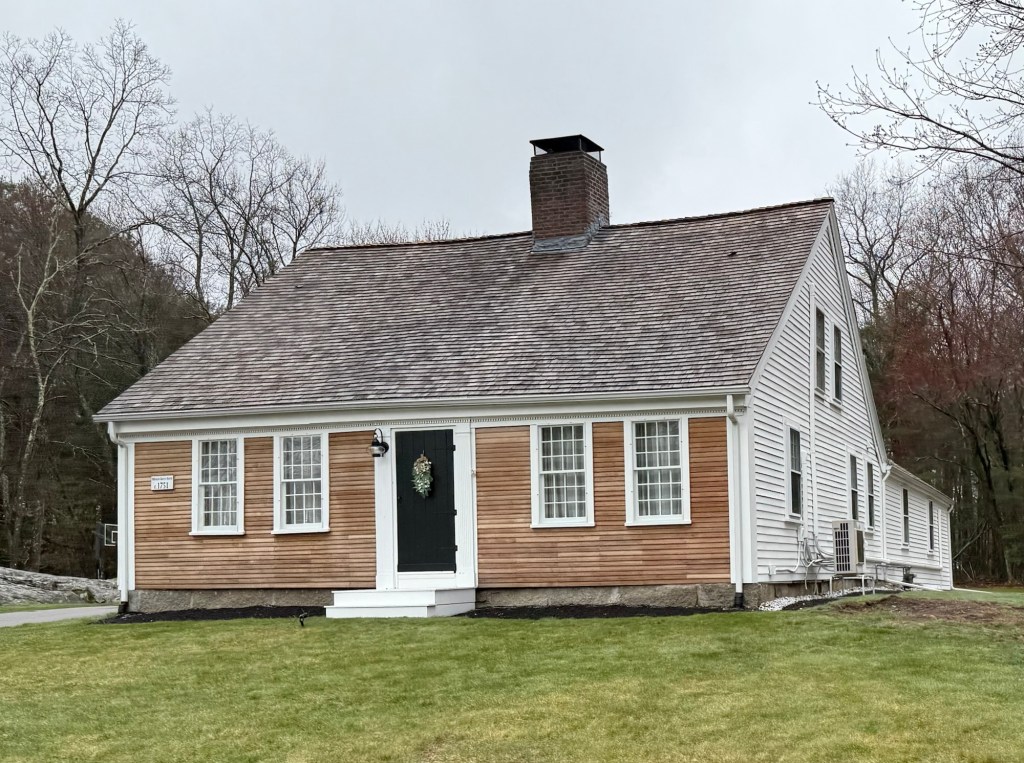
Orcutt-Ford Homestead // c.1751

In about 1751, Emerson Orcutt (1713-1777) purchased land in North Abington, Massachusetts, and built a half cape for his family. In 1762, Orcutt sold some of the land to John Ford, who was later a Lieutenant in the Continental Army, and according to local tradition, Ford added the other half of this current Georgian Cape house, giving it the current configuration. Character defining architectural details include an entry surround with fluted pilasters, and dentil cornice band on the main facade, 12-over-12 sash windows, and the central chimney, which would have heated both sides of the house. The property remained in the Ford family for over 100 years, and has since been converted back to a single family residence. Today, the charming pre-Revolutionary cottage is one of the oldest extant houses in Abington.

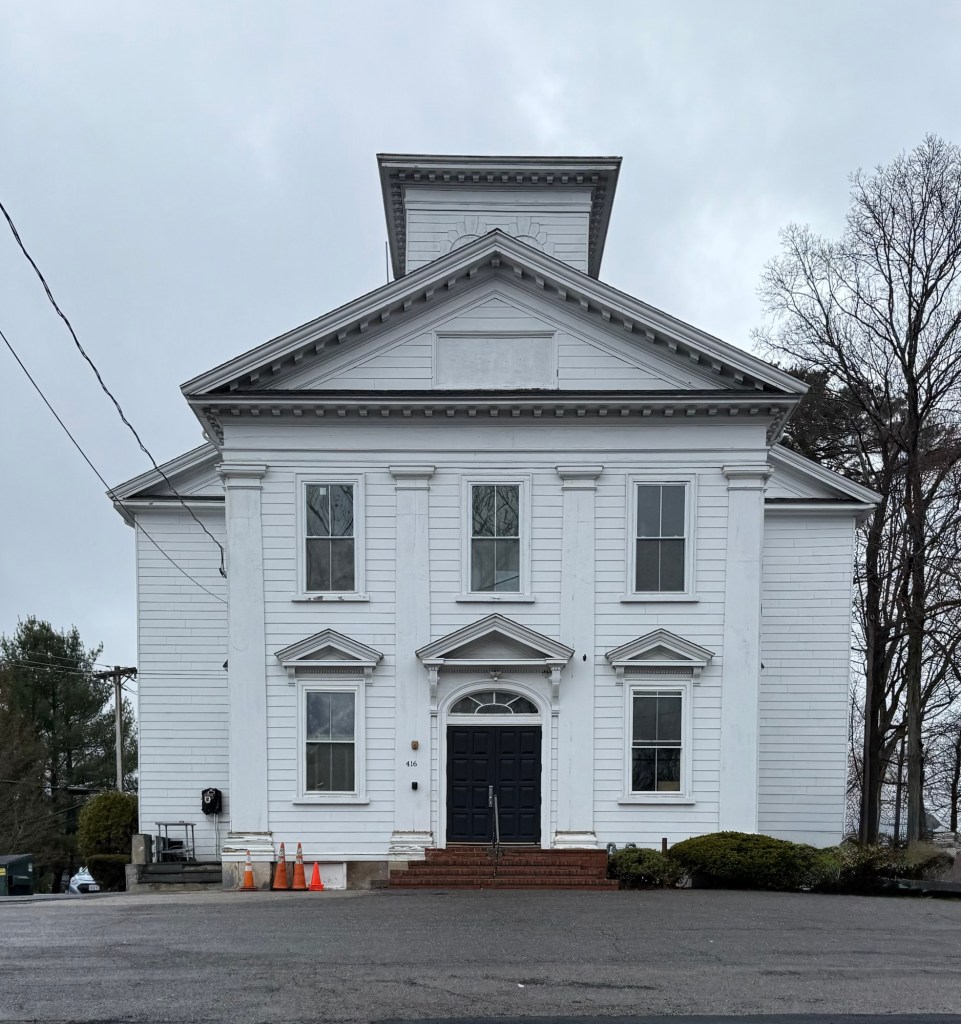
First Congregational Church of Abington – Abington Masonic Hall // 1819

The First Congregational Church of Abington, Massachusetts, was established in 1711. Besides the First Church, there were three additional churches founded in the town’s other villages: The Second Church in South Abington (now Whitman) Third Church of East Abington (now Rockland), and the Fourth Church at North Abington. This edifice was the third building of the congregation, and was built in 1819. The structure was only used as a church for 30 years until 1849, when the congregation built a new church nearby. This structure was sold and converted to a Masonic Hall and District Court for some years. Major changes to the building include the destruction of the steeple from the Gale of 1869, and in 1885, the present entryway was added, extending about 20 feet from the facade to provide a more adequate stairway to the second floor. Today, the building is used as a church for a local Brazilian congregation.

First Congregational Church of Abington // 1849

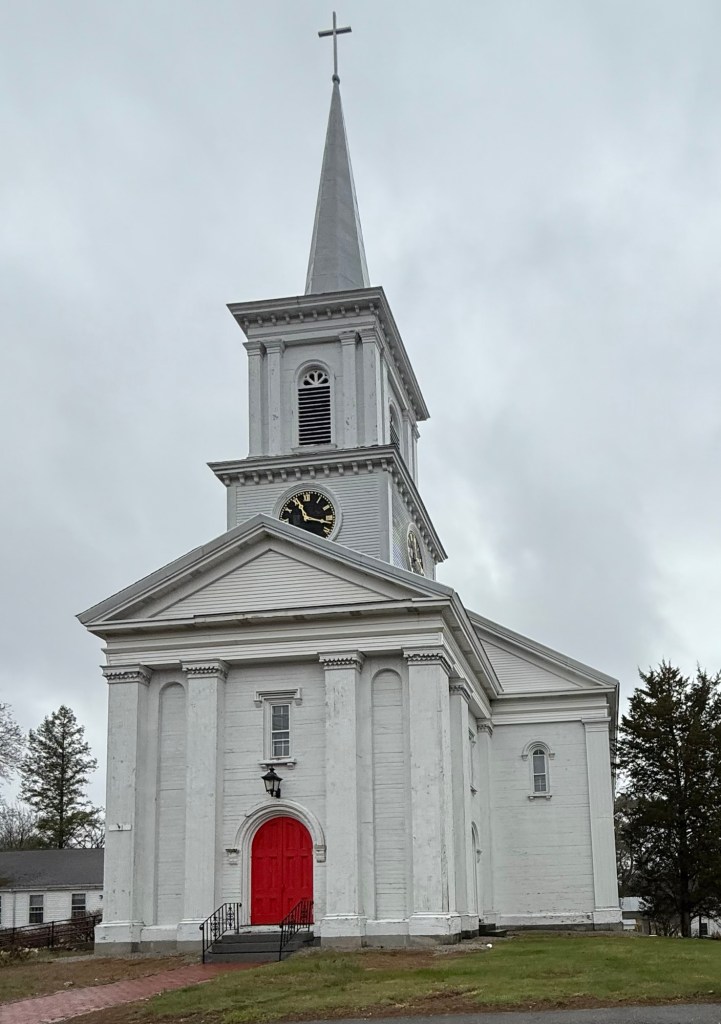
Abington, Massachusetts was first settled by Europeans in 1668 and was officially incorporated in 1712. Its namesake was is said to have been set by Governor Joseph Dudley as a tribute to Anne Bertie Venables, Countess of Abingdon, wife of the second Earl of Abingdon, who helped Dudley secure the governorship of the Colony of Massachusetts from Queen Anne. Governor Dudley noted in its decree that, “the Town be named Abingdon”. A marginal note on the document gave the spelling as “Abington” with a “t”, which has served as the spelling ever-since. At the center of town, this handsome church is the fourth edifice of the Congregational Church Society in Abington, Massachusetts, and replaced the third church, which was occupied for just thirty years until 1849, when this Greek Revival structure was built. Located a stone’s throw from its former home, this church showcases the increase in membership and relative wealth of the congregation by the middle of the 19th century. The structure with its flushboard siding and bold Doric pilasters, features an arched center entrance and multi-stage tower containing a clock and enclosed belfry.

New England Fireproof Construction Co. Apartments // 1917

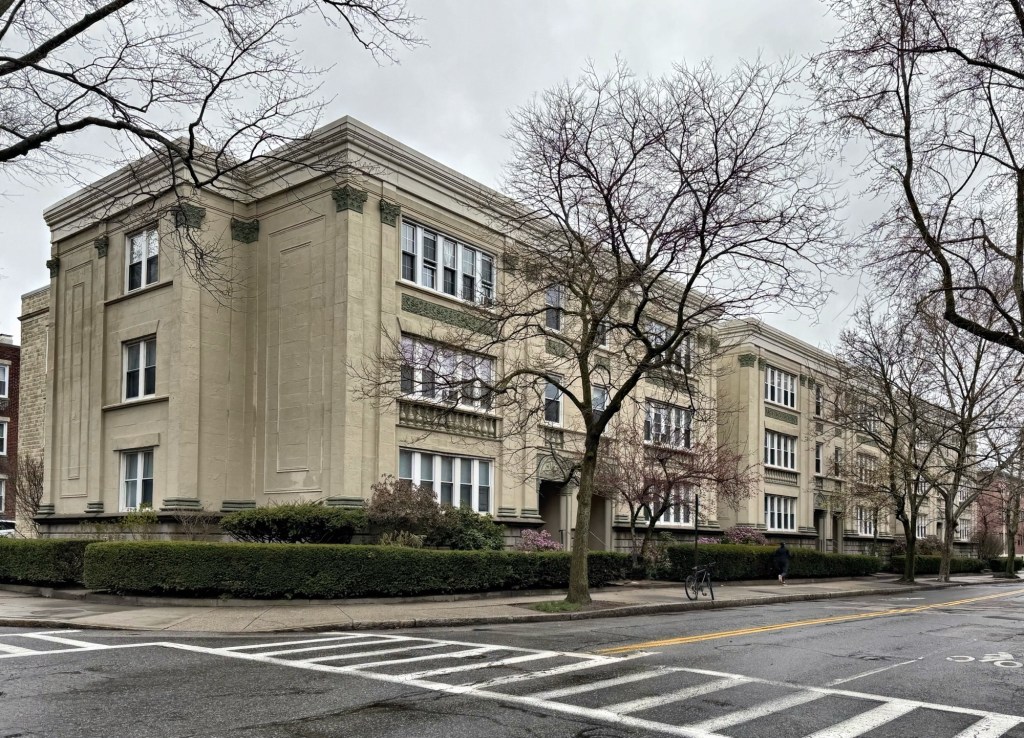
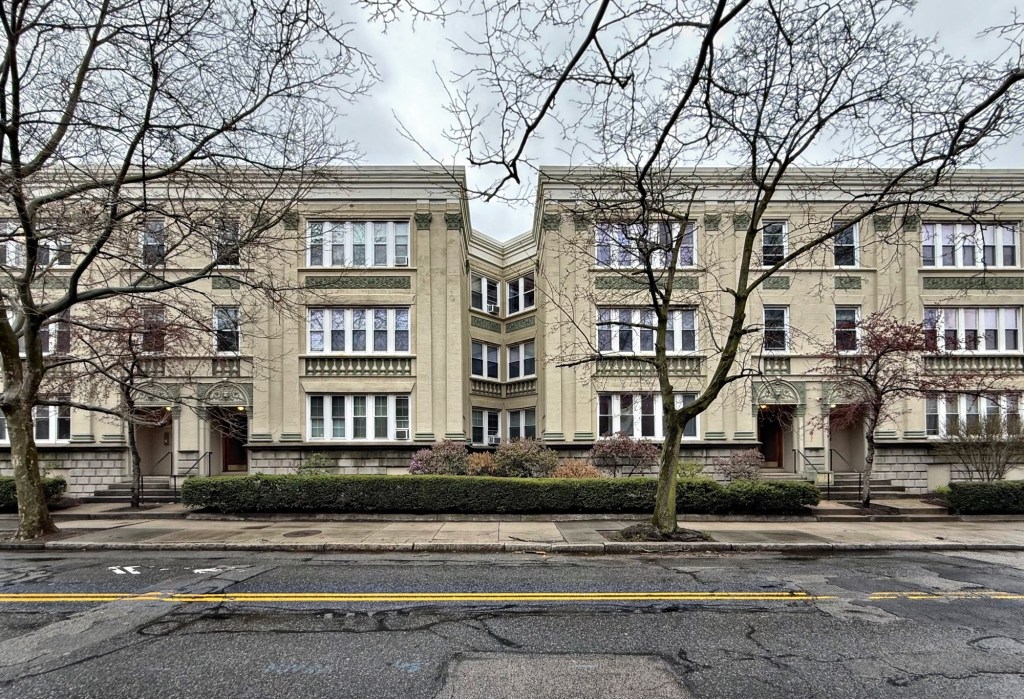
One of the most unique and architecturally pleasing buildings in Brookline has to be these apartments on Egmont and St. Paul streets that break the mold of traditional brick or wood-frame apartment houses. Built in 1917 by the New England Fireproof Construction Company as an example of how cheaper cement material can be used effectively and beautifully to design and construct high-quality housing. The company hired architect G. Bertram Washburn to design the buildings which utilize concrete block and cast concrete details with the facades embellished with pilasters capped with Corinthian capitals, engaged balusters, and modillioned and corniced entrances decorated with a lion’s head over each doorway. Additionally, a special touch is the recessed wells in the facade which not only break up the massing of the building, but provide additional light and air into the apartments inside. 

Snider and Druker Apartments // 1913

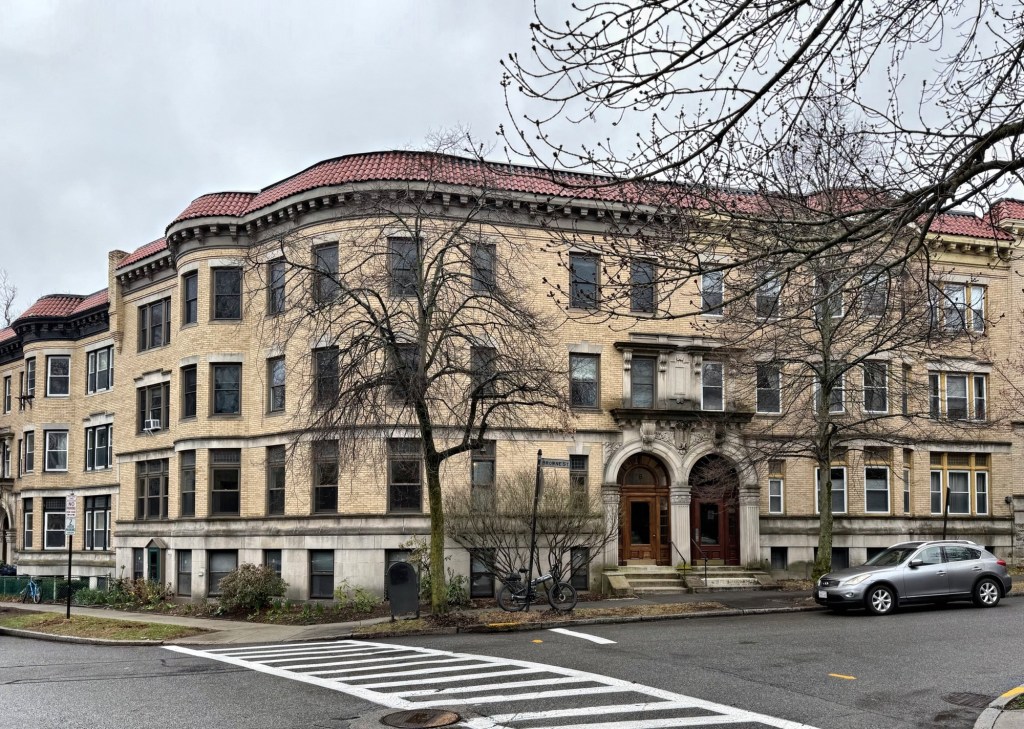
By the beginning of the 20th century, Brookline was developing rapidly as a desirable Boston suburb, with easy-access to downtown via streetcar and rail, all with less cramped land and less industrial development impacting the air quality. Developers soon realized that they could build high-quality apartment blocks within established neighborhoods to market to middle-income families who wanted to live in these desirable enclaves without breaking the bank. Developers Snider & Druker (a precursor to the Druker Company) purchased house lots in the neighborhood adjacent to Cottage Farm, a rich enclave of large homes on large lots, and began building apartment buildings. They hired architect Frederick A. Norcross, who specialized in multi-family housing designs, to furnish plans for these Renaissance Revival style apartments at the corner of Browne and Powell streets. Besides the use of buff brick, limestone trim and detailing, and the use of projecting bays to break up the facades, the building’s terracotta roof adds intrigue and individuality to a building form often maligned for blandness. 

Louis C. Page House // 1906

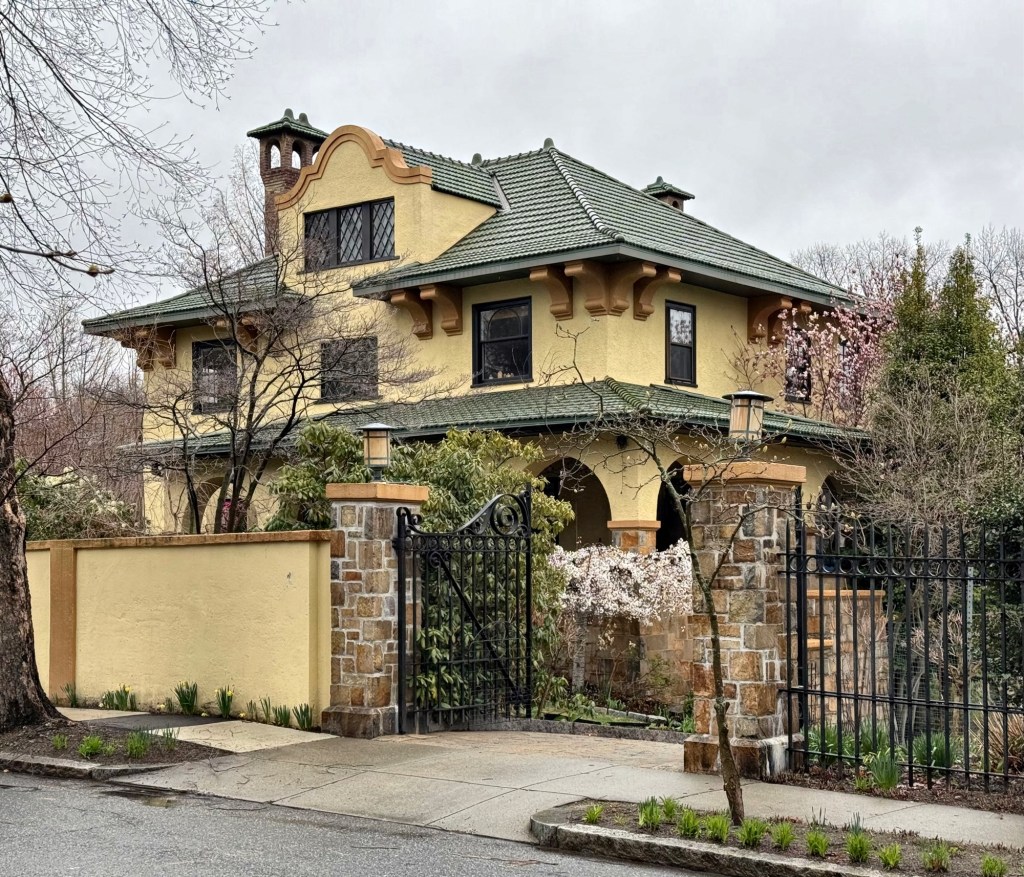
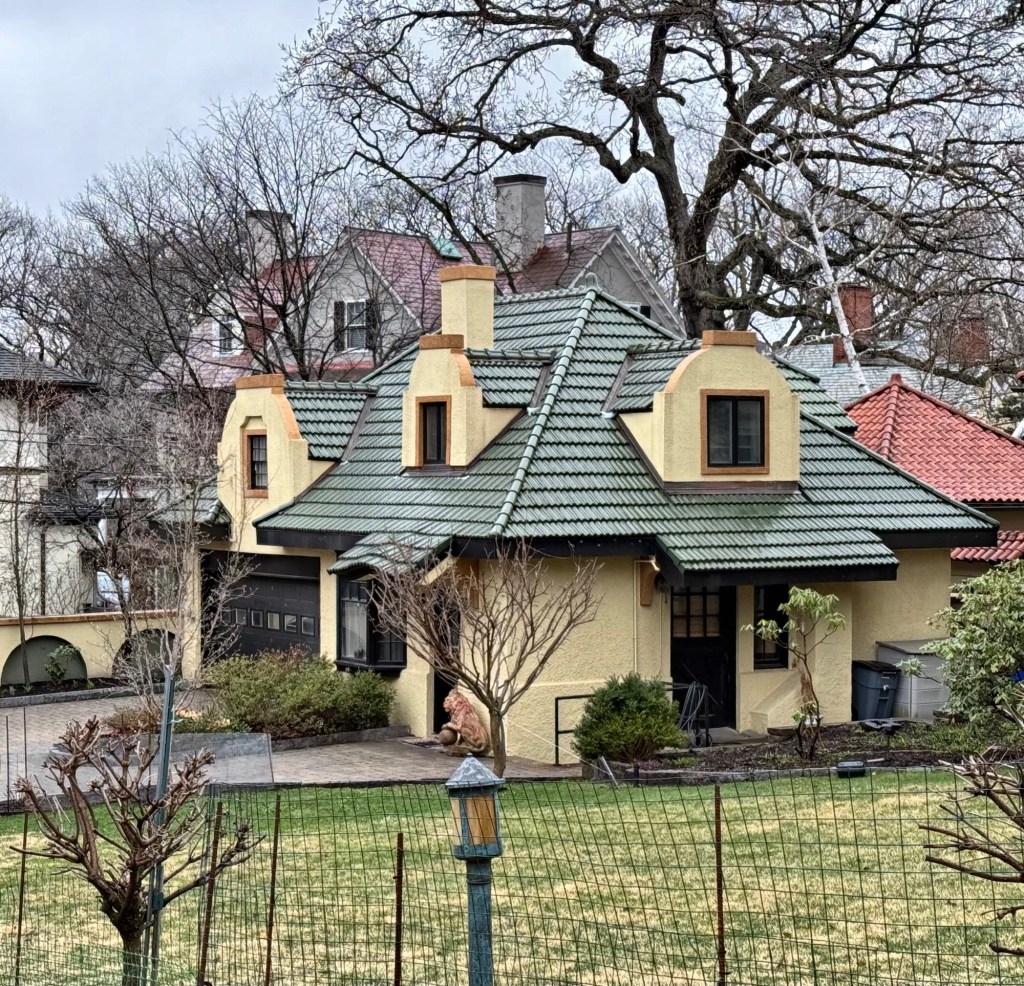
As Paul Hunt, the son of famous painter, William Morris Hunt, and the nephew of famed architect Richard Morris Hunt, built his house in Brookline, Massachusetts, he also began constructing this neighboring property which was to be sold upon completion (that is one good way to pick your neighbors!) On an oversized lot on Powell Street, Paul Hunt worked with his architect, Milton W. Stratton of Bar Harbor, to furnish plans for a similar style home to his own next door. The Mission Revival style mansion is set behind a tall, stucco and metal fence, and is constructed of wood and covered with stucco siding and capped by a lovely green tile roof. Main architectural details include the Mission-style dormer and the chimneys with round arched tops that are capped with small hipped roofs, creating a whimsical addition to the house. When finished, the property was sold to Louis Coues Page (1869-1956), a wealthy publisher with offices in Boston. Louis C. Page would hire local architect Edward B. Stratton, in 1916, to design a detached automobile garage in a style mimicking the main house. What an incredible property. 

Moseley-Widger House // 1906

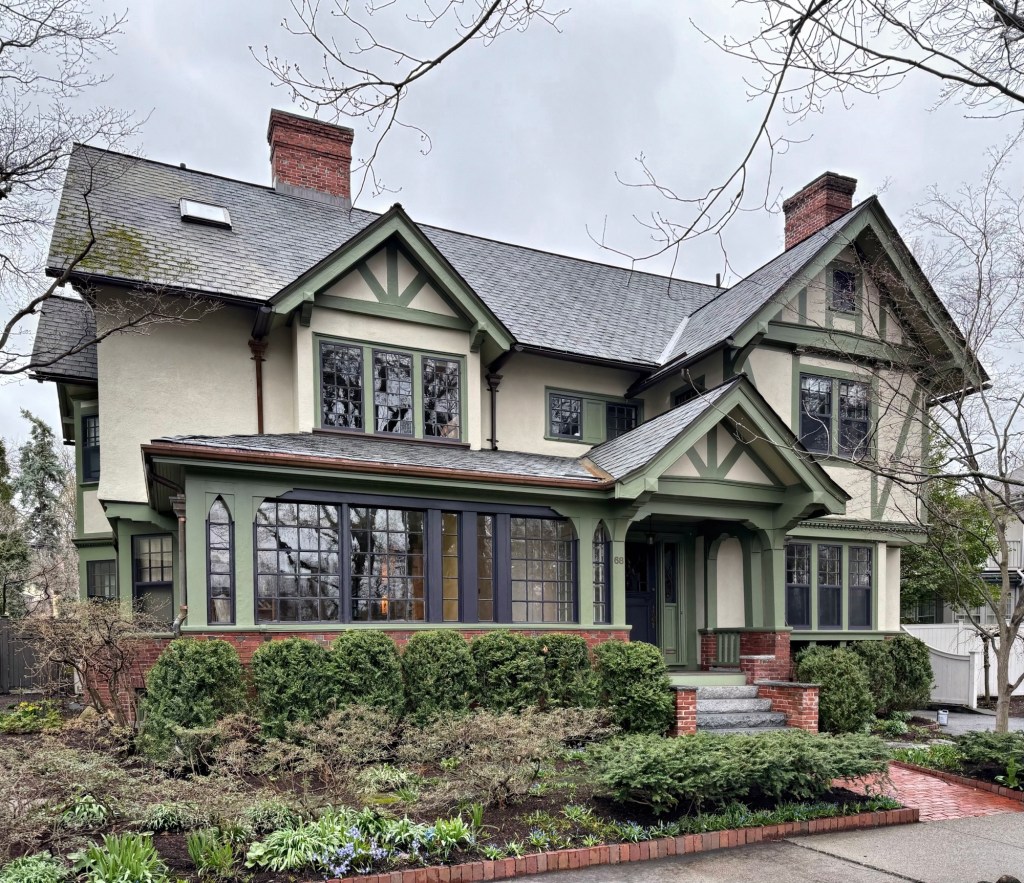
One of the many houses in the Cottage Farm-adjacent neighborhoods of Brookline, Massachusetts, is this great blending of the Tudor Revival and Arts and Crafts styles of architecture, which dominated residential architecture in the Boston suburbs in the early 20th century. This residence was built in 1906 for Mr. Frank Moseley and his wife, Martha Hawes Moseley from plans by architect Robert C. Coit. Covered in stucco siding and half timbering, the charming house evokes the countryside of England, right here in Brookline. After WWI, the house was owned by Ms. Lizzie Widger, a water color artist and member of Copley Society of Boston, and her husband, Samuel Widger, a cotton broker. The Moseley-Widger House looks as it did 120 years ago and is in a great state of preservation, thanks to generations of loving stewards.

Edward and Lillian Norton House // 1905

Edward Russell Norton (1871-1960) and his wife, Lillian (1870-1968) got married in 1904 and immediately began planning their dream home. They purchased a building lot on Powell Street in Brookline, Massachusetts, and hired architect, Robert Coit, to furnish plans for the new home which was completed by the next year. The house blends Arts and Crafts and Tudor Revival styles with a pleasing design and architecturally appropriate paint scheme.

Charles H. Owens House // 1906

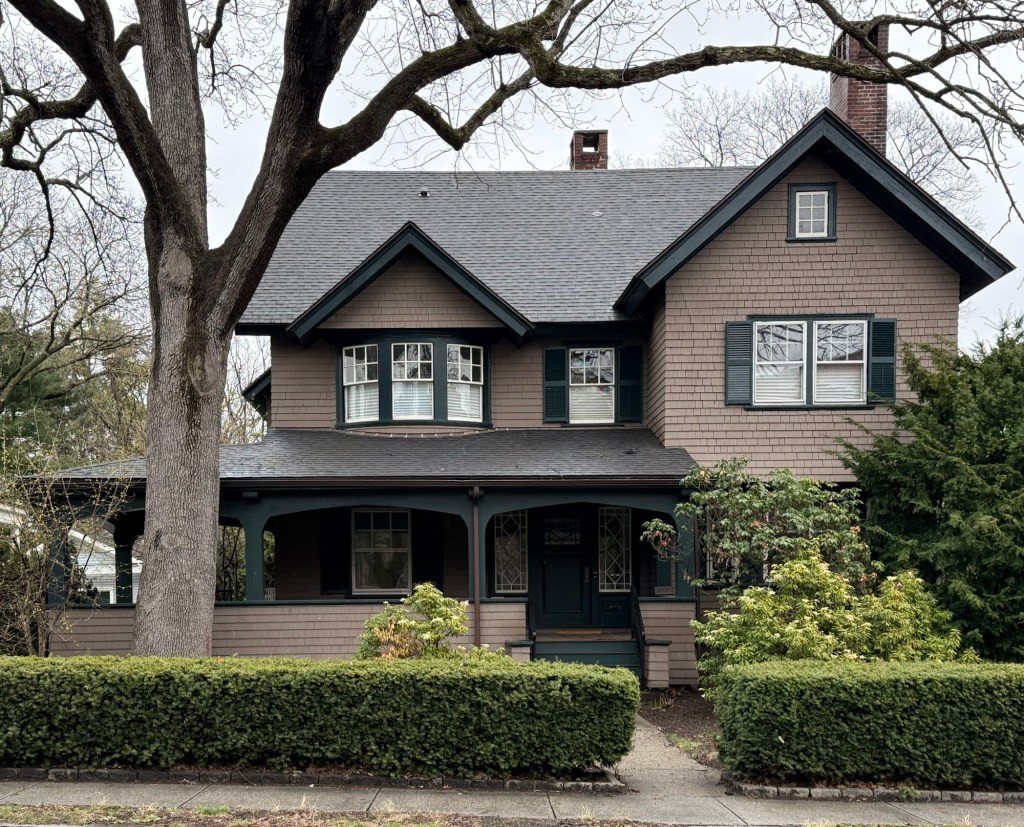
This stately house on Powell Street in Brookline, Massachusetts, was built in 1906 for Charles H. Owens, Jr., and his wife, Nellie. Charles was a “house decorator”, who built the house next door just two years earlier before moving into this larger home in 1906. Both houses were designed by the architectural firm of Loring & Phipps, who Owens likely collaborated on commissions with in his career. The house is 2 1/2-stories with a shallow hip roof and is an excellent example of an academic interpretation of the Colonial Revival style. The principal facade has flush board siding with round-arched windows on the first floor along with a squat fanlight transom over the center entrance.