North Cornwall Congregational Church // 1826

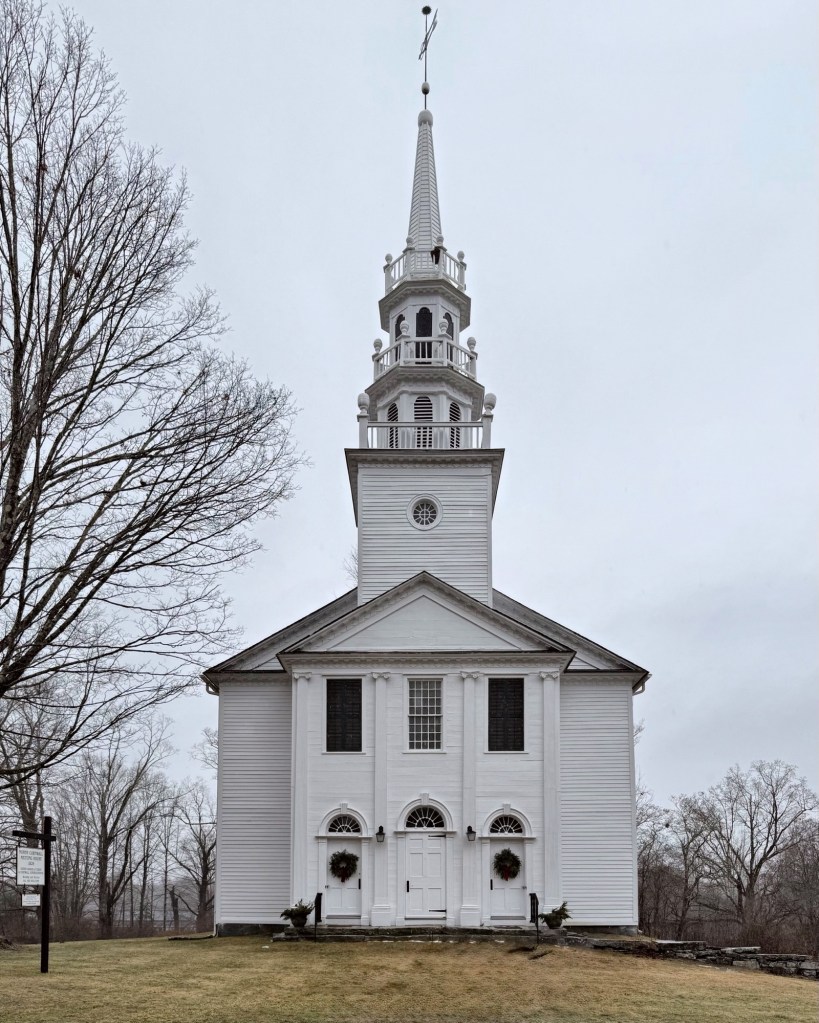
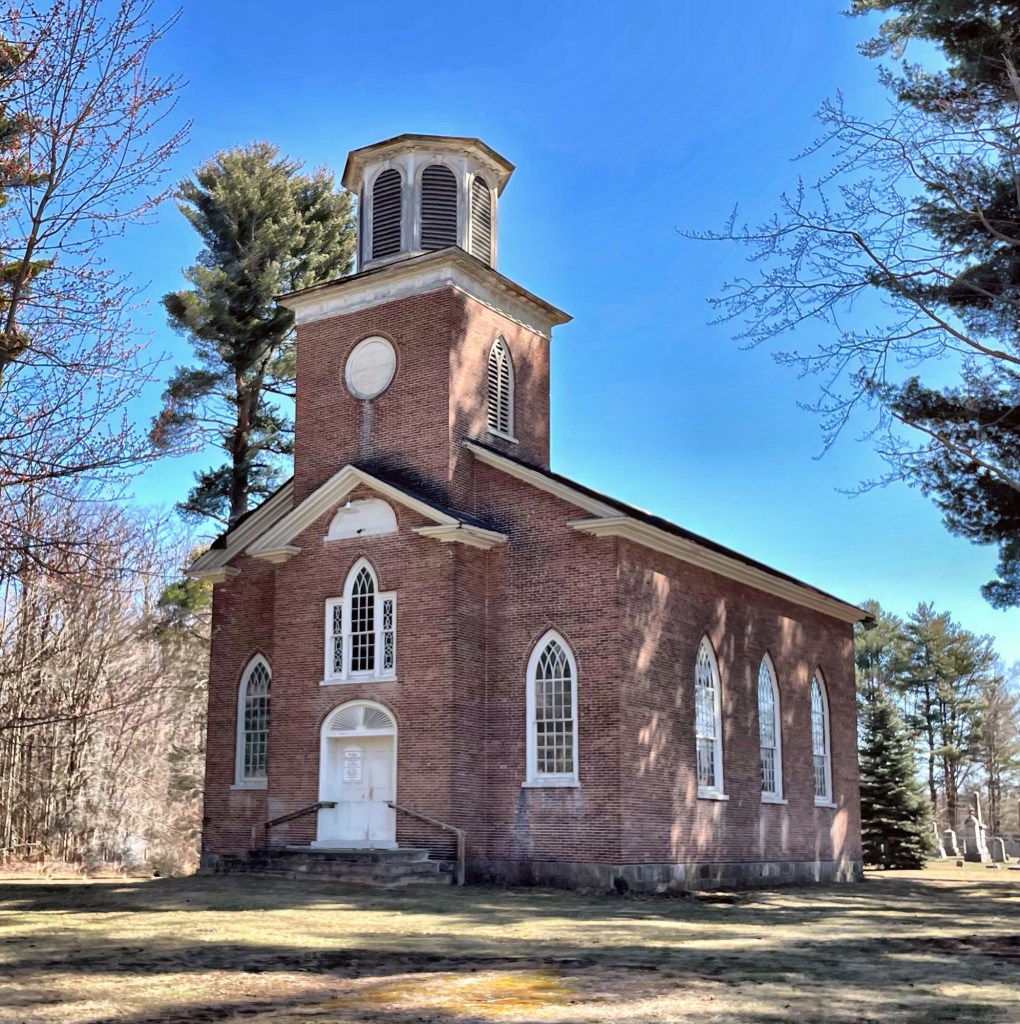
During the nineteenth century several small rural settlements dotted the landscape in Cornwall, Connecticut. In 1782, a group of “strict Congregationalists” seceded from the established Congregational church in town and constructed a “second” church in Cornwall Center. Following this, the town was divided into north and south parishes, with First Church built on the town center and the Second Church, this building, constructed in North Cornwall village in 1826. The North Congregational church is among the town’s finest Federal style buildings in the region and features three entrances with fanlight transoms and the bays of the facade are broken up by two-story fluted pilasters.

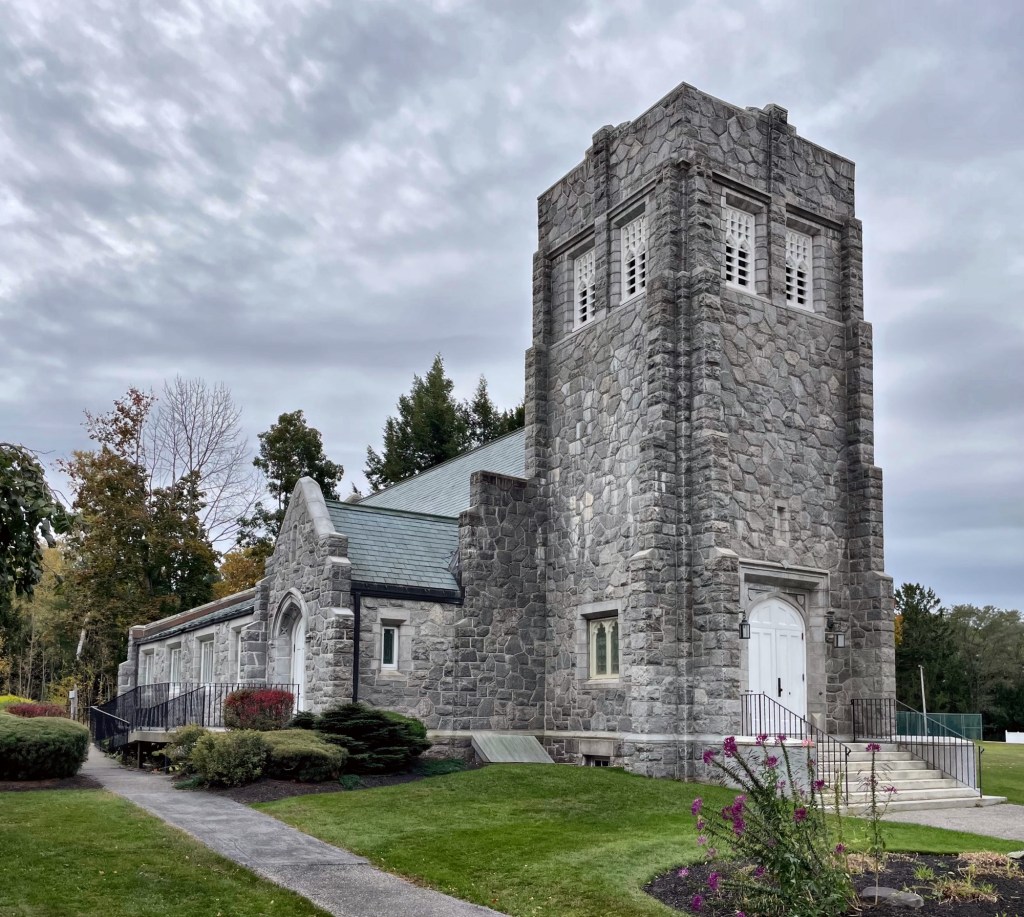
All Soul’s Chapel, Poland Springs // 1912

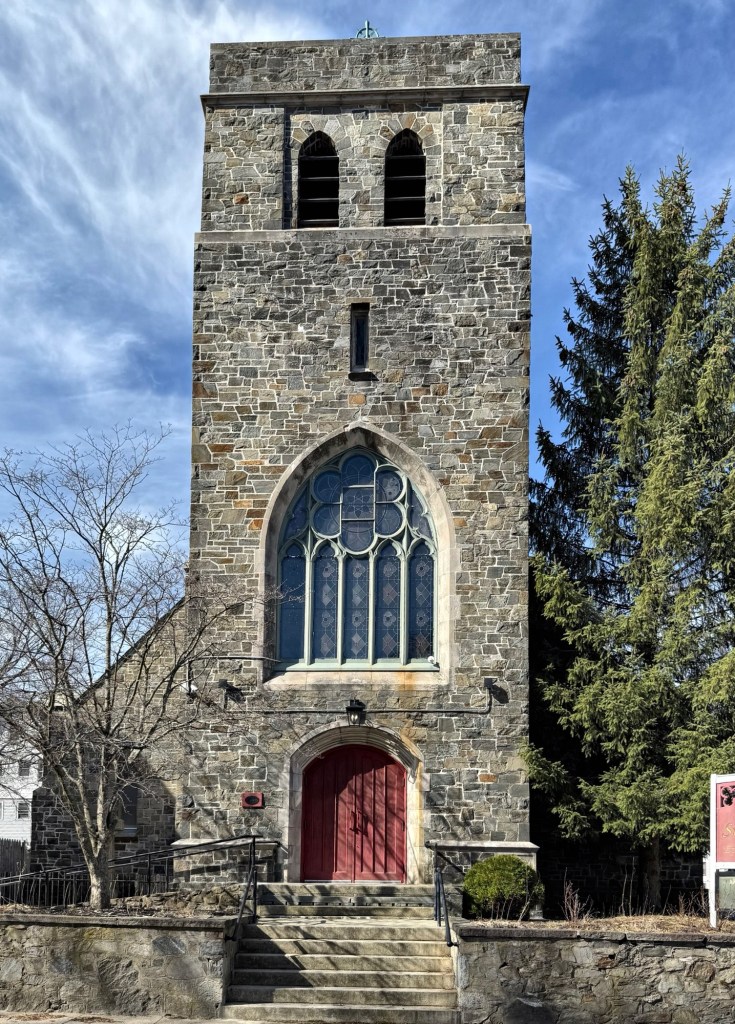
As part of the ever-growing Poland Springs Resort in Poland, Maine, the operators of the Poland Springs Hotel sought to erect a house of worship for guests and local community members. In 1909, fundraising had risen to total of $15,000 and that, along with a matching contribution by the Ricker Family, who owned the Poland Springs Resort, allowed for the hiring of an architect and the project to commence. Boston-area architect George Henri Desmond furnished the plans for the chapel, and were also hired by the Ricker family to complete plans for alterations to the Mt. Kineo House on Moosehead Lake during the same time period. All Souls Chapel is a Neo-Gothic Revival building constructed of irregular granite blocks with a gable roof covered with slate. It has a central tower with a flat parapet roof and a belfry with ornate louvered openings. The tower is square in plan and contains the principal entrance to the chapel. When the chapel was opened in 1912, it was opened as an interdenominational place of worship for use by Catholics and Protestants. Guests contributed much of the interior furnishings and all of the memorial hand-painted windows placed in the chapel were sponsored by guests or relatives of longtime guests. Today, the chapel hosts weddings, baptisms, and other similar events.

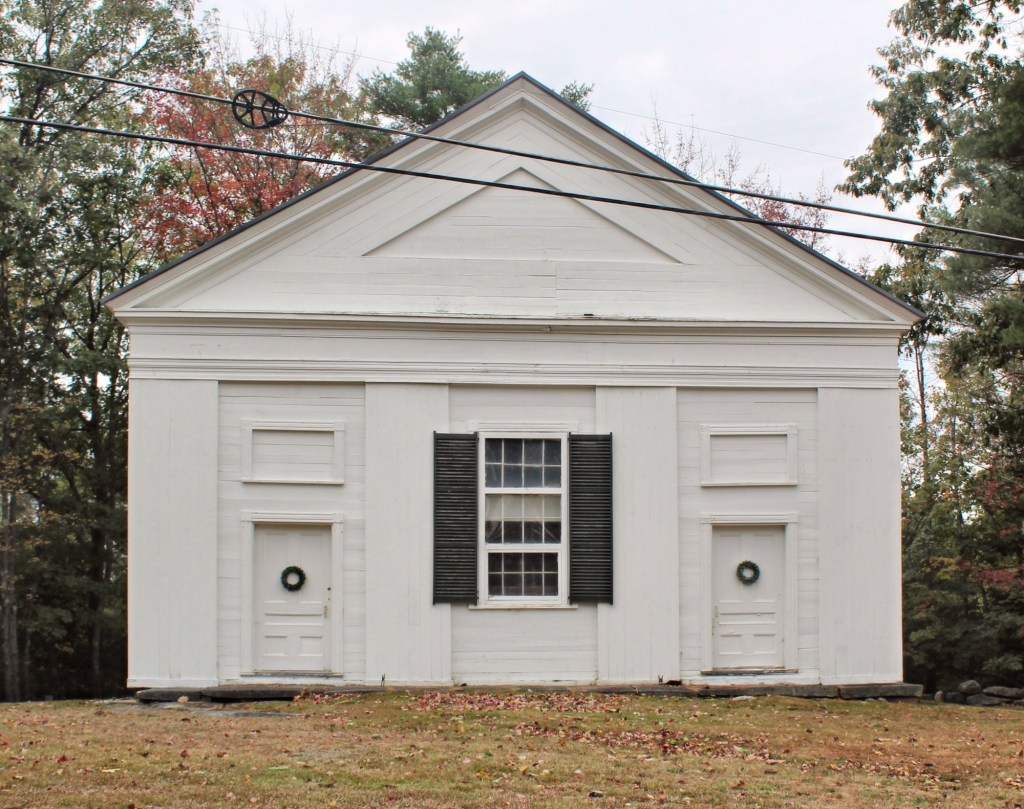
New Gloucester Universalist Meeting House // 1839

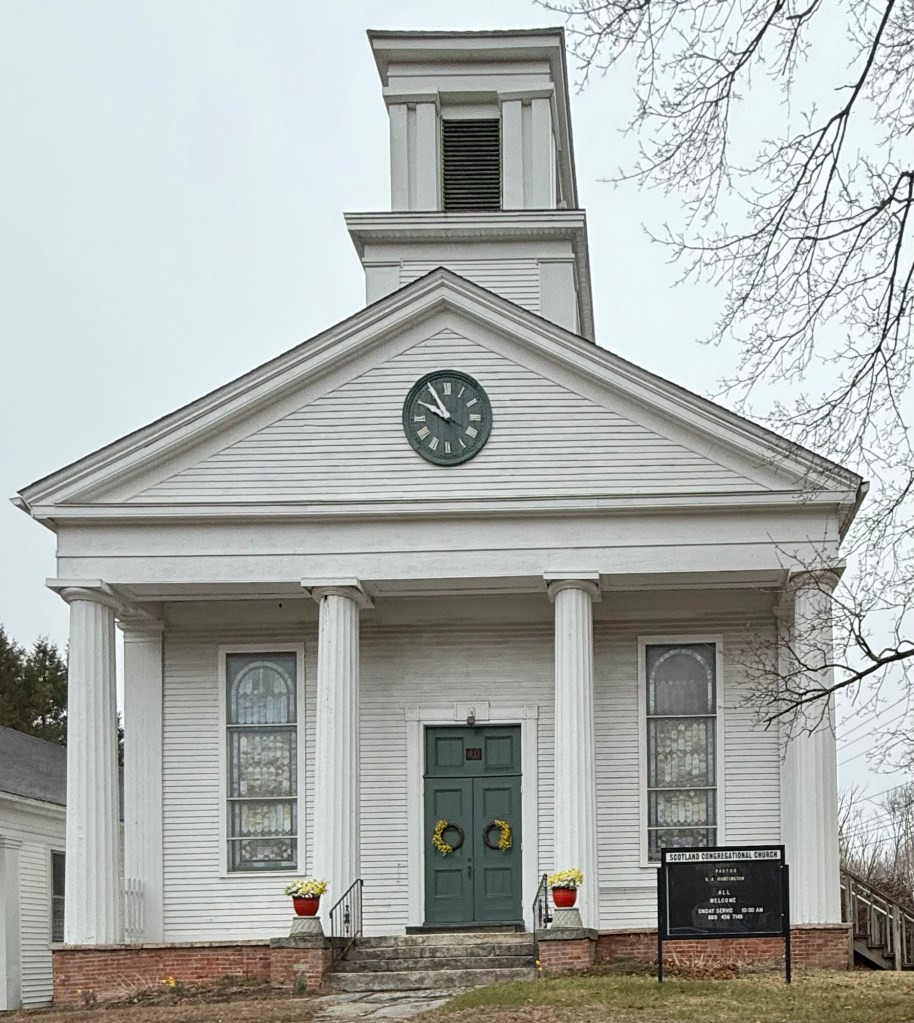
Constructed in 1839 by local carpenter/builder Jeremiah Cotton, the Universalist Meeting House of New Gloucester, Maine, is a dignified example of the Greek Revival style in a rural context. The First Universalist Society of Christians in New Gloucester was organized in 1805 with members drawn from nearby communities including those of Gray and Poland. In 1830, the congregation reorganized itself into the First Universalist Society of New Gloucester and Pownal. During its early history services were apparently held at various places in the community for it was not until November of 1838 that a meeting was called “…to take such measures for Building a meeting house as a majority of Subscribers or proprietors may think proper.” After World War I, membership began to decline and from the 1930s until the society’s demise in 1957 services were infrequently held. In 1969 the property was acquired by the New Gloucester Historical Society, who maintained and restored the building. The flushboard siding, fully pedimented gable, pilasters, and symmetrical façade containing two entry doors, all work together to display the Greek Revival style in a high-style example, but in a rural setting. The building appears to be opened periodically by the Historical Society.

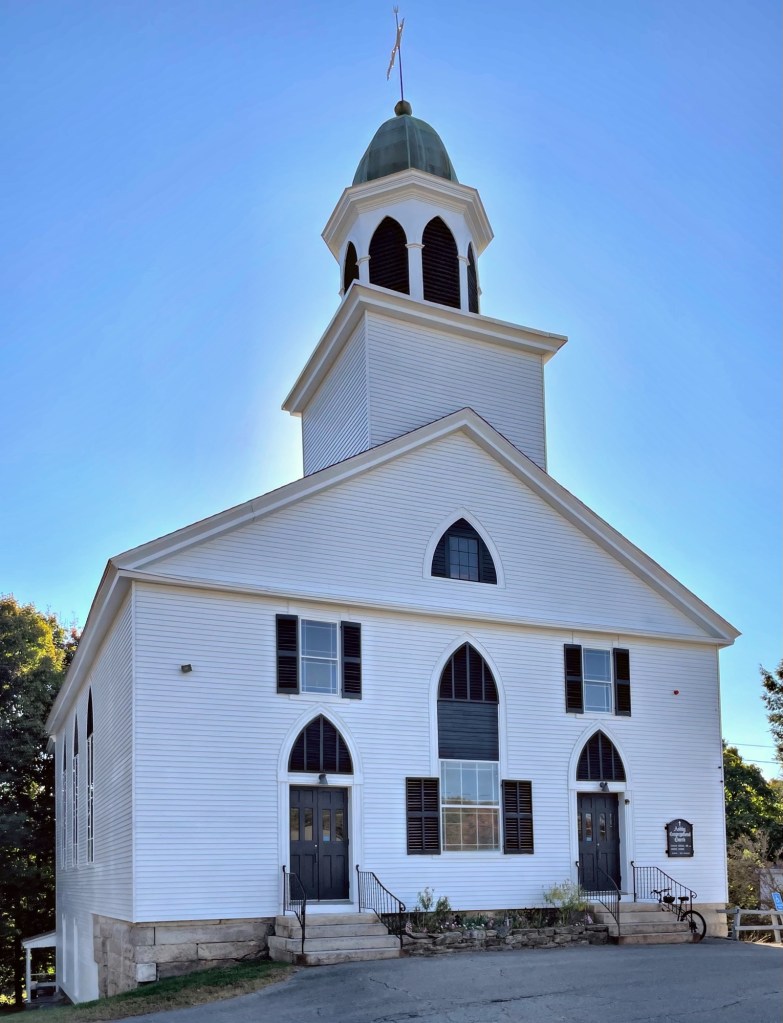
Ashby Congregational Church // 1835

Combining Greek and Gothic revival styles, the 1835 Ashby Congregational Church in Ashby, Massachusetts, is a significant building showcasing the transitional tastes of ecclesiastical architecture in 1830s New England. The church had its beginnings in 1818, when a group of church members disillusioned to the current teachings separated from the town’s Unitarian roots and the accompanying meeting house, the First Parish Church. In 1820 a church for the Congregationalists was built on the opposite end of the town common. In 1835 it was sold and this, the current church building was constructed on a new site facing the Common. The original 1820 church building became the Ashby Academy and is now a Grange Hall. The design of the Ashby Congregational Church shows the leaning towards Gothic detailing wit its prominent pointed arch detailing, yet retains some traditional Greek Revival features like the two-story pediment and pilasters at the belfry.

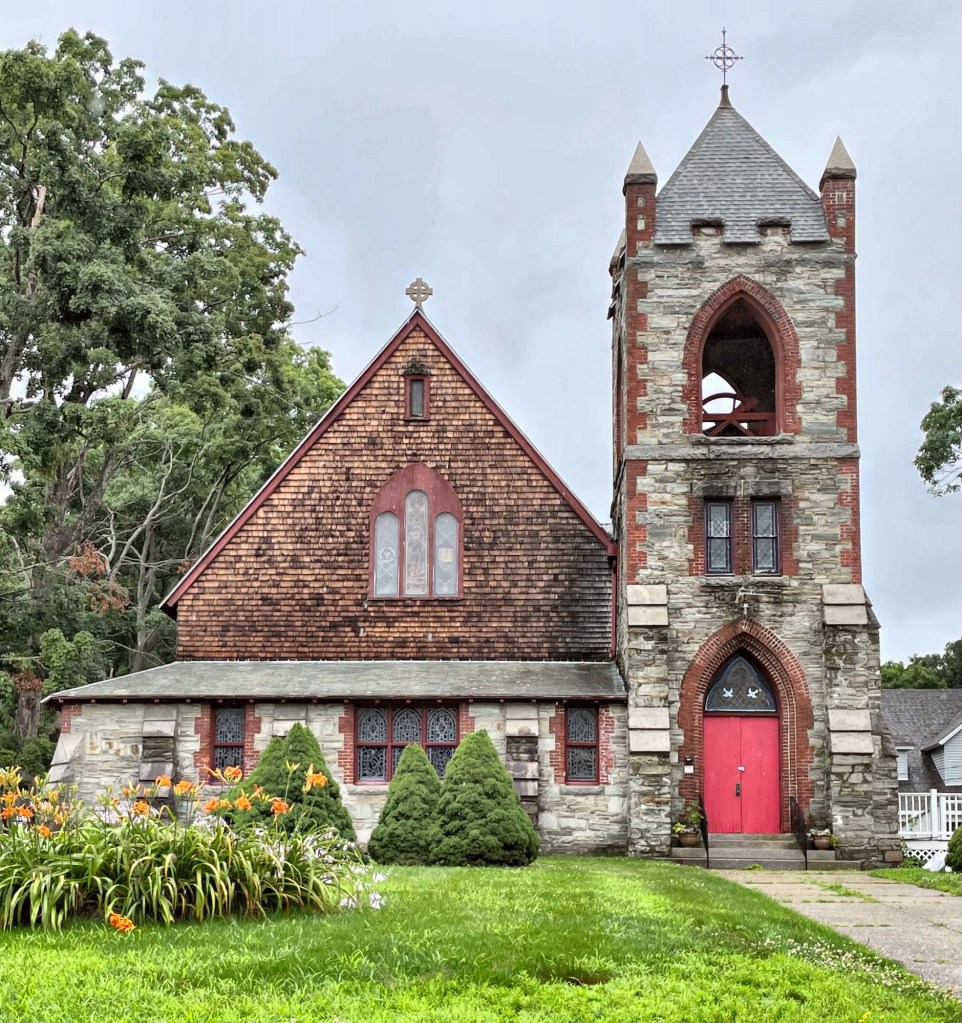
St. Alban’s Episcopal Church // 1891

Tucked away off Broad Street in the Danielson village of Killingly, Connecticut, you will find this charming and eclectic church building, long-occupied by the St. Alban´s Episcopal Church. Episcopalians began congregating in the town in the 1860s, and it would be in 1865, when an old academy building on this site was acquired and converted for use as an Episcopal church. By 1891, the relative prosperity of members of the church made it so a new church building was to be built on the site. Worcester-based architect Stephen C. Earle was hired to furnish plans for the new edifice which is eclectic with Victorian Gothic and Shingle style elements. The congregation appears to have either disbanded or merged with a nearby church as the building does not appear to be occupied. 

St. James Catholic Church, Danielson // 1870

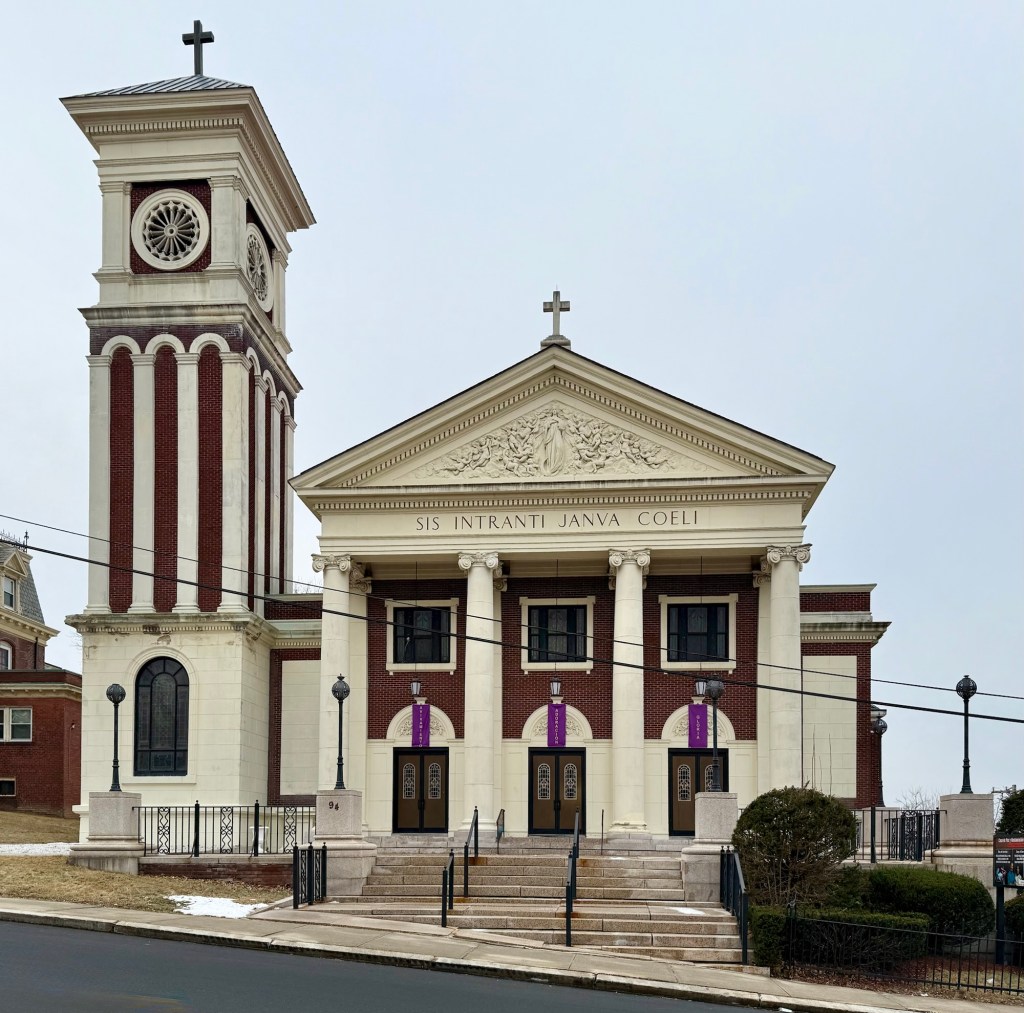
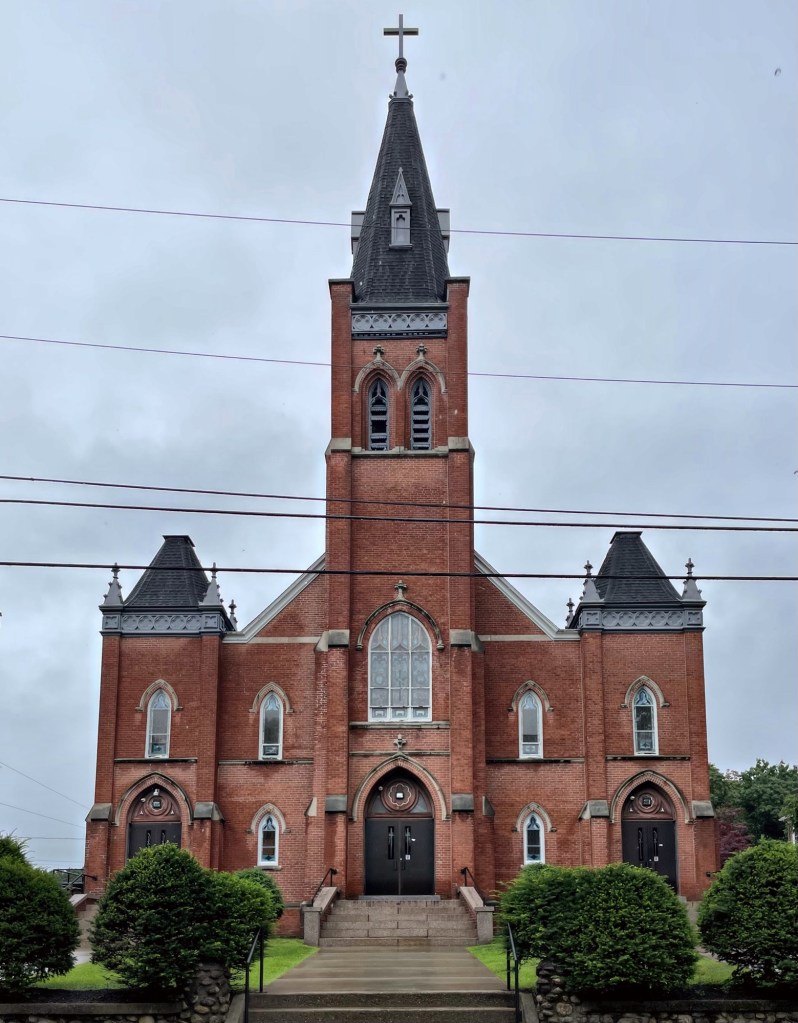
The St. James Catholic Church in Danielson, Connecticut, is an imposing and architecturally ornate example of a church built in the Victorian Gothic style. Catholics in town had their first Mass conducted by Rev. Michael McCabe, a Franciscan friar from Ireland, and the first service was held in a private home. They met in different halls until 1864 when they purchased the old Second Advent Chapel on Winter street and it became the first St. James Church. The congregation, largely of working-class Irish immigrants, eventually was able to afford a new church, this large brick structure, built in the form of a cross. A parish hall and school were also built next door and the campus serves as an important piece of the town´s immigrant and working-class history. 

Former St. Mary’s of the Bay Catholic Church // 1928

Catholic residents of Hull, Massachusetts surged in the early 20th century with many well-to-do Irish families settling in town as year-round or summer residents. As a result, the cramped original St. Mary’s of the Bay Catholic Church was deemed too cramped, and a site in Hull Village was selected for a new church. In 1927, ground was broken for the new stucco church, which was partially funded by the Kennedy Family, who had a summer house nearby. The first service took place in 1928 and the church was in use as a religious building until the 1990s when it was sold to a private owner. The church was converted to a single-family residence and recently sold to new owners, who preserve the significant Spanish Colonial Revival style edifice.

St. John’s Episcopal Church, Highgate // 1831

St. John’s Episcopal Church stands in a grove of pine trees at the southeastern end of the Highgate Falls village green in Highgate, Vermont. The church is built in a transitional style which combines the pointed arches of Gothic architecture with a unique Gothic-Palladian window, but with a traditional plan and massing commonly found in Federal style churches in New England. The church was built between 1831-1833 by Joel Whitney of nearby Enosburg, and was consecrated on May 21, 1834, by Rev. John Henry Hopkins, the first Bishop of the Episcopal Diocese of Vermont. The congregation was a full parish until 1896 and maintenance has since struggled due to dwindling use. The wooden steeple was removed in the late 20th century, but the church stands as an important architectural landmark for the small town.

Channing Memorial Church // 1880

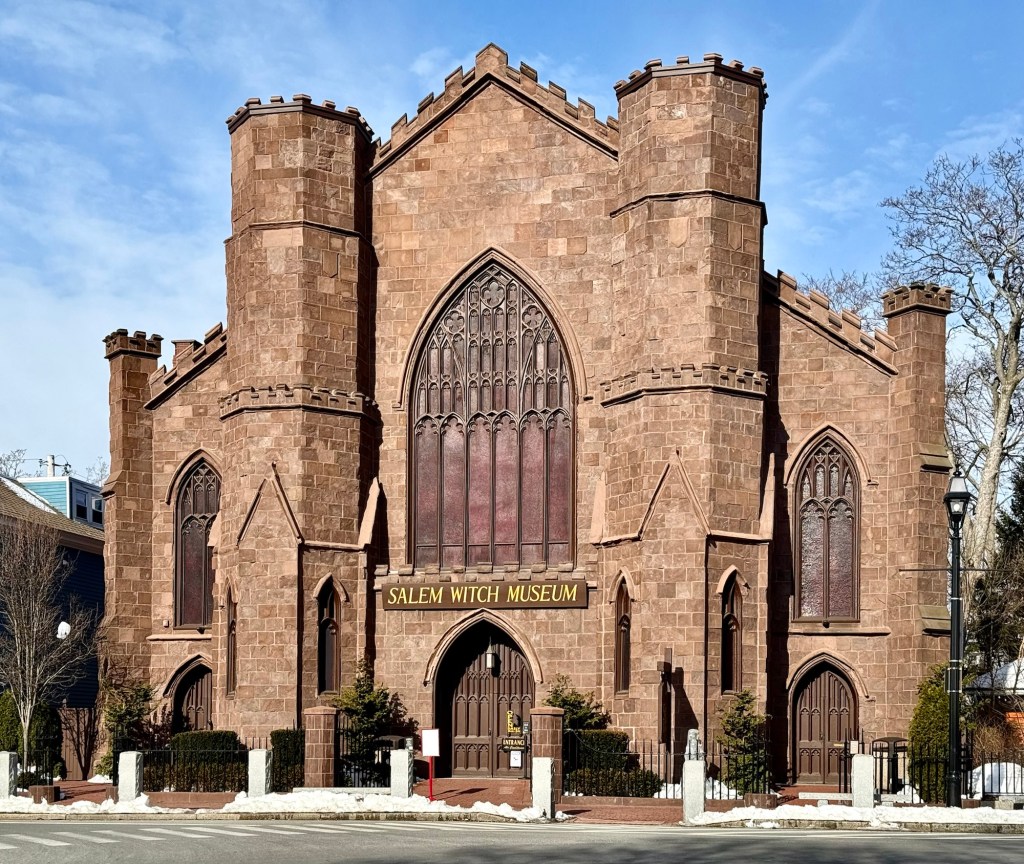
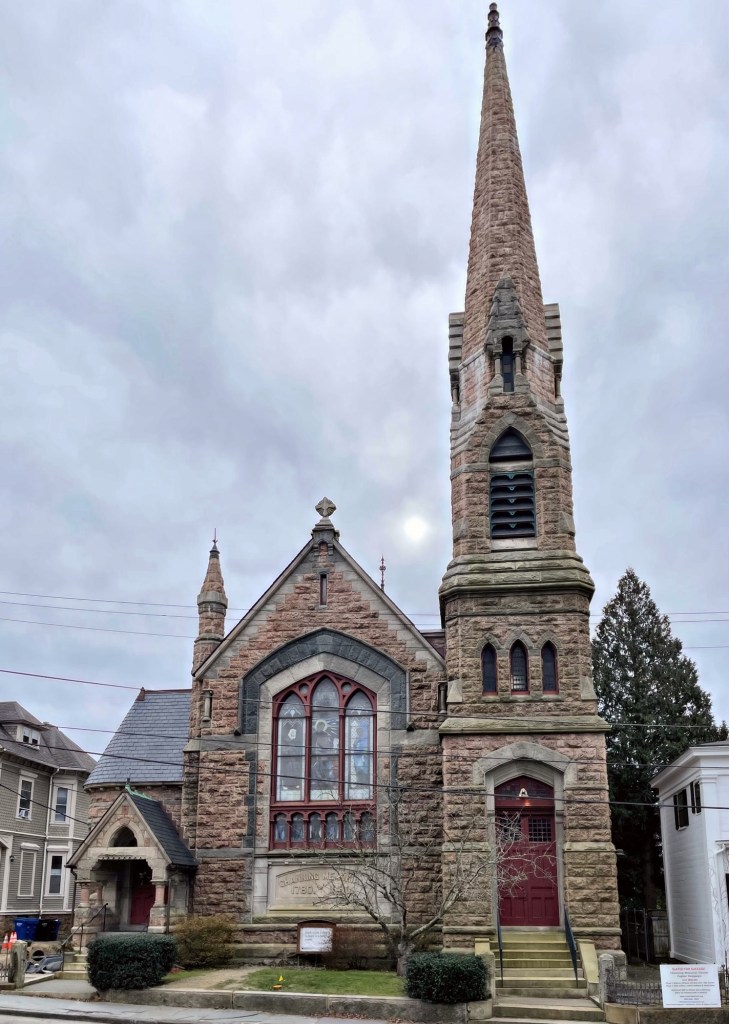
The Channing Memorial Church of Newport, Rhode Island was named in the memory of William Ellery Channing (1780-1842), an ardent abolitionist and founder of the Unitarian faith in America. In 1835, ten men formed the first Unitarian Society in Newport in October 1835 and met in the home of Channing’s grandfather, William Ellery, one of the 56 signers of the United States Declaration of Independence. In 1879, the congregation’s minister, Rev. M. K. Schermerhorn, conceived the idea of a memorial to William Emery Channing, whose centenary would be the following year. He decided upon the ambitious project of a new church building and planning began immediately. On Rev. Channing’s 100th birthday, the cornerstone laying ceremony occurred in 1880. The Victorian Gothic stone church designed by Elbridge Boyden took a year to be completed and was was built from granite, cut in Lyme, Connecticut. Inside, two stained glass windows, the first ecclesiastical commission of John LaFarge, flood the interior spaces with warm colored light. The church looks much as it did when completed almost 150 years ago, thanks to an active congregation preserving this great landmark.

Card Memorial Chapel // 1898

Cemetery chapels are fairly uncommon, but always a must-see when exploring a new place. These small charming buildings help bridge the gap between life and death and are often adorned with a permanence not seen in our lifetimes. This is the Card Memorial Chapel in the Spring Brook Cemetery of Mansfield, Massachusetts. The chapel was erected in 1898 as a memorial to 31-year-old Mary Lewis Card, who died in 1896. Mary’s parents, Simon W. Card and Mary J. Card, founded S.W. Card Manufacturing Company in 1874. The Mansfield-based company did very well and manufactured tap and die tools locally, shipping them all over the country. Before her abrupt death, Mary Lewis Card was set to marry architect Charles Eastman, who is credited with designing the memorial to his late-fiance. The chapel borrows from the Romanesque and Victorian Gothic styles, and is constructed of red brick laid with a tinted mortar atop a foundation of Quincy granite. The various roof sections are sheathed in green slate. The building displays a cross plan with a central tower rising forty-two feet from the ground to the apex, topped by a steeply pitched pyramidal roof. The building was restored years ago and still looks great!

Mansfield Orthodox Congregational Church // 1839

Welcome to Mansfield, Massachusetts! Located in the southeastern part of the state, this very suburban town is often overlooked in terms of architecture, but there are definitely some great buildings to discover. This is the Orthodox Congregational Church of Mansfield, an 1839 edifice at the town’s South Common. The congregation was established in the 1730s and followed strict Congregationalist beliefs, which were at odds with the growing tide of Unitarianism which was becoming a dominant belief in the Commonwealth by the early 1800s. The differences came to a head when the Anti-Slavery Riot of 1836 occured. Factions of local pro- and anti-slavery residents fought when Charles C. Burleigh, Secretary of the American Anti-Slavery Society, was invited, with the consent of the parish committee, to lecture in the meeting-house. This difference of theological taste as well as a difference of opinion on the idea of slavery led, in 1838, to the forming of a new society, the Orthodox Congregational Society, who built this church soon-after. While the split-off congregationalists were “behind the times”, among the separatists were Hermon Hall and Deacon Otis Allen, secretary and president of the Mansfield Anti-Slavery Society. This church was completed in 1839, and was altered and enlarged in the 1850s and 1870s.

Head Tide Church // 1838

In the early 19th century, Head Tide was a bustling village within the Town of Alna, Maine, supported by mills at the dam, agriculture and apple orchards, boat building, fishing and forestry. As Head Tide grew in population, village leaders determined to build their own Congregational church so they would not have to travel the three miles to the 1789 Meeting House in Alna Center. The Head Tide Church in Alna, Maine was dedicated in November 1838 and sits on a hill overlooking the village. The Head Tide Church is a handsome rural Maine house of worship which exhibits a combination of Federal style, Greek Revival, and Gothic Revival elements in its design. The facade displays the outline of a Grecian temple front with its six pilasters and strongly accented triangular pediment. The Federal fan motif appears above the two facade windows as well as in the center of the pediment and the Gothic Revival influence is felt in the two pointed arch windows on either side of the church and in the simple pinnacle at the top of each corner of the belfry. The church is a high-style building for the rural Maine village and is kept very well by the community. The congregation disbanded, but the church remains an important part of the town and is rented for memorial services, events, weddings.

St. Denis Catholic Church // 1838

Believe it or not, this church in rural Whitefield, Maine is the second oldest Catholic Church in New England! As Irish and French Canadian families settled in this part of Maine in the early 19th century, Catholic churches were needed to provide worship space for those families. The church community of St. Denis began in 1818 when Father Dennis Patrick Ryan, an Irish immigrant serving at St. Patrick Church in Newcastle (the oldest Catholic Church in New England), moved to Whitefield to serve the influx of Irish Catholics and soon founded the church. Fr. Ryan oversaw the construction on a wood-frame structure built on this site. As more Catholic families settled here, a more permanent building was needed, and between 1833 and 1838, the main portion of the present brick church building was constructed around that original church. The tower was added in 1861, and the stained glass windows also date from later in the 19th century following the growth and prosperity of the church and its members. The St. Denis Parish House was constructed across the street in 1871 and is a lovely Romanesque style building.

Trinity Church, Newport // 1725

Trinity Church in Newport, Rhode Island is one of the largest extant 18th century churches in New England, and founded in 1698, it is the oldest Episcopal parish in the state. Built in 1725, the Georgian style church was built just as the influence of Sir Christopher Wren’s churches reached the colonies, about a quarter century after his work had come to dominate ecclesiastical design in London. Trinity is the second major church built in the original colonies influenced by Wren, following Old North Church in Boston’s North End (1723). Stylistically, both churches are similar, with the notable difference in material (Old North in brick and Trinity Church in clapboard). Local builder Richard Munday, is credited with the design of Trinity Church. By the late 19th and early 20th centuries, many members of the Vanderbilt family and other wealthy residents attended sermons here when summering in Newport. When Newport was undergoing Urban Renewal in the mid-20th century, Queen Anne Square (the park which fronts the church) was created in the 1970s to establish a town common in a city which had never truly had one. “Early” buildings in the area to be bulldozed for the common were moved to other sites to enhance the “colonial” rehabilitation of the area around the harbor, making this one of the few examples of urban renewal having a positive impact on a city.

Dixmont Corner Church // 1834

Dixmont, a small rural town in central Maine was originally originally a land grant by the Commonwealth of Massachusetts (of which Maine was then a part) to Bowdoin College, which sold the first settlers their land for profit to build on their campus. As a result, the town was originally called “Collegetown”, which was obviously short-lived. Dr. Elijah Dix (1747-1809) of Boston, who never lived there but took an interest in its settlement, encouraged others to settle there, and when the town was officially incorporated in 1807, it named itself after Dix, as Dixmont. A “malignant fever” broke out among the settlers in the early years, also killing Elijah Dix while in Dixmont on a trip there in 1809, he was buried in the Dixmont Corner Cemetery. Elijah was the grandfather of reformer and nurse Dorothea Dix. The early settlers had this church built by 1834 by Rowland Tyler, a local master builder whose only other documented work is the 1812 City Hall of Bangor. The Dixmont Corner Church is one of Penobscot County’s oldest Gothic churches and also exhibits some Greek/Classical elements.