William Haven House // c.1807

William Haven (1770-1856) was the youngest son of Reverend Samuel Haven (1727-1806), the Pastor of South Church, and Mehitable Appleton Haven, daughter of Rev. Nathaniel Appleton. William was a merchant that traveled extensively with his brothers, who employed him as their accountant, later working as a cashier of the New Hampshire Bank in Portsmouth, and later an accountant for the Portsmouth Savings Bank. William married Sophia Henderson in 1807, and soon-after, had this large residence on Middle Street built for his new family. By the 1870s, the residence was owned by William H. Hackett, who likely modernized the home with the Italianate style stair-hall window on the second floor, and portico and entry. 
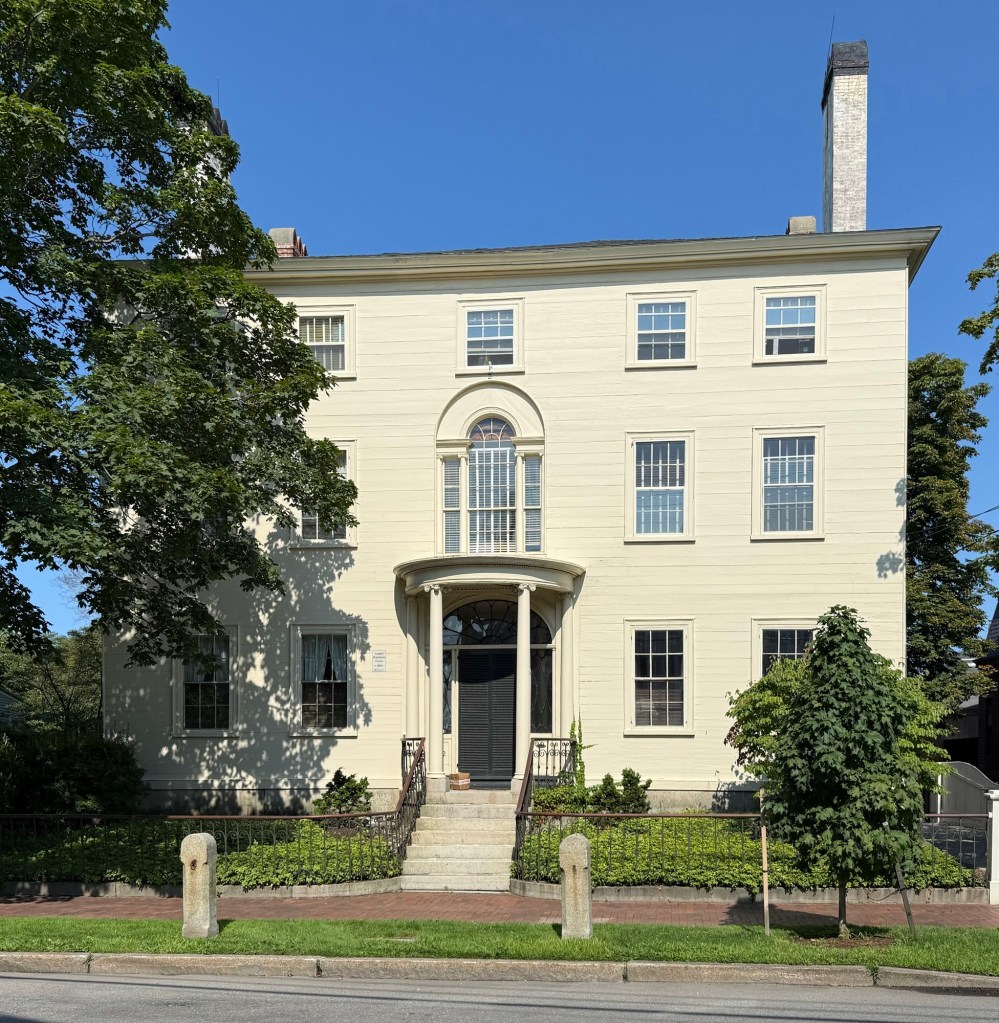
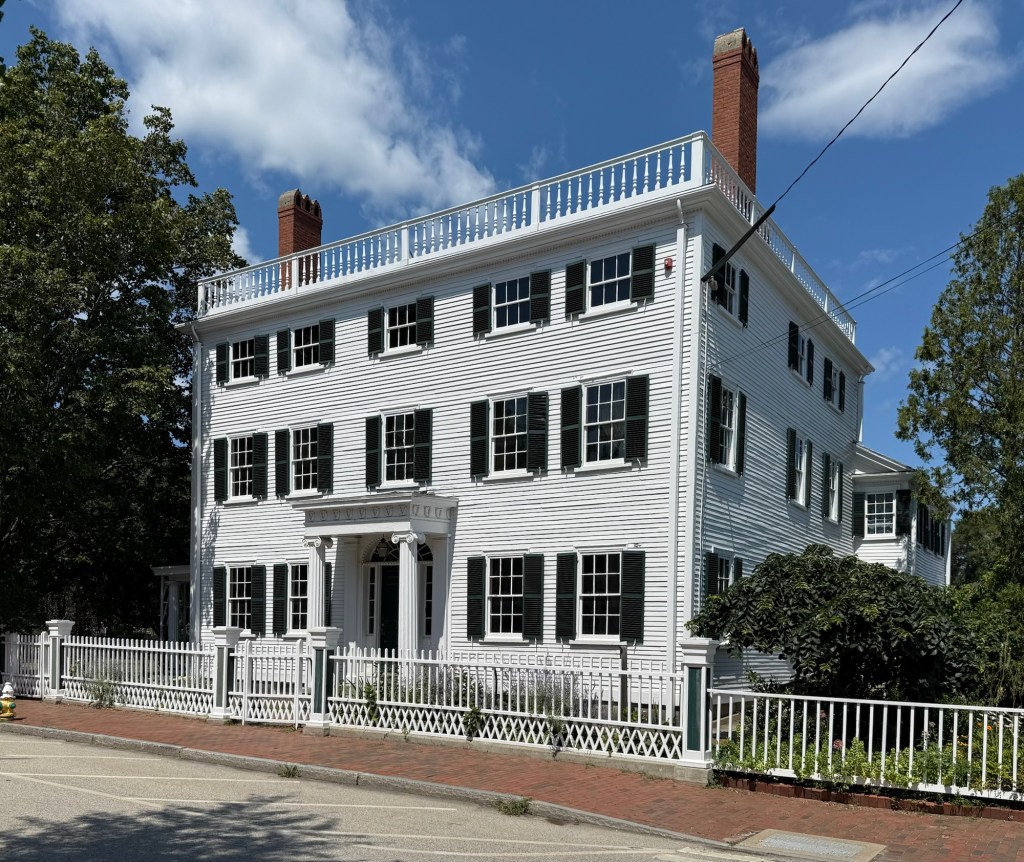
Langley Boardman House // c.1804

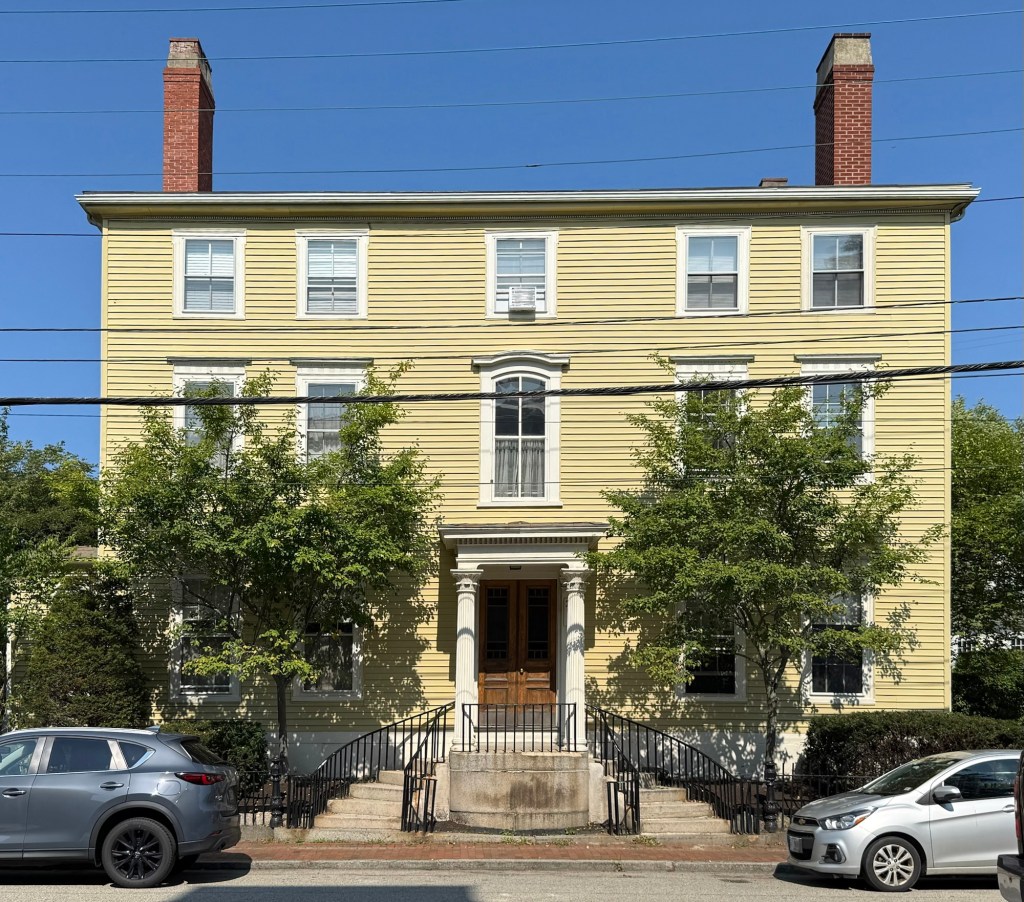
Langley Boardman (1774-1833) was an important builder and real estate developer who built his own home, this stately Federal style residence, at 152 Middle Street in Portsmouth, New Hampshire. Langley Boardman later served as a Constitutional Councilor and as a State Senator, living here until his death in 1833. His son, Dr. John Howe Boardman, owned the home until his own death in 1882. The Boardman House is a high-style Federal style residence with a three-story, five-by-three-bay, rectangular, form. The building has a hipped roof and four tall brick chimneys, with flushboard siding at the facade. The facade has a double wood-paneled entrance door with fanlight and rectangular sidelights under an elliptical flat-roof porch with overhanging eaves and denticulated cornice supported by columns with scrolled capitals. At the facade second story, directly above the entrance, is a Palladian window with columns with scrolled capitals slightly recessed in an elliptical surround.

Governor Goodwin Mansion // 1811

The Goodwin Mansion of Portsmouth, New Hampshire, is a landmark example of the Federal style of architecture and served as the home of Ichabod Goodwin and his wife, Sarah Parker Rice Goodwin. The home was built in 1811 and was originally located elsewhere in town, across from Goodwin Park, until it was moved to Strawbery Banke, saving the home from demolition. Ichabod Goodwin (1794-1882), a retired sea captain, purchased the home in 1832 and moved in with his wife, Sarah, and daughter, Abigail. The same year, he partnered with Samuel Coues to establish the shipping firm of Coues & Goodwin, importing raw materials, such as cotton, produced by enslaved people in the Southern States and elsewhere. Mr. Goodwin was the governor of New Hampshire upon the outbreak of the Civil War and was a prominent businessman until his death. Ichabod’s wife, Sarah, raised their children and planned the elaborate garden, which Strawbery Banke recreated where the mansion stands today. The Goodwins kept their home updated with all the latest technology, such as gas lighting, coal grates and running water from the Portsmouth Aqueduct Company, which brought water into houses through wooden pipes. It remains a significant house museum and architectural landmark in Portsmouth.

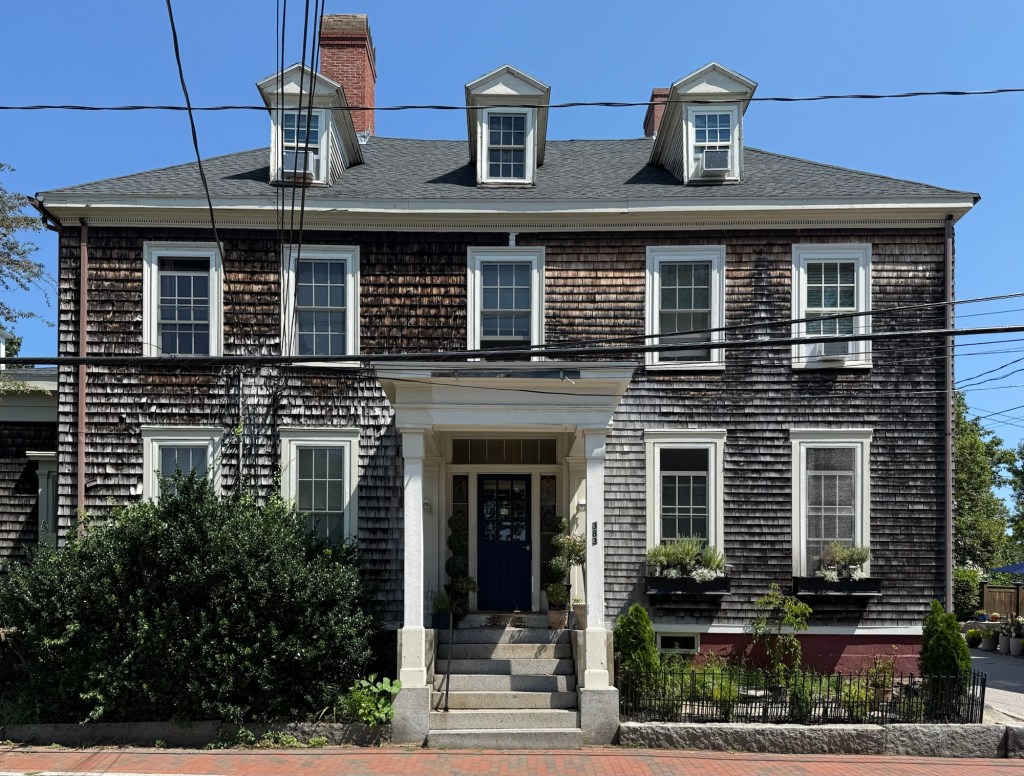
Capt. Charles Blunt House // c.1795

Master mariner Charles E. Blunt Sr. (1768-1823) built this large Federal period home on Pleasant Street in Portsmouth, New Hampshire near the turn of the 19th century for his bride, Abigail Laighton, and their new family. Charles Blunt was a wealthy sea captain who would be out at sea for months at a time, trading in the west indies. On a voyage near Havana Cuba in March, 1823, his vessel was boarded in the night by two piratical boats, with six men each, and Captain Charles Blunt was brutally murdered and thrown overboard. The ship’s cook was stabbed, and fed to the hogs on the brig, with the remainder of the crew maltreated and the goods plundered. The Captain Blunt House follows a symmetrical, five-bay, center entrance form, with cedar shake shingles, three pedimented dormers and large portico over the door.

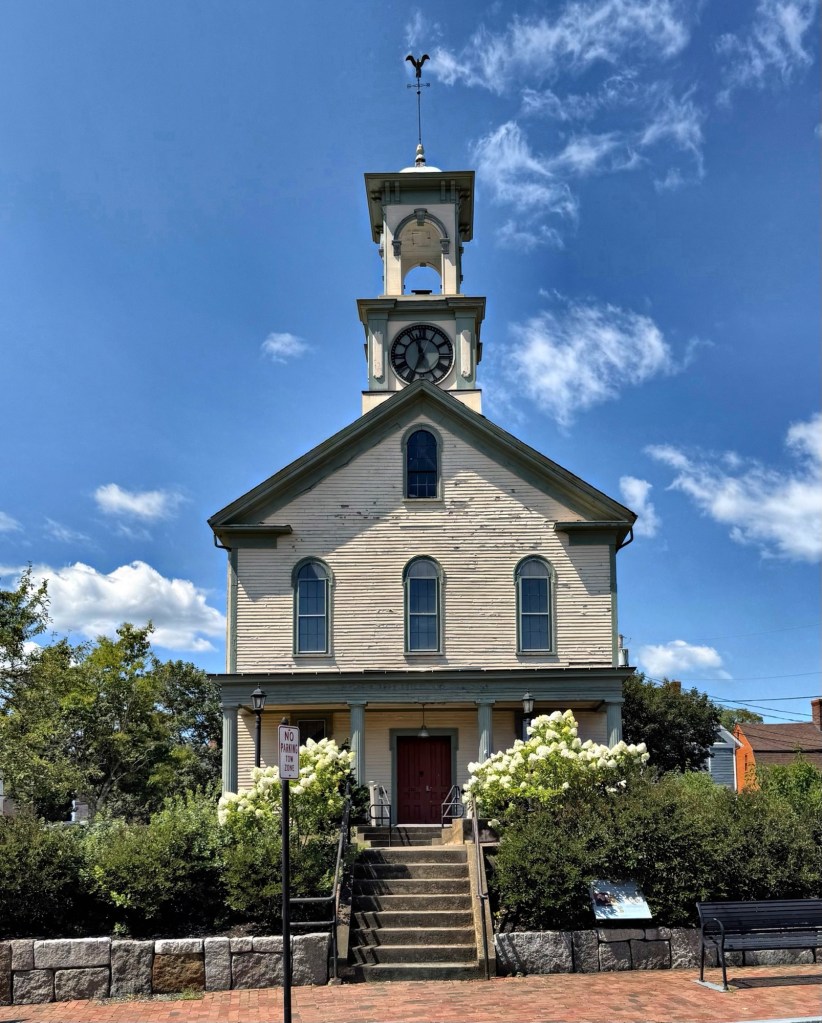
South Meeting House, Portsmouth // 1866

The South Meeting House was built in Portsmouth in 1866 and it is significant as a high-style Italianate building in the coastal town, and as the meeting place for the first African American church congregation in New Hampshire. The present building is the second building on this site. The initial structure was the Old South Meeting House, which was built for the South Church in 1731. The City demolished it in 1863 for the construction of the present building in 1866 as a Ward Hall for the Southern area of the community. The building’s upper level serves as a large public meeting space, and has seen use for political meetings, ward elections, and religious services The structure was the home of the People’s Baptist Church, the first African American church in New Hampshire, which organized in 1873, when the Freewill Baptists congregated on the second floor of this building. The church relocated in 1915 to 45 Pearl Street when the congregation raised money and bought their own building. In the late 19th century and early 20th century, the building continued to serve as a church, school, and community center until at least 1915. After World War II, it was boarded up due to economic circumstances and endured a period of neglect. In 1966, Strawbery Banke leased the building from the city for about fifteen years, during which it returned as a community resource and was renamed the South Meeting House. The city invested around $67,000 for repair work that also exposed further damage issues. In 1982, the city approved a proposal for the building to become a Children’s Museum. The community contributed to the required materials and labor that allowed the Museum to welcome the public from 1983-2008. Today, the city is still permitting restoration projects to preserve the historic building.

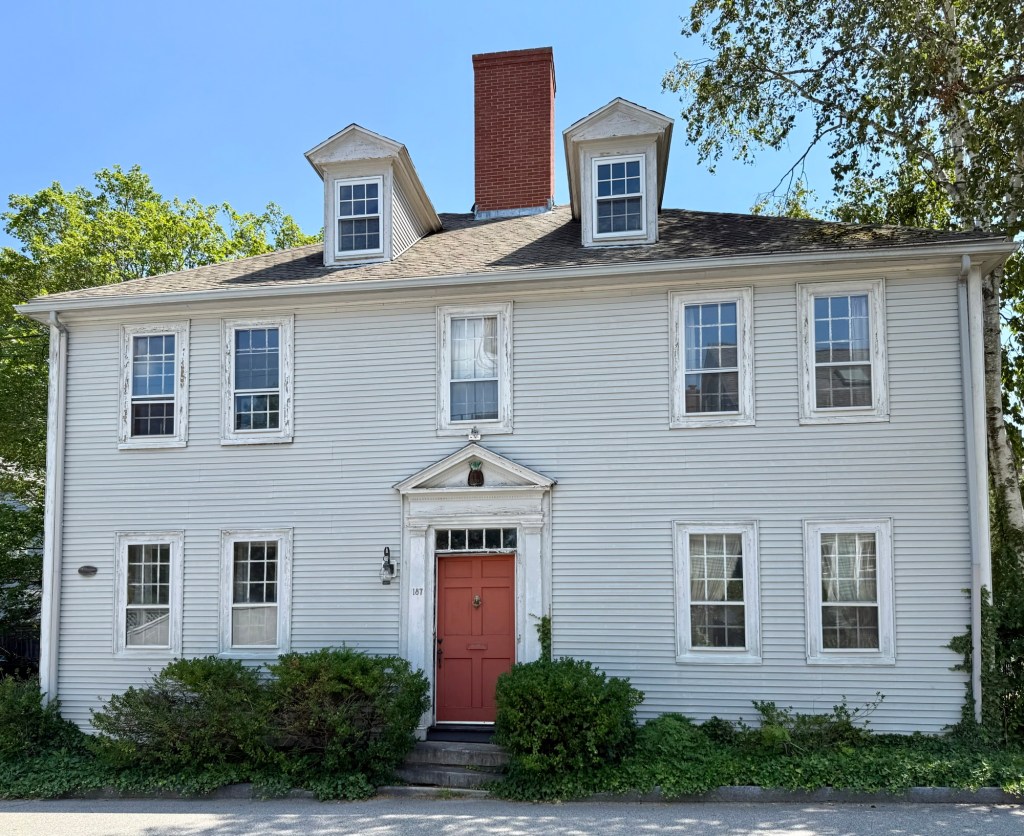
Tredick House // c.1802

The Tredick House is located at 187 Marcy Street in Portsmouth, New Hampshire and was built in 1802 for Captain Jonathan Martin Tredick (1777-1803) and his new wife, Martha Marshall on land gifted to them by Jonathan’s father, William Tredick. In a tragic shift of fortune, Captain Jonathan Tredick never got to live in his new house as he died at sea, with accounts differing, either from fever or being swept overboard. At the time, Jonathan and Martha had two children, 2 year-old Catherine Marshall Tredick (1801-1822) and newborn Jonathan Marshall Tredick (1802-1875). Martha, a sudden widow at the age of 26 with two children, was aided by her family and that of her late husband, and operated a store nearby to supplement her income until her death at home in 1872, she was 96 and never remarried. The late Georgian style house features a hipped roof with central chimney, pedimented dormers and a pedimented entry and 9-over-six sash windows on the house.

Former Columbian Cotton Mill // 1864

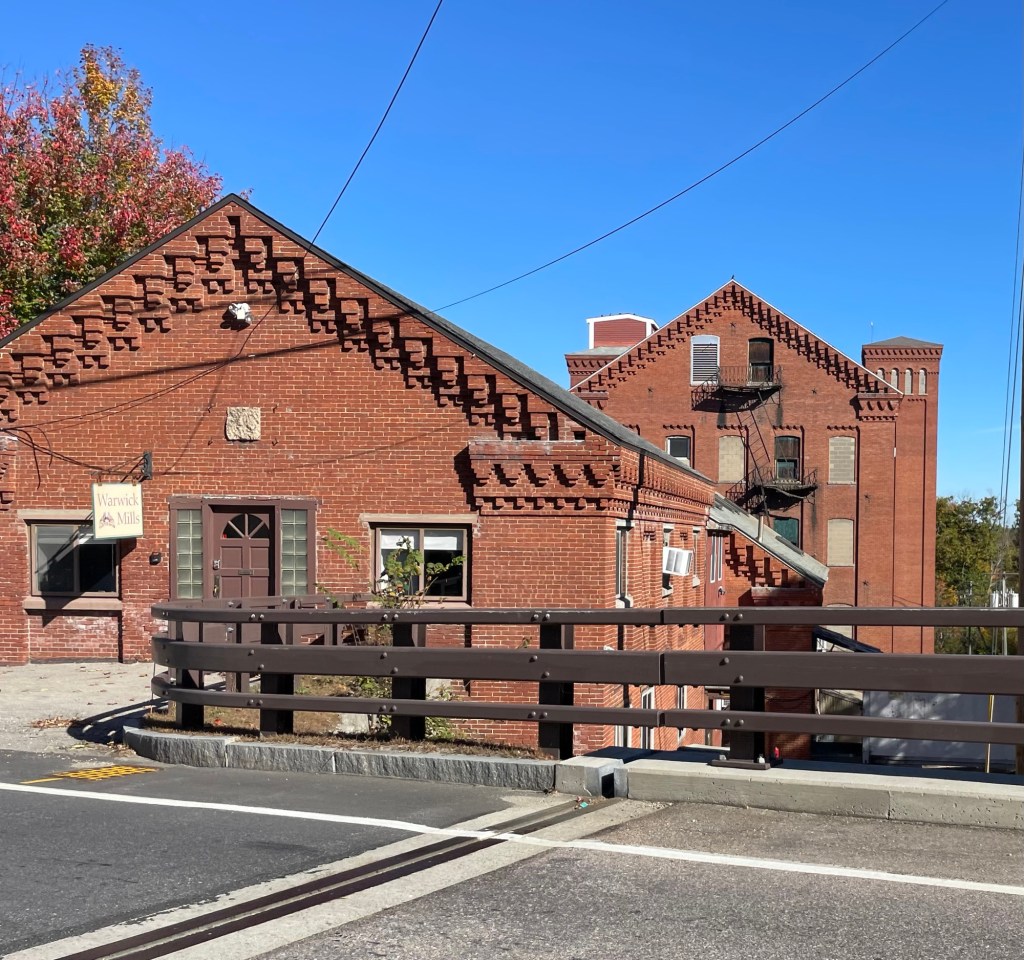
While New Ipswich, New Hampshire, is best known for its early Georgian and Federal period architecture, the small town is home to Warwick Mills, the site of the oldest textile mill in the state. Originally built circa 1807, the mills here burned down two times and were rebuilt a third time using brick; that third iteration is the building seen today. The brick for the building was forged on site and was finished in 1864, with signatures on the beams by craftsmen as far south as Baltimore. The mill was home to the Columbian Mill Company, who created textiles from cotton and other materials in the building, becoming a leading employer in the region. The building is now known as the Warwick Mill, and is an active manufacturing complex, making many contemporary and high-quality materials for 21st century clothing. The buildings exhibit stunning corbel detailing.

Old New Ipswich Center Schoolhouse // 1829

Presently owned and occupied by the New Ipswich Historical Society, this handsome brick building was originally constructed in 1829 as a schoolhouse for young students in town. The structure is located on Main Street and replaced wood-frame school that was located on the other side of the road. Almost immediately after it was built, the building and its location were heavily criticized as early as 1847. There were up to 92 pupils in its two rooms, both of which were accessed by a central entrance, causing those entering and leaving to disrupt both classrooms. Additionally, the closeness to the road caused noise and dust to enter the classrooms. The school closed in 1860 and was used for a time as a blacksmith shop before it was acquired by the New Ipswich Historical Society in 1939.

New Ipswich Public Library // 1895

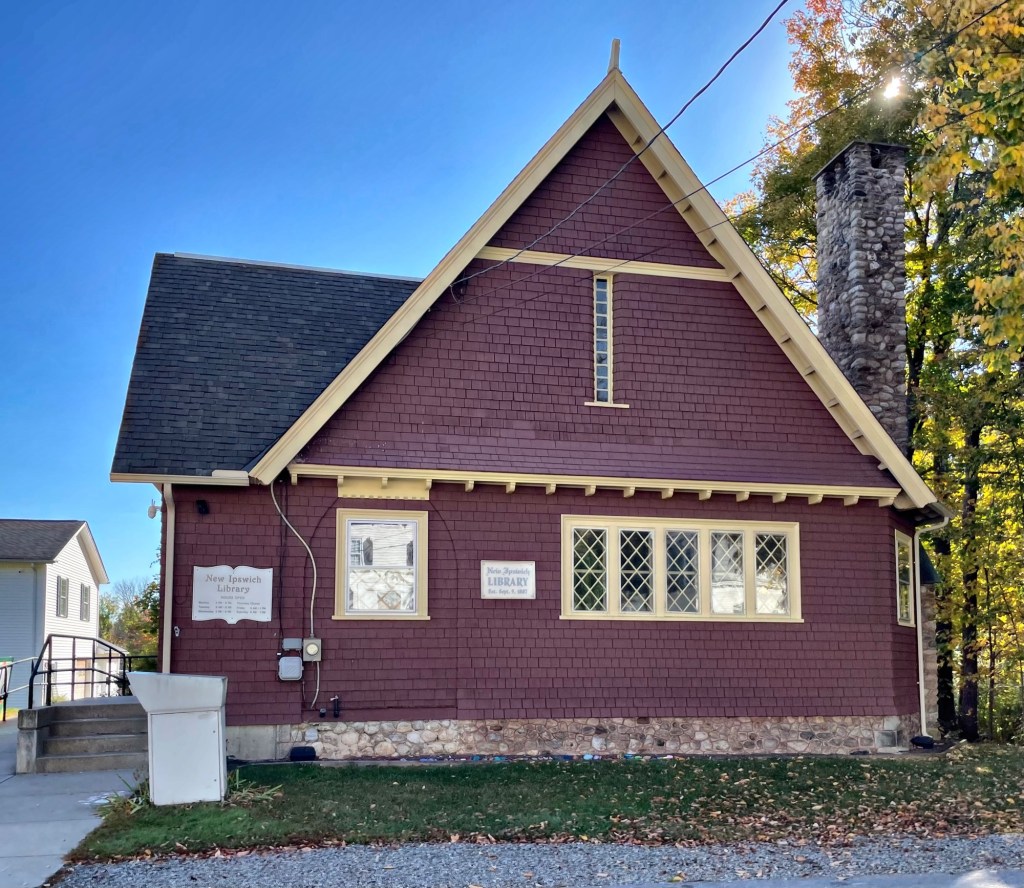
The New Ipswich Public Library is a one-story Shingle style building on Main Street in the charming village of New Ipswich, New Hampshire. The library building was likely designed by Ernest M. A. Machado, one of the best, and relatively unknown architects of the late 19th and early 20th century in Salem. The entrance which faces the side, is flanked by two diamond-pane windows, which can also be found on the primary facade. A special ten-light vertical window is recessed within a shingled depression in the gable, which adds some complexity to the design.

Former Appleton Academy Building // 1942

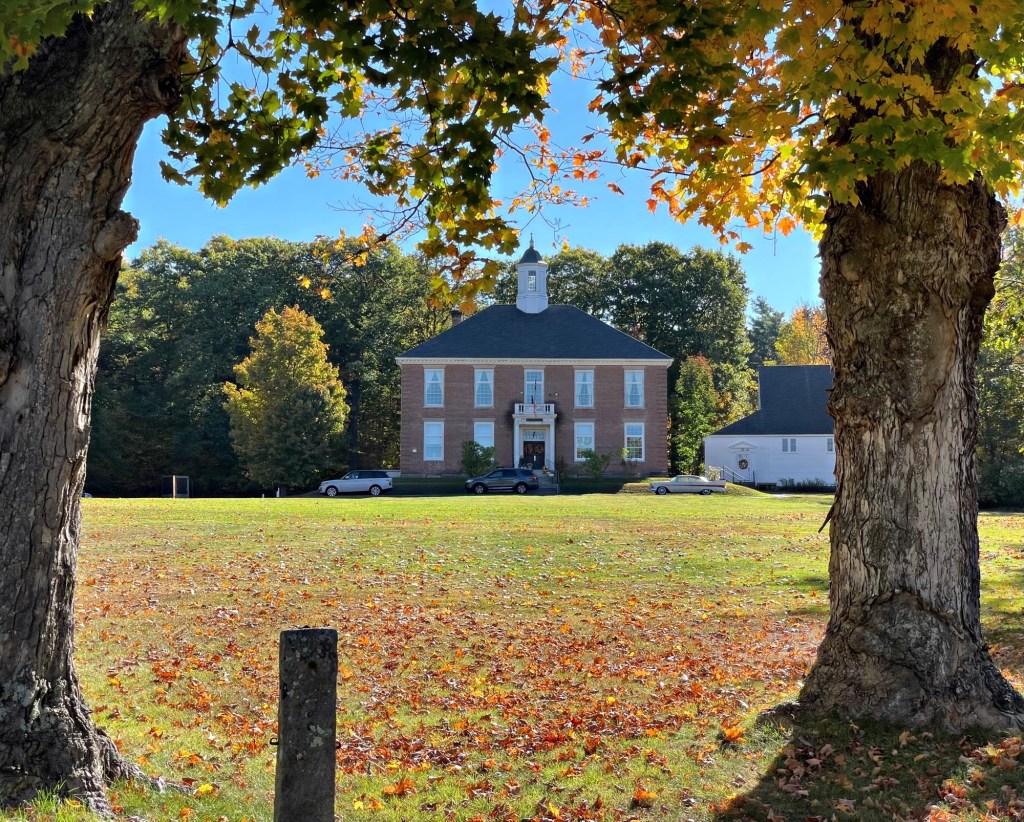
Appleton Academy (aka the New Ipswich Academy) was established in New Ipswich, New Hampshire, in 1789, being the second oldest private academy in the state. The school was named after benefactor Samuel Appleton, the largest early donor, who grew up in town at his father, Isaac Appleton’s homestead. This is the fourth Academy building in New Ipswich. The original 1789 frame building was outgrown and in 1816, it was decided that the academy would be shared with the new town hall building, occupying the second floor. Sharing a prestigious academy building with the town functions was deemed insufficient, and a new prominent site near Appleton Common was acquired, with a new brick academy building constructed there in 1853. The Italianate style structure was funded by the Appleton Family, and was designed by Boston architect, William Washburn. In January 1941, the main Academy building was destroyed by fire. The next year it was rebuilt, closely following the design of the earlier brick structure. The school closed in 1974 and was used by a non-profit and schools until it sold in 2018 and appears to be a residence now.