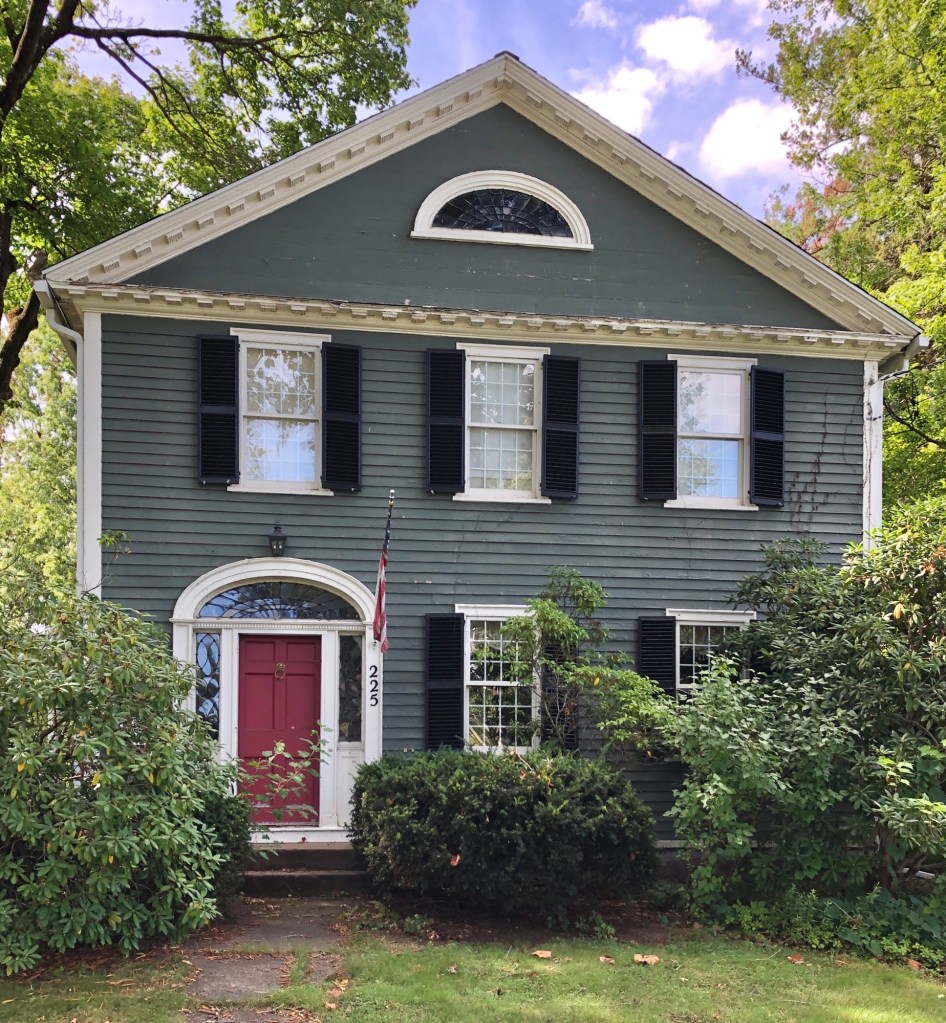
John W. Loomis House // c.1840

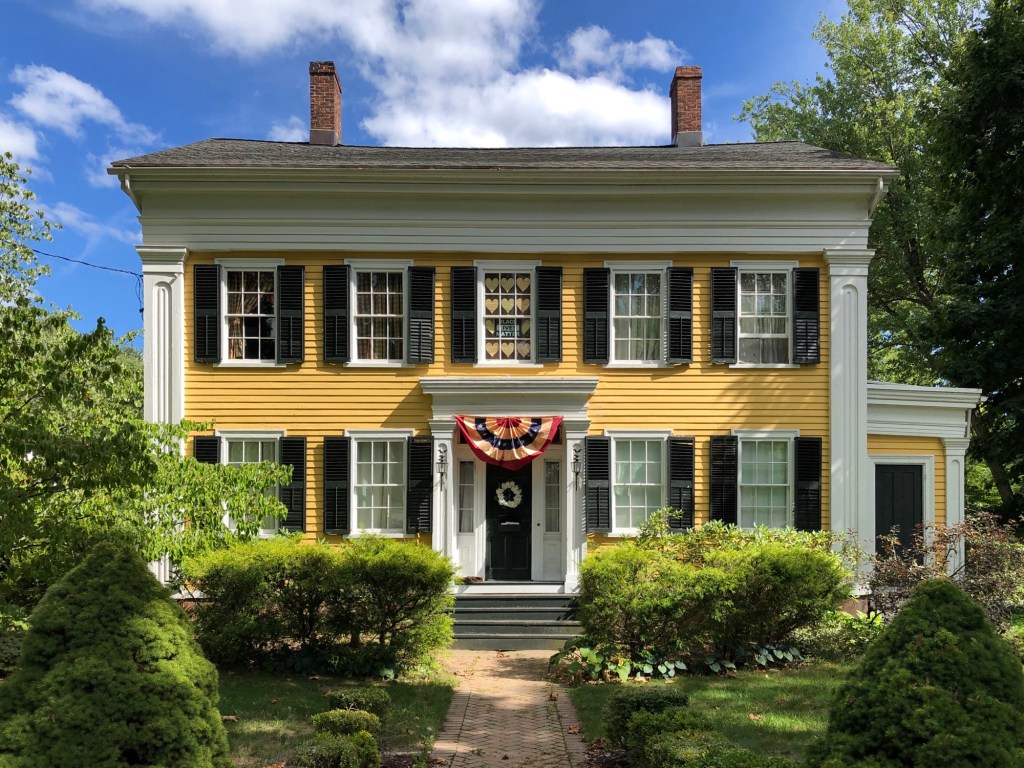
This stunning home sits on Main Street in Suffield, Connecticut, and was apparently built as a center-chimney home in the 18th century. By the 1840s, it was purchased by John Wells Loomis (1805-1879), and altered to fit the then-fashionable Greek Revival style, replacing the center chimney with two smaller chimneys, new pilasters were added to the corners and at the entry. John Loomis was the head of the Loomis family which made a fortune in the tobacco industry in Suffield, rolling and shipping products as far away as California. He operated his cigar business in a large warehouse, now gone, behind the house. Before his death, John Loomis built his son George a house nearby, knowing that his son would carry on the business, which he did until a couple years after his father’s death, until he sold the business and moved to New Haven. The Loomis House is one of the finest examples of a Greek Revival residence in the community.
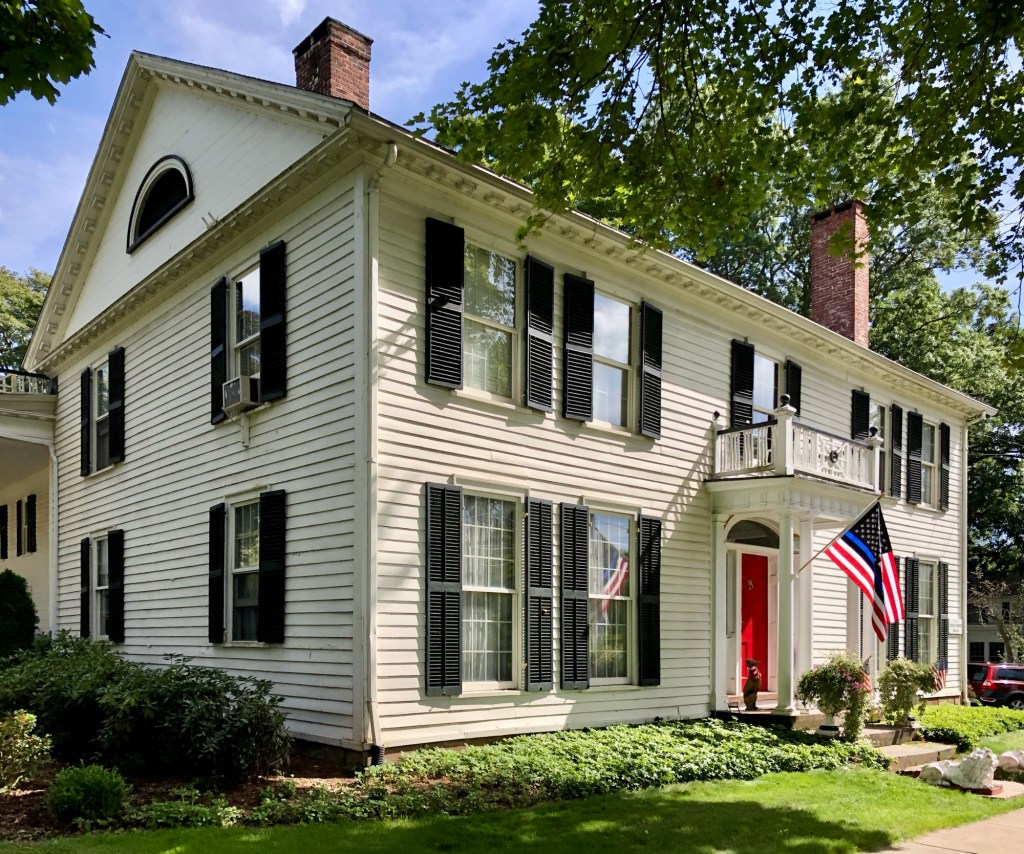
Dr. Asaph Bissell House // c.1835

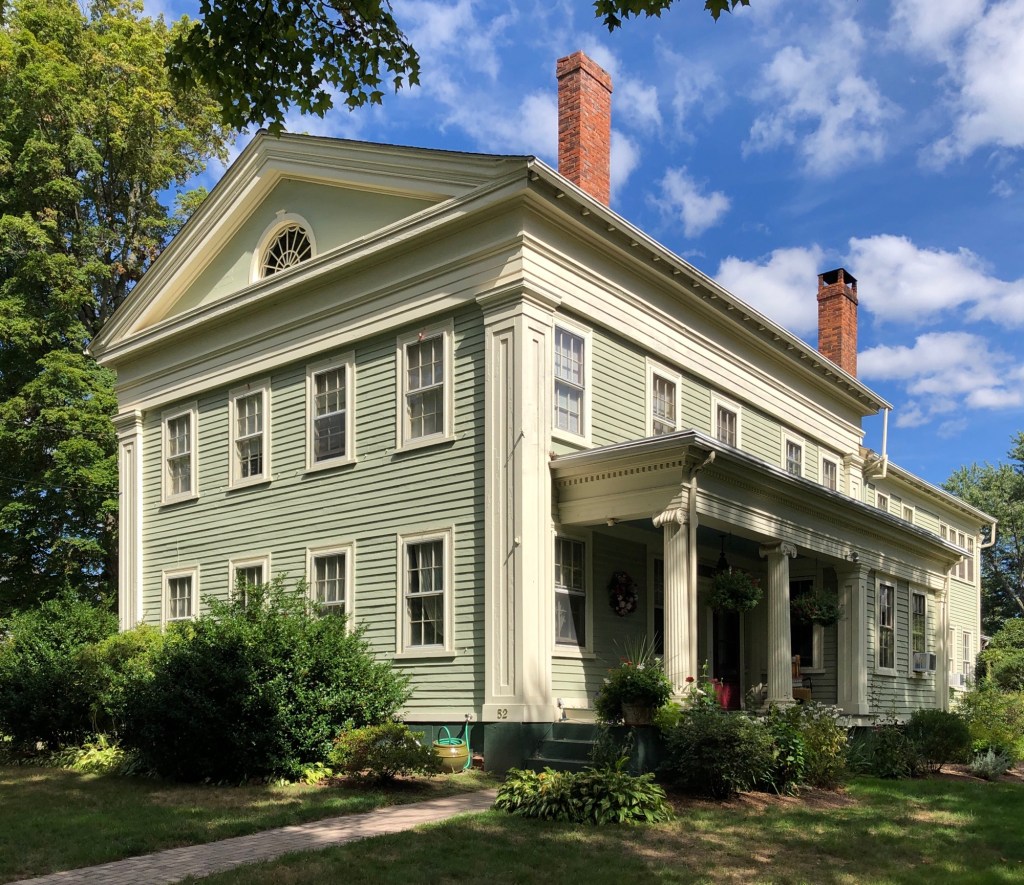
Dr. Asaph Bissell was born into the wealthy Bissell family which started here when John Bissell, the progenitor of the family in America, came from Somerset, England, and landed in Plymouth, Massachusetts, in 1628. He became one of the settlers of Windsor, CT. His descendant, Asaph Bissell (1791-1850) became one of Yale’s earliest medical graduates and built this stately Greek Revival style home on Main Street in Suffield, Connecticut, where he practiced medicine. Dr. Bissell often made house calls from his home right on Main Street until his death in 1850, after which, it was inherited by his eldest son, Charles Bissell. The house is Greek Revival in style with its entrance on the side elevation sheltered by a Classical porch, all facing southwards. The street-facing facade is four bays with large corner pilasters, a massive entablature, and pedimented gable-end with fanlight set within it.

John Fuller House // 1823

This lovely brick, Federal style farmhouse was built in 1823 for John and Mary Fuller in rural Suffield, Connecticut, in 1823 and operated as a farm by the family for over fifty years. The town of Suffield purchased the house and farmland before the 1880s for use as the town’s poor farm. Poor farms (also known as almshouses) were often rural houses where paupers, mainly elderly and disabled people, were supported at public expense. The land was available for the elderly and workers to harvest crops for sale and sustenance. One of the “residents” at the poor farm was “Old Cato” a formerly enslaved person who was owned by Maj. John Davenport, a lawyer and politician in Stamford. Davenport offered Old Cato his freedom in 1812 if he enlisted to serve in the War of 1812, which he did. By the 1820s, he moved to Suffield CT, and worked at the West Suffield Congregational Church, paid to ring the bell at the church, likely also maintaining the property. He eventually ended up at the poorhouse and died, estimated to be over 100 years old. The old Fuller/Poor House was sold by the town in 1952 and converted back into a single-family residence.

Spencer – Mearkle House // c.1824

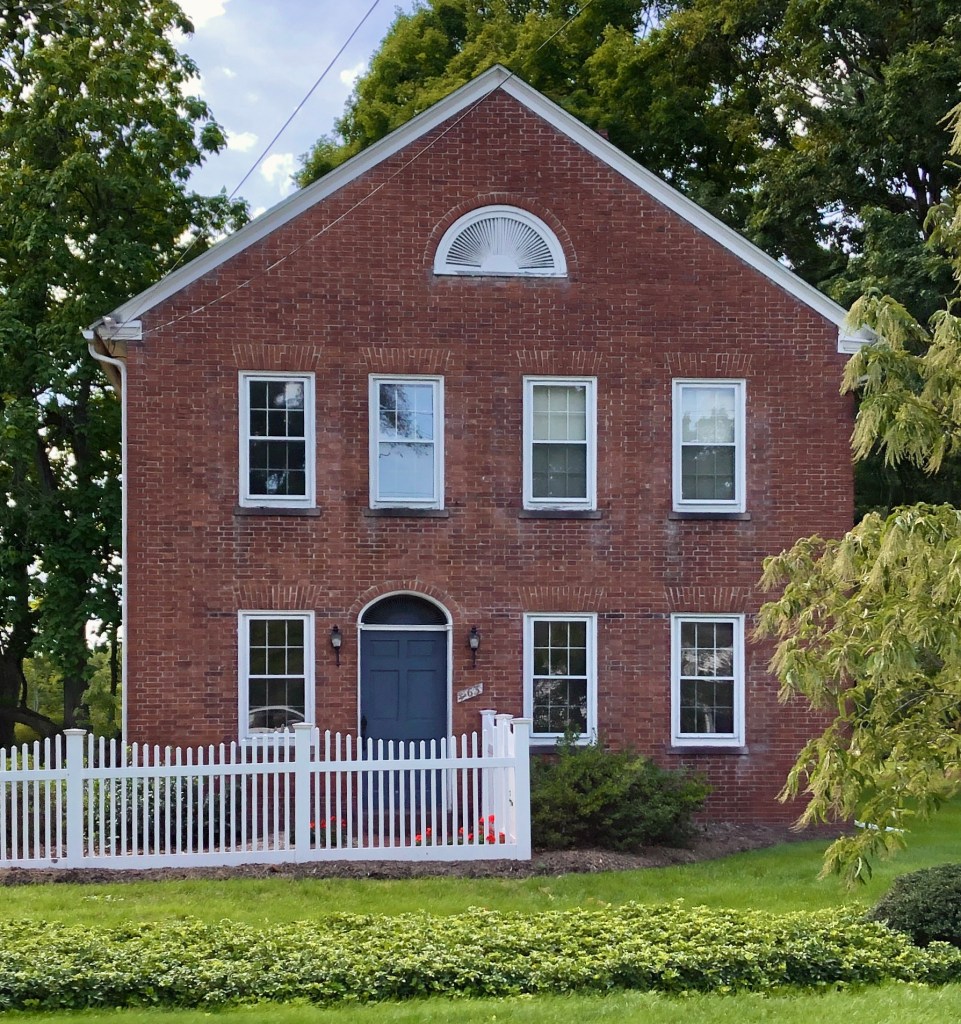
Built in 1824 by Hezekiah Spencer, this beautiful Federal style residence is located on South Main Street in the charming town of Suffield, Connecticut. Hezekiah Spencer (1795-1873) lived and raised his family here with his wife, Cecelia, who farmed the land behind. During the 20th century, the house was occupied by Annie Mearkle, a poet who wrote under the name of Angela Marco. The Spencer-Mearkle House is a great example of a Federal style residence in a side-hall form, with its gable-end oriented to face the street. The house retains its original leaded glass fanlight in the gable and glazed door surround.

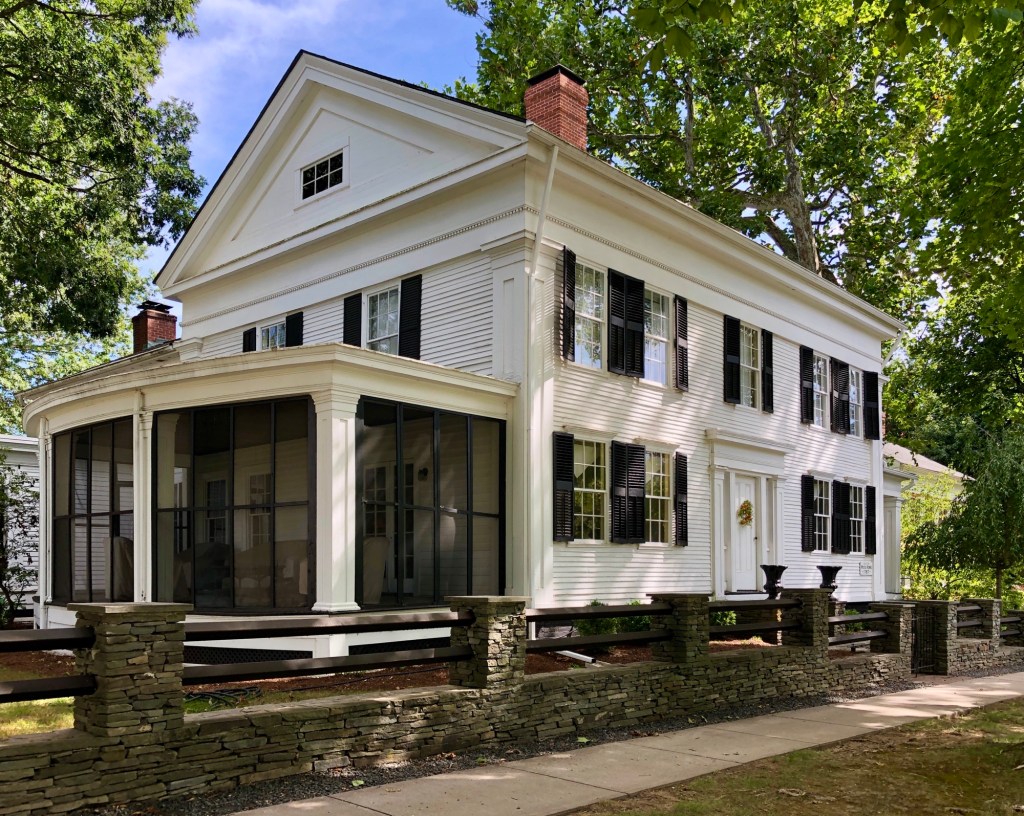
Charles Shepard House // 1824

The Charles Shepard House on Main Street in Suffield, Connecticut, is a stately and well-proportioned Federal period residence that contributes to the iconic streetscape of historic homes that have been lovingly preserved by centuries of ownership. The residence was built in 1824 for newlyweds Charles Shepard (1792-1867) and Cordelia King of the wealthy local King Family of Suffield. Charles was a local attorney who practiced in town for a few years until he moved to Hartford following the death of Cordelia in 1825, soon after this house was completed. The large residence was later owned by William Henry Fuller a local businessman and politician. The house features larger first-floor double-hung windows, fan motifs in the flushboarded gable ends, dentilled cornice, and early 20th century rear addition and entry portico on the facade.

Rowe House // 1767

One of the older homes on Main Street in Suffield, Connecticut, the Moses Rowe House was built in 1767 was later “modernized” to its present appearance. The house was constructed as a two-story Georgian home with minimal detailing, as the family home of Moses Rowe (1733-1799), his wife, and nine children. According to historical maps of the area, the home appears to have been purchased by Horace Sheldon, who in the 1830s, modified the home in the Greek Revival style, increasing the height of the home, adding side porches and the entablature at the roofline.

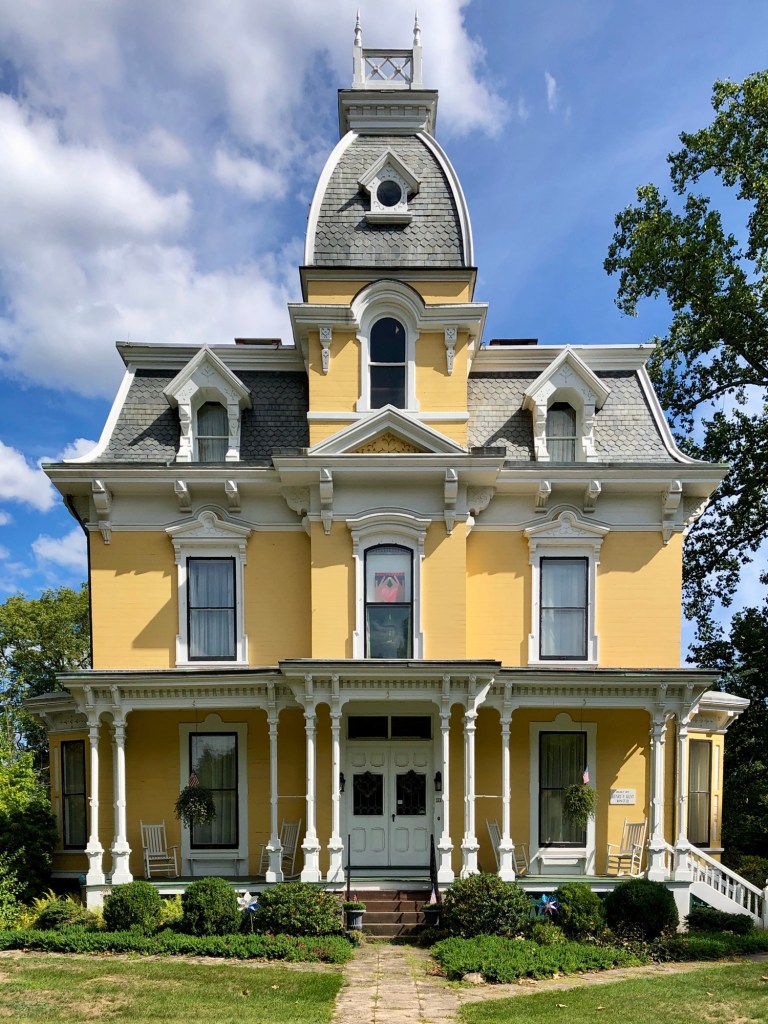
Henry P. Kent House // 1871

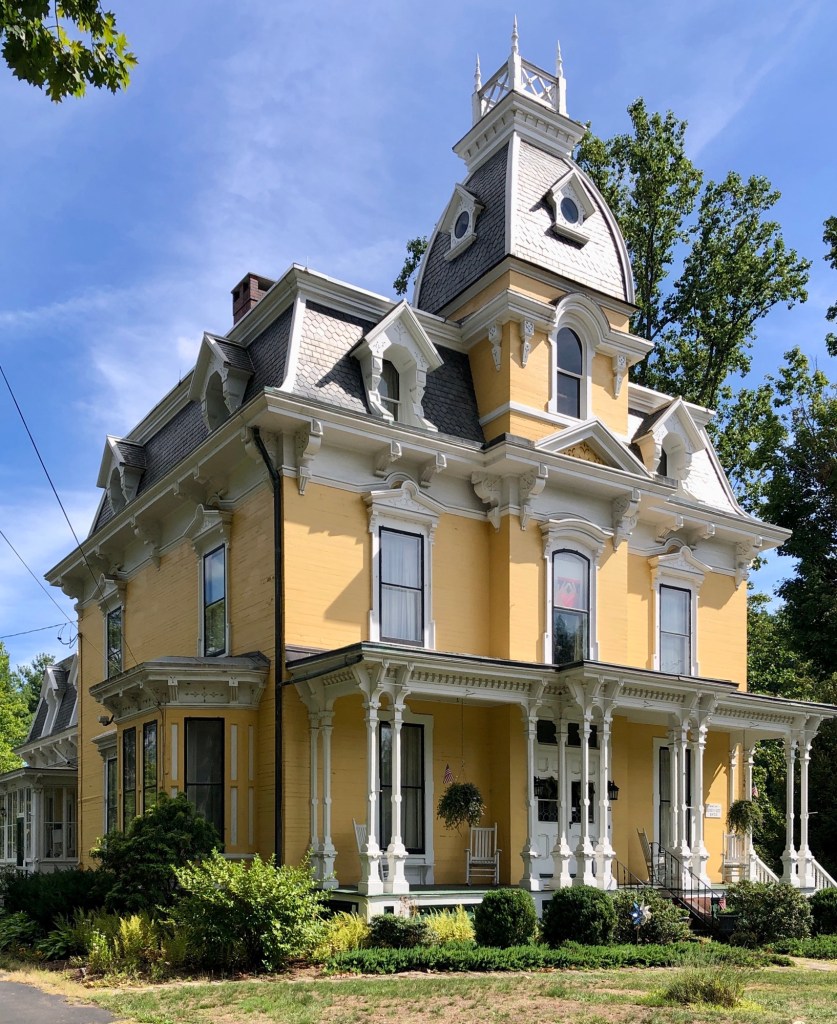
Located on South Main Street in Suffield, Connecticut, this stunning Second Empire mansion showcases the tobacco wealth seen in the town in the mid-to-late 19th century. Local legend states that in the early 1800s, a Cuban man arrived into town and was hired by a local farmer to grow tobacco and roll cigars for sale. Decades later, dozens of farmers in Suffield erected tobacco barns and cultivated tobacco to be rolled in cigars and shipped to communities all over the east coast. One of the first men in Suffield to box the cigars as a pack for shipping and sale was Henry Phelps Kent (1803-1887). With his success, Henry Kent purchased a large lot on the town’s Main Street and hired local architect, John C. Mead, to design a mansion to display his success in business. The large Second Empire mansion features flush-board siding, a full length porch, and a projecting mansarded tower with convex roof. The home was later owned by Samuel R. Spencer, a politician who served as a Lieutenant Governor of Connecticut, the first as a blind man. The home is now operated as a bed & breakfast “Spencer on Main”, named after its second owner.

Dr. Howard Alden House – “Aldenheim” // c.1794

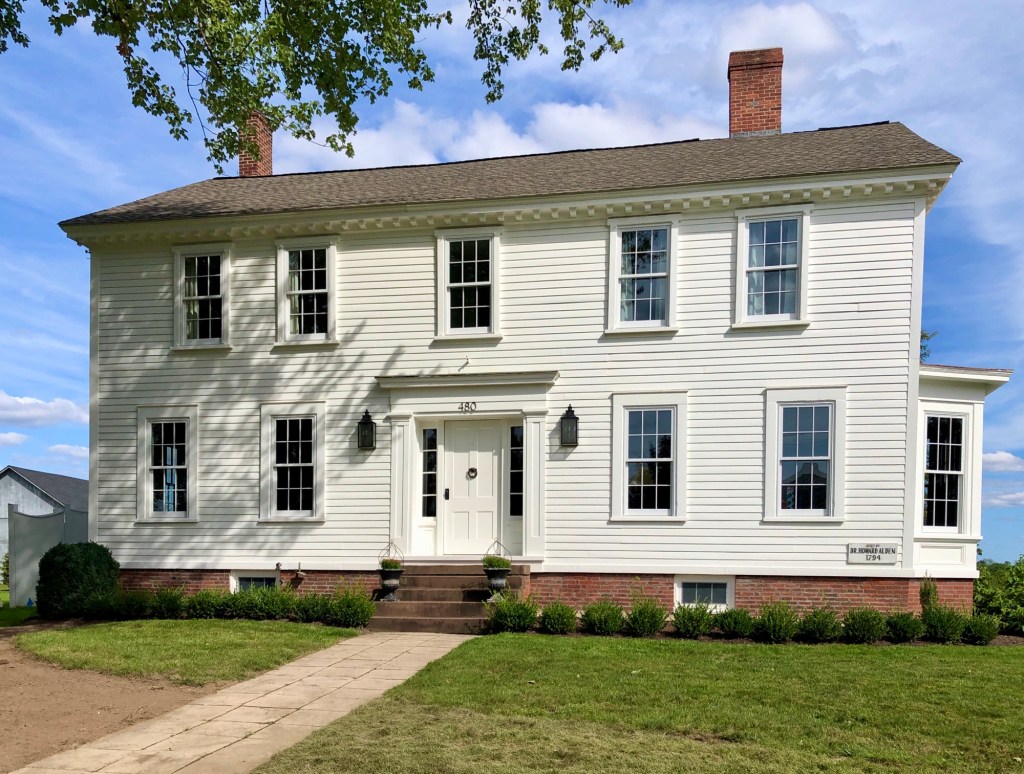
Located on North Main Street in Suffield, Connecticut, the Dr. Howard Alden House (also known as “Aldenheim”) stands as a significant late-18th century estate that has been lovingly preserved for centuries. The residence was originally built in 1794 for Dr. Howard Alden (1760-1841) the main village’s primary physician. The estate remained in the family, first willed to Dr. Alden’s daughter, Susan Alden Pease and later by her daughter, Sarah Pease Fuller and her husband, wholesale tobacco merchant, Edward A. Fuller. While not architecturally ornate, the Federal period residence features a symmetrical facade, center entry with Classical door surround, and dentilled cornice.