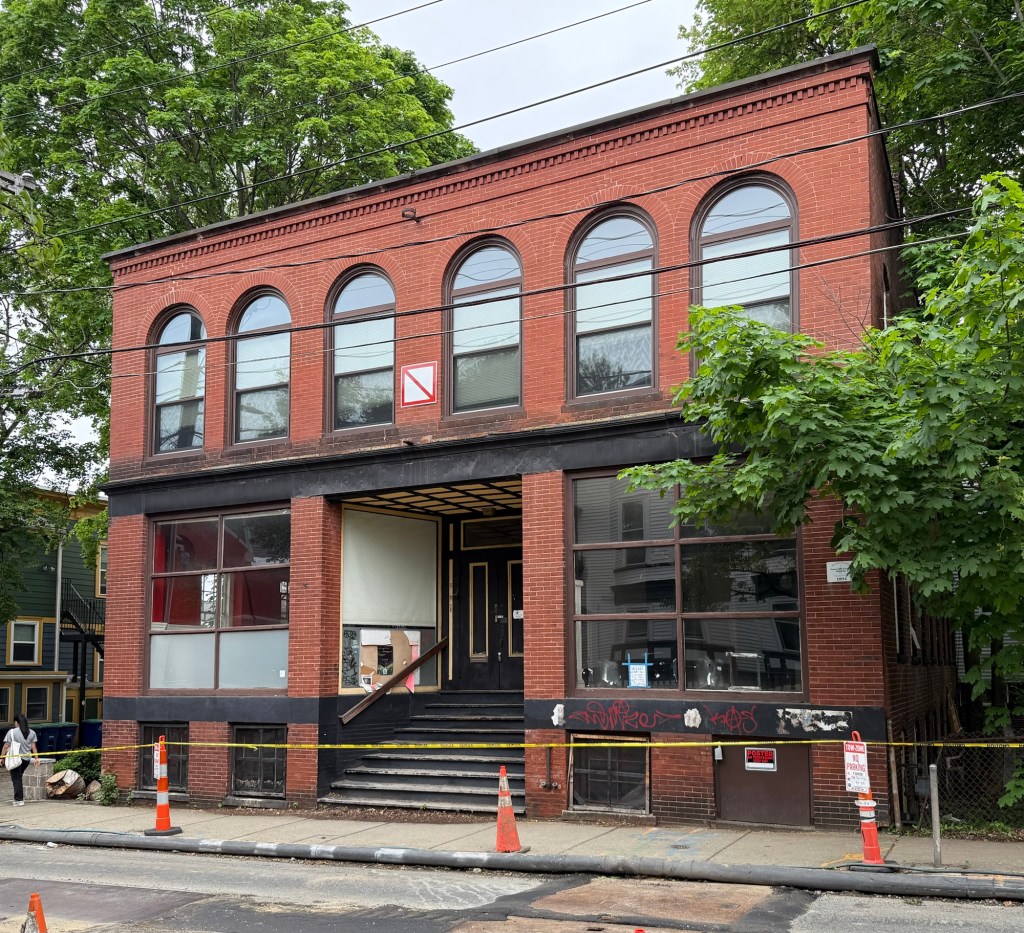
Somerville Journal Building // 1894

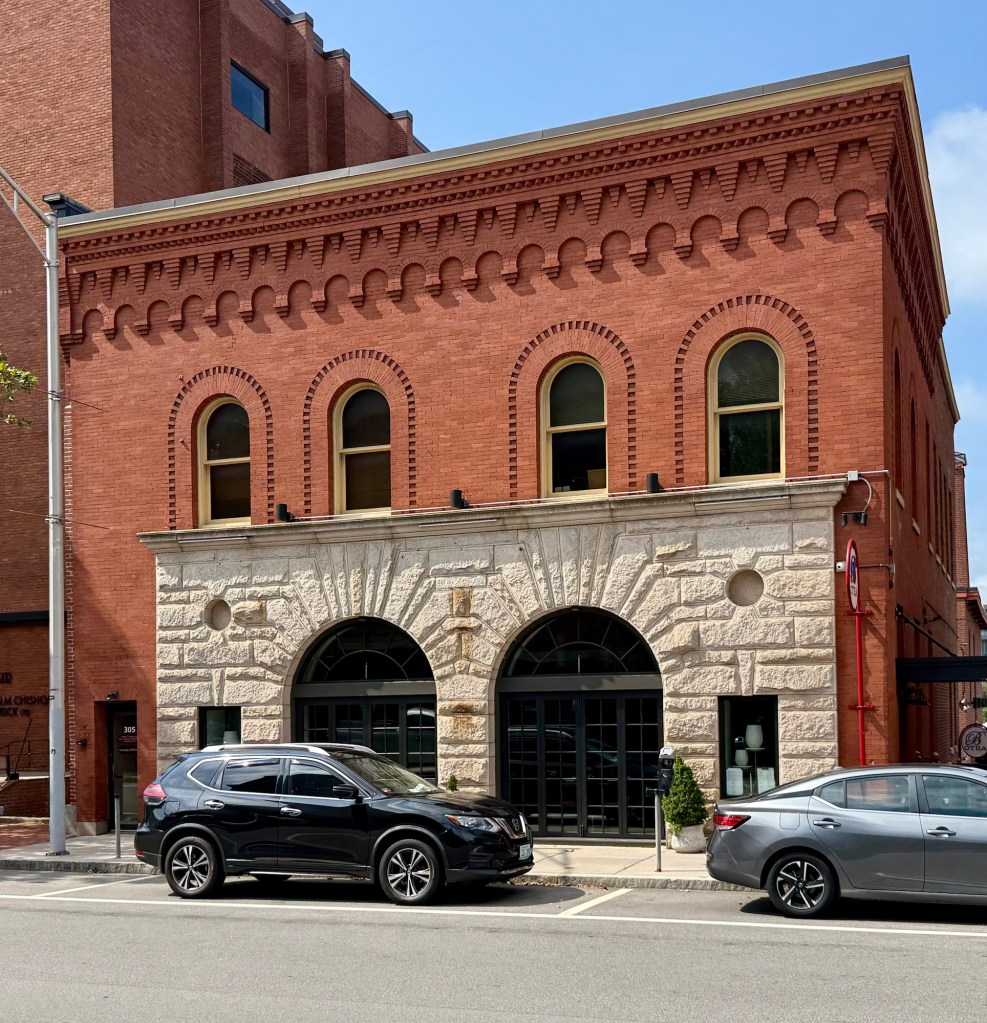
The Somerville Journal was a local paper founded in 1870. The paper was originally published and printed in an office in Boston, but moved to Somerville by the late 1870s. After about 15 years of renting space in a commercial building in Somerville’s Union Square, the paper purchased a lot nearby and began planning for its first purpose-built building for their company. This structure on Walnut Street was built in 1894 to house a new generation of printing equipment and increased production for its growing market, along with the estimated 50 employees at the time. The building was designed by William H. Gerrish (1865-1915), an engineer. Romanesque Revival in style with the arched second-story windows, the building along with its plate glass storefronts, have been an important landmark in the Union Square area for over 130 years. The Somerville Journal vacated the building in the 1950s and the building was used as a photo developing and printing studio. During the 1970s the building was used as a youth recreation center for the city of Somerville. It has been used as artist studios since the 1970s and today, appears to be vacant. Does anyone know what the plans are for this building?

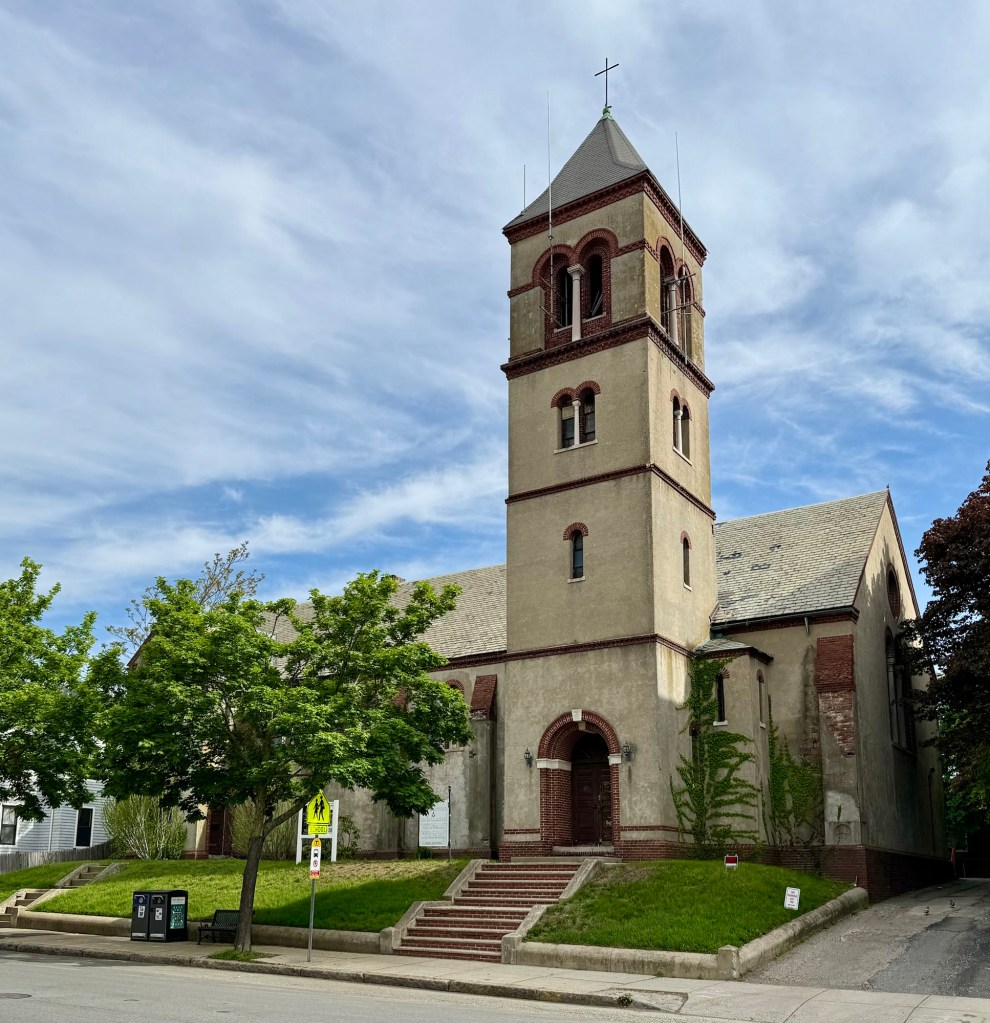
First Universalist Church of Somerville // 1917

The First Universalist Church of Somerville is located on the north side of Highland Avenue across from the First Unitarian Church of Somerville, in a completely different design. The congregation acquired this site in 1915, and the church was built from 1916 to 1923 to a design by the noted ecclesiastical architect Ralph Adams Cram, who produced a somewhat more Romanesque plan than the typical Gothical Revival work he is best known for. One of the key members of the building committee was Gilbert Henry Hood of the Hood Milk Company family. The new church was planned to house an “assembly room,” Sunday school classes, and a parish house. The church operated here for decades, but most recently was home to the Highland Masonic Building Association as the King Solomon’s Lodge. The lodge moved from the building and the property was purchased by a developer who hoped to demolish the building and erect a housing development. The building was deemed significant and “preferably preserved” by the Somerville Historical Commission, and landmark designation was initiated. The building was recently re-listed for sale, and would make a great adaptive reuse or even partial demolition for housing incorporated into the old church. Kudos to the Somerville Historical Commission for standing firm on this significant church by a nationally recognized architect.

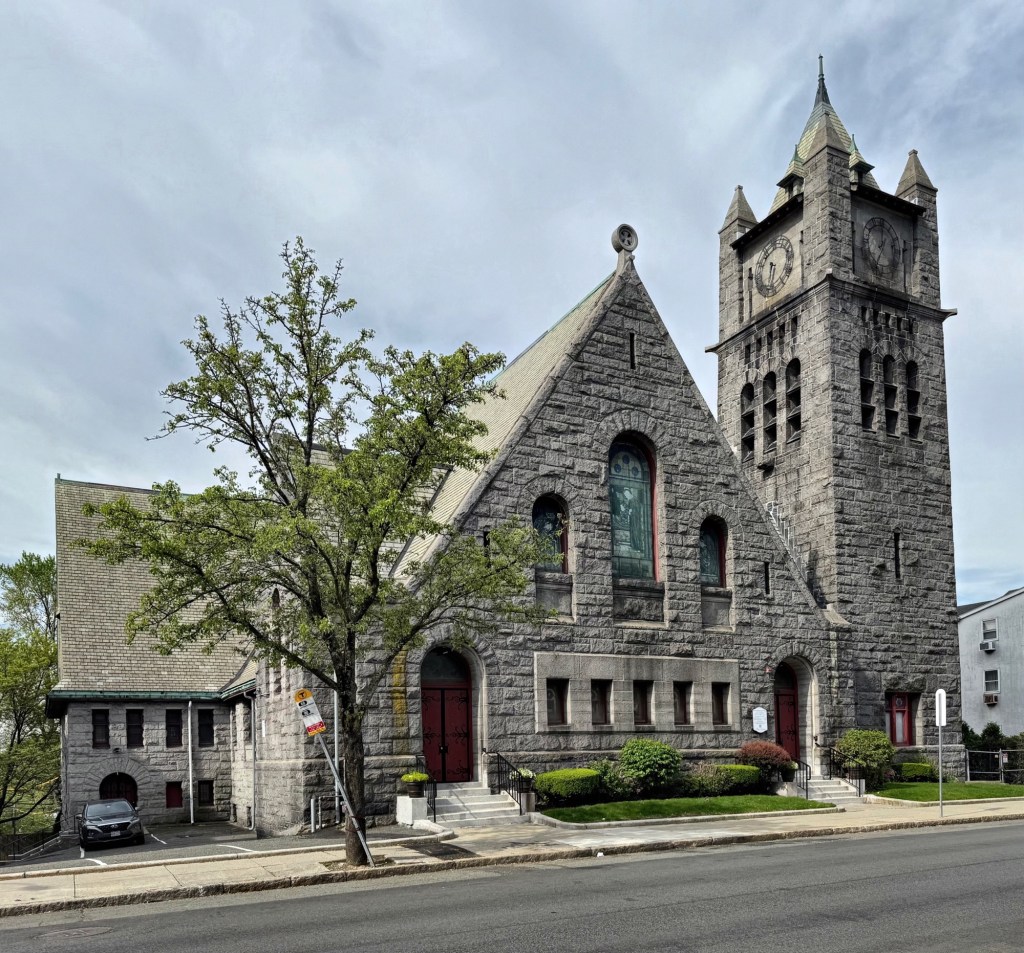
First Unitarian Church of Somerville // 1895

Located on Highland Avenue in the Central Hill section of Somerville, Massachusetts, the First Unitarian Church of Somerville is a landmark example of a church in the Romanesque Revival style. The church was built in 1895 from plans by the esteemed architectural firm of Hartwell & Richardson, and was the fourth and final building of the congregation, which was originally established in 1844. The congregation’s first church was a Gothic Revival style building designed by Richard Bond, but was destroyed by fire in 1852. A year later, the second edifice was designed and built by architect Thomas W. Silloway, which also burned in 1867. The church was replaced again by a Romanesque style structure in 1869. In the 1890s, when the City of Somerville purchased the building as part of the site for the new Somerville High School, a lot down Highland Avenue was secured and planning began for this building. The church is built of granite block with a steeply pitched gable roof, and a square tower at its right front corner. The prominent gable contains two arched entrances with a bank of five rectangular stained-glass windows below three tall round-arch stained glass windows. The congregation was dissolved in 1975 and a year later, the building was purchased by the Mission Church of Our Lord Jesus Christ, an Apostolic Pentacostalist church, who continue to use the building today.

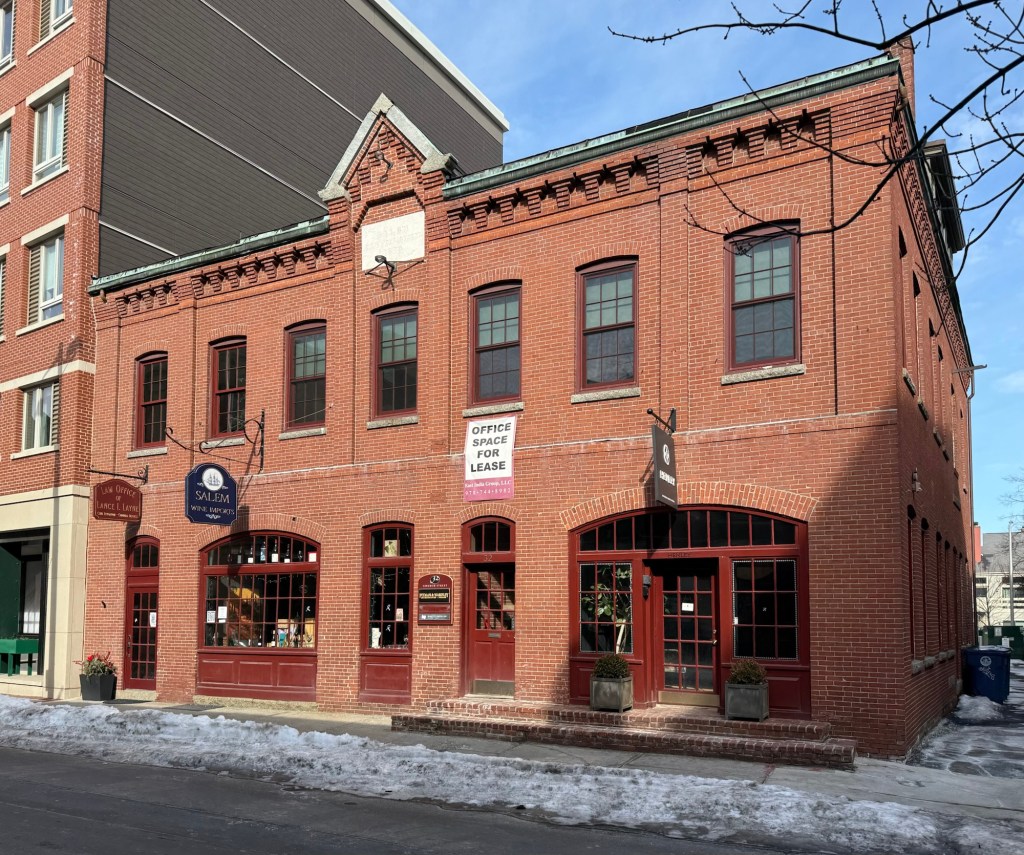
Salem Water Company Offices // 1879

Salem, Massachusetts, was first settled by Europeans in 1626, and it would take 170 years until in 1796, an organization of citizens was established for the purpose of supplying the inhabitants generally of Salem and Danvers with pure spring water. The Salem and Danvers Aqueduct Company was incorporated in 1797  “for the purpose of conveying fresh water by subterraneous pipes into the towns of Salem & Danvers.” As Salem grew, the need for a more central water district and distribution network became a necessity for the health and prosperity of the city. A 1864 law allowed Salem to construct its own water works, and it formed a Board of Water Commissioners who designed and constructed the system. From this, funding was acquired and paid for the laying of tens of thousands of feet of subterranean water distribution pipes connecting the reservoir to buildings and hydrants in Salem. Offices of the Waterworks were scattered and obsolete until 1877, when funds for the construction of this structure at 32-34 Church Street were set aside as the new Water Department Offices. Completed by 1879, the building is a great example of a Romanesque/Italianate style masonry structure with corbelled cornice and arched openings. According to the city directories, this building continued to operate as the Salem Water Works into the late 1930s. By 1945, it was the headquarters of the United States War Price & Rationing Board. In 1964, it held a number of city offices including: Civil Defense headquarters, Fire Department headquarters, Licensing Board, Planning Board, and the City Veterans Service, before being sold by the City of Salem to private ownership in 1976.

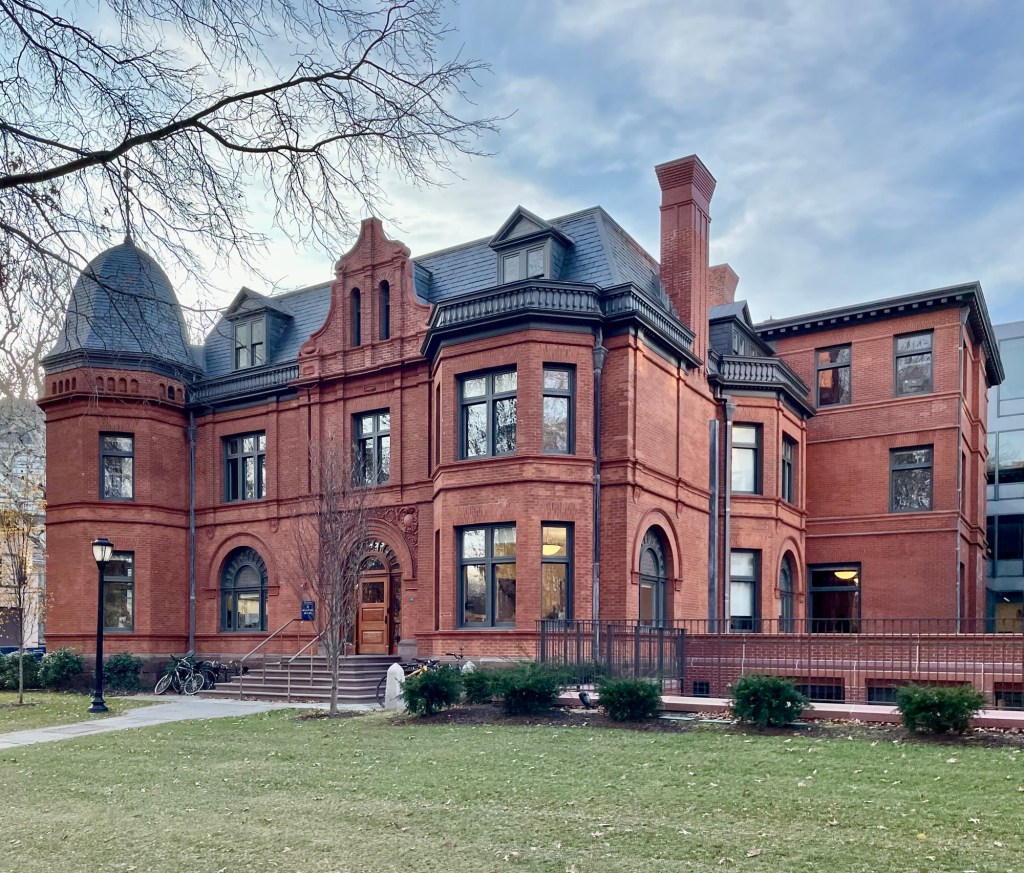
Charles H. Farnam Mansion // 1884

Charles Henry Farnam (1846-1909) was a lawyer, genealogist, and the son of Henry Farnam, a wealthy railroad industrialist in New Haven, Connecticut. Following his father’s death in 1883, Charles, who may have inherited a small fortune in the will, purchased a house lot on the finest residential street in New Haven, Hillhouse Avenue. The existing house on the lot, the Benjamin Silliman House, was relocated to front Trumbull Street (and recently relocated again to 85 Trumbull Street), clearing the site for his new mansion. He hired esteemed architect J. Cleaveland Cady, who designed a large, Queen Anne/Romanesque masonry home unlike anything else on the Avenue. The house features an asymmetrical plan, corner tower, a Flemish style gable, fancy brickwork and terracotta detailing, and a slate mansard roof. Charles H. Farnam would sell the property to Henry S. Parmelee, a noted businessman and piano manufacturer, who also is credited with inventing the first automated sprinkler head and as a result, owning the first building in the United States to be equipped with a fire suppression system, his piano factory. Parmelee hired local architect Leoni Robinson, to design a rear addition for the house. Parmelee died in 1902, and the property was maintained by his widow and daughter, until it was acquired by Yale University in 1920. Today, the Farnam Mansion is occupied by the Economics Department.

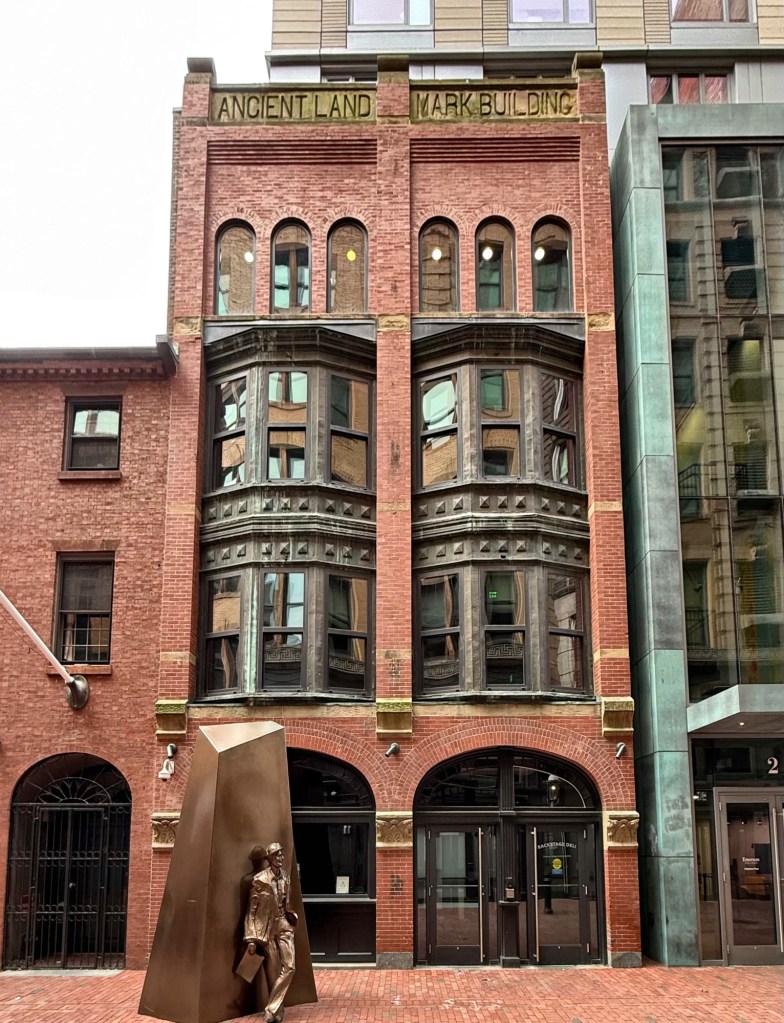
Ancient Landmark Building // 1887

Tucked away on Boylston Place, a dead-end pedestrian way off the bustling Boylston Street in Boston, you will find a collection of 19th century buildings that have miraculously survived over a century of growth, urban renewal, and rebirth. This is the Ancient Landmark Building, constructed in 1887 as a IOOF Lodge. The Independent Order of Odd Fellows (IOOF) is a non-political, non-sectarian international fraternal order established in the United States 1819. The four-story Ancient Landmark Building blends Queen Anne and Romanesque Revival styles effectively with its two arched openings, arched windows in the top floor and two-story metal projecting bays. In the 1970s, the building was listed as “substandard” by the infamous Boston Redevelopment Authority, and luckily did not get demolished as part of its Urban Renewal push. The property was eventually acquired by Emerson College, a great steward for historic buildings and cultural institutions, who restored the building and built a new dormitory above and alongside the Ancient Landmark Building. The project preserves the important streetscape of Boylston Place, while providing needed dormitories for the school.

Walker Building // 1891

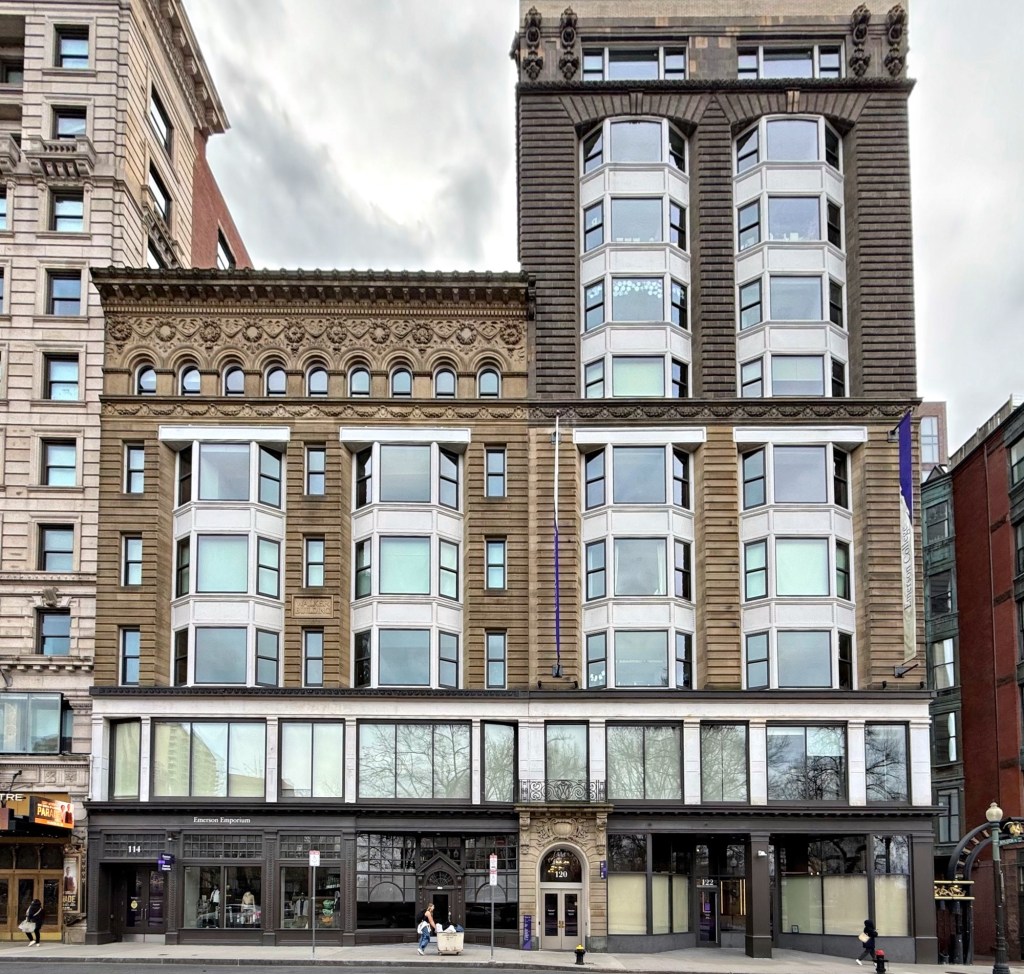
On Boylston Street overlooking the Boston Common, this historic building with two distinct parts is not photographed as much as some of its neighbors, but it is an important visual reminder of the period of growth and development in the city in the late 19th and early 20th centuries. This is the Walker Building, an early office building that was constructed beginning in 1891 in two phases by owner Joseph W. Walker. Mr. Walker hired the architectural firm of Winslow & Wetherell to design the building, which was finished in the Romanesque Revival style with a notable cornice with nine-bay arcade of arched windows and ornate wreath and swag motifs. A major tenant in the building was the Boston office of the S. S. White Dental Manufacturing Company, the largest dental manufacturing company in the world. Less than a decade after the six-story Walker Building opened, Joseph Walker purchased and razed the parcels nextdoor and again hired the same firm (at this time renamed Winslow & Bigelow), to expand the Walker Building, building a ten-story addition in a similar style. The second Walker building housed piano company showrooms and offices along with professional offices of numerous architects and professionals. The Walker Building is now owned by Emerson College, and is used as classrooms, computer labs, and study spots for students with the dining center and bookstore in the former retail spaces.

Chapin Mausoleum // 1914

The Chapin Mausoleum was built as a memorial to Chester and Dorcas Chapin by their son, Chester W. Chapin Jr. Located in the Chicopee Street Cemetery in Chicopee, Massachusetts, the otherwise ordinary burial ground is adorned by this stately mausoleum, which was designed by none other than Louis Comfort Tiffany. Chester W. Chapin, the father of the mausoleum builder, was one of the Connecticut Valley’ s most important 19th century businessmen. After more humble beginnings operating a store, Chapin operated a business for coaches and steamboats, and later, he became president and director of the Western Railroad Corporation (1854 to 1867), and president of the Boston and Albany Railroad Company (1868 to 1878). He was elected as a Democrat to the US House of Representatives and served from 1875 to March 3, 1877. His son, Chester Williams Chapin (1842-1922), followed his father’s footsteps and serves as president of the New York & New Haven Steamship Company and one of the organizers of the Central New England Railroad. Chapin Jr. hired Louis Comfort Tiffany to design and decorate this mausoleum as a memorial to his parents, in the cemetery where hundreds of family members are buried in Chicopee. The mausoleum is constructed of “Tiffany granite”, from a granite quarry in Cohasset that Tiffany Studios purchased in 1914. The entrance to the mausoleum is through a Romanesque portico complete with round arches, stocky columns, and Favrile glass mosaics on the sides. Two marble benches flank a specially designed Tiffany bronze door. Inside, it is said that there are 12 catacombs of richly veined white marble under a Favrile glass mosaic ceiling.

Dwight Manufacturing Company Complex // 1841+

The Dwight Manufacturing Company is named for Edmund Dwight (1780-1849) of Boston, an industrialist who envisioned an industrial town on the Chicopee River. Dwight, having a country home in Chicopee, had begun a venture with his brother, Jonathan, at Chicopee Falls creating the Chicopee Manufacturing Company, to produce cotton cloth. Due to the company’s immediate success, the Dwights along with other investors formed the Springfield Canal Company in 1831, with the goal to create the “new Lowell”, an industrial community in what is now Chicopee Center. In 1856, the Dwight Mills purchased some earlier mill complexes, creating the Dwight Manufacturing Company and consolidating all their cotton cloth manufacturing into one organization. In addition to the mills, the Company also built employee housing
along Depot and Dwight Streets, a stone’s throw from the mills. The creation of employee housing allowed the Company to attract new employees in particular women and children, nearly all immigrants, who could be housed together. My favorite part of the complex is the entrance gate, built in 1894, connecting the Office and Cloth Building. It is amazing to think of all of the people who passed through this portal, working long hours for a better life. Overtime as production methods changed and technology evolved, nearly all the original mills would be replaced or retrofitted. Despite the changes, the Company could not remain profitable and shut down production in 1927 and ultimately selling the land and equipment in 1930. Some smaller manufacturing has since occupied some of these buildings, but they remain largely (if not entirely) vacant, awaiting a new life.

Chicopee City Hall // 1871

Chicopee, Massachusetts, was first settled in the early 17th century and incorporated as a town in 1848. Originally part of Springfield, Chicopee grew rapidly in the 19th century, fueled by industrialization and following immigrants arriving to the city to work in factories there. Many of these ethnic groups established cultural centers and built churches, creating the diverse and architecturally unique city we see today. Sadly, like many other 19th century industrial cities, many of the factories closed or relocated in the mid-late 20th century. While the loss of industry harmed the local economy, Chicopee is poised for growth and rebirth as the second largest city in Western Massachusetts, and anchored by its great architecture. The Chicopee City Hall, built in 1871, is one of the region’s finest buildings and one of a handful built in the Romanesque Revival style. The present building was constructed on land the City purchased in 1869 from the Ames Manufacturing Company, a major employer in town with mill buildings nearby along the river. Architect, Charles E. Parker of Boston, was hired to design the new building which is said to have been loosely modelled after the Palazzo Vecchio, the historic town hall of Florence, Italy. The City of Chicopee have been great stewards to their historic City Hall, undergoing numerous restoration projects in the past decades.