William and Kathleen Fuller House // 1905

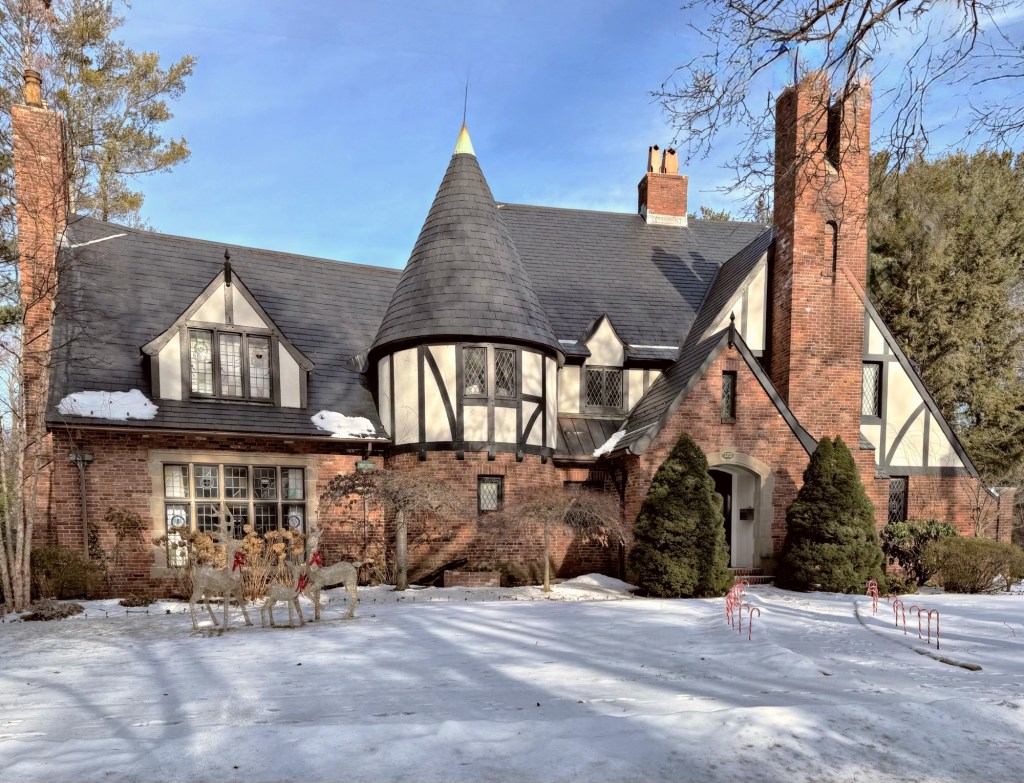
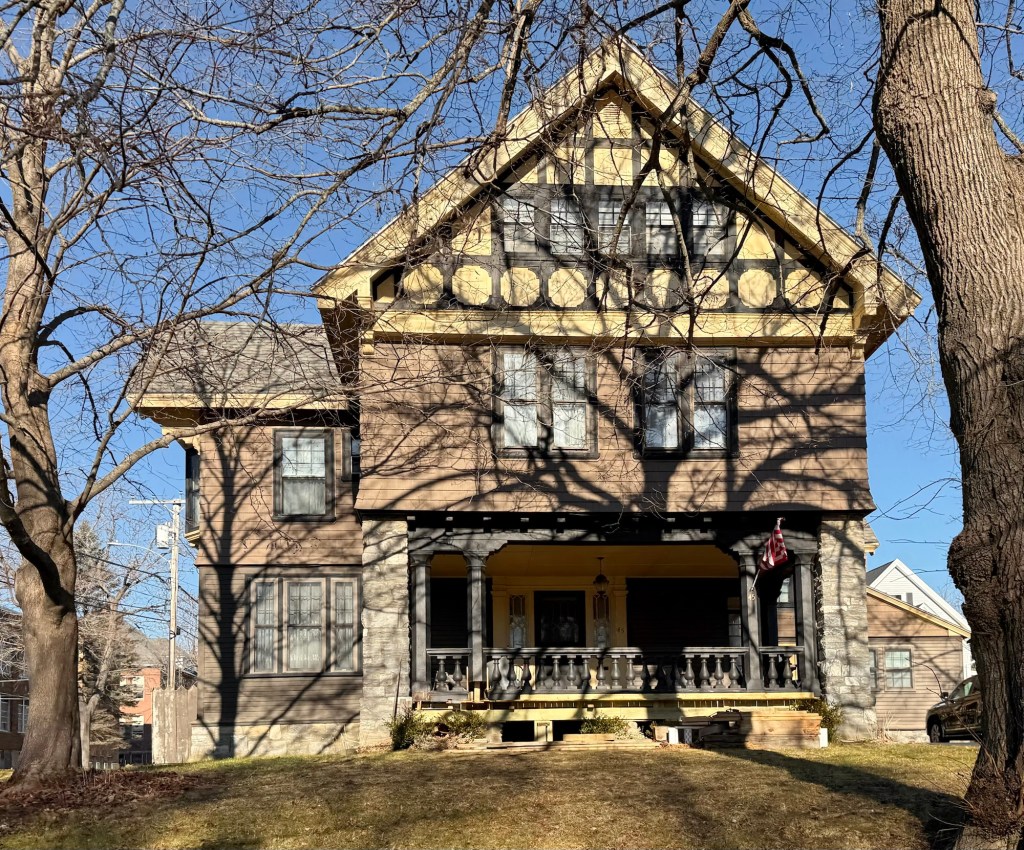
This handsome Tudor residence was built around 1905 for William Oliver Fuller (1856-1941) and his wife, Kathleen Stephens Fuller (1869-1948), and can be found at the corner of Beech and Lincoln streets in the finest neighborhood in Rockland, Maine. Although an architect could not be established at this time, the high-style residence features half-timbered gables, an inset front porch framed by stone pillars, and an absolutely perfect color palette. William Fuller was a newspaper publisher, who created his first newspaper, the Rockland Enterprise when he was 18 years old and in high school. He would go on to become the editor and publisher of the Courier-Gazette, the region’s main newspaper. Kathleen Fuller frequented the newspaper herself through her published poetry and columns and would later become an associate editor and co-owner of the paper.

Former Weeks Junior High School – Weeks House // 1931

Adaptive reuse projects will ALWAYS get love on here!

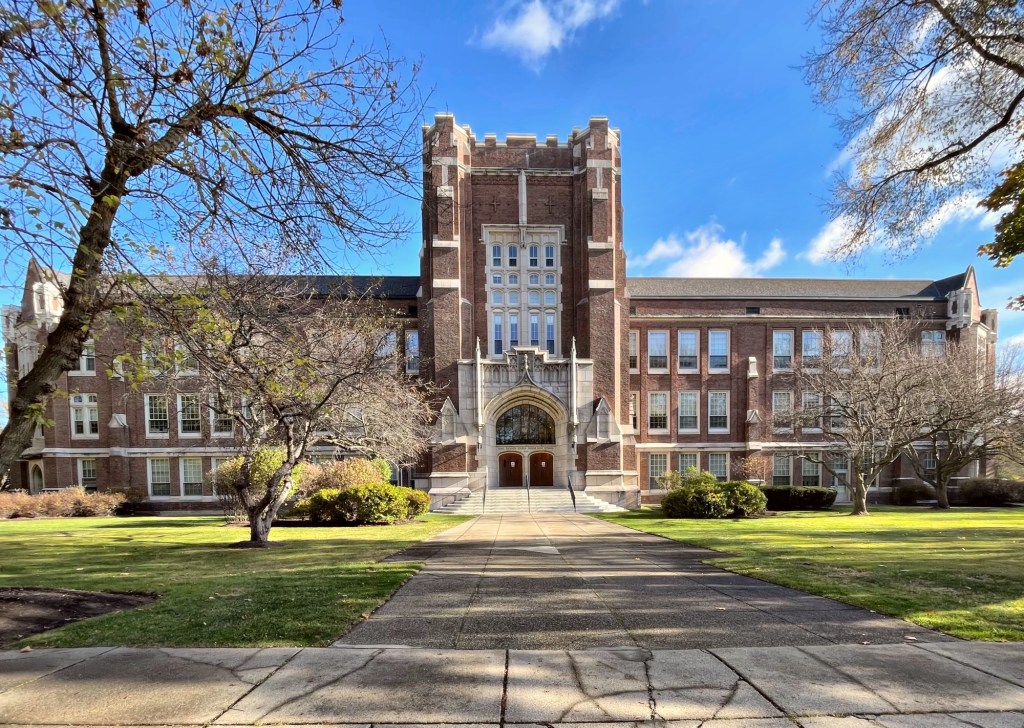
Originally constructed in 1931 as the Weeks Junior High School in Newton Centre, Newton, this architecturally significant school building is the finest local example of the Tudor Revival style in that use. The Weeks School was designed by Ralph Coolidge Henry and Henry Parsons Richmond, architects who were draftsmen for Guy Lowell, one of the greats, and the successors to his practice upon his death in 1927. The design for the Weeks School is of traditional brick and cast stone, with its main entrance through a large Gothic arch at the center of the building. Two wings extend parallel to the tower and then bend back at 45-degree angles, creating the distinctive U-shaped form, which provided ample natural light in all classrooms. After a consolidation of local schools in the mid-20th century, the Weeks School closed, but was beautifully rehabbed in 1984 into housing as the Weeks House. Today, the building is comprised of mixed income housing of about 75, one-, two- and three-bedroom units.

Chester-Rowley House // 1897

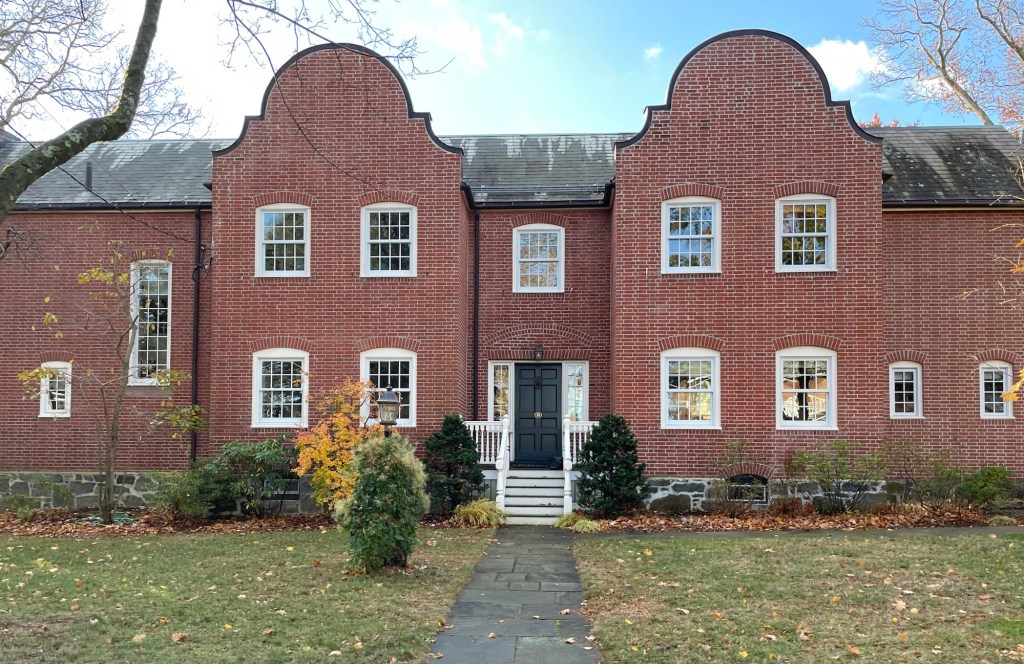
This unique brick house is located on Devon Road in Newton Centre, and was built in 1897 for Arthur Herbert Chester and Elizabeth S. (Rich) ChesterArthur H. Chester (1868-1898) worked in real estate, largely in the office of J. Montgomery Sears. He acquired a large house lot in Newton Centre, and had this unique Jacobean Revival residence built for his young family. Sadly, within a year of its completion, Arthur died of Malarial Fever at the age of just 30 years old in 1898. Elizabeth, his widow, would retain the house for a decade longer before it sold to Henry Esmond Rowley and his wife, Josephine. While it looks like a brick house, this residence is actually wood-frame with a brick veneer, a cost-saving measure to still give a stately appearance. The house is notable for its twin rounded gable parapets at the façade and lack of ornate trimmings. The house was covered in white paint for years, but the owners recently removed all the paint from the brick.

Former Newton Centre Branch Library // 1927

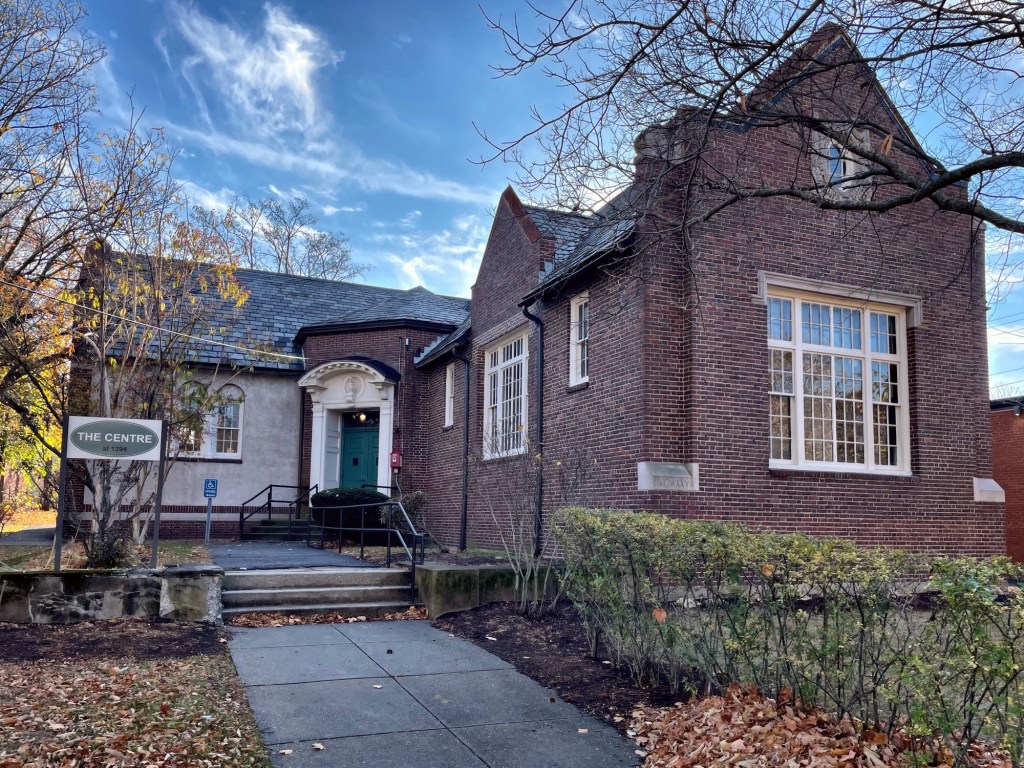
Formerly the Newton Centre Branch Library, this building was one of five branch libraries funded in Newton, Massachusetts by citizen subscription between 1926 and 1939 and turned over to the city. Like most of the others, the building is a small-scale, one story brick library of a Tudor Revival style. The building was designed by the firm of Ritchie, Parsons & Taylor and constructed in 1927. Architect James H. Ritchie was born and educated in Scotland, relocating to Boston and lived in Newton Centre, in two houses he built for his family. The Newton Centre Branch Library was one of the six branch libraries to close in 1991 when the main library opened, consolidating the neighborhood libraries under one roof; the remaining four closed in 2008 due to a budget cut. Today the Newton Centre branch library building serves as the Newton Health Department offices. Thanks to the Community Preservation Act, funds have been allocated to preserve and restore the building for another 100 years.

All Saints by-the-Sea Episcopal Church // 1905

Possibly my favorite type of building in Maine are the historic Episcopal summer chapels that sprouted up along the coast in the late 19th and early 20th centuries. This is the All Saints by-the-Sea Episcopal Church of Southport, Maine, an island community with many summer residents. This church had its beginnings when Reverend John Thomas Magrath of Gardiner, Maine, would visit Southport in the summers and hold services for rusticators under the oak trees or in the cottage living room if the weather was poor. Eventually, a member of the congregation purchased a lot on the east side of Southport on the rugged coastline, and planning began for a chapel. In 1905, the chapel was designed by architect, Albert Hall in a rustic blending of the Shingle and Tudor styles. The building exhibits shingle siding with half-timbering, the original diamond-pane windows, and a large entry porch off the entrance.

Tudor Lodge // c.1850

A rambling Gothic Revival style house in the mode of the picturesque Gothic estates in England, can be found tucked away in Newport, Rhode Island. This is Tudor Lodge, a stuccoed summer “cottage” notable for its stucco siding, moulding over all the windows, broad crenellated parapets, and a hip-roof porte-cochère in front of the principal entrance. The house was supposedly originally built as a summer residence for Nicholas Redwood Easton around 1850. After his death, the property was purchased by members of the Gibbs (Gibbes) Family, who owned much of the land in this part of town, giving nearby Gibbs Avenue its name. The property was purchased around 1900 by William Rogers Morgan, a New York City banker, who greatly remodeled and named the estate, Tudor Lodge, giving the house its present appearance. The estate was converted to four condominium units in 1980.

St. Paul’s Church Rectory // 1886

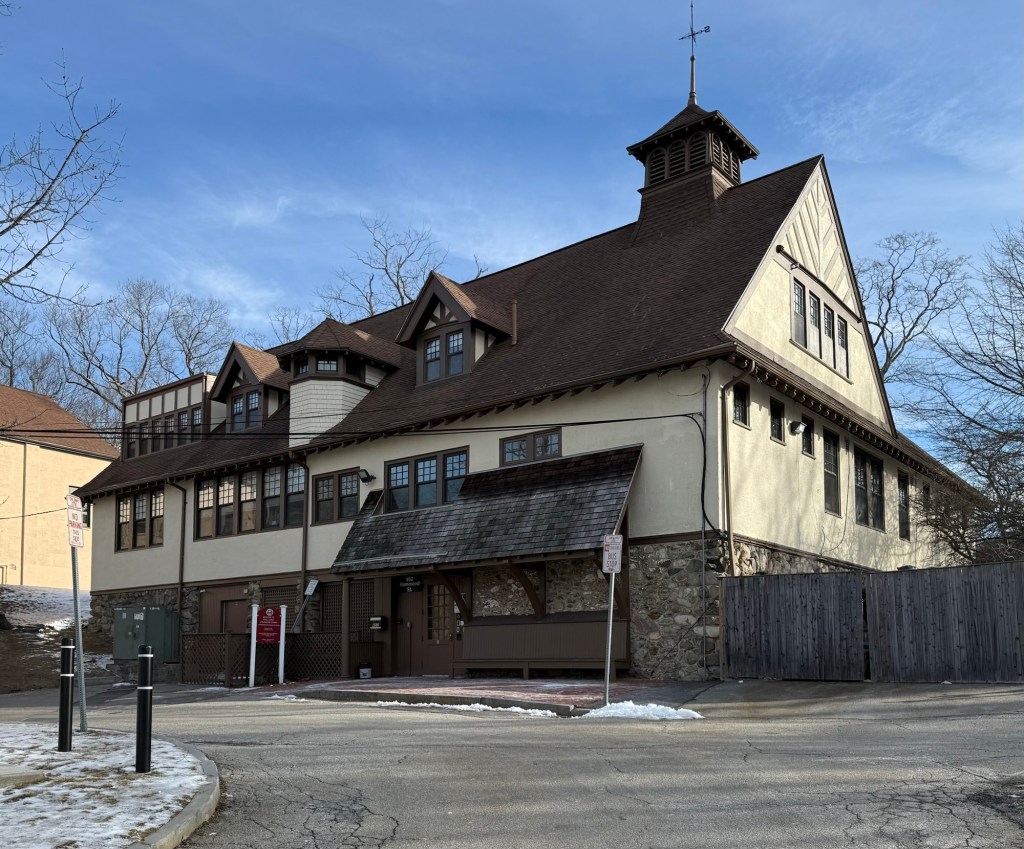
Located next door to the St. Paul’s Episcopal Church in Brookline, Massachusetts, the church’s rectory is equally stunning and compliments the 1850s Gothic church. The Rectory was built in 1886 from plans by Boston architects, Peabody & Stearns, in harmony with the architecture of the Church, with masonry walls of Brighton puddingstone with Nova Scotia freestone trimmings. The Rectory’s architectural style, is somewhat Jacobethan/Tudor due to the pitch of the roof, elbows on the parapet wall, diamond panes in the sashes of the windows, and projecting bay window on the second floor.

Fred Holland Day House // 1892

The Day House is a significant landmark in Norwood, Massachusetts. Originally built in 1861 for Lewis Day (1835-1910), a wealthy Boston leather dealer who was born in town. The house was a two-story Second Empire style mansion with mansard roof and detached stable. During 1890-92 the Day House was rebuilt at the direction of the Lewis’ son, F. Holland Day, who hired Boston architect J. Williams Beal to remodel the house in the Tudor Revival style. Fred Holland Day (1864 – 1933) was a prominent photographer and publisher and was an early and vocal advocate for accepting photography as a fine art. Day’s life and works were controversial because he took an unconventional approach to religious subjects and often photographed males nude sometimes the photos being homoerotic, leading many to speculate he was gay, though he never “came out”. Fred Holland Day died in 1933 and the house is today owned and managed by the Norwood Historical Society as a historic house museum.

Richmond Court // 1898

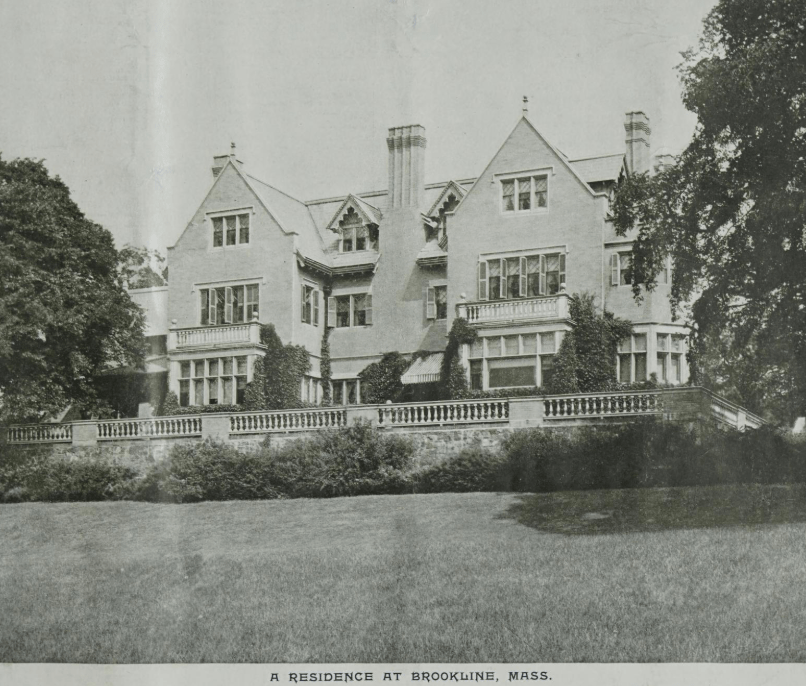
Believe it or not, but this apartment building on Beacon Street in Brookline, Massachusetts is one of the most significant buildings of the type in the Boston area! This is Richmond Court, which is one of the oldest (if not the first) apartment house built in the northeastern United States that resembled an English Tudor manor house. The apartment building was constructed in 1898 from plans by architect Ralph Adams Cram, one of the best American architects of the late 19th and 20th centuries. Cram even moved into the building briefly before moving into a townhouse in the Back Bay neighborhood of Boston. The building set the tone architecturally for later apartment buildings in the Boston area, with many architects attempting (largely not as effectively) to design Tudor-influenced apartment buildings regionally. The development is also significant in that at a time when most Boston-area developers were building apartment houses that maximized the buildable square footage, as they do to this day, Richmond Court included a landscaped courtyard to provide residents with more light and air circulation. The development also included two separate town houses on either side of the apartment block.

Kaffenburgh House – Bertram Inn // c.1910

Across the street from the C. D. Hammer House on Sewall Avenue in Brookline, Massachusetts, this later take on the Queen Anne style with Tudor Revival elements is about to go through quite a transformation!

A little history before I share the proposal for the site… This house was built around 1910 for Bessie V. and Carl J. Kaffenburgh, a tobacco dealer with a store in Downtown Boston. The house was  from plans by architect Harry E. Davidson, who had previously designed stucco houses with Tudor influences for both the Vorenberg and Kaffenburgh family including 20 Amory Street in the nearby Cottage Farm neighborhood. By 1940 the house was owned by Hazen Blood and his wife. The Bloods had rented out rooms in the house totalling 13 lodgers here as a rooming house in the 1940 directory. In 1987, owner, Bryan Austin purchased the property restored it, and opened it as the Bertram Inn.

In recent years, the adjoining lots were eyed for redevelopment and demolition was proposed for this property. Neighborhood opposition and the demolition delay process allowed for review of the plans, which now includes the “restoration” of the main house with a six-story boxy addition on the rear containing condominium units. While the proposed addition is not contextual to the historic Tudor Revival house, it does save the original building and provides much-needed housing for others, so I guess this is a win! What do you think?