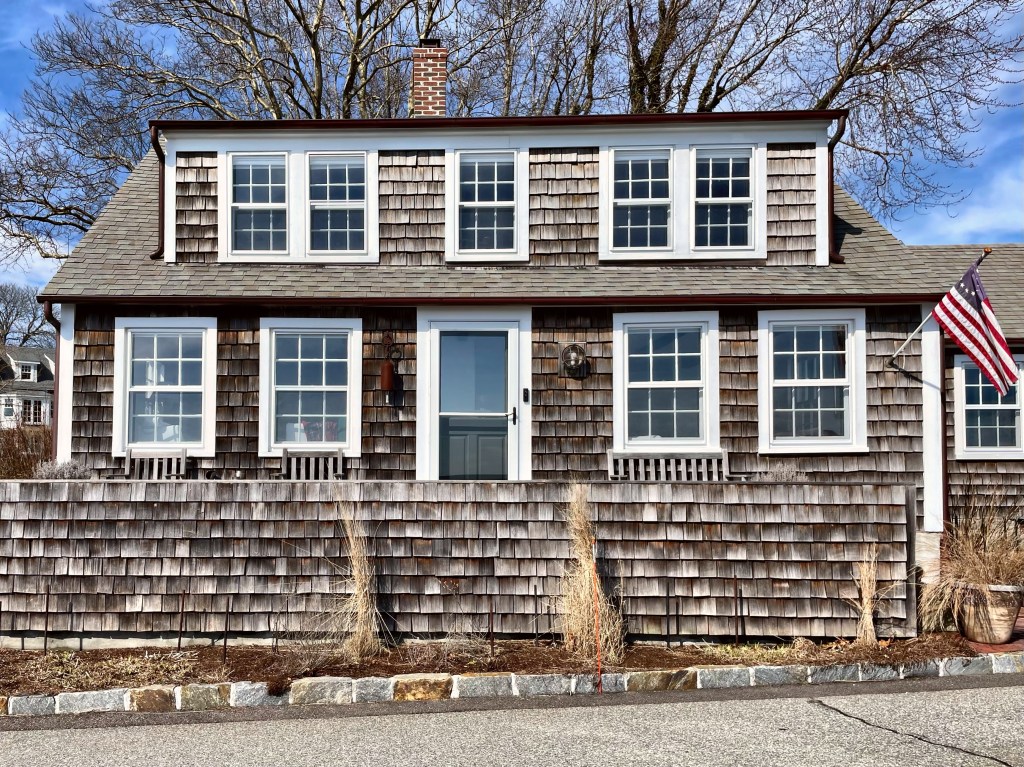
Merritt House // c.1725

In 1725, Samuel Merritt, a fisherman, inherited some of his father’s land in Marblehead and built this house. After Samuel Merritt died in 1743, his second wife Mary, her daughters Mary and Elizabeth and her son-in-law James Dennis, lived in the house. They added the one-story lean-to, giving the house a saltbox roof in 1762. This house, and many others in Marblehead are the reason why human-scaled historic neighborhoods built before the automobile, are some of the best places to explore. Historic preservation equals tourism, which results in tax revenue and property values, stabilizing neighborhoods and cities from the ebbs and flows of the economy. Gotta love it!

Samuel Sparhawk House // c.1870

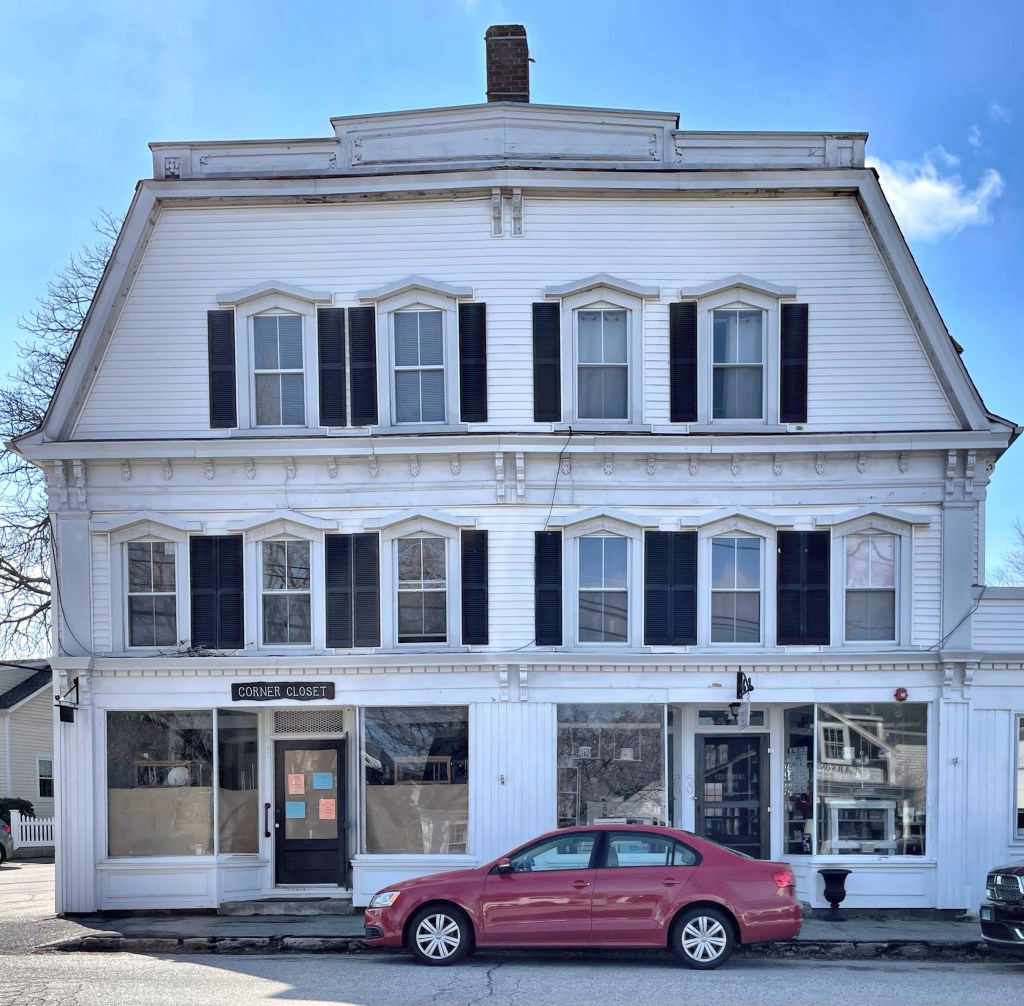
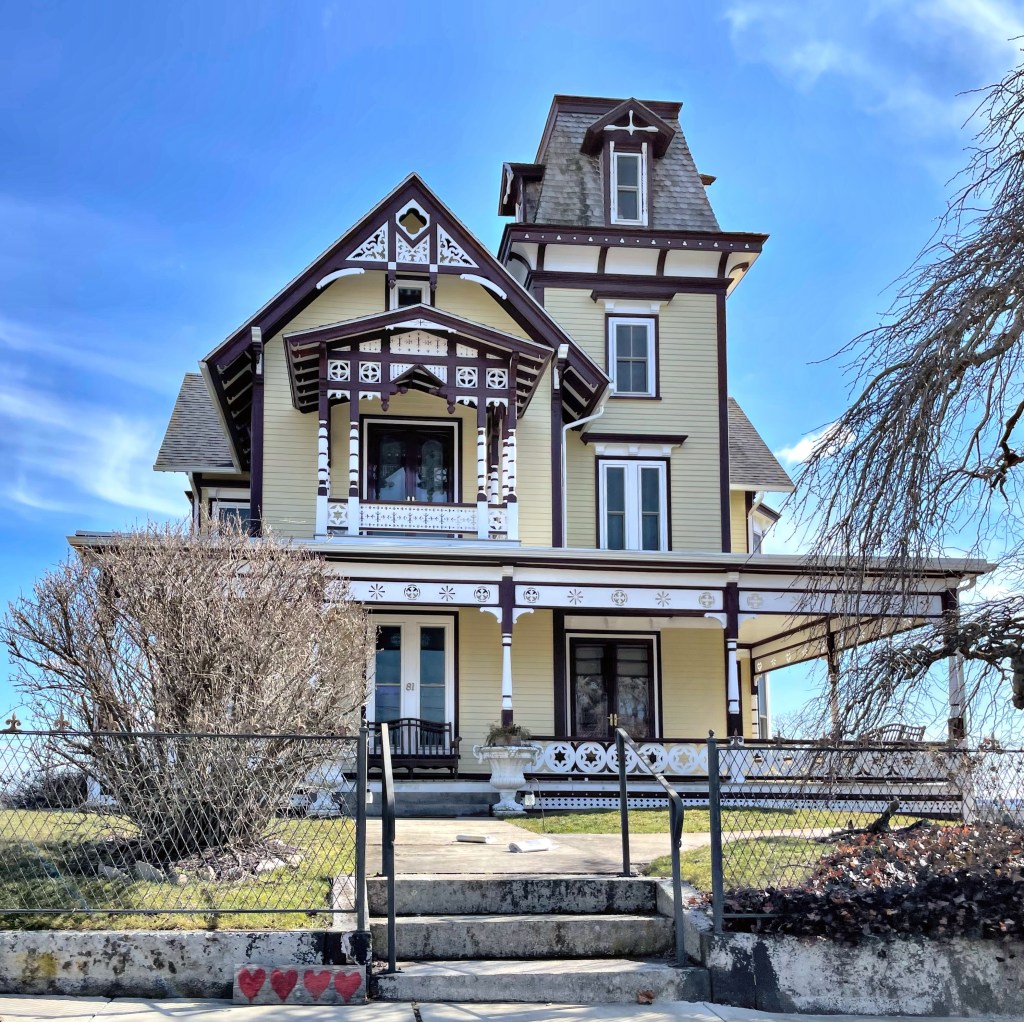
In 1870, Samuel Sparhawk built a large Second Empire style mansion on Mugford Street in Marblehead. Samuel and his brother Peter were among the first large shoe manufacturers in Marblehead, and did very well for themselves. Samuel also worked as Director of the Marblehead Savings Bank. In the early 20th century, the property was sold to Asa A. Schofield. In 1910, a fire at the Second Congregational Church destroyed the 1832 building and embers carried and burned the roof of the old Sparhawk House. The mansard roof was replaced with a simpler hipped roof with dormers.

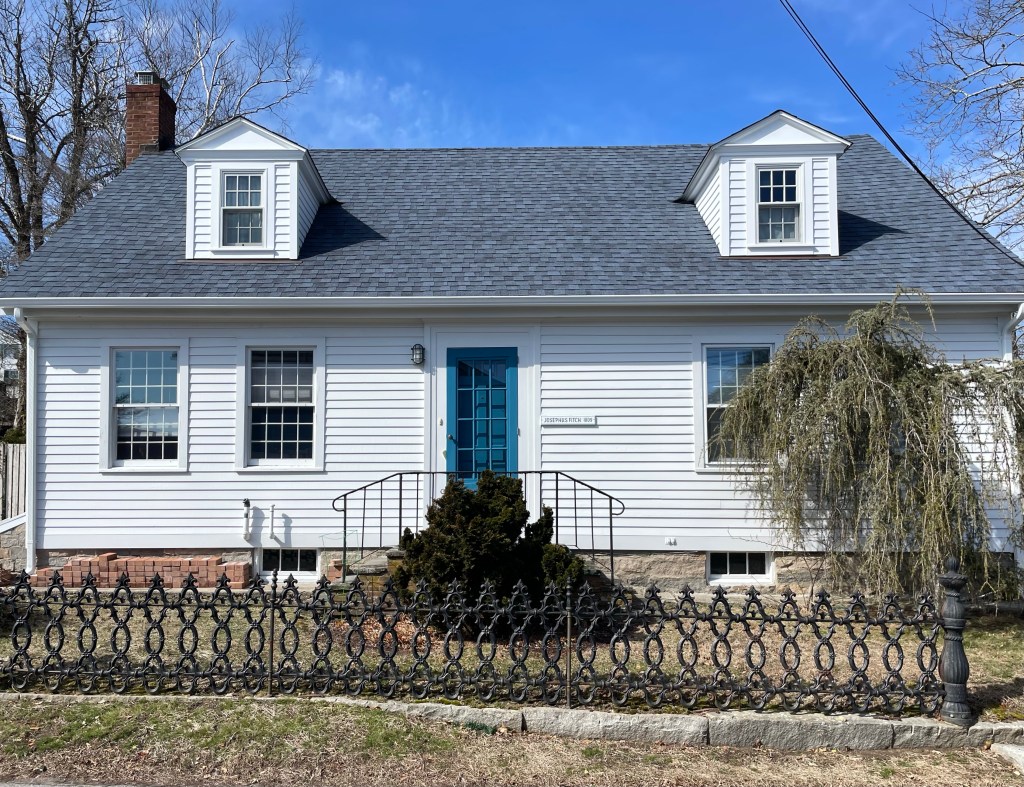
Orlando Rouland Art Studio // 1926

Born in Illinois, Orlando Rouland (1873-1945) became a painter of rural landscapes, scenes of New York City, and portraits of actors, inventors and Presidents. He lived in New York and resided in Marblehead in summers, taking advantage of the natural scenery and rustic homes for his landscapes. In Marblehead, Rouland formed the Marblehead Arts Association and was President of the North American Artists Group. He built this small building in 1926 as his studio while he spent time in the seaside town, with the large window to provide natural light into the interior. The Colonial Revival style studio has been converted to a residence.

Prentiss House // 1843

This past weekend, I took a little “stay-cation” in Cambridge, and I am so glad I did! I stayed at the Prentiss House, a highly significant Greek Revival house near Porter Square. The Inn is operated by Thatch, a company that offers short-term hotel stays, long-term apartments, and co-living arrangements in the Boston area. They recently acquired and renovated this amazing old house and its a great place to stay!

The home was built in 1843 by William Saunders a well-known housewright for his son, William Augustus Saunders about the same time as his first child, Mary was born. Sadly, Mary died at just six years old and was buried at Mount Auburn Cemetery with her grave guarded by a tiny stone dog. The Saunders Family resided at the home for over 50 years until William and his wife’s death at the end of the 19th century. The original location of the mansion on Massachusetts Avenue necessitated its move to the newly laid out Prentiss Street to save it from commercial development pressure and the wrecking ball. The home was moved to its present site in 1925 for the erection of a one-story block of stores on Mass. Ave. In 1992, the home was purchased by local artist, Charlotte Forsythe and she began the journey of transforming the home into the Mary Prentiss Inn. An addition by Bell/Fandetti added rooms and subterranean parking to the building at that time. The Inn was purchased by Thatch in 2021, who modernized the rooms.

The house reads like a Greek Temple, not with a full portico, but by using colossal applied pilasters and an entablature carried across the gable, suggesting a classical pediment. Ornamental wreaths adorn the full-length porch and interior mouldings.

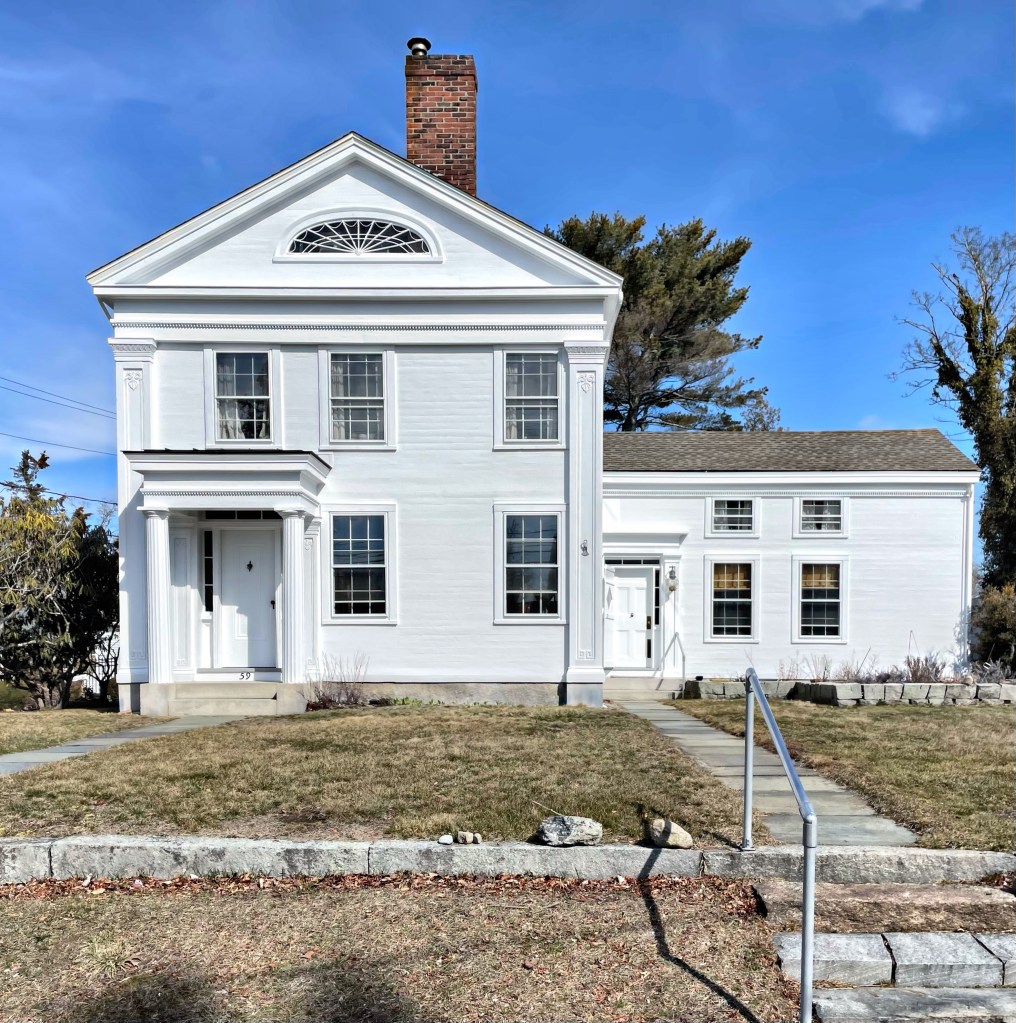
Cross-Kimball House // 1804

In 1803, sea-captain John J. Cross (1768-1804) began building a large Federal style house on land he purchased from his success on the open sea, largely working for the Hoopers. Sadly, before the home was finished, Captain Cross and all his men aboard his ship, the “Traveller” died at sea. The home, which was to be finished by the time of his return was left abandoned when news got back to the shore of the ship’s loss. His wife and three children were devastated and likely sold the property not long after. The property was owned later by Edmund Kimball, a sea-merchant who married into the Hooper Family. Kimball did well for himself and eventually owned multiple vessels. After his first wife, Mary Hooper Kimball died bearing him six children, Edmund remarried to Lydia Mugford Russell. The family home across from the town’s common has been very well preserved since and is an excellent example of a vernacular three-story Federal home on the North Shore.

Pearson-Bessom House // c.1720

In 1720, James Pearson acquired a house lot on Windmill Hill in Marblehead, and he soon after built a house in the bustling harbor town. He lived in the house until 1734, when it was sold to a Giles Irwin. After Mr. Irwin’s death, it was conveyed to John Patton and John Bailey, both mariners, who likely split up the home inside. From this, fireplaces were punched into the central chimney inside, totaling 10 fireplaces in the home! John Bailey also worked as the Captain of Fort Sewall during the War of 1812. His wife Mary, served as temporary commander of Ft. Sewell after his death until a successor was appointed. The house eventually came under the ownership of siblings Carrie Florence Bessom (1867-1944) and her brother Frank Lewis Bessom (1870-1952). Florence operated an antiques store in town and Frank worked as a welfare commissioner. The home is a great example of a Georgian, Colonial-era home with a gambrel roof and even has the two (what I believe to be) separate coal doors in the raised stone foundation when the home was occupied by two families.

Trevett House // c.1715

One of my favorite houses in Marblehead, Massachusetts is the Trevett House on Washington Street, a perfectly preserved stretch of Colonial-era homes that transports you to centuries past. The Trevett House was built around 1715 by merchant Samuel Russell, a wealthy merchant and slaveholder in town, who had this house built as a gift for his sister Elizabeth Trevett and her husband Captain Benjamin Trevett. The house passed to their son Russell Trevett and then on to his son Captain Samuel Trevett. Captain Trevett (1751-1832) was born in this house and is best known for leading the Marblehead artillery company to Boston, fighting at the Battle of Bunker Hill in 1775. At the battle, Captain Samuel Trevett was the only artillery officer that day to make a pretty good account of himself. He disobeyed Col. Gridley’s orders to remain off the Charlestown Peninsula and fire at the navy from the relative safety of Cobble Hill. He survived the battle and the war and died at his family home in 1832. The Marblehead Arts Association bought the house in 1928, and the amazing paneled interiors were featured in publications on early Colonial architecture, and documented as part of the Historic American Buildings Survey.

Powsland-Homan-Dixey House // 1732

The colonial home at 33 Washington Street in Marblehead was built in 1732 for (and likely by) Jonathan Powsland, a joiner (furniture maker-carpenter). In the 1740s, Peter Homan added the rear lean-to, giving the home a saltbox appearance, possibly after he married into the Powsland family. The home was eventually owned by the Dixey Family. John Dixey (1776-1868) spent a good part of his life as a ship master and had several sons that also went to sea. The most well known son was Richard W. Dixey (1809-1860) who, along with two other Marbleheaders, captained the ship that took the first American Consulate to China.

Homan House // 1744

This perfect Georgian house in Marblehead was built in 1744 for Richard Homan (1713-1803), a sea captain who also fought in the Revolutionary War. In 1736, Richard married Hannah Goodwin, the daughter of William Goodwin, a notable housewright. William Goodwin seemingly gave the newlywed couple land on his estate and likely built this stunning home for them. Hannah died in 1772, and remarried in 1776 to Susanna Stacey, who he also outlived. The couple moved to Ipswich, and this home was sold to his son, William. In the 1800s, the property was owned by William Hawkes Jr., a trader and shopkeeper who apparently operated a “rum shop” out of the first floor of the home. It remained in the Hawkes Family until at least 2013. The house features a gambrel roof of cedar shingles, 12-over-12 windows, a pedimented entry, and a period-appropriate paint color.

John Goodwin House // c.1810

Oh, Marblehead, why are you so pretty? The town of Marblehead was originally called Massebequash after the river which ran between it and Salem. The land was inhabited by the Naumkeag tribe under the sachem Nanepashemet. Epidemics in the early 1600s devastated the tribe’s population leading to it’s colonization. In 1635, the General Court of Massachusetts Bay established the town of Marblehead on land that belonged to Salem. The citizens in Marblehead were less devout and conservative than others in Salem, and they incorporated as their own town in 1649. Now… the name. Marblehead is believed to have gotten its name by settlers who mistook its granite ledges and cliffs for marble. The mistake stuck as the namesake. The town thrived as a fishing village, with many fishermen and sea-based jobs, with homes built on small lots along the warren of narrow streets. This home sits on Washington Street, one of the major streets in the Old Town. The home was built around 1810 for John Goodwin on land formerly owned by his grandfather. The Federal style home sits atop a raised stone foundation and has been excellently preserved.

Sweezy Summer House // 1916

Wilton, New Hampshire has a hidden enclave of high-style summer “cottages” built for wealthy residents in the early 20th century. The last of these examples I will feature is the Sweezy House, located in Wilton Center. The Federal Revival style mansion was built for Everett and Caroline Sweezy, summer residents who split their time between New Hampshire and New York. Mr. Sweezy was a banker for the Riverhead Savings Bank which was located on Long Island, which too was a summer destination. The couple hired the firm of Howe and Manning, led by female architects Lois Lilley Howe and Eleanor Manning, to design the home. The house is set back far from the street behind a rustic stone wall. The property remained in the Sweezy Family for four generations.

Cragin-Frye-Savage Mill // 1858

There’s not much that is more picturesque and stereotypical New Hampshire than old, wooden mill buildings. When I was looking for a town to explore in NH, I got stuck on a photograph of the old Cragin-Frye Mill in Wilton, and off I went! Daniel Cragin (1836-1921) was born in Merrimack, NH of Scottish descent. In 1856, age 21, he rented a room in a woolen goods mill, and he built knife trays and wooden toys which he turned into a business. He started his business with ten dollars, and turned a profit from the beginning, so much so that by 1858, he accumulated enough money to purchase a nearby existing building for his own operation. The mill was water-powered and grew quickly. The Daniel Cragin Mill began production of sugar boxes and dry measure boxes. The mill closed briefly after Cragin retired in the early 20th century. In 1909, Whitney Morse Frye and his father, Dr. Edmund Bailey Frye, bought the mill from Cragin. Frye continued the Cragin line of wooden trays, boxes, and pails in addition to his normal processing of grains. Whitney Frye died in 1961, and his employee, Harland Savage Sr. purchased the old mill, continuing operations. After his retirement in 1981, his son Harley and his wife Pam Porter Savage took over operations and they have operated the mill to the present day as Frye’s Measure Mill. The mill is one of a few remaining operating water-powered measure mills in the United States!

Reverend Abel Fiske House // c.1791

Reverend Abel Fiske (1752-1802) was born in Pepperell, Massachusetts and graduated from Harvard College in the class of 1774. Four years later in 1778, at 26 years old, he was ordained as the successor of Reverend Jonathan Livermore at Wilton, New Hampshire, where he remained until his death. During his time in Wilton, Rev. Fiske built this Federal style home for his family. The house is a short walk to the old church where he gave sermons to the growing rural community.

Buss-Newell House // c.1800

One of the finest Federal homes in southern New Hampshire is this residence that sits in the middle of Wilton Center. The home appears to have been built for Richard Taylor Buss, or another member of the Buss Family who settled in Wilton in the 18th century. By the second half of the 19th century, the property was owned by George A. Newell, who built a gorgeous Victorian era stable on the property. Swoon!!

First Unitarian Church of Wilton // 1860

Wilton, New Hampshire’s original land grant included 240 acres for a church and stipulated that a building must be erected by 1752. From this, settlers built a log church. For the first ten years traveling preachers supplied the pulpit. In 1763, Rev. Jonathan Livermore became the first settled minister. In April 1773, the town voted to provide six barrels of rum, a barrel of brown sugar, half a box of lemons and two loaves of loaf sugar for framing and raising a new meetinghouse. In 1859, a fire destroyed the Revolutionary-era church/meetinghouse, and members immediately began the construction of a new, modern building. The present building blends Greek and Gothic revival styles in a later, vernacular form.