Former Brookline Savings Bank // 1898

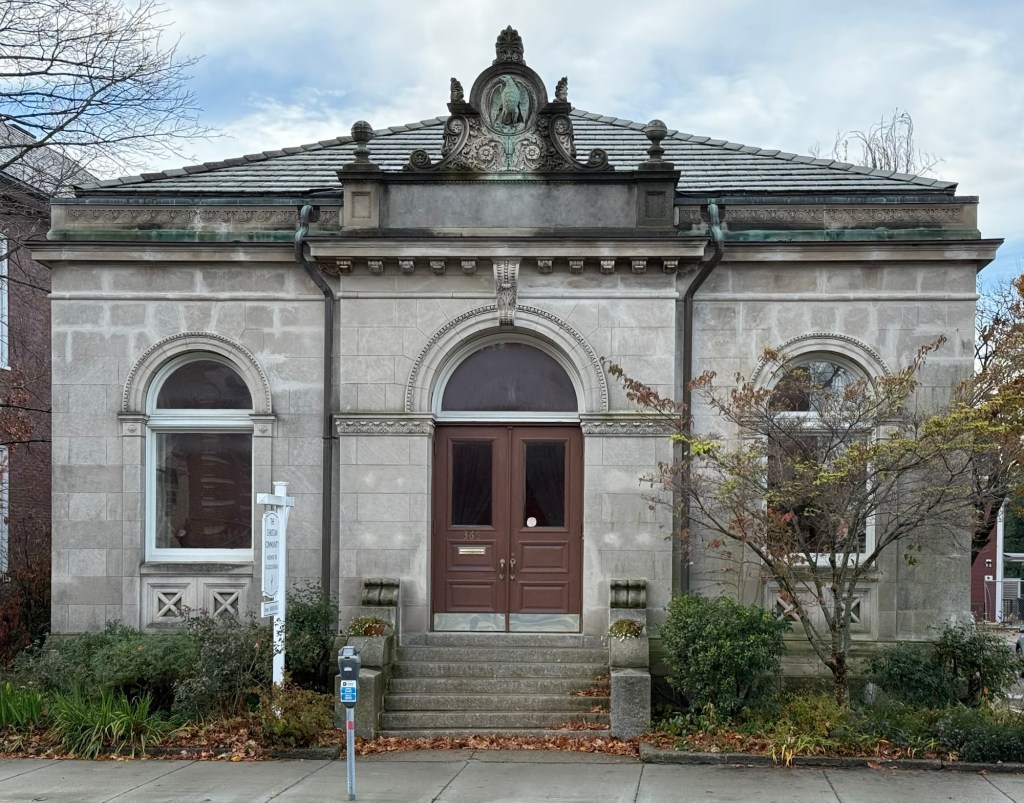
The diminutive former Brookline Savings Bank building on Washington Street in Brookline Village is in stark contrast in scale and design from the 1965 Brookline Town Hall down the street. The building committee hired Franz Joseph Untersee, a Swiss-born architect who settled in Brookline, to furnish designs for their new bank, which opened in November 1898. Covered in Indiana limestone, the Beaux Arts style bank building features a modest, three-bay facade that is adorned by large round arched windows surrounded by an egg-and-dart motif, and an elaborate pediment with acanthus leaf and a central eagle in copper. Like many local banks, the Brookline Savings Bank saw a series of acquisitions and mergers throughout the 20th century, and this small bank building was sold. Today, the former Brookline Savings Bank on Washington Street is occupied by a church.

Former Derby Savings Bank // 1893

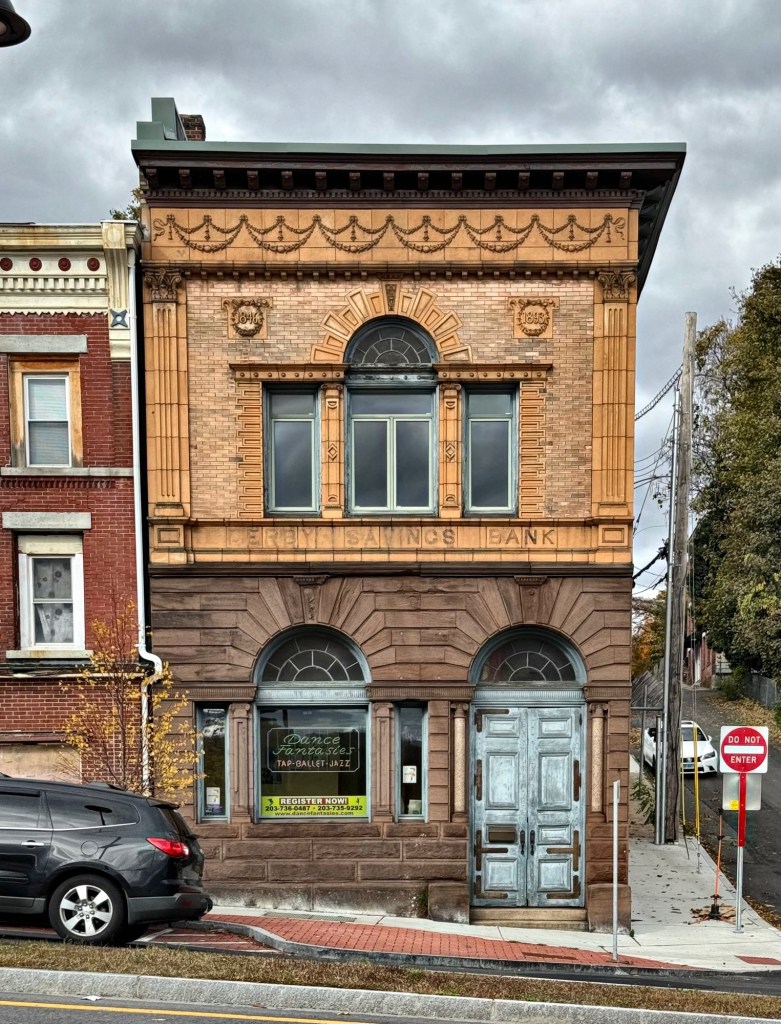
The former Derby Savings Bank stands at the corner of Main and Caroline streets and is one of the many handsome commercial buildings in Derby, Connecticut, which have been preserved. Designed in the Romanesque and Classical Revival styles, the building is adorned by terracotta, brick, and brownstone, with medallions depicting the date of incorporation (1843) and the date of this building (1893) which flank the Palladian window at the second floor. The bank occupied this structure from the date of its completion in 1893 until it built a new banking facility farther down Main Street in 1923. The bank again built a new building during the period of urban renewal in Derby’s downtown in 1976 when the modern structure at Main and Elizabeth streets was completed. The Modern bank is presently used as the City Hall.

Former Birmingham National Bank // 1892

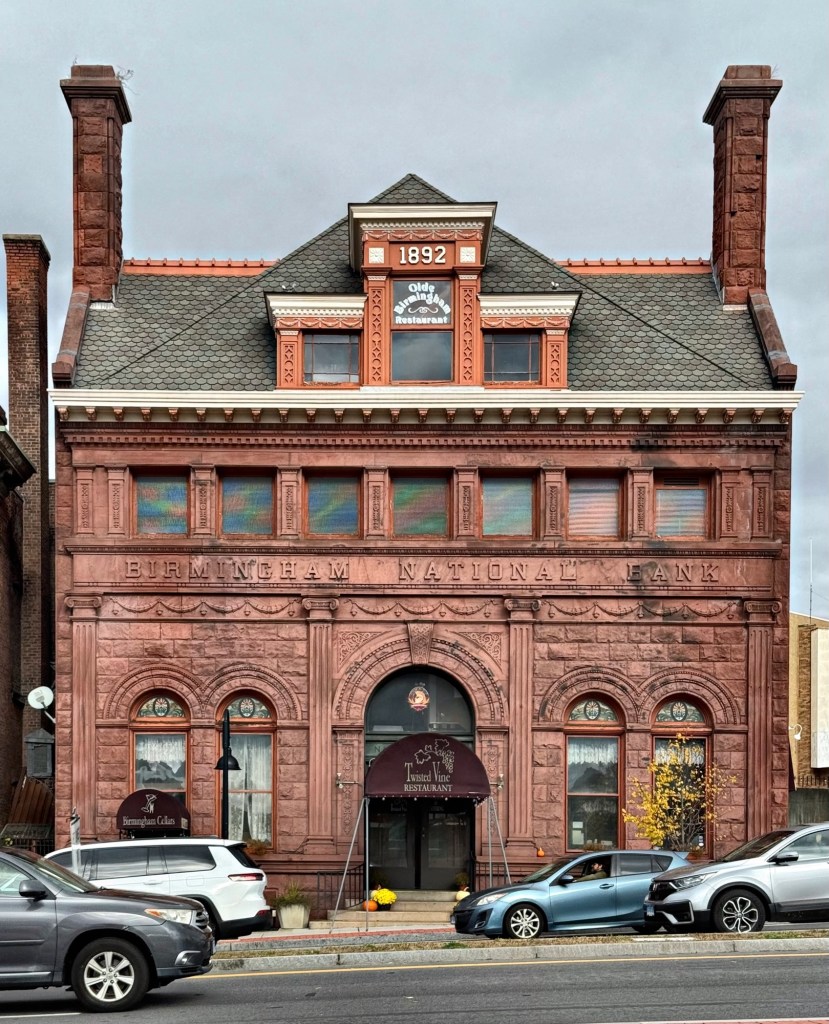
The former Birmingham National Bank building on Main Street in Derby, Connecticut, is one of the finest buildings in the former industrial village of Derby (originally named Birmingham). The bank was originally chartered in 1848 as the Manufacturers Bank of Birmingham, with Edward N. Shelton as its first president, and became a national bank after the Civil War. Designed by architect Warren R. Briggs and constructed in 1892, the building features an elaborately detailed facade of red sandstone with terracotta trim in the Sullivanesque and Romanesque Revival styles. Like many local and regional banks in the mid-late 20th century, the bank merged with others and the building was vacated. Today, the former Birmingham National Bank building is occupied by the Twisted Vine restaurant.

Old Stone Bank // 1896

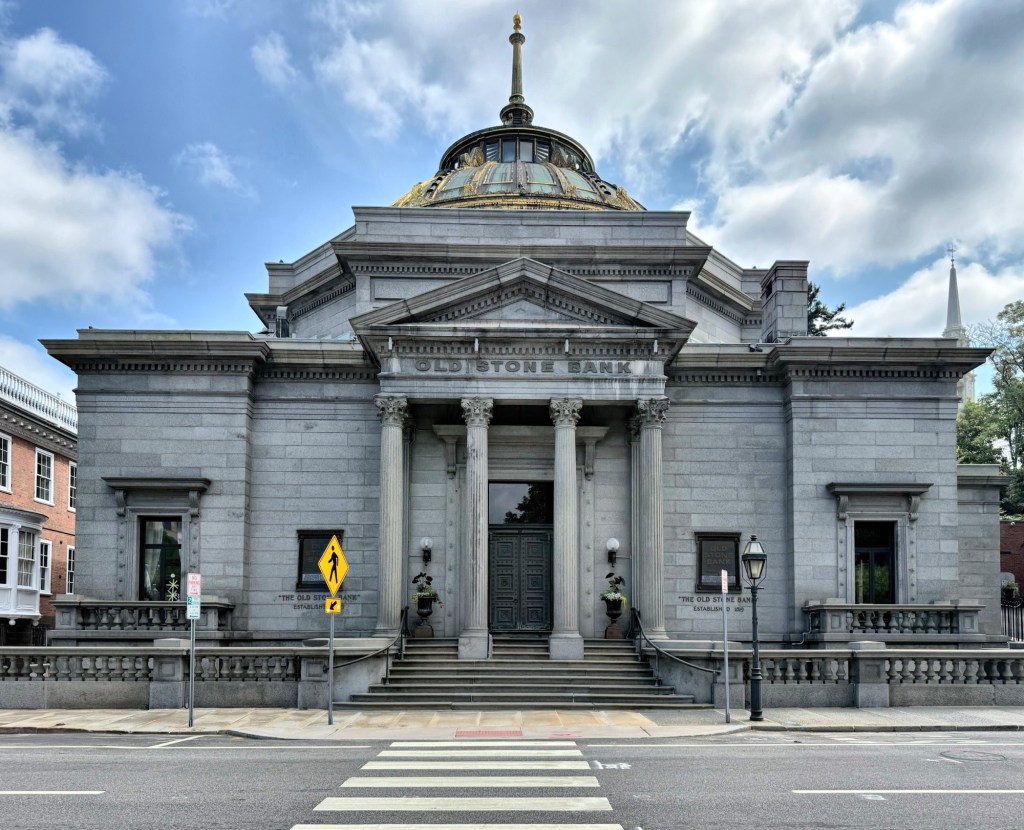
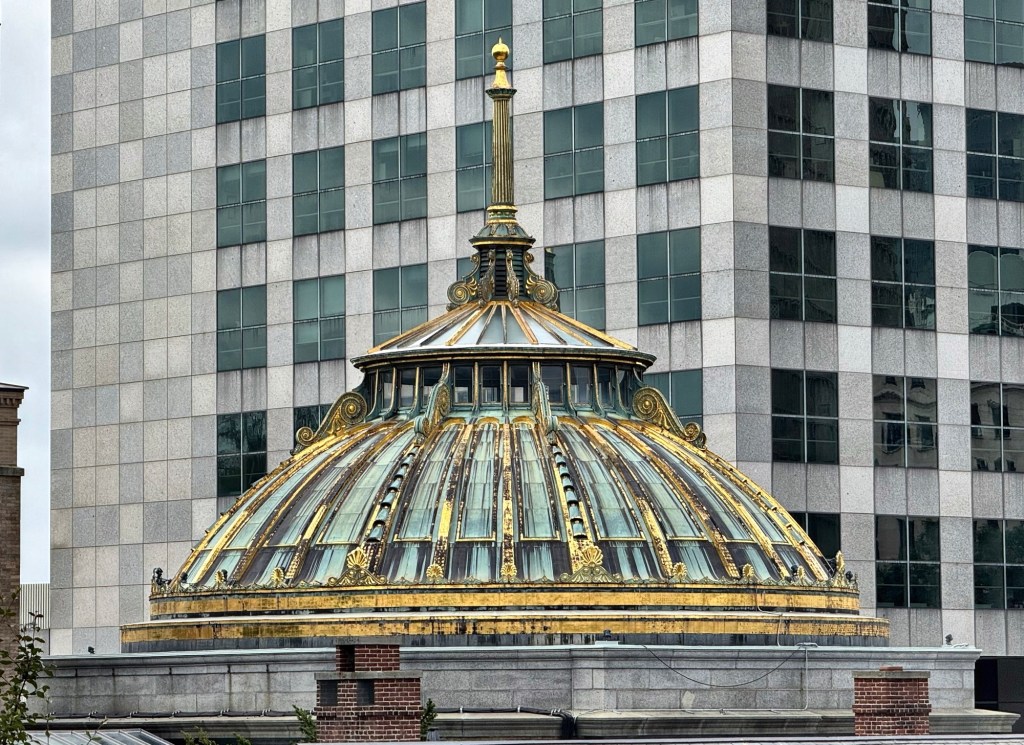
The Old Stone Bank was founded in 1819 as the first savings bank in Providence, Rhode Island, but originally under the name, Providence Institution for Savings. A constantly growing volume of business influenced the erection, in 1854, of a building for the exclusive purposes of the bank at 86 South Main Street, near College Hill. Designed by C.J. and R.J. Hall, the original stone bank stood one-story tall with a gable roof. Success and further expansion of the institution led to the erection, in 1896, of the present building, which served as the main office. Designed by the local architectural firm of Stone, Carpenter & Willson, the present domed banking structure is said to have incorporated parts of the 1854 building, and expanded the rest to the landmark we see today. The Beaux Arts/Neo-Classical banking structure is constructed of granite, with a Classical pedimented entry of monumental Corinthian columns atop the staircase, but the highlight of the building has to be the gold-leaf-and-copper domed roof which partially served as a skylight for the banking hall inside. Offices relocated to a new building in the late 1960s. The banking institution closed in the 1980s and following acquisitions and insolvency, the main bank was sold in 1995 to Brown University for $1.15 million to house the Haffenreffer Museum of Anthropology‘s collection of Native American artifacts. Years later, Brown decided it was unfeasible to house the collection in the building as the necessary alterations would have altered the historic character of the building, they then sold the building to an LLC in 2009. The Old Stone Bank is now a single-family home. Yes, you heard that right. The new owners have lovingly preserved this architectural marvel for all to enjoy as they stroll the city.

People’s Savings Bank // 1913

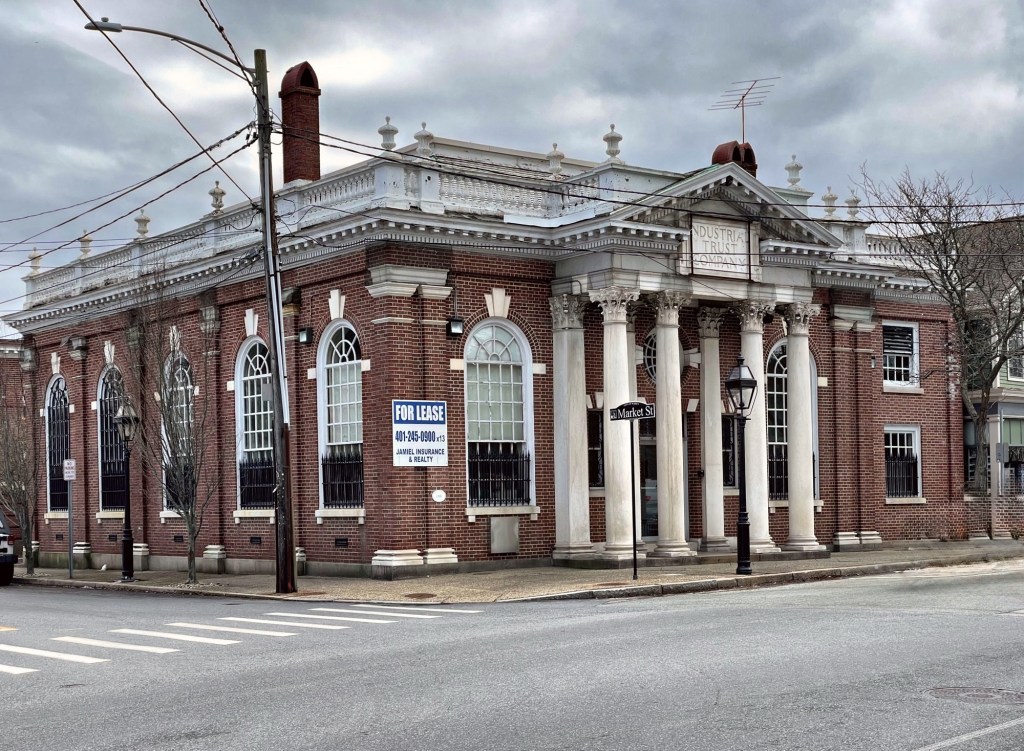
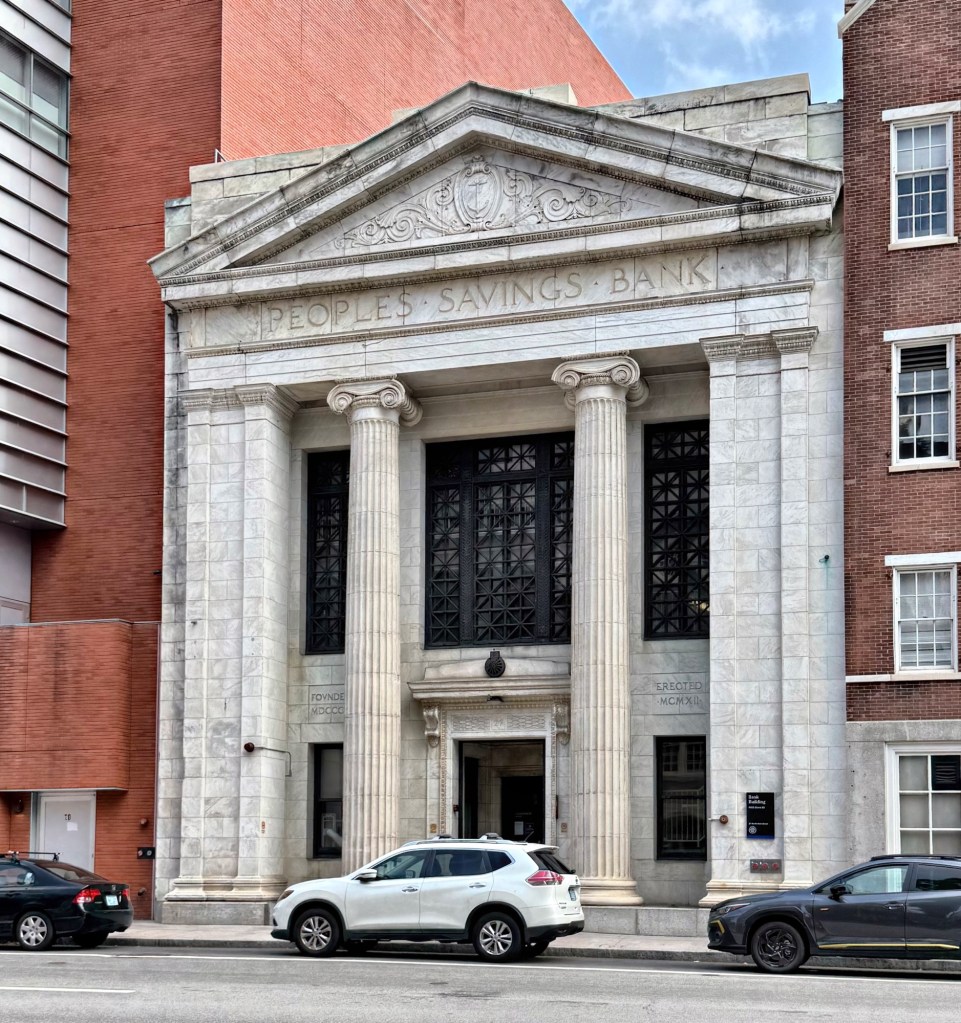
Built in the mode of a Greek temple, the former People’s Savings Bank was built in 1913 on a prominent site overlooking Market Square in the East Side neighborhood of Providence. Designed by the Providence-based architectural firm of Clarke & Howe, the handsome marble-faced two-story bank showcases the bold, yet clean proportions found in many Classical Revival style institutional buildings of the early 20th century. The People’s Savings Bank was established in 1851 and after decades of growth, built this structure to show customers the prosperity and stability of their institution. After a series of bank acquisitions and mergers in the 20th century, the building was eventually acquired by the Rhode Island School of Design, who had the building converted into studio space and later into the college’s hardware store. Yes, you heard that right… Talk about adaptive reuse!

Westborough Savings Bank // 1928

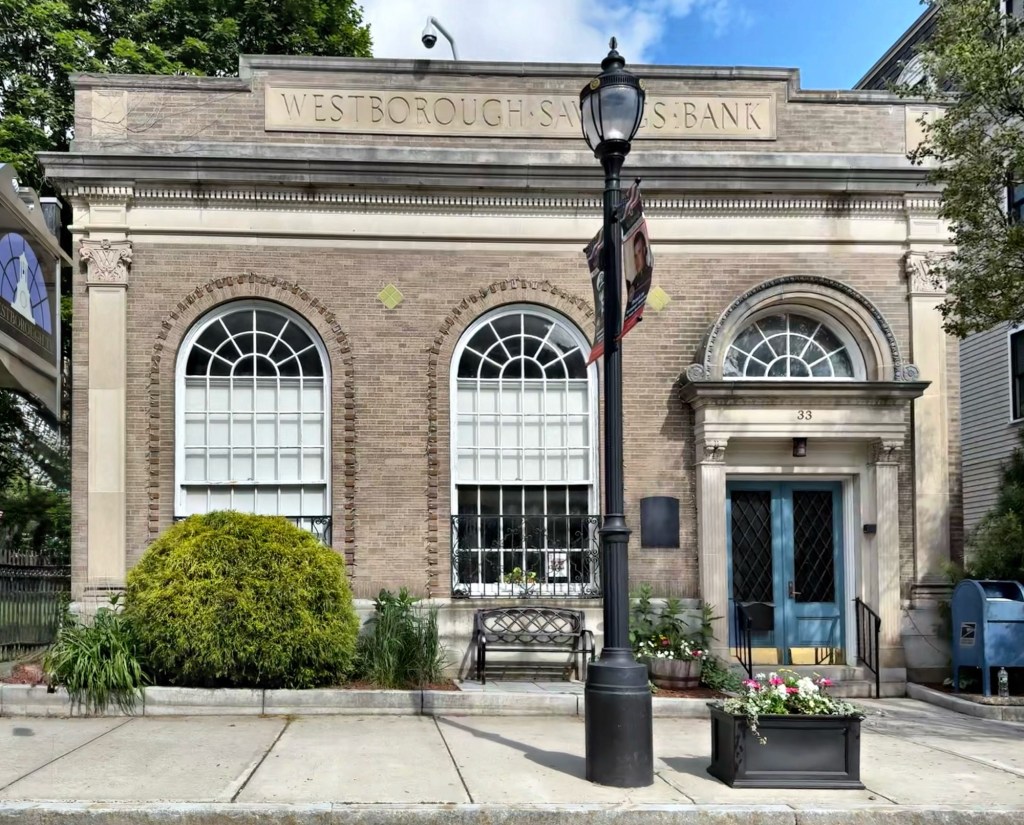
The Westborough Savings Bank was incorporated in 1869 and shared space in a building with another bank and the post office. As the population and prosperity grew in the suburban community, so did the Westborough Savings Bank, who would move into a larger space. Just before the Great Depression, the bank sought to build its first purpose-built structure, and they hired the firm J. Williams Beal & Sons to furnish plans for this handsome masonry bank, designed to showcase the strength and stability of the institution. Renaissance Revival in style, the 1928 building is constructed of buff brick with limestone trim. The facade is dominated by large, round arched windows and is framed by pilasters with an off-center entrance. The Westborough Savings Bank would eventually merge into Avidia Bank and the West Main Street building was sold. The handsome building is well-preserved and home to Westborough TV, which makes broadcast media programming that is by, about, and for the entire Westborough community.

Somerville National Bank // 1908

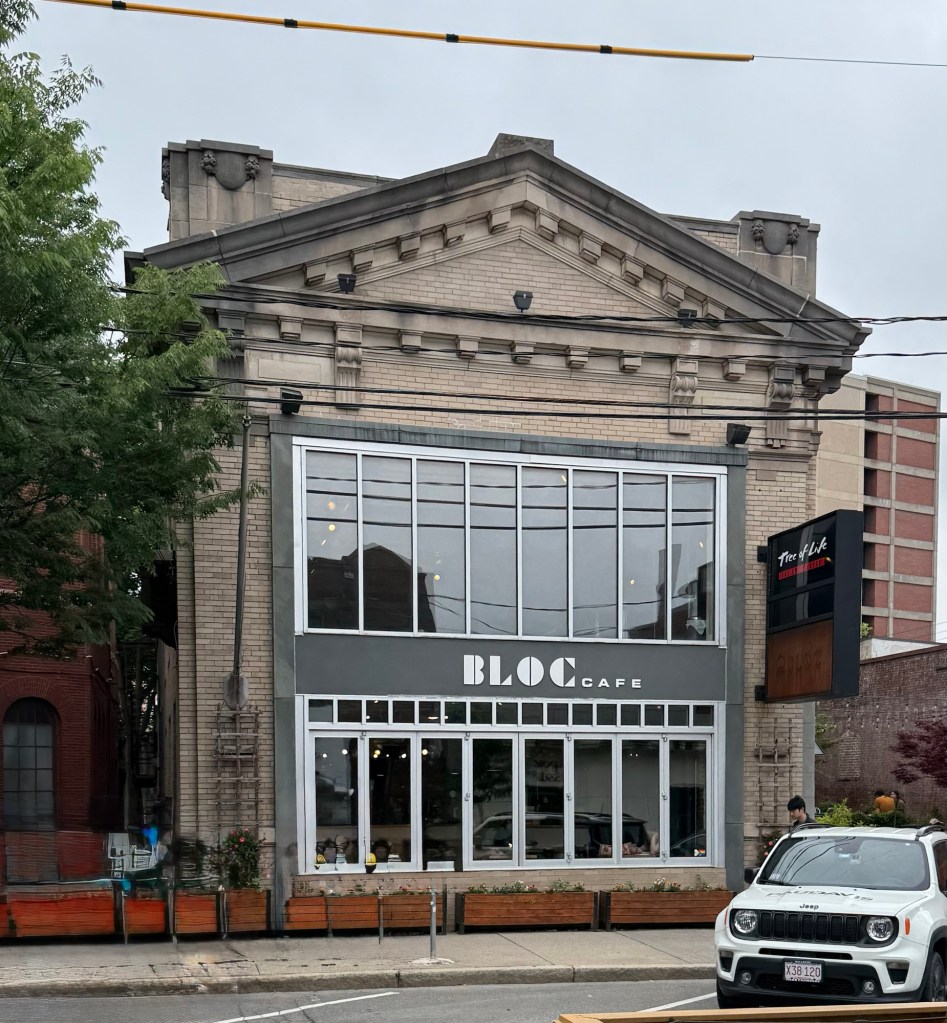
This altered, yet significant building on Bow Street in Somerville’s Union Square commercial district, was built in 1908 as the Somerville National Bank. The Somerville National Bank was chartered in 1892 and was the city’s first and only local bank until the 1930s. After nearly two decades of renting space in another building, the bank hired the architectural firm of Gay & Proctor, to furnish plans for this handsome suburban bank building. Constructed of brick with stone trim, the building originally featured a large, arched window at the facade, which was replaced by a more contemporary opening. Classical Revival details remain, from the monumental gable pediment with dentils, to the parapet with classical moldings. The bank has been repurposed into mixed use space, with a cafe on the ground floor and yoga and wellness studio above.

Abington Savings Bank // 1930

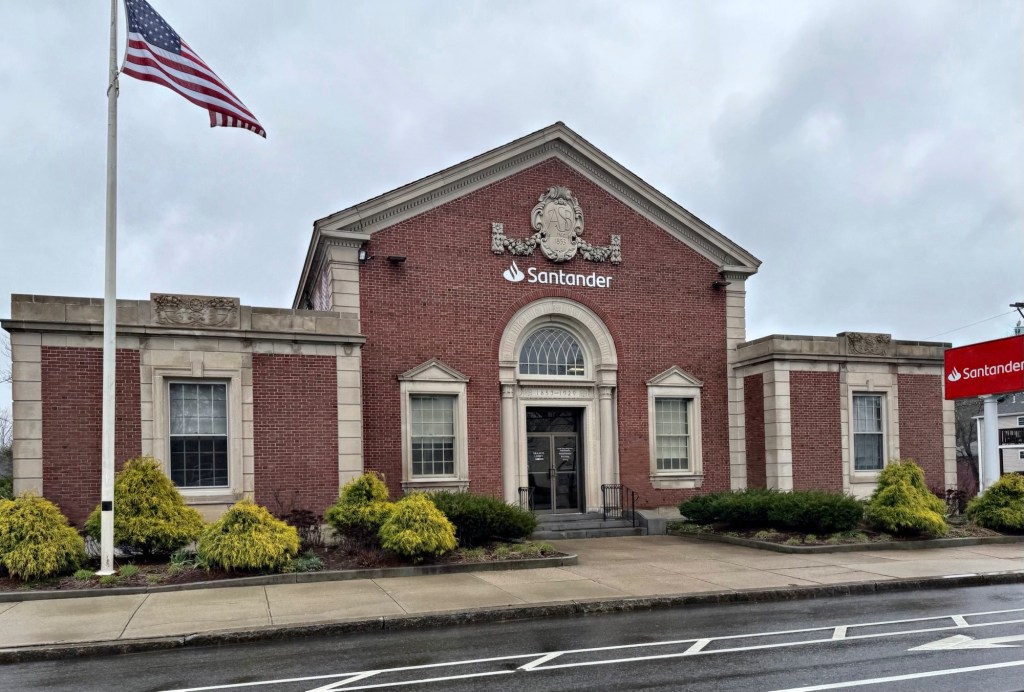
Built in 1930 for the Abington Savings Bank, this handsome Colonial Revival style building is located in the center of Abington, Massachusetts and has been a bank for almost 100 years! The bank was originally incorporated in 1853 and grew as Abington and adjacent towns saw suburban growth. The corporation hired the firm of J. Williams Beal & Sons, who specialized in commercial developments, to furnish plans for the building, resulting in the present structure. The firm also designed the Abington Mutual Fire Insurance Company Building (1931) across the street and the Dyer Memorial Library (1932), the town library. The brick and limestone building has three main bays, with the center rising above with a gable, resembling as a pediment of a Roman temple. In the gable, a shield with swags is adorned with the letters “ASB” (Abington Savings Bank) with the original incorporation date of 1853. The bank merged with others and eventually became a Sovereign Bank, and later Santander Bank, which remains in the building to this day.

Rockland Security Trust Building // 1912

The Rockland Security Trust Building is a significant Colonial Revival style bank structure located on Main Street in Downtown Rockland, Maine. Built in 1912 from plans by Boston architect Richard Clipston Sturgis, the brick building is trimmed in marble, to provide a visual representation to the financial wealth and stability the bank could provide its clients. The bank closed and the building is presently occupied by an art gallery. Sadly, the rooftop deck railing takes away so much from the building’s presence.

Former Newton Savings Bank Building // 1962

Opened in 1962 as the Newton Savings Bank, this unique Mid-20th century Modern banking structure showcases the forms and materials not conceived in previous decades. The building is located on the Newton Centre Green, adjacent to the former Newton Centre Methodist Episcopal Church, and provides a sharp contrast between the stone building in the Romanesque style and more contemporary forms. The bank was designed by Bastille and Halsey Associates, established in 1953 by partners, Robert Adams Bastille and William Ashbaugh Halsey. Now occupied by a Citizens Bank with professional offices also inside, the building exhibits precast concrete “zipper” banding between floors that are broken up by solid brick masses in the facade. What do you think of these corporate modern buildings?