Callender-Sedgwick House // 1802

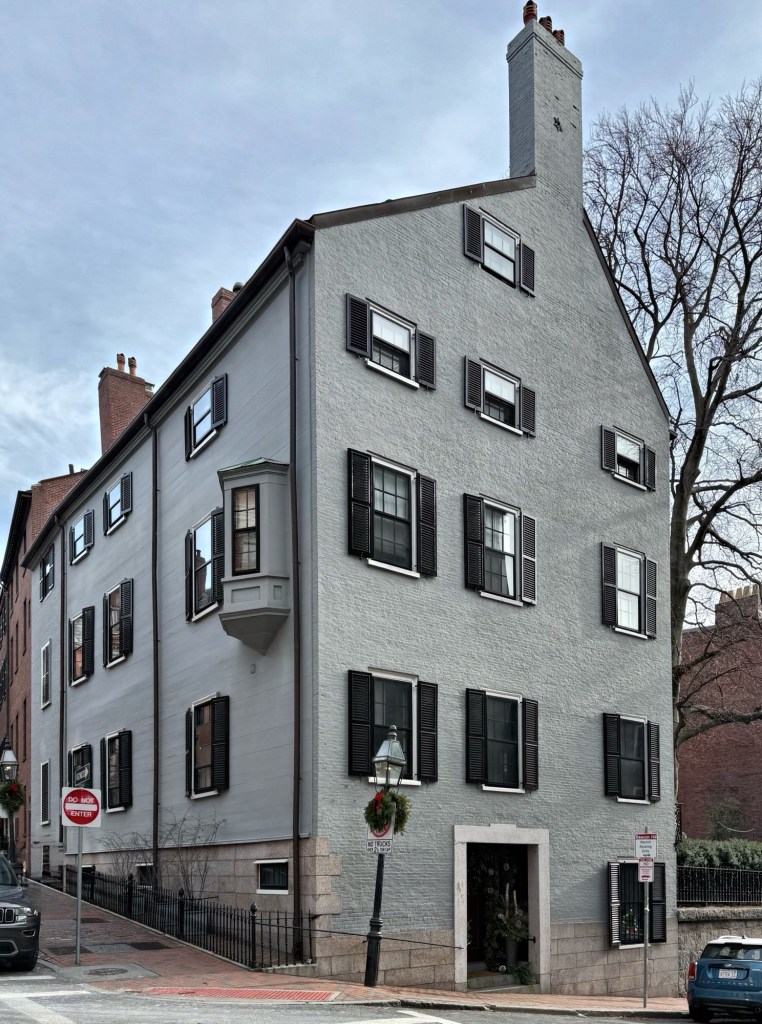
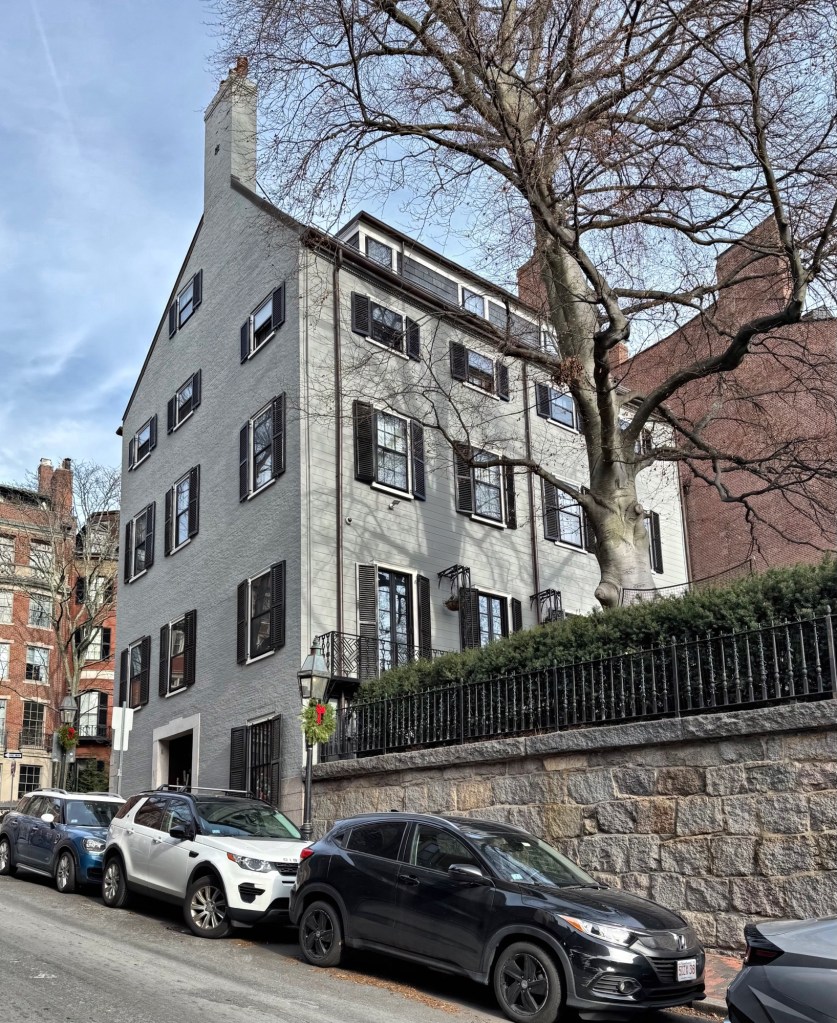
Built in 1802, this large residence at 14 Walnut Street is among the oldest extant mansions on the South Slope of Beacon Hill and includes a large hidden garden behind a granite block retaining wall. John Callender, Clerk of the Supreme Judicial Court of the Commonwealth, purchased land at the corner of Mount Vemon and Walnut streets for $2,000 and immediately started construction on his requested “small house finished for little money $5,000-$7,000”, but this was anything but modest. The house originally had its primary facade facing Mount Vernon Street, but in 1821, Walnut Street was lowered by city officials, so Callender had the granite retaining wall built for the garden and new entry built on Walnut Street. Mr. Callender lived here until his death in 1833 and the property was purchased by members of the Lyman family and later by Harriot Curtis (1881-1974) an early amateur female skier and golfer who used her fortune as a philanthropist, funding medical facilities in Boston for impoverished immigrants and served as dean of women in Hampton Institute in Virginia, an HBCU from 1927-1931. The most significant owner, Ellery Sedgwick (1872-1960), lived here from 1908 until his death in 1960. Sedgwick worked as editor of the Atlantic Monthly (now known as The Atlantic), and under his ownership, the magazine became one of the most circulated magazines in the world. The Callender-Sedgwick House features unique flushboard siding, providing a seamless surface that resembles a masonry wall when painted earth tones and a 19th century oriel window. The brick end elevation is punctuated with bays of hung windows and the recessed entry with a long, granite garden wall which has been well-preserved by owners.


Lyman-Paine Mansion // 1824

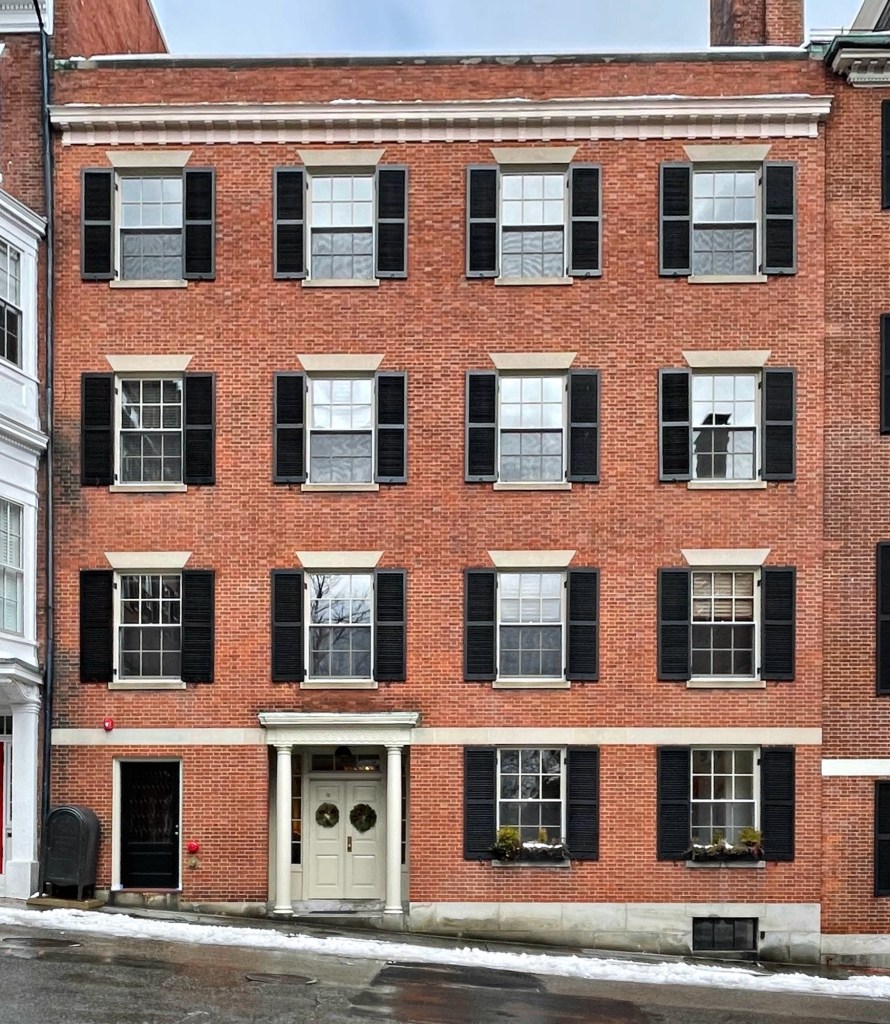
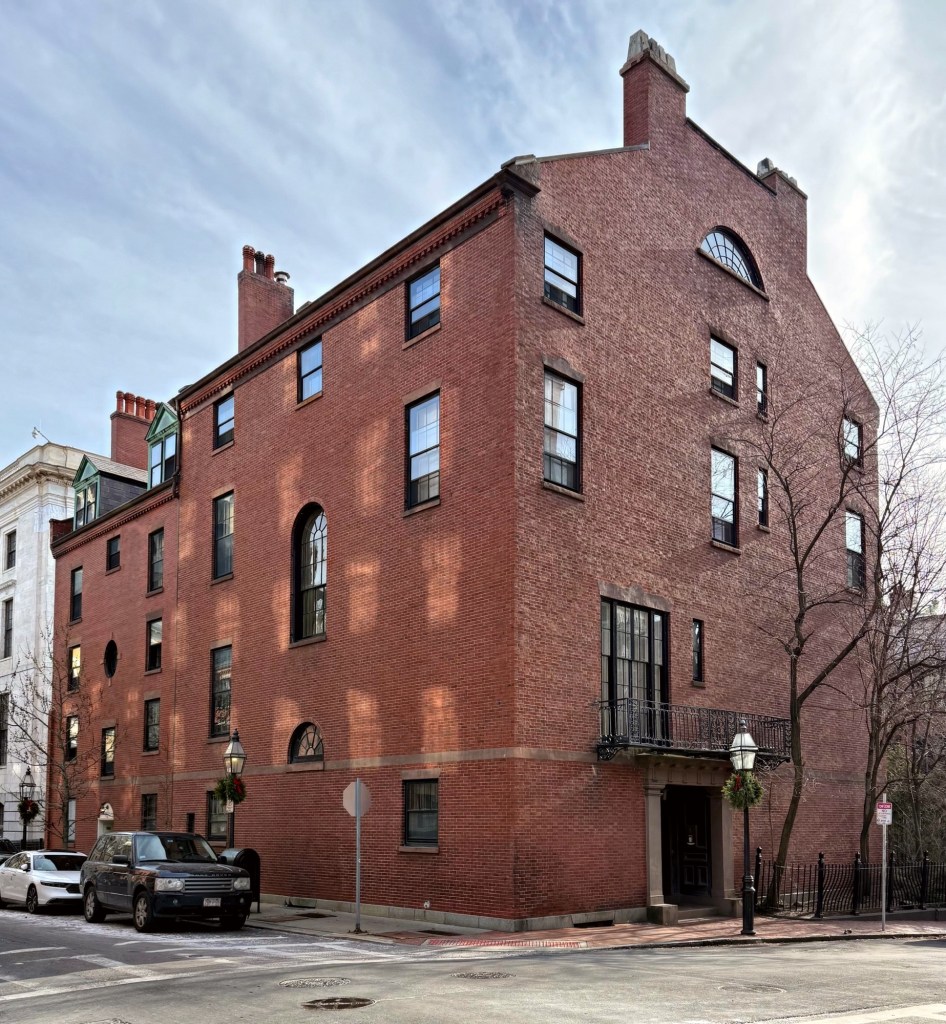
The Lyman-Paine Mansion at the corner of Joy and Mount Vernon streets in Boston’s Beacon Hill neighborhood is an architecturally significant Federal style house designed by a skilled architect and was owned by members of prominent local families. This four-story mansion was designed in 1824 by architect Alexander Parris for George Williams Lyman (1786-1880), a shipping merchant who became one of the Boston Associates, a group of wealthy Bostonians who funded the expansion of New England textile mills, which helped grow many industrial communities all over the region in the 19th century. This house served as Lyman’s winter estate, his summer mansion was the the Lyman Estate, “The Vale”, in Waltham, which he had inherited from his father. Upon George Lyman’s death in 1880, Lydia Lyman Paine, George’s youngest daughter, inherited this Beacon Hill mansion. Lydia’s husband, Robert Treat Paine, was a graduate of Harvard and a successful local attorney. Mr. Paine retired from law in 1872 to become the treasurer for the new Trinity Church building committee, where he averted a fiscal crisis during the mid-1870s when Henry Hobson Richardson’s cost overruns in designing the new Copley Square church threatened its completion. In addition to his pro bono work with Trinity’s finances, Paine was deeply interested in improving the quality of life of the working class, founding building and loan associations and institutes to allow immigrants to buy homes in the Boston area. In addition to their Joy Street mansion, the Paines had a country estate called Stonehurst, which is adjacent to the Vale in Waltham; it was renovated by Richardson. The mansion was converted to apartments (now condos) in the mid-20th century, and maintains its unique, vernacular Federal character, with asymmetrical facade and oddly placed and shaped windows.

Lyman-Gray House // 1834

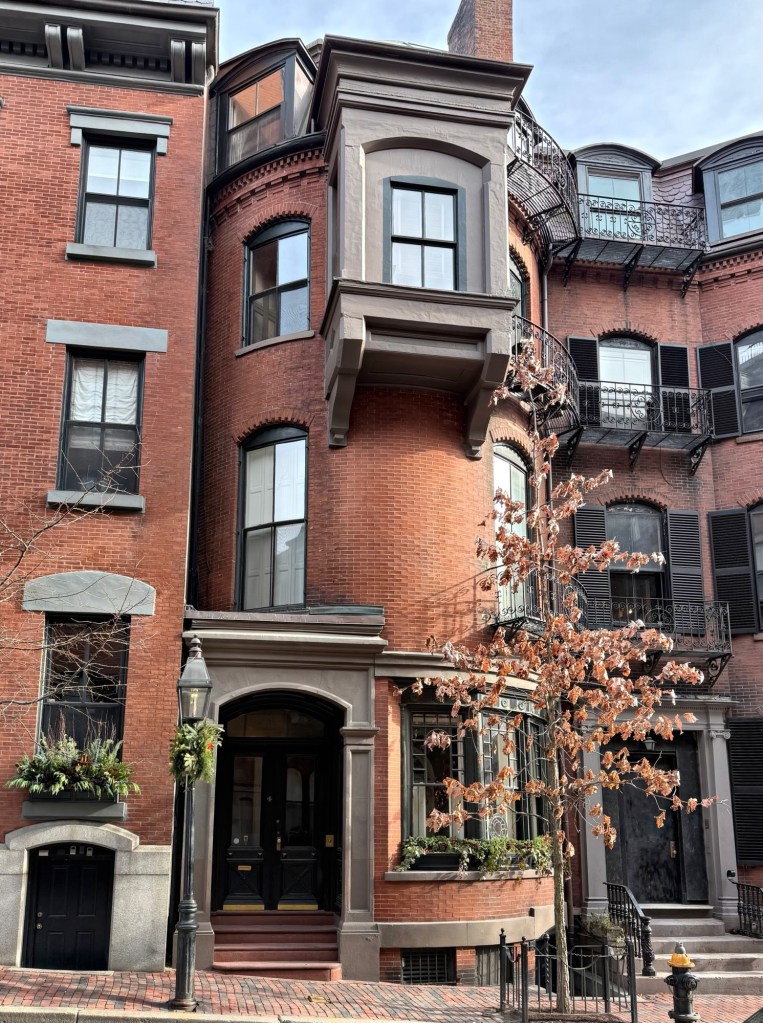
Mount Vernon Place is a short, dead-end street in Boston’s Beacon Hill neighborhood. The street was once an entire block of eight rowhouses, and was developed in the 1830s on land formerly owned by John Hancock and his family. The residences numbered 1-5 Mount Vernon Place were torn down during the 1910s to accommodate the expansion of the landscaped grounds of the State House, leaving just 6, 7, and 8 Mount Vernon Place. The center rowhouse, 7 Mount Vernon Place, was built in 1834 and is believed to have been designed by Alexander Parris, a prominent local architect who designed Quincy Market and mastered the Federal and Greek Revival architectural styles with many notable buildings all over the east coast. The residence has a three bay facade and brownstone sills, lintels, and door surround and has been preserved for nearly two centuries. The house was long-owned by George W. Lyman, an industrialist who lived nearby on Joy Street. The residence was rented for decades until it was purchased by Francis C. Gray a physician, and inherited by his grandson, Ralph Weld Gray, an architect through the 1940s.

Russell-Bradlee Mansion // 1825

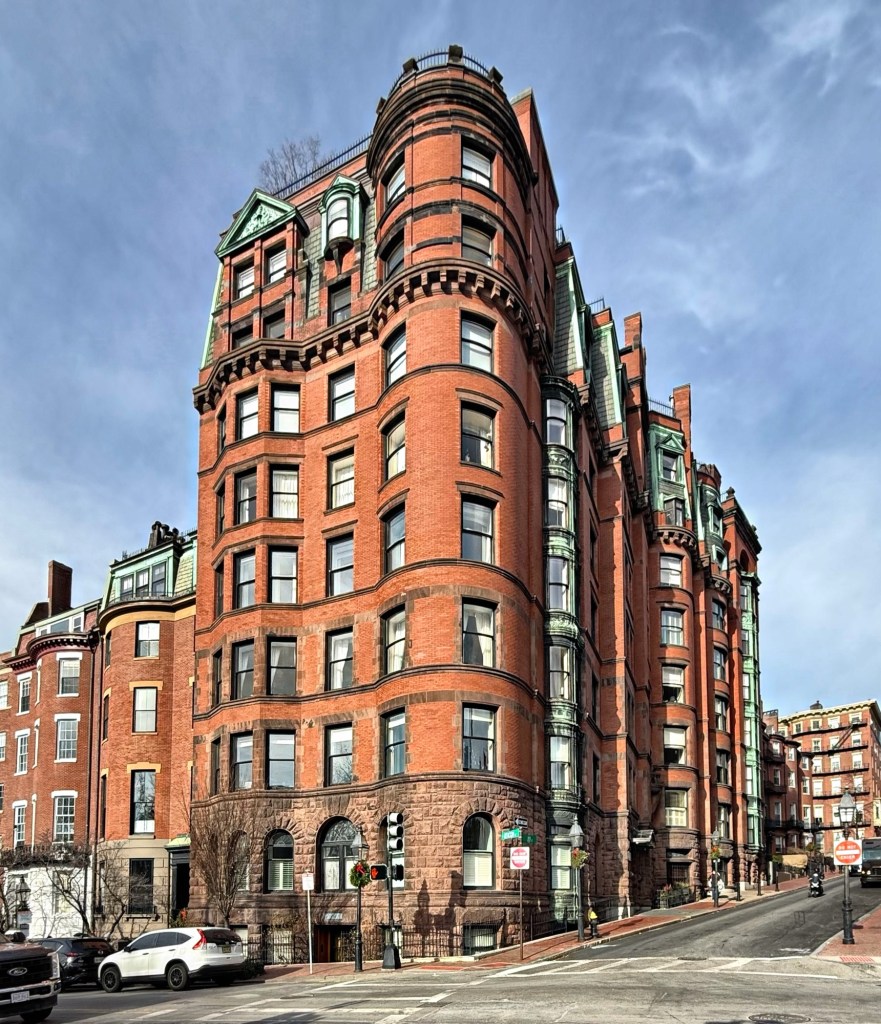
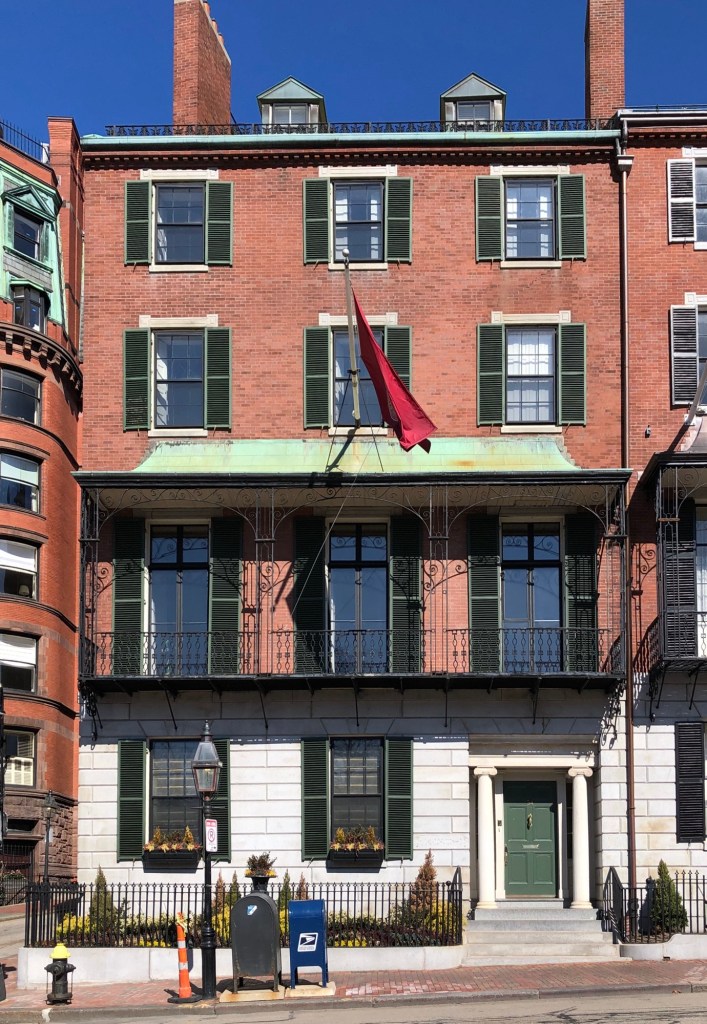
The land at the corner of Beacon and Joy streets in Boston’s Beacon Hill neighborhood was once John Hancock’s west pasture for his grand manor (razed in 1863) until 1819, when subdivision of the Hancock estate began following his death. In 1821, Israel Thorndike, one of the leading land speculators of early nineteenth-century Boston, began buying out the Hancock heirs and house lots overlooking the Boston Common were sold to John Hubbard and George Williams Lyman, who hired architect Cornelius Coolidge, to build some stately Greek Revival townhomes for wealthy Boston elites. The house at the corner of Beacon and Joy streets, 34 Beacon Street, was built in 1825 for Nathaniel Pope Russell, a leading Federal period China Trade merchant. By 1850, James B. Bradlee, a wealthy merchant, had acquired the property. Bradlee’s grandson Ogden Codman Jr., the influential late nineteenth- and early twentieth-century architect and interior decorator, was born in this house in 1863. Codman later collaborated with novelist and tastemaker Edith Wharton on ‘The Decoration of Houses‘, a book that had an enormous impact on the direction of interior design when it was published in the 1890s. Little, Brown and Company, a publishing company founded in 1837, purchased the former residence and moved their headquarters here in 1909. The publishing company sold the property in 1997, and it converted to a single-family home. In 2007, the residence was purchased by Northeastern University and has since been the President’s House.

Clark-Cottle House // 1890

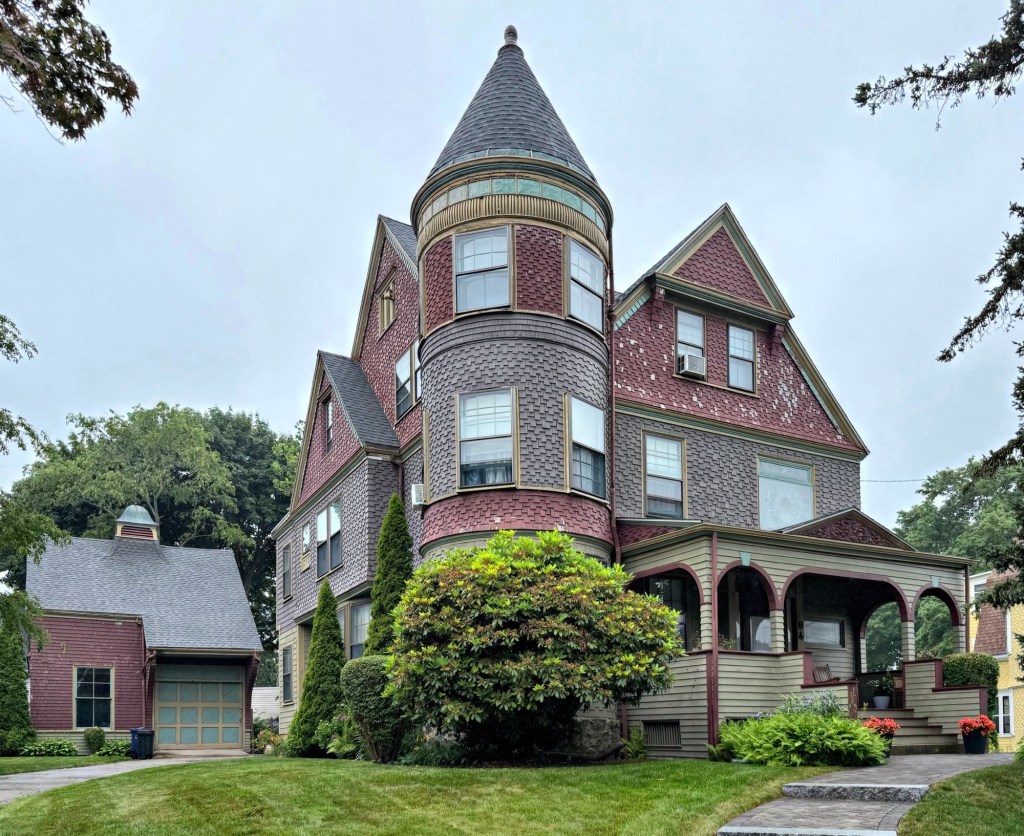
One of the most sumptuous Victorian-era homes in Dorchester can be found at 94 Ocean Street, this is the Clark-Cottie House. The residence (and rear stable) was built in 1890 from plans by famed architect Arthur H. Vinal, who designed many other Shingle style and Queen Anne homes in the surrounding neighborhood. The first owners of the mansion were Evelyn and Edward Clark, who after a few years, sold the property to Edgar Cottle, president of the Curtis & Pope Lumber Company. The three-story Queen Anne style mansion features a rounded corner tower, varied shingle siding, shingled porch, and the intact, charming stable at the rear.

King-Murdock House // c.1894

Located on Ashmont Street in the Ashmont Hill neighborhood of Dorchester in Boston, this handsome Colonial Revival style residence was one of many large homes constructed here at the end of the 19th century. This house was built by 1894 for owner Franklin King and rented to tenants for supplemental income. Franklin King was part owner of the E & F King Company, a major paint and stain manufacturer in Boston. Franklin died in 1898 and the property was inherited by his son, Samuel Gelston King, who continued to rent the home. A notable renter of the house was Harold Murdock, a cashier and amateur historian and author who wrote various books of everything from the American Revolution to the Reconstruction of Europe. The architect is said to be Clarence Blackall of Cambridge, which makes sense as this house is clearly the work of a trained architect. Symmetrical in plan, the center-hall residence features a preserved entry portico, hipped roof, and detailed dormers.

Chansonetta Stanley Emmons House // 1893

Chansonetta Stanley Emmons (1858-1937) was born in Kingfield, Maine, and was one of the great women photographers in the 19th and early 20th century, often depicting domestic life and New England scenes. The young Chansonetta Stanley grew interested in photography after her brothers’ (Francis E. and Freelan O. Stanley) dry-plate printing invention, they also invented the steam-powered automobile known as the Stanley Steamer. She married James Nathaniel Whitman Emmons in 1887 and in 1894, James hired architect Henry McLean, to design a residence for him and Chansonetta, this lovely home on Harley Street on Ashmont Hill. The couple occupied the house until 1898, when James died of blood poisoning at the age of 41. Chansonetta sold the home and moved to Newton, where her two brothers lived and operated their business. The house blends Queen Anne and Colonial Revival styles and originally had a conical roof over the corner rounded bay. The roof was replaced with a flat roof at about the time of the large balcony and extended dormer.

George Derby Welles Rental House // c.1872

From the 1780s until 1870, almost all of Ashmont Hill (west of the present train station) was a farm, with the large farmhouse dating to about 1720, located at the corner of Washington and Welles streets, now the home to the Codman Square Branch of the Boston Public Library system. The farm was owned for a time by General Henry Knox. Sometime before 1850, the estate and mansion came into the possession of the Honorable John Welles, who died in 1855. The property would eventually be deeded to John Welles’ grandson, George Derby Welles, who was then just 26 years old and living in Paris with his wife, Armandine V. Derby. Welles wasted no time in developing the property through his agent, Boston Attorney Edward Ingersoll Browne. Streets were laid out and house lots were platted and sold, with some early properties built with much of the neighborhood developing by the turn of the century. The old Knox-Welles farmhouse would be razed by 1889, but the remainder of the neighborhood has since become a landmark neighborhood of Victorian-era homes. This mansard double-house at 67-69 Ocean Street dates to around 1872 and is one of the earliest properties in the area. Blending the Second Empire and Stick architectural styles, the handsome double house is said to have been designed by architect Luther Briggs for George D. Welles and rented to tenants.

McInnis House // 1901

Located next door to Ms. Matchett’s house on Chatham Street in the suburban Longwood neighborhood of Brookline, Massachusetts, you will find this very unique example of a Colonial Revival style single-family home. Built by 1901 for lawyer Edwin G. McInnis (sometime spelled McInnes) and his wife, Mabel, the house is high-style Colonial Revival with symmetrical facade, rustication, two-story Corinthian pilasters framing the bays, Palladian window, and Federal style entry with fanlight transom. No records of the architect could be located sadly.

Johnston-Sullivan House // c.1894

One of the more exuberant and ornate homes in Roxbury’s Washington Park neighborhood is this charmer on Howland Street. The eclectic house was built in around 1894 for Ellen S. Johnston from plans by local architect Timothy Edward Sheehan and stands out for its preserved exterior in a neighborhood where many homes are covered in later siding, obscuring the ornate details underneath. Details include: swag and garland applied ornament, two bays at the facade (one polygonal and one rounded), a Colonial Revival style porch, and central rounded dormer. Wow!