Rowe House // 1911

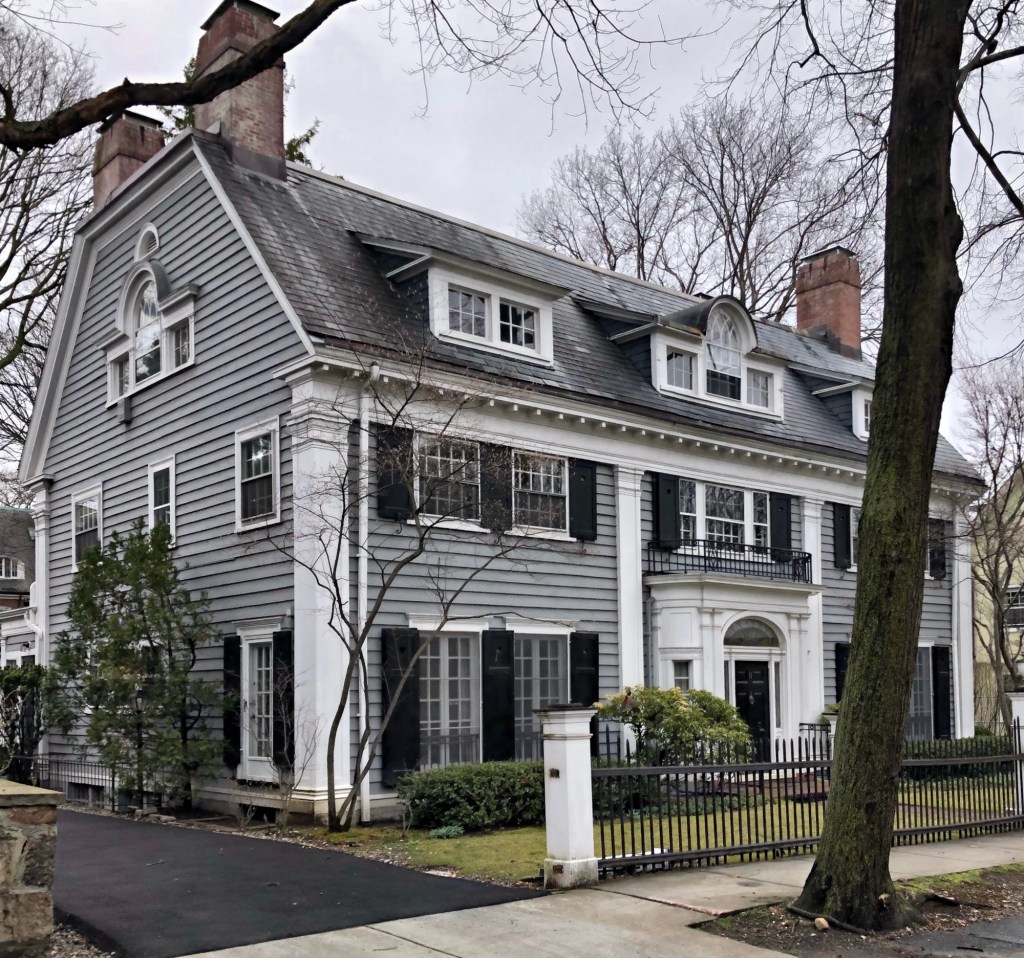
The Rowe House at 11 Mason Street is an over-the-top, and high-style example of the Colonial Revival style, showcasing the oversized proportions and scale that architects in the early 20th century followed when referencing Colonial American architecture. The house here was built in 1911 for Edward Prescott Rowe (1879-1936) and his wife, Eleanor Livingstone. Designed by the firm of Rowe & Keyes of Boston and New York, the commission was likely a relative of Mr. and Mrs. Rowe. The symmetrical house features a broad gambrel roof with Palladian windows in the side gable and central dormer at the facade, large pilasters breaking up the bays on the facade, a projecting Colonial Revival entry, and squat windows at the second floor terminating at the entablature above. The property even retains its Colonial Revival gateway.

Abington Savings Bank // 1930

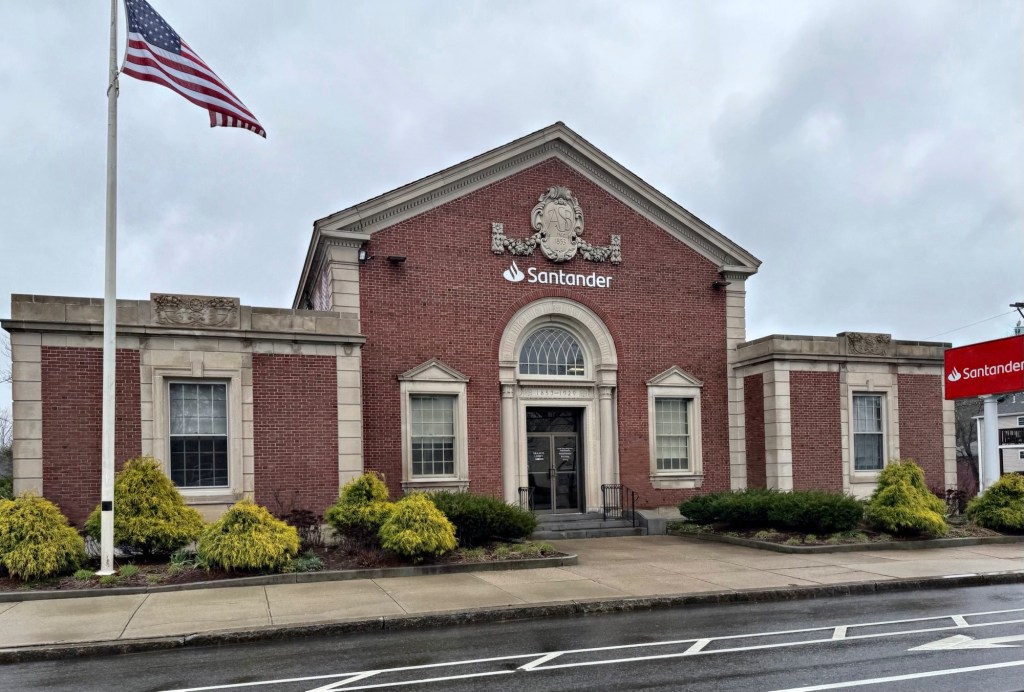
Built in 1930 for the Abington Savings Bank, this handsome Colonial Revival style building is located in the center of Abington, Massachusetts and has been a bank for almost 100 years! The bank was originally incorporated in 1853 and grew as Abington and adjacent towns saw suburban growth. The corporation hired the firm of J. Williams Beal & Sons, who specialized in commercial developments, to furnish plans for the building, resulting in the present structure. The firm also designed the Abington Mutual Fire Insurance Company Building (1931) across the street and the Dyer Memorial Library (1932), the town library. The brick and limestone building has three main bays, with the center rising above with a gable, resembling as a pediment of a Roman temple. In the gable, a shield with swags is adorned with the letters “ASB” (Abington Savings Bank) with the original incorporation date of 1853. The bank merged with others and eventually became a Sovereign Bank, and later Santander Bank, which remains in the building to this day.

Charles H. Owens House // 1906

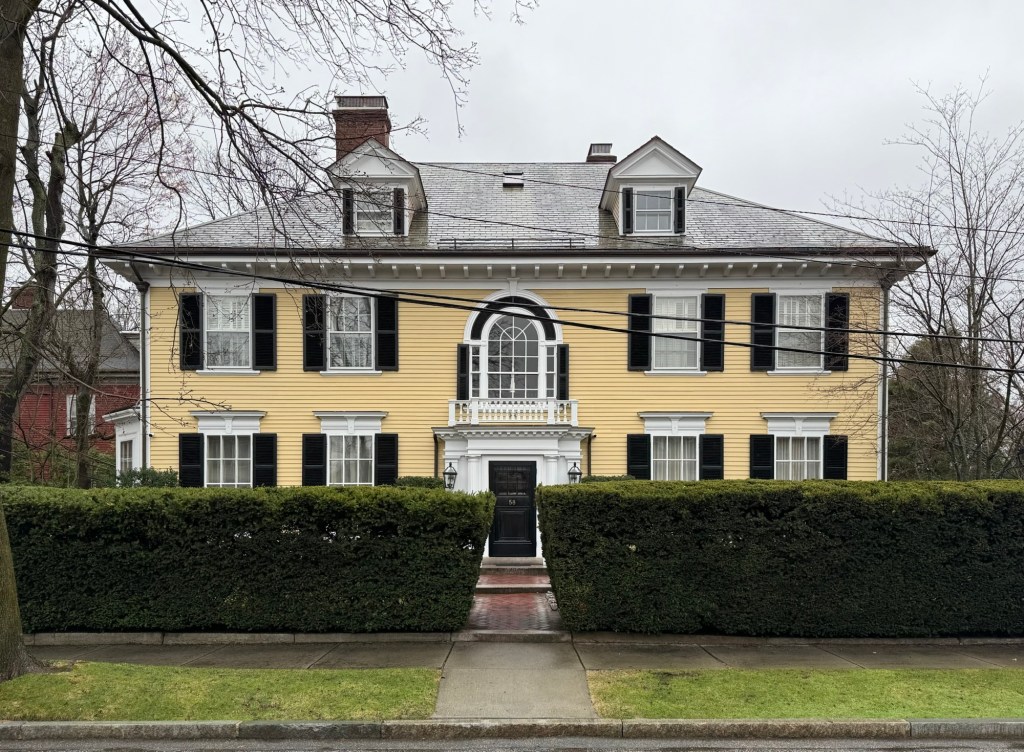
This stately house on Powell Street in Brookline, Massachusetts, was built in 1906 for Charles H. Owens, Jr., and his wife, Nellie. Charles was a “house decorator”, who built the house next door just two years earlier before moving into this larger home in 1906. Both houses were designed by the architectural firm of Loring & Phipps, who Owens likely collaborated on commissions with in his career. The house is 2 1/2-stories with a shallow hip roof and is an excellent example of an academic interpretation of the Colonial Revival style. The principal facade has flush board siding with round-arched windows on the first floor along with a squat fanlight transom over the center entrance.

John R. Perry House // 1904

This lovely Colonial Revival style house on Powell Street in Brookline was built in 1904 for Charles H. Owens, Jr., an interior designer who just two years later, built another home next door that he would reside in with his own family. This house was rented to John R. Perry, who was also listed as a “decorator” in city directories and president of Perry, Lewis & Whitney, a design firm. The house (like its neighbor built two years later), was designed by the architectural firm of Loring and Phipps and was oriented southward to face the side yard. The Perry House features small projecting oriel windows, a broad gambrel roof, and an entrance portico supported by Tuscan columns.

First Congregational Church of Canterbury // 1964

The Canterbury Green has been home to four congregational churches in its history. Originally established in 1711, a modest frame church was built here and in 1736, a new meetinghouse was constructed as a more permanent building. The rustic structure was deemed insufficient for a wealthy rural community, so in 1805, a stately, Federal style edifice was built. Designed by Thomas Gibbs, a local architect/builder who also designed other nearby high-style Federal homes, the building was destroyed by fire in December, 1963. Within a year, this church was constructed on the ground of its 1805 building. While designed and constructed during the mid-20th century, the town clearly wanted its new church to contribute to the village’s Colonial character, having this Colonial Revival style church serve as the new anchor to the green.

“The Pillars” // c.1780

Renovated in the early 20th century from a Federal style farmhouse, “The Pillars” in Canterbury, Connecticut, is an extravagant example of a Colonial Revival style residence in this quiet part of the state. The Pillars was the creation of Frank Edwin Miller (1856-1947) and his wife, Hattie Jenks Miller. The Miller’s retired here in 1913 after Hattie inherited the family homestead, which dated to the late 18th century, and they had the home renovated, adding the massive two-story columned porch and projecting entry. The house is a visual representation of the difference between Colonial and Colonial Revival styles as this home, the latter example, is a free interpretation of its prototype with exaggerated architectural details in a scale not seen centuries earlier.

Samuel B. Conant House // 1895

Built in 1895 for Samuel Conant, president of a Pawtucket printing firm, this stately residence is one of the finest Colonial Revival houses in Central Falls, Rhode Island. Designed by the Providence architectural firm of Stone, Carpenter & Willson, the house is brick on the first floor with clapboard siding above. The Contant house has a gambrel roof punctuated by several gable dormers. The main facade has two symmetrical round bays, which rise to the roof and are topped by low balustrades. A single-story porch extends between the center points of these bays, and is also topped by a low balustrade. Recognized for its architectural grandeur (inside and out), the house was individually listed on the National Register of Historic Places. The Conant House is now used as a nursing home and while the transition to this new use has required a number of interior alterations, these changes have been made with sympathy for the character of the house and many of them are reversible.

Parsons-Zielinski House // 1897

Bounded by three streets and overlooking the town Common, this stately house in Salem, Massachusetts, showcases a blending of Queen Anne and Colonial revival styles. Built in 1897 from plans by Boston architect, Alfred Fernald, the house was constructed by and for its first owner, Joseph Parsons, a Civil War veteran and house builder. The Parsons family continued to live in the house until Joseph’s death in 1915, after which his widow, Minnie, sold the property and moved to Florida. Dr. Ignatius Zielinski purchased the property in the 1920s and divided the house into a physician’s office and several residential units. Tragically, Dr. Zielinski died while serving his country during WWII, and the family would retain the property until 1987. The house is unique for its materiality with the first floor consisting of ashlar, rough-faced stonework with a wood-shingled second story, stained glass windows and a wrap-around porch.

First Universalist Church of Salem // 1808

The First Universalist Church of Salem, Massachusetts, is a landmark example of a brick, Federal style church in New England. Tucked away within a network of Urban Renewal-era townhomes and backing up into a busy thoroughfare, the church is overlooked by many who pass behind its rear elevation, not knowing how special the building’s primary facade truly is! The church was constructed between 1808-1809 with early Church records showing that the interior carvings were done by Samuel McIntire, a Salem native, who was trained as a wood carver and later became an architect. It is unclear if any of McIntire’s work remains as numerous building modifications were completed throughout the 1800s; including a major exterior remodel in 1855 by architect Enoch Fullerchanging the appearance from Federal to Italianate. The church would again fall back to changing tastes in 1924, when they restored to an approximation of its original appearance by the office of R. Clipston Sturgis, a prominent Boston architect who specialized in Colonial Revival architecture. While the building’s significance is lessened by the urban renewal infill and streets surrounding it, the building remains one of the oldest in Salem and a significant architectural landmark in the city. 

Kenneally House // 1913

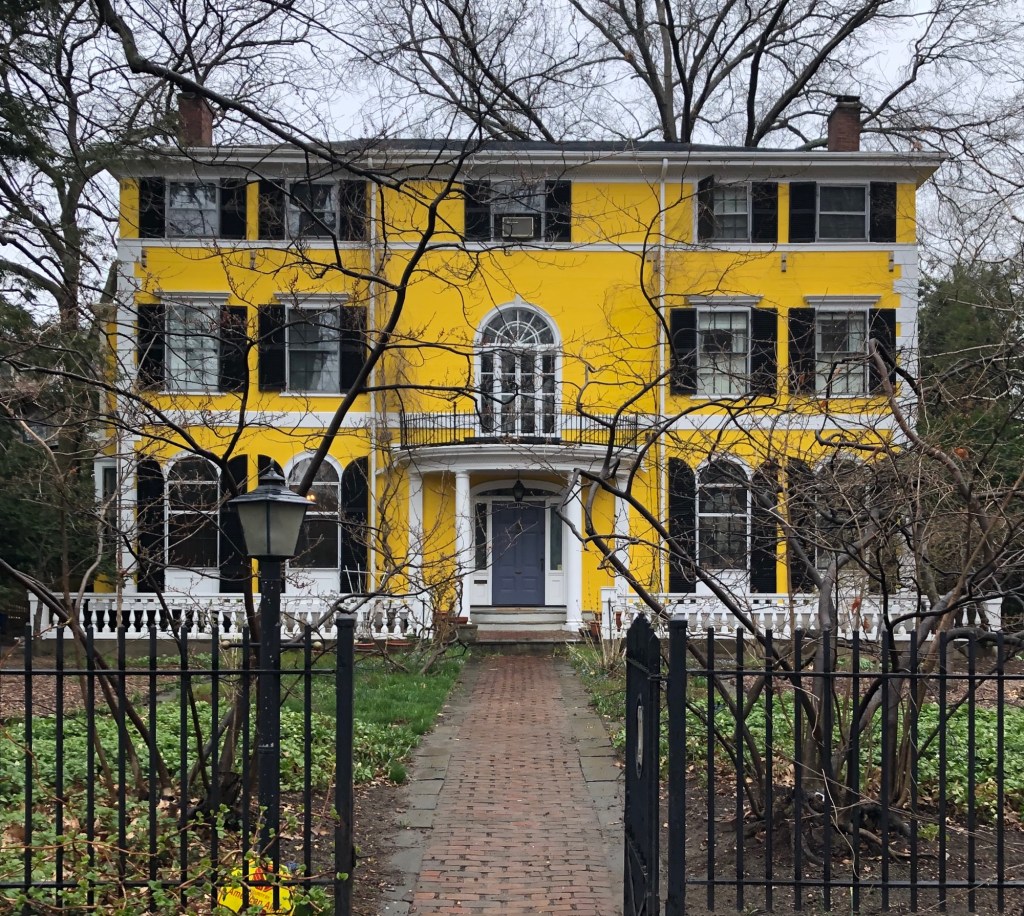
While Salem, Massachusetts, is best-known for its Colonial and 19th century architecture, there are some great 20th century buildings that deserve attention. This is the Kenneally House at 3 Williams Street, just north of the Salem Common, a c.1913 Colonial Revival home with great curb appeal. The house was built for Maurice D. Kenneally, a teamster, who lived here with his wife, Mary, and son, Patrick. Symmetrically arranged, the house has a center entry , with sidelights and an elliptical fanlight. The front facade is dominated by a full-width first story porch on paired Doric columns and a gable roof with Palladian window.