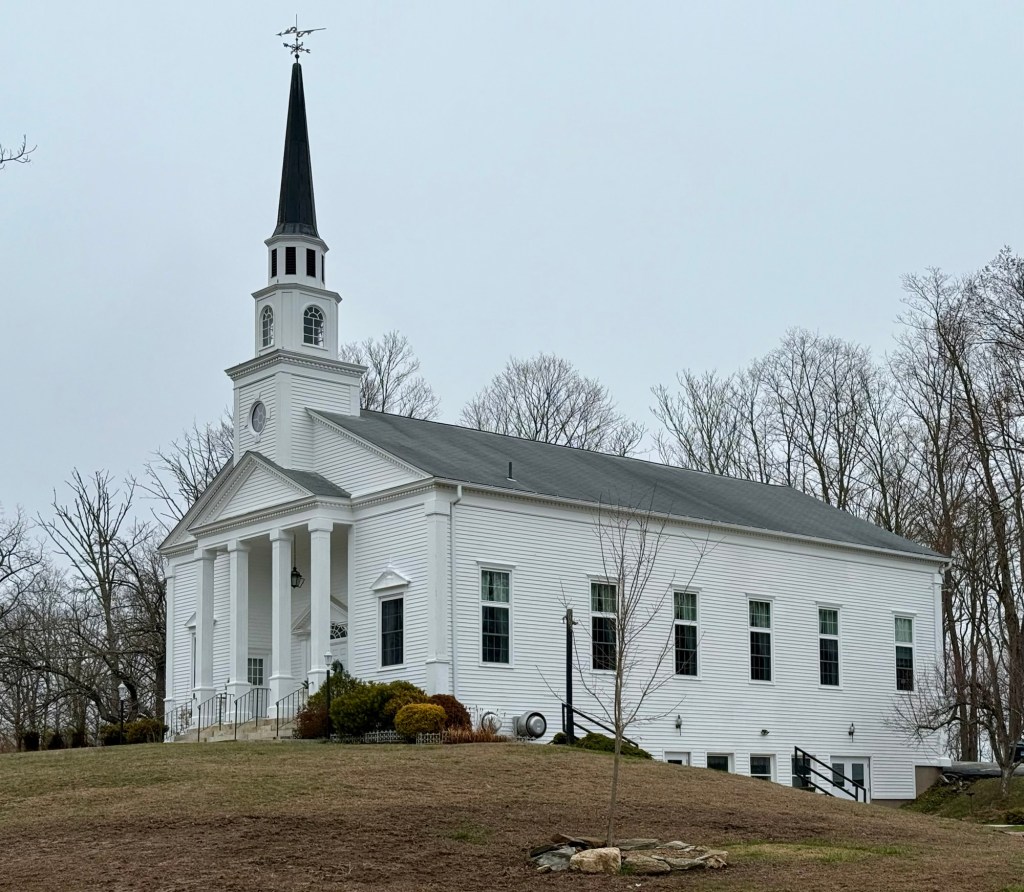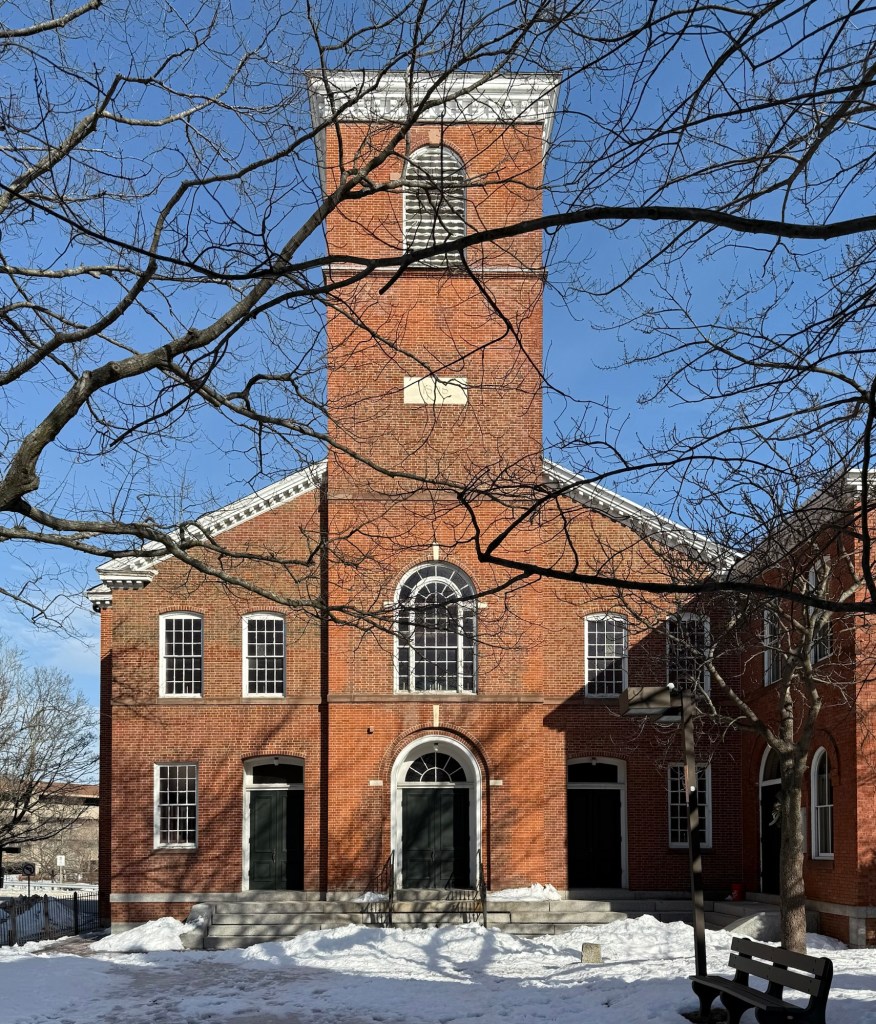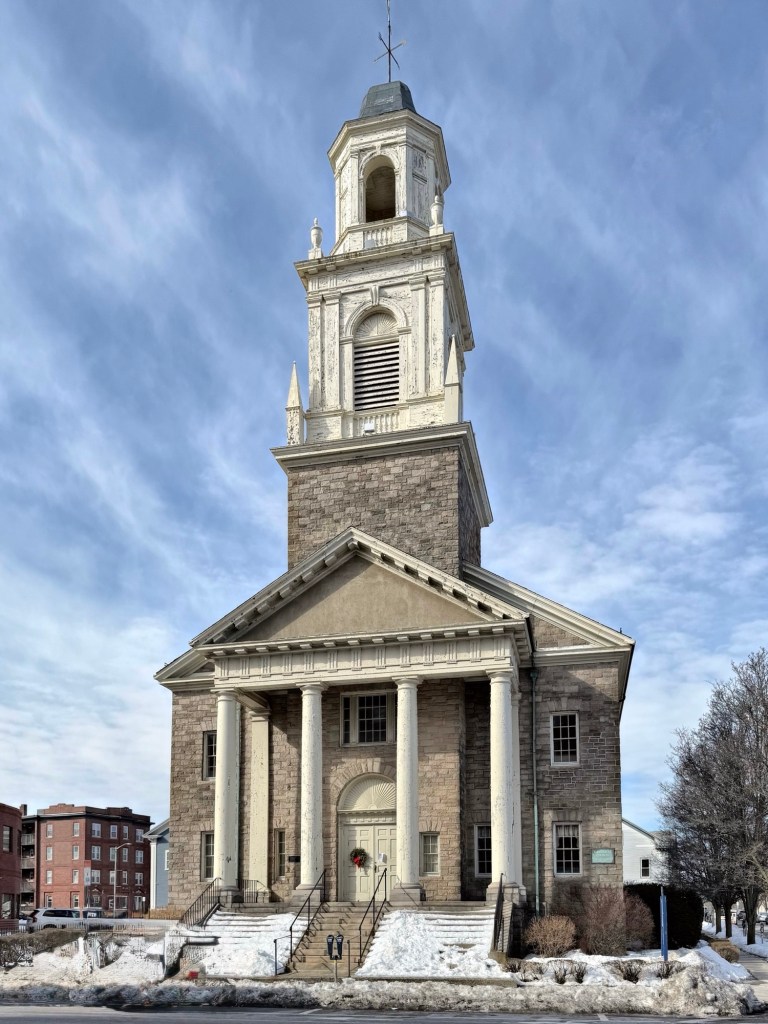
Tabernacle Congregational Church of Salem // 1923

The Tabernacle Congregational Church at Washington and Federal streets in Salem, Massachusetts, was built in 1923 for one of the oldest congregations in the Commonwealth. The Tabernacle Church’s congregation traces its origins to the founding of the First Church of Salem in 1629. The church was originally located a few blocks away until a fire destroyed the wooden building in 1774. The congregation built a new wooden church on this site by 1777, and have remained on the site ever since the United States was established. The present, stone church building, was constructed from designs by the Boston firm of Philip Horton Smith and Edgar Walker in 1922. This dignified and graceful Colonial Revival church building (with attached parish house) is the third ecclesiastical structure to stand on this site. It replaced a large wooden Italianate church which the parish occupied from 1854 until it was torn down in 1922. Its predecessor, which stood from 1776 to 1854, possessed an elegant three-stage tower which Samuel McIntire added in 1805. The Tabernacle Church is a stone-veneered masonry building with a prominent engaged tower which contains a large arched entry, and a giant order porch consisting of four Tuscan columns and associated pilasters of the same type, which supports a pedimented roof that shelters the entrance. The tower is surmounted by a square, wood-frame belltower with pilastered corners above which is an open octagonal cupola with bell-cast roof. What a great Colonial Revival style church!

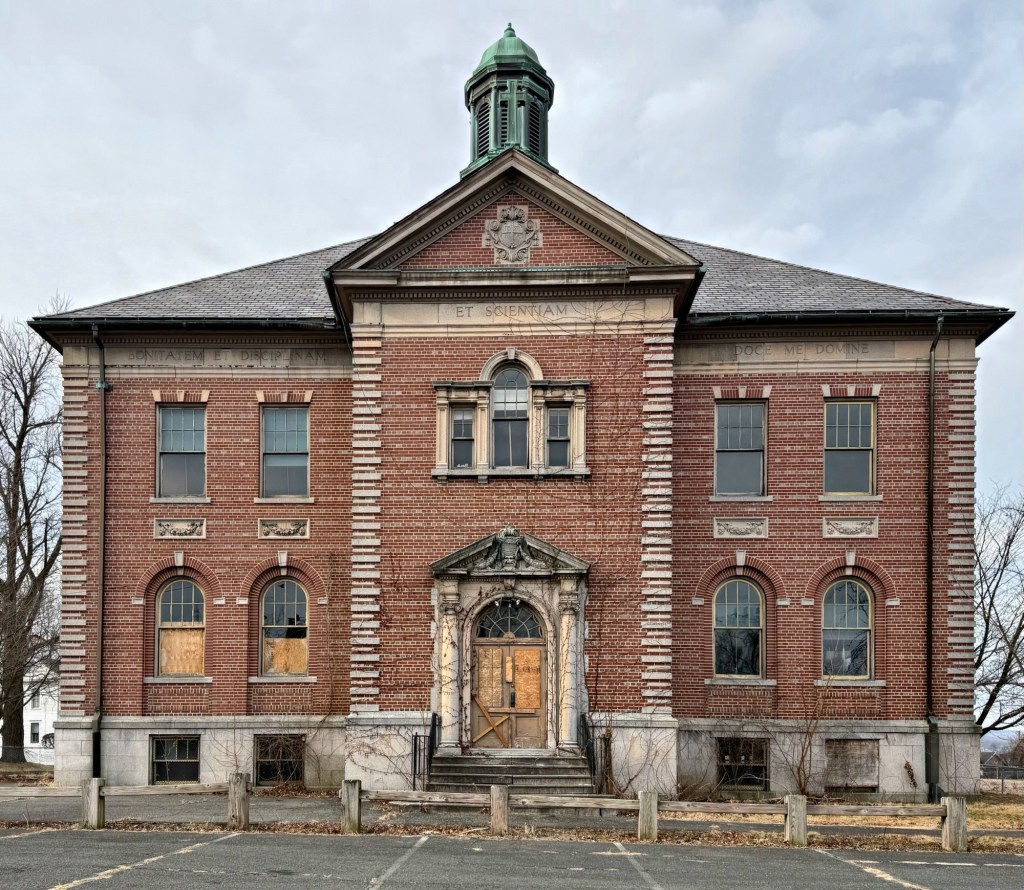
Holy Name Science High School // 1925

The third and final extant building on the former Church of the Holy Name of Jesus complex in Chicopee, Massachusetts, is this former school building, a stunning example of Colonial Revival architecture. Located behind the former church and rectory buildings, this three-story building was built in 1925 as a “Science” building to accompany an existing girl’s high school. Inside, the building had a “Commercial” department, where young girls could learn important skills like banking, stenography, and typing; with the second floor containing traditional science classrooms and labs along with the school library. Springfield-based architect, John W. Donohue, who specialized in ecclesiastical buildings in Western Massachusetts, designed the building in the Colonial Revival style with brick and stone construction, an elaborate entrance and Palladian window on the second floor facade. The school building closed in the late 20th century, and has seemingly sat vacant ever-since. I sincerely hope this important building could be incorporated as much-needed housing for Chicopee residents!

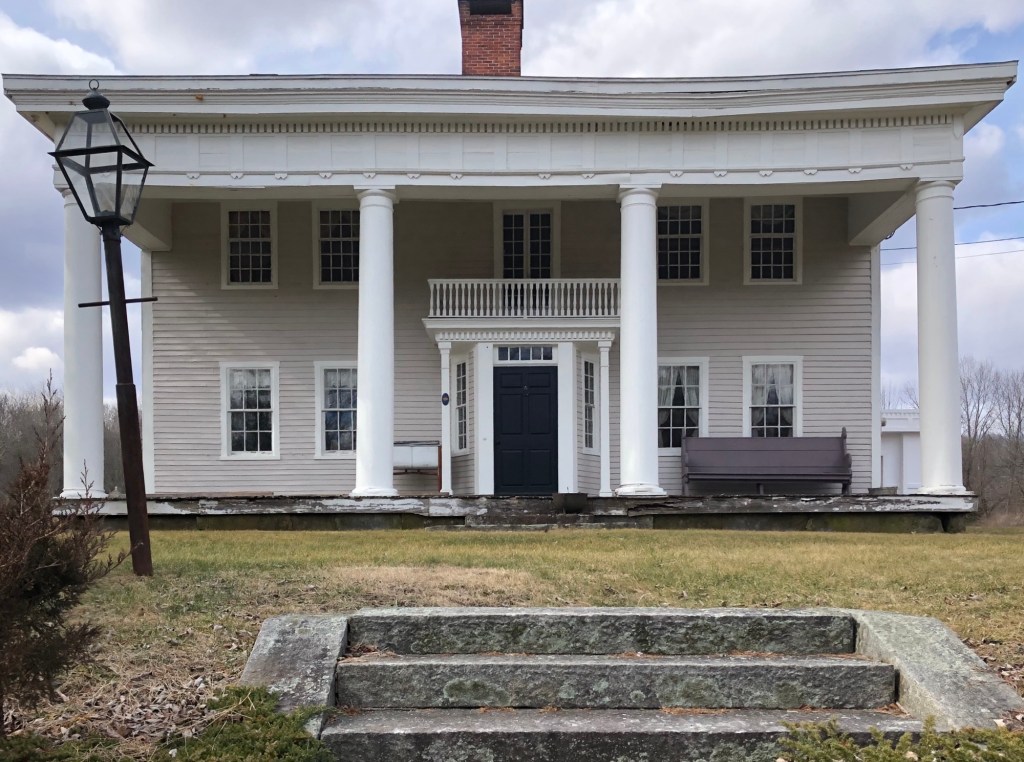
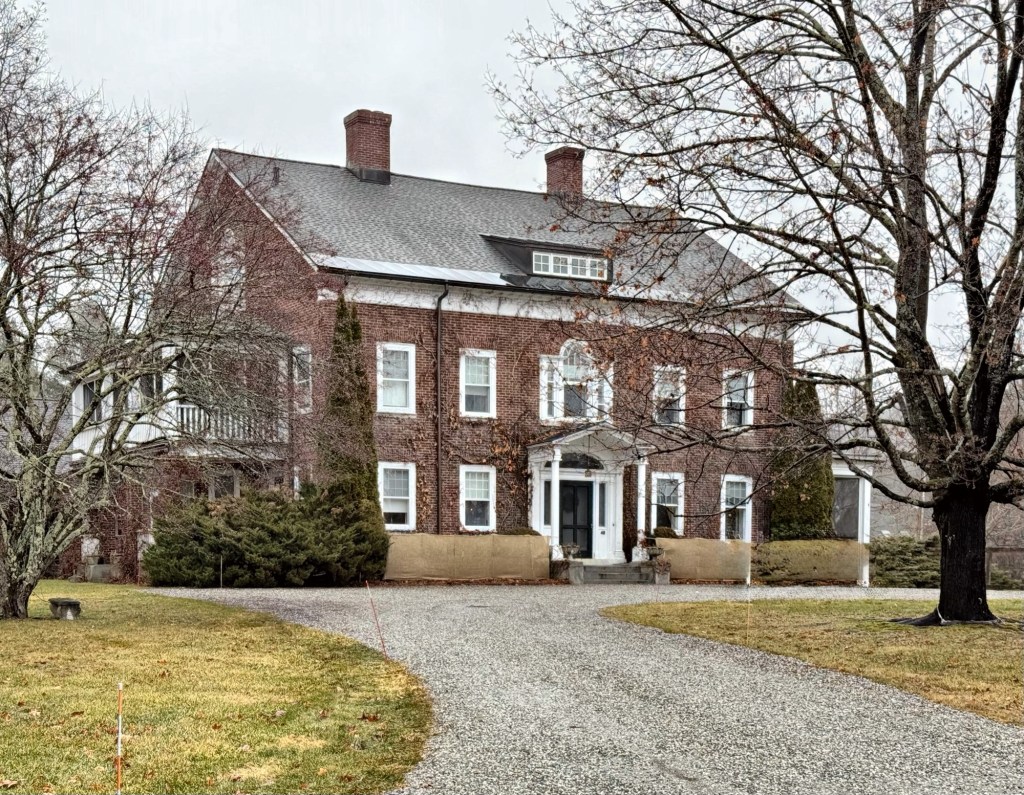
John E. Calhoun House // c.1912

This site, in the heart of Cornwall village, was once occupied by an early 19th century Federal style residence, built by the wealthy Pierce family in town. The Pierces’ large home was acquired by John E. Calhoun (1859-1940), a successful New York businessman, who retreated to his father’s hometown for summers away from the city. In 1911, a fire destroyed the home, which was wood-frame construction. This event mobilized Mr. Calhoun, who was untrained but interested in architecture, to begin planning a new summer residence, but of fireproof construction. Calhoun is said to have designed (and funded) the town’s library just years before, and modeled his home in line with the Colonial-era residences in the village, just larger and of brick. From the 1950s through the 1990s, the house was occupied by the headmaster and administration of the local Marvelwood School, but was re-established as a private home, a use that remains today.

Harriet Bennett House // c.1912

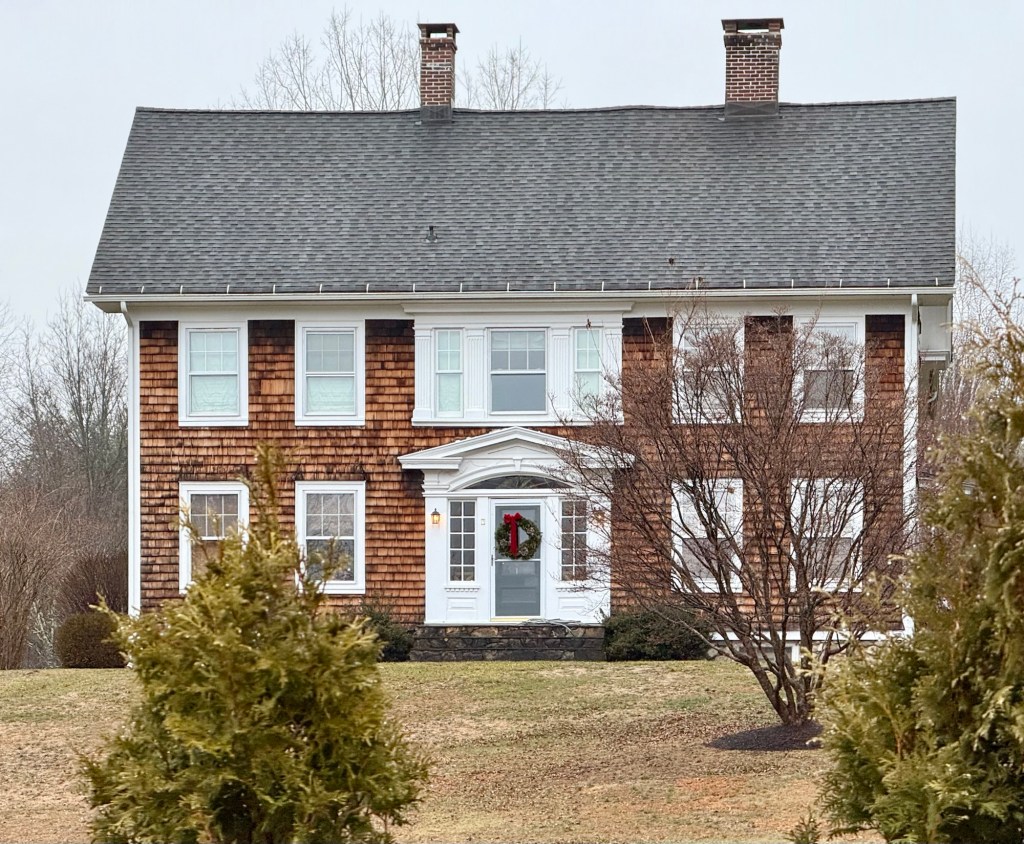
While most houses I have featured in Cornwall date to the early-mid 19th century, there are some great examples of early 20th century Colonial Revival dwellings, built at the time the town became eyed as a wealthy retreat for city-folk. This Colonial Revival residence was built for Ms. Harriet Bennett (1841-1928), an ardent suffragist and an active member of the Connecticut Woman Suffrage Association. Harriet was married to William C. Bennett and after his death in 1898, she devoted the rest of her life to charitable causes and giving back to others. As a widow and in her seventies, Harriet oversaw construction of this house, which was completed by 1912, in that same year, established the Cornwall Equal Suffrage League, hosting many of its events and meetings from this house. The League’s activities mirrored the efforts of suffragists throughout the nation. The house remains a well-preserved example of a house in the Colonial Revival style in town.

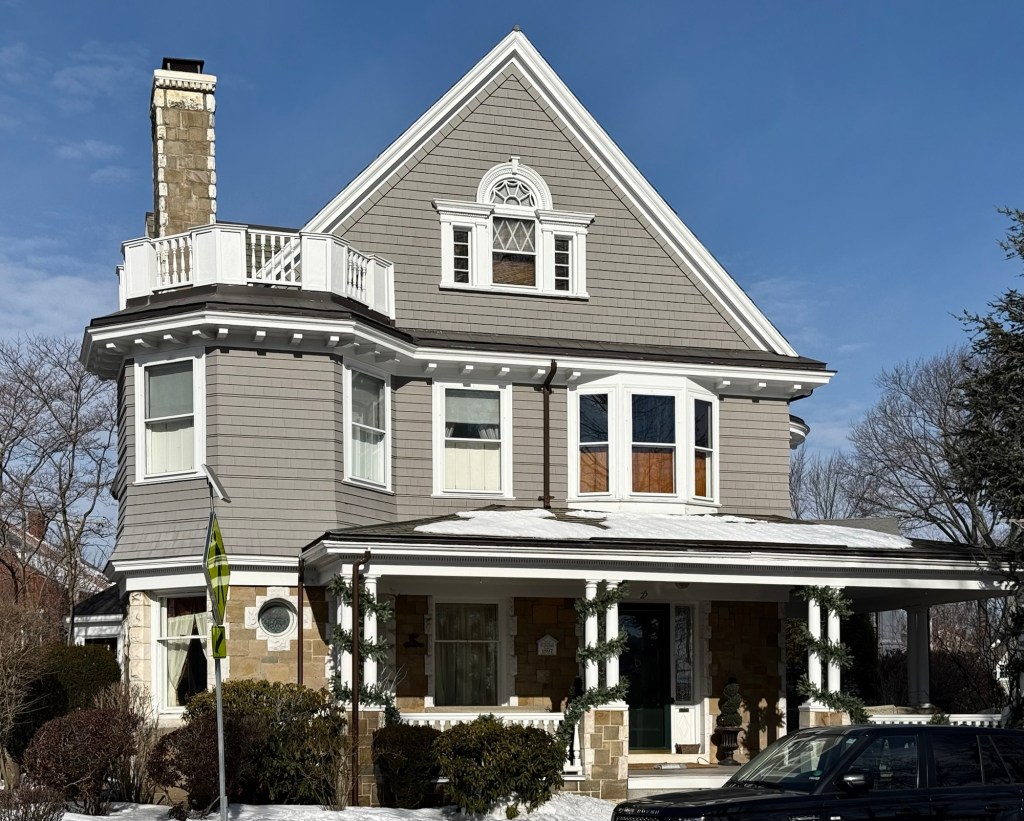
Louis E. Robinson House // 1892

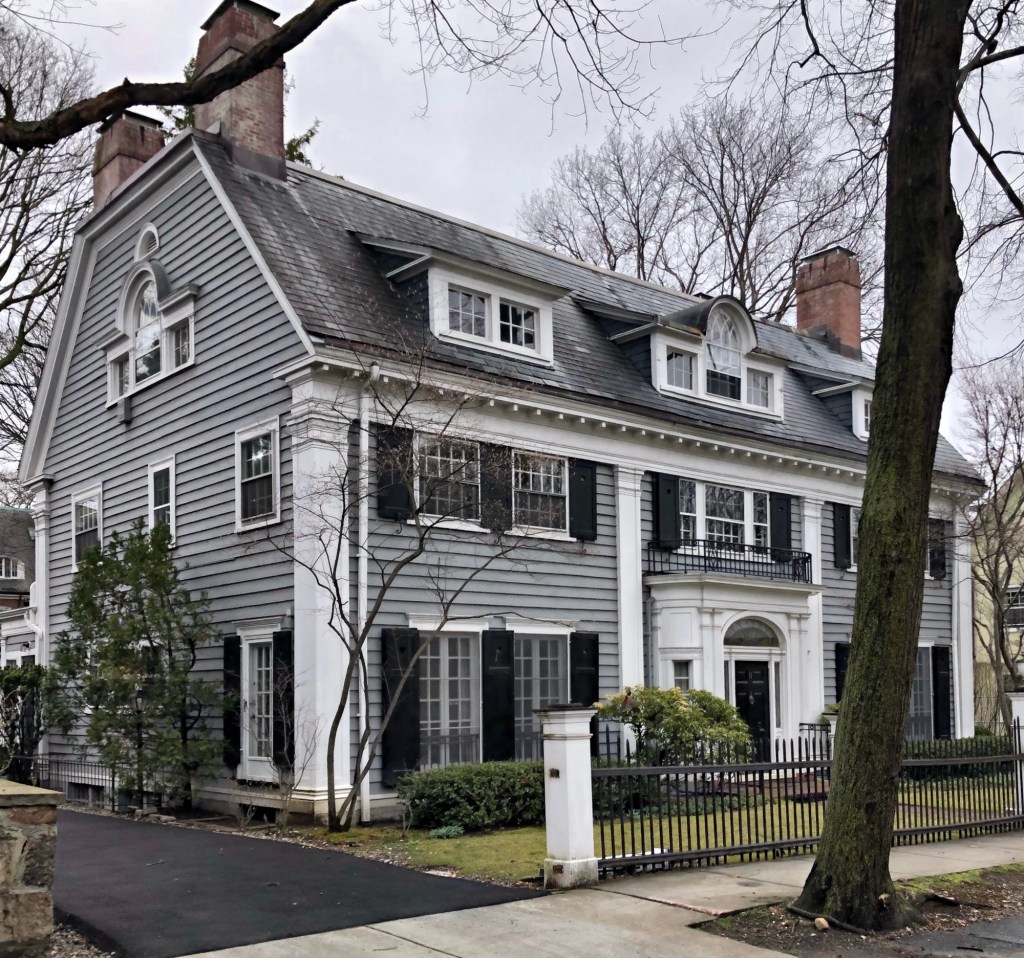
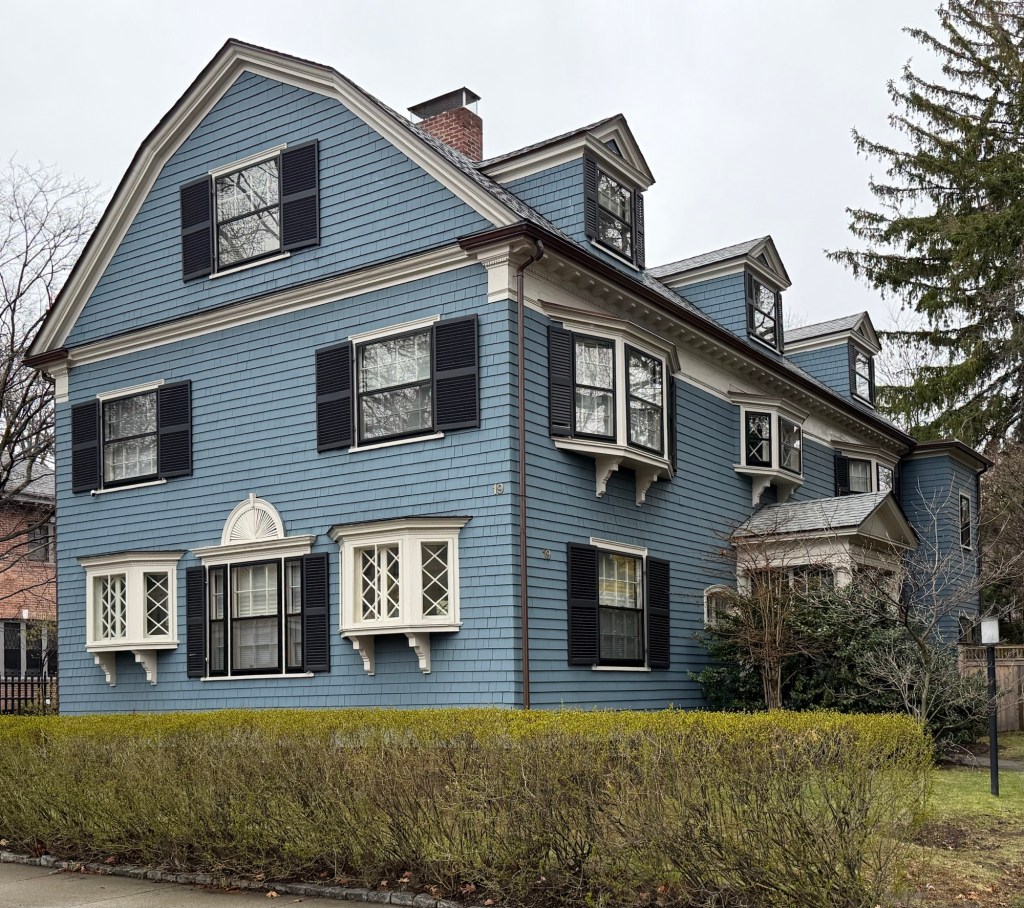
Built in 1892, at the height of the convergence of tastes of the Queen Anne Victorian and more traditional Colonial Revival architectural styles, the Louis E. Robinson House at 60 Stimson Avenue in Providence, Rhode Island, showcases the intricacies and whimsy that can be designed when a house is a blending of styles. The residence was built for Louis Elmer Robinson (not Robertson like so many sources claim), a cotton dealer and merchant, from plans by architect Frank W. Angell of the firm, Gould & Angell of Providence. The Robinson House is a gambrel-roofed mass, set gable end to the street, leaving only the ground story and side elevations in clapboard. The polygonal half-tower attached to the side elevation and its paneled grouping of windows retains the older medieval allusion of the early Queen Anne style, but with a swans neck pediment topping the stair hall window showcased the Colonial influence. I am imagining the home with a more period-appropriate color palette, but it still shines!

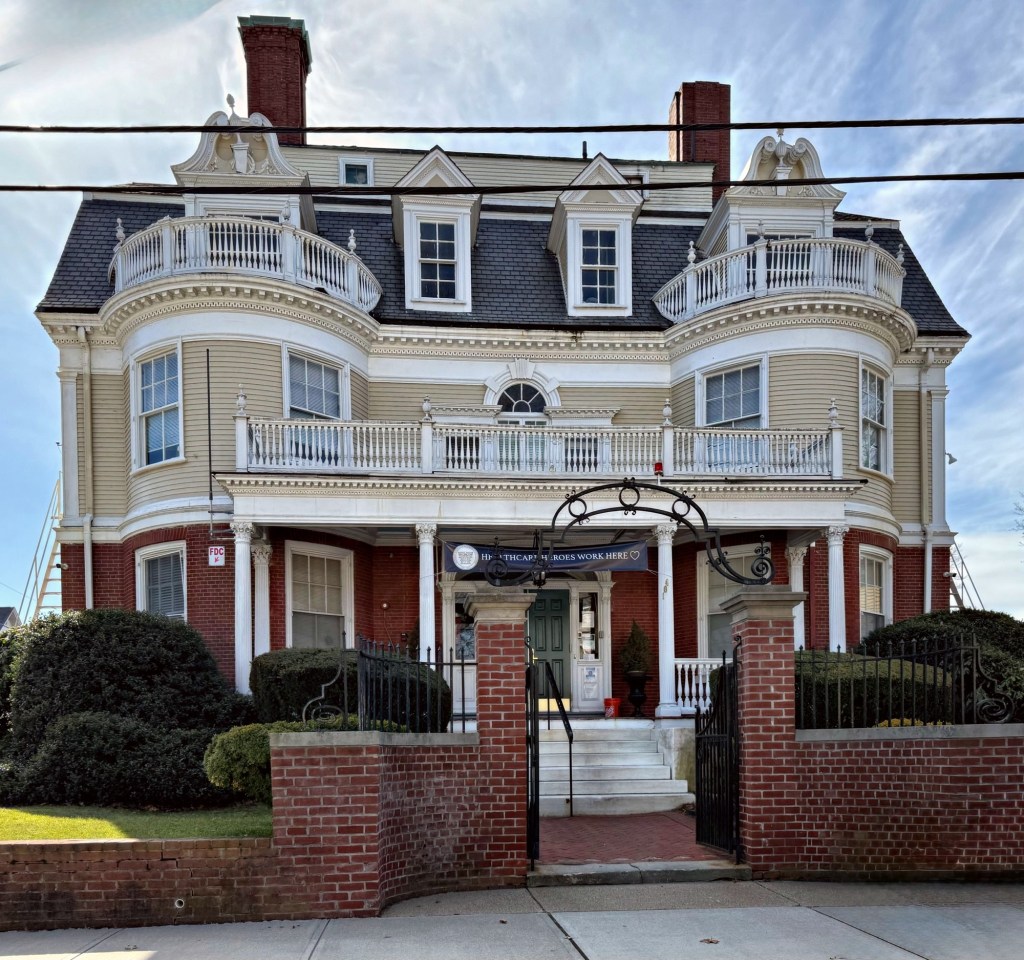
Francis and Sarah Cranston House // c.1895

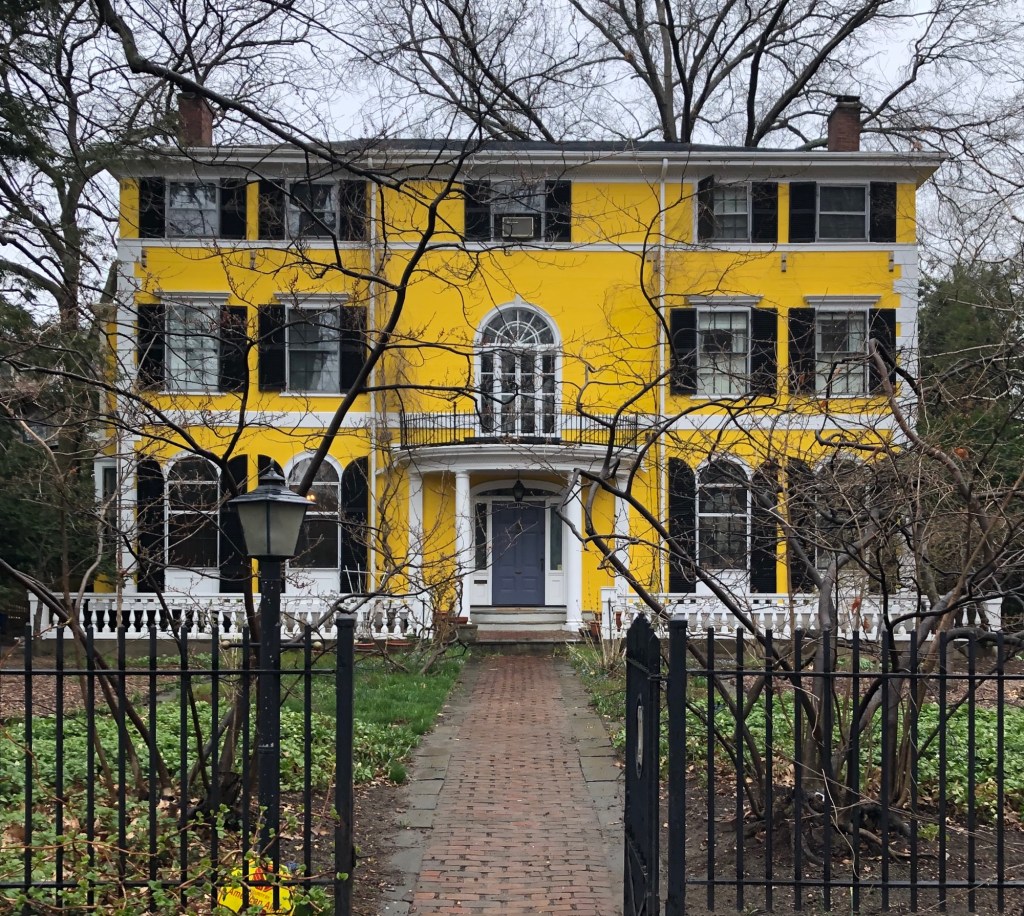
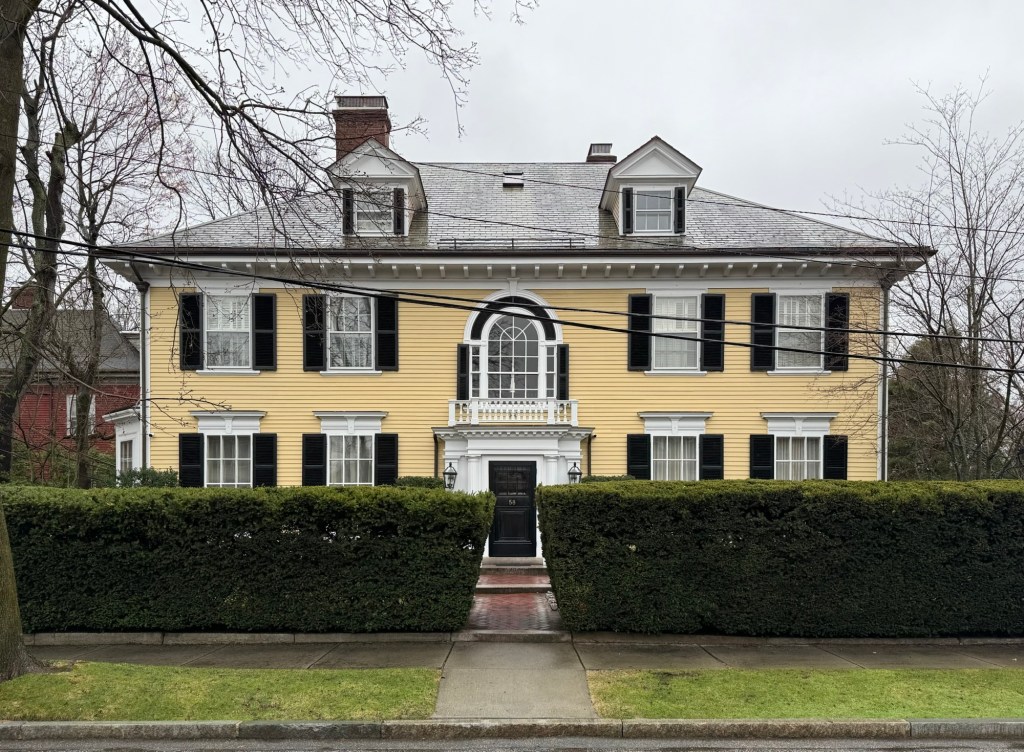
The Francis and Sarah Cranston House is located on Bowen Street in the College Hill section of Providence, Rhode Island. Built circa 1895 for Francis Augusta Cranston (1837-1909) and his wife, Sarah (Hill) Cranston, the house is one of the best residential examples of Colonial Revival architecture in the city. Francis was the son of Barzillai Cranston, a descendant of Gov. Samuel Cranston, who held office from 1698 to 1727, being elected to office 30 times; serving as governor longer than any other individual in the history of Rhode Island. Francis worked as cashier of the Old National Bank of Providence for over fifty years and built this residence to settle into retirement. The residence is unique for its high-sloping hipped roof with two layers of dormers, corner quoins, Palladian window, and Ionic portico. I could not locate the architect, but if anyone knows, I’d love to give them their deserved credit!

Rockland Security Trust Building // 1912

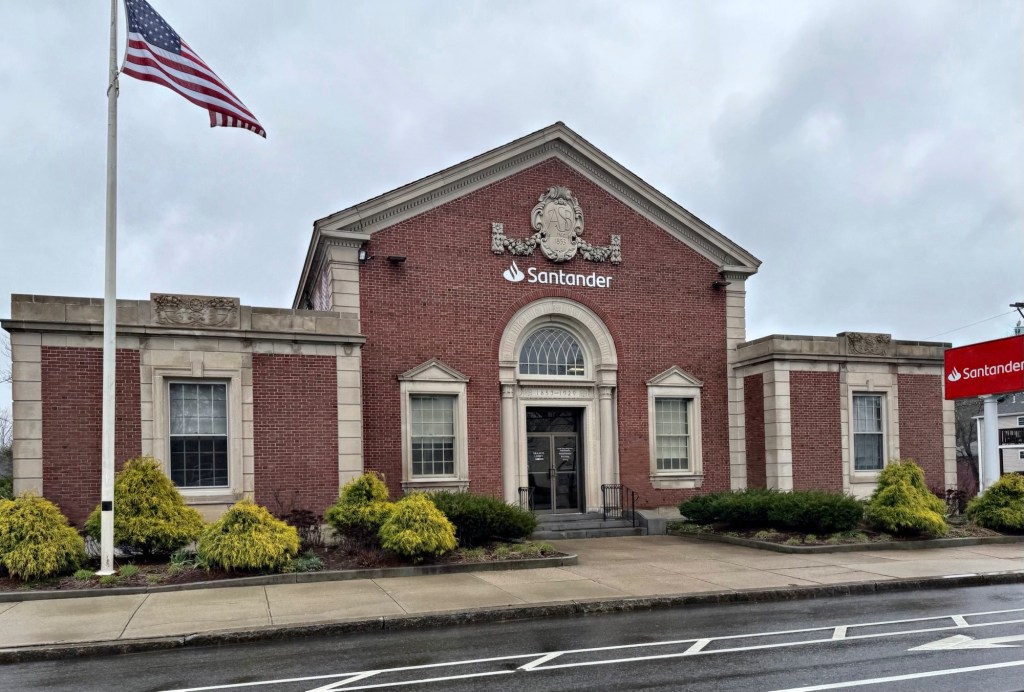
The Rockland Security Trust Building is a significant Colonial Revival style bank structure located on Main Street in Downtown Rockland, Maine. Built in 1912 from plans by Boston architect Richard Clipston Sturgis, the brick building is trimmed in marble, to provide a visual representation to the financial wealth and stability the bank could provide its clients. The bank closed and the building is presently occupied by an art gallery. Sadly, the rooftop deck railing takes away so much from the building’s presence.

Wadsworth School // 1897

The former Wadsworth School of Danvers, Massachusetts, was built in 1897 as a district schoolhouse for the growing town and is one of the finest examples of a school building designed in the Colonial Revival style in the state. The large building held four classrooms (two on each floor) for over 200 pupils with stairhalls at either entrance and was designed by local architect, William H. Pearce. The school was in use until the 1970s when the town consolidated many of the schools, selling this building as excess. The property was converted to offices and given a preservation restriction by the town, protecting it as a local landmark for generations to come!

Tapley Memorial Hall // 1930

Years after the Danvers Historical Society acquired the Jeremiah Page House, saving and relocating it to its present location on Page Street, the society began planning for a new facility to house its collections. After a successful fundraising campaign, the society solicited plans from local architect, Lester S. Couch, a partner in the firm, Little & Browne, and member of the historical society, to design the new memorial building. Designed in 1930 and completed a year later, the Colonial Revival style building is constructed of fireproof brick walls with a hipped roof. Two entrances are located on the side elevation facing the Page House, with pedimented surrounds and blind fanlight transoms. The building is notable for the use of slightly recessed arched bays, common in Federal and Federal Revival buildings. The Tapley Memorial Hall is still maintained by the society and can be rented out for functions.

Danvers Town Hall // 1854

The land that is now Danvers, Massachusetts, was once owned by the Naumkeag branch of the Massachusett tribe. Permanent European settlement began in 1636, when present-day Danvers was known as Salem Village, a village of Salem. The historical event for which Danvers is best-known is the Salem witch trials of 1692, which began in the home of Rev. Samuel Parris, in Salem Village. Danvers officially separated from Salem in 1752 and is likely named after Sir Danvers Osborn, a Colonial Governor of New York. In 1757, Massachusetts incorporated Danvers as a town and, according to legend, King George II later vetoed this act of incorporation and returned his decree with the message, “The King Unwilling.” They simply ignored this royal veto, which was later included on the town’s seal! Danvers would eventually build a central town hall building , this structure, in 1854 which partially functioned as a high school as well. Plans were drawn by the Salem architectural firm of Emmerton & Foster in a pleasing blending of Greek Revival and Italianate styles. As the town grew, the building was expanded in 1883, and in the 1890s. When a new, purpose-built high-school was constructed elsewhere in town in the early 1930s, it was decided to renovate the town hall building. Due to financial constraints during the Great Depression, the town got a lifeline by the Federal government, who in 1934, appropriated $6,500 to the town for a renovated town hall as part of the New Deal. Additional funds from the WPA went to murals (many of which still adorn the walls inside). Architect Lester S. Couch of Danvers, a partner in the firm Little & Browne, oversaw the renovations in the Colonial Revival style.

Riccar Inn // 1913

The Riccar Inn, now known as the Presidential Inn, was constructed in 1913 on the grounds of the former Poland Springs House. The structure was the last of the hotel buildings constructed by the Ricker family, who started the resort aimed at drawing in tourists to take in the area’s natural healing waters. The annex hotel building was named Riccar Inn, with the spelling “Riccar” from the historic surname used by members of the family before they emigrated to America. The Queen Anne/Colonial Revival style hotel building survived the 1975 fire that destroyed the main hotel, the Poland Springs House. Architecturally grand, this three-story irregular plan hotel has a flat roof and features a four-story projecting double bay in the front facade topped with two octagonal towers. While covered in vinyl siding, much of the original ornament still shines (and there is likely more underneath the siding to be uncovered at a future date). What a beautiful building.

Fourth Byfield Parish Church // 1931

The Byfield Parish Church at 84 Warren Street in Georgetown, Massachusetts, was built in 1931 and is the fourth meetinghouse to occupy the site. The congregation dates to 1701, when sixteen families in this section of Rowley (now Georgetown) near Newbury were set off separate from the Rowley First Parish. Travel for religious services became too arduous, so the local residents petitioned to create their own parish, Byfield. Some accounts state that the first meetinghouse was built in 1702 and it is said to have been razed by 1746 to make way for a new wood frame church with a steeple, a spire, and a weathervane. This church burned in 1833, and it was replaced by a new meetinghouse soon after. The 1833 church was used for almost a century until, in March 1930, it was struck by lightning and burned to the ground. The congregation banded together and had this brick church built, its fourth. Completed in 1931, the Colonial Revival style building was designed by architect, George M. Champney, partner in the Boston office of Derby, Barnes & Champney. The church is sited within a historic cemetery containing the remains of many of the churches members, dating back to 1670. The Byfield Parish Church moved to a new building (its fifth) nearby in 1987, and in 1993, sold this church building to a private owner (retaining and maintaining the cemetery themselves) with the 1931 church converted to a single-family dwelling. How cool!

Perley School // 1898

The Perley School, formerly known as the “The Perley Free School” is an architecturally and historically significant school building in Georgetown, Massachusetts, constructed in 1898 as a result of the former high school being lost to fire. The original funding for the Perley School was made possible by donations from the estate of John Perley. John Perley (1782-1860) was born in town and operated grocery stores, later getting involved in land speculation. He never married nor had children and lived frugally despite having a small fortune, that would end up being distributed to extended family and as gifts to the town, including funding this building and in the local Congregational church. He died in 1860 and was buried in a local cemetery, marked by the town’s most ornate memorial. The Colonial Revival style school would suffer a catastrophic fire in 1935, but was largely rebuilt and added onto, showing the community’s resolve and determination. It remains today as the town’s elementary school.

Georgetown Town Hall // 1905

Welcome to Georgetown! The Georgetown Central School, now known as the Memorial Town Hall, stands near the historic commercial center of Georgetown, Massachusetts, a rural community in Essex County located about 28 miles north of Boston. The two story wood-frame building was built in 1905 to a design by the Boston architectural firm of Cooper and Bailey, and located at the site of an earlier one-room schoolhouse built in the 18th century. It was Georgetown’s first multi-room school building, and was built after the town’s first high school/town hall burned down in 1898. The Colonial Revival style school building was eventually outgrown and was no longer needed as an educational facility. It was converted to municipal offices in 1974, a use that has remained ever since. The town has taken pride in this building, restoring much of the exterior details and slate roof.

New Gloucester Old High School – New Gloucester Public Library // 1902

This building, the present New Gloucester Public Library, was originally constructed in 1902 as the town’s high school, a use that remained until 1962, when pupils would go to a modern school building in nearby Gray, Maine. The building is an excellent example of the Colonial Revival style with a symmetrical facade dominated by a row of multi-light windows separated by paneling, a segmental-arched dormer, and cupola at the roof with a bell. When the high school moved to its present location, this building sat vacant for some time and would be occupied by the New Gloucester Historical Society for storage and display of their collections until the public library moved into the building by the early 1990s.