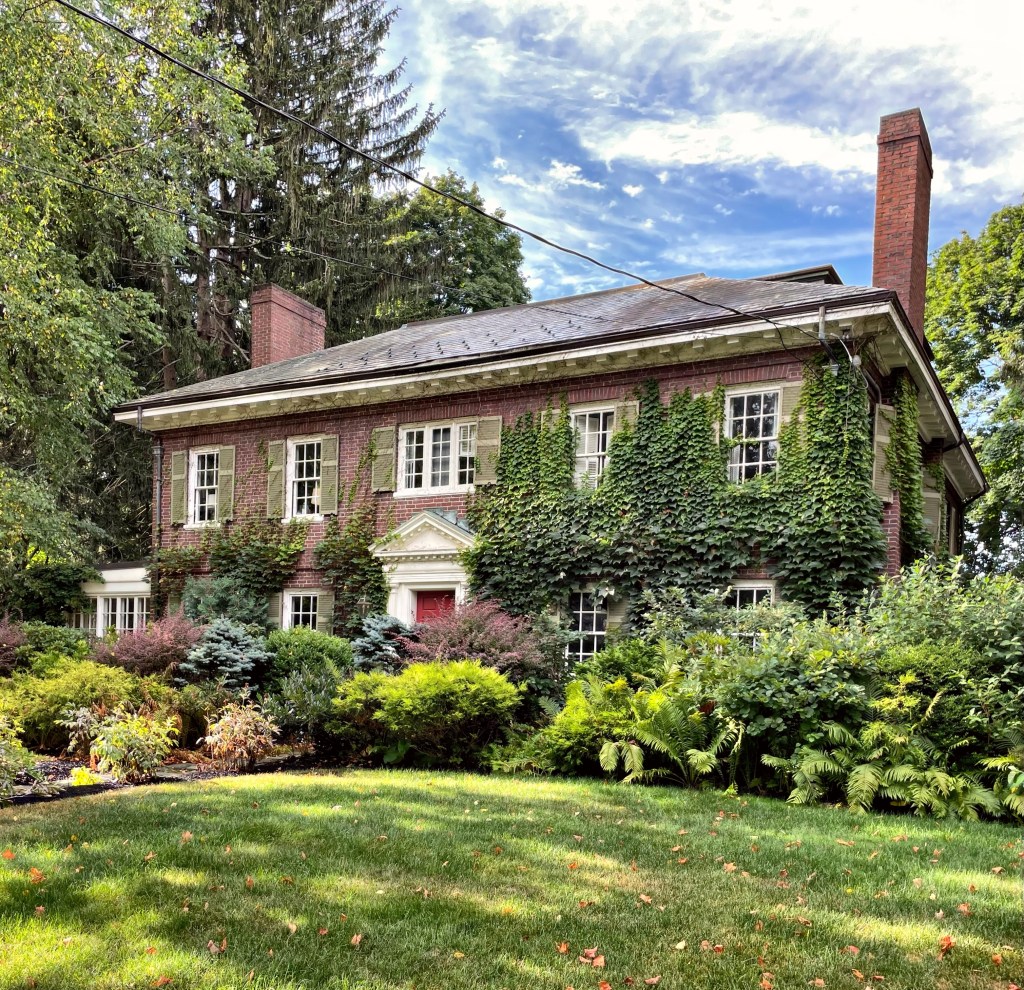
Emmel Building // 1896

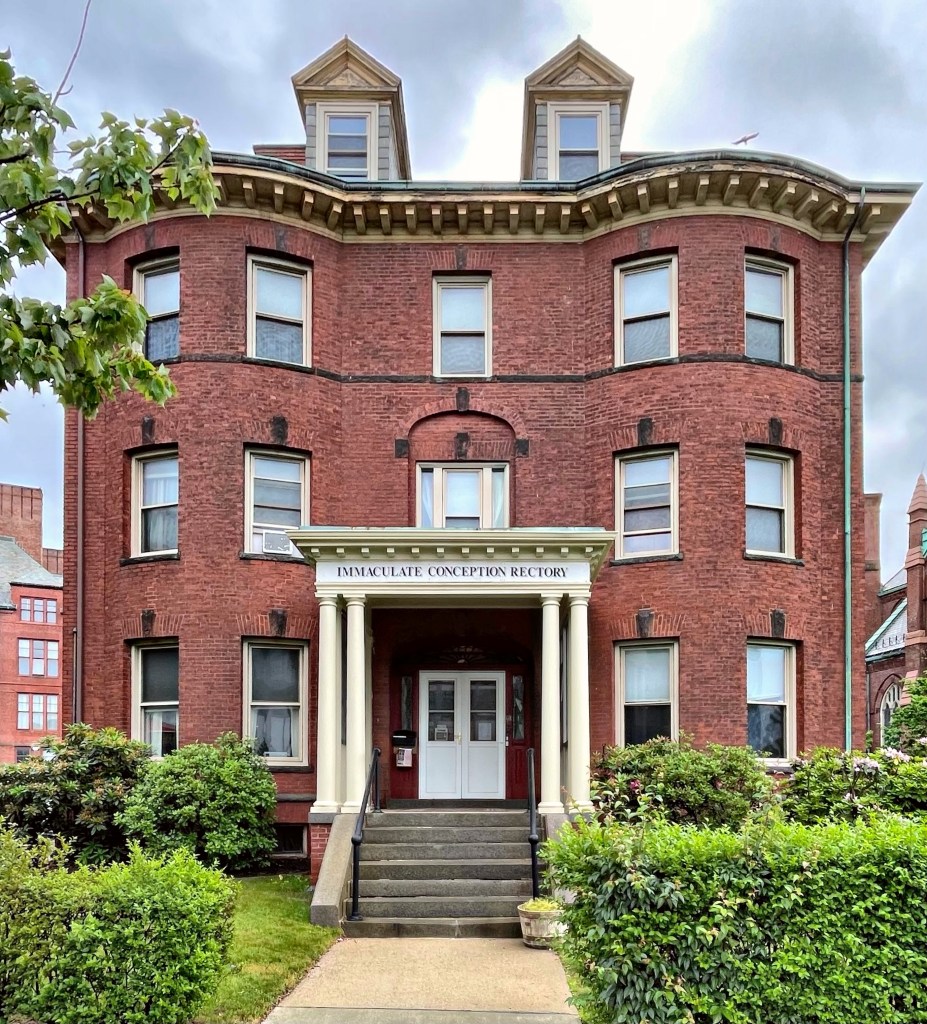
In 1896, architectural sculptor Charles Emmel purchased land in the rapidly developing Forest Hills section of Jamaica Plain, Boston. He hired local architect George Zimmer, to design a massive double-house which would serve as an income-producing investment, and could also be a sort of advertisement for his sculpture work. The result is this massive Colonial Revival style property, perched atop a puddingstone foundation. Architectural ornament has been lovingly preserved, a testament to the owners of the building today and the amazing work of the original owner, Mr. Emmel. I found myself staring at the building for a while when walking by, looking at all the hidden detail and architectural ornament which adds so much to the building.

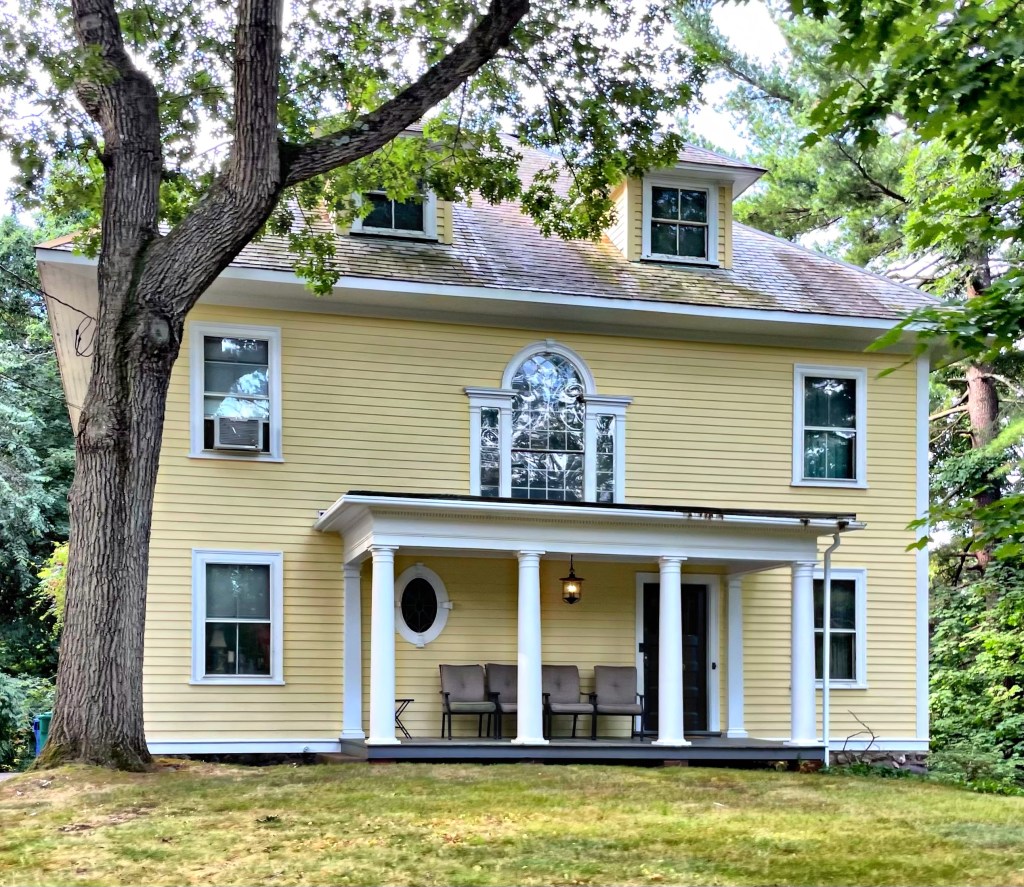
Stetson House // 1897

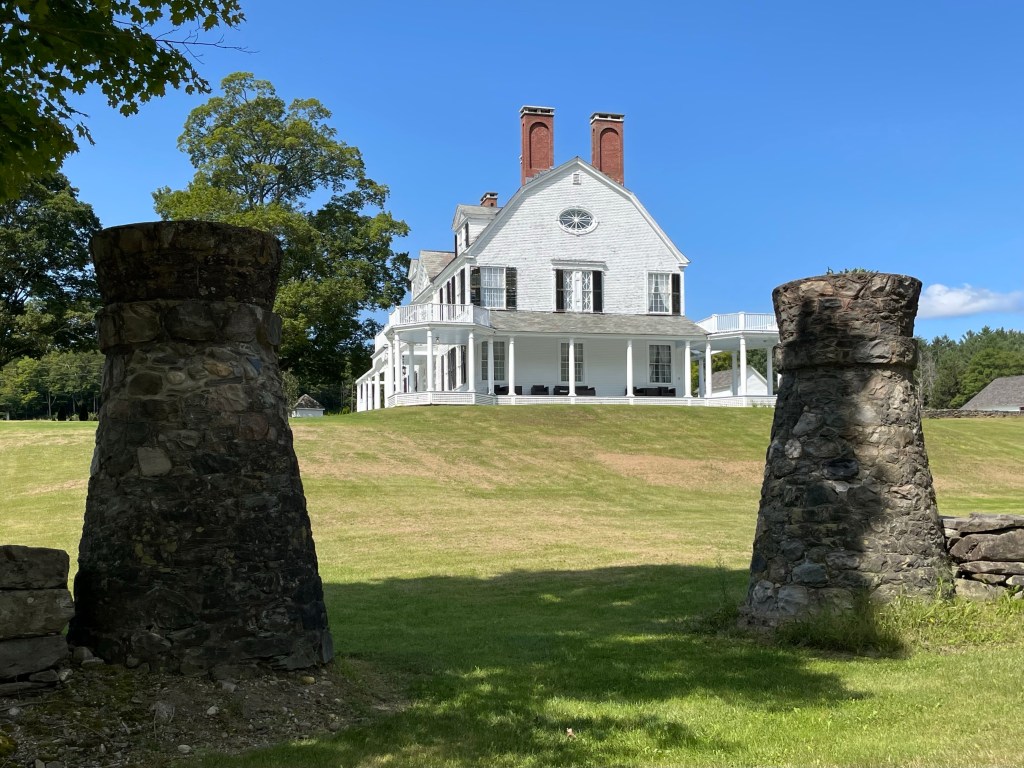
Waban is full of eclectic homes from the end of the 19th century, and this example is probably my favorite! The Herbert and Georgia Stetson House was built in 1897 and demonstrates how elements of the Colonial Revival style were incorporated into a less rigid Queen Anne style plan. Herbert was a lumber dealer, and likely used his own product in his home. The mixture of ornament includes Colonial
Revival style pedimented dormers, a Palladian motif window, oval windows, and a modillion cornice in combination with bays, oriels, a dramatically overshot gable roof, and a swept dormer reminiscent of the Queen Anne style. Together, the composition is perfection, and really makes you stop and analyze all the details!

Touro Synagogue // 1763

While Newport is arguably best-known for the Newport mansions from the Gilded Age, there are soooo many amazing buildings from the Colonial era, including some of the most significant and historic in the United States. Touro Synagogue in Newport is the oldest synagogue building still standing in the United States, the only surviving synagogue building in the U.S. dating to the colonial era, and the oldest surviving Jewish synagogue building in North America (for reference, second-oldest extant synagogue in North America was built in 1833, seventy years later)! Its history begins in the 17th century when the small but growing colony of Newport received its first Jewish residents possibly as early as 1658. The earliest known Jewish settlers arrived from Barbados, where they participated in the triangular trade along with Dutch and English settlements. By 1758, the Jewish population had grown sufficiently that there was a need for a house of worship. The Congregation now known as Congregation Jeshuat Israel (Salvation of Israel) engaged Newport resident Peter Harrison to design the synagogue. Harrison, a British American merchant and sea captain, who was self-tutored in architecture, studying mostly from books and drawings. By the time he designed Touro Synagogue, he had already completed iconic buildings including Newport’s Redwood Library and King’s Chapel in Boston. Construction began on the “Jews Synagogue” in 1759, which was completed years later in 1763. The building is one of the most significant buildings in America, and is open to tours where you can see the immaculately restored interiors.

William Jelly House // 1905

Ernest Machado, the Cuban-American architect mentioned in the last post is credited with designing this massive Colonial Revival mansion on Beckford Street in Salem. The house was constructed in 1905 for William Jelly, a teller at the Salem Five Cent Savings Bank. William’s family-owned property on the street before he acquired the property, seemingly from his father. Ernest Machado was a locally significant architect who designed stately city mansions and enchanting country estates for some of Boston’s wealthiest families in the late 19th- and early 20th centuries. This home is setback off the street and faces the side, a common practice for larger homes in narrow urban lots. The house has a five bay symmetrical facade facing south, with clapboard sheathing, rusticated quoins, and a modillion cornice. It is topped by a gambrel roof, which has two large interior brick chimneys at the ridge. A Chippendale patterned balustrade stretches between three pedimented dormers which rise above the roof on main facade. Who else loves Colonial Revival houses?!

Jesup Memorial Library // 1910

Bar Harbor’s first library is believed to have been organized in 1875 by a group of summer residents. This collection of 176 volumes was assembled for the use of Mt. Desert’s permanent residents and made available to them for two nights per week. A small frame library was built in 1877. In 1883, the growing collection was turned into a subscription library with borrowing privileges charged at the rate of $1.00 per family, but the fee was dropped three years later. By the late 19th century, the village’s population boomed, especially in the summer months when wealthy families descended upon the sleepy town every year to take in the cooler climate and sweeping scenery of Mount Desert Island. Acknowledging the need for a more suitable library, Maria Van Antwerp DeWitt Jesup, the widow of Morris K. Jesup (1830-1908), a New York financier and long-time summer resident of Bar Harbor, gifted the town funds to erect a new building as a memorial to her late husband. The Colonial Revival style library was designed by the New York firm of Delano & Aldrich, and exhibits a beautiful centered entrance recessed in a limestone arch.

Breeze Cottage // 1896

The marriage of Anna Perkins Pingree to Joseph Peabody in 1866 was a merging of two of the most influential and wealthy families of Salem, Massachusetts. The marriage however did not meet the mark, as the couple eventually had a large falling-out after purchasing a mansion in Boston’s Back Bay neighborhood in 1877. In her time away from her estranged husband, Anna became heavily involved in the arts, collecting hundreds of paintings and decorating her homes in Boston, Ipswich, and her new summer cottage in Bar Harbor. In 1896, she had her Bar Harbor cottage built on West Street, a road of substantial summer homes right next to downtown. The Colonial Revival “cottage” sits on the waterfront of Frenchman Bay and has only 12 bedrooms and 7 bathrooms, in 12,500 square feet.

Valentine Hill House // c.1649

Valentine Hill emigrated to Boston in 1636 from England with his brother and began a successful career as a merchant and trader. In 1638 Valentine was made a member of the Artillery Company, In 1640 he took the Freeman’s Oath, and in that same year ordained as a Deacon in the Boston Church. In 1641 he was elected a Selectman serving until 1647. In 1643 Valentine received a grant of land at the falls of the Oyster River in what is now Durham, N.H. In 1649, Valentine and an associate got permission to build a saw mill on the river. Additional grants of land included 500 acres for farming. Due to issues with his businesses in Boston, he moved up to present-day Durham to manage his mills and property there. On the property, he employed “seven Scots”, who were indentured servants captured by British forces in the Battle of Dunbar, and among other industries, lumber was milled for use in the shipbuilding industry in surrounding towns. In 1649 Valentine Hill built the original homestead, a single-story house with a basement. In 1699, Nathaniel Hill, son and heir of Valentine, made a two-story addition to the house, giving the home the appearance we see today. After successive owners, the next major period of the property was early in the 1900’s, when James Frost took over the estate, completing the transformation of the grounds and turned into a Colonial Revival summer estate with extensive formal gardens, arbors and an elaborate stone wall. The property remained in the family until the 1980s, but suffered from some neglect. The house was purchased in 1997 and restored to her former glory and is now known as the Three Chimneys Inn. Interestingly, if this home can be dated with dendrochronology (aging the home based on the age of the cut timber), this home would be at least a decade older than the present oldest home in New Hampshire!

George House // c.1929

This Georgian Revival house was built in the mid-late 1920s for the George Family, who ran a construction company based out of Worcester, Massachusetts. The home was a summer retreat for the family, who acquired a prime lot on Butler Point in Marion, MA, from the Butler’s Point Associates, a group of men who developed the peninsula with the Kittansett Club and desirable house lots from plans by the Olmsted Brothers, landscape architects. The house is prominently sited and is one of the best examples of the Colonial Revival style I have seen in the seaside town. It is clad in cedar shingles as a nod to the vernacular coastal homes and larger Victorian-era summer homes seen in the village.

Ward Parker Delano House // 1797

During the 1790s and early 1800s, the rise of the coastal schooner trade and whaling ushered in a long period of prosperity for coastal towns in New England, which continued unabated until the Civil War. The War of 1812 provided many Marion sailors and sea captains with the chance to experience life at sea with privateers papers issued by the United States government, these captains went to sea in their schooners to hunt down British ships, plundering them like pirates. One of these captains was Ward Parker Delano, who built this house in 1797 overlooking Sippican Harbor. Under subsequent owners in the Delano family, the home was modified on numerous occasions in styles popular at the time until the early 20th century when it was Colonialized, which added the portico, gable, and dentils.

Walter Garde Cottage // c.1910

This summer cottage in the Neptune Park development of New London, Connecticut, was built around 1910 for Walter Garde, a resident of Hartford and New London. Walter built this home as a retreat from city-living where he could breathe the fresh sea breeze and not worry about smoke and pollution from the growing industrial cores of Hartford and New London. The home blends styles and forms elegantly with a stuccoed ground floor and shingles above. A cross-gambrel roof adds depth with windows in various shapes and sizes creating a pleasing composition at the street. Walter Garde was a businessman who notably opened the Garde Theatre (now Garde Arts Center) in Downtown New London.