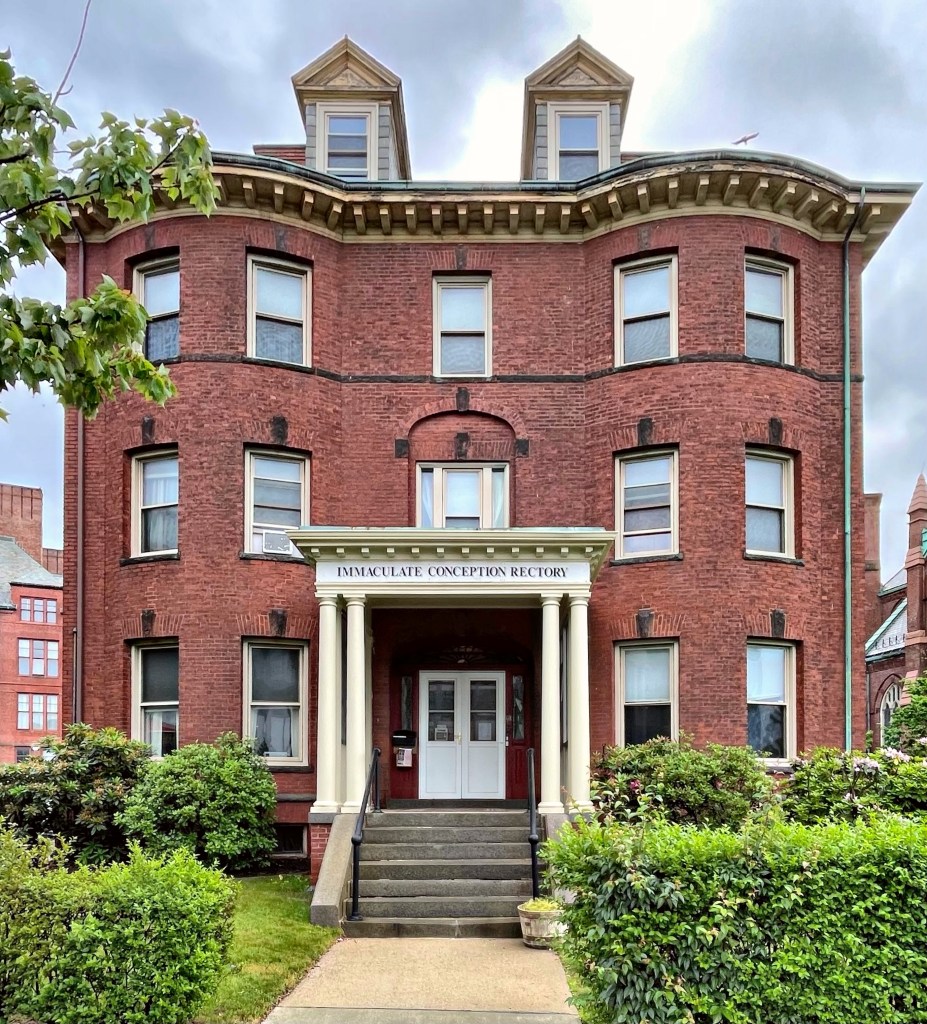
Immaculate Conception Rectory // 1904

Next door to the Immaculate Conception Roman Catholic Church (last post) in Everett, you will find the church rectory, which completes the city block. Though very different in architectural style, the building is compatible with its more grand neighbor with the use of materials and setbacks. The rectory was built in 1904 in the Colonial Revival style, which was very popular at the time in New England. The three-story, hip-roofed building has bowed bays that flank a single-story porch with Doric columns that shelters a central entrance with fanlight and sidelights. Other Colonial-inspired details include the tripartite window set into the recessed arch above the porch, modillion cornices and splayed brick lintels with keystones. It is not clear who designed the rectory, but they did a great job at it! Rectories served as the residence of the priest of the church. Not bad digs if you ask me!

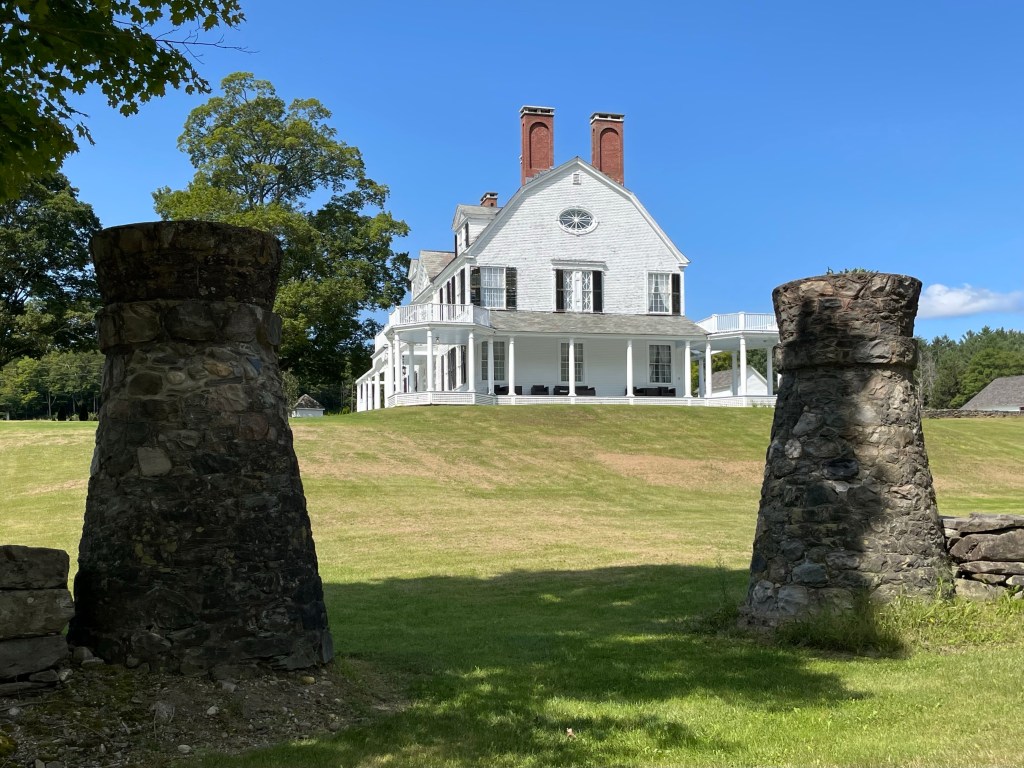
Brook Farm // 1894

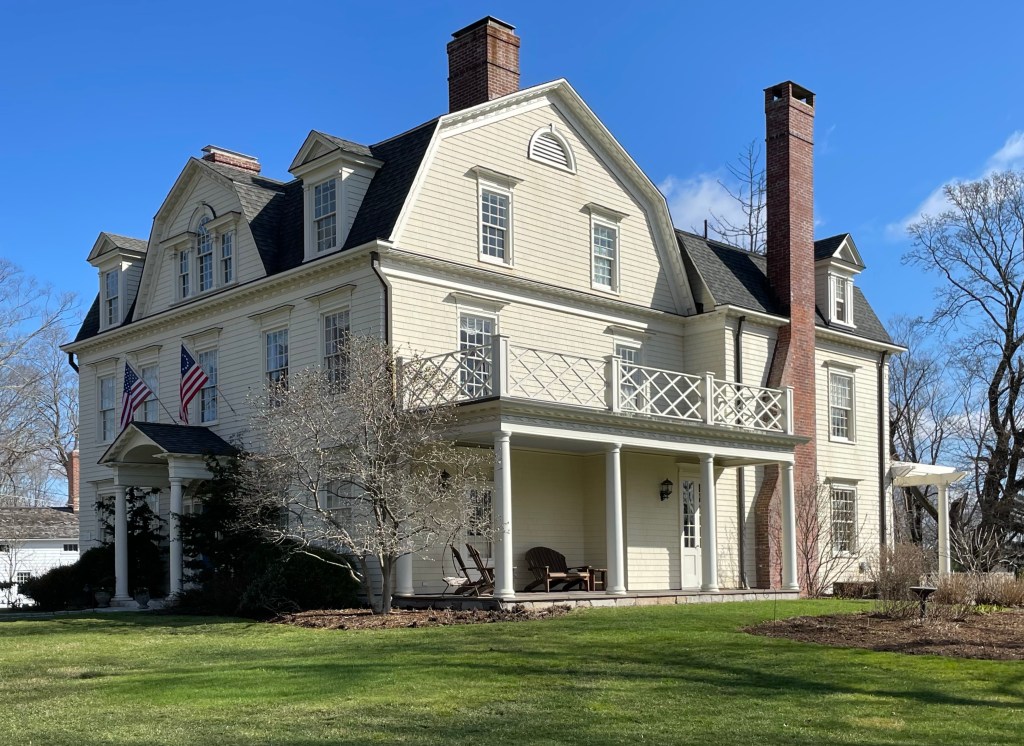
By the late 1800s, Vermonters had left the state in high numbers as agriculture began to sharply decline as a career path in New England, with many leaving to urban centers and manufacturing towns. Vermont politicians responded to the de-population with initiatives to encourage the redevelopment of existing farms by seasonal residents with money who could summer there to escape the hustle and bustle (and dirty air) of urban centers. Towns threw events like “Old Home” days with activities to entice affluent family members to return home and bring their money with them. After 1850, railroads made it easier for urban families to trade the heat and congestion of the city for the beauty of Vermont. One of these wealthy expats was James Hale Bates (1826-1901), who was born in Cavendish, Vermont, and moved to New York and worked in advertising, operating a major firm there. He retired in 1895, after the completion of Brook Farm one year earlier, a gentleman’s farm that he had built in his ancestral hometown of Cavendish. This massive Colonial Revival mansion was the centerpiece among sweeping fields and orchards contained by rustic stone walls. It is believed that Vermont architect, Clinton Smith, designed the estate house and many of the out-buildings on the site from the carriage and cow barns to the caretaker’s house and creamery. In recent years, the estate was operated as a vineyard, but it appears to be closed now. This is one of the hidden gems of Vermont and one of the most stunning Colonial Revival homes I have seen!

St. Stephen’s Episcopal Church // 1914

When Ridgefield, Connecticut was settled in 1708 by Europeans, there was only one Episcopal Church in the state, and the general assembly allowed dissenters their own churches so long as they continued to pay taxes to support the Congregational Church. Ridgefield’s first Episcopal church, St. Stephen’s was built in 1740 on land granted by the Proprietors who founded the town and laid out lots along the towns new Main Street. In 1776, St. Stephen’s minister, Epenetus Townsend, a Tory (loyal to the British), was ordered to leave town with his wife and five children when the Revolution picked up steam. He was appointed chaplain to a British regiment and in 1779, the battalion was ordered to Nova Scotia. En route by vessel, a severe storm arose and all passengers were lost. The church was taken over by the commissary department of the American Army. During the Battle of Ridgefield, British troops set it on fire as a statement to the townspeople. The church was replaced two more times until 1914 when the present building was constructed. The Colonial Revival church is absolutely stunning and built from plans by (unknown to me) architect Walter Kerr Rainsford. The rubblestone church is one of the most pleasing designs I have seen in Connecticut!

Rev. Thomas Hawley House // 1713


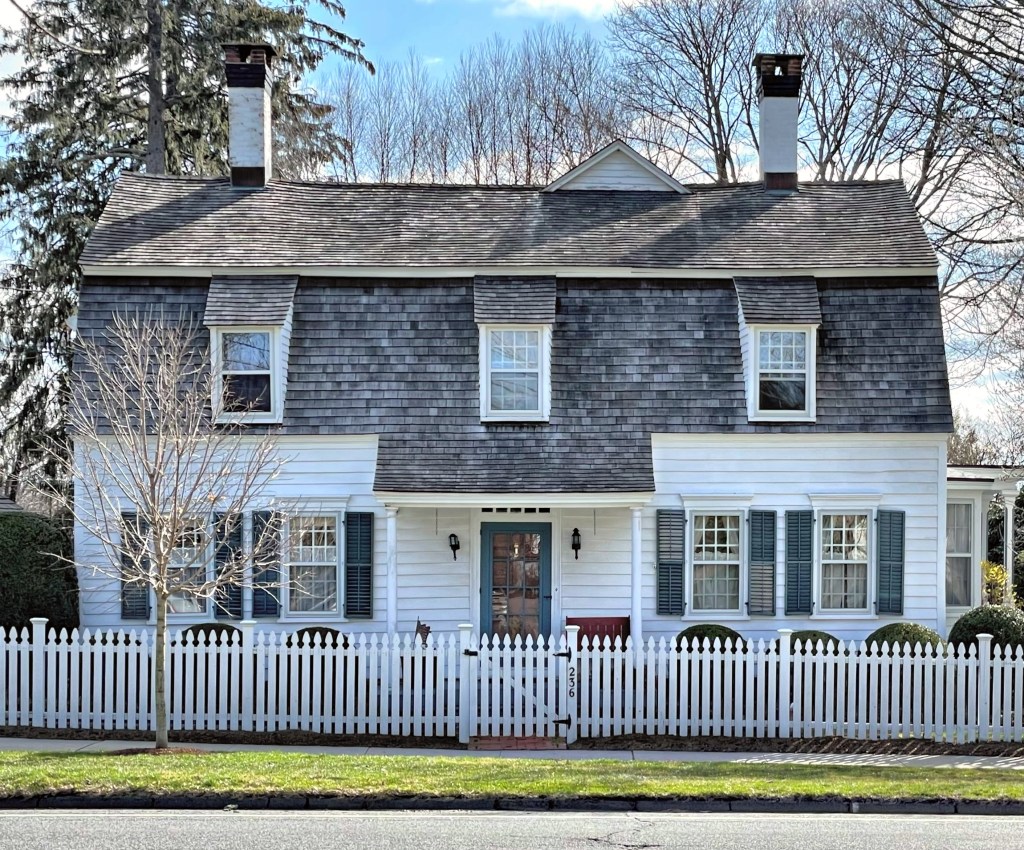
This old Georgian house was built in 1713 on the Proprietors Lot 5, on Ridgefield’s Main Street. Constructed for the first minister of Ridgefield, the home was originally occupied by 25-year-old Reverend Thomas Hawley (1689-1738) not long after his graduation from Harvard in 1709. In addition to being minister of the newly formed Congregational Church, Hawley (also spelled Hauley) also served as school teacher and town clerk. The house employs Dutch Colonial detailing from the gambrel roof to the extended portico over the front door, common in the Dutch colonies in the Hudson River Valley in New York.

The Fountain Inn // 1740

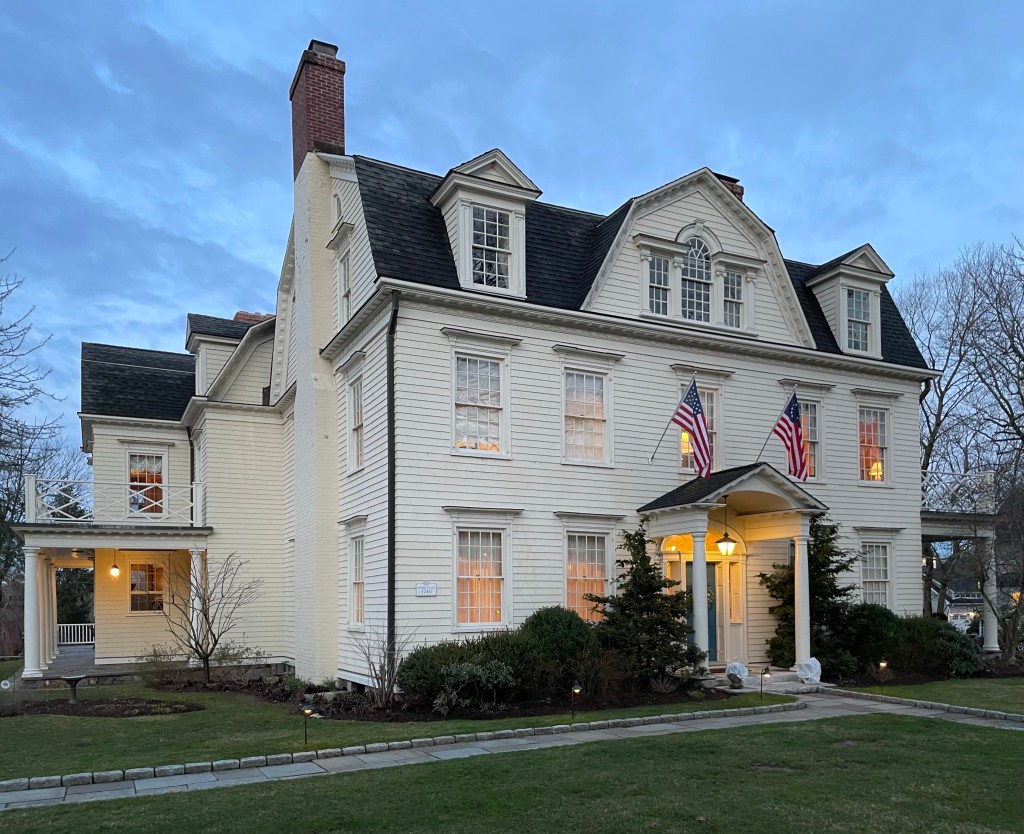
Located on Main Street in idyllic Ridgefield, in Fairfield County, Connecticut, The Fountain Inn provides one of the most welcoming and historical bed and breakfast experiences in New England! The Fountain Inn was built in 1740 as a “city home in the country” for David Hoyt, who showed off his wealth and stature in the young town by having such a high-style home built at the time. Decades later during the Revolutionary War, David Hoyt’s house became a part of the Battle of Ridgefield. After defeating the Colonial militia elsewhere on Main Street, British Gen. William Tryon‘s troops turned their attention to nearby Keeler Tavern, the local militia’s headquarters, which just happened to be neighbors with the mansion owned by David Hoyt, a known Loyalist. General Tryon’s troops practiced their artillery-firing skills on the building pummeling it with cannonballs, sending a message to the head of the local militia. David Hoyt formally demanded a cease-fire, as he was concerned about wayward cannonballs damaging his home. By 1790, with Ridgefield’s British influence diminishing by the day, David Hoyt finally left his Connecticut home and sailed back to England. The home was expanded and modernized over the next two hundred years until the present owners purchased the property and underwent a massive restoration of the Colonial house inside and out as their family residence. In the past year, the inn opened as the Fountain Inn so-named after a Cass Gilbert-designed fountain across the street.

Dunnell House // 1884

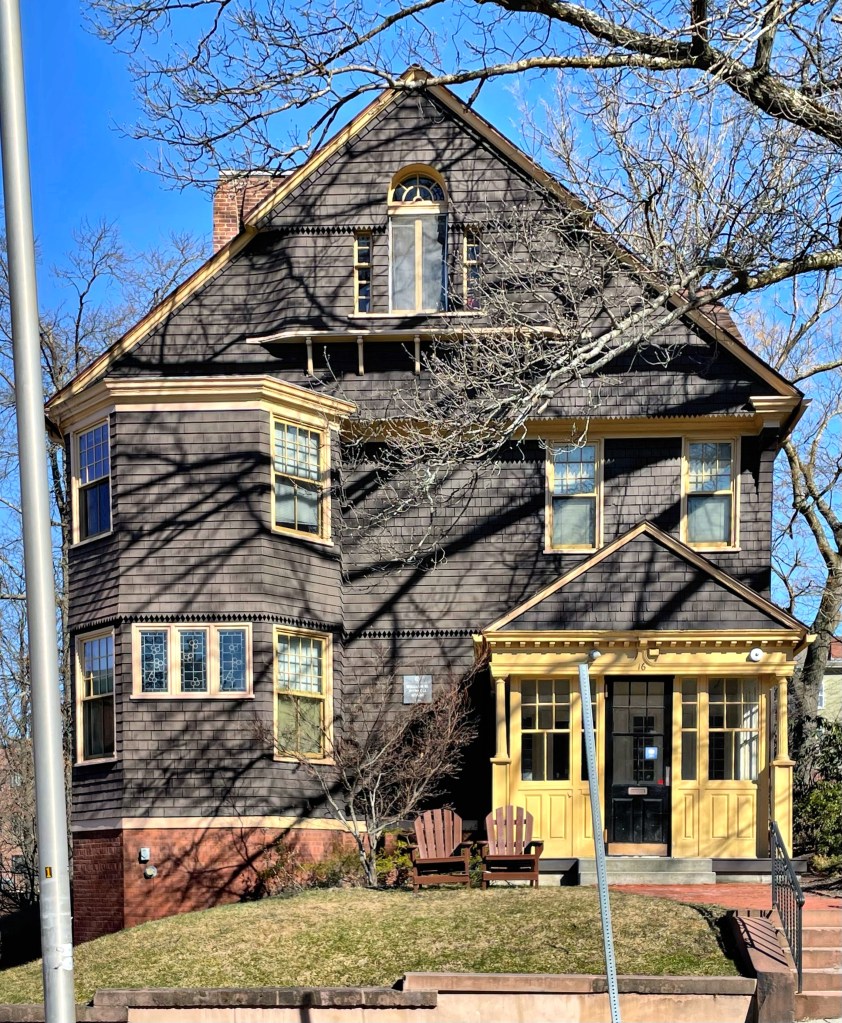
William Wanton Dunnell (1850-1933) was born in Pawtucket, Rhode Island and was educated in Rhode Island schools. He eventually helped run his family’s cotton goods business, which grew over the next decades. The Dunnell Finishing Works factory was a success in Apponaug (Warwick) Rhode Island, and he had over 500 employees turning out over 1,000,000 yards of printed cloth a week! Before all this, William had this amazing house built in College Hill, Providence for his family. The local architectural firm of Stone, Carpenter & Willson was hired and blended Shingle, Queen Anne, and Colonial Revival styles elegantly under one roof. I am particularly fond of the sawtooth shingles, Palladian motif windows in the gable, and undulating facade. The house is owned today by RISD.

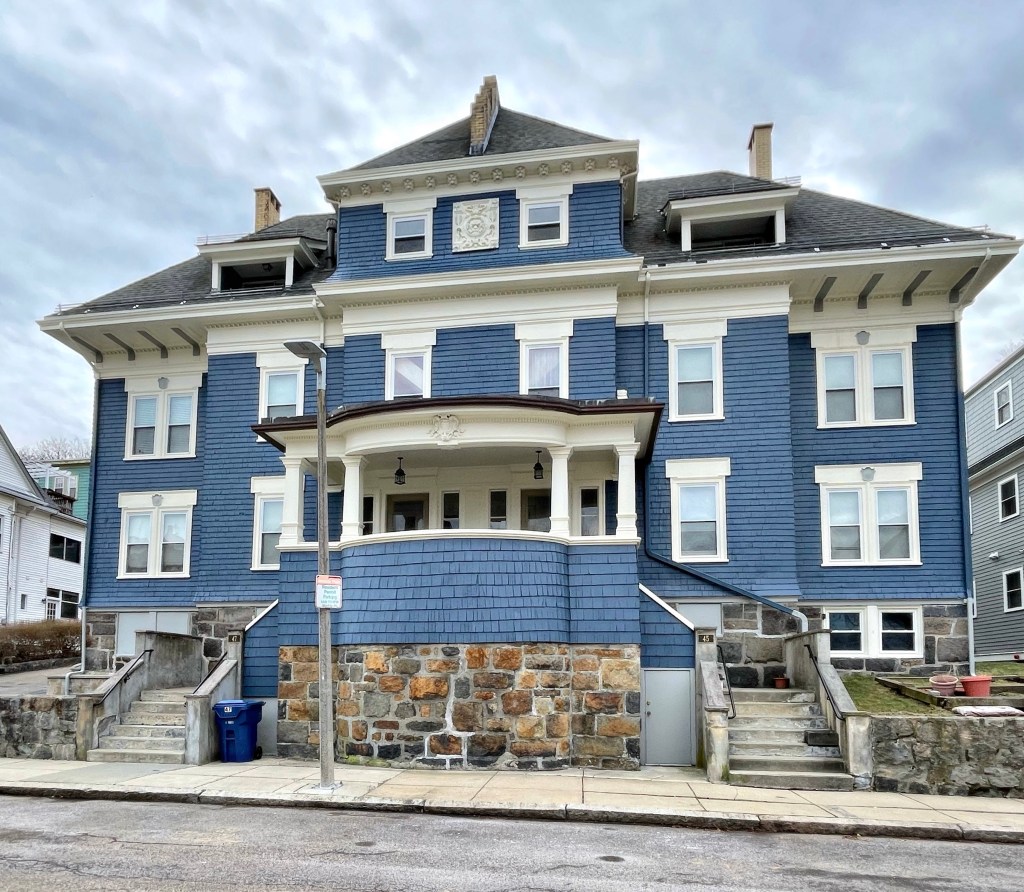
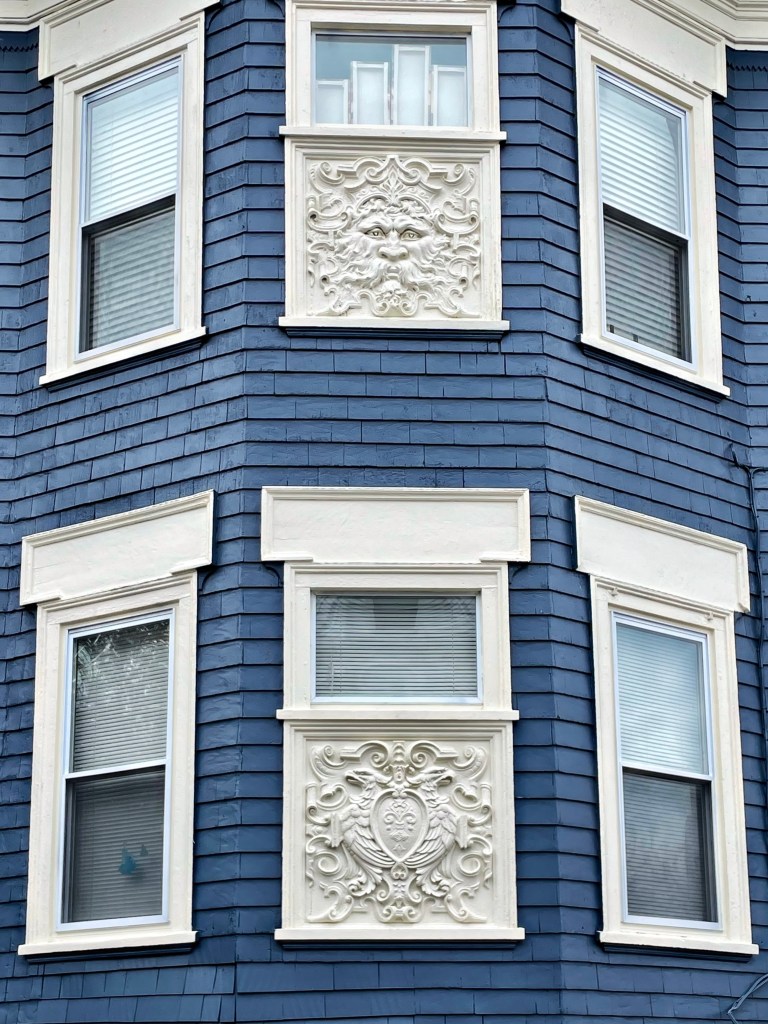
Emmel Building // 1896

In 1896, architectural sculptor Charles Emmel purchased land in the rapidly developing Forest Hills section of Jamaica Plain, Boston. He hired local architect George Zimmer, to design a massive double-house which would serve as an income-producing investment, and could also be a sort of advertisement for his sculpture work. The result is this massive Colonial Revival style property, perched atop a puddingstone foundation. Architectural ornament has been lovingly preserved, a testament to the owners of the building today and the amazing work of the original owner, Mr. Emmel. I found myself staring at the building for a while when walking by, looking at all the hidden detail and architectural ornament which adds so much to the building.

Stetson House // 1897

Waban is full of eclectic homes from the end of the 19th century, and this example is probably my favorite! The Herbert and Georgia Stetson House was built in 1897 and demonstrates how elements of the Colonial Revival style were incorporated into a less rigid Queen Anne style plan. Herbert was a lumber dealer, and likely used his own product in his home. The mixture of ornament includes Colonial
Revival style pedimented dormers, a Palladian motif window, oval windows, and a modillion cornice in combination with bays, oriels, a dramatically overshot gable roof, and a swept dormer reminiscent of the Queen Anne style. Together, the composition is perfection, and really makes you stop and analyze all the details!

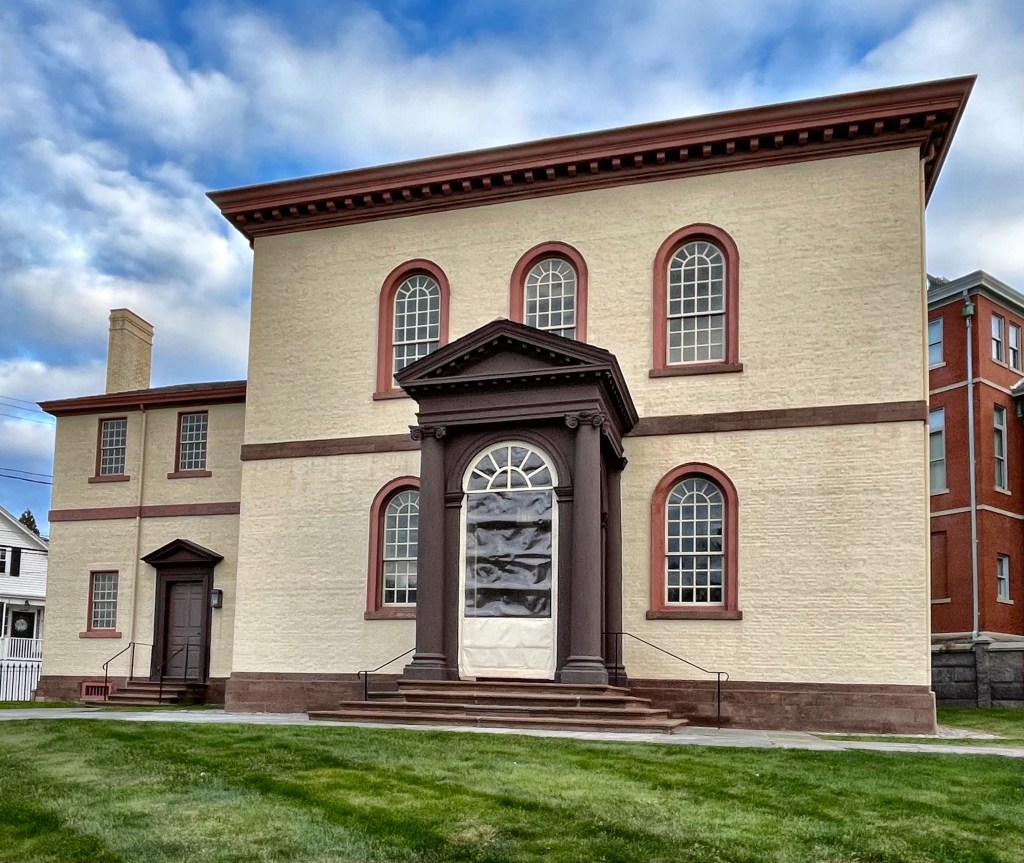
Touro Synagogue // 1763

While Newport is arguably best-known for the Newport mansions from the Gilded Age, there are soooo many amazing buildings from the Colonial era, including some of the most significant and historic in the United States. Touro Synagogue in Newport is the oldest synagogue building still standing in the United States, the only surviving synagogue building in the U.S. dating to the colonial era, and the oldest surviving Jewish synagogue building in North America (for reference, second-oldest extant synagogue in North America was built in 1833, seventy years later)! Its history begins in the 17th century when the small but growing colony of Newport received its first Jewish residents possibly as early as 1658. The earliest known Jewish settlers arrived from Barbados, where they participated in the triangular trade along with Dutch and English settlements. By 1758, the Jewish population had grown sufficiently that there was a need for a house of worship. The Congregation now known as Congregation Jeshuat Israel (Salvation of Israel) engaged Newport resident Peter Harrison to design the synagogue. Harrison, a British American merchant and sea captain, who was self-tutored in architecture, studying mostly from books and drawings. By the time he designed Touro Synagogue, he had already completed iconic buildings including Newport’s Redwood Library and King’s Chapel in Boston. Construction began on the “Jews Synagogue” in 1759, which was completed years later in 1763. The building is one of the most significant buildings in America, and is open to tours where you can see the immaculately restored interiors.

Jesup Memorial Library // 1910

Bar Harbor’s first library is believed to have been organized in 1875 by a group of summer residents. This collection of 176 volumes was assembled for the use of Mt. Desert’s permanent residents and made available to them for two nights per week. A small frame library was built in 1877. In 1883, the growing collection was turned into a subscription library with borrowing privileges charged at the rate of $1.00 per family, but the fee was dropped three years later. By the late 19th century, the village’s population boomed, especially in the summer months when wealthy families descended upon the sleepy town every year to take in the cooler climate and sweeping scenery of Mount Desert Island. Acknowledging the need for a more suitable library, Maria Van Antwerp DeWitt Jesup, the widow of Morris K. Jesup (1830-1908), a New York financier and long-time summer resident of Bar Harbor, gifted the town funds to erect a new building as a memorial to her late husband. The Colonial Revival style library was designed by the New York firm of Delano & Aldrich, and exhibits a beautiful centered entrance recessed in a limestone arch.