Derby Summer House // 1793

The Derby Summer House sits on the Glen Magna Farms property in Danvers, Massachusetts, and is a rare and excellent example of a formal 18th century garden house in the Federal Style. The structure was built in 1793-94 by Samuel Mclntire, the noted craftsman-carpenter of Salem, on the country farm of Elias Hasket Derby in South Danvers. The Derby Farm was sold off by the family, but in 1901, Mrs. Ellen Peabody Endicott, a descendant of the original owners, bought the Derby Summer House and transported it to Glen Magna Farm, their own summer residence. A shopping center now occupies the original location of the Derby Farm. Inside the structure on the first floor, there are two small rooms which are divided by a central hall that extends through the structure. The steps and vestibule at this level are surfaced in white marble. The second floor, where tea was served, was decorated in an Oriental manner. A wood parquet floor, dating from the first decade of this century is still in place. The structure with its carved figures has been studied and replicated by architects and historians for decades, but nothing beats the original.
Glen Magna Farms // c.1790

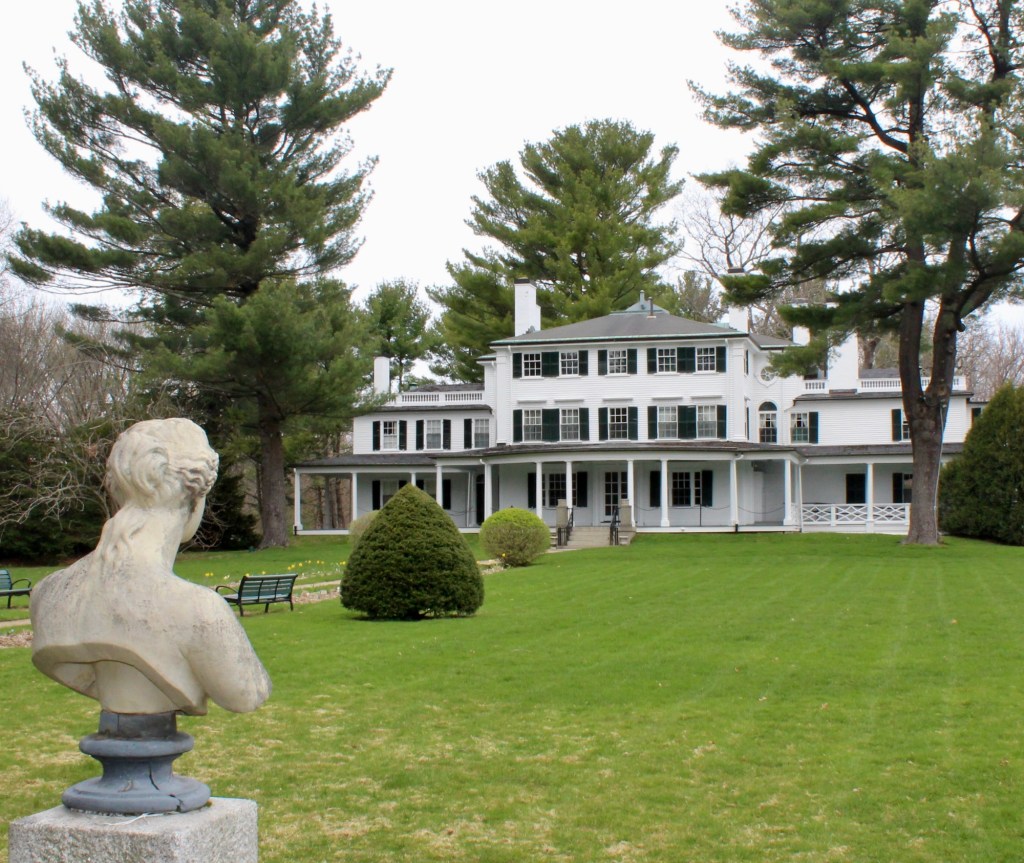
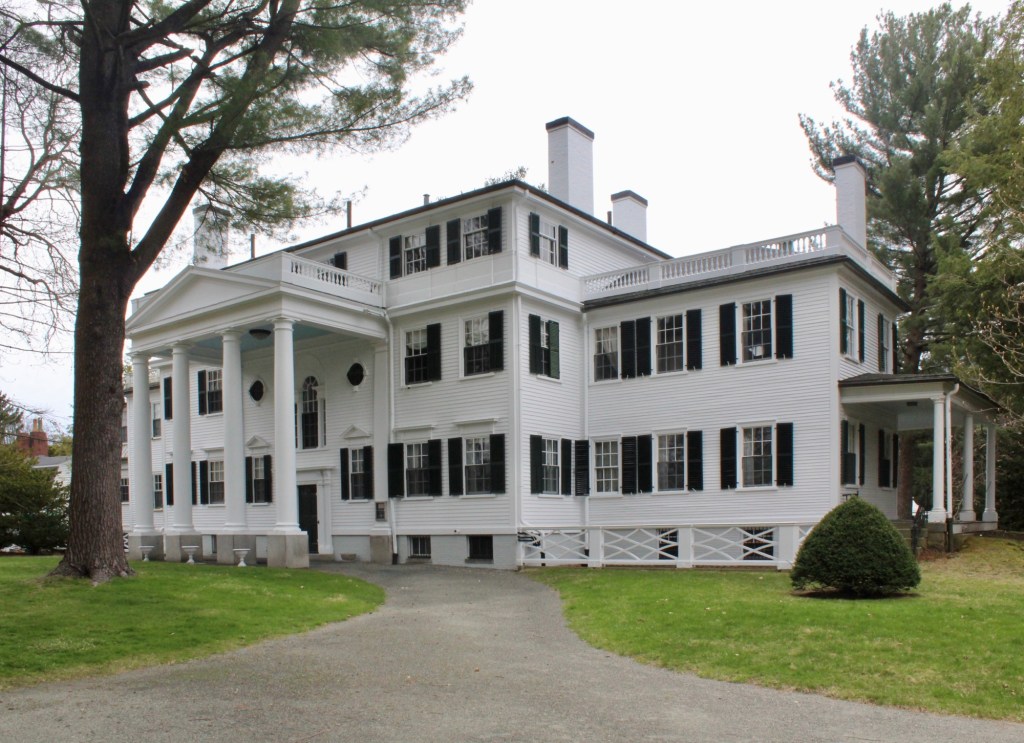
Glen Magna Farms is a historic estate located in Danvers, Massachusetts, and it is one of the lesser-known historic properties of this stature. During the War of 1812, Joseph Peabody, the wealthiest Salem shipping merchant of his day, bought a 20-acre Danvers farm with a dwelling house. The c.1790 house was likely updated at this time in a higher example of the Federal style, and used as a summer residence the family would escape to during the warmer months. Peabody purchased additional property and Glen Magna grew to over 130-acres. William Crowninshield Endicott, who served as Secretary of War during the Grover Cleveland administration, married Ellen Peabody, granddaughter of Joseph Peabody in 1859. The couple would inherit Glen Magna and later hire the firm of Little, Browne, and Moore in the 1890s to renovate the mansion and update the gardens. Ellen Peabody Endicott would also have the Derby Summer House added to the grounds by 1901. In 1963, the Danvers Historical Society purchased the house and eleven acres of surrounding gardens which they painstakingly restored to their early 20th century condition. Glen Magna can now be rented out for weddings and other events!

Fowler House // 1809

Photo courtesy of Wikimedia commons.

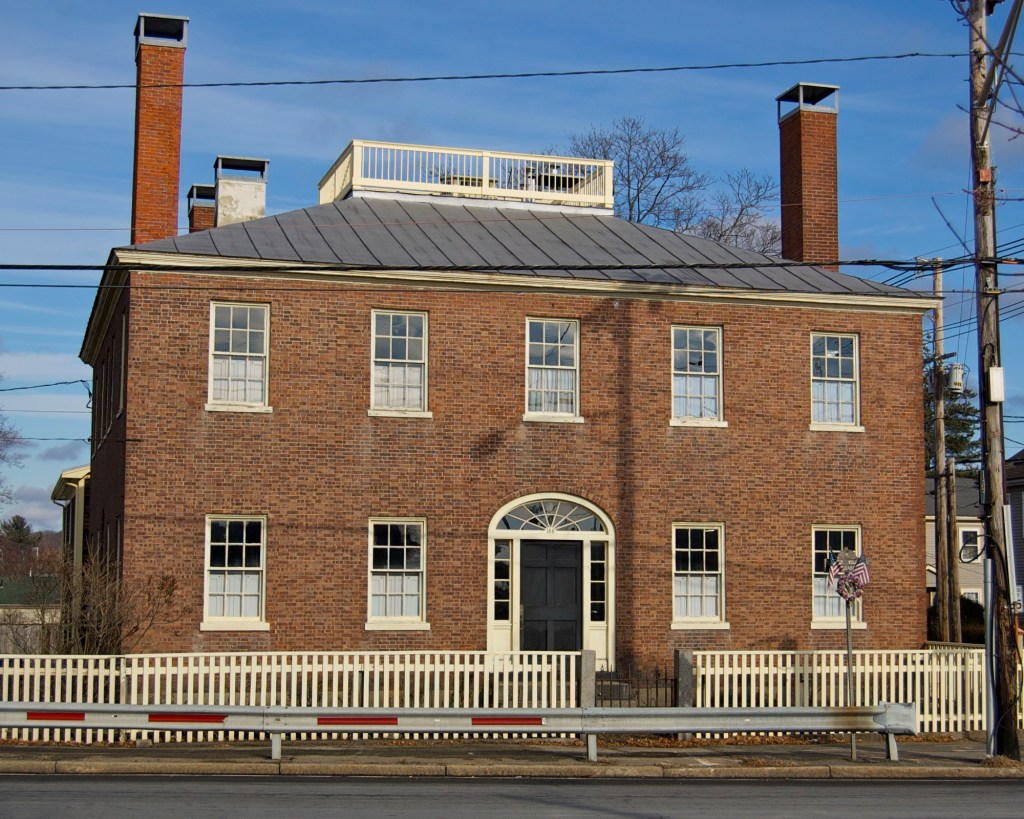
The Fowler House is located in the Danversport section of Danvers, Massachusetts, and is one of the town’s few brick Federal period homes. The residence was built in 1809 by builders Levi Preston and Stephen Whipple for Samuel Fowler Jr., an early Danvers industrialist and landowner in this part of town. The property was passed down through generations of the Fowler family and ultimately acquired by the Society for the Preservation of New England Antiquities (SPNEA, now known as Historic New England) as their second property acquisition in 1912. Uniquely, Historic New England granted life occupancy of the house to the two unwed Fowler sisters, who had resided here, even as it was converted into a museum. When bought by SPNEA, some members were concerned that the Fowler house was not grand or architecturally interesting enough to warrant its acquisition, Samuel Appleton, the founder, stated, “As might be expected, the Fowler home reflects the simple tastes of its owner. As seen from the square the house is as severely simple as it could be. It depends for its effect on its very simplicity and admirable proportions. The principal features of the house may be said to be simplicity, good taste, solid construction, splendid preservation, and homogeneity.” The property was eventually sold by Historic New England to a private owner, but a preservation easement by the Society ensures its preservation for the future. The Fowler House was recently listed for sale, and the property retains many historical features, including original ca. 1810 wallpaper in the main two-story entry hall and a large hearth in the main kitchen, its original floors, plaster, woodwork and other features.

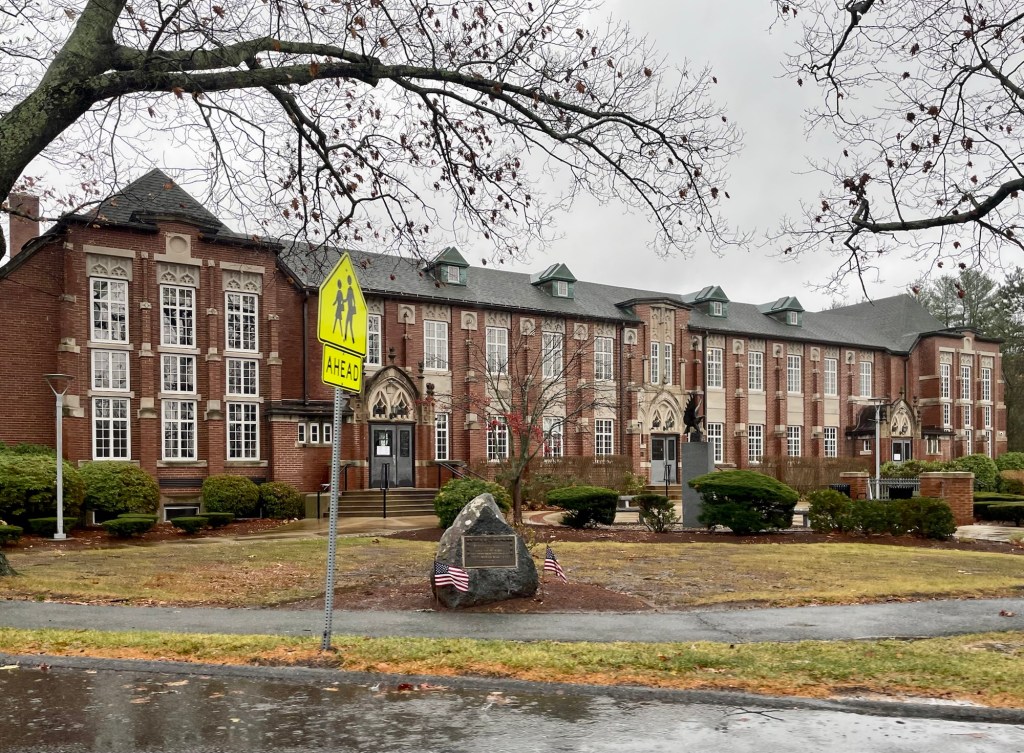
St. John’s Memorial Dining Hall // 1925

Built in 1925 as the cafeteria for St. John’s Prep School in Danvers, Massachusetts, this handsome brick building is sited across Summer Street from Porphyry and Xavier halls, both built decades earlier. The structure was designed by architect, Matthew Sullivan, a member of the notable firm, Maginnis, Walsh & Sullivan, who specialized in ecclesiastical design in the Boston area. The firm disbanded in 1907 with Sullivan creating his own practice, where he won the commission for this building years later. The cafeteria is Neo-Gothic in style with Gothic tracery, lancet arches, buttresses and pinnacles at the entrances. This is a really underrated and stunning structure. I am glad to see it so well-preserved 100 years later!

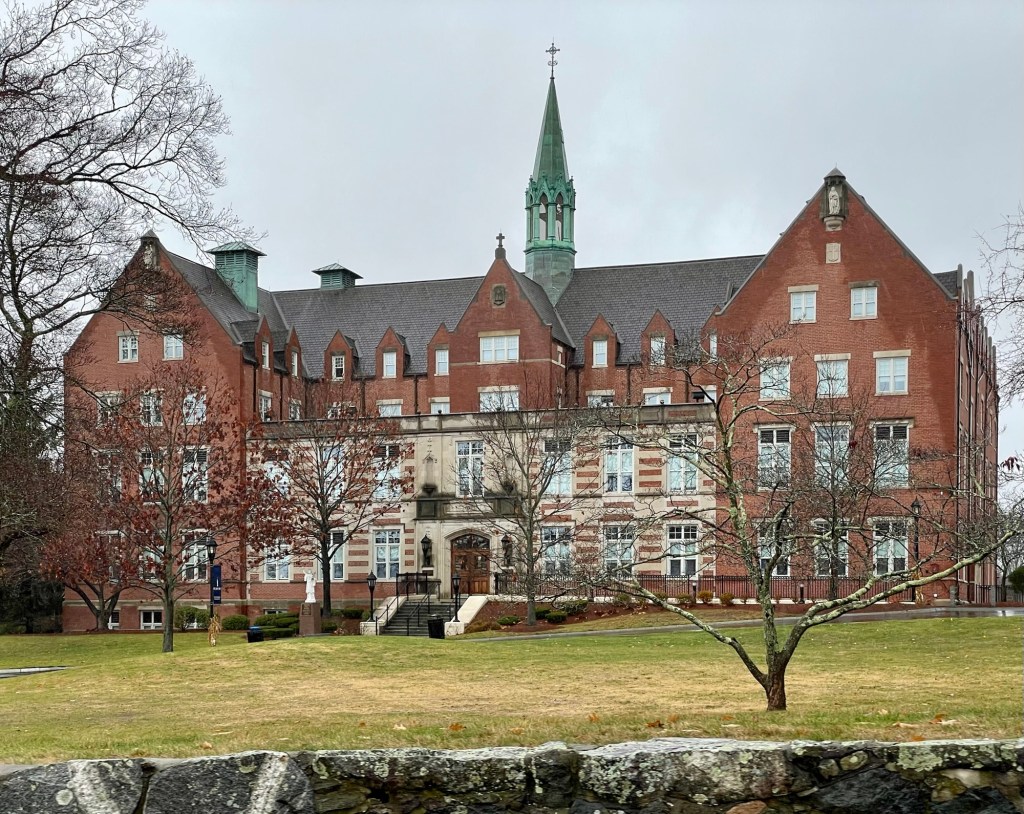
Xavier Hall // 1911

Xavier Hall was built between 1910-11 on the campus of St. John’s Prep School in Danvers, Massachusetts. The building was constructed by the Xaverian Brothers as classrooms as the first purpose-built structure in what would become a large campus. The Neo-Gothic Revival style building was sited adjacent to Porphyry Hall, an 1880 estate house that the new school purchased in 1891, which was later expanded by the addition of a rear chapel. Edward T. P. Graham, an architect best known for his design of Roman Catholic churches and associated buildings, was hired to design the stately structure built of brick and limestone.

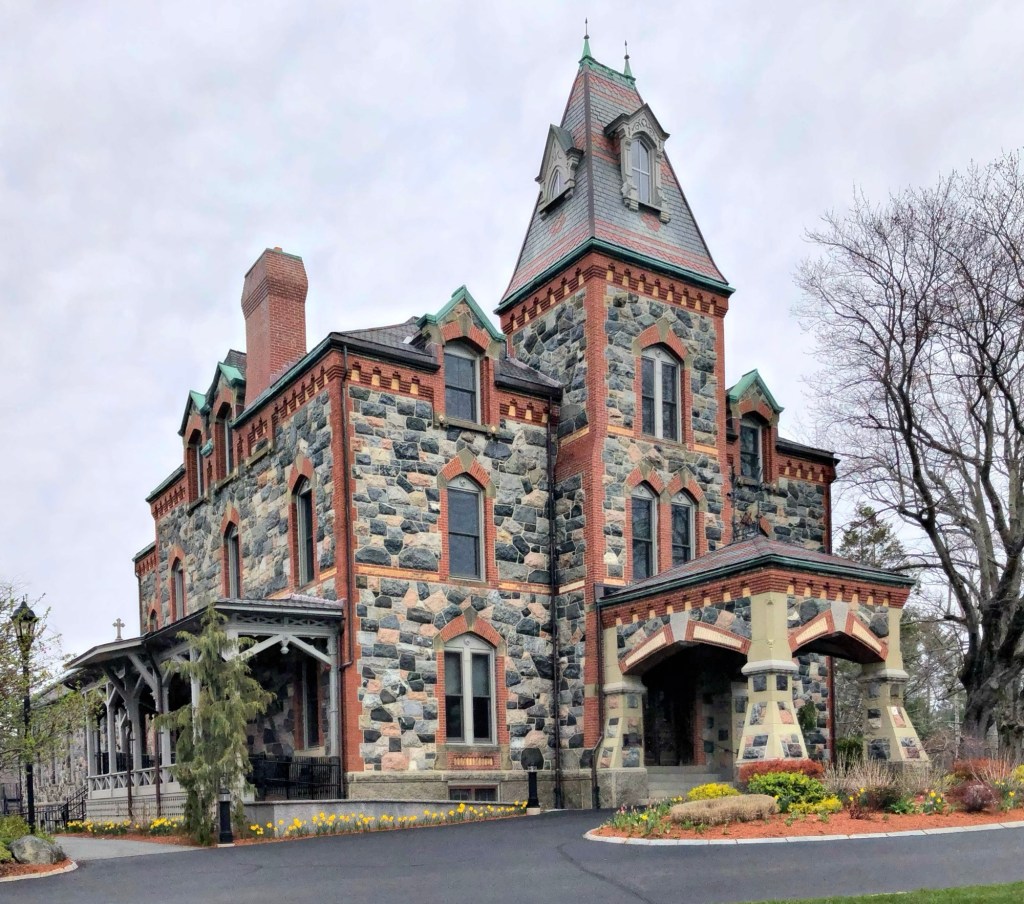
Porphyry Hall // 1880

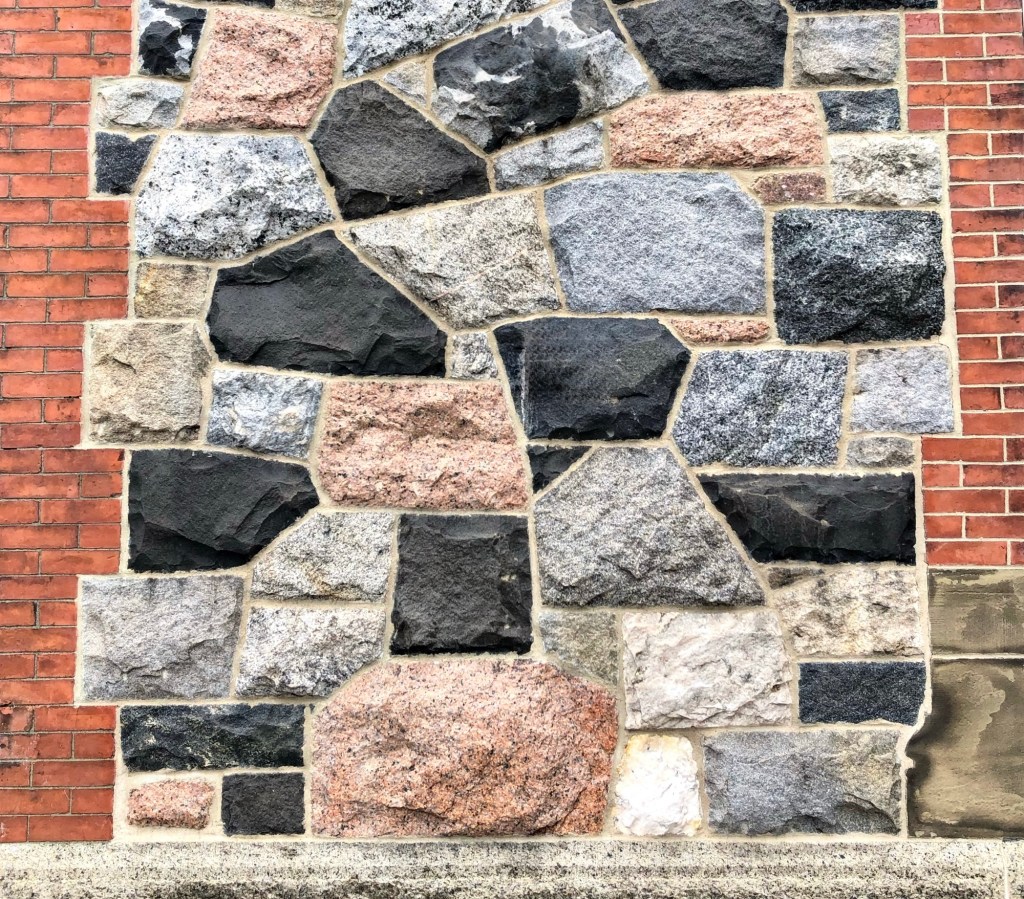
The Jacob E. Spring Mansion, also known as Porphyry Hall, is a high-style estate house located in Danvers, Massachusetts, that is one of the finest and most unique in the state! The house was built in 1880 for Jacob Evans Spring (1825-1905), who was born in Brownfield, Maine, and at the age of twenty, he went to Argentina and amassed a fortune in the wool business in Buenos Aires between 1845 and 1865, when he returned to the United States. Jacob and his wife, Sara Duffy, would purchase a large farm in Danvers and began planning for their family country home. Their residence was built on a high hill over two years and constructed of over 40 types of stones of irregular size and color with door and window sills of Nova Scotia freestone with arches of the doors and windows and corners of brick. The mansion was designed by architect George M. Harding of Boston, and built by several skilled masons over many months. Mr. Spring named his estate, “Porphyry Hall” with Porphyry meaning an igneous rock with large crystals in a fine-grained matrix; suitable for the walls of their mansion. The Spring’s lived lavishly at this home and spent nearly all of their fortune, selling the property after just ten years to the Xaverian Brothers, who opened it as Saint John’s Normal College. In 1907, the compound was re-organized as a Catholic boys prep school. In 1915, a chapel was added to the rear of the building, constructed from gray fieldstone to blend with the main house. Have you ever seen a building like this?

Israel Putnam House // c.1648

The General Israel Putnam House in Danvers, Massachusetts, was built circa 1648 by Lieutenant Thomas Putnam on farmland that then consisted of 100 acres. In 1692, his youngest son, Joseph Putnam, lived here, inheriting the property over his half-brother, Thomas Putnam, Jr. (1652-1699), causing friction within the family. During the infamous witch trials and hysteria in Salem Village, Joseph Putnam was one of two people who took notes during the examinations of the first three to be accused of witchcraft in 1692 – Sarah Good, Sarah Osborne, and Tituba. From that point forward, he was one of the most outspoken opponents of the proceedings, which put him in direct conflict with most of the Putnam family, especially that of his half-brother Thomas. Fearing accusations against him by his half-brother, Joseph was said to have kept horses saddled at all times, ready to escape at a moment’s notice. He was never accused, though Thomas Putnam was responsible for the accusations of 43 people, and his daughter was responsible for 62. In 1718, Israel Putnam, the son of Joseph Putnam, and later Commander of the colonial troops at the Battle of Bunker Hill, was born in this house. It is the only extant structure with direct ties to Commander Putnam. During the Battle of Bunker Hill, Putnam is thought to have ordered William Prescott to tell his troops, “Don’t fire until you see the whites of their eyes.” This command has since become one of the American Revolution’s notable quotations. It was given to make the best use of the low ammunition stocks that the troops had. The Putnam House remained in the family into the 20th century, and due to highway and commercial expansion, the property now sits in the middle of a cloverleaf intersection of two highways. The house was given by the Putnam family to the Danvers Historical Society in 1991, but as of 2020, the Putnam family once again owns the property. The house is not holding up well and I could not locate plans for restoration or preservation of it online. This house deserves to be preserved.

Holten House // c.1670

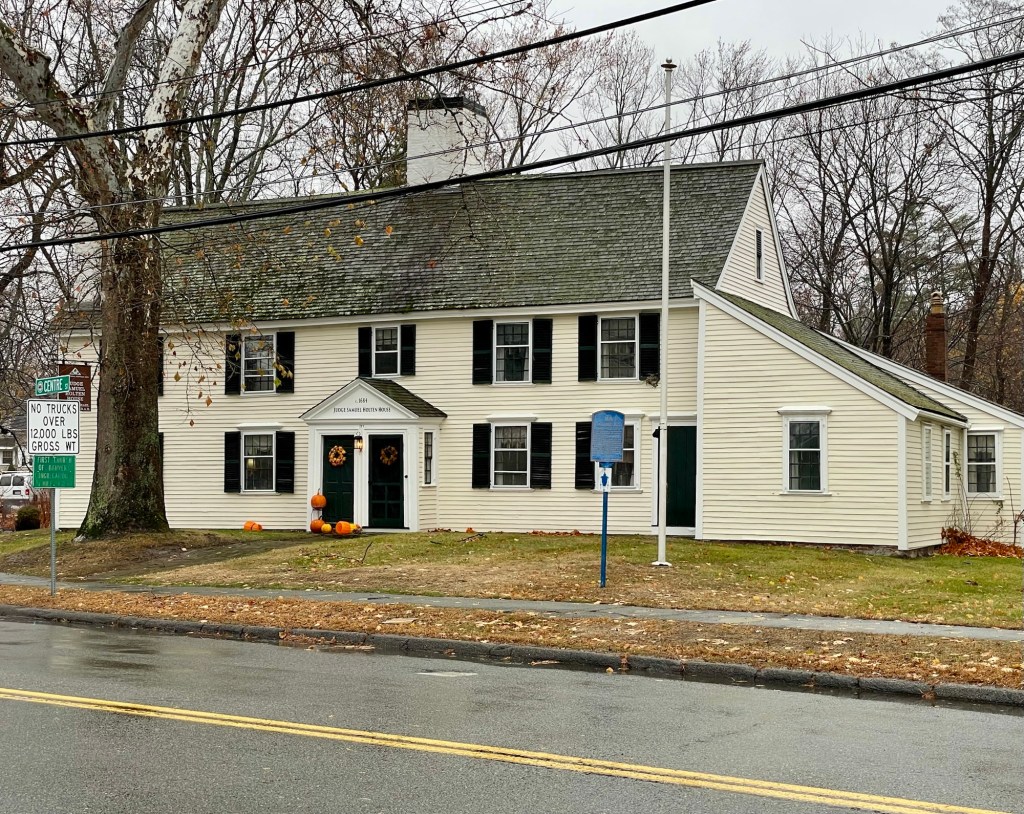
Built circa 1670 and today known as the Holten House, this large, First Period home can be found in Salem Village, present day Danvers, Massachusetts. While the house has been significantly expanded over the years, the original structure is at the eastern (right) end of the house that stands today and grew as families and living styles grew. The residence was first built for Benjamin Holten (Houlton) and was later occupied by Sarah Holten, who in 1692 gave testimony against Rebecca Nurse, who lived on a farm nearby, which led to her death in the Salem Witch Trials. During the American Revolutionary War, it was the home of Judge Samuel Holten, a Founding Father of the United States who served in the Continental Congress. The house was acquired by the Daughters of the American Revolution in 1921 and was restored. It is open to tours by appointment.

Joshua Silvester House // 1857

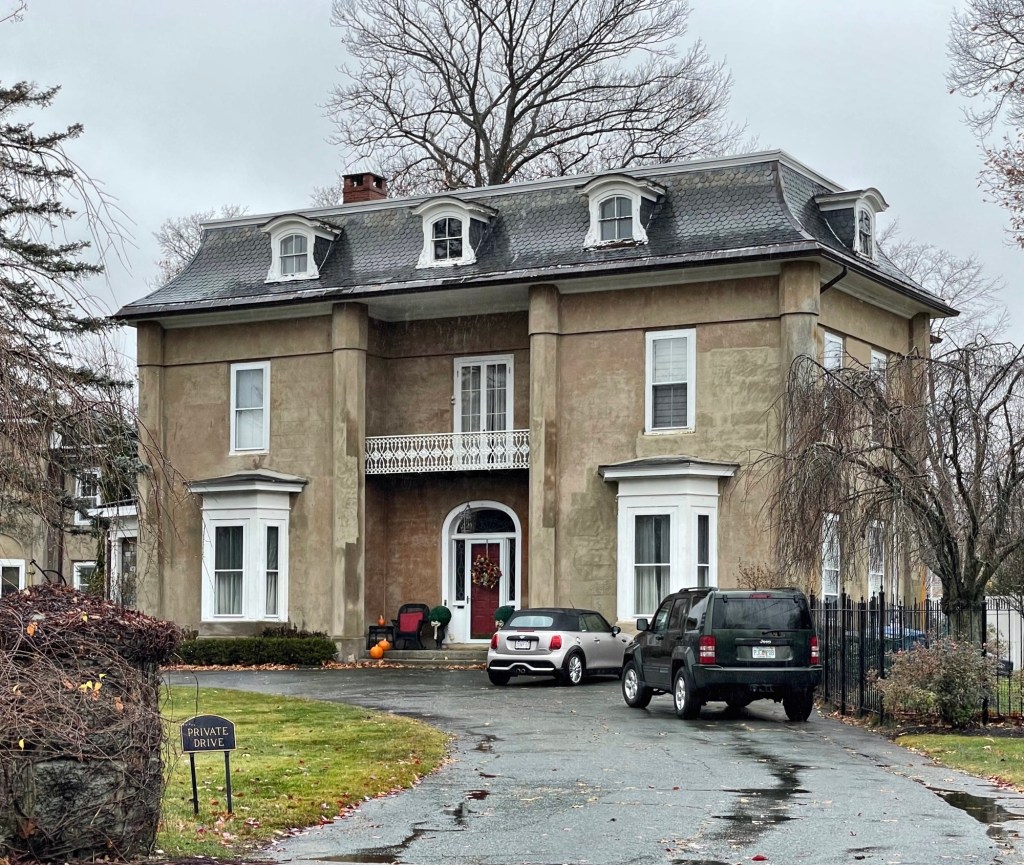
This large house sits on Peabody Avenue in Danvers, Massachusetts, and is thought to be the oldest house built of cement in the United States! Joshua Sylvester Silvester (1803-1888), the house’s original owner, was born in Wiscasset, Maine, and began working in the shoemaking business, expanding his products in England, taking many business trips there. While in England, he is said to have particularly admired Charles Dickens’s estate, Gad’s Hill, and modeled his Danvers home after it. Joshua Silvester not only designed this house, but directly supervised its construction which is of hand-poured cement/stucco by two masons imported to town to work on the house. The fifteen-room residence with octagon-shaped barn was complete by 1858. In 1880, the property was purchased by Isaac B. Howe of Clinton, Iowa. Howe was a civil engineer who had helped to lay out the Transcontinental Railroad and had been superintendent of the Iowa division of the Chicago and Northwestern Railroad. Howe died within a year of moving to Danvers,
but his family continued to live in the house for many years.


Peabody Institute Library of Danvers // 1892

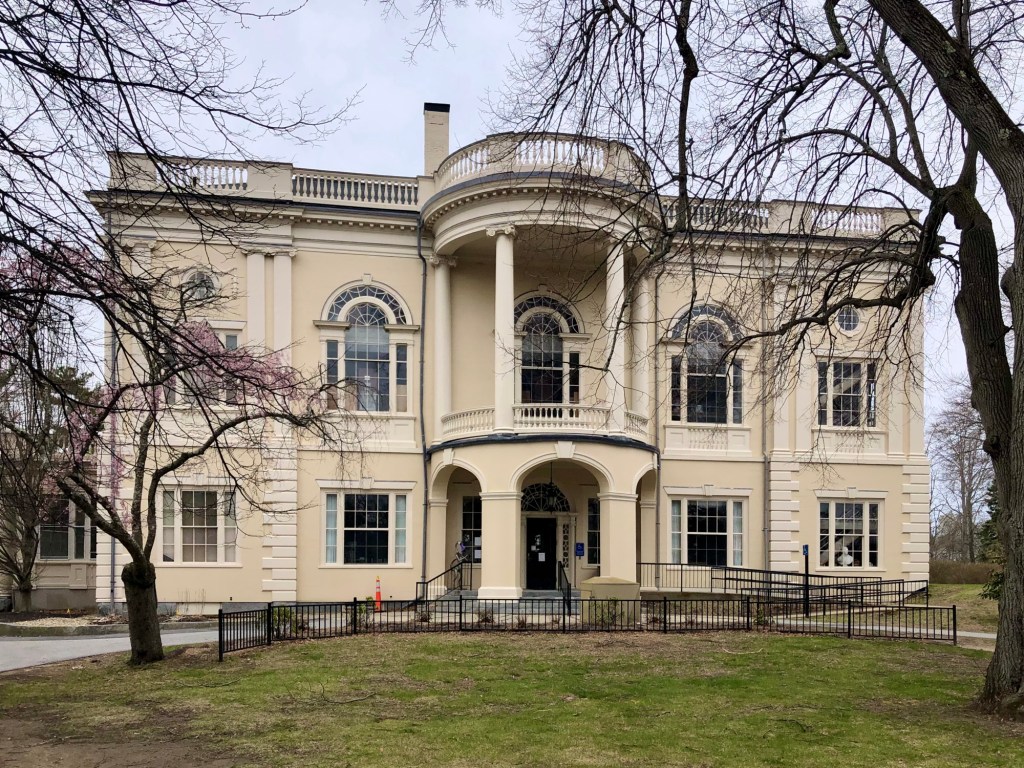
In 1856, George Peabody, an American banker and philanthropist, donated funds for a library for Danvers, Massachusetts. The original library was housed in the Town Hall until land was acquired on land that is today known as Peabody Park. In 1866, Peabody deeded the town additional funds for a purpose-built library building, similar to that of Peabody, Massachusetts (which separated from Danvers in 1855). A Gothic style library was built on this site from plans by architect Gridley J. F. Bryant with the purpose “for the promotion of knowledge and morality in the Town of Danvers.” On July 2, 1890, a massive fire destroyed the Danvers library, but many of the collections and volumes were saved by townspeople. Through insurance funds and additional money by trustees, it was decided to rebuild the library on the same site, retaining the architectural firm of Little & Browne, (whose chief draftsman, Lester S. Couch, was a Danvers resident) to design the new building. The present Georgian/Classical Revival structure was completed in 1892 and is one of the finest library buildings in New England.