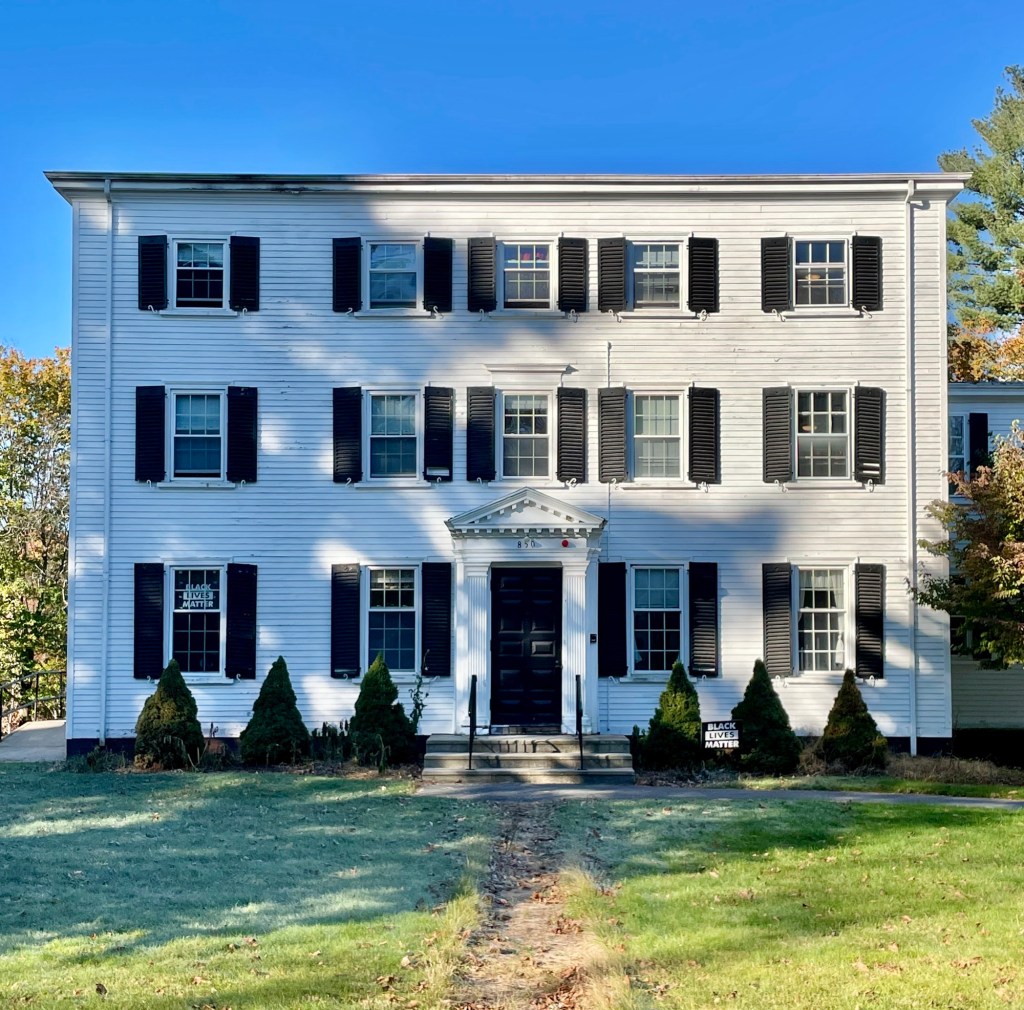
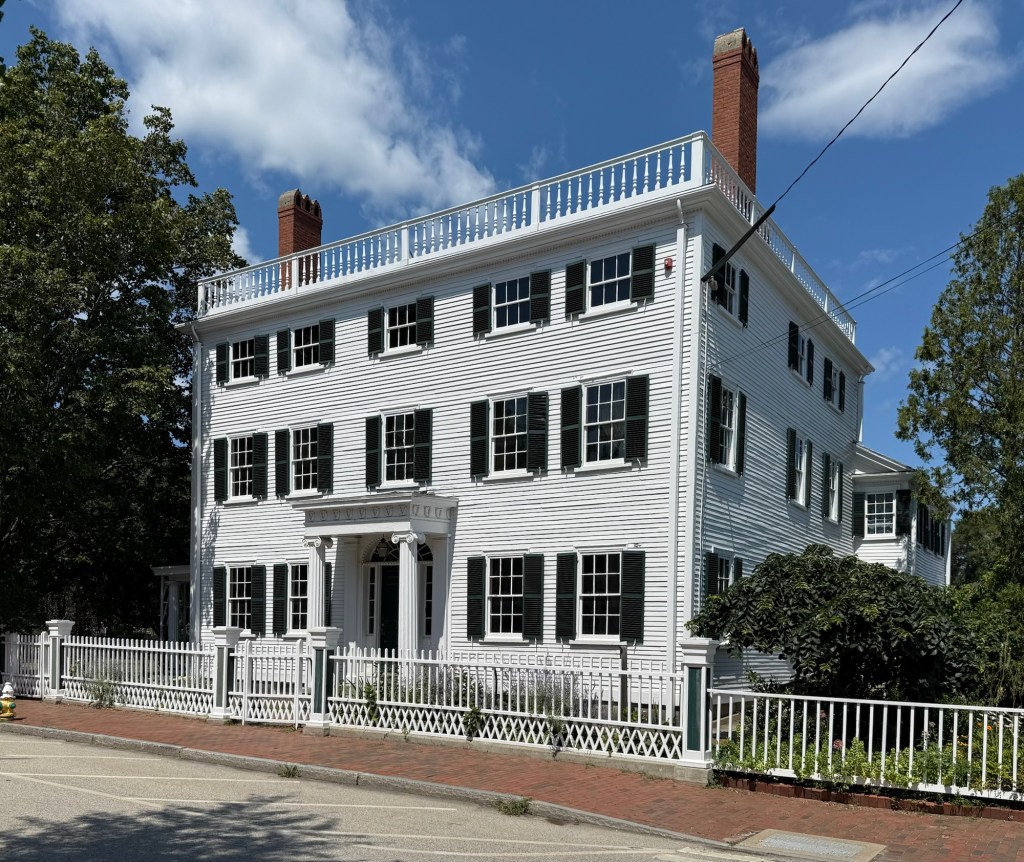
Murray A. Potter (1871-1915) and his wife, Bessie Lincoln Potter lived in Cambridge, Massachusetts, where Murray worked as a Professor of Romance Languages at Harvard College. The couple spent summers in Lancaster, Massachusetts, where they would purchase a house in 1909 that was built just a decade or so earlier. The couple were said to be big fans of history and decided to make their house resemble the 1782 Pierce-Nichols House in Salem, having the brown shingle Victorian house “modernized” in the current three-story near-symmetrical form.
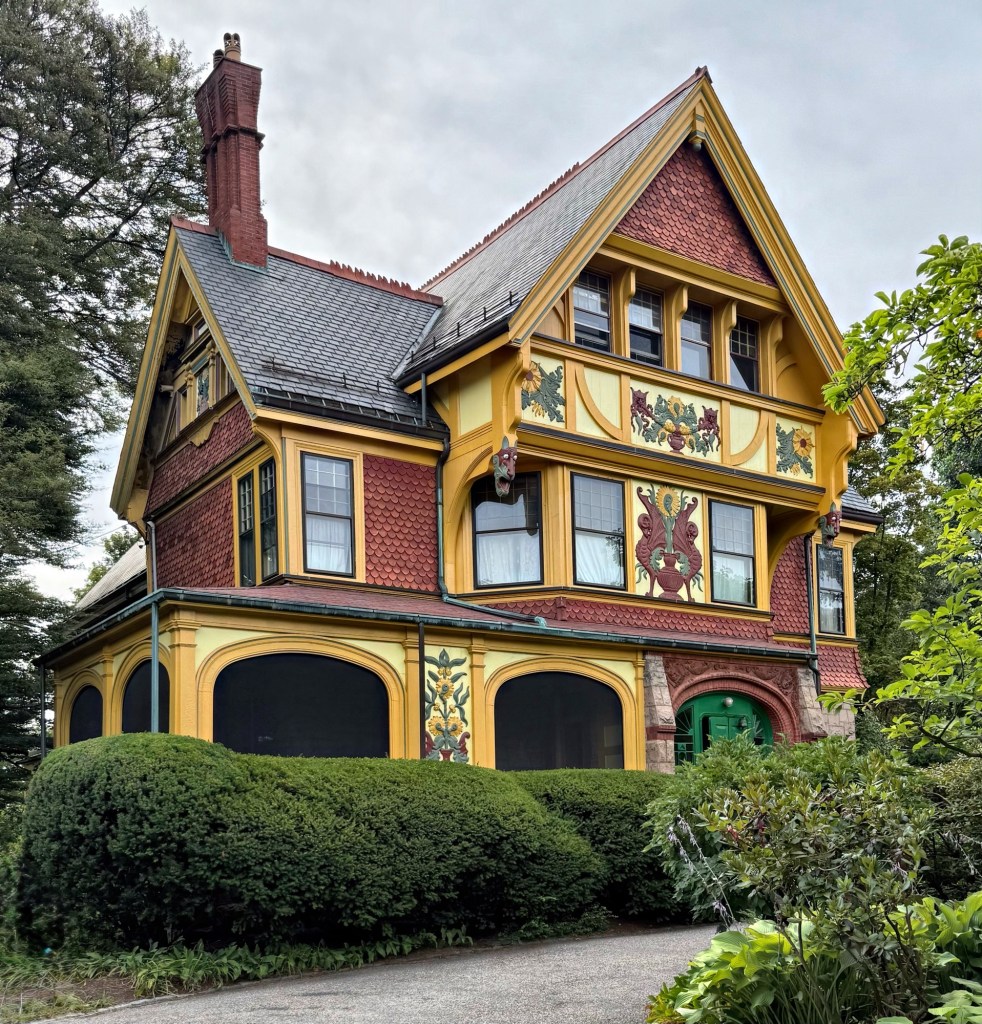
The Edward Stanwood House at 76 High Street in Brookline, Massachusetts, is one of the finest and exuberant examples of the English Victorian Queen Anne style, notable for its varied wall textures and materials, unique form, and applied ornament. The house was built in 1879-1880 for Edward Stanwood, who was for many years the editor of the Boston Daily Advertiser, and a children’s magazine, The Youth’s Companion. The ornate residence was designed by Clarence Sumner Luce, with interiors by Thomas Dewing. The Stanwood House features a well-preserved exterior and period-appropriate paint scheme, highlighting the bas-relief sunflower ornament and gargoyles. Of particular note is the use of hung tile siding, overlaid to give the appearance of fish scales and the roof cresting.
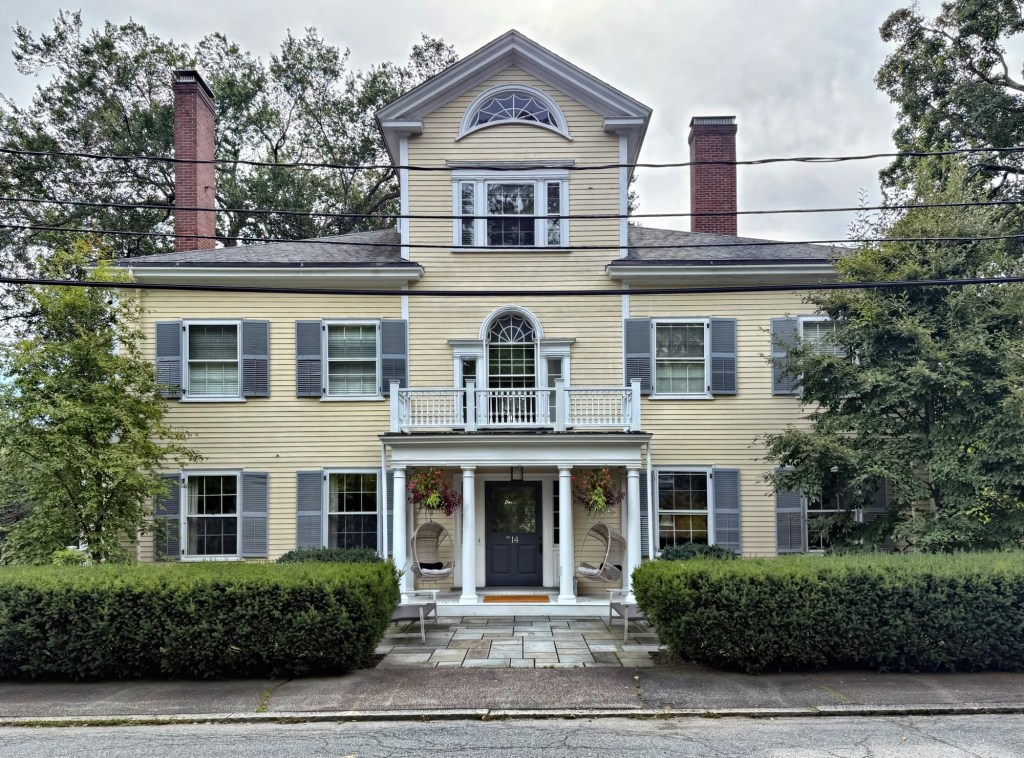
The Thomas Aspinwall House at 14 Hawthorn Road in Brookline was constructed in 1896 by architects, Ball & Dabney. The stately home was built for Thomas Aspinwall as a near copy of his great-grandfather’s 1803 Federal style house on Aspinwall Hill, the William Aspinwall House. Both residences feature a four-tier central bay with Palladian and lunette windows with a columned portico at the entrance. His grandfather, Dr. William Aspinwall graduated from Harvard in 1764 and studied medicine in Connecticut and in Philadelphia before beginning his medical practice in his hometown. He was one of the Brookline men who marched west and fought British troops as they retreated from Lexington and Concord in April 1775. He was put in charge of a hospital in Jamaica Plain during the Revolutionary War and later ran a hospital for smallpox victims in Brookline. His 1803 Federal style home was demolished in 1900 as the Aspinwall Hill area of Brookline was developed, but luckily, a replica remains on the other side of town, here on Hawthorn Road!
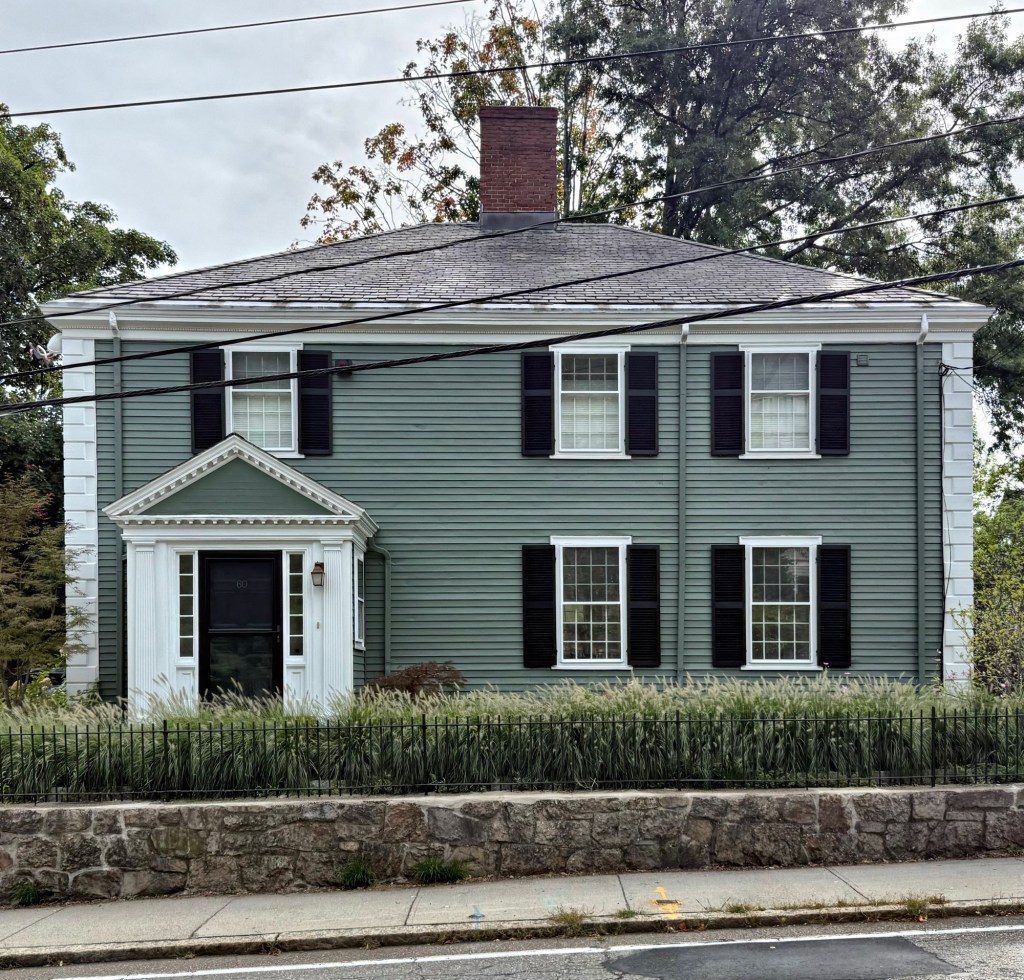
Built in 1928 as an accurate reproduction of an 18th-century residence the Codman-Gillet House at 60 High Street in Brookline is significant architecturally in the Colonial Revival style but also as a preserved house by the architectural firm of Howe, Manny and Almy. Lois Lilley Howe and Eleanor Manning were among the first women graduates of the M.I.T. School of Architecture, and the firm was joined in 1926 by Mary Almy. Their firm was the first all-woman architecture practice in Boston and the second in the U.S. Howe was the first woman elected a Fellow of the American Institute of Architects. The house was built for William Coombs Codman, a trustee of various real estate trusts, and was likely rented or sold for investment. The first long-time owner/occupants of the residence were Mr. and Mrs. Fernand Gillet and who both taught at the New England Conservatory of Music. Fernand was the principal oboist of the Boston Symphony Orchestra from 1925 to 1946. The Codman-Gillet House features many traditional Colonial Revival elements including: the corner quoining, window trim, a pedimented projecting entrance, and hipped roof with large central chimney.
What do this unique Victorian house and sideburns have in common? Well, you are about to find out!
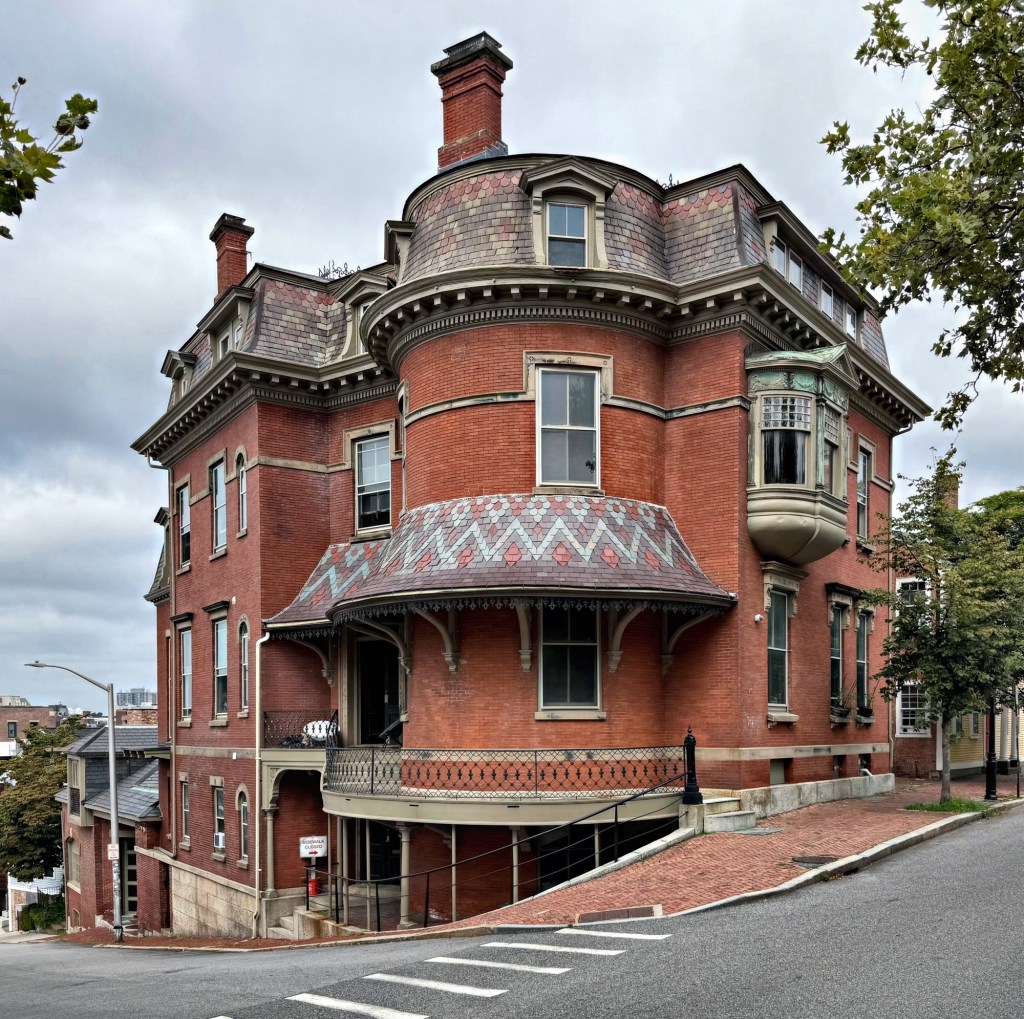
The Ambrose Burnside House is sited on an oddly shaped, and sloping corner lot on Benefit Street in Providence’s East Side neighborhood, and is one of the most unique Second Empire style residences in New England. The house was built in 1866 for General Ambrose Burnside (1824-1881), a Uniongeneral in the American Civil War, who returned to Providence and was about to begin a term as governor, followed by two terms in the United States Senate. Ambrose Burnside hired local architect, Alfred Stone, to design his new city mansion, which upon completion, was deemed one of the most “modern residences” in Providence. Built of brick with Nova Scotia stone with a concave slate mansard roof and one-of-a-kind rounded corner bay, the Ambrose Burnside House does not disappoint! Ambrose Burnside died in 1881 and the property was occupied by his sister-in-law until the property was sold in 1884 and housed the Providence Children’s Friend Society House for Aged Women and the Providence Association for the Benefit of Colored Children, providing shelter and food for elderly women and children of color without parents or guardians. After WWII, the Burnside House was converted to apartments.
Now, to the sideburns… Ambrose Burnside was noted for his unusual beard, joining strips of hair in front of his ears to his mustache but with the chin clean-shaven; the word burnsides was coined to describe this style. The syllables were later reversed to give sideburns.
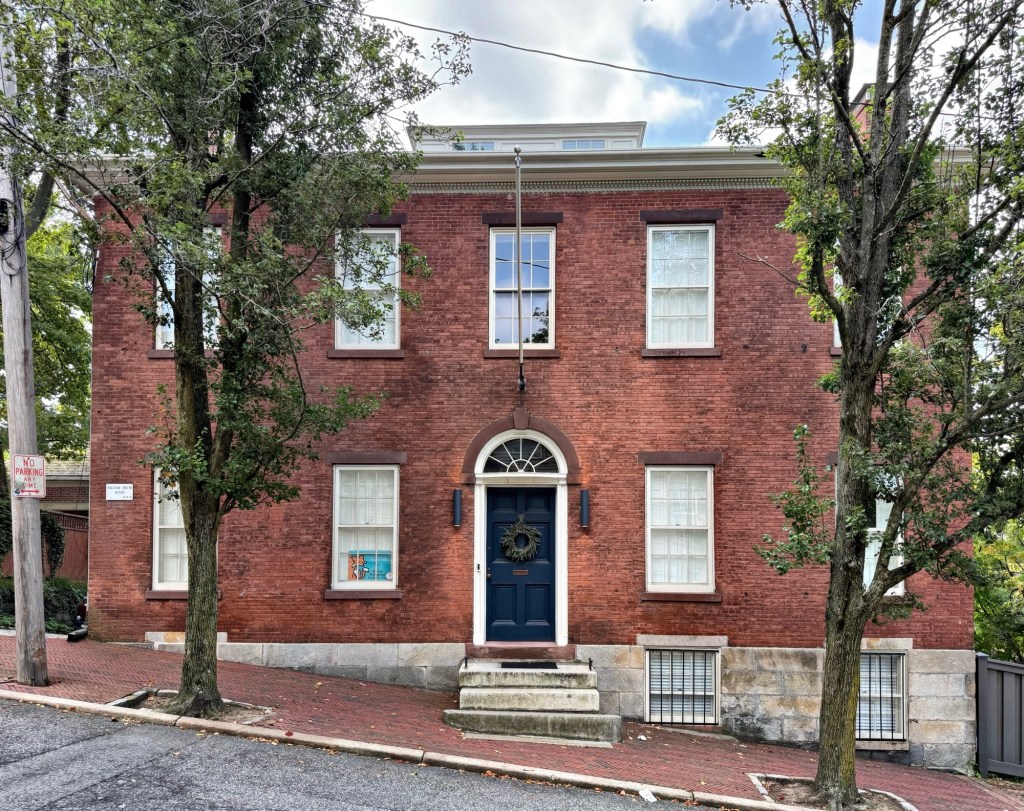
The William Smith House at 18 James Street in the Fox Point neighborhood of Providence’s East Side, is similar to its neighbor, the William Woodward House in style and design details. Smith, a carpenter by trade, possibly built this house himself, with inspiration or plans by local architect, John Holden Greene, who designed many similar homes in the city around this time. The residence was built around 1826 and it was built into the steeply sloping hill on its raised granite foundation. Besides its elegant proportions, the house features a shallow hipped roof with monitor, fanlight over the door, and brownstone sills and lintels.
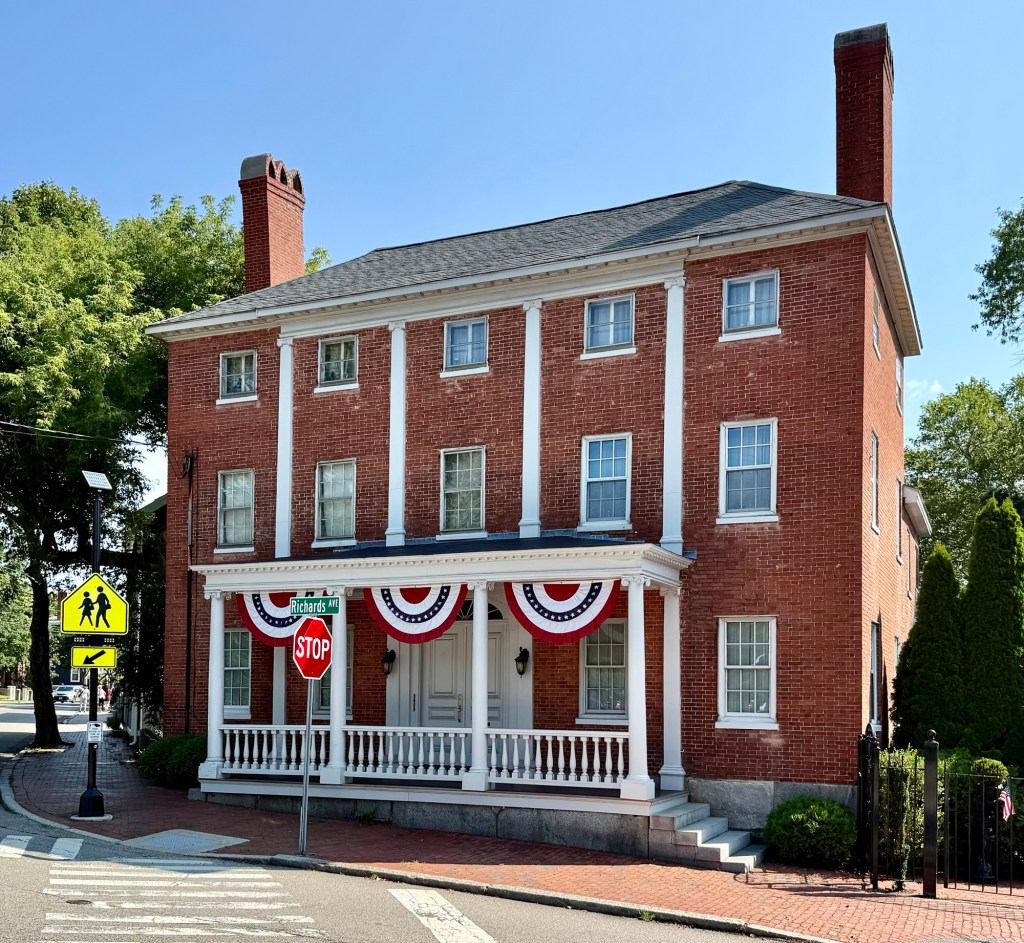
The Long-Ladd House at 3 Richards Avenue in Portsmouth, New Hampshire, showcases the versatility of the Federal style, an architectural style that dominated American architectural tastes from the 1780s through the 1830s. This house dates to 1812 and was built for George Long (1762-1849), a sea captain and trader until engaging in politics in his later years. He remained in the home until his death in 1449, leaving the property to his only heir, Marcy, and her husband, Henry Hurd Ladd. The Long-Ladd House is constructed of brick with the facade dominated by four, full-height pilasters breaking up the bays. A center portico shelters the main entrance which is adorned by a fanlight transom and classical surround. In a city full of Federal style homes, this one really stands out!
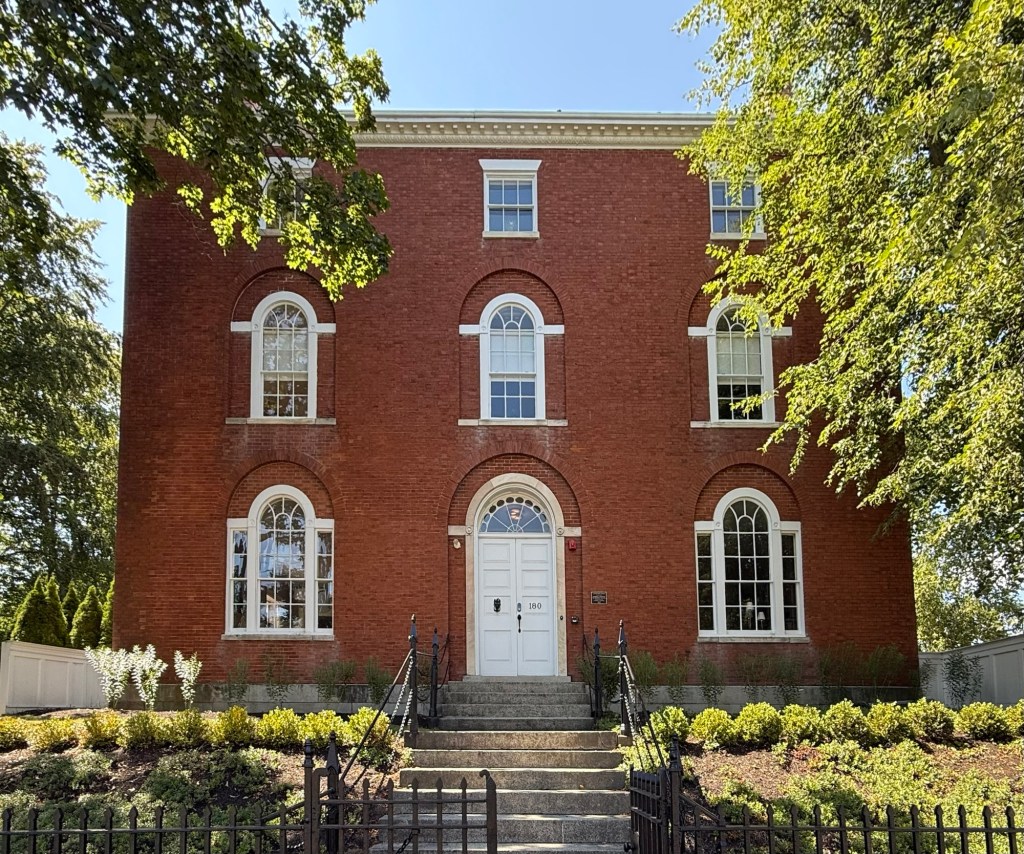
The Larkin-Ladd House at 180 Middle Street in Portsmouth, New Hampshire, is a three-story, masonry Federal-style residence with symmetrical facade, built for one of the city’s wealthiest merchants. Samuel Larkin (1773-1849) was born in Charlestown and moved to Portsmouth, marrying Ann Jaffrey Wentworth, a daughter of Col. Joshua Wentworth. During the War of 1812, Samuel Larkin made his fortune as an auctioneer, selling the contents of English ships captured by local privateers. It is believed that fourteen privateers and their crews worked out of Portsmouth Harbor and are said to have captured an estimated 419 British ships! With the profits from stolen goods from these British ships, Larkin purchased lots on Middle Street and began construction of this stately residence. He (and mostly his wife), had twenty-two children, although roughly half of them died before reaching adulthood. By the late 1820s, financial hardship fell on Larkin and he sold this property, moving into his house next door, which before this was his original residence and later rented to boarders. The Federal style mansion was later owned by Henry H. Ladd, a prosperous Portsmouth shipping merchant, who also served as President of New Hampshire Bank and Portsmouth Savings Bank. The Larkin-Ladd House is undoubtedly one of the finest Federal style residences in New England, and stands out for its entrance, flanked by Palladian windows and the slightly recessed elliptical surrounds at the first and second floor windows. Additionally, the historic stable, also from the 1810s, maintains much of its architectural integrity.
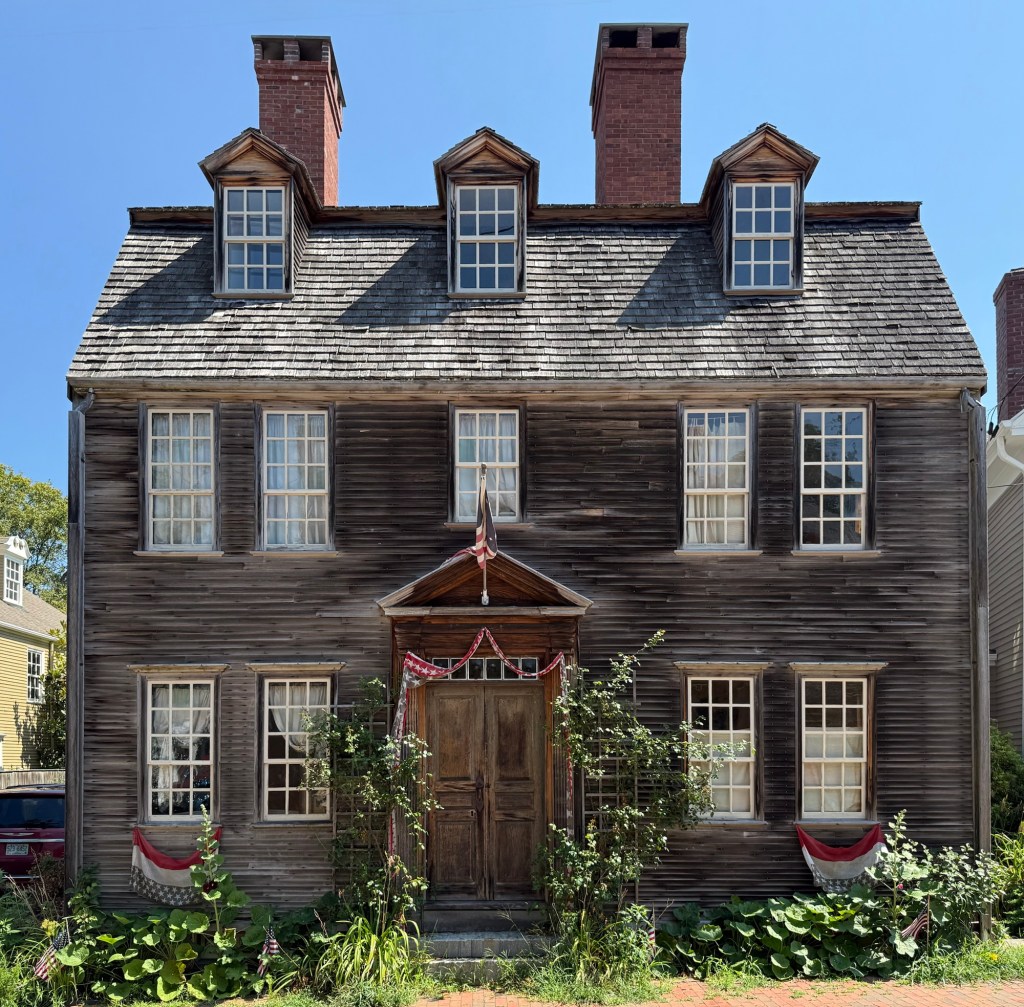
The Shillaber House on Washington Street in Portsmouth, is one of the most photogenic residences in the charming port city. The Georgian-style residence was likely built in the late-1760s, after Joseph Shillaber (1725-1791), a potter, purchased land here in 1766. The residence is of a typical form for 1760s Portsmouth, with a gambrel roof with pedimented dormers and a slightly off-center entry with Georgian style pilasters and pediment. In the later half of the 19th century, the house was “Victorianized” with a bracketed door hood and bay windows at the facade, but the house would be restored by later owners to a version close to its original conditions. The exposed clapboard siding adds to the home’s unique charm.
The Goodwin Mansion of Portsmouth, New Hampshire, is a landmark example of the Federal style of architecture and served as the home of Ichabod Goodwin and his wife, Sarah Parker Rice Goodwin. The home was built in 1811 and was originally located elsewhere in town, across from Goodwin Park, until it was moved to Strawbery Banke, saving the home from demolition. Ichabod Goodwin (1794-1882), a retired sea captain, purchased the home in 1832 and moved in with his wife, Sarah, and daughter, Abigail. The same year, he partnered with Samuel Coues to establish the shipping firm of Coues & Goodwin, importing raw materials, such as cotton, produced by enslaved people in the Southern States and elsewhere. Mr. Goodwin was the governor of New Hampshire upon the outbreak of the Civil War and was a prominent businessman until his death. Ichabod’s wife, Sarah, raised their children and planned the elaborate garden, which Strawbery Banke recreated where the mansion stands today. The Goodwins kept their home updated with all the latest technology, such as gas lighting, coal grates and running water from the Portsmouth Aqueduct Company, which brought water into houses through wooden pipes. It remains a significant house museum and architectural landmark in Portsmouth.
 Buildings of New England
