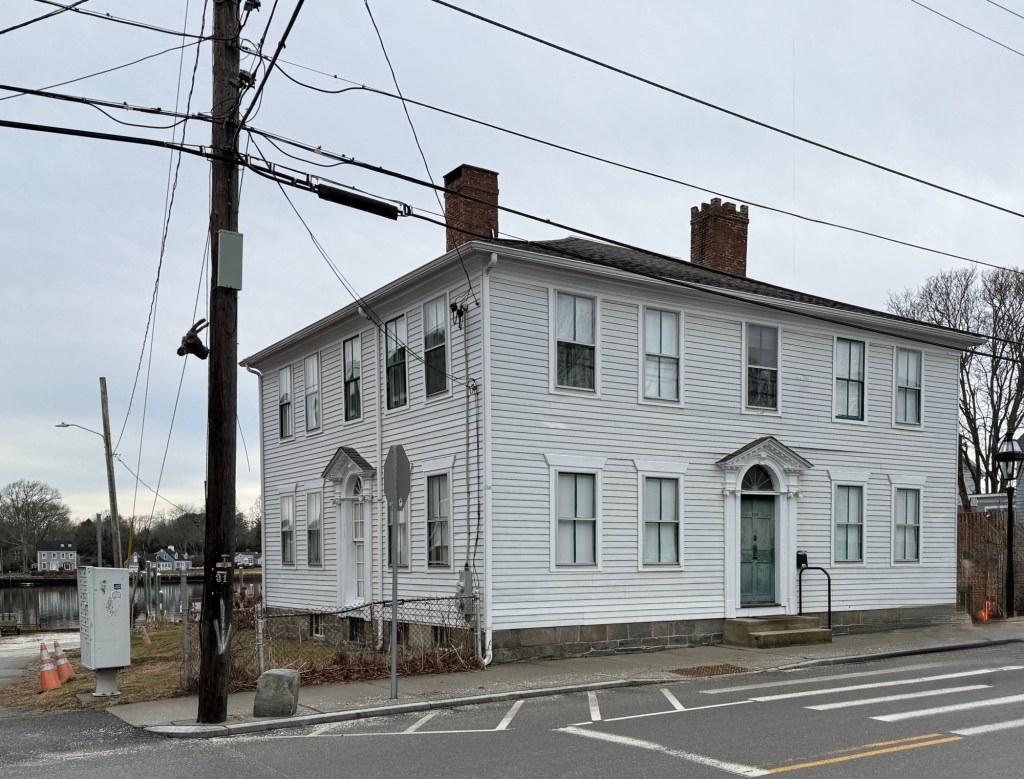
This house, located on Water Street in Warren, Rhode Island, is said to have been built in the 1760s, but its present appearance in the Federal style is credited to owner, Caleb Carr (1768-1853). In around 1790, Caleb fully renovated the property in the Federal style for his residence and as a tavern, with an elegant fanlighted door put on each facade—one for household use, the other for tavern customers. The property was inherited by his son, Captain Caleb Carr Jr., who continued as a tavern owner, but was also an important shipbuilder and operator of the ferry to Barrington, which docked at the end of the street. The Carr Tavern is today covered with later aluminum siding and has Victorian-era two-over-two windows but if restored, would shine as one of the best Federal style homes in town!
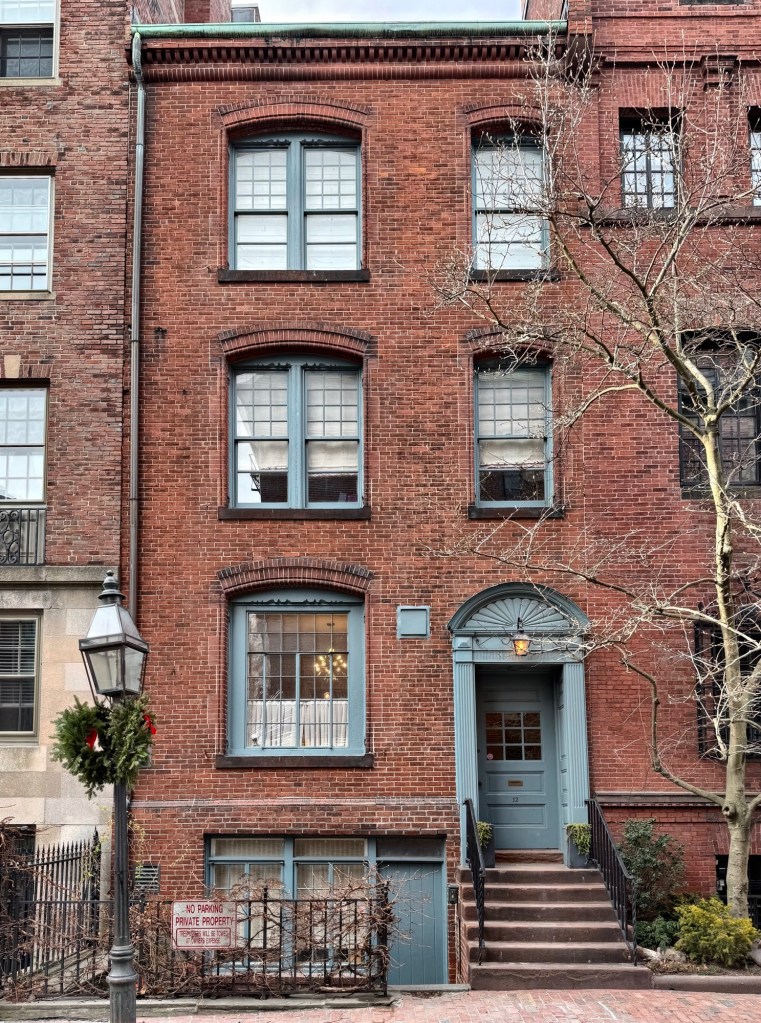
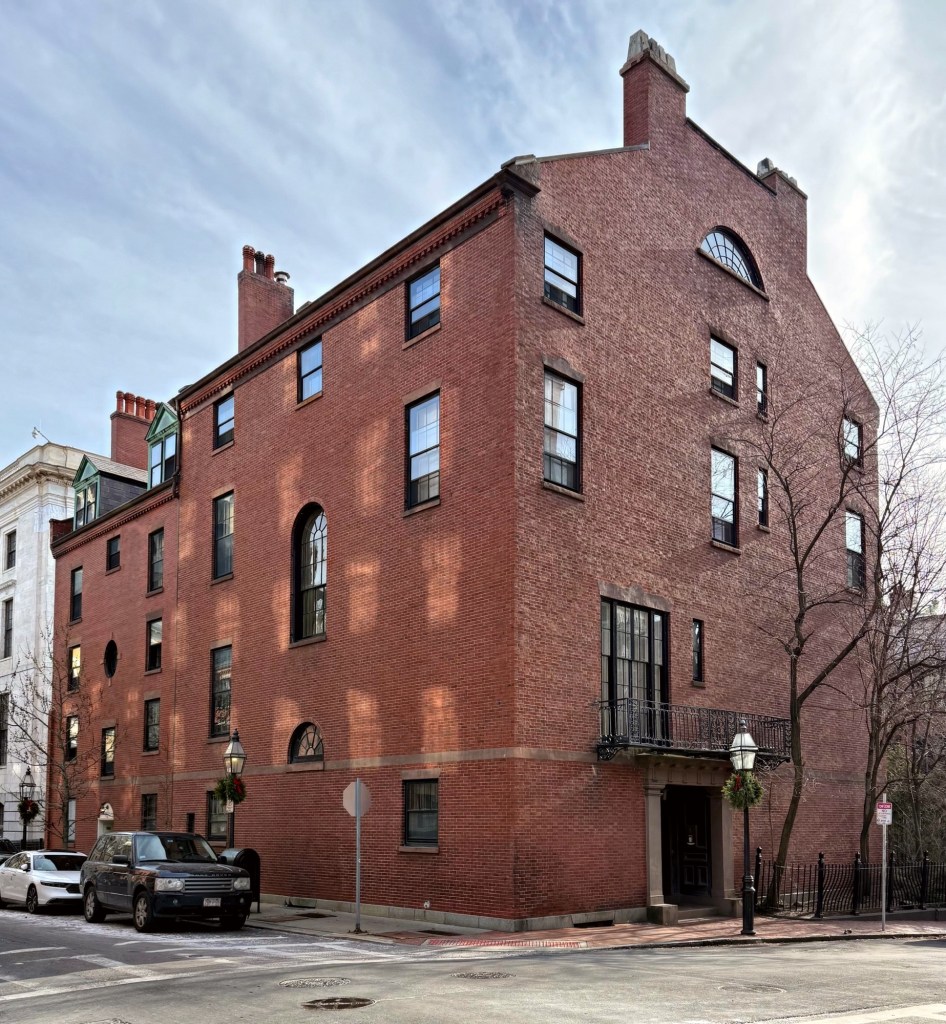
This unique brick house at 12 Otis Place in Beacon Hill was built in 1883 by the architect, Carl Fehmer for attorney Glendower Evans and his wife, Elizabeth Gardiner. Mr. Evans died in 1886 of Hodgkin’s Disease at just 30 years of age. His widow, Elizabeth Glendower Evans (1856-1937) was greatly influenced by her husband during their brief marriage, even taking her husband’s first name as her middle name after his death. Elizabeth Glendower Evans became a prominent social activist, studying child labor conditions in the South and took up the cause of women’s suffrage and the associated problems of tenements and factory work arising from disenfranchisement in the late 19th and early 20th centuries. In 1915 Evans served as a delegate to the International Congress of Women at the Hague. She was the first National Organizer of the Woman’s Peace Party. From 1920 until 1937 she served as a national director of the American Civil Liberties Union. In the 1910s, Elizabeth sold the home to Edward Albert Filene (1860-1937), who, together with his younger brother Abraham Lincoln Filene, reorganized his father’s department store into “William Filene’s Sons Company”, which would later becomeFilene’s. He was a supporter of credit unions to help ordinary American workers to access loans at reasonable rates and allow workers to save their money so that when hard times hit, they were prepared.
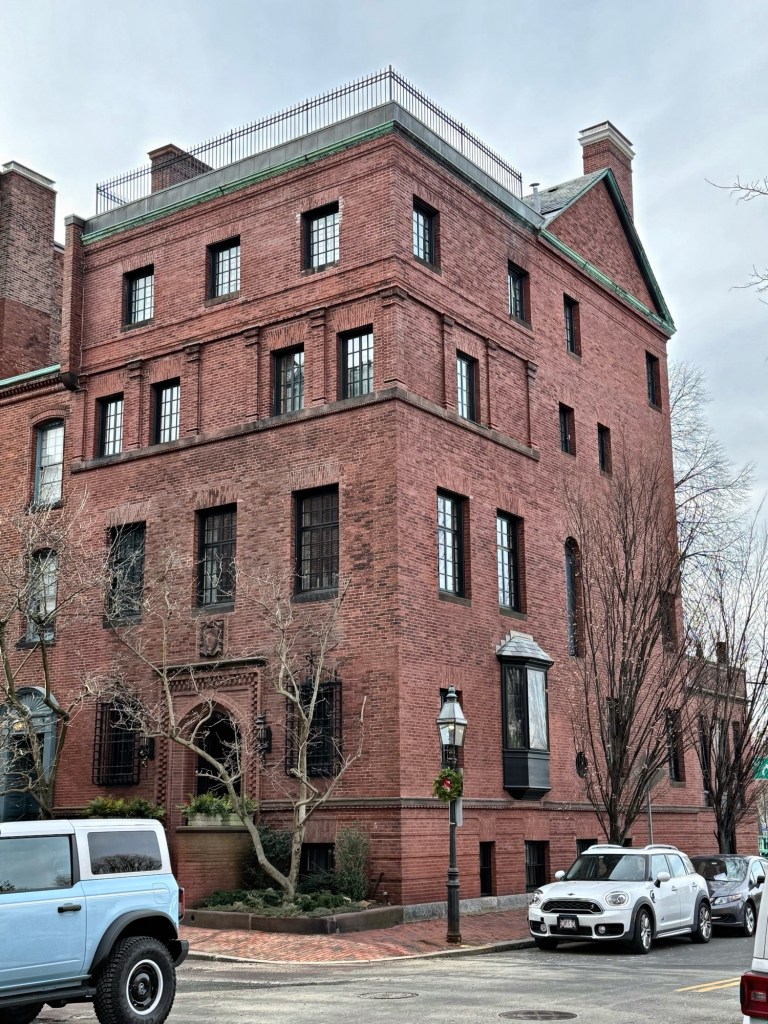
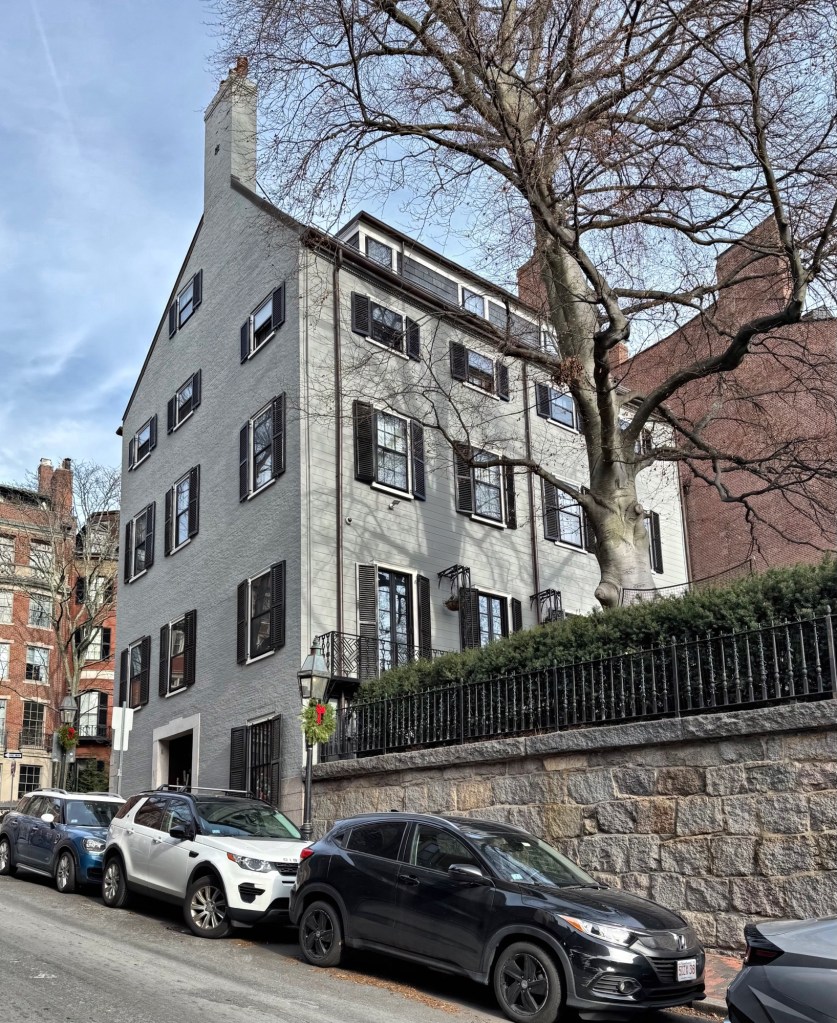
This unique four-story brick townhouse on Otis Place in Beacon Hill, Boston, was built in 1885 by the architectural firm of Rotch & Tilden for Mrs. Octavia L. Apthorp and her husband, William F. Apthorp. Elevated on a tall brick basement, the exterior of the house is richly detailed with masonry decoration in what has become known as the “panel brick” style; with an elaborate brick entrance archway, paneled pilasters at the third floor, and vertical brick lintels above the windows. Over the ground floor windows near the entrance, iron grates with spear-like finials give the design a Medieval/English Queen Anne presence. William F. Apthorp was the only son of Robert Apthorp, a prominent Boston attorney and abolitionist who lived across the street at 2 Otis Place. William was a pianist and teacher at the New England Conservatory of Music and writer who married Octavia (sometimes spelled Octavie) Loir Iasigi in 1876, she was also from a well-connected Beacon Hill family.
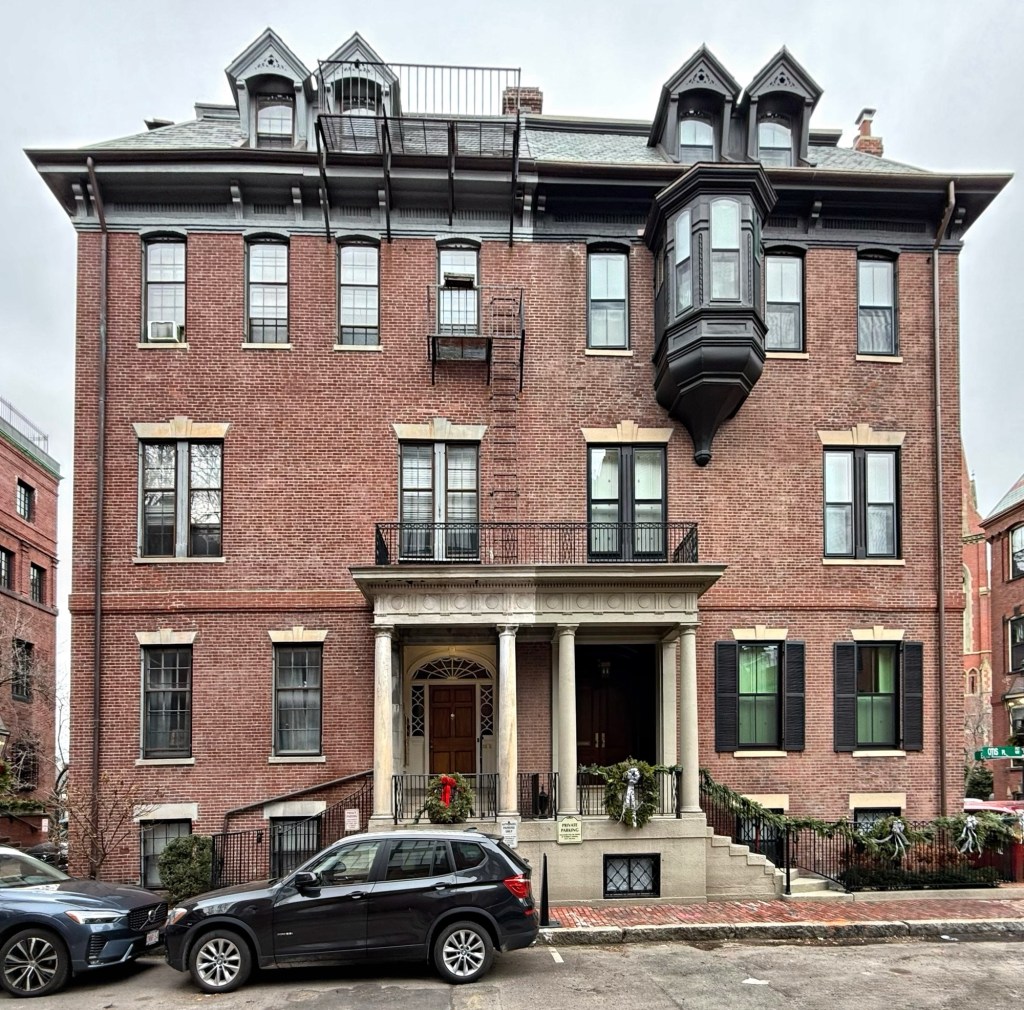
These two near-identical townhouses at 1 & 2 Otis Place in Beacon Hill are significant architecturally and as they are bounded by four streets. The unique lots were created when Otis Place was laid out on made land in 1869 and were built the following year as an identical pair sharing a party wall and with their front facades facing south on Otis Place. The two residences were designed by the firm of Ware and Van Brunt, who blendedSecond Empire and Victorian Gothic styles with gothic arched windows, bracketed cornices, slate mansard roof, and later Colonial Revival porticos added in 1916 by architect, Frank A. Bourne. No. 1 Otis Place (right side with the oriel bay window) was first owned by Henry G. Pickering, a dealer in engines and machinery at the height of New England’s industrial revolution. No. 2 Otis Place (left with later fanlight entry), was originally owned by Robert E. Apthorp, an attorney and realtor, who decades earlier, was an active member of the Boston Vigilance Committee, the group established to harbor and assist fugitives from slavery after the passage of the Fugitive Slave Act in September 1850.
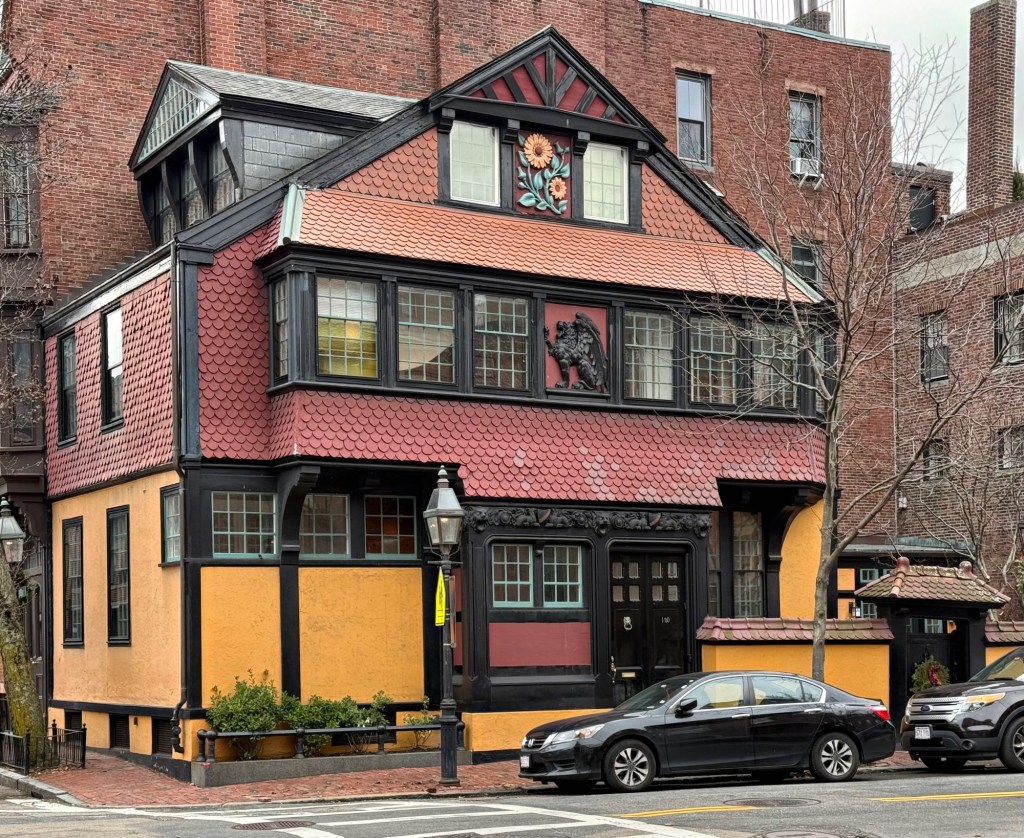
This absolutely unusual and enchanting cottage on Mount Vernon Street in Beacon Hill, Boston, was originally was constructed in the 1840s but completely altered decades later in its distinctive English Queen Anne style. In 1878, Frank Hill Smith, an artist and interior designer, worked with architect, Clarence Luce to renovate what was originally a two-story Greek Revival house into one of the most eclectic and unique residences in New England. The Sunflower Castle, a name reputedly coined by Oliver Wendell Holmes, features a yellow stucco first floor with the upper floors covered with red fish-scale shingles. Further detail includes the half-timbering, decorative panels depicting a gryffin and a sunflower in the gable, and carved wood frieze over the doorway. Clarence Luce was likely so inspired by this project, that he built an even more extravagant example of this house for Edward Stanwood in Brookline soon after. By 1903, the property was sold to the painter, Gertrude Beals Bourne and her husband, architect, Frank A. Bourne, who were both key players in the revival and gentrification of the Beacon Hill Flat neighborhood west of Charles Street in the early 20th century. The Sunflower Castle was used as their home and as an artist’s studio for the couple, with Frank adding the side garden wall with tile-roofed gateway to enclose a private open space. The property remains as a private residence.
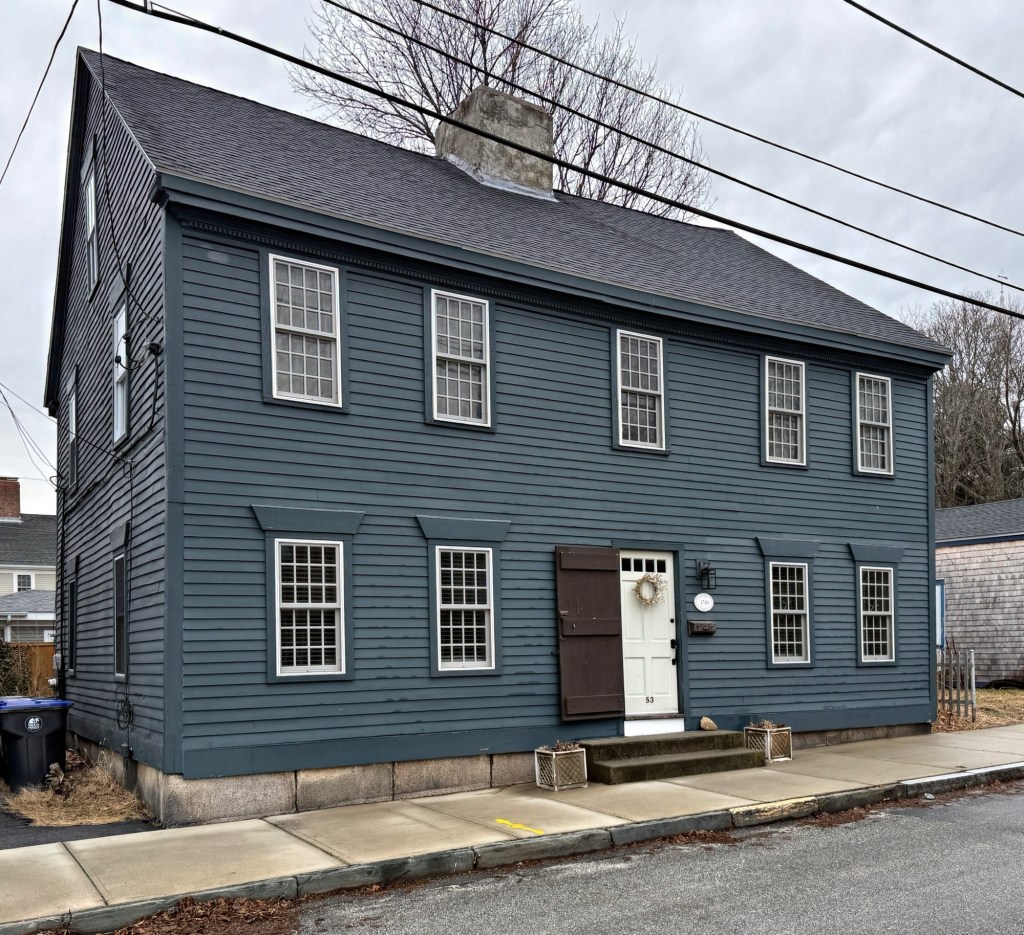
This large house on State Street in Warren, Rhode Island, has a plaque that dates it to around 1740, but it must have been relocated to this site or been built later as the street it is located on was initially laid out in 1790. The large, two-story, Federal style house exhibits a large central chimney and five-bay facade and has recently been restored. It looks great! According to sources, the property was owned by members of the Cole Family, a prominent local family who engaged in the sale and transportation of enslaved Africans in the 18th and 19th centuries. The house was eventually owned by Charles Richmond in the mid-19th century and is typical of the many great historic homes in Warren.
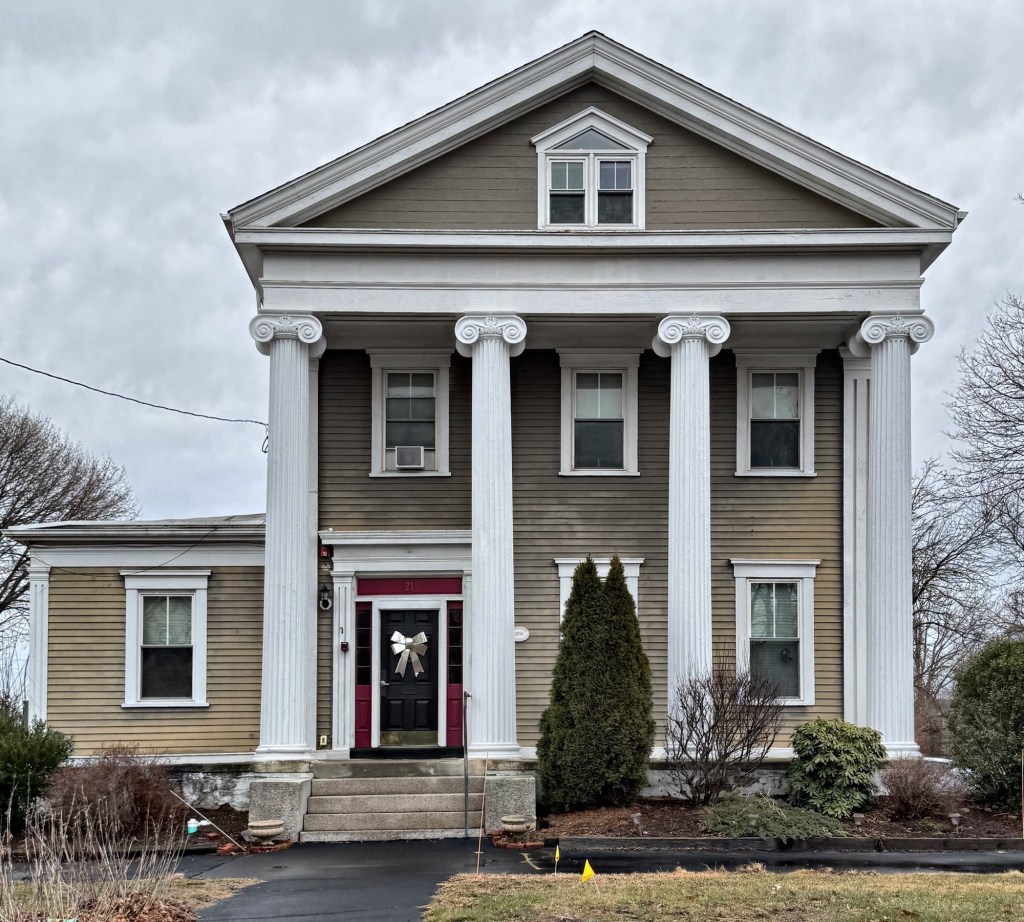
The only two-story temple-front Greek Revival style house in Warren, Rhode Island, the Judge Alfred Bosworth House on Federal Street, is believed to be the work of great architect Russell Warren. Alfred Bosworth (1812-1862) ran a law office in Warren and Providence and represented Warren in the General Assembly from 1839 until 1854 and then served as a justice on the Rhode Island Supreme Court. Bosworth was of counsel for Rhode Island in suits growing out of the boundary question between Rhode Island and Massachusetts, specifically around Fall River. Judge Bosworth died at home in 1862 and his widow, Anne, lived here afterwards. At the end of the century the Bosworth House was converted to an ice cream parlor, named Maxfield’s, which became a very popular attraction in town. The company, owned by Nathaniel and Julia Maxfield, attracted throngs of local residents every summer who would eat ice cream on the front yard of the house. Maxfield’s was even frequented by Providence writer, H. P. Lovecraft, when he was a young man. During the mid-1900s, the house served as a nursing home until 1988, when owners restored the house back to a residence and removed the asphalt siding that was added to the exterior around the time of the Great Depression.
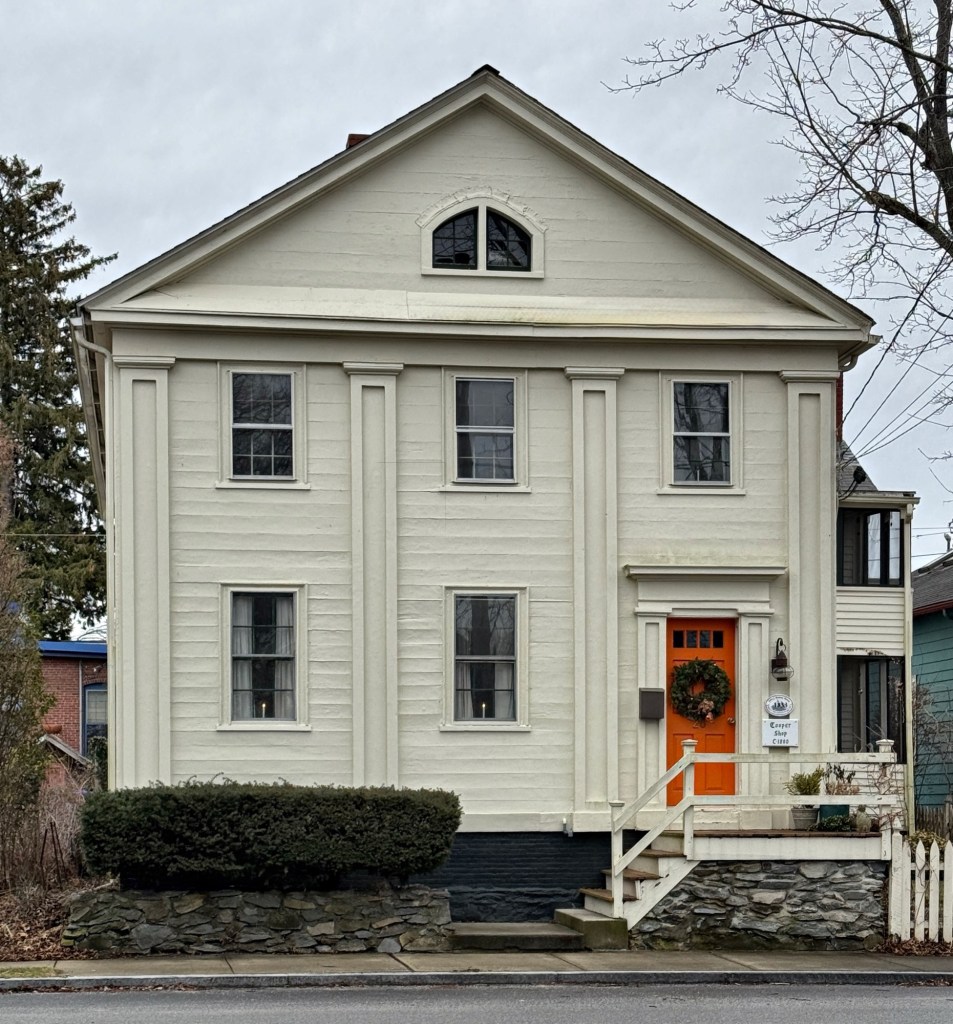
This stunning Greek Revival house on Lyndon Street in Warren, Rhode Island, was according to historians, built around the turn of the 19th century as a cooper shop! A cooper as a professional, would make wooden barrels, tubs, and casks from wooden staves, which were all made in this building before it was converted and renovated around 1830 in the Greek Revival style for Deacon John J. Bickner, who was likely affiliated with the Episcopal Church across the street, which was designed by architect, Russell Warren. Due to the connection, it is possible that the renovation for Bickner was undertaken by Russell Warren as well. On its facade, the house has two-story applied pilasters which break up the bays and smooth flushboard siding which makes the house even more stately!
One of four seafaring brothers who lived in Warren, Rhode Island, this charming cottage was built after Captain James Barton purchased a house lot at the northwest corner of Liberty and Union streets in 1841, likely building the home within a year. Captain James Barton (1790-1877) commanded a two-and-a-half year long whaling voyage to the Indian Ocean and undertook three subsequent trips to the Pacific. Upon retiring from the sea in 1867, Captain Barton established the Warren Gazette, where he worked as both owner and publisher. Before his time as a sea captain, James Barton had experience working in a printing office in Providence. Upon the Captain’s death in 1877, his wife Mary, continued to reside here with their daughter Nora B. Easterbrooks and her husband. Built as a modest Greek Revival style cottage for Barton’s wife while he was away at sea, the residence features a touch of the romantic Gothic Revival style in its window trim and the stable behind.
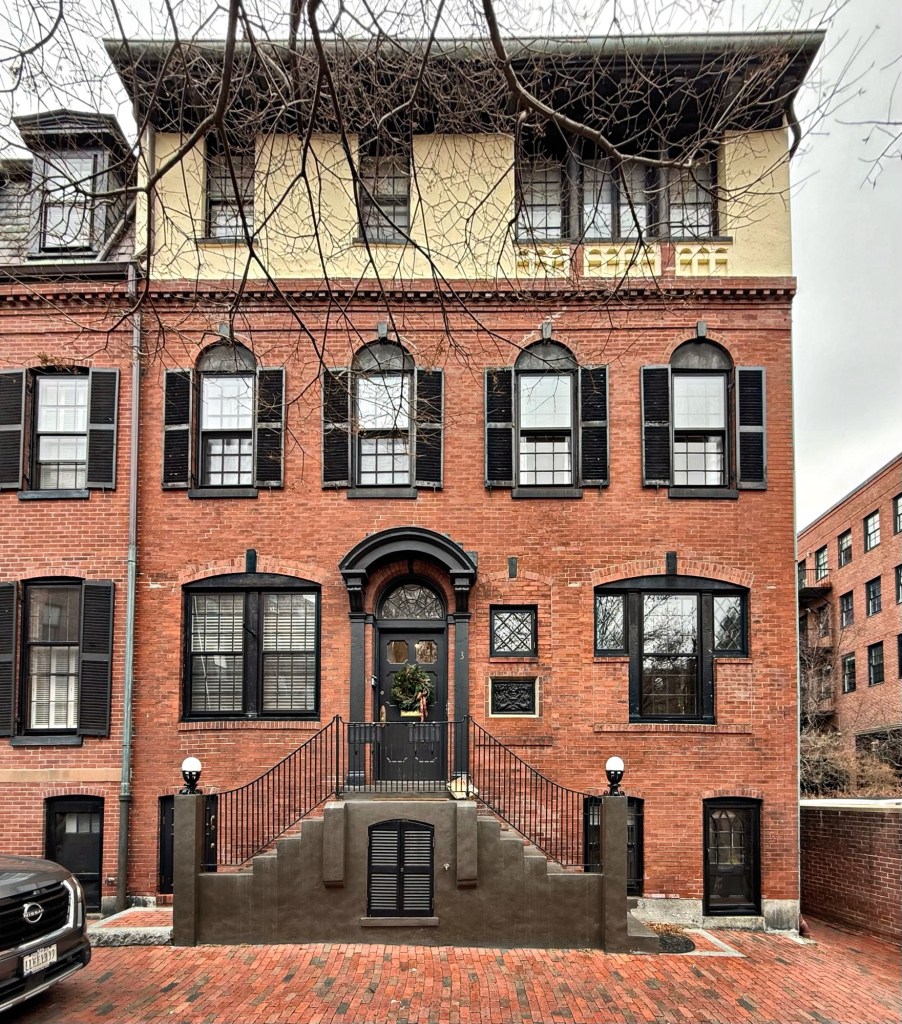
This charming residence is one of a few hidden houses tucked away on Mt. Vernon Square in Boston’s Beacon Hill. The small enclave of four houses with a stable was developed in 1869 by the partnership of builder Daniel Davies and Grenville T. W. Braman, a businessman turned real estate developer in the mid-late 19th century. The residence pictured is today known as 3 Mt. Vernon Square, but was once a double-house that was rented to families by Braman before they were sold off to separate owners. In 1903, Philip Cabot (1872-1941), a member of the wealthy Cabot Family of Boston, purchased both 3 and 4 Mt. Vernon Square and had the homes combined to a single-family home for his family. It is unclear who was hired as architect, but the property was renovated with a new central entrance, full third floor faced with stucco replacing the former mansard roof, diamond-pane and blind arched windows, and a decorative metal or cast-stone panel inlaid in the facade. Philip was married to Lucy Fuller but filed for divorce in 1910 after she deserted him according to local papers, and in 1911, she married Winthrop Ames, of the wealthy Ames Family of North Easton, Massachusetts. Philip Cabot also remarried, and sold the house on Mount Vernon Square to Frank Washburn Grinnell, a successful attorney.
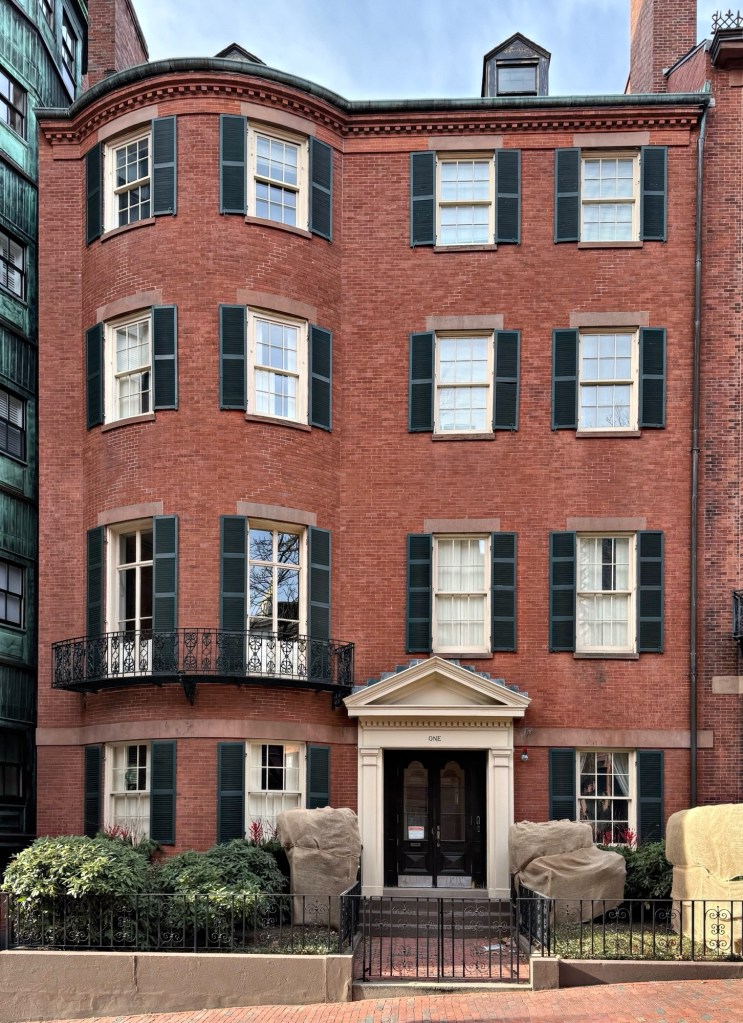
Constructed of red brick and trimmed with brownstone, the beautiful townhouse at 1 Joy Street, is one of a few properties in Boston’s Beacon Hill neighborhood to have a front yard. Built in 1832, the four-story residence has its primary facade characterized by a flat entrance with a rounded bay extending upwards to the roof. Designed by architect, Cornelius Coolidge, who designed many other homes in this section of Beacon Hill, the completed house was purchased by Thomas Handasyd Perkins, Jr. (1796-1850), the eldest son of the enormously wealthy and influential Thomas Handasyd Perkins, Sr., who is considered by many to have been the most successful merchant prince of Boston’s Federal period. In 1892, the Episcopal Association purchased 1 Joy Street for use as headquarters of the diocese, and it became known as the Diocesan House. Today, the building is divided up into condominium units, providing residences just steps from the Boston Common.
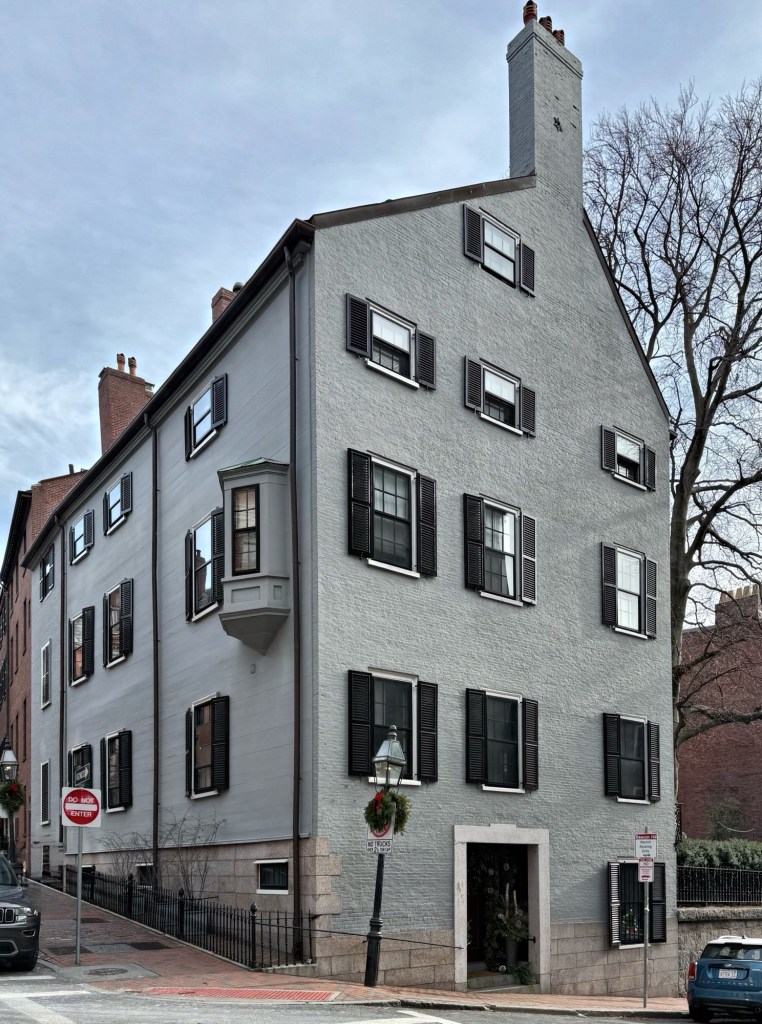
Built in 1802, this large residence at 14 Walnut Street is among the oldest extant mansions on the South Slope of Beacon Hill and includes a large hidden garden behind a granite block retaining wall. John Callender, Clerk of the Supreme Judicial Court of the Commonwealth, purchased land at the corner of Mount Vemon and Walnut streets for $2,000 and immediately started construction on his requested “small house finished for little money $5,000-$7,000”, but this was anything but modest. The house originally had its primary facade facing Mount Vernon Street, but in 1821, Walnut Street was lowered by city officials, so Callender had the granite retaining wall built for the garden and new entry built on Walnut Street. Mr. Callender lived here until his death in 1833 and the property was purchased by members of the Lyman family and later by Harriot Curtis (1881-1974) an early amateur female skier and golfer who used her fortune as a philanthropist, funding medical facilities in Boston for impoverished immigrants and served as dean of women in Hampton Institute in Virginia, an HBCU from 1927-1931. The most significant owner, Ellery Sedgwick (1872-1960), lived here from 1908 until his death in 1960. Sedgwick worked as editor of the Atlantic Monthly (now known as The Atlantic), and under his ownership, the magazine became one of the most circulated magazines in the world. The Callender-Sedgwick House features unique flushboard siding, providing a seamless surface that resembles a masonry wall when painted earth tones and a 19th century oriel window. The brick end elevation is punctuated with bays of hung windows and the recessed entry with a long, granite garden wall which has been well-preserved by owners.
The Lyman-Paine Mansion at the corner of Joy and Mount Vernon streets in Boston’s Beacon Hill neighborhood is an architecturally significant Federal style house designed by a skilled architect and was owned by members of prominent local families. This four-story mansion was designed in 1824 by architect Alexander Parris for George Williams Lyman (1786-1880), a shipping merchant who became one of the Boston Associates, a group of wealthy Bostonians who funded the expansion of New England textile mills, which helped grow many industrial communities all over the region in the 19th century. This house served as Lyman’s winter estate, his summer mansion was the the Lyman Estate, “The Vale”, in Waltham, which he had inherited from his father. Upon George Lyman’s death in 1880, Lydia Lyman Paine, George’s youngest daughter, inherited this Beacon Hill mansion. Lydia’s husband, Robert Treat Paine, was a graduate of Harvard and a successful local attorney. Mr. Paine retired from law in 1872 to become the treasurer for the new Trinity Church building committee, where he averted a fiscal crisis during the mid-1870s when Henry Hobson Richardson’s cost overruns in designing the new Copley Square church threatened its completion. In addition to his pro bono work with Trinity’s finances, Paine was deeply interested in improving the quality of life of the working class, founding building and loan associations and institutes to allow immigrants to buy homes in the Boston area. In addition to their Joy Street mansion, the Paines had a country estate called Stonehurst, which is adjacent to the Vale in Waltham; it was renovated by Richardson. The mansion was converted to apartments (now condos) in the mid-20th century, and maintains its unique, vernacular Federal character, with asymmetrical facade and oddly placed and shaped windows.
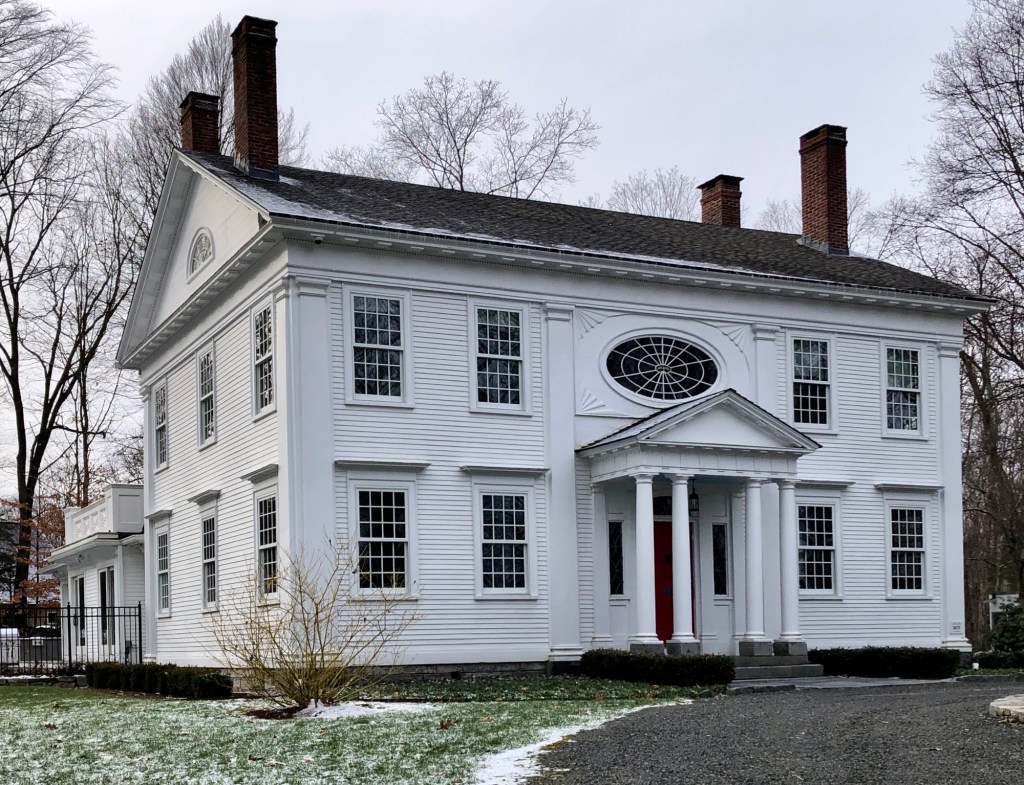
This architecturally unique and stunning Federal style house in Chester, Connecticut, was built in 1820 on the Middlesex Turnpike by Abram Mitchell for $10,000, double what he originally hoped to pay for the residence. The principal builder was Samuel Silliman, a locally well-known master carver, who clearly showcased his skill inside and out, much of which has been preserved by two centuries of owners. In 1845, the property was purchased by George Spencer, and presented as a wedding gift for his daughter, Julia, who married Dr. Ambrose Pratt (1814-1891). Dr. Pratt became well-known for his practice of hydropathology and temporarily used his house as a sanitarium known as the Chester Water Cure. The house was acquired by the local Roman Catholic Church and became the parish center until the residence was purchased and moved away from the busy street to its current location in 1966. In the 1980s, the house was purchased by famed artist, Sol Lewitt. The house has a large spider web window, still containing the original glass over the door and full-height pilasters dividing bays and inside, many stunning carved mantles and woodwork.
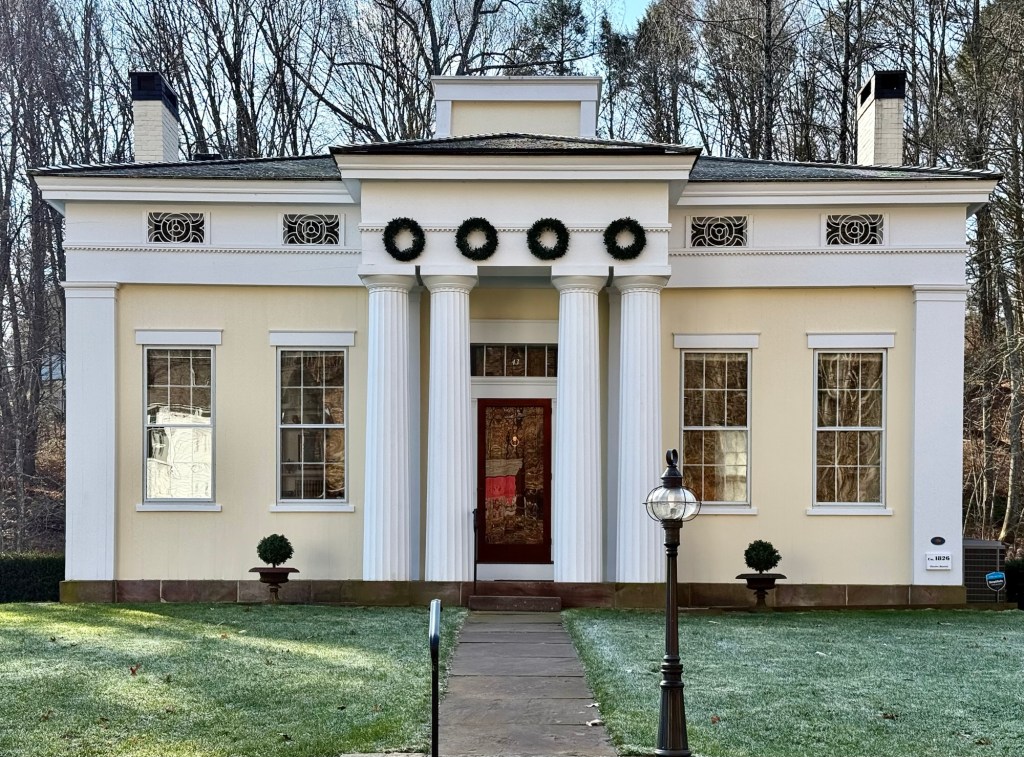
The Charles Daniels House in Chester, Connecticut, is a sophisticated and excellently proportioned and designed example of a single-family residence in the Greek Revival style. Features like the Doric portico, flushboarding and frieze windows are components of a skillful design that has been credited to architect Ithiel Town, but this is unsubstantiated. The home was built around 1826 for Charles Daniels (1799-1838), a gimlet manufacturer, who had his factory nearby. Charles died in 1838, and the property was inherited by his second wife, Abby Gilbert, who also remarried and lived here with her new husband, Clark N. Smith, and they resided here until the early 1900s. Later, the residence was owned by the adjacent mill company, and used temporarily as a storage facility. The location adjacent to the deteriorating factory threatened the significant Daniels House, so in 1978, architect Thomas A. Norton had the house moved a short distance away onto the present site. The house was listed in the National Register of Historic Places and has been preserved, inside and out, by later owners.
 Buildings of New England