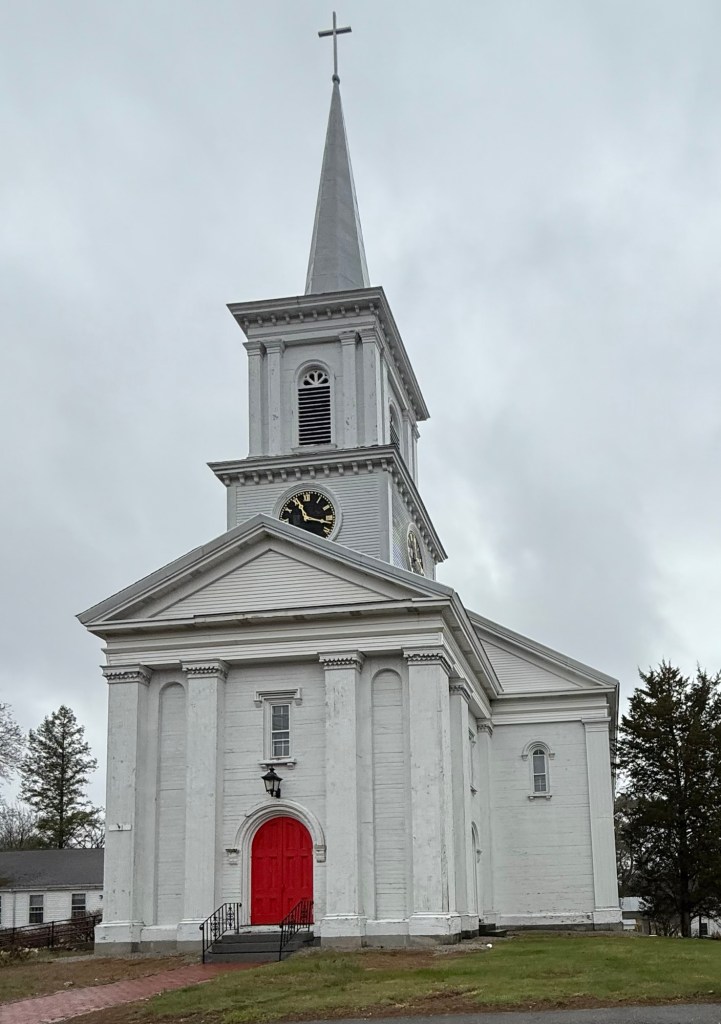
First Congregational Church of Abington // 1849

Abington, Massachusetts was first settled by Europeans in 1668 and was officially incorporated in 1712. Its namesake was is said to have been set by Governor Joseph Dudley as a tribute to Anne Bertie Venables, Countess of Abingdon, wife of the second Earl of Abingdon, who helped Dudley secure the governorship of the Colony of Massachusetts from Queen Anne. Governor Dudley noted in its decree that, “the Town be named Abingdon”. A marginal note on the document gave the spelling as “Abington” with a “t”, which has served as the spelling ever-since. At the center of town, this handsome church is the fourth edifice of the Congregational Church Society in Abington, Massachusetts, and replaced the third church, which was occupied for just thirty years until 1849, when this Greek Revival structure was built. Located a stone’s throw from its former home, this church showcases the increase in membership and relative wealth of the congregation by the middle of the 19th century. The structure with its flushboard siding and bold Doric pilasters, features an arched center entrance and multi-stage tower containing a clock and enclosed belfry.
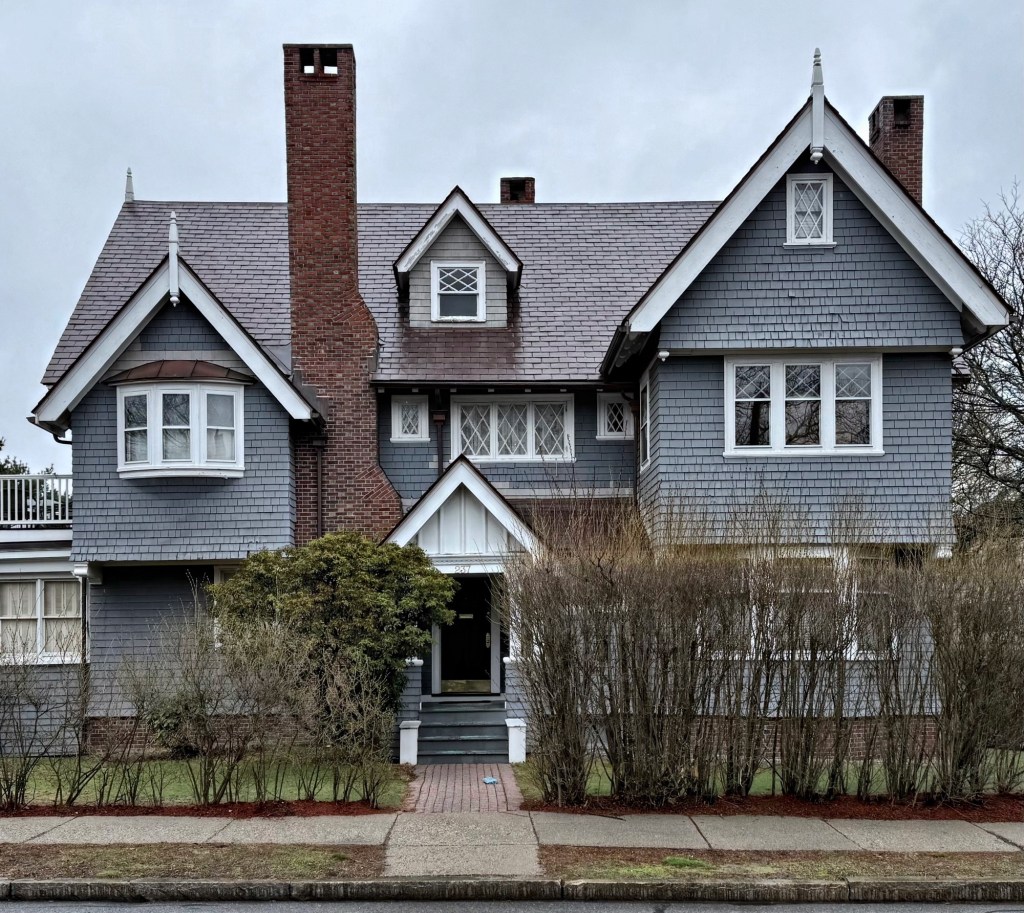
George and Annie Andrews House // 1899

By the end of the 19th century, Brookline’s connection to Boston via the streetcars opened the town up to suburban development unlike anything seen before. From this, Boston businessmen could move to the suburbs for more land and live in larger single-family homes while commuting to the city for work. This large house in the Cottage Farm neighborhood was built in 1899 on speculation and purchased by George and Annie Andrews, who two years later, built a stable on the adjacent lot. Architect Robert Coit, specialized in large suburban houses, primarily in the Boston-area suburbs, and showcased his design talents for this Tudor Revival home. Tudor Revival style ornament include the second story over-hangs supported on brackets, the diamond pane sash and casement windows, vergeboard with finials, and portico with steep gable.

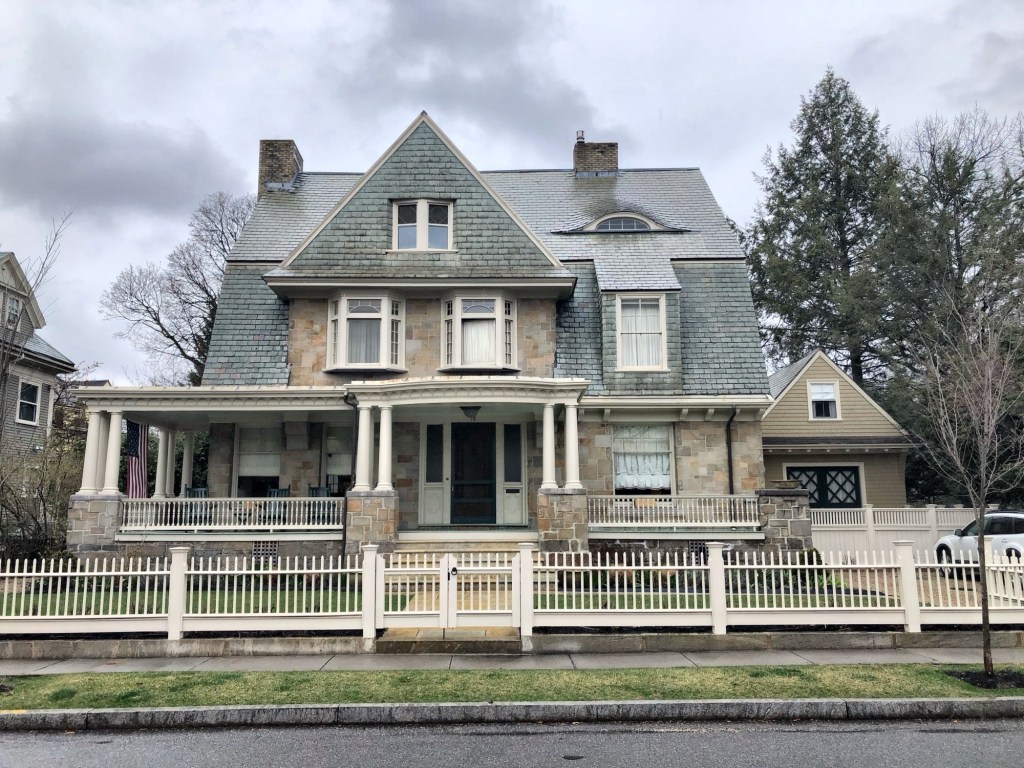
Kramer-Duane House // 1895

One of five houses built by developer Albert Jewell along Powell Street in the Cottage Farm neighborhood of Brookline, this residence stands out for its materiality and stately design. The house was designed by J. Williams Beal, an architect who trained at Massachusetts Institute of Technology and then worked for McKim, Mead & White before opening his own business. The house was first purchased from Mr. Jewell by Grace and Edwin Kramer, who worked as superintendent for R. H. White & Co., the large dry goods store in Boston. The next long-term owner was Harry B. Duane, a wealthy grocer. The Kramer-Duane House is unique for the stone veneer at its facade, gambrel roof covered in slate, and varied window styles including: bay windows, dormer windows, and an eyebrow dormer window at the roof.

Former Essex County Jail // 1811

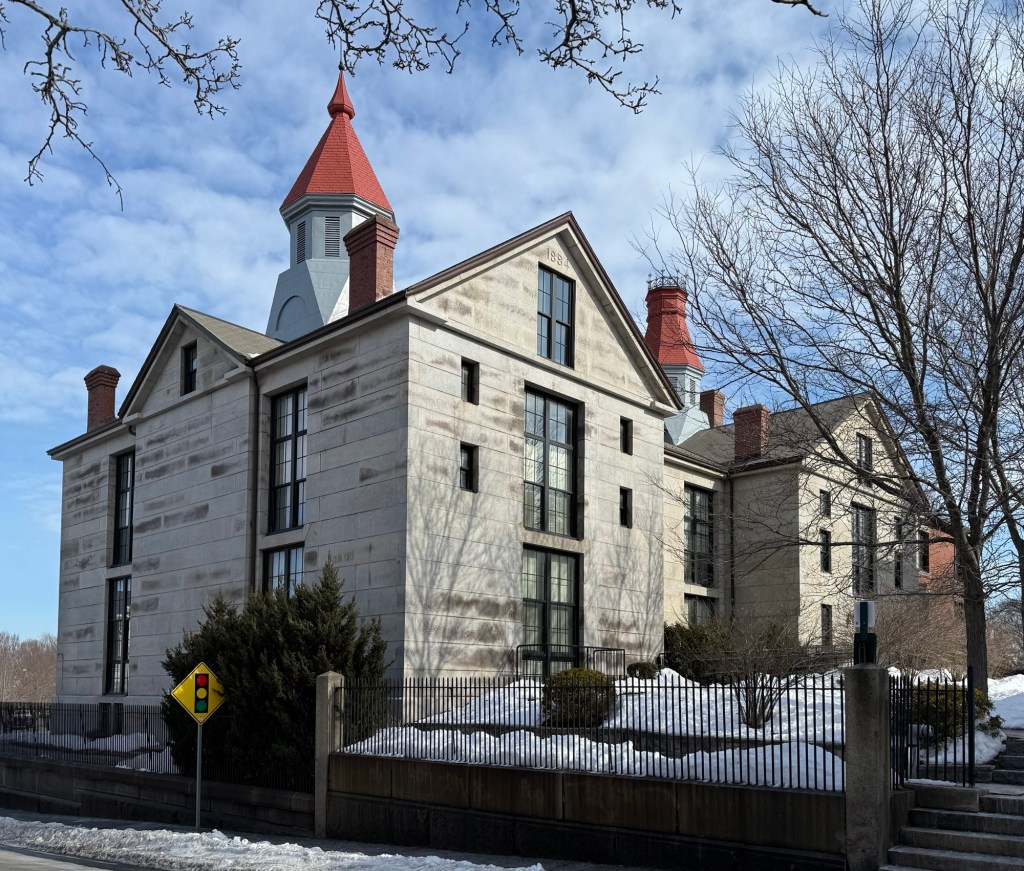
The former Essex County Jail is a large and significant building in Salem, Massachusetts, that has seen a recent rebirth thanks to the intersection of historic preservation and the demand for new housing in many New England communities. Constructed of large, Rockport granite blocks, the building was constructed in two phases—the section to the east was constructed in 1811-13 while the parallel west wing dates to 1884, with each of the construction dates inscribed at the top of the pediments on the south elevation. Completing the complex is the 1813 Jailer’s Residence which sits at the edge of the now enclosed courtyard. Those who were committed here were largely sentenced to short terms, many for the offense of drunkenness or petty theft. Inside, prisoners did all the labor, such as cooking, baking, firing the boilers, etc., with the female inmates making clothing for all inmates. The jail was in operation until 1991, and at that time was considered the oldest active penitentiary in the United States. Years prior, in 1984, several detainees had successfully sued the county for inadequate living conditions, leading to the closure of the building. A preservation restriction was established for the building and in 2009, the property was conveyed to a developer who converted the complex into 23 apartments, with 19 in the old jail, three in the old jail keeper’s residence, and one in a converted carriage house. The great preservation/adaptive reuse firm of Finegold Alexander Architects furnished the plans for the successful renovation that provided a new life for a once crumbling eyesore.

East Church of Salem – Salem Witch Museum // 1844

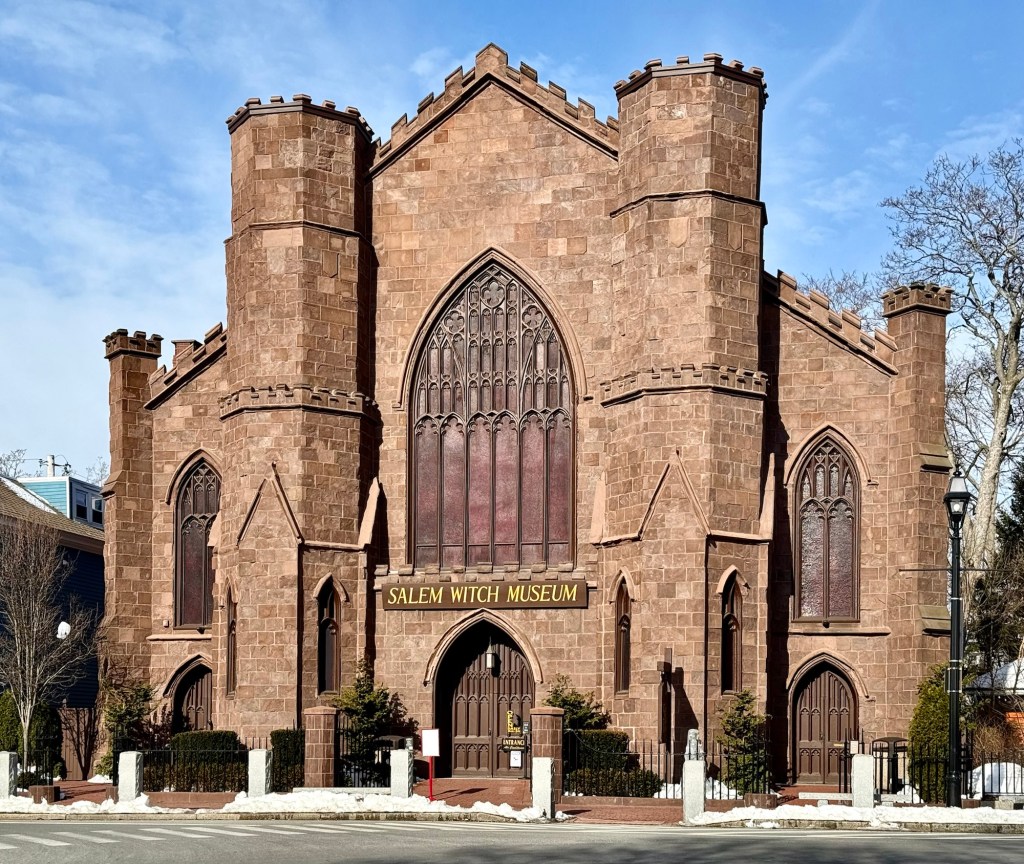
One of the most recognizable buildings in Salem is the former East Church, now occupied by the Salem Witch Museum. The East Church was constructed between 1844 and 1846 for the oldest branch of the First Church of Salem, which originally organized in 1718. The stunning Gothic Revival church has been credited to architect Minard Lafever (1798-1854), a prominent New York architect known for his Gothic, Greek and other Exotic Revival style buildings. Constructed of brownstone, a material Lafever utilized for his New York City churches built at the same time, the East Church exhibited pointed arch stained glass windows, crenellation resembling battlements, and once featured two, four-stage octagonal towers, which were cut down in the 1920s to their current height. The church suffered from a massive fire in the early 20th century and the church eventually moved out in the 1950s. The building was occupied by the Salem Auto Museum until another fire in 1969. In 1972, the Salem Witch Museum moved in and completely updated the interior.

First Universalist Church of Salem // 1808

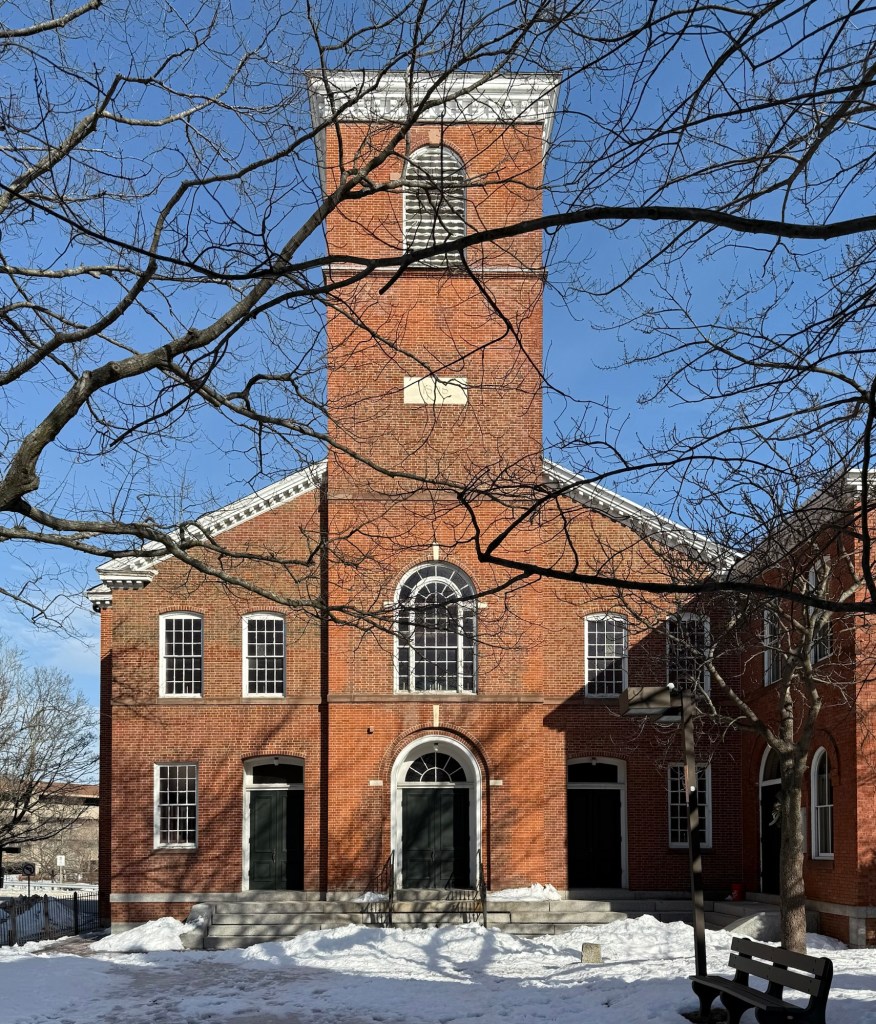
The First Universalist Church of Salem, Massachusetts, is a landmark example of a brick, Federal style church in New England. Tucked away within a network of Urban Renewal-era townhomes and backing up into a busy thoroughfare, the church is overlooked by many who pass behind its rear elevation, not knowing how special the building’s primary facade truly is! The church was constructed between 1808-1809 with early Church records showing that the interior carvings were done by Samuel McIntire, a Salem native, who was trained as a wood carver and later became an architect. It is unclear if any of McIntire’s work remains as numerous building modifications were completed throughout the 1800s; including a major exterior remodel in 1855 by architect Enoch Fullerchanging the appearance from Federal to Italianate. The church would again fall back to changing tastes in 1924, when they restored to an approximation of its original appearance by the office of R. Clipston Sturgis, a prominent Boston architect who specialized in Colonial Revival architecture. While the building’s significance is lessened by the urban renewal infill and streets surrounding it, the building remains one of the oldest in Salem and a significant architectural landmark in the city. 

Conway-Trumbull House // 1848

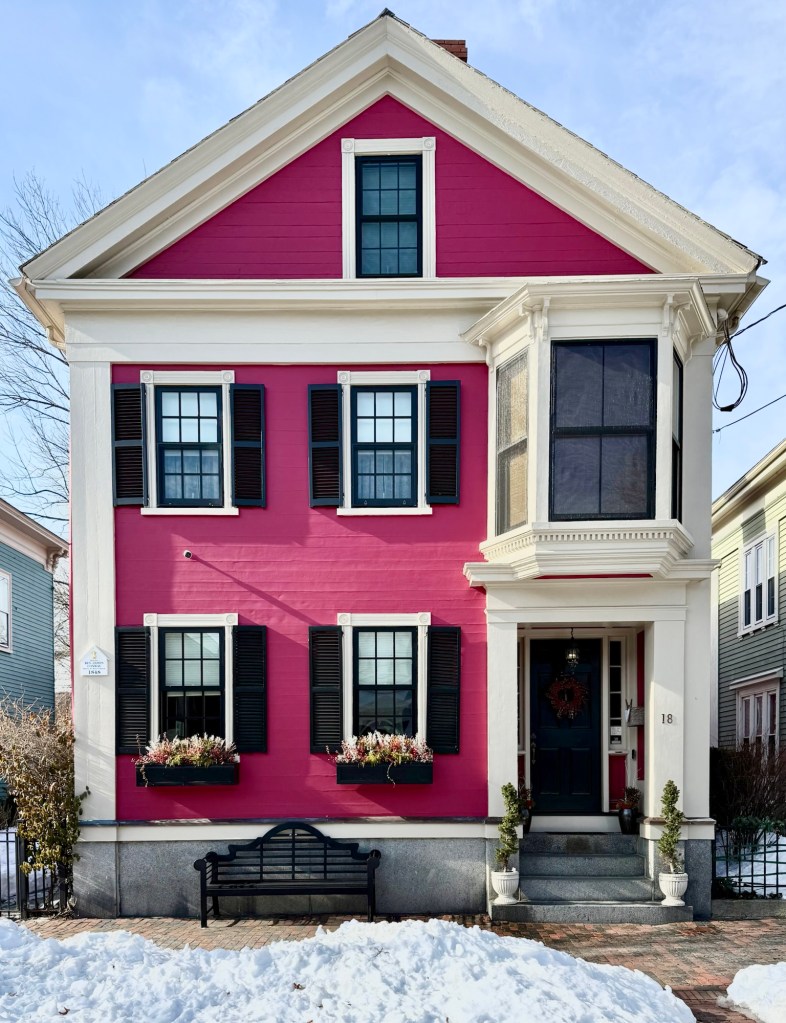
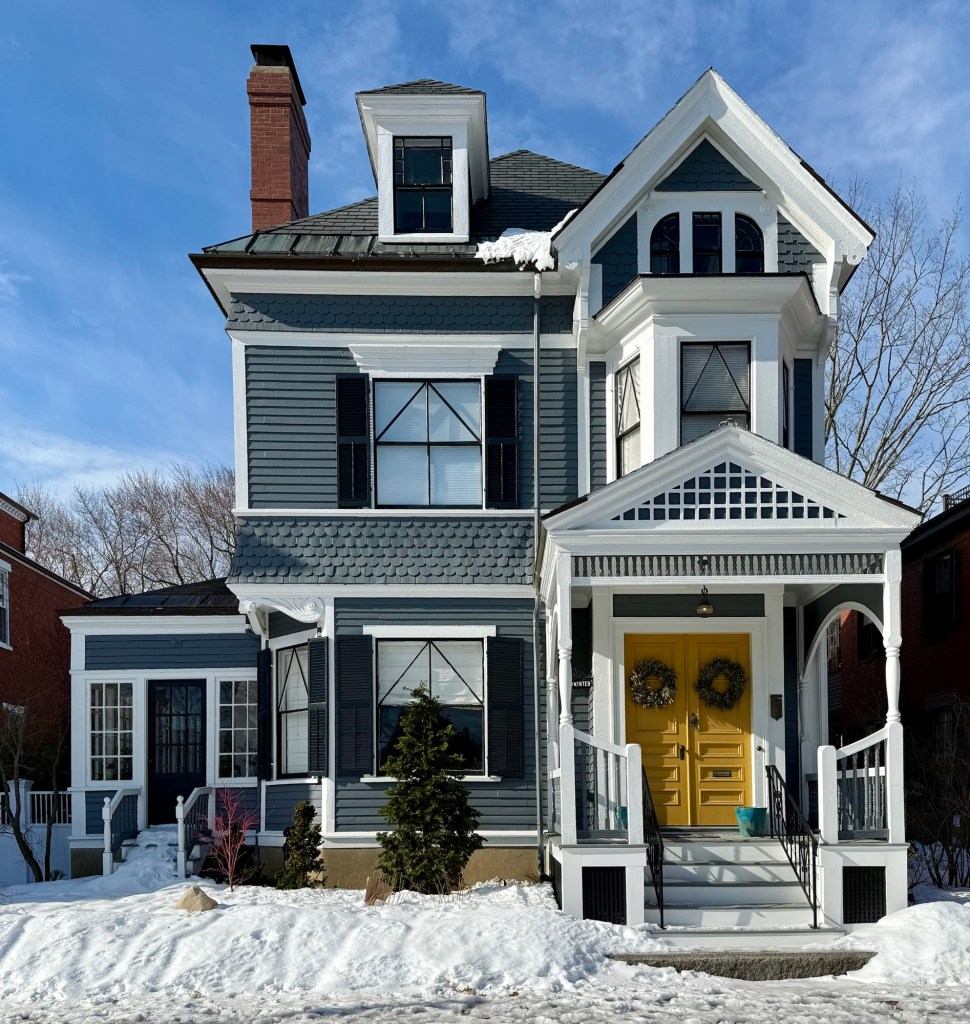
Built in 1848 for Rev. James Conway of Salem, this stunning Greek Revival home on Winter Street blends architectural integrity with a bold pop of color! James Conway was born in Ballinamore, Ireland and moved to the United States and was ordained as a Catholic priest. He was a missionary with the Penobscot Tribe in Maine, before preaching in Lowell and later in Salem, Massachusetts. When he moved to Salem, he had this house on Winter Street built with flush board siding, paneled side-hall entry, and moulded window surrounds with corner blocks. Conway would later sell the property to Edward Trumbull, a Salem merchant and later to Ebenezer Putnam. It was likely Putnam who added the oversized second-story bay window on the facade of the house.

Odell House // 1887

Built in 1887 for Charles Odell and his wife, Alice, this Queen Anne house on Winter Street in Salem, Massachusetts, stands out as a high-style example of Victorian architecture on the street notable for early-mid 19th century architecture. The house lot was purchased by the Jewett Family who lived in the brick house next door and long used the lot as a garden. Charles and Alice Odell married in 1888, so this Victorian home was built for the newlywed couple to raise their family. Charles A. Odell (1863-1931) worked at his father’s insurance and real estate business, later assuming ownership of business upon death of his father and was a district agent for New England Mutual Life Insurance Company. Sheathed in a combination of wood clapboards and shingles in a variety of patterns, the house has a steeply hipped, slate roof punctuated by cross gables and hipped dormers. The predominant window sash style consists of a distinctive sash in which the upper displays a triangle with central muntin over a conventional two-light lower sash. The property has been lovingly preserved for well over a century and is a landmark example of a Queen Anne style house in Salem.

Joseph Story House // 1811

Built in 1811 for Joseph Story, lawyer, politician, and judge of the United States Supreme Court, this stately brick residence on Winter Street in Salem, Massachusetts, is significant, not only for its architecture, but for its esteemed owners. Judge Joseph Story (1779-1845), who was then Speaker of the House of Massachusetts in 1810, purchased this house lot near the Salem Common, and proceeded to have this three-story brick house constructed. By the time it was finished, Story had been appointed by President Madison to the bench of the United States Supreme Court. He was just 32-years-old when nominated to the bench. The house is also the birthplace in 1819 of Story’s son William Wetmore Story, a well-known sculptor. Judge Story would reside here until 1829, when he moved to Cambridge in order to pursue his work at the new Harvard Law School. The property was sold in 1831 to Robert Upton (1788-1863), a self-made merchant heavily engaged with trade in South America. Robert Upton and his sons were among the most important men in Salem in the 1830s-1850s, for they were able to maintain a successful foreign commerce, and keep ships and men employed, at a time when Salem was otherwise fading as a seaport. The house has been lovingly maintained by centuries of stewards, and the house was designated as a National Historic Landmark in 1973.

Brown-Battis House // 1851

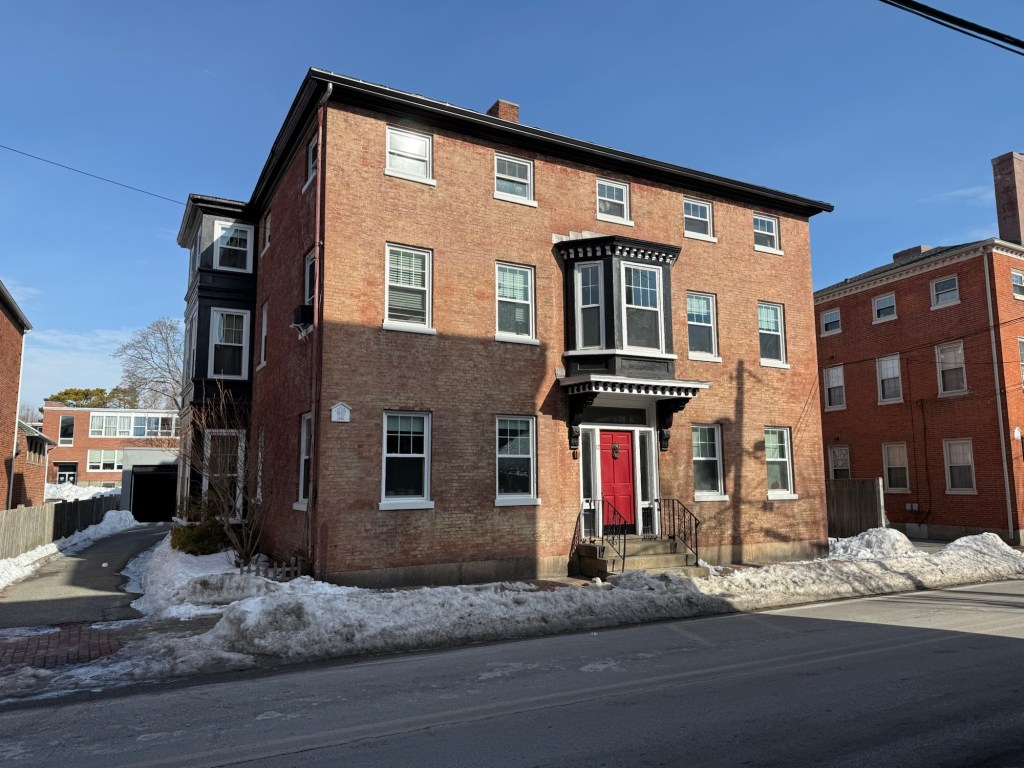
Captain Nathaniel Brown (1800-1866), a master mariner in Salem, built this fine brick house on Brown Street in 1851. Captain Brown bought the lot from the heirs of Nathaniel Kinsman in 1850, with an older house already occupying the site. The existing house was razed and construction began on this house, with it completed by 1851. The building is unique as it resembles the Federal period form of the five-bay and three-story residence with shortened third-floor windows under a low hipped roof. Although the Federal period waned in popularity by the 1830s, this house clearly took cues from the earlier homes nearby. Following Nathaniel Brown’s death in 1866, James Herrick Battis, a tobacconist and cigar manufacturer, purchased the home. City records state that Battis was issued a building permit in 1878 for an addition to the dwelling. It is probable that the bay windows and front door hood were also added at this time, giving the residence more of an Italianate style. Battis continued to own the property until his death in 1891. By 1930, the residence was converted into apartments and was known as the Conant Apartments. It remains a six-unit apartment building today.