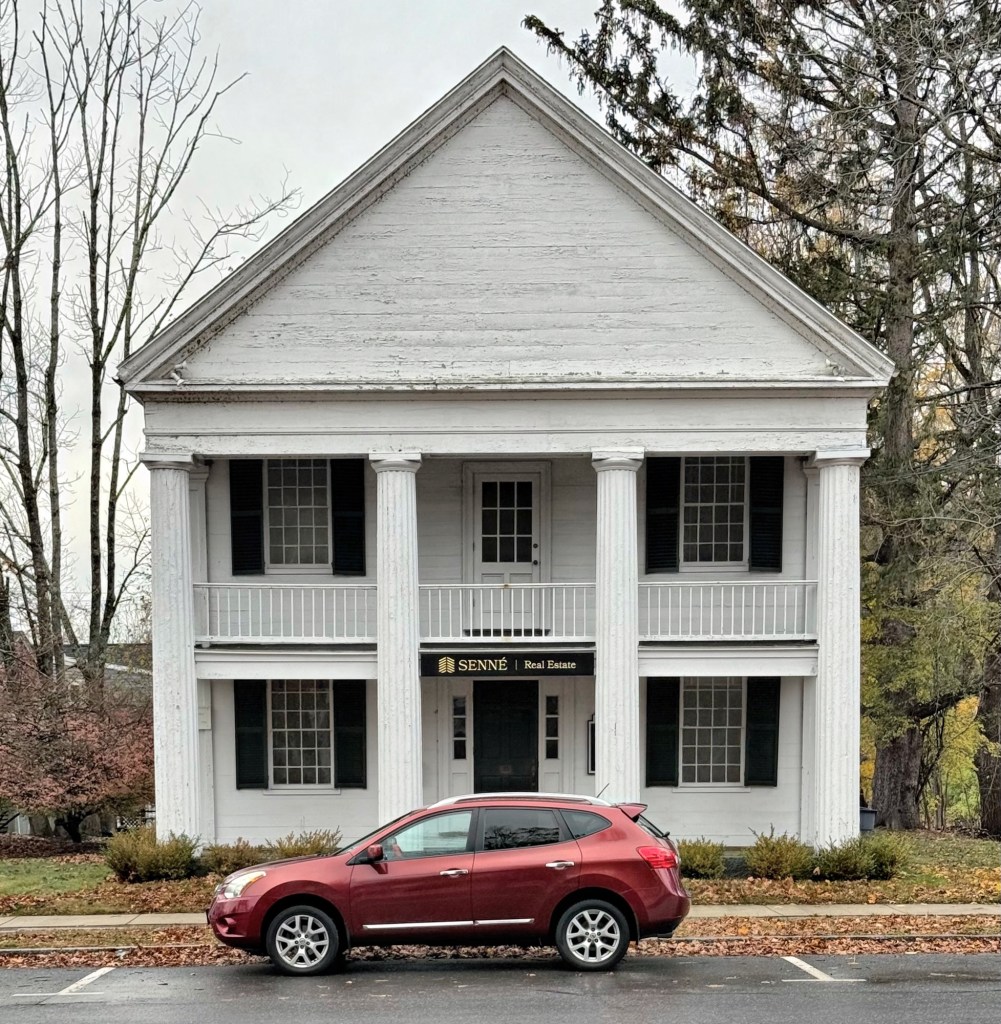
Old Wayland Town House – Lovell’s Market // 1841

The Old Wayland Town House on Cochituate Road is an imposing Greek Revival temple-front building that has served various uses for the community. The structure was built in 1841 to serve as Wayland’s first municipal building and it was referred to as the Town House, with a large classroom and a small entry space on the first floor and a town meeting hall on the second. In 1850, the Wayland Free Public Library was opened in the building, in a small room in the front of the building. The small building was quickly outgrown for its civic uses, and in 1878, Wayland built a new, large Stick style town hall (demolished in 1958). The old Town House was sold to Lorenzo Knight Lovell (1837-1909), who soon after converted the Town House into a dry goods and grocery store known as Lovell’s Market. Following Lorenzo Lovell’s death, his son William S. Lovell ran the store until about 1922 when he leased the building to Lawrence Collins, who remained here for nearly 60 years operating his own store. Collins Market was eventually purchased in the late 1980s and converted to office space, which remains today.
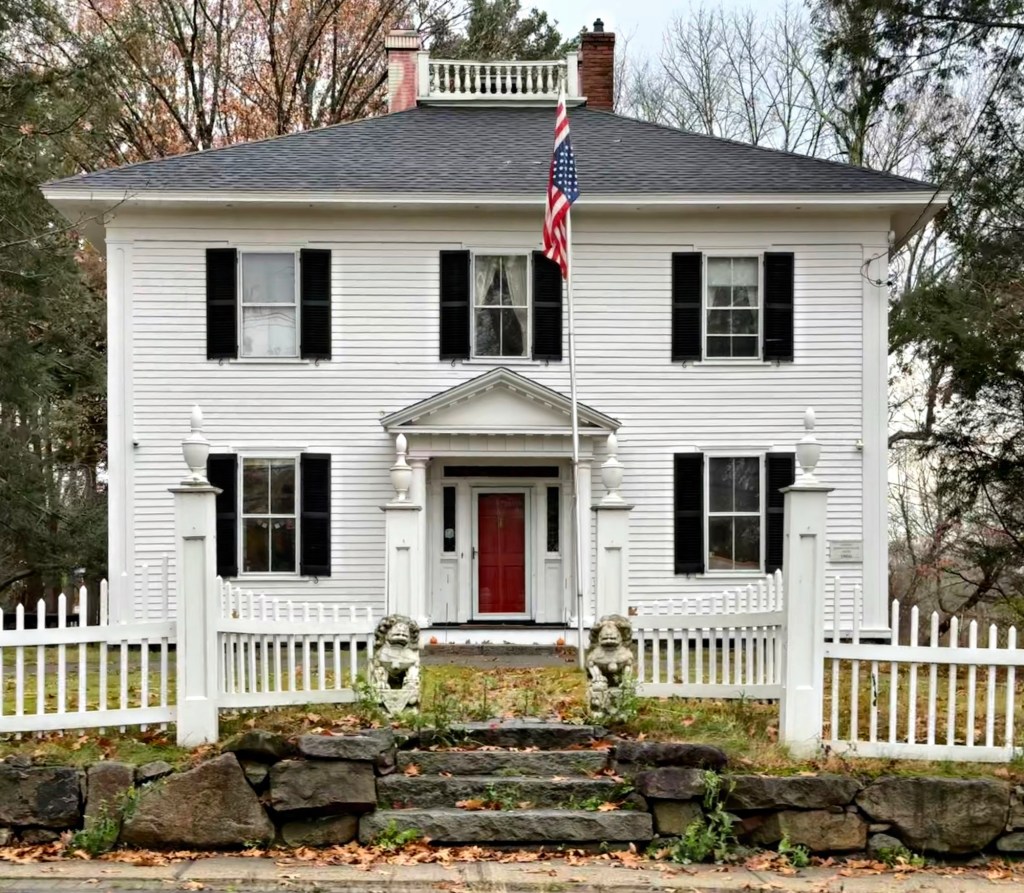
Pousland House // c.1865

Built around 1865, this stately residence in Wayland, Massachusetts, was originally owned by sea captain, Edward Pousland who came to Wayland with his family around 1859. Interestingly, Mr. Pousland continued working as a sea captain, travelling to Salem and Beverly, where he would be at sea for months at a time. Likely due to his profession, the house features a ‘widow’s walk’, a common feature of houses by the sea where folklore holds that the wives of ships’ captains looked out for the return of their husbands. Edward, his wife Hannah W. (Langmaid) Pousland lived in this house at least until Edward’s death. After successive ownership, the property was purchased by Jonathan Maynard Parmenter (1831-1921), who gifted the house to the First Parish Church across the street, for use as a parsonage a use that continued until 1984 when the church sold the house back into private ownership. The house, designed in the Italianate style, was “modernized” in the early 20th century with Colonial Revival alterations, which added the portico and likely removed the brackets at the eaves.

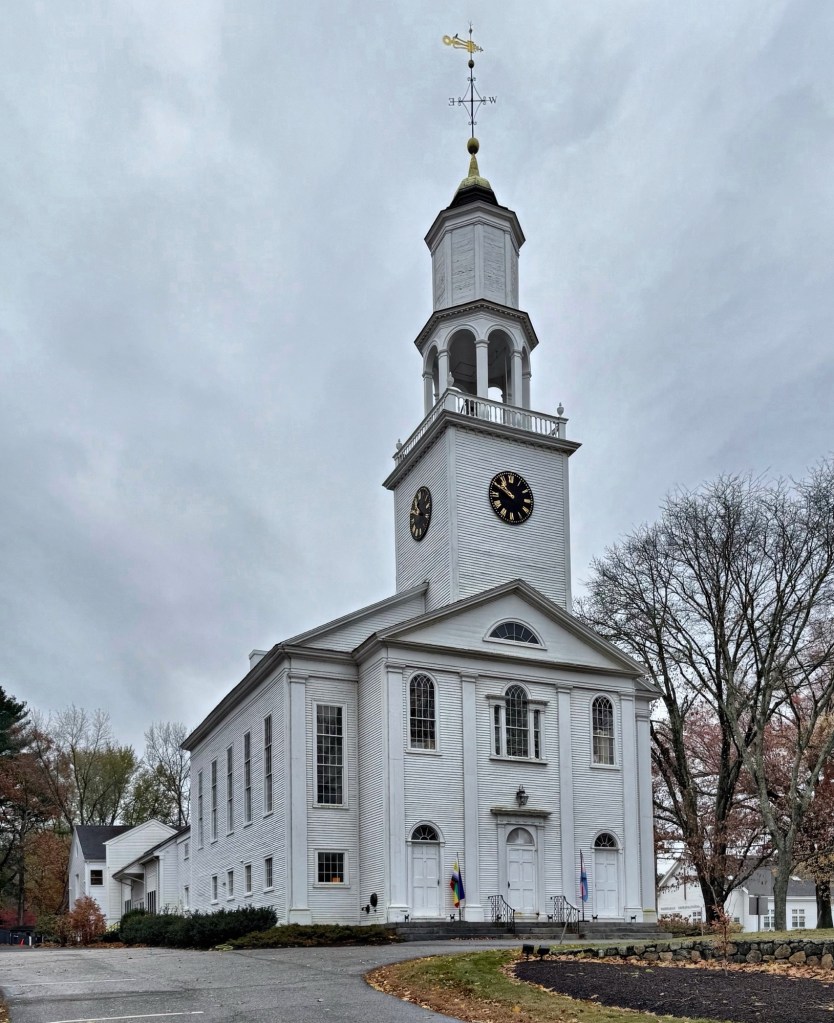
First Parish Church, Wayland // 1814

The First Parish Church of Wayland, Massachusetts, is an iconic church that displays the typical early 19th-century meetinghouse form with Federal-style elaboration. Built in 1814, the church is two-stories with a five-bay gabled-front structure with a projecting enclosed portico of three entrance bays, and a four-stage bell tower that rises above the façade. Today known as Wayland, the town was originally called East Sudbury, after it split away from the western parish in 1780. In 1835, members of town meeting voted to rename East Sudbury “Wayland” in honor of Dr. Francis Wayland, a temperance advocate, abolitionist, and then president of Brown University. The First Parish Church of Wayland was built by Andrews Palmer of Newburyport, who used an Asher Benjamin design. The bell was cast by Paul Revere and Sons and first lifted into the bell tower in 1814. The property also includes the historic, twelve-bay horse/carriage sheds where parishioners would “park” their horses and carriages while attending services.

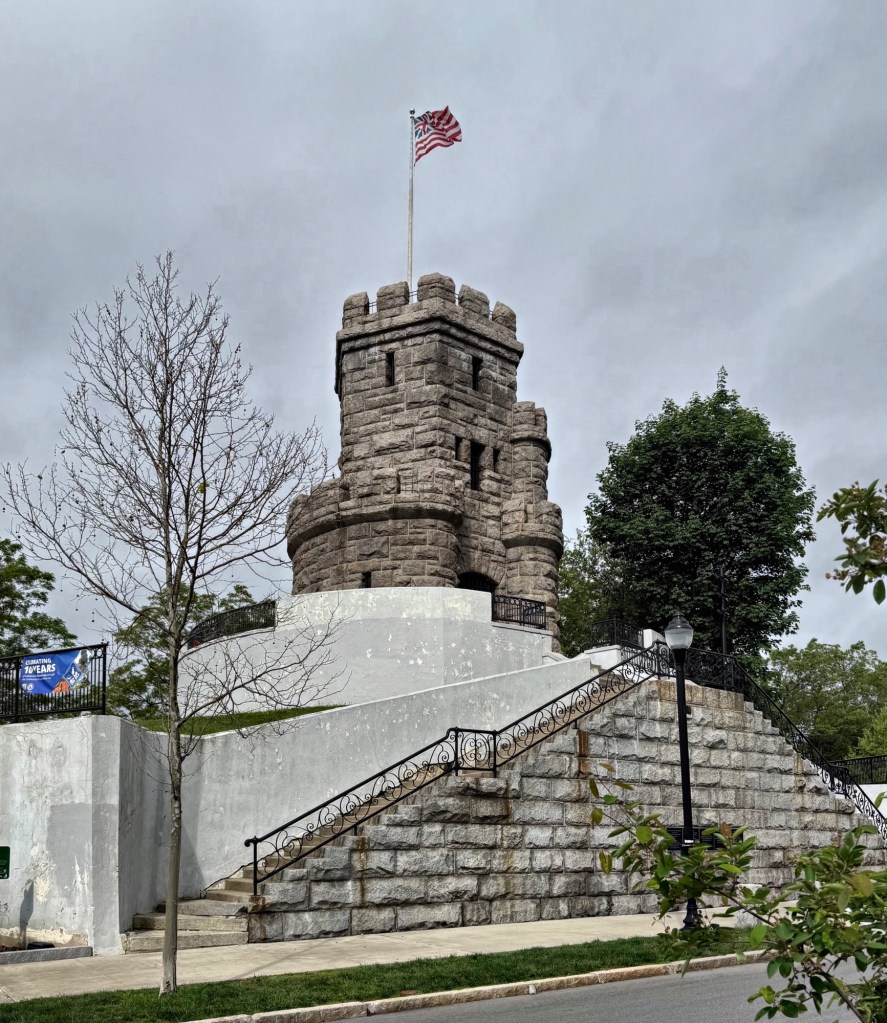
Prospect Hill Tower // 1903

Originally part of the town of Charlestown, Massachusetts, Prospect Hill is now located in the nearby town of Somerville, established in 1842. As one of the hills closest to the city of Boston, the hill played a pivotal role in the line of defensive works constructed after the Battle of Bunker Hill. The area developed slowly, with old farms around Prospect Hill, largely subdivided in the late 19th century for residential development. Around this time, in 1886, the Prospect Hill Park Association was formed, and in 1898, land here was purchased for a public park. The focal point of the iconic neighborhood park is the stone castle structure at the top. Completed in 1903 to commemorate soldiers of the Revolutionary and Civil wars, the rusticated granite tower was designed by Ernest W. Bailey, the City Engineer of Somerville, who also worked to landscape the surrounding park. The granite blocks were shipped in from Deer Isle, Maine. By the 1960s, the structure began to suffer from deferred maintenance. The City of Somerville added the concrete retaining walls to shore up the landscape, which worked for some time. Decades later in the early 2000s, the structure was at risk of further deterioration. Through Community Preservation Act funds, the tower and surrounding landscape were restored and made safer, making this important memorial accessible and enhanced for all to enjoy. 

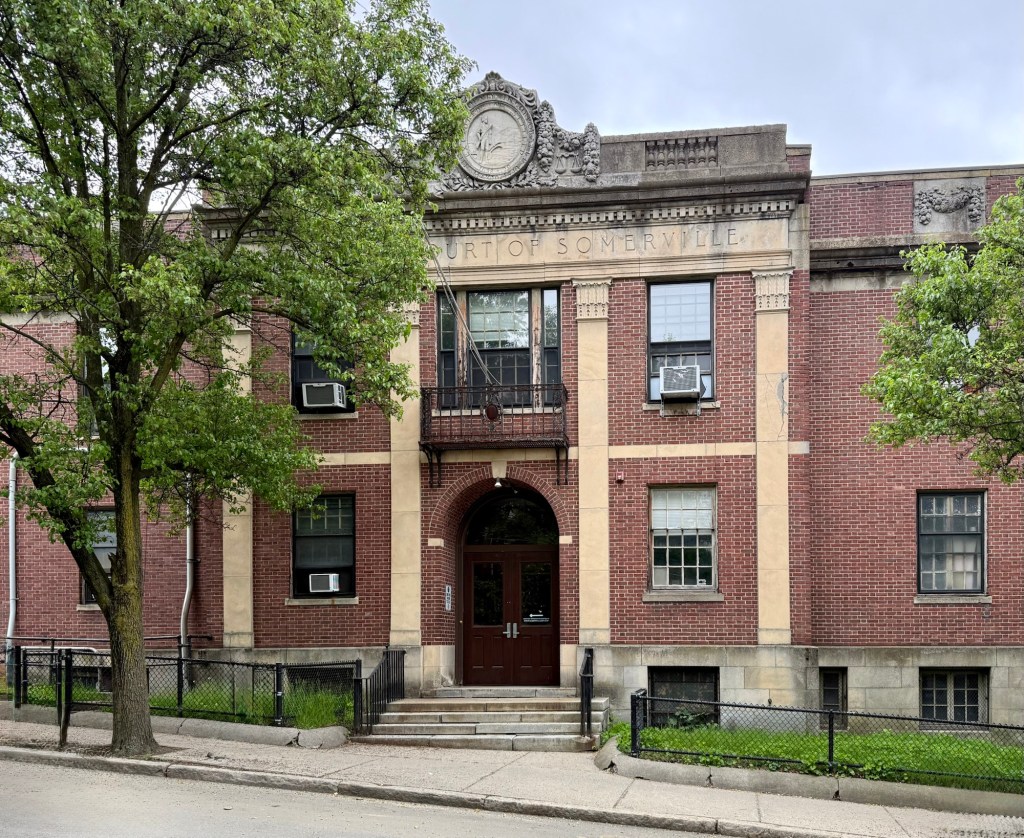
Former Somerville District Courthouse // 1925

The former Somerville District Courthouse at 19 Walnut Street in Union Square, is a two-story masonry building constructed in 1925. While much smaller and less ornate than other courthouses, the small building is significant as the first courthouse built in the young city and an architecturally significant example of a Classical Revival style civic building designed by architect Charles R. Greco. The building served as the Somerville District Courthouse until the late 1960s, when the legislature authorized a new district courthouse. The City of Somerville purchased the old courthouse in 1969, and the building has housed offices for the City’s Recreation Commission since that time. Interestingly, the building was used for the filming of a courthouse scene in the 1980’s “Spencer for Hire” TV detective show.

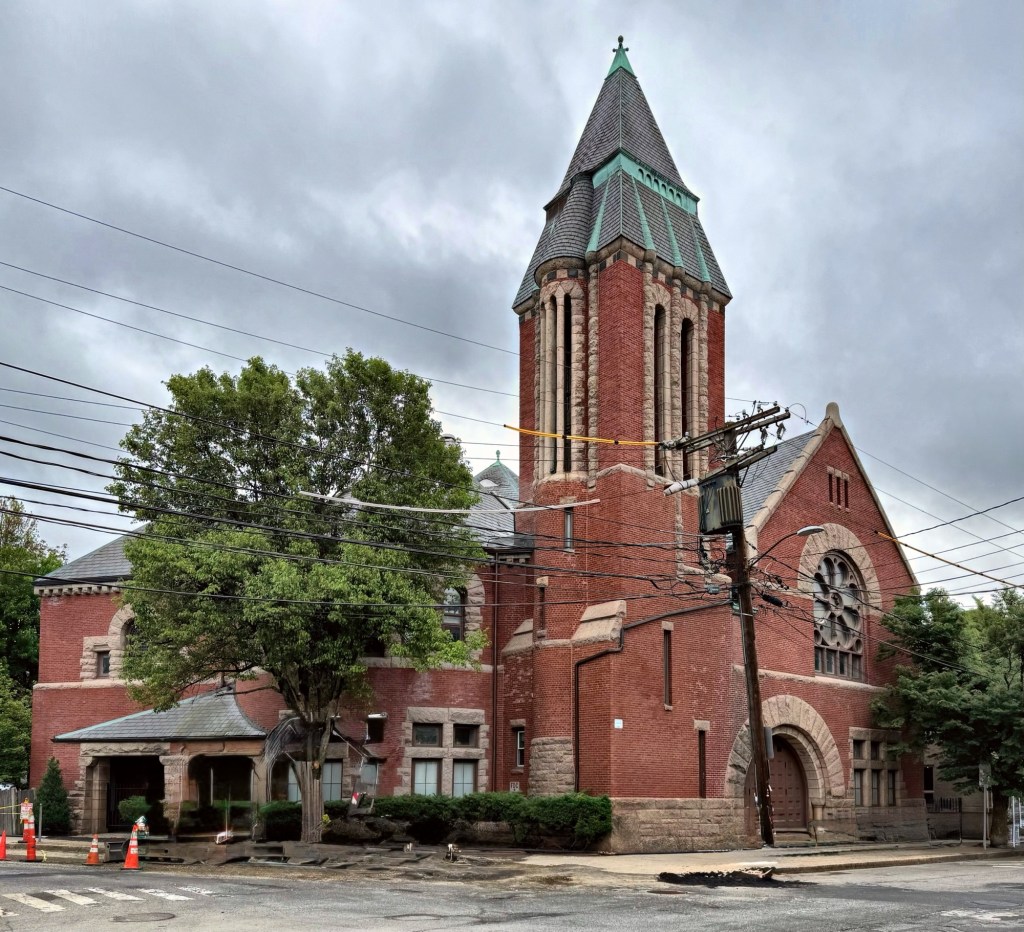
Prospect Hill Congregational Church // 1887

Located at the corner of Bow and Walnut streets in Somerville’s Union Square commercial center, the former Prospect Hill Congregational Church is one of the finest examples of the Richardsonian Romanesque style in the city. The congregation here was established in 1874 and originally met in private residences before erecting its first building on Warren Street in 1876. After two decades, the membership and prosperity of the congregation grew, allowing it to purchase a more prominent lot nearby and the ability to hire an architect for a new, substantial building. Architect Henry Squarebridge McKay furnished plans for the masonry building in 1887, clearly taking inspiration from the late Henry Hobson Richardson, who died the year prior. The church is constructed of brick with stone trimmings, features irregular massing with tall belfry tower, and a large arched entrance. After WWII, the congregation dwindled, and the building was later sold off. In the 1980s, the church was converted to residential use but without altering the exterior. 

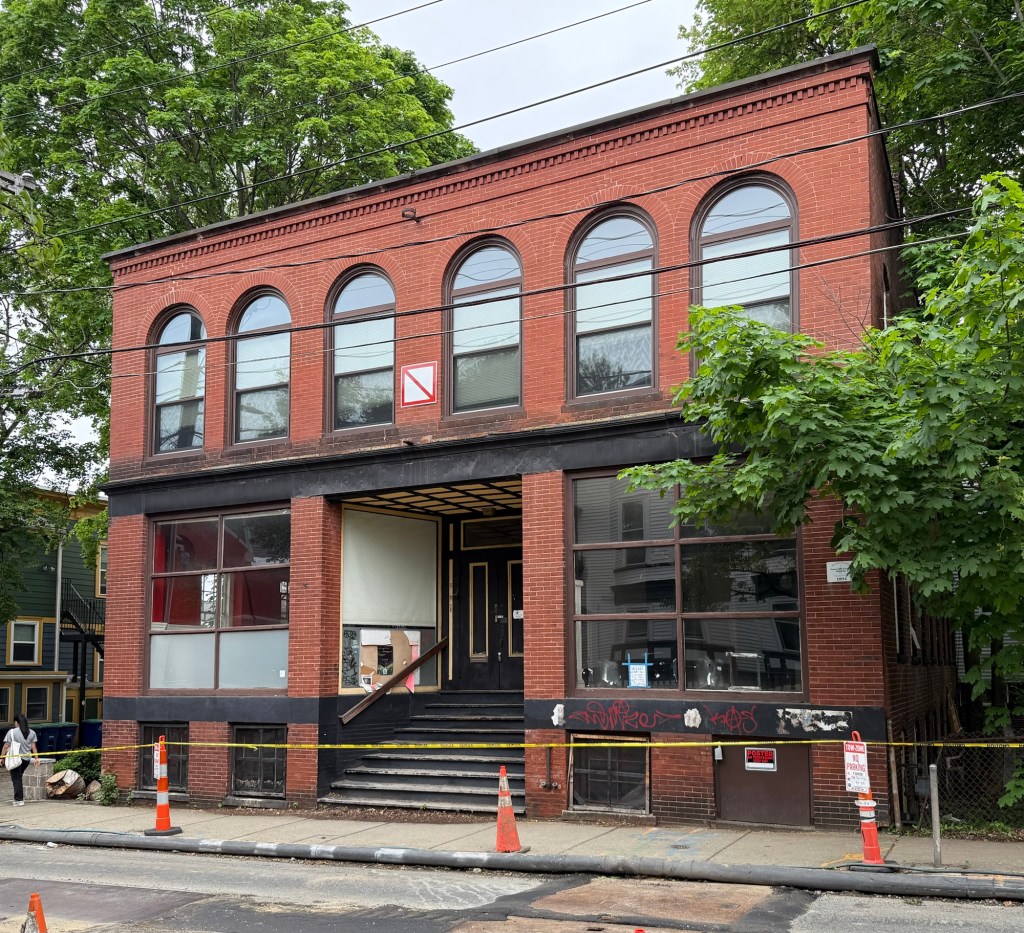
Somerville Journal Building // 1894

The Somerville Journal was a local paper founded in 1870. The paper was originally published and printed in an office in Boston, but moved to Somerville by the late 1870s. After about 15 years of renting space in a commercial building in Somerville’s Union Square, the paper purchased a lot nearby and began planning for its first purpose-built building for their company. This structure on Walnut Street was built in 1894 to house a new generation of printing equipment and increased production for its growing market, along with the estimated 50 employees at the time. The building was designed by William H. Gerrish (1865-1915), an engineer. Romanesque Revival in style with the arched second-story windows, the building along with its plate glass storefronts, have been an important landmark in the Union Square area for over 130 years. The Somerville Journal vacated the building in the 1950s and the building was used as a photo developing and printing studio. During the 1970s the building was used as a youth recreation center for the city of Somerville. It has been used as artist studios since the 1970s and today, appears to be vacant. Does anyone know what the plans are for this building?

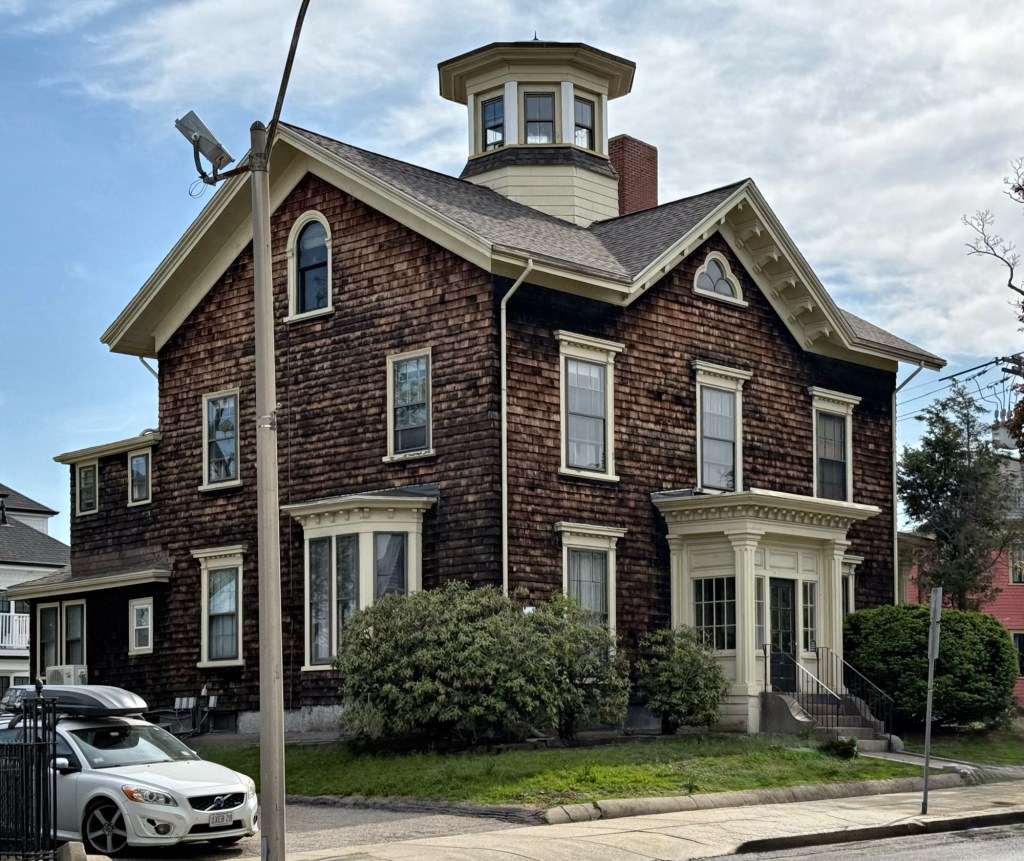
Samuel & Susan Gaut House // c.1855

Built in the 1850s, the Samuel and Susan Gaut House on Highland Avenue in Somerville, Massachusetts, is one of the finest examples of a symmetrical, three-bay, Italianate style house in the city. Samuel Norton Gaut (1816-1891) worked as a baker with shops in downtown Boston, and married Susan Dutton (1824-1892), the daughter of a wealthy shipbuilder in Newburyport. The Gaut House was listed on the National Register of Historic Places for its architectural significance as an intact example of a gabled Italianate style home. Special details include the brackets in the gable, trefoil window in the peak, and the octagonal cupola at the roof. Early 20th century alterations include the shingle siding, replacement windows, and enclosed portico, but neither truly detract from the beautiful home.

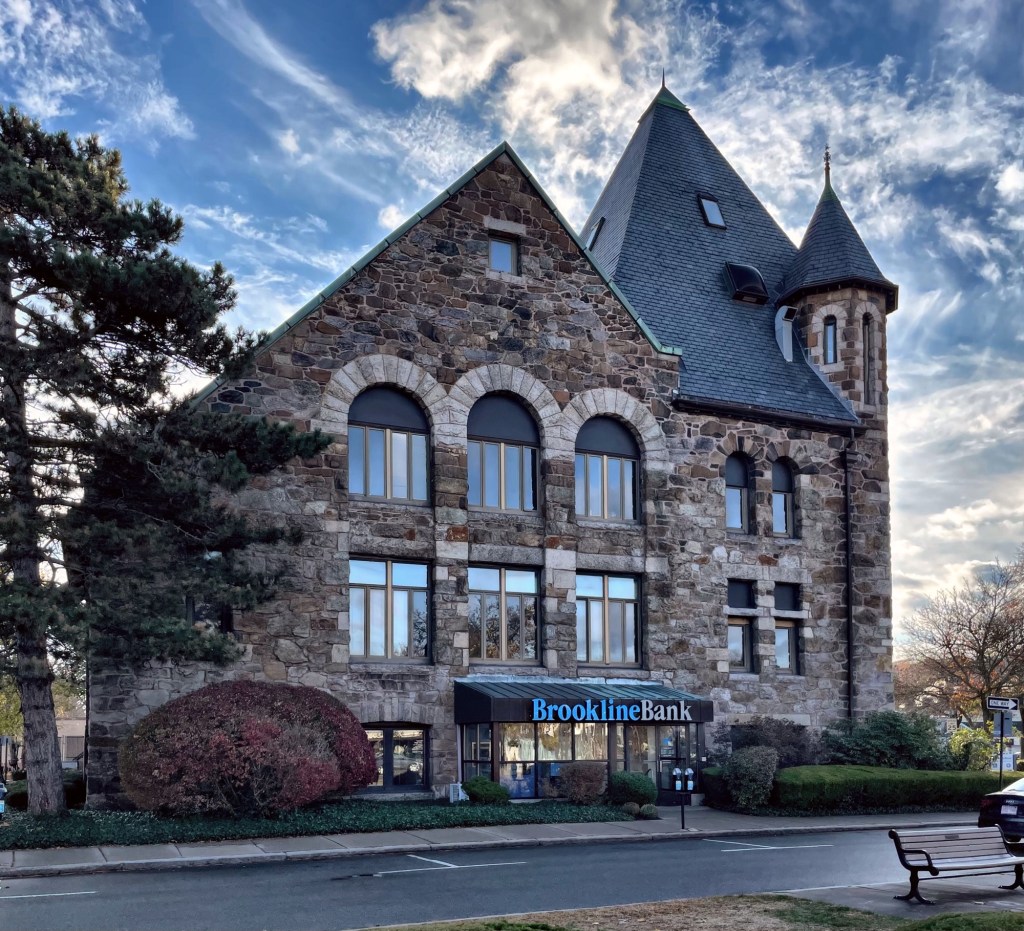
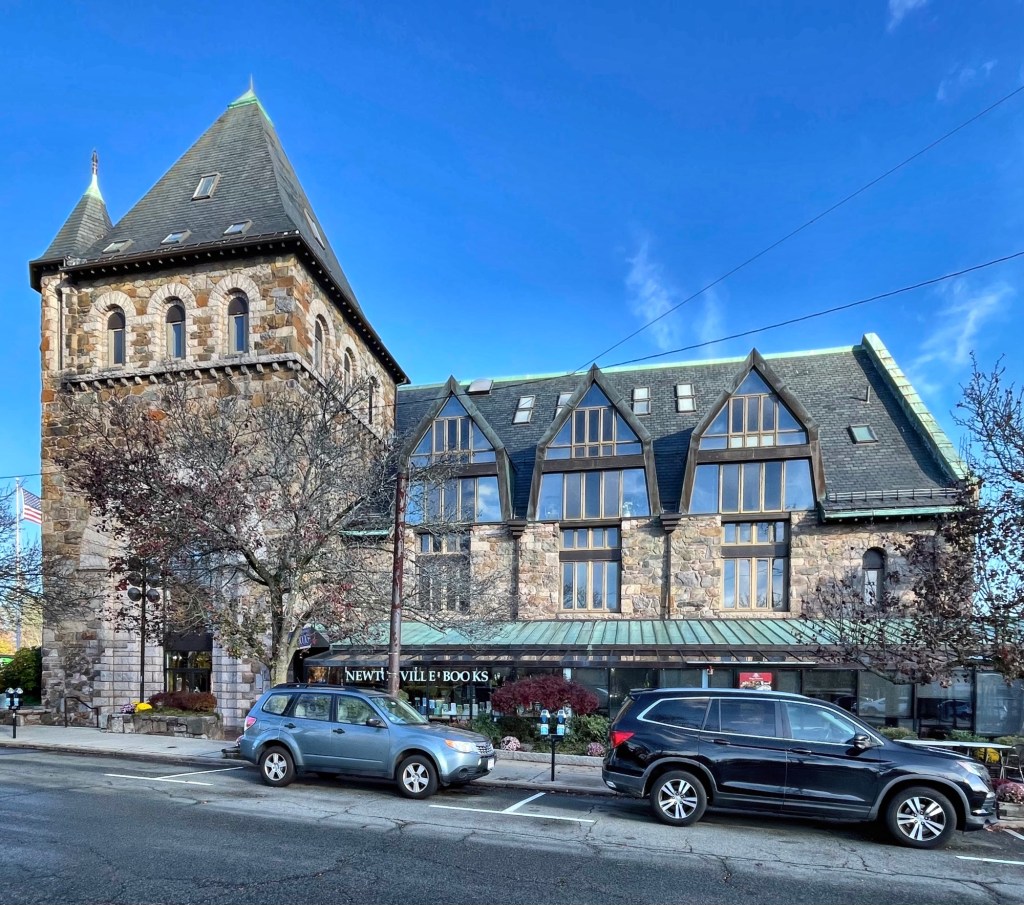
Former Newton Centre Methodist Episcopal Church // 1899

This building, the former Newton Centre Methodist Episcopal Church, is Romanesque in style, and is one of the more notable adaptive reuse projects in Newton. The church was designed by the esteemed architectural firm of Andrews, Jacques & Rantoul and completed in 1899 for the local Methodist Episcopal congregation. The edifice is built of locally quarried rubblestone, often called Roxbury Puddingstone, and trimmed with rough cut Milford granite. The granite is used at the windows, forming the arches and heads, and most strikingly in the large arched entrance. The church eventually closed and was renovated with modern windows, additions, and more, and currently houses a restaurant, bank, book store, and professional offices.

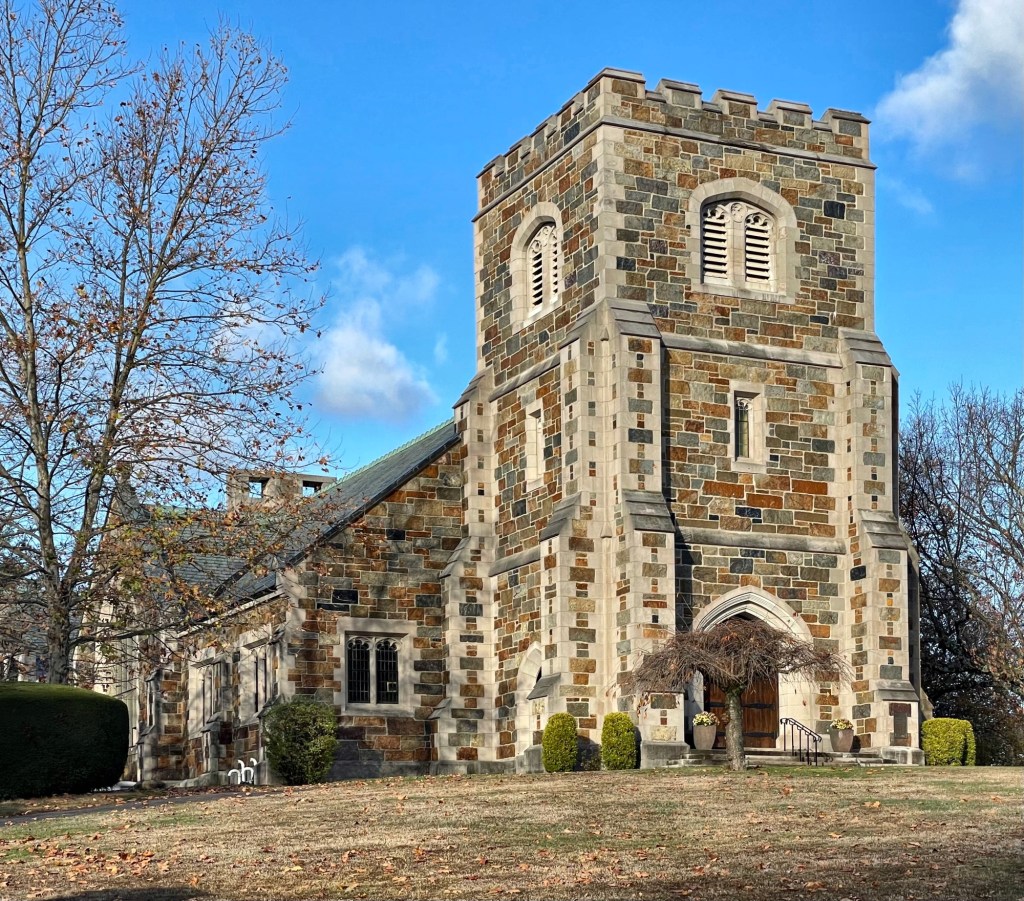
Former First Congregational Church, Newton // 1904

The former First Congregational Church (now the Greek Evangelical Church of Boston) of Newton Center, Newton, is a landmark example of the Neo-Gothic architectural style for a church building. Built in 1904, the structure resembles an English village church in the form of a Roman Cross with short trancepts. The structure is constructed of Quincy granite and was designed by the architectural firm of Shepley, Rutan & Coolidge. The First Congregational Church of Newton was originally established in 1664 as a parish church when Newton was still a part of Cambridge (then known as Newtowne). The parish has had six meeting houses built by the Congregation, with the last four on this site. Seeing dwindling membership in the mid-20th century, First Church in Newton dissolved in 1972, after more than 300 years of service to the Newton community. Luckily, the newly formed Greek Evangelical Church of Boston would buy the church that same year and has maintained the significant edifice ever-since!