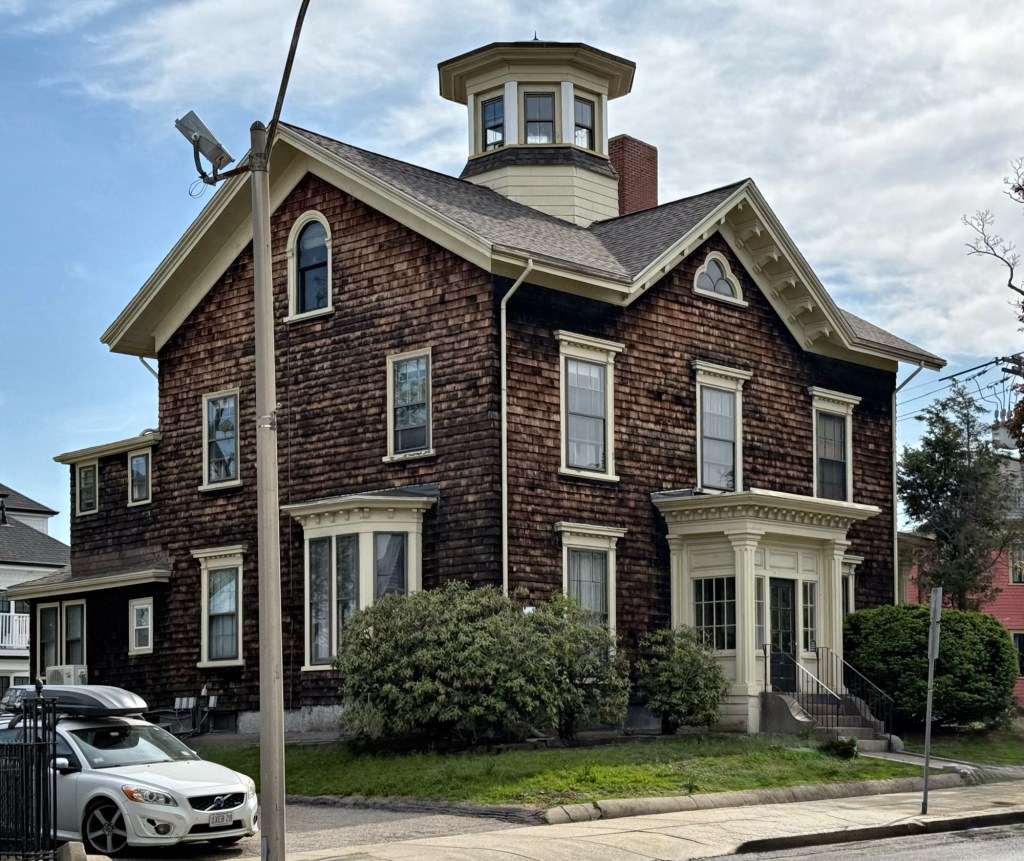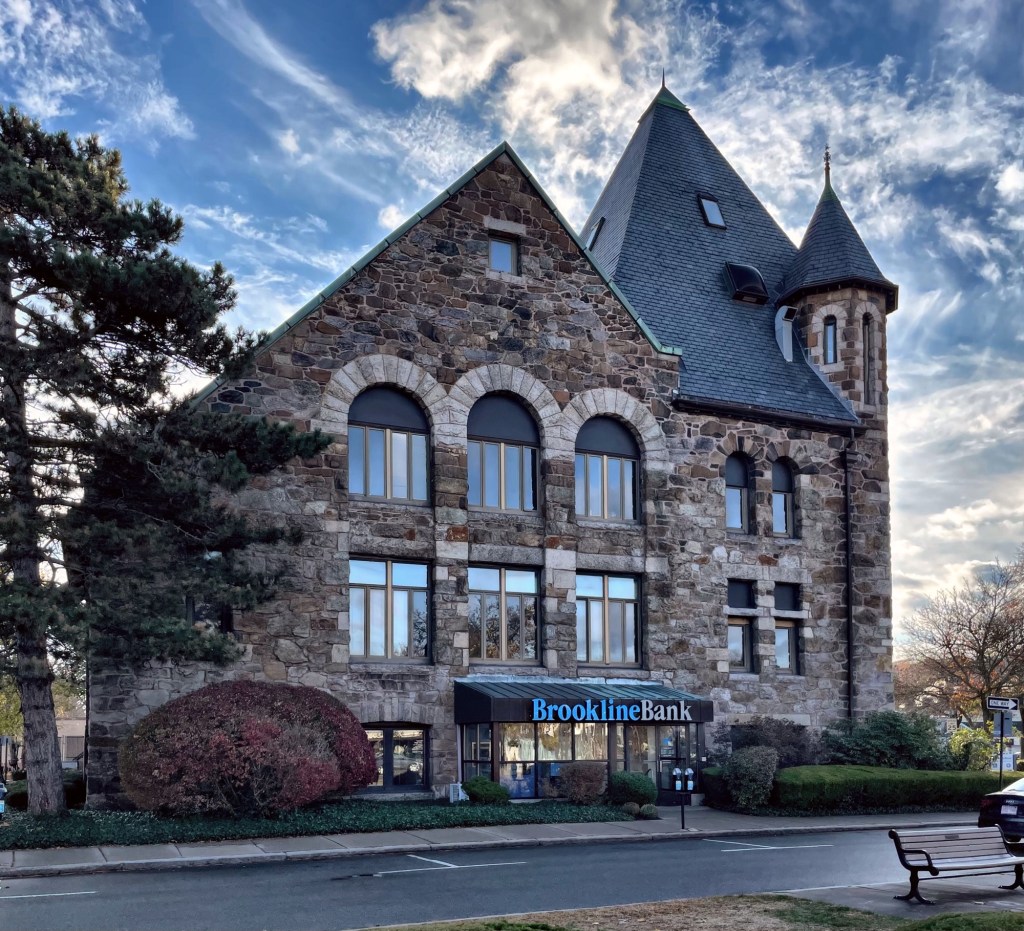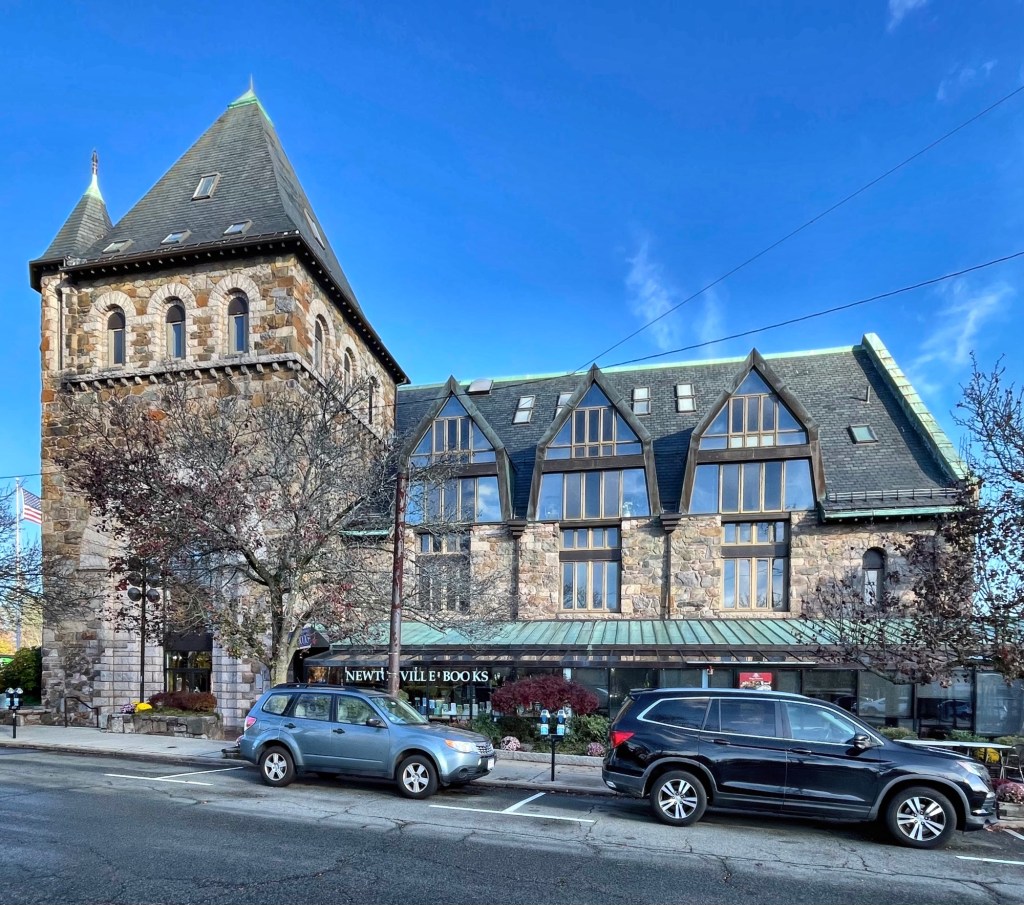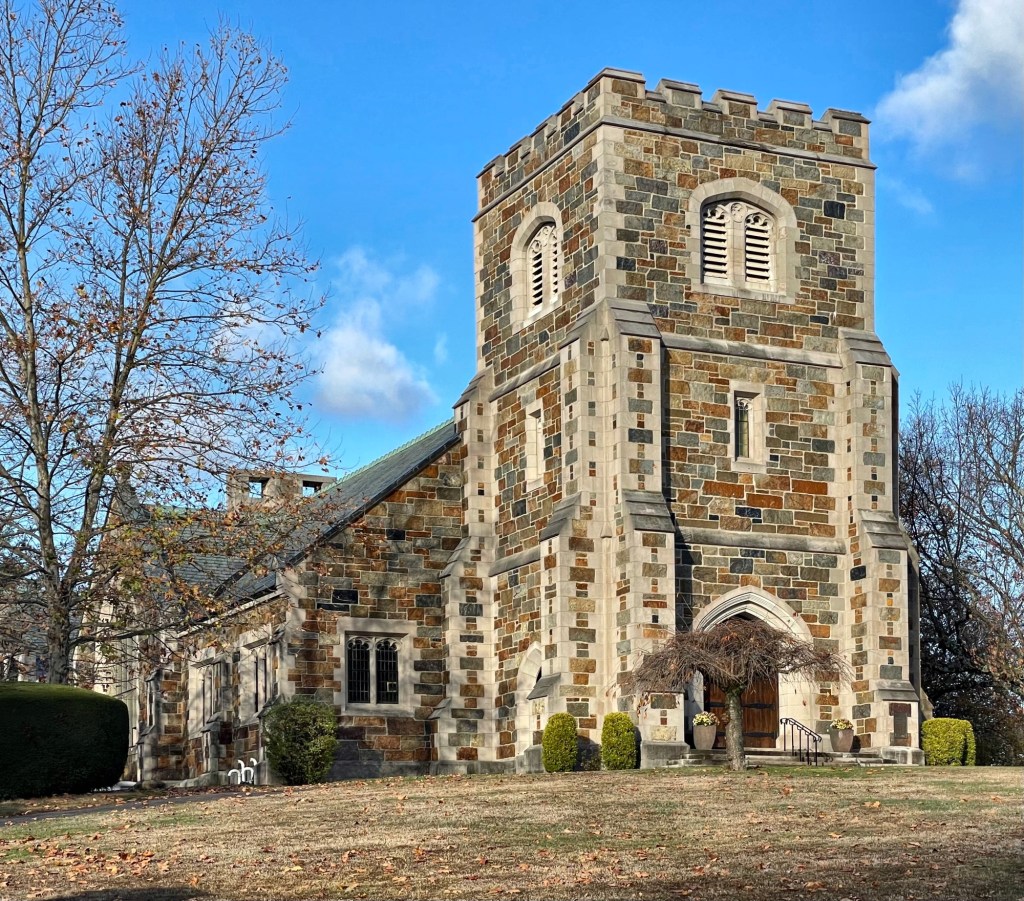
Spot Pond, now encompassed by the Middlesex Fells Reservation, became a site of country retreats for Boston businessmen in the mid-late 19th century. One of the property owners was Charles Copeland, a confectioner and ice cream dealer, had ice houses on Spot Pond where he harvested ice for production into ice cream in Boston area shops. Copeland’s main house was located near the ice houses at the eastern shores of the pond, but this home was also owned by him in the 1870s. This residence was possibly rented out by Copeland or occupied by one of his many children. It remains a great example of the Stick and Shingle styles of architecture. The residence is maintained as part of the Massachusetts Department of Conservation and Recreation’s property in the Fells Reservation park.
Built in the 1840’s as a carriage barn, and once attached to a nearby mansion now gone, this barn sits near the eastern shores of Spot Pond, a major feature in the Middlesex Fells Reservation, just north of Boston. The barn sits in Stoneham, Massachusetts, and was a part of Frederic Tudor’s rural estate out in the “country”. Frederic Tudor is best known as Boston’s “Ice King”, he was the founder of the Tudor Ice Company and a pioneer of the international ice trade in the early 19th century. He made a fortune shipping ice cut from New England ponds to ports in the Caribbean, Europe, and as far away as India and Hong Kong. After the turn of the 20th century, many of the buildings surrounding Spot Pond were razed as to secure the watershed, protecting the surrounding town’s drinking water. Frederic Tudors large estate was razed, but the barn survived. Years of deferred maintenance and lack of preservation by the late 1990’s made the old barn threatened with demolition. This was exacerbated by a fire damaging the roof and in 2003, a wall collapsed. Local preservationists rallied together to acquire funding (both private and public grants) to restore the building. It remains a highlight on the walks around Spot Pond and Middlesex Fells Reservation, and is a visual link to the earlier days in what was once remote “Boston”.
The Middlesex Reservoir and Spot Pond are located just north of Boston and have long been a little piece of the outdoors near the heart of New England’s largest metropolitan area. In 1894, the Massachusetts Legislature established the Metropolitan Parks Commission, which was endowed with the authority to acquire, maintain, and make recreational spaces available to the public. By 1900 the new commission had acquired 1,881 acres for the reservation. Part of this reservation, Spot Pond, is a natural water feature that for a number of years was integrated into the Boston area public drinking water supply, servicing the towns of Stoneham, Melrose, and Malden with drinking water. As part of this, gatehouses were built with hardware to open and close the pipes delivering the water to the adjacent towns. This gatehouse is in Stoneham was built in 1900 by the architectural firm of Shepley, Rutan & Coolidge, to not only protect the machinery inside, but to beautify the parkland, then maintained by the Metropolitan Parks Commission. The Renaissance Revival style building is today surrounded by a tall chain link fence, which really diminishes its presence in the landscape (but it does help prevent graffiti).
Woodlawn Cemetery in Everett, MA was established in 1850 as a rural, private cemetery in the tradition of Mount Auburn Cemetery in Cambridge. The story of Woodlawn Cemetery began in 1850 when a group of ten prominent Bostonians petitioned the Massachusetts General Court to organize a corporation “for the purpose of procuring, establishing and preparing a cemetery or burial place for the dead in Malden” (present-day Everett was established in 1870 from Malden). Adjacent to the Cemetery Gate and Tower (last post), the Woodlawn Cemetery Lodge replaced an 1850s lodge and office constructed of wood, in the Gothic-style, that was deemed unsatisfactory for later boards managing the cemetery. The group hired Boston architect William Hart Taylor to design the gate and lodge, the latter in the Classical Revival style. The buff brick building features terra-cotta trim and a red tile roof with dentil cornices and copper cresting along the ridges and eaves. The square entry tower has a columned belfry and incorporates additional Classically-inspired features including Ionic columns, moldings, swags, and wreaths, which looks like a Greek Temple plopped onto the top. Gorgeous!
Woodlawn Cemetery in Everett, MA was established in 1850 as a rural, private cemetery in the tradition of Mount Auburn Cemetery in Cambridge. The story of Woodlawn Cemetery began in 1850 when a group of ten prominent Bostonians petitioned the Massachusetts General Court to organize a corporation “for the purpose of procuring, establishing and preparing a cemetery or burial place for the dead in Malden” (present-day Everett was established in 1870 from Malden). When you approach the main entrance of the cemetery, you are greeted by the entrance gate and tower. Completed in 1897 to replace an earlier wooden gate, the Entrance Gate consists of a central stone tower and two side entrances. The gate, tower, and adjacent lodge (next post) were designed by Boston architect William Hart Taylor, who was buried at the cemetery upon his death in 1928. The tower has decorative sculpted terra cotta which includes winged angels at the corners with outstretched arms that once hold trumpets. Below the medallion which is centered on each side, there is the bust of a winged child, supposedly a carved likeness of the architect’s young son who died at the age of six and is buried at Woodlawn.
Albert Norton Parlin (1848-1927) was born in Everett, Massachusetts to Ezra Parlin and Nancy Pickering-Parlin. At a young age, Albert lost both his parents – his mother passed in 1853 at the age of 26 and his father passed in 1858 at the age of 37, both succumbing to “consumption” (tuberculosis). At the age of nine, young Albert had become an orphan, and was raised by his grandmother at the Pickering Estate. He found his first job as a floor-sweep and errand boy in a retail cloak store. At seventeen, Albert Parlin began working with Magee Furnace Company, a Boston-based company where Mr. Parlin spent twenty-eight years of his professional career, moving up the ranks to become treasurer of the company. After he became successful, he gave back to his hometown, when in 1892, he donated his familial home and money to the City of Everett for the erection of the Parlin Memorial Library, to honor his late son. Parlin was not done giving to his hometown. He also left funds and a large piece of land to the City of Everett for a new Junior High School in 1915. The architectural firm of Desmond & Lord was commissioned to design the school which is set deep on the lot to give the building a beautiful front lawn. The 1931 building blends Art Deco and Tudor Revival styles with a large central panel.
The Frederick E. Parlin Memorial Library is arguably the most architecturally significant building in the City of Everett, Massachusetts. Constructed of buff brick, sandstone and terracotta, it displays characteristics of the Richardsonian Romanesque style including the main entrance set within a recessed arch at the base of a square tower with arched openings. In 1892, Albert Norton Parlin, a local businessman, donated to the City of Everett the Pickering Estate, his birthplace and familial home, to be torn down and a library erected on the parcel in memory of his son, Frederick E. Parlin, who died in 1890 at the age of eighteen. Albert Parlin gave to the City an additional $5,000 to aid in the building of the Frederick E. Parlin Memorial Library. The original 1894 library as well as a 1911-1912 addition were designed by local architect John Calvin Spofford who positioned the building to face a small triangular park. By the 1940’s, the building was outgrown, but it wasn’t until 1982 that a plan was set in motion to renovate the original building and to construct an addition. Childs, Bertman, Tseckares was chosen to draw up the architectural plans, and ground was finally broken in the spring of 1990. With construction of the new addition, the building is almost three times its original size and handicapped accessible, all with an appropriate, Post-Modern design.
This cute brick house in Boxborough, MA, was built c. 1832 by the Revolutionary War veteran Peter Wheeler where he lived until his death in 1847. The home sits on a heavily trafficked street, yet retains much of its architecture and even historic windows, despite its conversion to commercial use! The brick house features e 6/6 double-hung units on the first story and 3/3 in the second, with the central window featuring stunning stained glass.
Damn I just love old brick Federal houses! This home in Boxborough, MA was constructed in 1804 for Dr. Daniel Robbins, who owned a one-story wooden home on the site in 1798. As building materials were expensive at the time, Robbins likely incorporated that structure as one of the side additions to this new brick house you see here. Robbins served as a town doctor until his death in 1837, and would treat patients in his home or ride on horseback to treat sick residents nearby.
Tracing the history of old New England homes can be difficult and finding the history of this house is no different! The rural property here in Boxborough, MA, was owned in 1731 by Moses Foster, a teacher according to a deed of that year. A home was built here, but it appears it was a one-story house, which is verified as the 1798 tax lists report two single-story houses on the property. It is likely that a subsequent owner modified one of the homes and added a second story to fit a growing family here, probably in the early 19th century. To add more layers to this, the historical commission’s research lists the house date as c.1731, the sign on the house reads c.1778, and my estimation is c.1810. Who said historic preservation and house research is easy?!
One thing I really love about small towns in New England is the prevalence of amazing old homes on the winding back roads. Located in Boxborough, MA, the Jacob Littlefield Farmhouse showcases the agricultural character and charm seen in the town. The farmhouse and outbuildings were built by Jacob Littlefield, who likely hired a housewright from town as the home is a near match to a home built on a nearby street. Mr. Littlefield was a farmer from Wells, Maine with seven children and a wife named Anna. After his death, his wife Anna owned the farm, until her death in 1896. Their son Albert ran the farm from about 1896-1922, after which time Jacob’s grandson Earl was the owner. Earl was taxed in 1928 for ownership of two horses, 17 cows, a bull, the house, barn and shed, tool house, ice house, root house, hen house, garage, and a second house on 101 acres. He resided here until 1929 when it was sold out of the family. Since then, subsequent owners have restored the home and the various outbuildings to maintain the architectural and historic integrity of the property. We need more stewards of old homes like this!
The area which became the town of Boxborough, Massachusetts, was first inhabited by the Native Americans of the Nipmuc and Pennacook tribes. Land in Boxborough was not settled by colonists until the beginning of the eighteenth century by farmers looking for fertile land to establish farms, who branched out from nearby Acton. Boxborough was formed from Harvard, Littleton, and Stow in 1783 and was incorporated as its own town. With the exception of small local industries including gristmills, sawmills, and cooperages as well as some minor boot and shoemaking, comb-making, and a lime quarry and kiln, Boxborough’s economy remained almost entirely agricultural through the 19th century. The town grew steadily and a Town Hall building was funded by the turn of the 20th century. This Queen Anne/Colonial Revival Town Hall building was constructed in 1901, atop the foundation which was constructed of locally gathered cobblestone by local volunteer farmers. Today, the town retains much of its agricultural heritage, but it is definitely under threat by subdivisions and Neo-Colonial mansions further contributing to Bostons suburban sprawl.
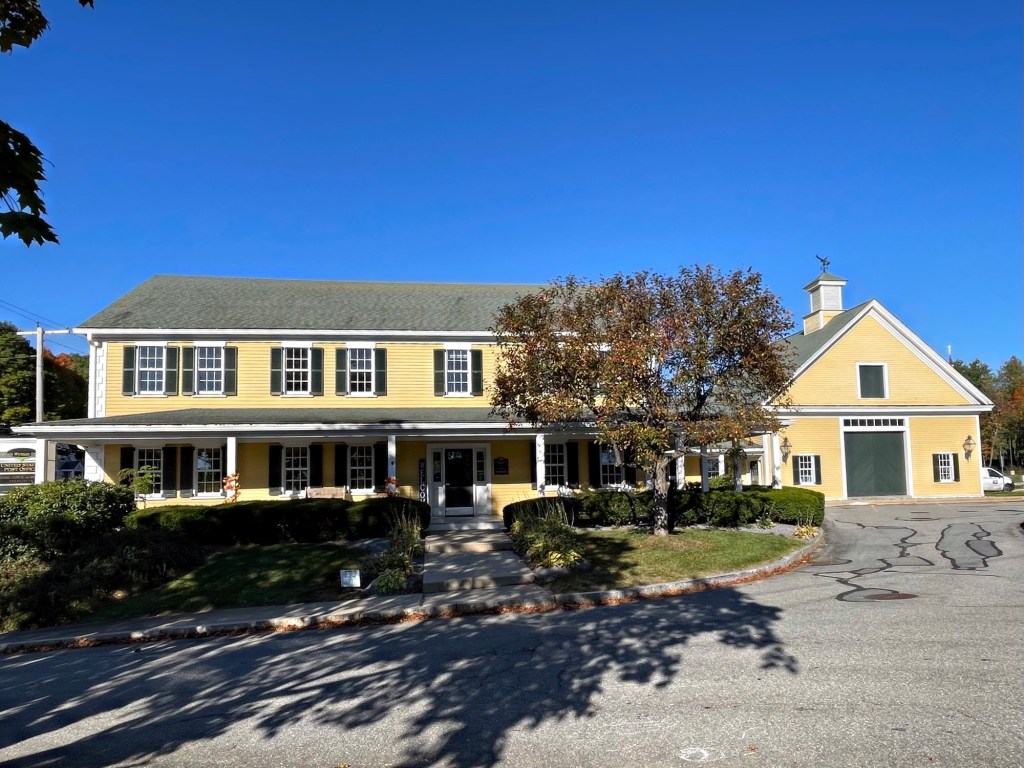
Not far off Main Street in Acton Center, this stunning old Georgian home was built around 1740 for Jacob Hooker a tailor and later served as the home of James Dudley, a blacksmith in the village. After the American Revolution, Acton called on Reverend Moses Adams (1749-1819) to be the minister for the Acton Meetinghouse. The town acquired the old Dudley House for Reverend Adams to reside in with his family. In 1780, the home was enlarged, and possibly given the raised foundation we see today. Mrs. Adams ran a store out of the basement, accessed by the doorway in the brick foundation. After Adams’ death in 1819, the property went to the next reverend in town, until his death decades later. In 1889, a carpenter, Moses Taylor, purchased the home, restored much of the woodwork, and replaced the historic windows with 2-over-1 windows, popular at the time. Moses moved a house on Main Street to make way for the new Acton Memorial Library, and was active in building and renovating homes in Acton until his death.
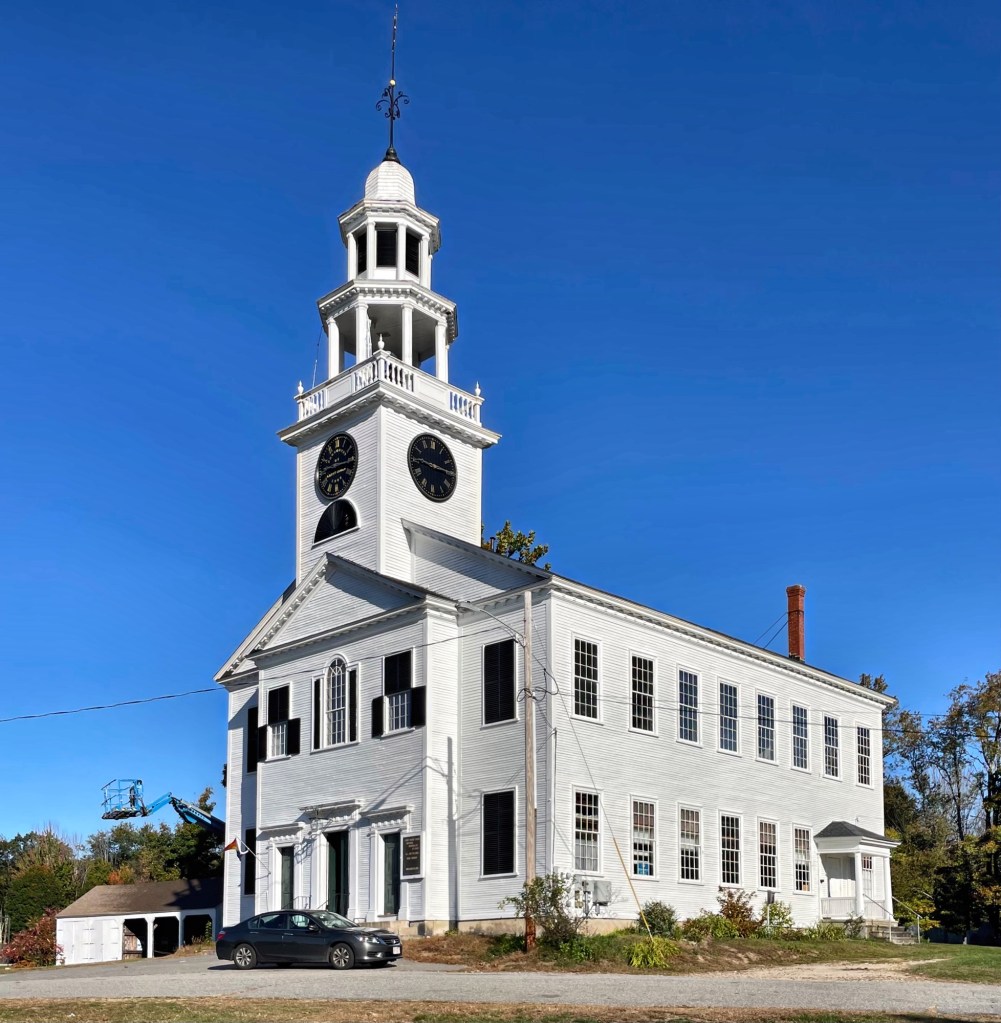
Acton, Massachusetts, was once part of Concord, the first inland colonial town established in the Massachusetts Bay Colony in 1635. 100 years later in 1735, land that we know today as Acton, separated from Concord to become their own town. Acton’s second Meetinghouse was located here in Acton Center, which was selected for its location more accessible to all houses and farms in the town. The Second Meetinghouse was built in 1806, and burned to the ground in 1862. Immediately after, a town committee was formed to construct a new town hall. Opening in 1863, Acton’s Town Hall stands as a stunning Italianate building with tripartite arched windows, corner quoins, a two-stage cupola with clock, and a bold (and historically appropriate) paint scheme. Acton’s Town Hall remains as one of the finest extant in the state.