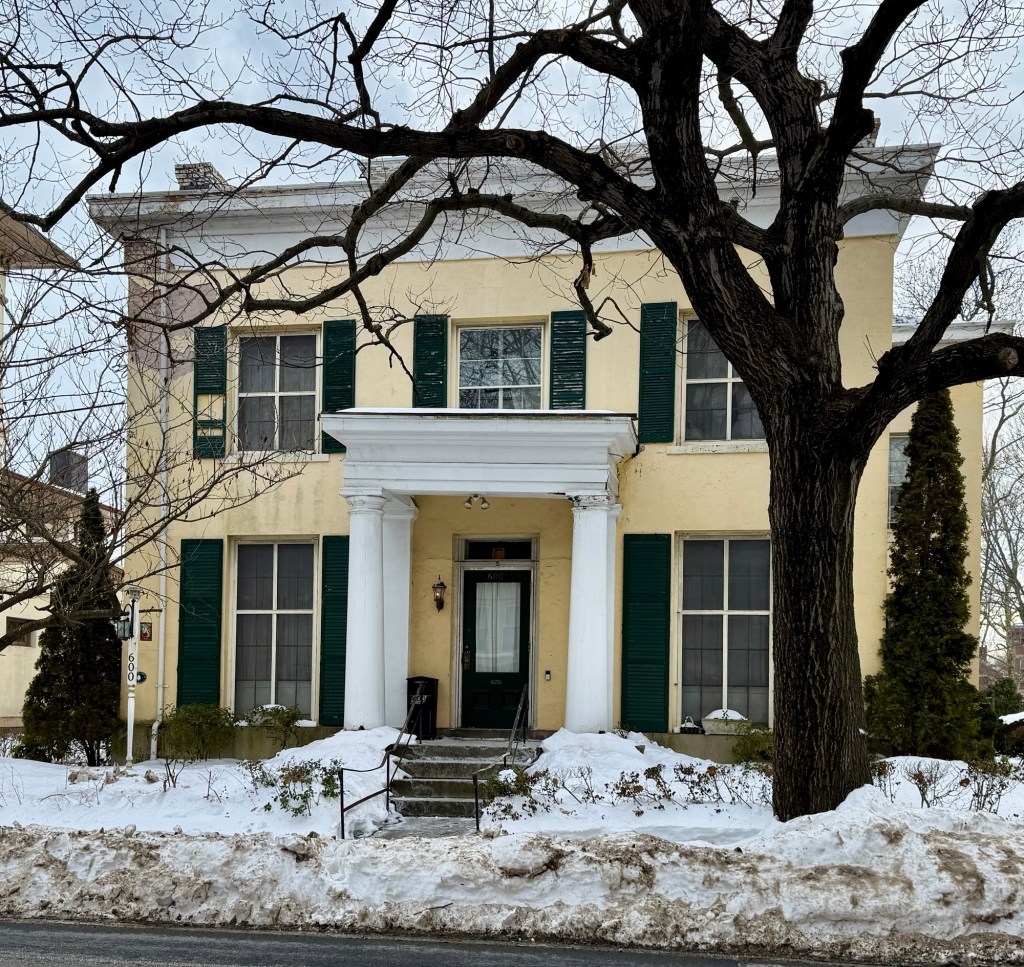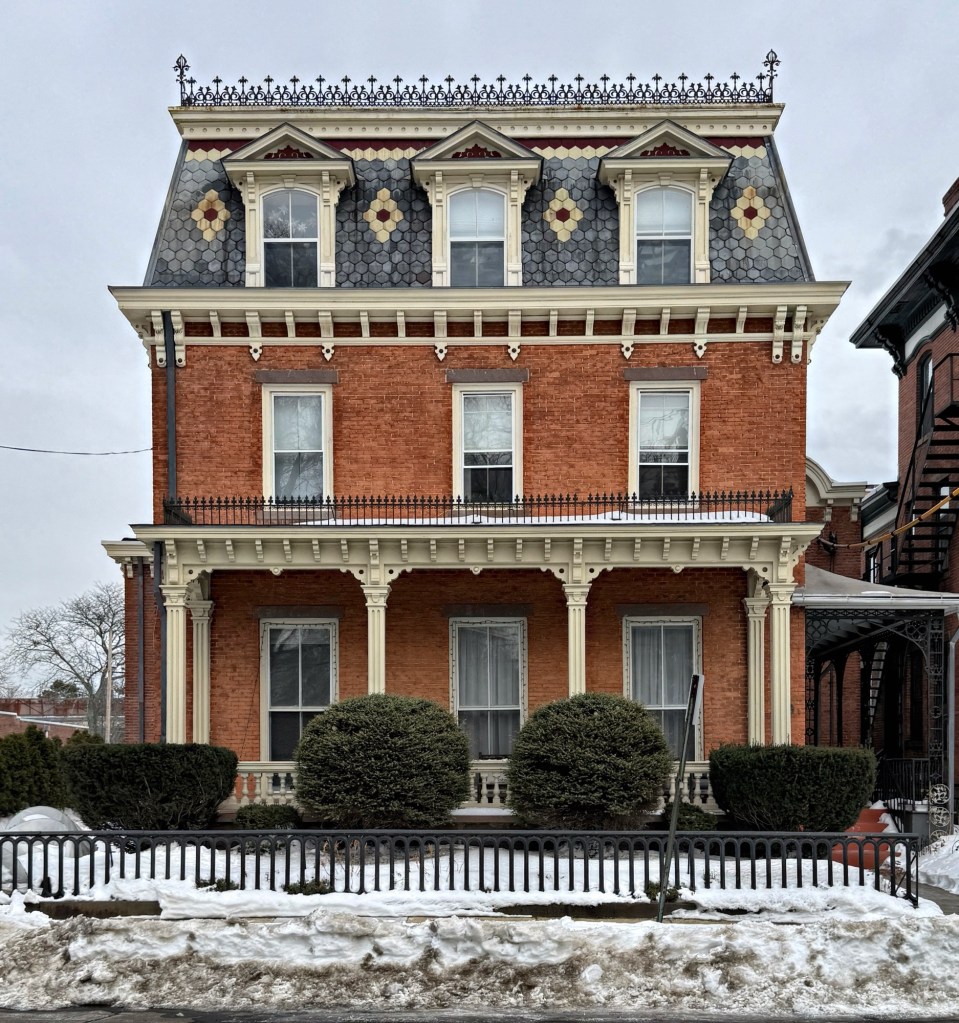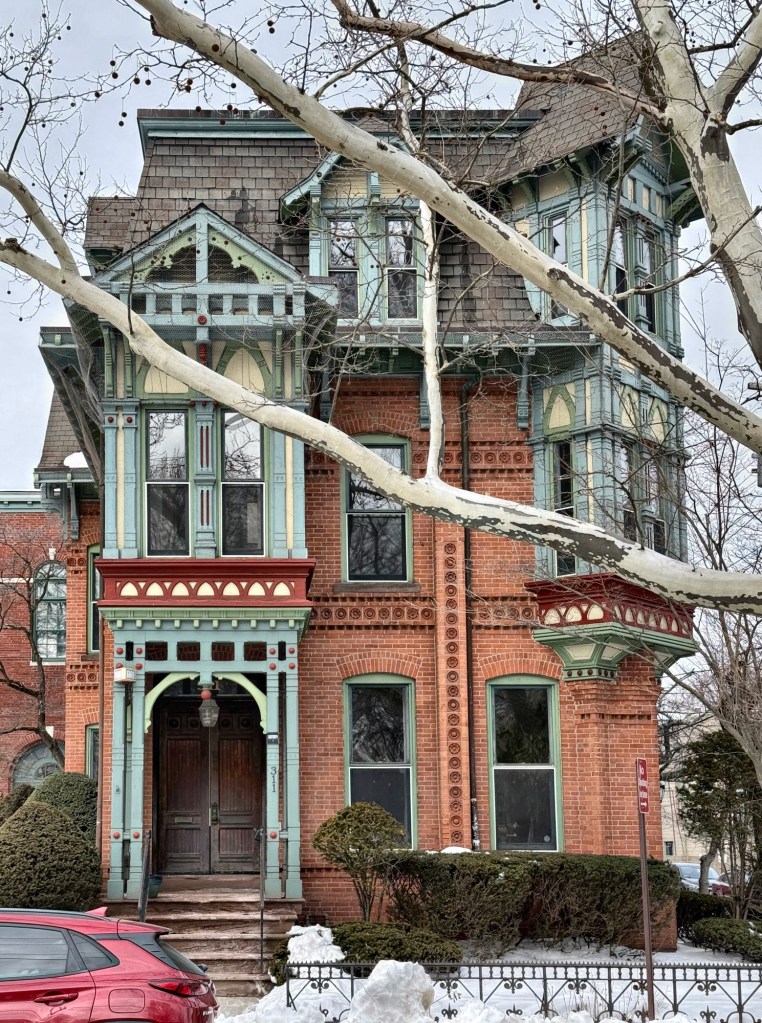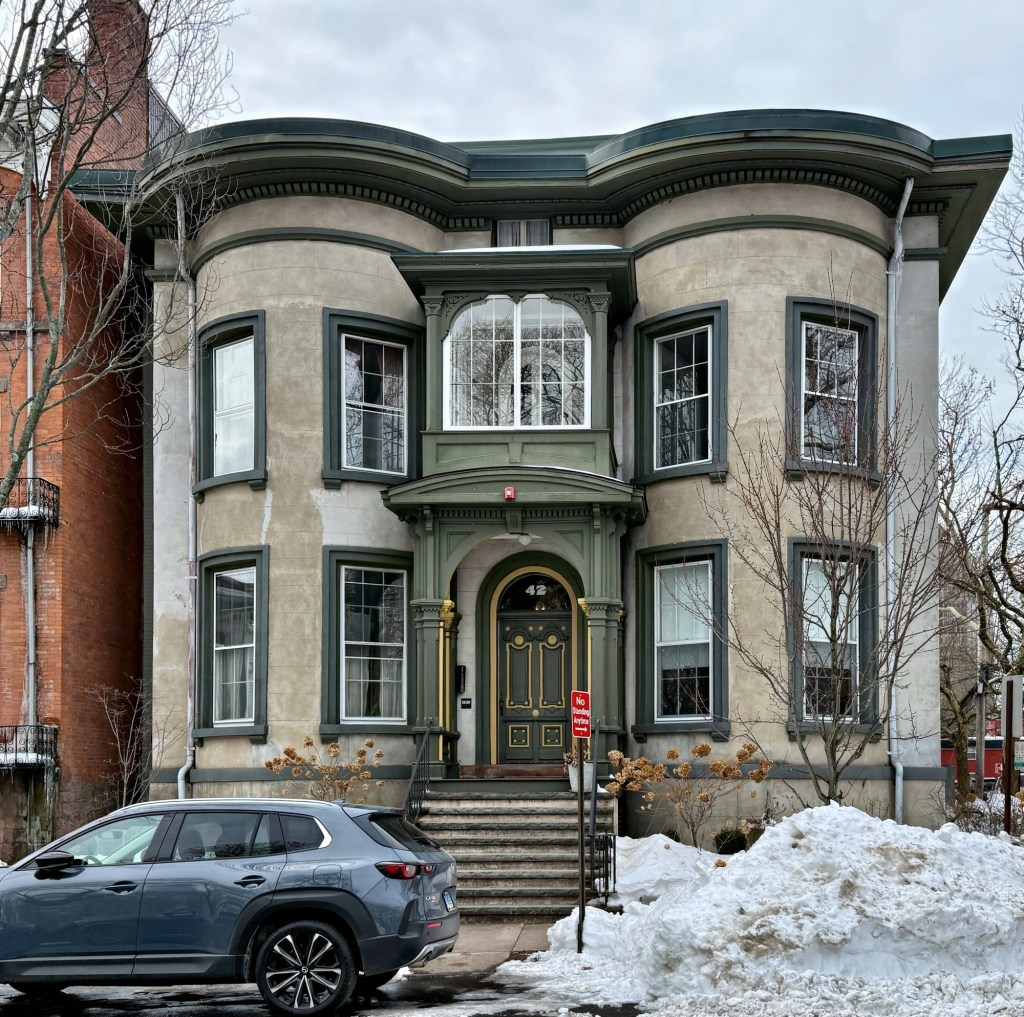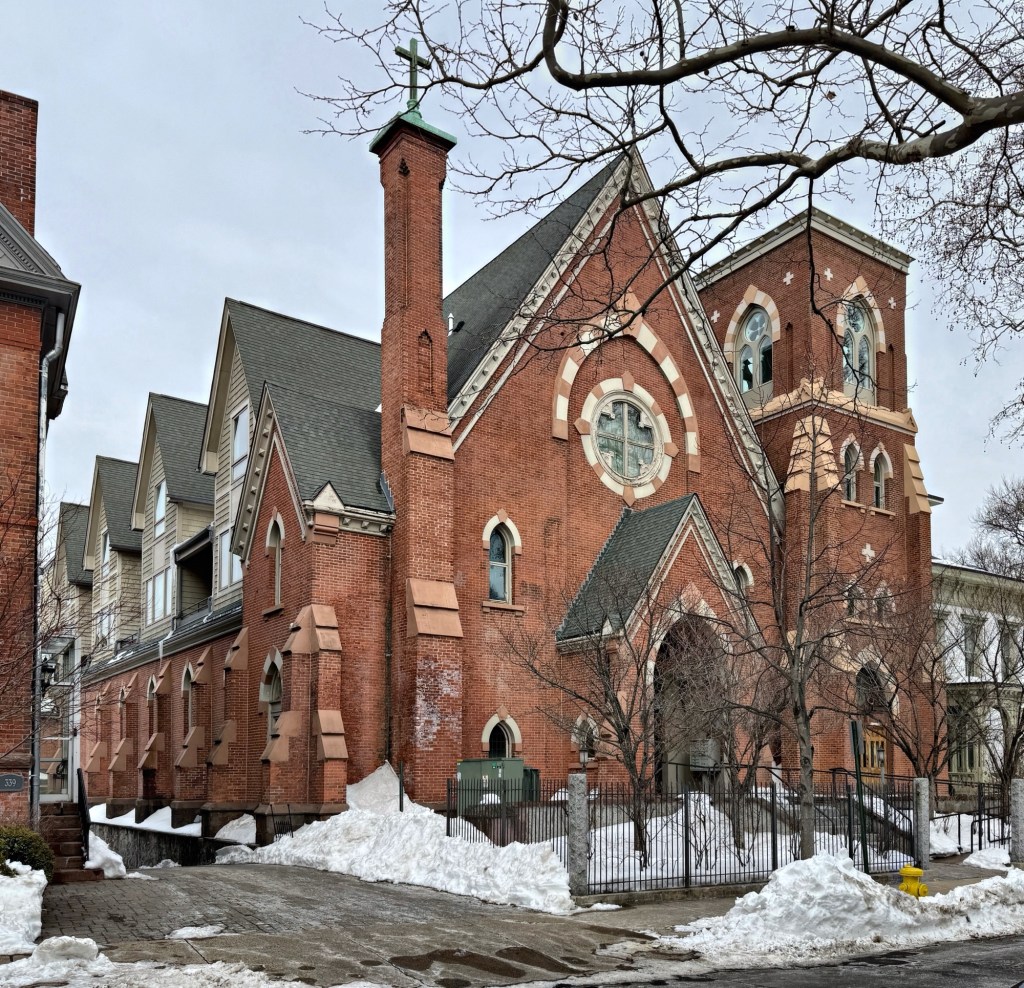
Farnam House – Yale President’s House // 1871

In 1871, wealthy engineer and philanthropist, Henry Farnam (1803-1883), purchased a house lot on the desirable Hillhouse Avenue in New Haven, Connecticut, where he would live out his final days in retirement. Mr. Farnam made his fortune beginning in 1839, when he was instrumental in building the railroad connecting New Haven to New York. In 1850, he moved to Illinois where he partnered with Joseph E. Sheffield to build the Chicago, Rock Island and Pacific Railroad, becoming that railroad’s president in 1854. In 1868, Farnam moved back to New Haven when he hired Russell Sturgis, Jr., to design and oversee construction on his home there. Henry Farnam also worked with Sturgis on Farnam Hall at Yale, where he is the benefactor and namesake of the building. Henry Farnam died in 1883, and in his will, he stipulated that he would gift his property to Yale College under the condition that his son, Henry W. Farnam, could live there until his death. Henry Walcott Farnam was an economist, and served as president of the American Economic Association. In 1933, the property ownership was officially transferred to Yale University, who in 1936, renovated the property, changing its appearance from Victorian Gothic to Colonial Revival. Architects, Richard A. Kimball and Ellery Husted furnished the designs for the stately residence. Since that time, the Farnam House has served as the residence of the Yale President.

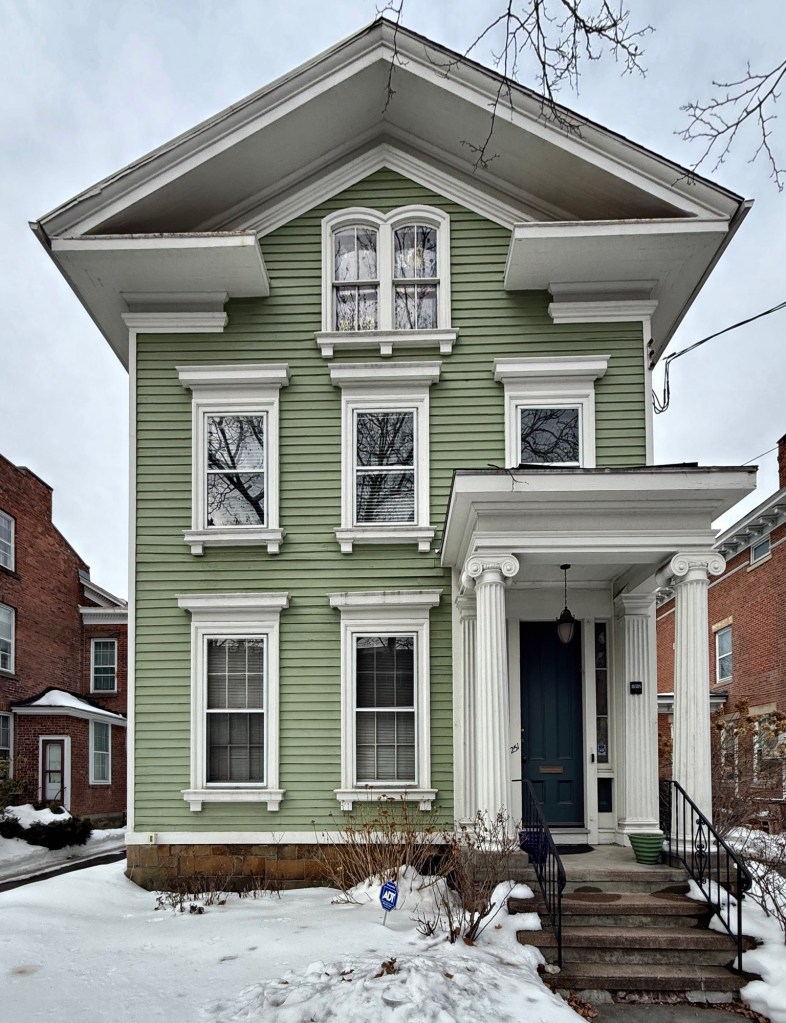
George P. Fisher House // 1864

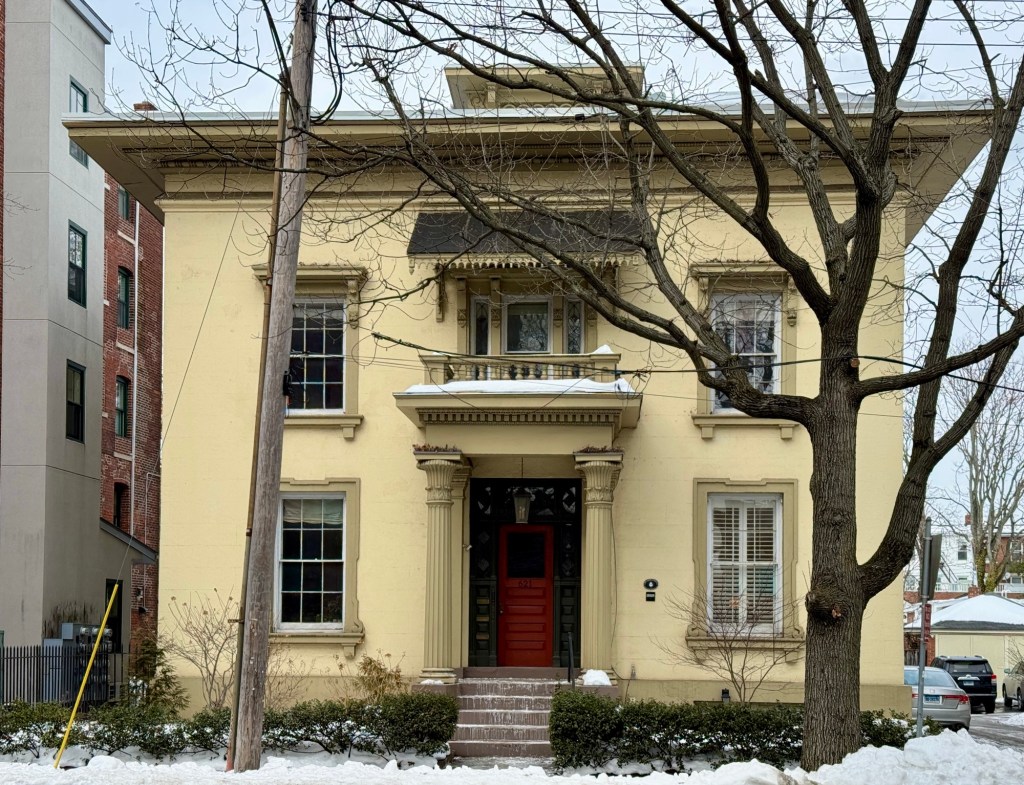
The George P. Fisher House is located at the corner of Hillhouse Avenue and Trumbull Street in Central New Haven, Connecticut. Built in 1864, the residence is one of the finest examples of the Italianate style in the state with its square, three-story form with gabled pediment, bracketed eaves, window hoods, and brick construction with stucco scored to resemble ashlar masonry. George Park Fisher (1827-1909) completed his education in Theology at Brown and Yale and would become a professor at the latter institution for much of his life. Additionally, Rev. Fisher was a frequent contributor to The New Englander (now the Yale Review) the oldest literary journal in the United States. Due to failing health at the turn of the 20th century, George Fisher relocated to Litchfield County for fresh air and relaxation for his health. The property was sold to John Wolcott Bristol, a wealthy attorney who never married. As with nearly all of the buildings on Hillhouse Avenue, the property was acquired by Yale in 1935 and is now occupied by the University’s Economic Growth Center.

Abigail Whelpley House // c.1826

The oldest extant building on Hillhouse Avenue in New Haven is this Federal-period house with later Victorian-era modifications. The Abigail Whelpley House was built by 1826 (with some estimates as early as 1800 and moved to the site) and was a traditional, five-bay, two-story Federal style residence. It is said that the house was built by James Abraham Hillhouse (1789-1841) for his widowed family member, Ms. Whelpley, and her two sons. As of 1849, the property was owned by Noah Porter, later President of Yale, who would alter the house in the 1860s with the addition of a mansard roof and trim, all designed by architect, Henry Austin. The house, now known as Allwin Hall, is maintained by Yale University and contains offices for the program on Ethics, Politics & Economics.

Pritchard House // 1836

One of the earliest houses built on Hillhouse Avenue in New Haven, Connecticut, is this stately Greek Revival mansion with monumental portico. The house was built in 1836 for Mary Pritchard from plans by great American architect, Alexander Jackson Davis. The mansion is two stories and is constructed of brick and stucco with a distinct two-story portico supported by fluted Corinthian columns. The architect also may have designed a barn at the rear of the house for Ms. Pritchard. Like many other former residences on Hillhouse Avenue, the house was acquired by Yale University, and is now the house of the Provost.

Perit House – Horchow Hall // 1859

This Italianate Villa style mansion on Hillhouse Avenue in New Haven, Connecticut, was built in 1859 for Pelatiah Webster Perit (1785-1864), a successful New York City shipping merchant and president of the New York Chamber of Commerce. Perit split his time between New York and New Haven and would hire architect, Sidney Mason Stone, to design this home on Hillhouse Avenue in New Haven. The brownstone residence is notable for its elaborate scroll brackets supporting the window pediments and front entry portico with arched doorway with rope moldings. The mansion was occupied by Perit for just four years until his death in 1864, and it was later owned by Henry Lucius Hotchkiss, a businessman. Like nearly all buildings on Hillhouse Avenue, the building was acquired by Yale University and is now known as Horchow Hall, and is part of the Yale School of Management.

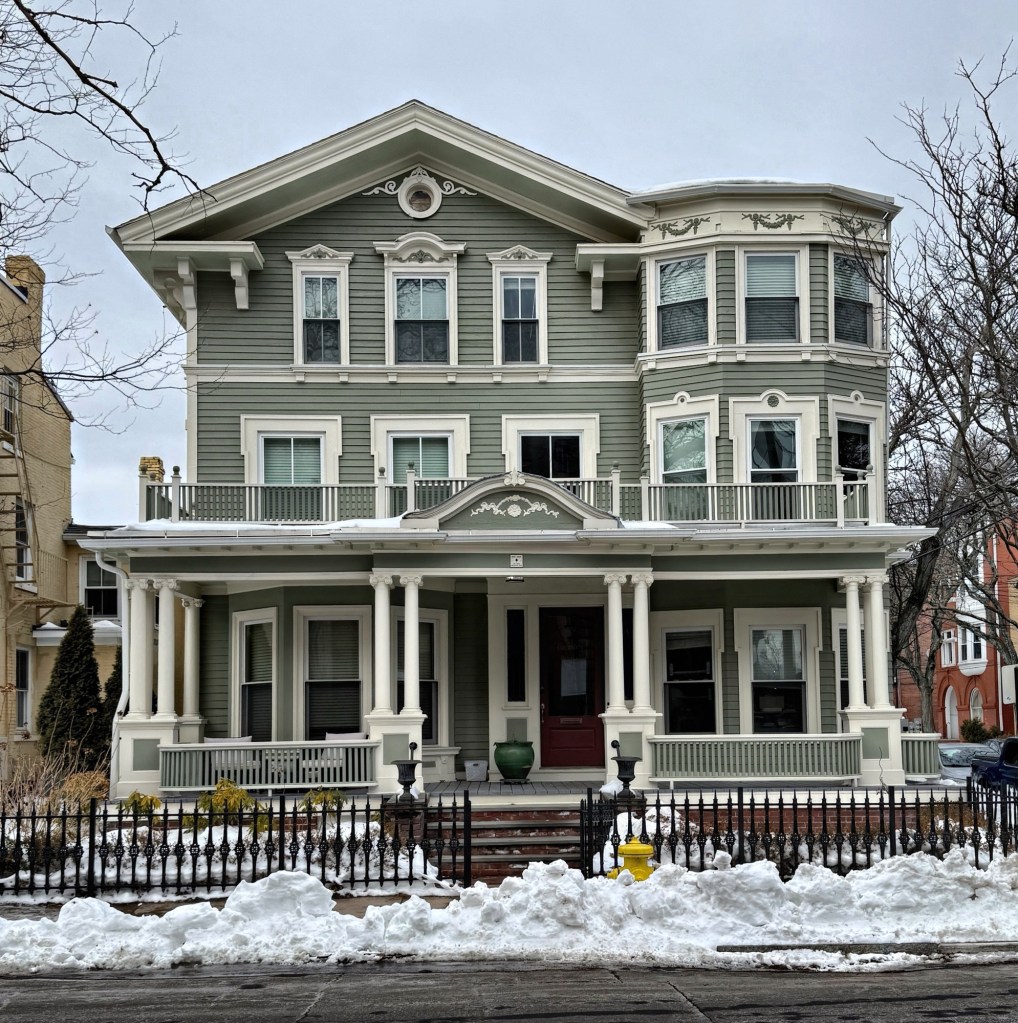
Graves-Dwight House // c.1862

Hillhouse Avenue in New Haven, Connecticut is lined with stunning 19th- and 20th- century mansions showcasing the evolution of styles and architectural taste for the wealthiest residents. This is the Graves-Dwight House, a high-style Italianate mansion built around 1862. The residence was built for John Samuel Graves (1807-1892), a local businessman and politician who was a founder of the New Haven Gas Light Company. The architect is not known, but the house is the work of a skilled designer with immense attention to detail. The highly ornamented exterior features a symmetrical facade, bracketed cornice and window hoods, a recessed third-floor balconette with segmental arch pediment above, and bold, period-appropriate paint scheme. The residence was later owned by James McLaren Breed Dwight, a lawyer, and his wife, Cora Tallmadge Dwight. Since the 20th century, the property has been owned and preserved by Yale University, and is now home to the Archaeology Department.

Yale University – Warner House // 1887

Originally known as Cloister Hall, this ornate building on Hillhouse Avenue in New Haven, Connecticut is one of the most interesting I have seen. The building was constructed in 1887-8 as a residence hall for members of the Book and Snake, a secret society at Yale University. Architect H. Edwards Ficken designed the ornate brownstone Cloister which was completed in 1888. At the time, it was considered “one of the most picturesque buildings on the Yale campus.” The society added a matching rear addition in 1915, which is a heavier mass, but compliments the original structure. Yale University would eventually acquire the building after the society no longer needed a separate lodging house for members. Today, the building is called Warner House, and Yale does a great job at maintaining this beauty.

Yale University – Alpha Delta Phi Hall // 1895

Completed in 1895 for the Alpha Delta Phi fraternity at Yale, this stunning example of the Richardsonian Romanesque style on Hillhouse Avenue was such a treat to see in person. This building was designed by local architect William H. Allen who designed the building to provide student members dining and socialization space, but no dormitories. The group was active as a Junior Society, but disbanded by 1930, and the building was sold to Yale University. Yale has since occupied the building with the Morris Steinert Collection of Musical Instruments and it recently underwent a restoration. The longer I look at the building, the more amazing details I can find. The proportion of the Syrian arch with squat engaged columns is really remarkable.

Yale University – Mason Laboratory // 1911

On Hillhouse Avenue, one of the finest streets in New Haven, you will find a great collection of historic homes and large institutional landmarks. Adjacent to St. Mary’s Roman Catholic Church, the Sheffield Scientific School of Yale College built this structure, the Mason Laboratory between 1910-1911 for Mechanical Engineering and related departments. The building was designed by architect Charles C. Haight, who was responsible for a number of other Neo-Gothic buildings at Yale. The limestone building properly holds the streetedge and blends in well with its surroundings.

St. Mary’s Roman Catholic Church Priory // 1907

Located next to the St. Mary’s Roman Catholic Church on Hillhouse Avenue in New Haven, Connecticut, you will find one of the finest Neo-Gothic style buildings in the city that was not built by Yale University. This structure was constructed in 1907 as the Priory for the Catholic Church next door. Historically, the church had been under the care of the Dominican friars of the Province of St. Joseph, based in New York City, and the church needed a residence for the friars (a Priory). Due to dwindling attendance at churches all over the country, area churches were consolidated under the Hartford Archdiocese, who replaced the friar residents of this building with Dioscesan priests in late 2021.