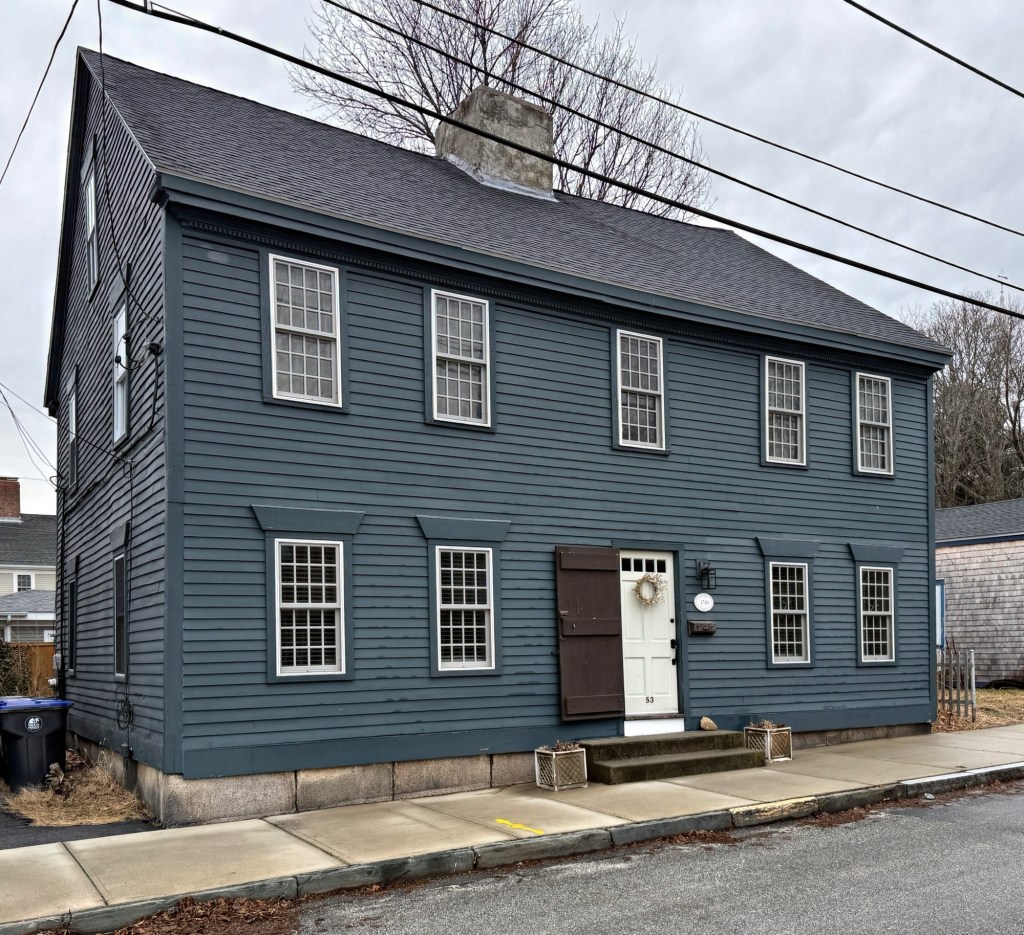
This large house on State Street in Warren, Rhode Island, has a plaque that dates it to around 1740, but it must have been relocated to this site or been built later as the street it is located on was initially laid out in 1790. The large, two-story, Federal style house exhibits a large central chimney and five-bay facade and has recently been restored. It looks great! According to sources, the property was owned by members of the Cole Family, a prominent local family who engaged in the sale and transportation of enslaved Africans in the 18th and 19th centuries. The house was eventually owned by Charles Richmond in the mid-19th century and is typical of the many great historic homes in Warren.
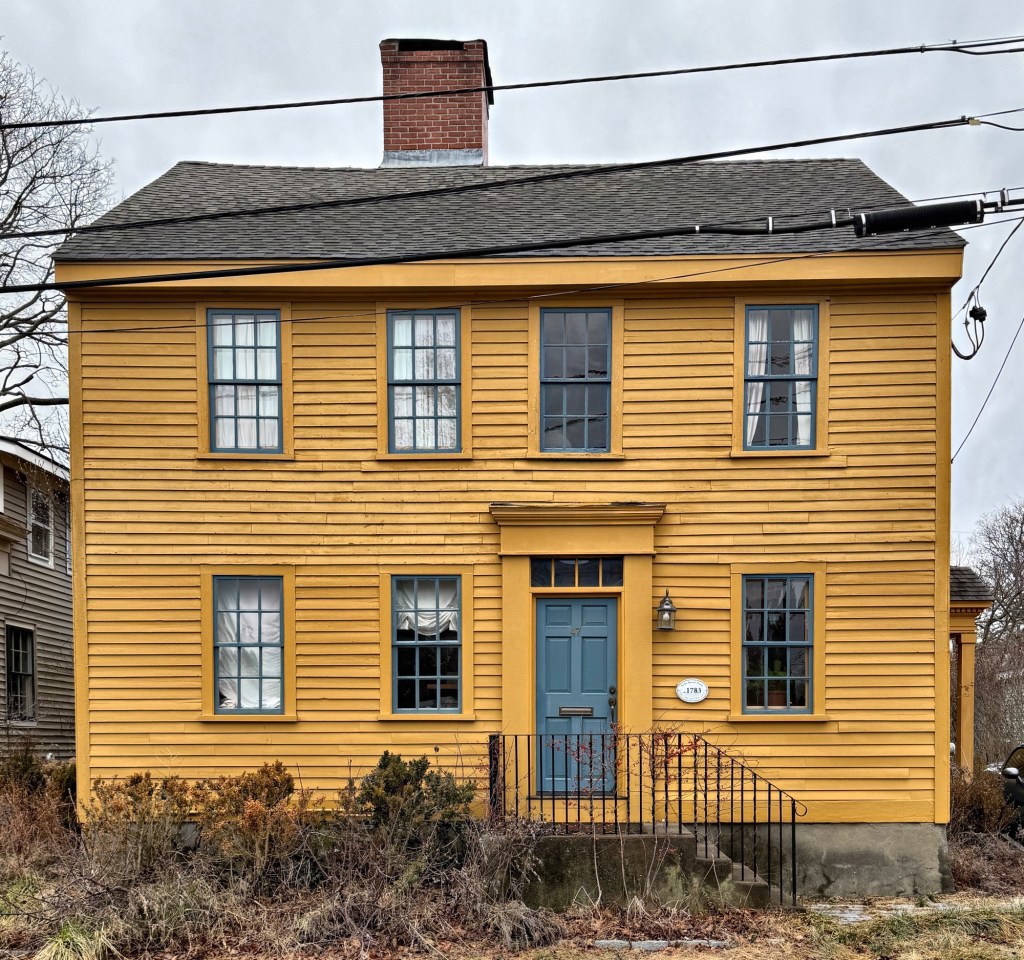
This charming house on Broad Street in Warren, Rhode Island, was built by 1783 for Rufus Barton and his wife, Prudence Cole. Rufus Barton and his family moved to New York and sold the property to Nathan Burr for $775 in 1797, who . Nathan Miller Burr sold the home to William Eastabrook two years later. Captain Eastabrook/Easterbrook had just returned from an illegal slave voyage on the “Betsey” to Africa that resulted in the enslavement of 79 Africans who were sold into slavery in Havana. He would go on to captain at least two more illegal voyages on the “Little Ann” (1806) and the “Hannah” (1807) from Bristol. These three voyages accounted for the death or enslavement of 229 people. The home has been lovingly restored by later owners, who removed the vinyl siding and replaced the cheap, vinyl windows with historically appropriate windows.
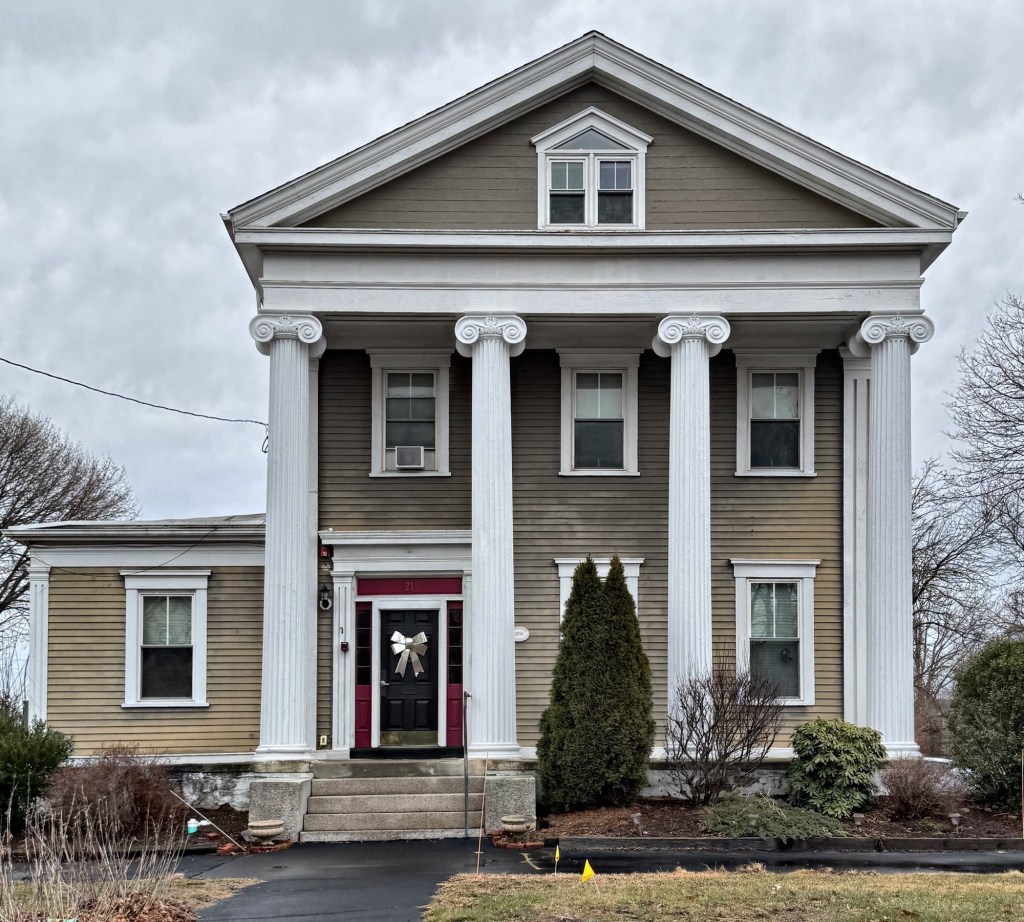
The only two-story temple-front Greek Revival style house in Warren, Rhode Island, the Judge Alfred Bosworth House on Federal Street, is believed to be the work of great architect Russell Warren. Alfred Bosworth (1812-1862) ran a law office in Warren and Providence and represented Warren in the General Assembly from 1839 until 1854 and then served as a justice on the Rhode Island Supreme Court. Bosworth was of counsel for Rhode Island in suits growing out of the boundary question between Rhode Island and Massachusetts, specifically around Fall River. Judge Bosworth died at home in 1862 and his widow, Anne, lived here afterwards. At the end of the century the Bosworth House was converted to an ice cream parlor, named Maxfield’s, which became a very popular attraction in town. The company, owned by Nathaniel and Julia Maxfield, attracted throngs of local residents every summer who would eat ice cream on the front yard of the house. Maxfield’s was even frequented by Providence writer, H. P. Lovecraft, when he was a young man. During the mid-1900s, the house served as a nursing home until 1988, when owners restored the house back to a residence and removed the asphalt siding that was added to the exterior around the time of the Great Depression.
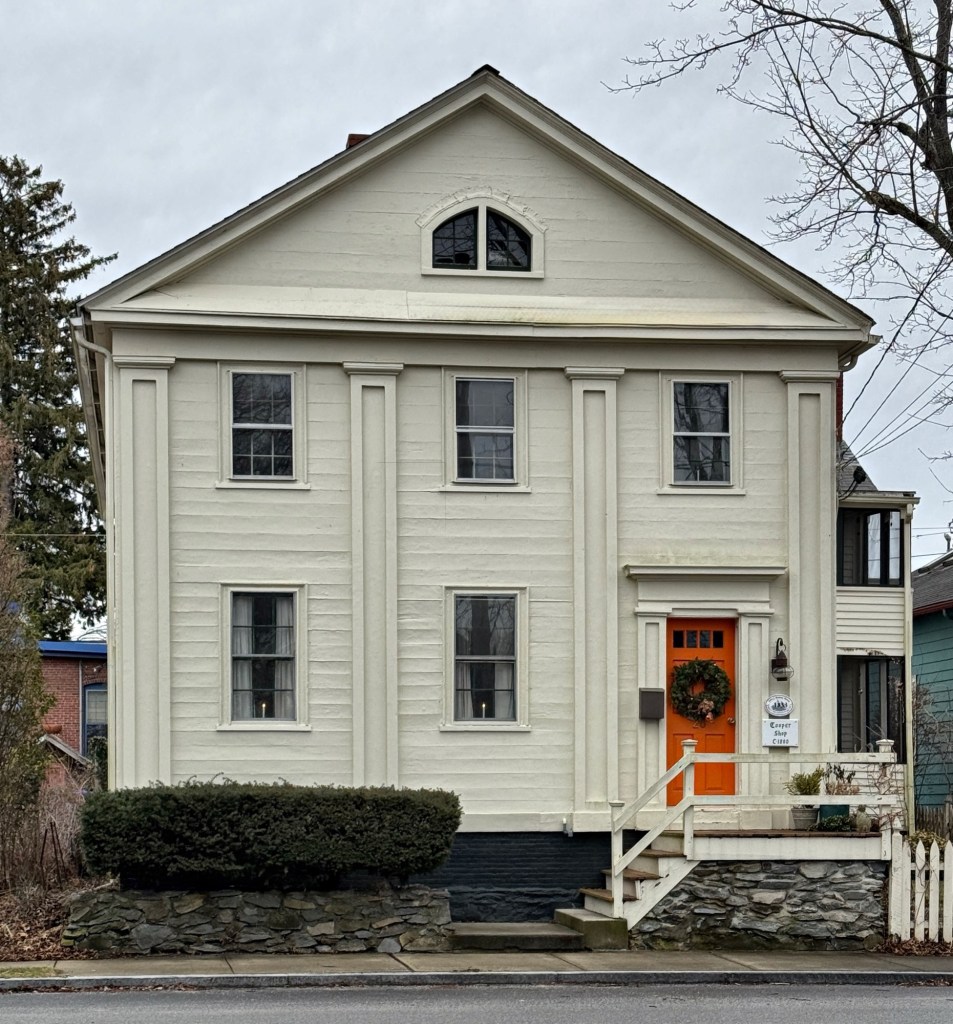
This stunning Greek Revival house on Lyndon Street in Warren, Rhode Island, was according to historians, built around the turn of the 19th century as a cooper shop! A cooper as a professional, would make wooden barrels, tubs, and casks from wooden staves, which were all made in this building before it was converted and renovated around 1830 in the Greek Revival style for Deacon John J. Bickner, who was likely affiliated with the Episcopal Church across the street, which was designed by architect, Russell Warren. Due to the connection, it is possible that the renovation for Bickner was undertaken by Russell Warren as well. On its facade, the house has two-story applied pilasters which break up the bays and smooth flushboard siding which makes the house even more stately!
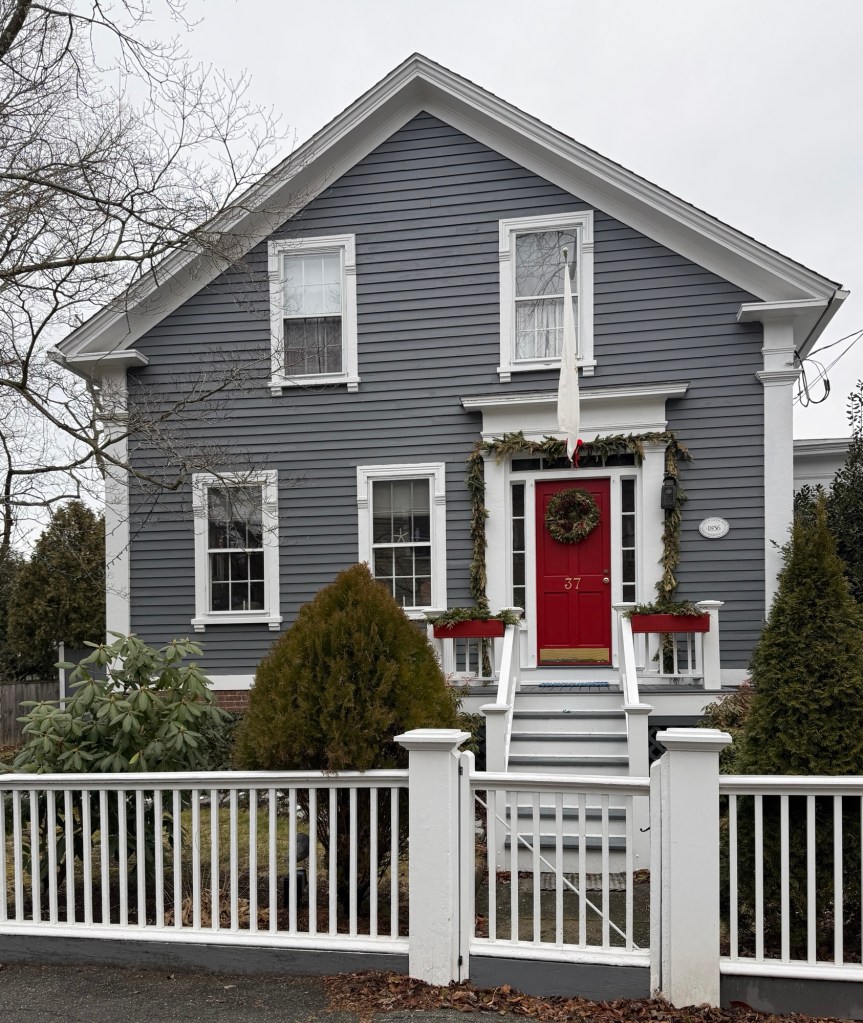
One of four seafaring brothers who lived in Warren, Rhode Island, this charming cottage was built after Captain James Barton purchased a house lot at the northwest corner of Liberty and Union streets in 1841, likely building the home within a year. Captain James Barton (1790-1877) commanded a two-and-a-half year long whaling voyage to the Indian Ocean and undertook three subsequent trips to the Pacific. Upon retiring from the sea in 1867, Captain Barton established the Warren Gazette, where he worked as both owner and publisher. Before his time as a sea captain, James Barton had experience working in a printing office in Providence. Upon the Captain’s death in 1877, his wife Mary, continued to reside here with their daughter Nora B. Easterbrooks and her husband. Built as a modest Greek Revival style cottage for Barton’s wife while he was away at sea, the residence features a touch of the romantic Gothic Revival style in its window trim and the stable behind.
Located in northern Willington, CT, this farmhouse on a quiet, country road, dates to before the Revolutionary War! David Lillibridge (1744-1831) of Exeter, Rhode Island, served from 15 to 17 in the French and Indian War, and manned Fort Stanwix. In 1767, when he was a lieutenant in his local militia, he converted, and entered the Baptist ministry. In 1777, he purchased a farm from Moses Holmes, but it is unclear if this residence was existing or if he built this large farmhouse. In Willington, David Lillibridge became a farmer-preacher, establishing a Baptist ministry here. The home remained in the Lillibridge family at least until the 1870s, when it was owned by Burnham Lillibridge. The Georgian saltbox residence is set back from the street and sits upon the bucolic rolling fields of the property.
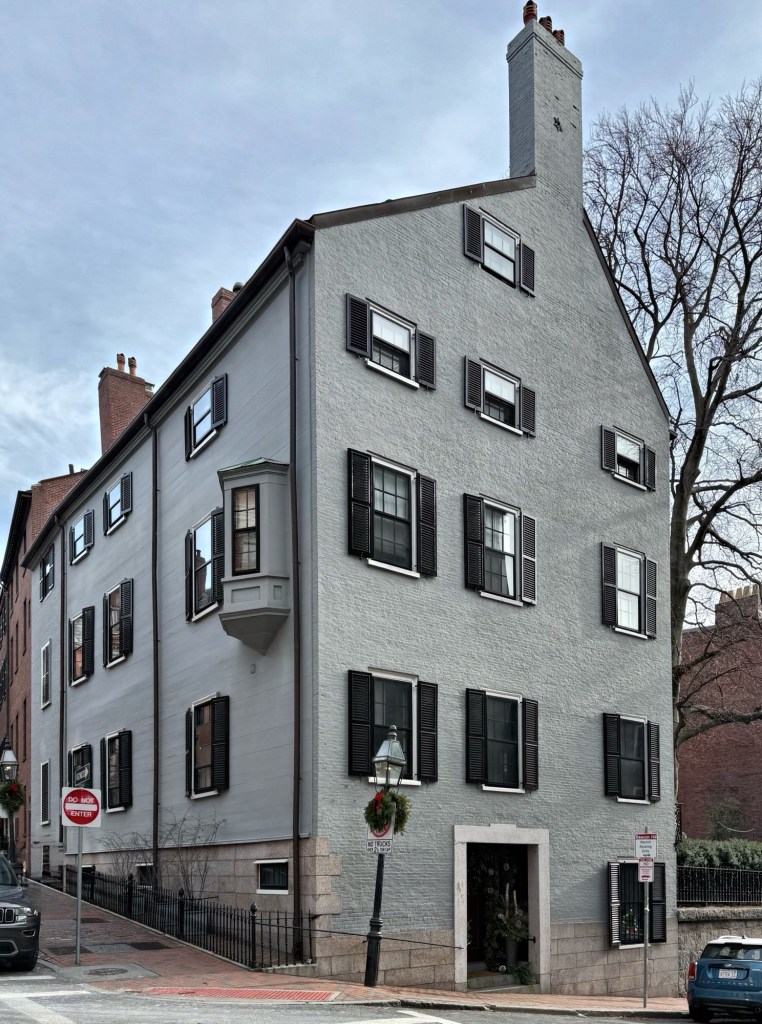
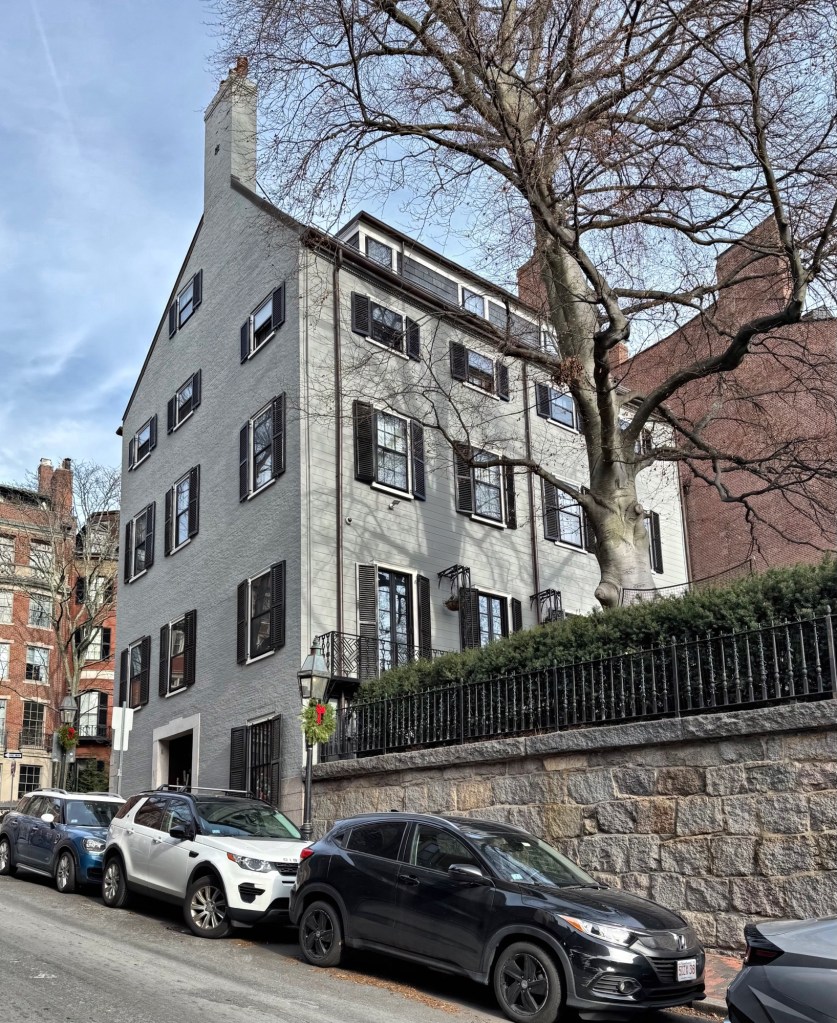
Built in 1802, this large residence at 14 Walnut Street is among the oldest extant mansions on the South Slope of Beacon Hill and includes a large hidden garden behind a granite block retaining wall. John Callender, Clerk of the Supreme Judicial Court of the Commonwealth, purchased land at the corner of Mount Vemon and Walnut streets for $2,000 and immediately started construction on his requested “small house finished for little money $5,000-$7,000”, but this was anything but modest. The house originally had its primary facade facing Mount Vernon Street, but in 1821, Walnut Street was lowered by city officials, so Callender had the granite retaining wall built for the garden and new entry built on Walnut Street. Mr. Callender lived here until his death in 1833 and the property was purchased by members of the Lyman family and later by Harriot Curtis (1881-1974) an early amateur female skier and golfer who used her fortune as a philanthropist, funding medical facilities in Boston for impoverished immigrants and served as dean of women in Hampton Institute in Virginia, an HBCU from 1927-1931. The most significant owner, Ellery Sedgwick (1872-1960), lived here from 1908 until his death in 1960. Sedgwick worked as editor of the Atlantic Monthly (now known as The Atlantic), and under his ownership, the magazine became one of the most circulated magazines in the world. The Callender-Sedgwick House features unique flushboard siding, providing a seamless surface that resembles a masonry wall when painted earth tones and a 19th century oriel window. The brick end elevation is punctuated with bays of hung windows and the recessed entry with a long, granite garden wall which has been well-preserved by owners.
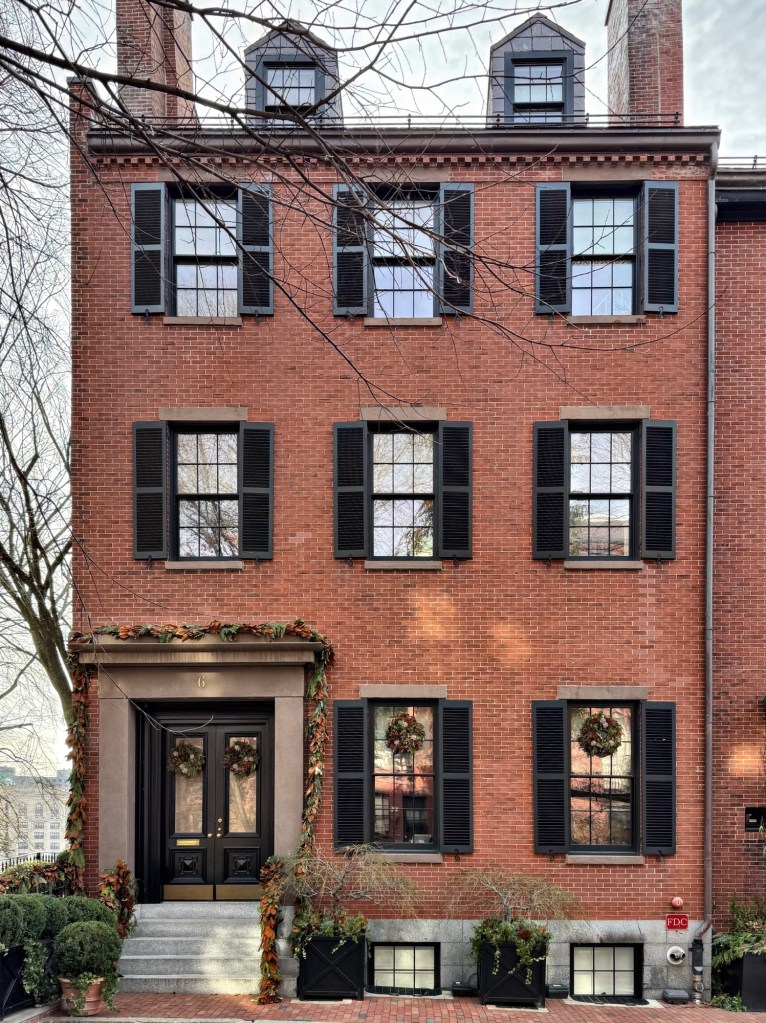
Mount Vernon Place is a short, dead-end street in Boston’s Beacon Hill neighborhood. The street was once an entire block of eight rowhouses, and was developed in the 1830s on land formerly owned by John Hancock and his family. The residences numbered 1-5 Mount Vernon Place were torn down during the 1910s to accommodate the expansion of the landscaped grounds of the State House, leaving just 6, 7, and 8 Mount Vernon Place. The easternmost rowhouse, 6 Mount Vernon Place, was built in 1834 and is believed to have been designed by Alexander Parris, a prominent local architect who designed Quincy Market and mastered the Federal and Greek Revival architectural styles with many notable buildings all over the east coast. This house was purchased in 1834, when still unfinished, by William Savage, a merchant, who sold the property to Pliny Cutler, president of the Atlantic National Bank, who appears to have bought it for his son, Dr. William Ward Cutler (1812-1870). The property was owned in the early 20th century by Robert Treat Paine Jr., who likely rented the home to boarders. The residence has a three bay facade and brownstone sills, lintels, and door surround.
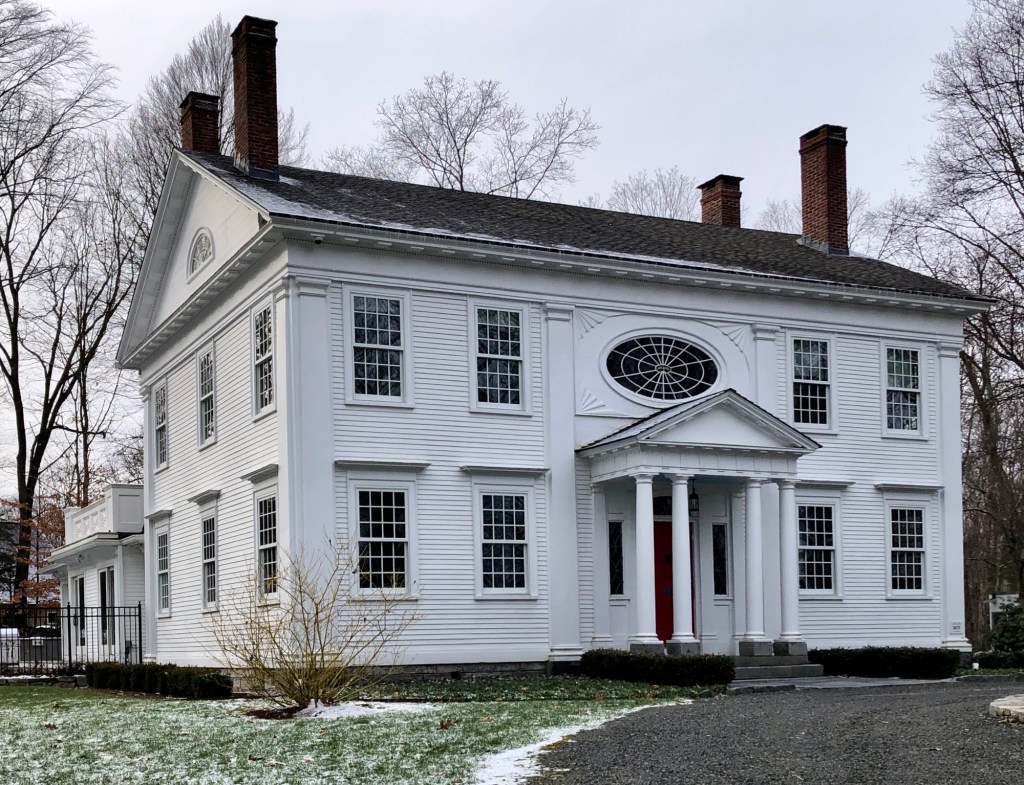
This architecturally unique and stunning Federal style house in Chester, Connecticut, was built in 1820 on the Middlesex Turnpike by Abram Mitchell for $10,000, double what he originally hoped to pay for the residence. The principal builder was Samuel Silliman, a locally well-known master carver, who clearly showcased his skill inside and out, much of which has been preserved by two centuries of owners. In 1845, the property was purchased by George Spencer, and presented as a wedding gift for his daughter, Julia, who married Dr. Ambrose Pratt (1814-1891). Dr. Pratt became well-known for his practice of hydropathology and temporarily used his house as a sanitarium known as the Chester Water Cure. The house was acquired by the local Roman Catholic Church and became the parish center until the residence was purchased and moved away from the busy street to its current location in 1966. In the 1980s, the house was purchased by famed artist, Sol Lewitt. The house has a large spider web window, still containing the original glass over the door and full-height pilasters dividing bays and inside, many stunning carved mantles and woodwork.


 Buildings of New England