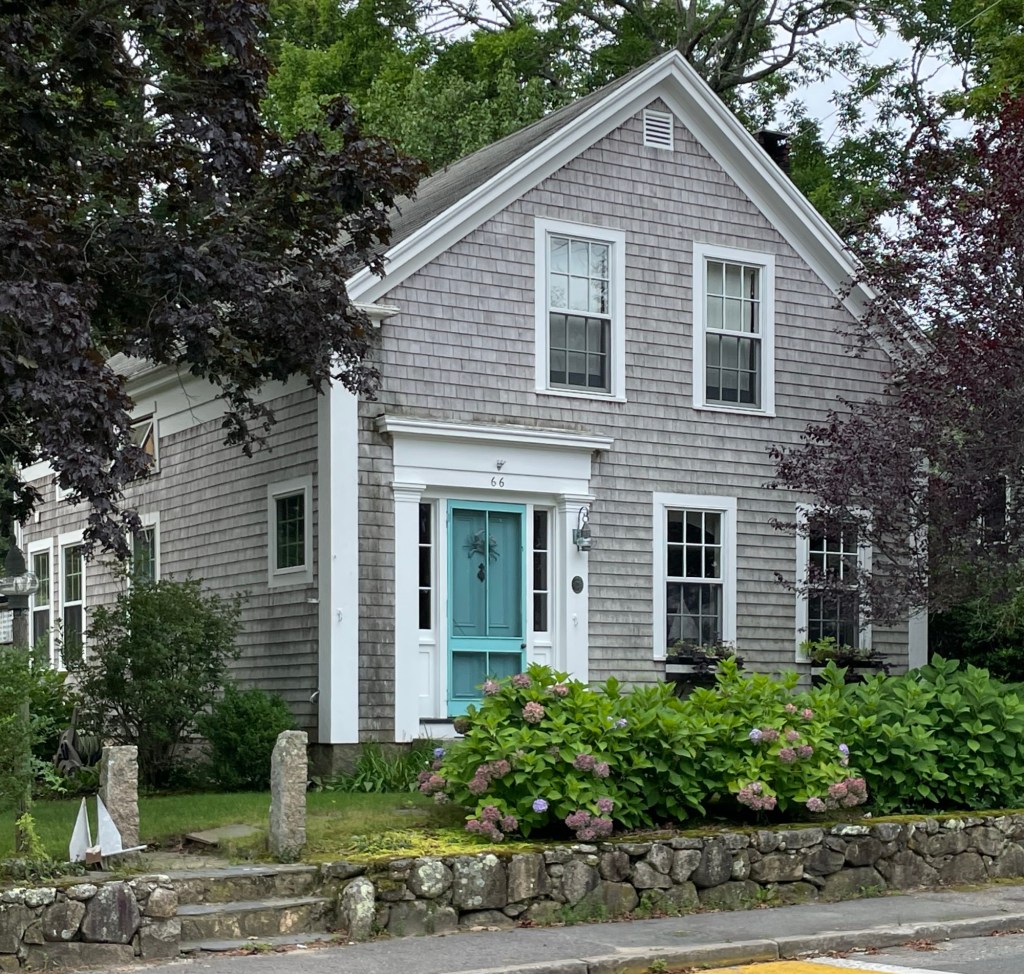
This perfect mid-19th century cottage showcases what makes coastal New England so special. Located on Main Street in the walkable historic center of Marion, Massachusetts, this 1852 home was built by Warren Blankinship (1816-1898), a carpenter, as his own residence. It was built just before his second marriage to Mercy Wing in 1853. A series of tragedies struck Blankinship’s marriages as he outlived three of his four wives. A well-preserved example of a modest Greek Revival home, it is clad in cedar shingles, a hallmark of many coastal homes in New England. White Cedar shingles are so popular historically as the species is such a hard wood that pieces are naturally insect and rot resistant and hold up amazingly well to salt air. Early colonists noted the use of the tree for canoes and other objects by Native people and followed suit, constructing homes from the native tree.
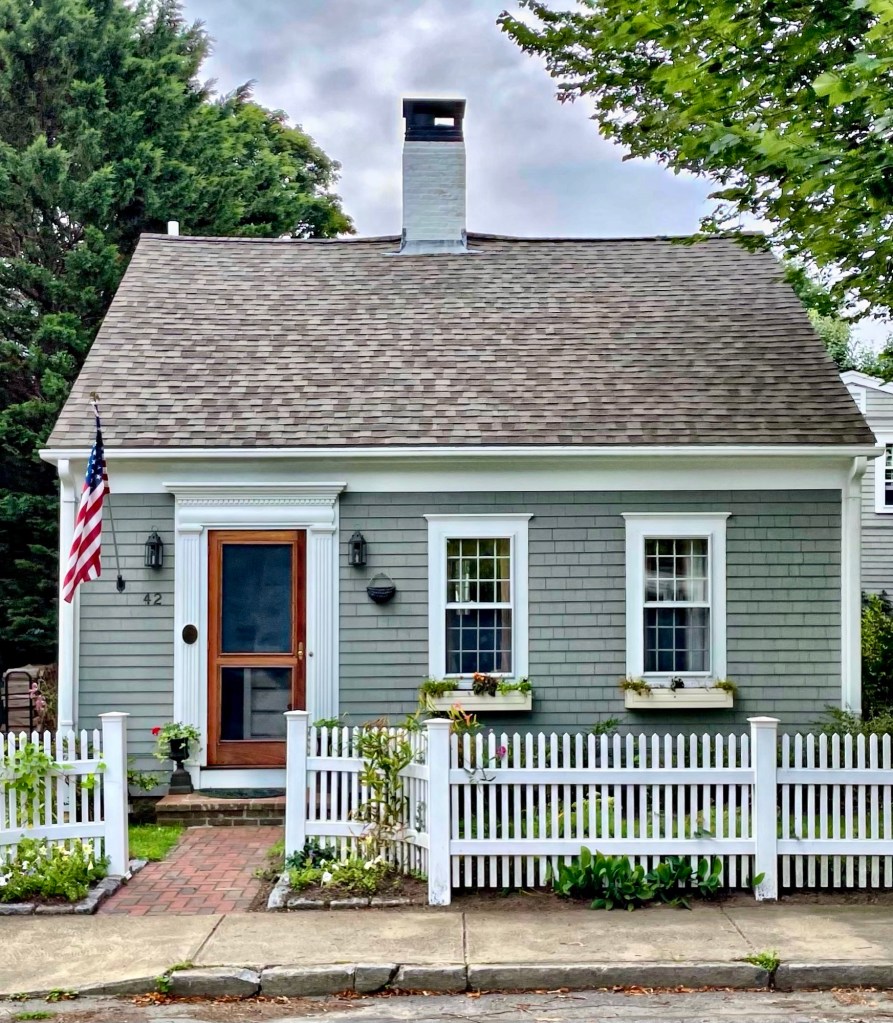
This tiny half-cape house on Main Street in the harbor town of Marion, Massachusetts, was likely built around 1820 for Silas Briggs (1792-1833), a mariner, who married Desire Clark a year prior. Silas would pass away by 1833, leaving Desire widowed to raise three children and maintain their home. When he came of age, the house was inherited by Timothy H. Briggs, who followed his father’s footsteps to become a sea captain. Timothy lived here with his wife, Josephine and elderly mother, never needing to expand the home into a full cape like what was done to so many other residences in the mid-19th century. Captain Timothy Briggs died in 1877 while at sea and his widow too lived in the home into the 20th century. The old Briggs House retains its original half-cape form, 12-over-12 sash windows, central chimney, and elaborate door surround, which makes the small but mighty cottage one of my favorites in Marion!
Reportedly built in 1790, this stately Federal period residence on Main Street in Marion and overlooks the sheltered harbor sharing strong connections to the sea. Known colloquially as the House of the Two Captains, this residence was built as a double house and known for its connections to sea captains, Elisha E. Luce (1786-1850) and Noble E. Bates. Captain Luce moved into this house shortly after his marriage to Jane Hiller, daughter of a local Deacon. Particularly note-worthy is the main facade’s center entrance, which exhibits unusually fine surrounds, including fluted Doric pilasters and a pediment enlivened by dentils. Inside, the house is said to have hidden passages behind a large fireplace. The captains used part of the house as a crockery and supplies store. Captain Elisha E. Luce’s best-known ship was the Persia, which made numerous profitable trade missions to the Far East. This house was also the birthplace of the Universalist Church in Marion, when during the early 1830s, Universalists met in Captain Bates’ half of the house to organize a religious society and plan the construction of the church. The Luce and Bates families co-owned this house until the mid-19th century and the residence remains one of the finest in the harbor village.
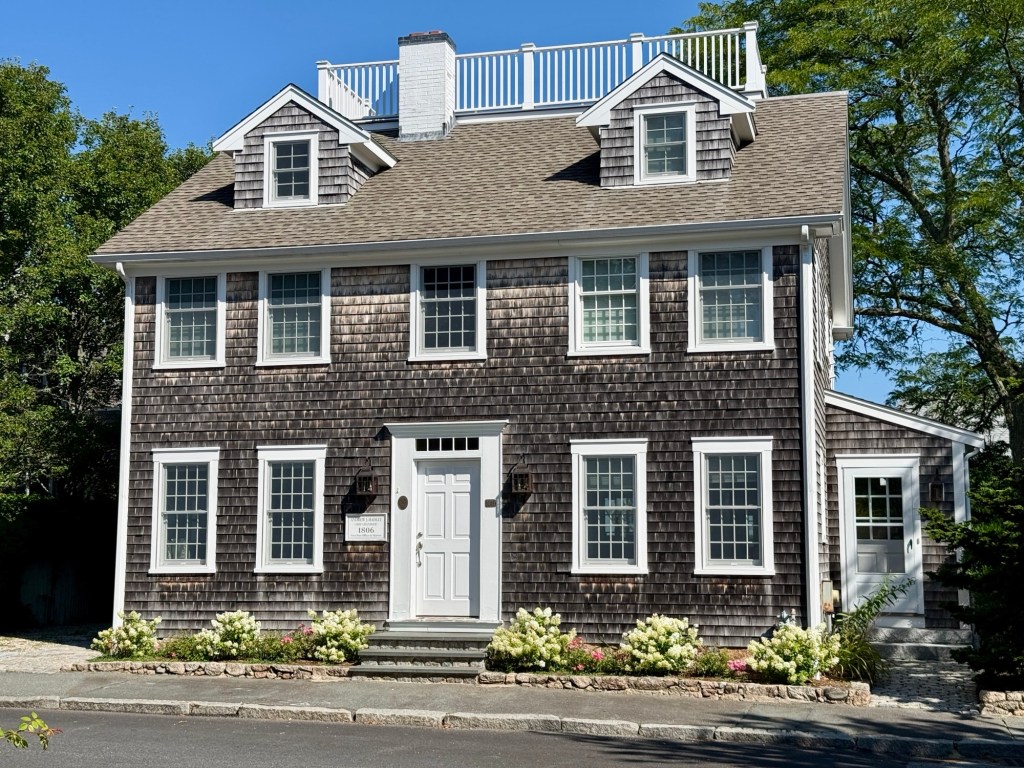
This late-Georgian style residence on Main Street in Marion’s Wharf Village is a stone’s throw from the harbor and has been conveniently located near the town’s Long Wharf since it was constructed around 1806. The building was constructed as a store for A. J. Hadley, where ships were outfitted for voyages. While Hadley’s store occupied the eastern half of the first story, the left side of the ground floor was Marion’s first post office. The second floor served as a clothes-making factory with the top floor operating as a sailmaker’s loft. By 1855, the structure was converted to a residence and owned by Sumner Ryder, who served as the Town Clerk and later joined the ranks of the Union Army during the Civil War. During the early 20th century, the property, with its widow’s walk, was owned by members of the Harwood family, including Ms. Sarah W. Harwood, who lived here with Margaret French (1860-1935) who was listed in the Census for decades as her partner, housemate, and boarder.
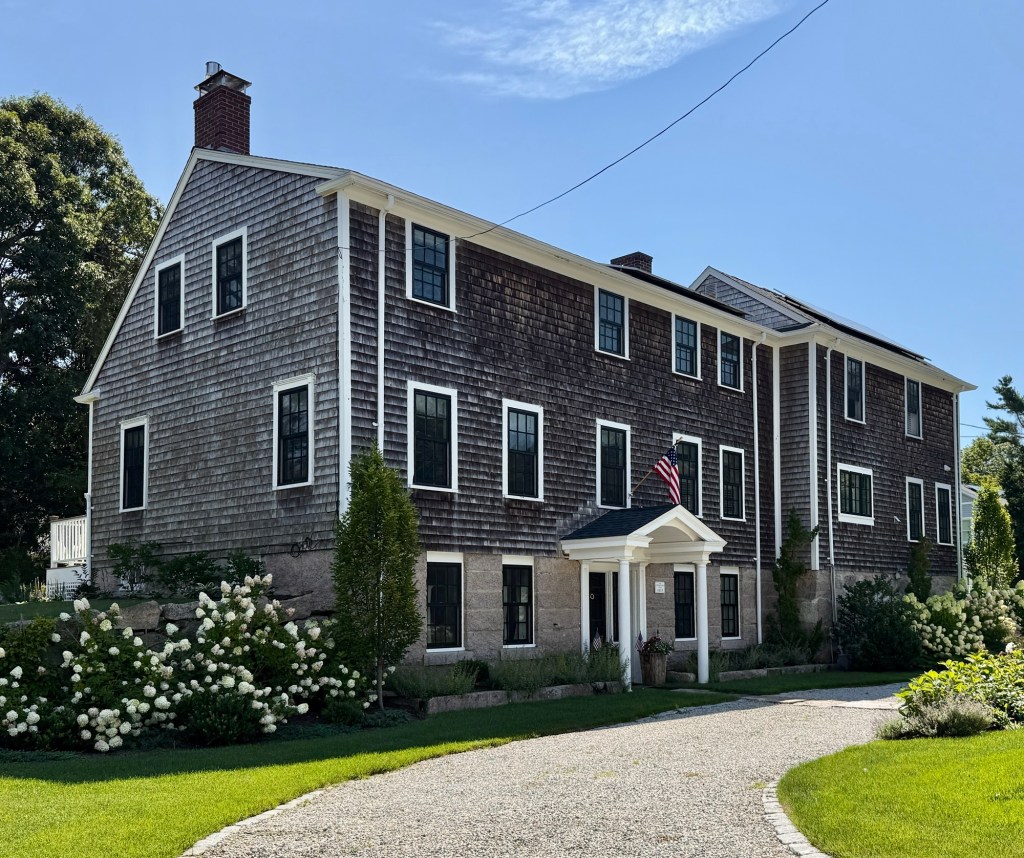
Known as the “Old Parsonage” this historic house in Marion, Massachusetts, was built in 1813 by Capt. John Pitcher (1788-1867) around the time of his marriage to Catharine Clark. John Pitcher was the brother of Elizabeth Pitcher Taber, a major benefactor of the town of Marion. The residence is unique in that the primary facade is actually facing away from the street, with the prominent three-story facade being the historic rear of the home. The Federal period house sits on a raised stone foundation with a central door and shingle siding above. Behind his home, a large pasture was grazed by sheep and cows until the land was sold off and subdivided for residential development later in the 19th century. When Capt. Pitcher died, he left his house to the Congregational Church, which used it as a parsonage for many years until 1966, when the church sold the property to Lawrence P. and Edith G. Pangaro, who co-founded the Marion Sentinel and the Sippican Publishing Company. The home was recently renovated.
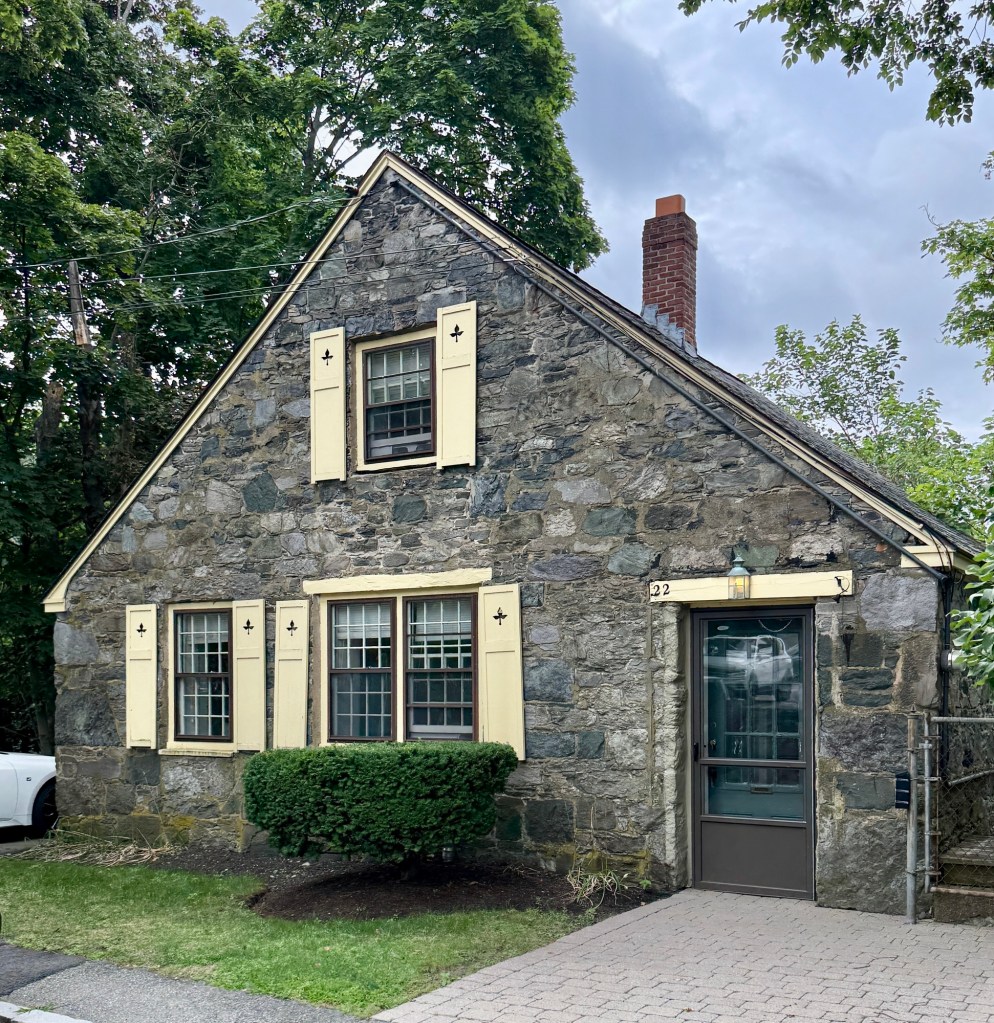
Located next to the Pettee Stone Barn in Newton’s Upper Falls village, this equally charming stone cottage was built around the same time by Otis Pettee, a wealthy industrialist and founder of the Pettee Machine Works, which manufactured cotton and silk machinery. This cottage served as a shop and later as the residence of the caretaker of the silk mill which also had space and equipment to raise the silk worms in the adjacent barn. Later in the nineteenth century, the cottage was owned by George Pettee (1827-1896), son of Otis Pettee. In the 20th century, the structures were operated by the New England Spun Silk Corporation and it now is a single-family residence. The facade of the Pettee Cottage is three bays wide with twelve-over-twelve windows with wood shutters.
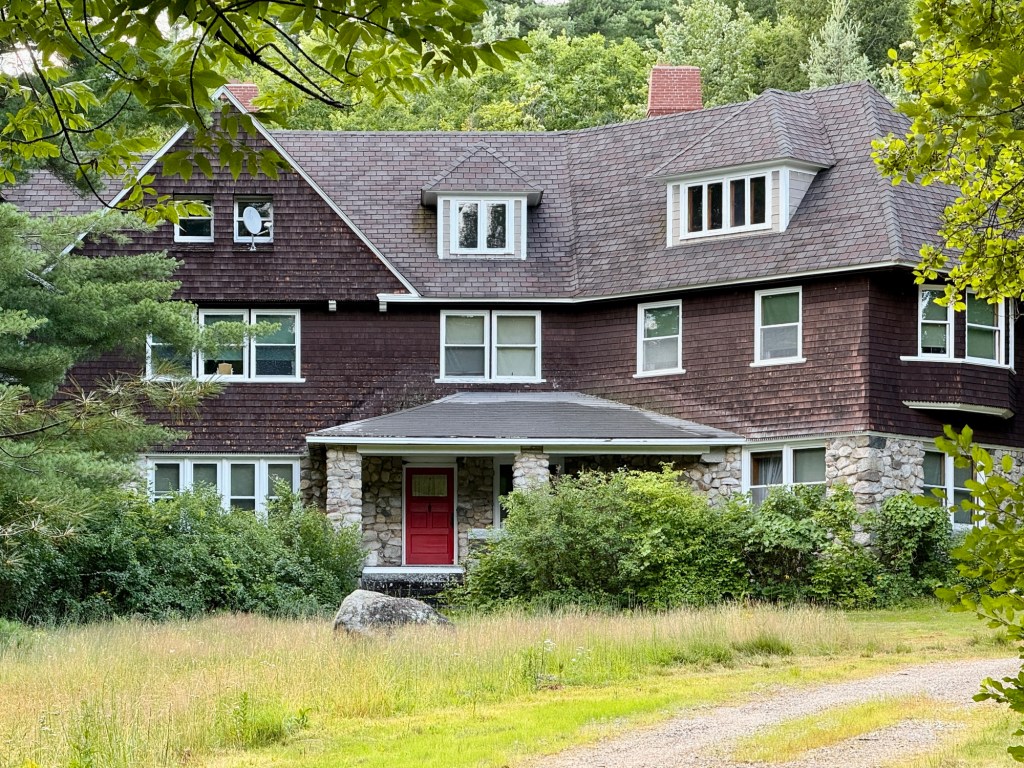
Set into the trees in Chocorua in Tamworth, Cairncroft stands as one of the many stately “cottages” built in the late 19th and early 20th centuries for city-dwellers to escape the hot summers for the fresh air and views of the White Mountains of New Hampshire. This cottage was built for Emil Christian Hammer (1823-1894), who migrated to the United States from Denmark in 1840, where he became a prominent businessman in several Boston business, including Waltham Manufacturing Company. In the mid-1880s, he founded the United States Watch Company in Waltham, one of the most important such companies in the country. From his success and connections, Emil was appointed by President Abraham Lincoln as Danish consul in 1864. Emil purchased the land here in 1886 and built a barn and ice house before having his home and nearby stone cairn built on the grounds; the latter is likely what gave the property its name. Cairncroft was designed by Boston architect, Edwin James Lewis, Jr., an expert at Arts and Crafts and Shingle style designs. After Emil’s death, just two years after his cottage was completed, the property passed to his wife, Martha. Her daughter, Cynthia Hollis and also an accomplished artist, inherited it later and eventually passed it to her husband, John Charles State Andrew, professor of theology at Harvard and Boston University.
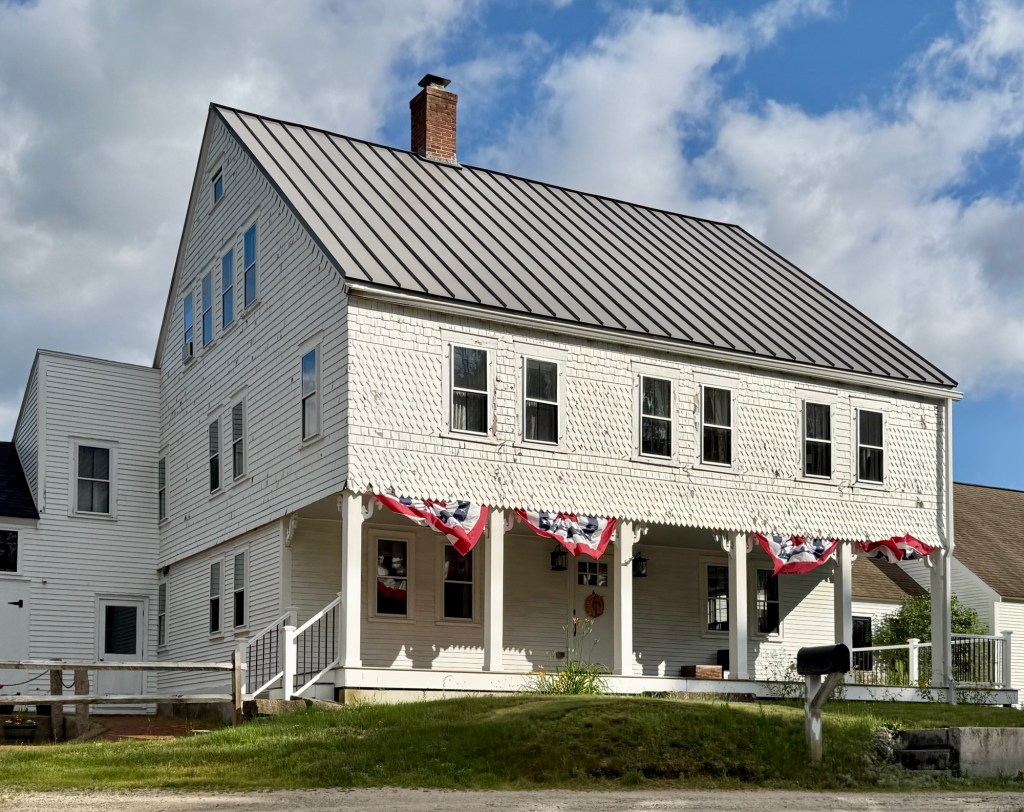
This now significantly altered Federal period residence is located in Tamworth, New Hampshire, and is a visual representation of the shift of the community from an agricultural economy to a tourism-based economy. The residence was built in the first half of the 19th century and owned by Henry Alonzo Wiggin (1808-1871) who was listed in the Census as a farmer. The formerly vernacular Federal period farmhouse was converted and expanded into an inn in the late 19th or early 20th century and became known as the Swift River House. When converted to an inn, the house was given the projecting addition on the facade at the second and third floors with the full-length porch, and covered with shingles. The structure served a vital role in the tourism economy when Lakes Region towns saw huge increases in visitors for the summer months. In 1929, Dr. Edwin Remick purchased the property for his son, Dr. Edwin Remick Jr., and his new wife, Marion. The father and son doctors maintained a medical office nearby in the Enoch Remick House, which now alongside this structure, are house museums operated by the Remick Country Doctor Museum & Farm.
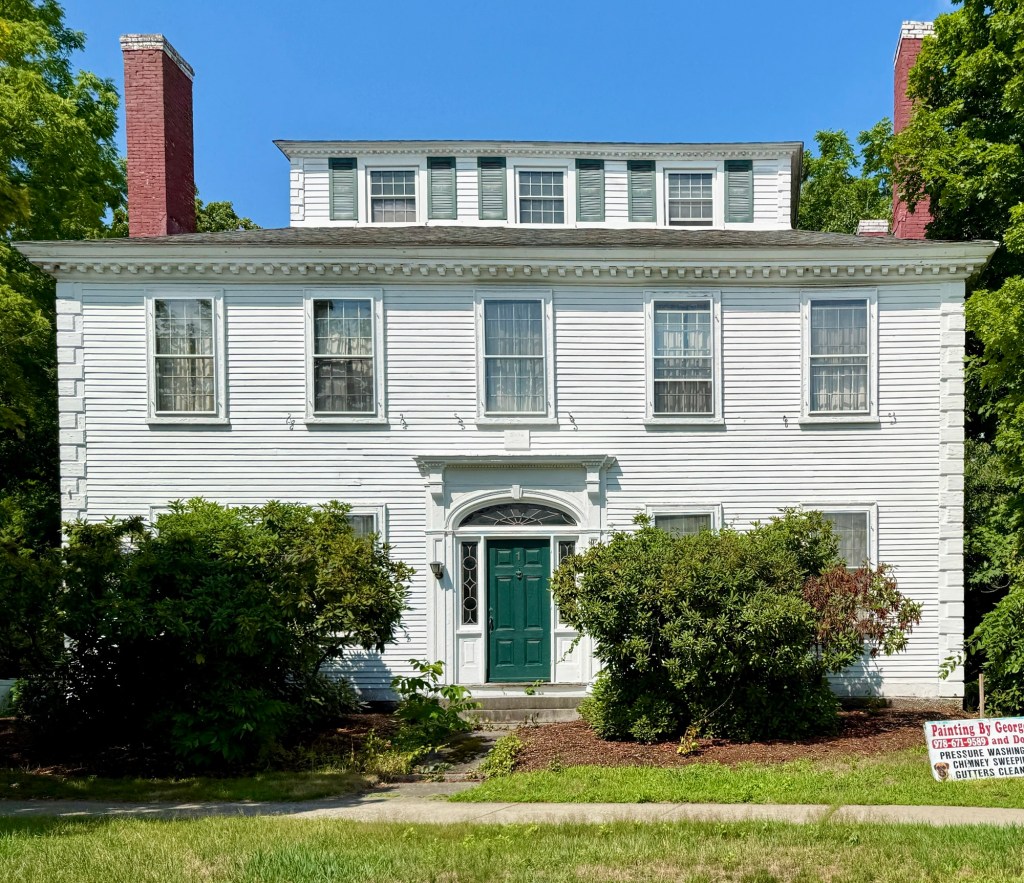
This charming example of a New England Federal style house is located in the village center of Tamworth, New Hampshire and has lived quite the life. The residence was built in about 1830 for Obed Hall (1795-1873), one of Tamworth’s first lawyers. Mr. Hall married a local woman, Elizabeth “Betsey” Gilman and they had a daughter, Caroline in 1830. Tragically, at the age of 26, Elizabeth died within a year of giving birth to Caroline, leaving Obed to care for their daughter alone. Obed Hall lived in this house with his daughter for 16 years until he remarried in 1847 to Caroline Eleanor. History repeated when Hall’s second wife had a baby daughter, Eleanor Mary (Nellie) in 1849 and then died within a month, leaving Obed with a second child to raise. Despite his family losses, Hall was Register for Probate for Carroll County from 1840 to 1851 and was a State Senator in 1854 and 1856. He appears to have extended the house to rent it to an additional family, likely to assist with raising his two daughters. After his death in 1873, the property was inherited by daughter, Nellie, and her husband, Jewett Lowe, who modernized the house likely to house hotel workers as Tamworth became a popular summer retreat in the early 20th century. In 1946, the house was sold to the New England Box Company, based in Greenfield, Massachusetts, but maintained mills around New England including one just east of Tamworth. The company divided up the house into three two-story apartments for local company employees, including lumbermen and mill workers, many of whom recently returned from overseas during WWII. The property went back to private ownership by the Dyer family, who in 2008, sold the property to the Tamworth Historical Society, now known as the Tamworth History Center, who maintain and operate it as a house museum.
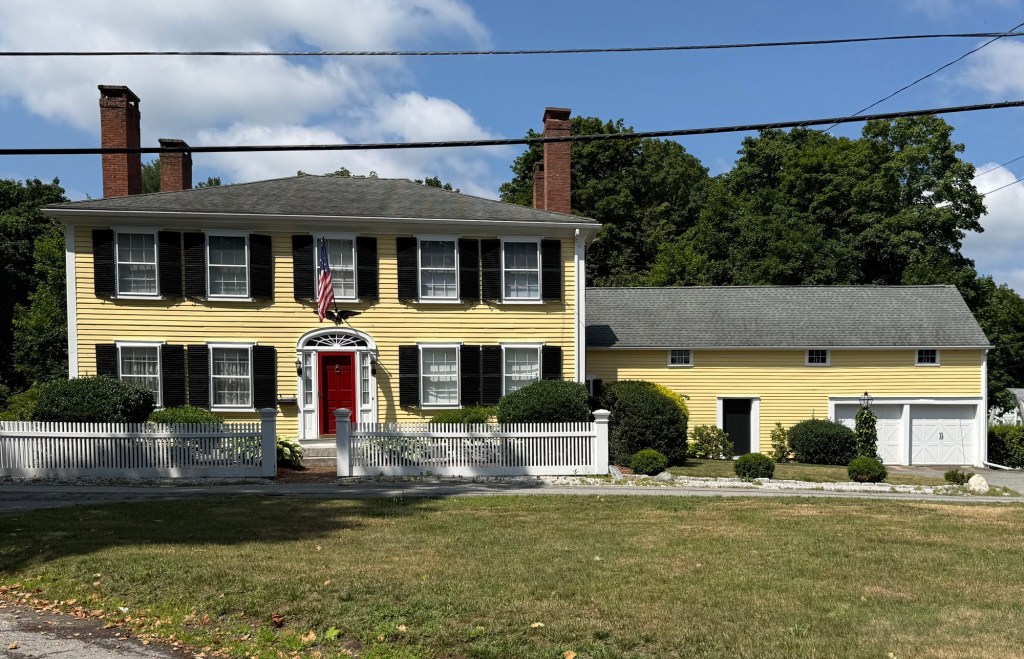
A fine example of a Federal style brick-ender, the Farmer-Colson House in North Billerica is a stately and well-proportioned residence of its type in Massachusetts that has been lovingly preserved inside and out for over 200 years. The house was built in 1803 by Oliver Farmer (1760-1839) on land he acquired from his wife, Hannah’s father. The house was later inherited by Oliver and Hannah’s daughter, Rachel, and her husband Israel Colson. Israel Colson arrived in the mill village in about 1830 from Rhode Island and was a farmer by trade but became engaged in the development of the locks for the Middlesex Canal on the Concord River in the village. Architecturally, the house retains its symmetrical facade with center entrance adorned by a fanlight transom and sidelights, massive end chimneys, and an attached barn/stable.
An excellent example of a Federal style country mansion, the Dr. Bowers House sits on the edge of the Town Common in Billerica, Massachusetts, retains its original form and architectural features which set it above many other residences of its period in town. The mansion was built in 1804 for Doctor William Bowers (1744-1820) and is square in plan with five bays on each side and brick end walls. The roof features a large monitor and massive chimneys extending from the rooms below. Formal entrances are located on both street-facing elevations, with the side door likely originally serving as an entrance to the doctor’s home office.
The town of Billerica was originally settled by colonists in 1640, but the area west of the Concord River was not settled until after 1690. This saltbox Colonial house built around 1696 is believed to be the oldest house in town west of the river. The residence was built by Samuel Manning (1644-1711) as his homestead. Between 1752 and 1800, the Manning family operated a tavern out of the rear portion of the house. In the later years of the 18th century by the family of William Manning, a veteran of the Revolutionary War, who after the war, began to believe that his military service meant little to the American ruling class. He wrote the anti-Federalist ‘The Key of Liberty” in 1798, arguing that the goal of the “Few” was to distress and force the “Many” into being financially dependent on them, creating a continued cycle of dependence to the elite class and government. In the late 19th century, this old saltbox Colonial house began to deteriorate, until the 1890s, when descendant of its original owner, and landscape architect, Warren H. Manning, spearheaded family efforts to restore the property. As a prominent landscape architect, Manning purchased not just the house, but the surrounding lands that formed the basis of Manning State Forest, protecting both. Manning conducted a carefully documented restoration of the house in 1899, and made it his summer home. A family association was eventually formed to take over the property, which leases the old home to a local pub and restaurant. The house faces south, away from the street and the kitchen ell off the side of the house does detract from the building, but it remains a significant early building from the settlement of Billerica.
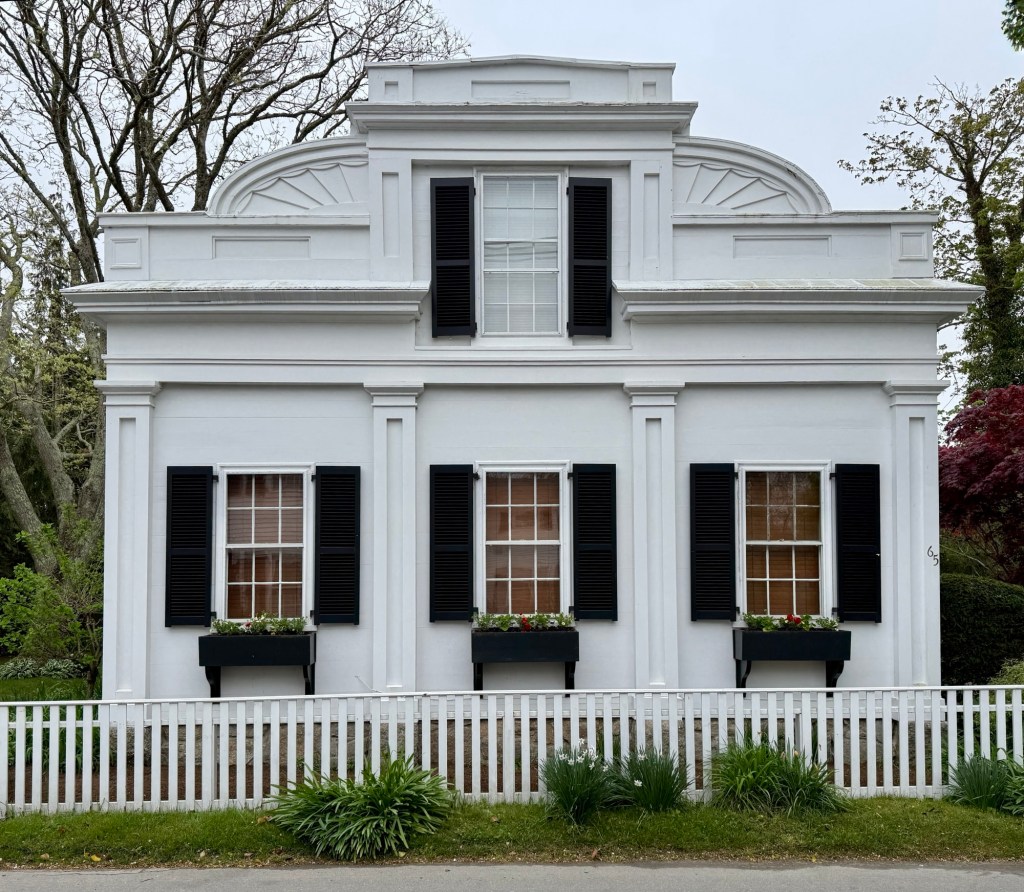
The architecturally distinguished Holmes Smith House on South Summer Street in Edgartown, Martha’s Vineyard, showcases the range in which the Greek Revival style could showcase whimsy and unique architectural details from the typical side-hall gable-end form seen all over New England. The house appears to date from the mid 1830s with its strong, symmetrical facade of flushboard siding, its three bays divided with paneled pilasters, and elaborate parapet containing a central dormer and arched fan motifs. The house was originally owned by Capt. Holmes Wass Smith (1798-1849) and his wife, Sophia (Coffin) Smith and later in the 19th and early 20th centuries by members of the Pease family. The residence is now a summer home and has been thoughtfully preserved as one of the most excellent and unique examples of its style on Martha’s Vineyard.
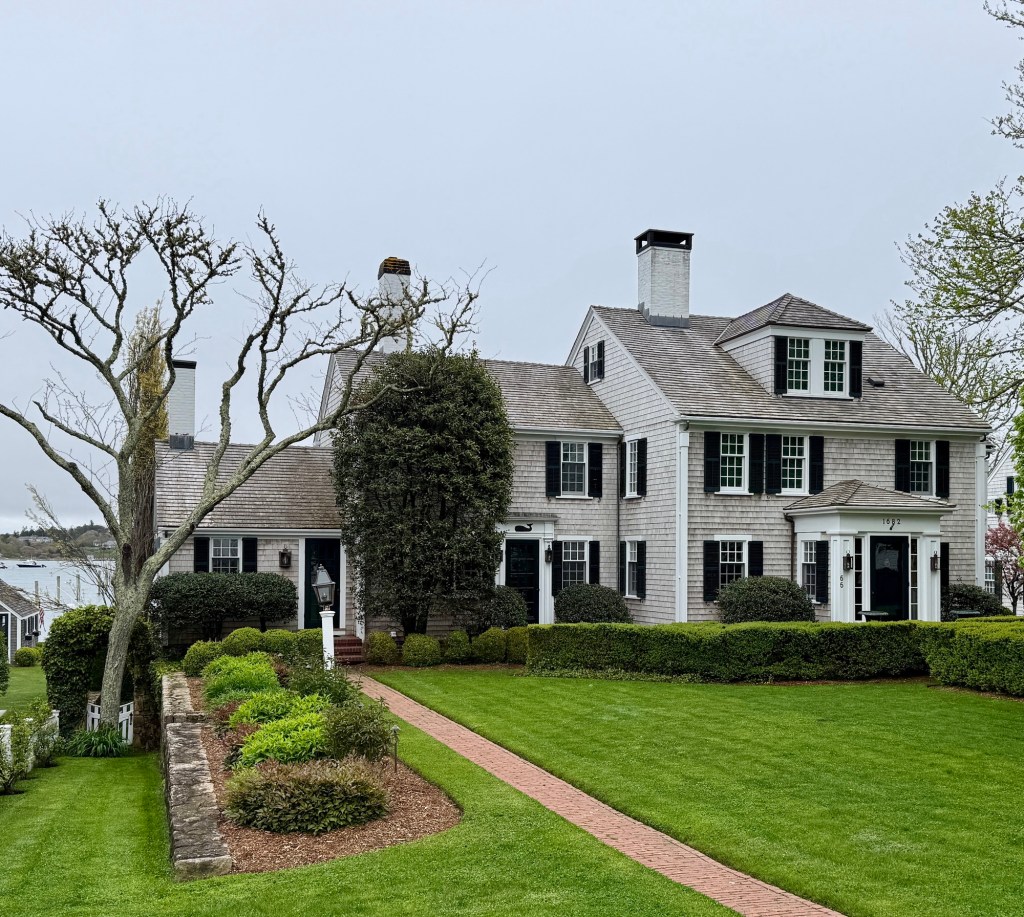
John Coffin (1647-1711) was born in Haverhill, Massachusetts, and later moved to Nantucket with his father finding work as a blacksmith. John moved to Edgartown (Martha’s Vineyard) in 1682, continuing his profession there as the island’s premier blacksmith. Soon after arriving, John Coffin and his wife, Deborah, built a small residence and blacksmith shop, here on South Water Street, which later became this stunning property with later additions and alterations. The construction of the original section is said to be built of timber infilled with brick, a luxury but also a necessity to protect John Coffin’s house in case of a fire from his attached blacksmith shop. The business did well and John and Deborah moved to a new residence on North Water Street by the turn of the 18th century. This property overlooking the harbor was later occupied and expanded by various artisans, including Elijah Dunham, a shoemaker, in 1792. It was likely under Dunham’s ownership that the house was expanded to its present two-story form with telescoping ells. More recently, the Coffin-Dunham House, one of the oldest extant buildings on the island, was thoughtfully renovated by Patrick Ahearn Architects.
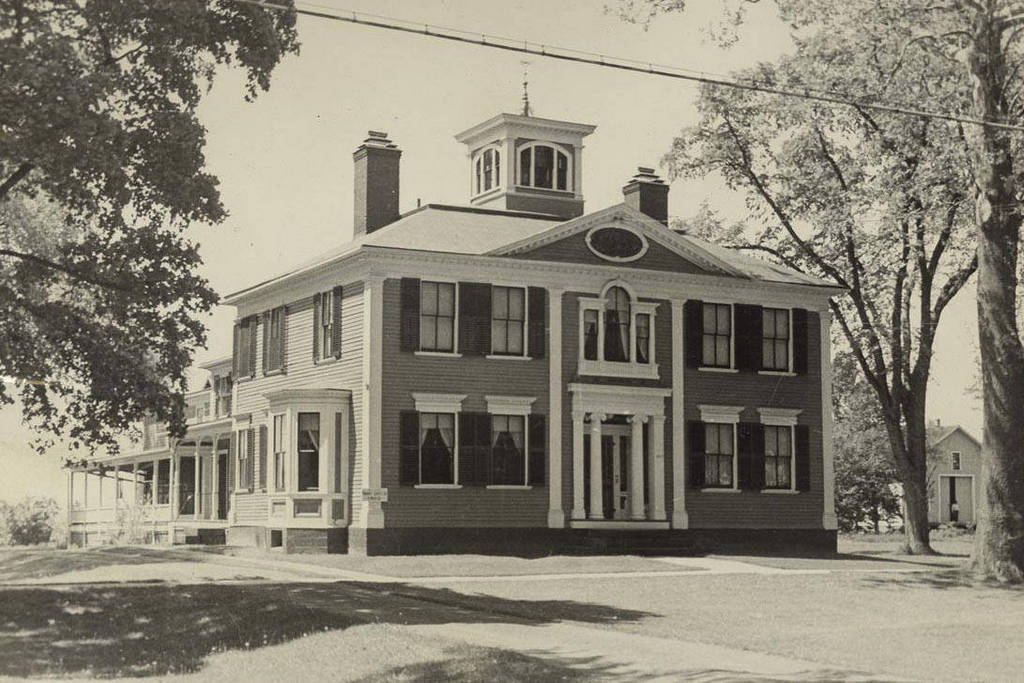
One of the many grand homes on Main Street in Suffield is this Federal style home built in 1800 for a 21-year-old Thaddeus Leavitt. Like his father, Thaddeus was a merchant with a store in Suffield and . Immediately after the home was completed, Thaddeus got married and moved into the home with his new wife, Jemima Loomis. The home was altered in the 1850s with Italianate features including a belvedere and bay windows, which lasted into the 20th century. Since then, the home was restored back to its original Federal style.